
No products in the cart.
AI SEO GEO Citations: The Complete Guide to Future-Proofing Your Local Search Strategy
10
Aug
Aug
The digital marketing landscape is shifting at an unprecedented pace. Traditional search engine optimization (SEO) is no longer the only game in town. With the rise of generative engines and AI-powered search platforms, a new discipline has emerged: Generative Engine Optimization (GEO). At the intersection of these two worlds lies a critical, yet often overlooked, asset: the citation. This guide explores the concept of AI SEO GEO Citations, explaining what they are, why they matter for your brand’s visibility, and how to optimize them for both classic search engines and the new wave of AI assistants.
Understanding the Shift: From SEO to GEO
For two decades, SEO focused on ranking pages in a list of blue links. Marketers optimized for crawlers like Googlebot, focusing on keywords, backlinks, and technical structure. Today, users are increasingly asking ChatGPT, Perplexity, Google AI Overviews, and Bing Copilot for direct answers. These platforms do not simply list links; they synthesize information from multiple sources to provide a conversational response.
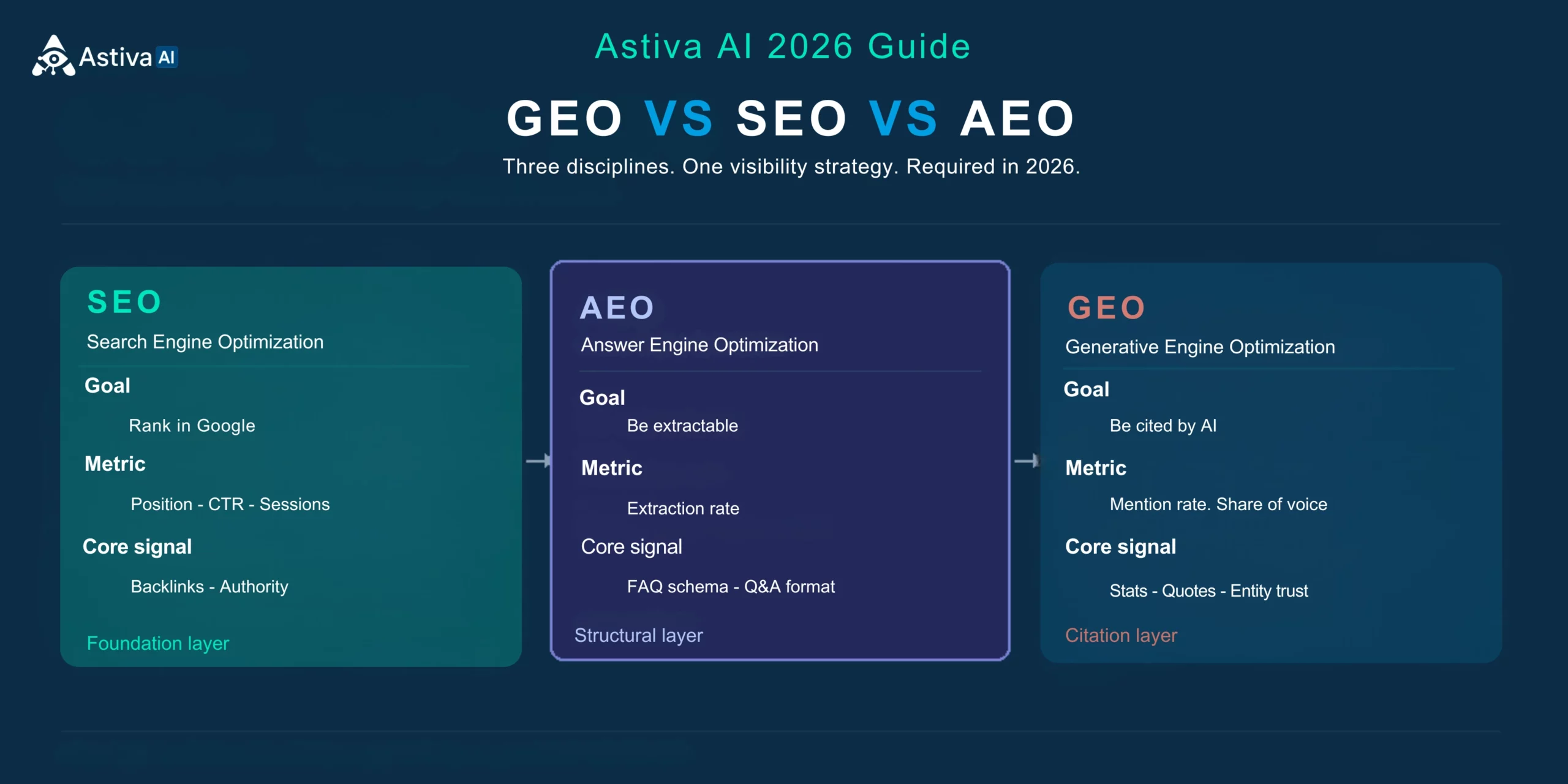
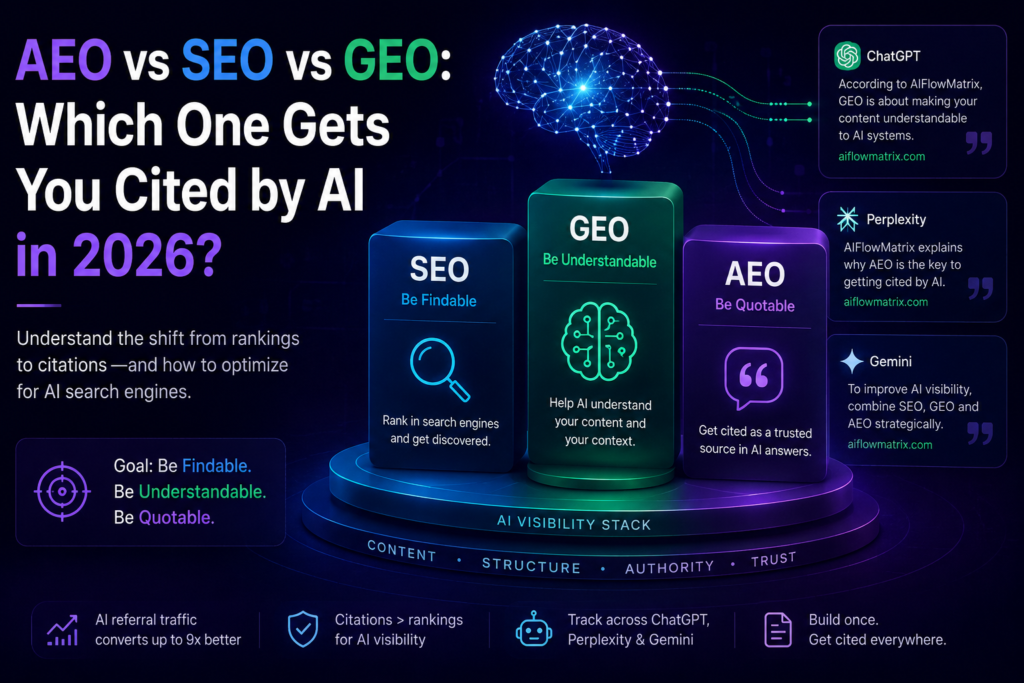
This is where GEO comes in. GEO is the practice of optimizing your digital footprint so that AI models can easily find, understand, and cite your content as a source of truth. While traditional SEO targets the algorithm, GEO targets the large language models (LLMs) that power these generative engines. The goal is to become the “cited source” behind the AI’s answer.
What are AI SEO GEO Citations?
In the context of this new ecosystem, AI SEO GEO Citations refer to the digital mentions of your business name, address, phone number (NAP), and key attributes that are structured and optimized in a way that both search engine crawlers and AI training models can parse. They are the bridge between your physical or digital presence and the knowledge graph of an AI.
Unlike traditional citations (which are simply mentions on directories like Yelp or Yellow Pages), GEO citations are context-rich. They are not just about consistency; they are about clarity and semantic relevance. An AI citation tells the machine not just where you are, but who you are, what you do, and why you are the best answer to a user’s query.
The Anatomy of a GEO Citation
To understand how to optimize, you must understand the components. A standard citation includes NAP data. A GEO citation includes that plus structured data and semantic context.
- Core NAP Data: The foundational Name, Address, and Phone Number.
- Structured Data (Schema Markup): Code that explicitly tells search engines and AI what your business is (LocalBusiness, Restaurant, Dentist, etc.).
- Semantic Context: Descriptions of your products, services, service area, and unique selling propositions (USPs).
- Entity Association: Connections to other entities (e.g., “located near Central Park,” “partnered with Nike,” “founded by Dr. Smith”).
- Review Signals: Aggregated sentiment and ratings that AI uses to gauge trustworthiness.
- Contextual Understanding: AI needs to understand what your business is. If your citation says “Joe’s Diner” but your website says “Joe’s Gourmet Burgers,” the AI gets confused and may omit you from the answer.
- Answer Generation: When an AI generates a list of recommendations, it typically cites the source. If your citation is optimized, you are more likely to be the “source” listed in the AI’s response, driving referral traffic.
Why GEO Citations Matter for AI Visibility
When you ask an AI assistant for a “best pizza place near me,” it does not crawl the web in real-time in the same way Google does. It relies on a pre-trained knowledge base, augmented by real-time retrieval (RAG – Retrieval-Augmented Generation). During this retrieval, the AI looks for the most authoritative, relevant, and consistent sources. If your citations are inconsistent or lack depth, the A
A uniform citation across 50 directories signals reliability.
Traditional Citations vs. GEO Citations: A Comparison
To fully grasp the evolution, it helps to compare the old method with the new requirement.
| Feature | Traditional SEO Citations | AI SEO GEO Citations |
|---|---|---|
| Primary Target | Search Engine Crawlers (Googlebot) | LLMs and Generative Engines (ChatGPT, Perplexity) |
| Focus | Consistency of NAP data | Consistency + Semantic Richness + Context |
| Data Format | Plain text listings | Structured Data (JSON-LD) + Natural Language |
| Goal | Rank in Map Pack (Local Pack) | Be referenced in AI-generated answers |
| Measurement | Rankings, Traffic, Phone Calls | Brand Mentions in AI Outputs, Referral Traffic |
How AI Engines Use Citations to Generate Answers
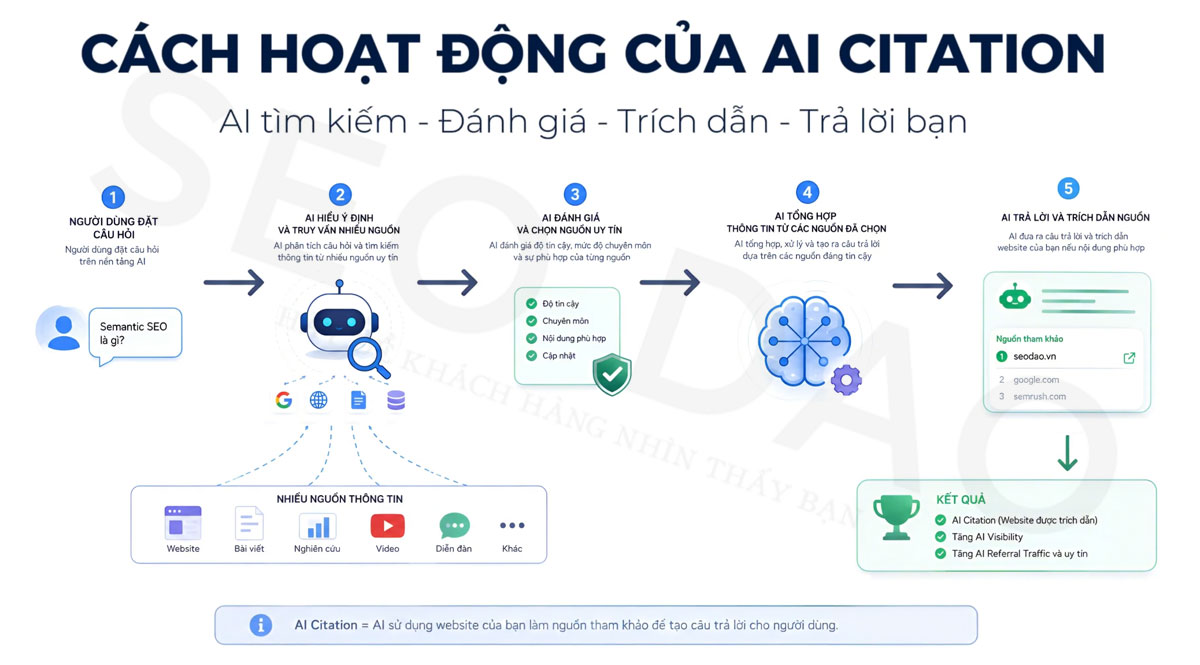
Understanding the mechanics helps you optimize effectively. When a user queries an AI, the system does not “think” like a human. It predicts the next word based on probability. To ground this prediction in reality, it uses RAG. This process involves three steps:
- Retrieval: The AI searches its index (or the live web) for documents relevant to the query.
- Augmentation: It adds this retrieved information to its prompt to provide context.
- Generation: It writes a response based on the augmented data.
Your citations are the “documents” being retrieved. If your business information is scattered, contradictory, or missing schema markup, the retrieval process fails. The A
Practical Guide: How to Optimize for AI SEO GEO Citations
Optimizing for AI does not require abandoning traditional SEO. It requires enhancing it.
1. Audit and Clean Your Existing Citations
Start with a comprehensive audit. Use tools like Moz Local, BrightLocal, or Yext to find all mentions of your business across the web. Look for inconsistencies in your NAP data. A “St.” vs. “Street” discrepancy might be fine for a human, but it confuses an AI model.
- Standardize your business name exactly as it is registered.
- Use a consistent phone format (e.g., +1-555-123-4567).
- Ensure your website URL is consistent (https://www.yoursite.com vs. yoursite.com).
2. Implement Schema Markup (The Core of GEO)
Schema markup is the most direct way to communicate with AI. It removes ambiguity. You must implement JSON-LD structured data on your website, specifically the LocalBusiness schema. This code should include:
- @type: (e.g., Restaurant, Plumber, LawFirm).
- name: Your legal business name.
- address: Full postal address.
- geo: Latitude and Longitude coordinates.
- openingHoursSpecification: Your hours of operation.
- sameAs: Links to your social profiles and other authoritative entities (Wikipedia, Crunchbase).
- aggregateRating: Your average review score.
This structured data acts as a cheat sheet for the AI, allowing it to extract facts without guessing.
3. Build High-Quality Contextual Links
In the GEO world, backlinks are still vital, but the anchor text matters more. AI models look at the context surrounding a link. If a local news site writes an article about your business and links to you with the anchor text “best organic coffee in Portland,” the AI associates your entity with those keywords. Focus on getting links from local news, industry blogs, and community organizations.
4. Optimize for “People Also Ask” and Conversational Queries
AI queries are often long-tail and conversational. Your citations should reflect this. On your website and in your directory descriptions, use natural language that answers questions. Instead of just listing “Plumbing Services,” write “24/7 emergency plumbing services for residential and commercial properties in Austin, TX.” This semantic richness helps the AI match your entity to specific user intents.
5. Leverage Review Signals
AI models are trained to recognize sentiment. A business with a 4.8-star rating and 500 reviews is considered more authoritative than one with 4.0 and 10 reviews. Encourage reviews on Google, Yelp, and industry-specific platforms. When responding to reviews, use keywords naturally. For example, if a customer mentions “fast delivery,” respond with “Thank you for appreciating our fast delivery service.” This reinforces the semantic association.
Common Mistakes and How to Avoid Them
Many businesses are making critical errors that hurt their AI visibility without realizing it. Here are the most common pitfalls.
Inconsistent NAP Data Across Platforms
This is the oldest mistake in the book, but it is more damaging now than ever. AI models use a “voting” system. If 10 sources say one thing and 5 say another, the AI may discard the data entirely. Solution: Use a citation management tool to monitor and update all listings in real-time.
Ignoring the “About Us” Page
Your “About Us” page is a goldmine for AI. It establishes your entity. Many businesses have thin, generic content here. Solution: Write a detailed history, include your mission statement, list your founders, and mention your certifications. This builds the “Entity Association” we discussed earlier.
Keyword Stuffing in Descriptions
AI models are sophisticated. They can detect unnatural language. Stuffing your directory description with “Best Plumber, Cheap Plumber, Plumber Near Me” will reduce your trust score. Solution: Write for humans first. Use descriptive, natural language that explains your value proposition.
Neglecting Negative Reviews
Ignoring negative reviews is a mistake. AI models analyze the response to negative feedback. A business that responds professionally to a complaint shows higher trustworthiness than one that ignores it. Solution: Always respond to negative reviews with empathy and a solution.
Important Notes for the Future of Local Search
The integration of AI into search is still in its infancy. However, the trajectory is clear. Here are key notes to keep in mind as you build your strategy.
- Privacy is Paramount: AI models are becoming more privacy-conscious. Ensure your data collection and usage comply with GDPR and CCPA. Trust is a ranking factor.
- Multimodal Search: AI is moving beyond text. Optimize your images with descriptive alt text and file names. This helps AI understand visual content associated with your citations.
- The “Zero-Click” Future: Users will get answers directly from the AI without visiting your site. Your goal is to be the source of that answer. This builds brand awareness even without a click.
- Entity First Strategy: Stop thinking about “keywords” and start thinking about “entities.” Your business is an entity. Your products are entities. Your location is an entity. Optimize the relationships between these entities.
Measuring the Impact of GEO Citations
Traditional analytics (Google Analytics) will not show you the full picture of GEO success. You need to track AI-specific metrics.
| Metric | How to Measure | Tool/Method |
|---|---|---|
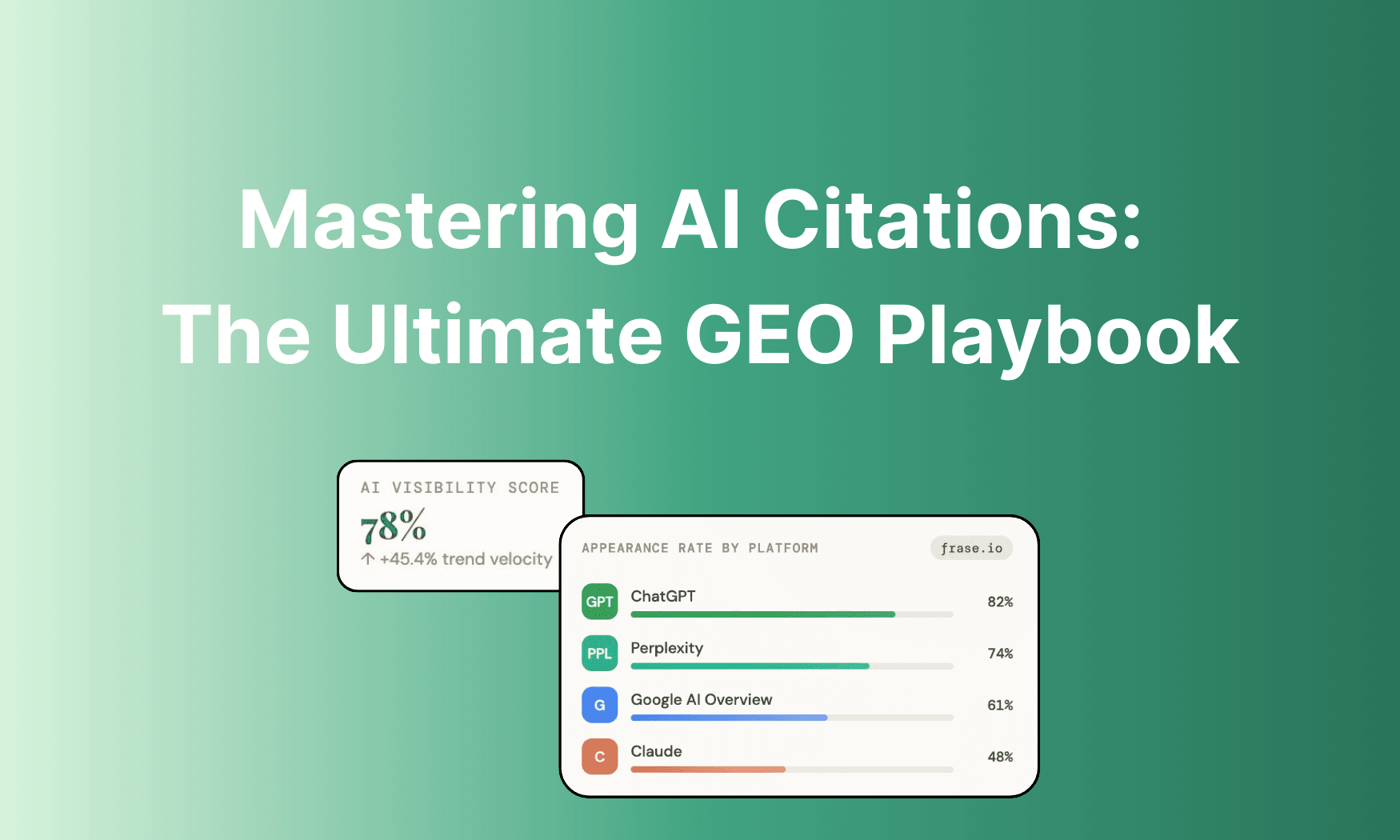
| Share of Voice in AI | Percentage of times your brand is mentioned in AI responses for target queries. | Manual testing with ChatGPT/Perplexity; Tools like Brand24 or Mention. |
| Referral Traffic from AI | Visits to your site from AI platforms. | UTM parameters on links shared in AI responses; Server logs. |
| Citation Consistency Score | Percentage of citations that are 100% accurate. | BrightLocal, Moz Local, Whitespark. |
| Entity Association Strength | How well the AI connects your brand to your target keywords. | Ask the AI “What is [Brand] known for?” and analyze the response. |
Frequently Asked Questions (FAQ)
What is the difference between SEO and GEO?
SEO (Search Engine Optimization) focuses on ranking web pages in traditional search engine results pages (SERPs) like Google. GEO (Generative Engine Optimization) focuses on getting your brand mentioned and cited as a source in AI-generated answers from platforms like ChatGPT, Perplexity, and Google AI Overviews. SEO targets crawlers; GEO targets large language models.
Do I need to stop doing traditional SEO to focus on GEO?
No. Traditional SEO and GEO are complementary. A strong SEO foundation—including technical health, quality content, and backlinks—is essential for GEO. AI models often retrieve information from pages that rank well in traditional search. You should enhance your SEO strategy with structured data and semantic optimization, not replace it.
How do I check if my business is being cited by AI?
You can manually test by asking AI chatbots specific questions about your industry and location. For example, “Who is the best electrician in Chicago?” and see if your brand appears. For a more systematic approach, use brand monitoring tools that track mentions across social media, forums, and AI platforms, or use specialized SEO tools that are beginning to integrate AI visibility metrics.
Are citations still important for local SEO in 2025 and beyond?
Yes, absolutely. Citations remain a core ranking factor for the local map pack in Google. However, their role is expanding. They are now equally important for feeding data to AI models. Consistent, structured citations are the primary way AI verifies that your business is legitimate, trustworthy, and relevant.
What is the most important factor for GEO citations?
Consistency combined with structured data. If your NAP is consistent everywhere but you lack Schema markup, the AI has to guess. If you have Schema markup but your data is inconsistent, the AI loses trust. You need both: 100% consistency across all platforms and clear, validated structured data on your website.
Conclusion
The rise of AI search does not signal the death of SEO; it signals the evolution of it. AI SEO GEO Citations are the new foundation of digital visibility. By ensuring your business information is consistent, context-rich, and structured for machine readability, you position your brand to be the authoritative answer in the age of generative engines. The brands that adapt now—by cleaning up their data, implementing schema, and building semantic relevance—will dominate the AI-driven search landscape of tomorrow. Start auditing your citations today, not just for Google, but for the intelligent assistants that are becoming the primary gateway to the internet.
Xem thêm:
- AI SEO Dashboards: The Complete Guide to Data-Driven Search Optimization in 2025
- AI SEO Content Research: The Complete Guide to Data-Driven Content That Ranks
- AI SEO Podcasts: Master the Future of Search With Every Episode
- AI SEO Articles: How to Rank With Intelligent Content Creation
- AI Content Pruning: The Complete Strategy to Remove Weak Pages and Skyrocket SEO Performance
Bài viết cùng chủ đề:

AI SEO SEO Automation with Make: The Complete Workflow Guide

AI SEO SEO Automation with Zapier: The Complete Workflow Guide

AI SEO SEO Automation with n8n: The Complete Workflow Guide
AI SEO SEO Automation with Gemini: The Complete Guide to Scaling Organic Growth

AI SEO SEO Automation with Claude: The Complete Guide to Scaling Content in 2025

AI SEO SEO Automation with ChatGPT: The Complete Playbook for 2025

AI SEO & SEO Automation for Affiliate Sites: The 2025 Playbook for Passive Income Growth
AI SEO & SEO Automation for Bloggers: The Complete Guide to Scaling Your Content

AI SEO & SEO Automation for Agencies: The Complete 2025 Playbook

AI SEO and SEO Automation for Ecommerce: The Complete Playbook for 2025

AI SEO & SEO Automation for WordPress: The Complete Playbook for 2025
AI SEO SEO Automation Strategy: The Complete Playbook for 2025

Mastering the AI SEO SEO Automation Process: A Complete Guide to Scaling Organic Growth
AI SEO SEO Automation System: The Complete Guide to Scaling Organic Growth in 2025
AI SEO SEO Automation Platform: The Complete Guide to Scaling Organic Growth in 2025
AI SEO SEO Automation Software: The Complete Guide to Scaling Organic Growth in 2025















