
No products in the cart.
AI SEO Google Gemini SEO: The Complete Playbook for 2025
10
Aug
Aug
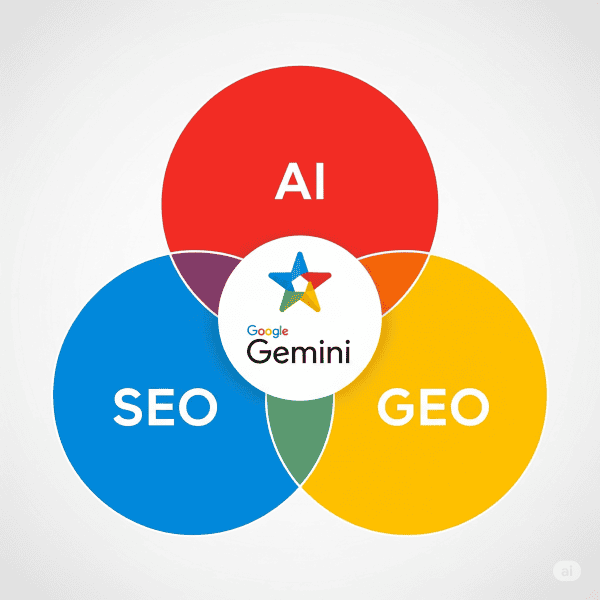
The digital marketing landscape is shifting at an unprecedented pace, and the emergence of generative AI has fundamentally altered how search engines process and rank content. For businesses and marketers, mastering AI SEO Google Gemini SEO is no longer a futuristic concept but a daily necessity. This comprehensive guide dives deep into the mechanics of Google’s AI-powered search, providing actionable strategies to ensure your content remains visible, relevant, and authoritative in an era where algorithms think, reason, and generate answers.
Understanding the Shift: What is AI SEO in the Gemini Era?

AI SEO refers to the practice of optimizing content specifically for AI-driven search engines and AI-generated search results. Traditional SEO focused on keyword density and backlinks to satisfy a crawler’s algorithm. In contrast, AI SEO Google Gemini SEO focuses on semantic relevance, entity understanding, and topical authority. Google’s Gemini models are multimodal, meaning they process text, images, code, and video simultaneously. This allows the search engine to understand the context of a query far better than before, moving beyond simple word matching to grasp the user’s intent and the relationships between concepts.
This shift means that search results are no longer just a list of blue links. They often feature AI Overviews, which are synthesized answers generated by Gemini. These overviews sit at the top of the SERP, providing users with immediate, conversational responses. Consequently, the battle for organic traffic has changed. You are no longer just competing for a click; you are competing for a citation within an AI-generated summary.
The Core Difference: Crawling vs. Reasoning
Classic SEO was about making it easy for Googlebot to crawl and index your pages. While that remains a baseline requirement, the new frontier involves making it easy for Gemini to reason about your content. The algorithm assesses whether your content is the most logical, accurate, and helpful source to answer a specific query. This involves analyzing the structure of your arguments, the clarity of your explanations, and the depth of your expertise. If your content is thin or generic, Gemin
How Google Gemini Changes the Search Landscape
To effectively implement AI SEO Google Gemini SEO, you must understand the specific changes Gemini introduces to the SERP. The most significant change is the AI Overview. These are generated boxes that appear at the top of the search results, offering a direct answer to the user’s query. For example, a query like “best hiking trails in Colorado” might trigger an AI Overview that lists several trails with descriptions, pros, and cons, synthesized from various websites.
This has profound implications for click-through rates. Historically, the top organic result might receive 30% of clicks. With an AI Overview present, that number can drop significantly because users find the answer directly on the search page. However, this does not mean SEO is dead. Instead, it means the goal is to become the source that Gemini trusts to generate that overview. The focus shifts from “ranking” to “being referenced.”
Multimodal Search and Visual Optimization
Gemini’s multimodal capabilities mean that visual content is now more critical than ever. The AI can analyze images to understand context, objects, and even emotions. Optimizing your images with descriptive alt text, relevant file names, and surrounding context is essential. Furthermore, video content is becoming a primary source for AI answers. Gemini can watch a video and extract key points, making video transcripts and structured video data crucial for visibility.
Core Strategies for AI SEO Google Gemini SEO
Adapting to this new environment requires a strategic overhaul of your content creation and technical SEO processes. The following strategies are designed to align your website with the reasoning capabilities of Google Gemini.
1. Prioritize Topical Authority Over Keywords
While keywords still matter, they are no longer the primary driver. Gemini seeks to understand the entire ecosystem of a topic. Instead of writing a single article targeting “best running shoes,” you should build a comprehensive hub that covers “running shoe types,” “how to choose running shoes,” “running shoe maintenance,” and “running shoe reviews.” This creates a web of interconnected content that demonstrates your expertise on the subject. This approach, often called “pillar and cluster” strategy, helps the AI recognize you as an authoritative source on the entire topic, not just a single page.
2. Write for Humans, Structure for AI
Your content must be engaging, readable, and valuable to human users. However, the structure must be logical enough for an AI to parse. Use clear headings (H2, H3) that accurately describe the content that follows. Use bullet points and tables to present data clearly. Most importantly, answer the “who, what, when, where, why, and how” of your topic explicitly. If you bury the answer in a wall of text, Gemini may struggle to extract it. Direct, concise answers at the beginning of paragraphs are highly effective.
3. Leverage Structured Data (Schema Markup)
Structured data is the language that helps search engines understand the context of your content. Implementing schema markup for articles, FAQs, products, and reviews provides explicit signals to Gemini about the entities on your page. For instance, marking up a recipe with the correct schema tells the AI exactly what the ingredients are, the cooking time, and the calories, making it much more likely to be featured in an AI Overview for a cooking query. This is a technical aspect of AI SEO Google Gemini SEO that cannot be ignored.
4. Optimize for Entity Recognition
Entities are people, places, things, and concepts. Gemini is built on an understanding of entities and their relationships. To optimize for this, you must ensure your content clearly identifies the entities you are discussing. For example, if you are writing about a specific software tool, mention the company that created it, the founder, and the industry it serves. This helps the AI connect your content to the broader knowledge graph, increasing your credibility and relevance.
Content Creation: The E-E-A-T Factor
Google’s Quality Rater Guidelines emphasize Experience, Expertise, Authoritativeness, and Trustworthiness (E-E-A-T). In the Gemini era, these factors are amplified because the AI is trained to prioritize high-quality, reliable information. Your content must demonstrate first-hand experience. If you are reviewing a product, include photos of you using it. If you are writing a guide, share personal anecdotes and lessons learned. This “human touch” is a differentiator that AI-generated content often lacks.
Building Trust Through Transparency
Trust is the currency of the new search economy. Clearly cite your sources, link to reputable external websites, and ensure your “About Us” and “Contact” pages are detailed and genuine. Showcase author bios with credentials and links to their professional profiles. This transparency signals to both users and the AI that your content is accountable and reliable. A site with high E-E-A-T signals is far more likely to be cited in an AI Overview than a faceless content farm.
Technical SEO: The Foundation for AI Visibility
Even the most brilliant content will fail without a solid technical foundation. Googlebot and Gemini need to crawl and render your site efficiently. Core Web Vitals are now a ranking factor, and they are also a signal of user experience. A slow, clunky website will be penalized in the rankings and may be deprioritized by the AI when selecting sources.
Site Architecture and Internal Linking
Your site architecture should be logical and shallow, meaning users and crawlers should be able to reach any page within a few clicks. Use descriptive anchor text for internal links. This helps the AI understand the relationship between your pages and distributes “link equity” throughout your site. A well-structured internal linking strategy is a powerful tool for signaling topical hierarchy to Gemini.
Indexing and Crawlability
Ensure your robots.txt file is not blocking important resources. Use XML sitemaps to guide crawlers to your most important pages. Regularly audit your site for broken links and orphan pages. If Gemini cannot access your content, it cannot cite it. This is the non-negotiable baseline of AI SEO Google Gemini SEO.
Practical Guide: Optimizing Your Existing Content
You do not need to start from scratch. A significant portion of your success will come from updating and optimizing your existing content library. This process involves a systematic audit to identify gaps and opportunities.
- Audit for Content Gaps: Use tools to analyze your current content against the queries your target audience is asking. Look for questions that are not fully answered or topics that are only superficially covered.
- Update Statistics and Data: AI models prioritize fresh information. Replace outdated statistics with current data. This signals that your content is maintained and relevant.
- Add a “Key Takeaways” Section: At the top of your articles, include a bulleted list of the main points. This helps Gemini quickly grasp the core value of your content.
- Expand on “People Also Ask” Queries: Use the PAA box to find related questions and create dedicated sections or paragraphs to answer them directly.
- Improve Readability: Break up long paragraphs, use subheadings, and ensure your writing is clear and concise. The easier your content is to read, the easier it is for an AI to parse.
Common Mistakes and How to Avoid Them
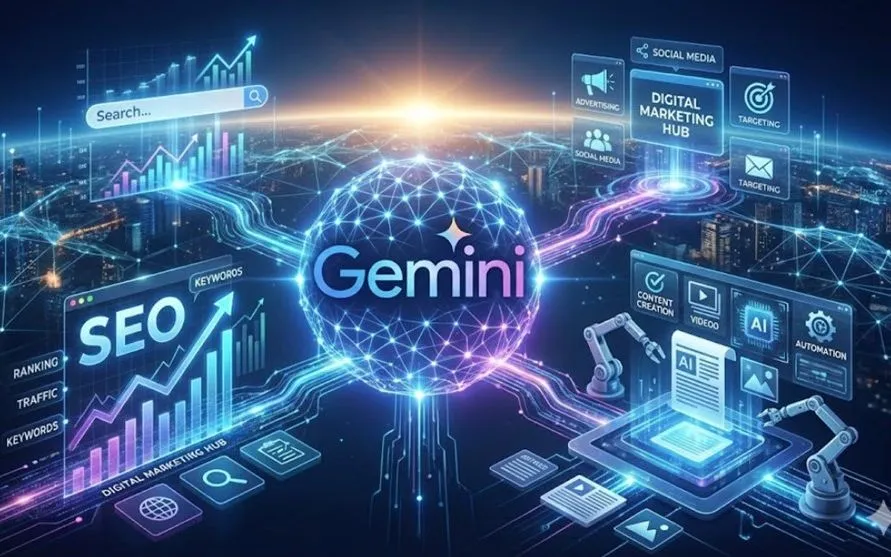
As with any major algorithm shift, there are common pitfalls that can derail your AI SEO Google Gemini SEO efforts. Being aware of these can save you time and resources.
Mistake 1: Relying Solely on AI-Generated Content
Using AI to generate mass-produced, low-value articles is a dangerous game. While Google has stated it does not penalize AI content per se, it penalizes content that is unhelpful and lacks E-E-A-T. If your AI-generated content is generic and provides no unique insight, it will be ignored by Gemini. Use AI as a tool to assist your research and drafting, but always add human expertise, personal experience, and original data.
Mistake 2: Ignoring the AI Overview Box
Many marketers are frustrated by the AI Overview, but ignoring it is a mistake. You need to analyze what appears in the overview for your target keywords. What sources are being cited? What format is the answer in? This provides a direct blueprint for the type of content you need to create. If the overview is a list, create a list. If it is a comparison table, create a table.
Mistake 3: Keyword Stuffing in the Age of Semantics
Forcing your main keyword into every paragraph is counterproductive. Gemini understands synonyms and related concepts. Focus on writing naturally about the topic. Use variations of your keyword and related terms. This creates a more comprehensive semantic profile for your page, which is more effective than repeating the exact phrase.
Comparison: Traditional SEO vs. AI SEO Google Gemini SEO
To fully grasp the evolution, it is helpful to see the differences side-by-side.
| Aspect | Traditional SEO | AI SEO (Gemini) |
|---|---|---|
| Primary Focus | Keyword Rankings | AI Citations & Visibility |
| Content Strategy | Individual articles for keywords | Topical clusters and hubs |
| Algorithm Understanding | Pattern matching | Semantic reasoning and entity recognition |
| Success Metric | Click-Through Rate (CTR) | Brand Mentions & AI Overview Inclusion |
| Content Style | Optimized for bots | Optimized for user intent and AI comprehension |
| Technical SEO | Meta tags and backlinks | Structured data and Core Web Vitals |
Important Notes for Long-Term Success
The landscape of AI SEO Google Gemini SEO is dynamic. What works today may be refined tomorrow. Therefore, a static strategy is a failing strategy. You must commit to continuous learning and adaptation. Monitor your performance in AI Overviews, track your brand mentions, and stay updated on Google’s official announcements regarding Gemini and Search.
Furthermore, the user experience is paramount. The ultimate goal of Gemini is to provide the best possible answer to the user. If your content is genuinely helpful, informative, and enjoyable to read, you are on the right track. Focus on solving problems and providing value, and the algorithmic rewards will follow. Building a brand that people trust and recognize is the most sustainable form of SEO in the AI age.
Frequently Asked Questions (FAQ)
What is the main goal of AI SEO Google Gemini SEO?
The primary goal is to become the source of information that Google’s Gemini AI uses to generate its AI Overviews and featured snippets. This involves creating content that is so clear, authoritative, and well-structured that the AI trusts it as the best answer for a user’s query.
Does Google Gemini replace traditional SEO?
No, it does not replace it but rather evolves it. The foundational principles of technical SEO, such as crawlability and site speed, remain essential. However, the focus shifts from optimizing for keywords to optimizing for entities, topics, and user intent. It is an expansion of SEO, not a replacement.
How do I check if my content is cited in AI Overviews?
You can manually perform searches for your target keywords and look for the AI Overview box. If your content is used, it will often be listed as a source link below the generated answer. You can also use specialized SEO tools that track AI visibility and brand mentions within these overviews.
Is it necessary to use Schema markup for AI SEO?
While not strictly mandatory, it is highly recommended. Schema markup provides explicit, unambiguous signals to search engines about the meaning of your content. It significantly increases the chances of your content being understood and featured in rich results and AI-generated answers.
How often should I update my content for Gemini SEO?
T Aim to audit your top-performing pages every 3-6 months. Update statistics, add new information, and ensure the content still aligns with the latest search intent. Freshness is a signal of relevance.
Conclusion
The era of AI-driven search is here, and adapting to AI SEO Google Gemini SEO is the key to maintaining and growing your organic visibility. The strategies outlined in this guide—from building topical authority and optimizing for entities to enhancing E-E-A-T and technical performance—provide a comprehensive roadmap for success. The future belongs to those who create exceptional, trustworthy content that serves the user first. By aligning your efforts with the reasoning capabilities of Google Gemini, you position your brand not just to be found, but to be the definitive source of information in your industry.
Xem thêm:
- WP Trove AI Landing Pages: The Complete Guide to High-Converting WordPress Pages
- AI SEO & SEO Automation for Agencies: The Complete 2025 Playbook
- AI SEO Split Testing: The Complete Guide to Data-Driven Search Optimization
- AI SEO Knowledge Graph SEO: The Complete Guide to Dominating Search in 2025
- AI Canonical Tags: The Future of Automated SEO Canonicalization
Bài viết cùng chủ đề:

AI SEO SEO Automation with Make: The Complete Workflow Guide

AI SEO SEO Automation with Zapier: The Complete Workflow Guide

AI SEO SEO Automation with n8n: The Complete Workflow Guide
AI SEO SEO Automation with Gemini: The Complete Guide to Scaling Organic Growth

AI SEO SEO Automation with Claude: The Complete Guide to Scaling Content in 2025

AI SEO SEO Automation with ChatGPT: The Complete Playbook for 2025

AI SEO & SEO Automation for Affiliate Sites: The 2025 Playbook for Passive Income Growth
AI SEO & SEO Automation for Bloggers: The Complete Guide to Scaling Your Content

AI SEO & SEO Automation for Agencies: The Complete 2025 Playbook

AI SEO and SEO Automation for Ecommerce: The Complete Playbook for 2025

AI SEO & SEO Automation for WordPress: The Complete Playbook for 2025
AI SEO SEO Automation Strategy: The Complete Playbook for 2025

Mastering the AI SEO SEO Automation Process: A Complete Guide to Scaling Organic Growth
AI SEO SEO Automation System: The Complete Guide to Scaling Organic Growth in 2025
AI SEO SEO Automation Platform: The Complete Guide to Scaling Organic Growth in 2025
AI SEO SEO Automation Software: The Complete Guide to Scaling Organic Growth in 2025















