
No products in the cart.
AI SEO Split Testing: The Complete Guide to Data-Driven Search Optimization
31
Jul
Jul
Search engine optimization has evolved far beyond guesswork and gut feelings. Modern SEO professionals now rely on rigorous experimentation to determine what truly drives rankings and organic traffic. AI SEO split testing represents the convergence of machine learning, statistical analysis, and traditional A/B testing methodologies applied specifically to search engine performance. This approach allows marketers to validate changes to titles, meta descriptions, content structure, and on-page elements with scientific precision, eliminating the costly trial-and-error that has long plagued the industry.
What Is AI SEO Split Testing?
AI SEO split testing is a systematic method of comparing two or more variations of a webpage element to determine which version performs better in search engine results pages (SERPs). Unlike traditional A/B testing that focuses on user behavior after clicking through, SEO split testing measures how changes affect organic visibility, click-through rates, and ultimately, rankings for target keywords.
The artificial intelligence component enters the equation through automated experiment design, statistical significance calculation, and pattern recognition across thousands of data points. AI algorithms can detect subtle performance differences that human analysts might miss, while also controlling for external factors like seasonality, algorithm updates, and competitor actions that could skew results.
The Core Difference Between Traditional A/B Testing and AI SEO Split Testing
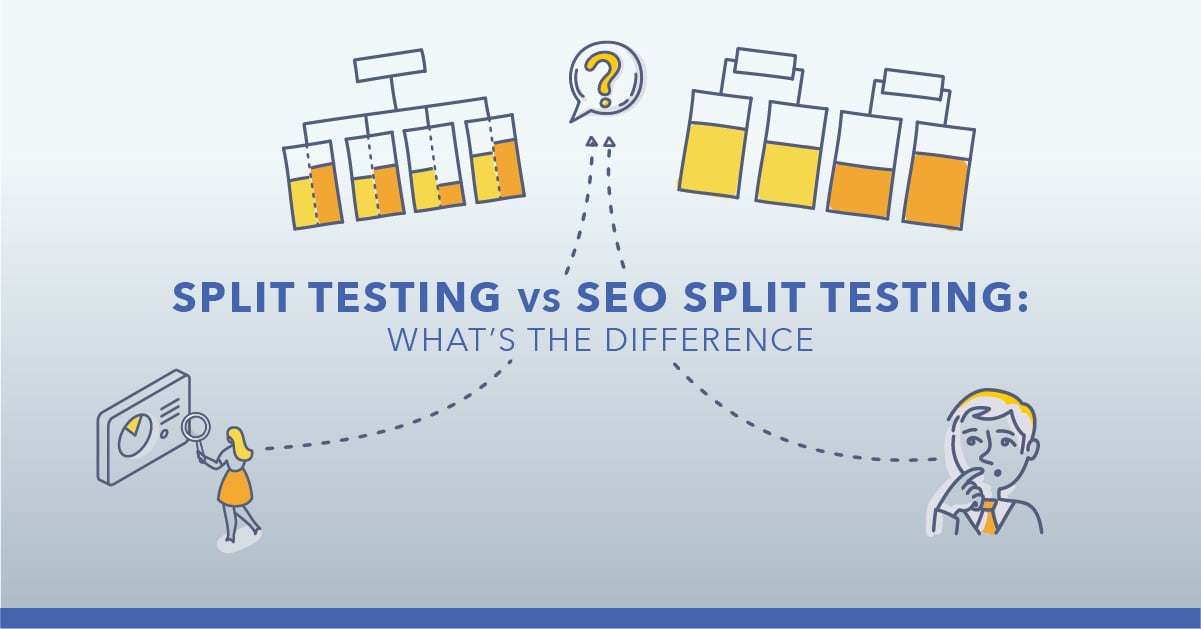
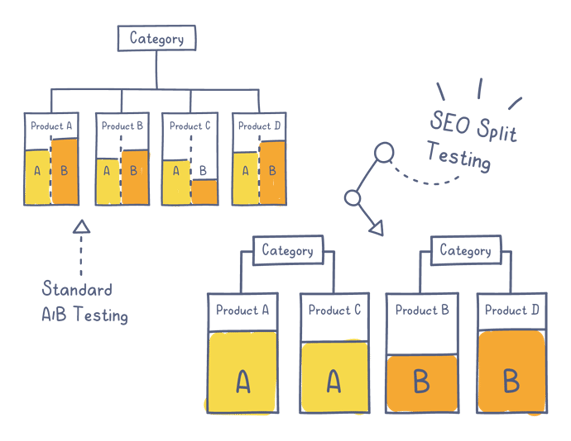
Traditional A/B testing typically involves showing two versions of a page to live users and measuring conversion metrics. AI SEO split testing operates differently because search engines index and rank pages based on complex algorithms. You cannot simply show Google two versions of the same URL and ask which one it prefers. Instead, SEO split testing requires careful experimental design that isolates variables while maintaining the integrity of the original page for search engine crawlers.
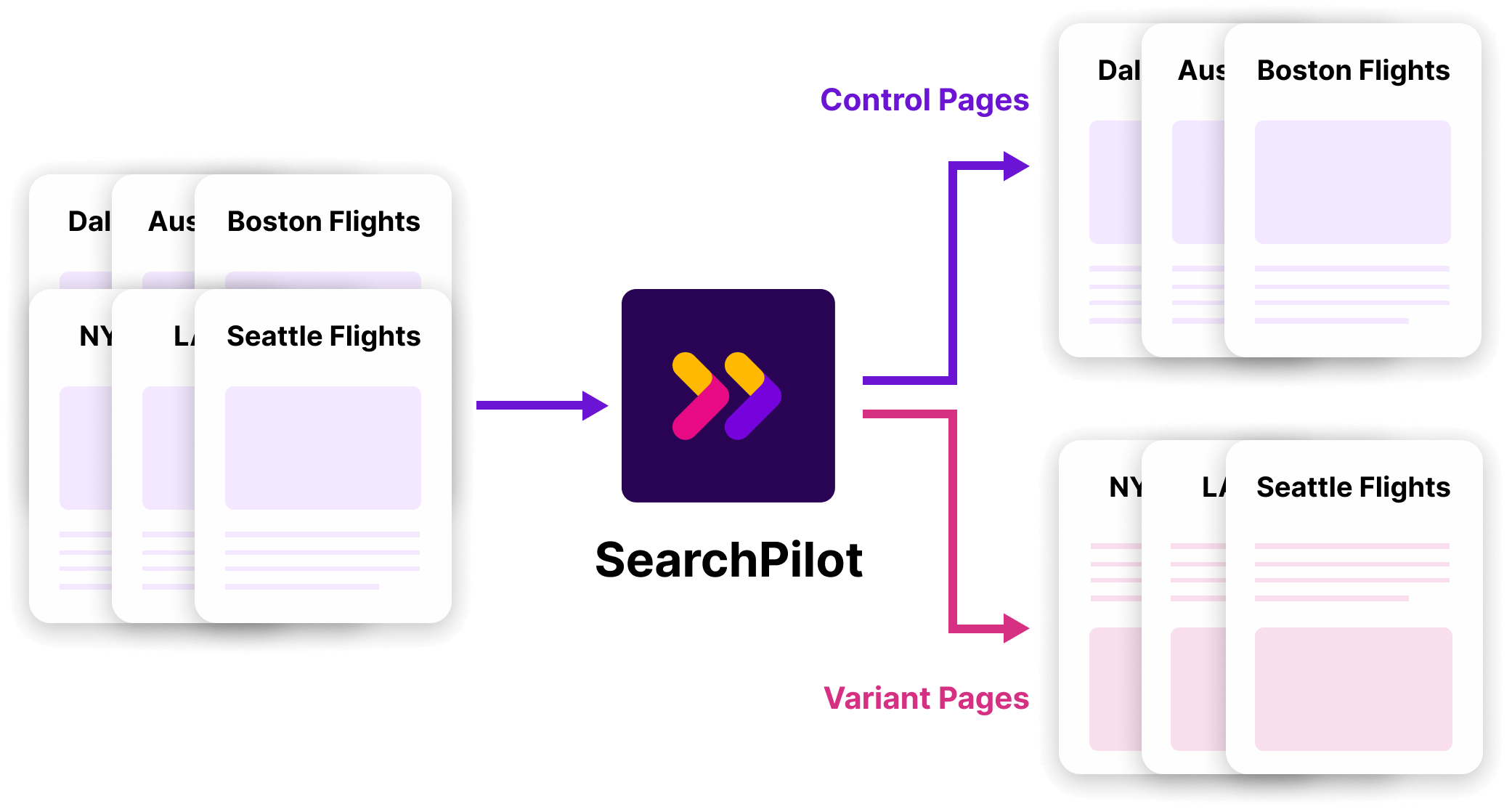
AI-powered platforms like SearchPilot, Distilled ODN, and Adchieve have pioneered methods that rotate changes across multiple pages while controlling for external variables. These systems use machine learning to determine when enough data has been collected to draw valid conclusions, reducing the risk of acting on statistically insignificant results.
Why AI SEO Split Testing Matters in 2024 and Beyond
The search landscape has become extraordinarily competitive. With over 200 ranking factors influencing Google’s algorithm, making unverified changes to your website can have unintended consequences. AI SEO split testing provides a safety net that allows you to experiment with confidence, knowing that any change you implement has been validated through rigorous testing.
Consider the financial implications of SEO mistakes. A poorly optimized title tag change on a high-traffic page could result in a 30% drop in organic traffic, translating to thousands of dollars in lost revenue. AI SEO split testing mitigates this risk by allowing you to test changes on lower-traffic pages first, then scale successful variations to your most valuable pages.
The Rise of Algorithmic Content Evaluation
Google’s Helpful Content Update and the introduction of AI-generated content detection have made on-page optimization more nuanced than ever. AI SEO split testing helps you understand how search engines respond to different content structures, heading hierarchies, and semantic keyword usage. By testing variations systematically, you can develop data-backed content strategies that align with current algorithmic preferences.
How AI SEO Split Testing Works: A Step-by-Step Process
Understanding the mechanics of AI SEO split testing requires familiarity with the experimental design principles that underpin the methodology. The process involves several distinct phases, each critical to producing reliable, actionable results.
Step 1: Hypothesis Formation
Every successful split test begins with a clear hypothesis. You might hypothesize that adding a keyword to your title tag will improve click-through rates, or that restructuring your H2 headings will enhance keyword relevance. The AI system helps you formulate testable hypotheses by analyzing your current performance data and identifying patterns across your site.
Step 2: Variable Selection and Control
AI SEO split testing requires isolating a single variable to ensure that any observed performance difference can be attributed to that specific change. The AI platform identifies a set of pages with similar characteristics, such as traffic levels, keyword targeting, and page type. These pages are then divided into control and treatment groups.
Step 3: Implementation and Rotation
Unlike traditional A/B testing where users see different versions simultaneously, SEO split testing must account for the fact that search engines crawl and index pages at different times. Advanced platforms use a rotation system where the treatment version is served to search engine crawlers while users see the original version, or vice versa. This allows the system to measure how search engines respond to the change without disrupting the user experience.
Step 4: Data Collection and Statistical Analysis
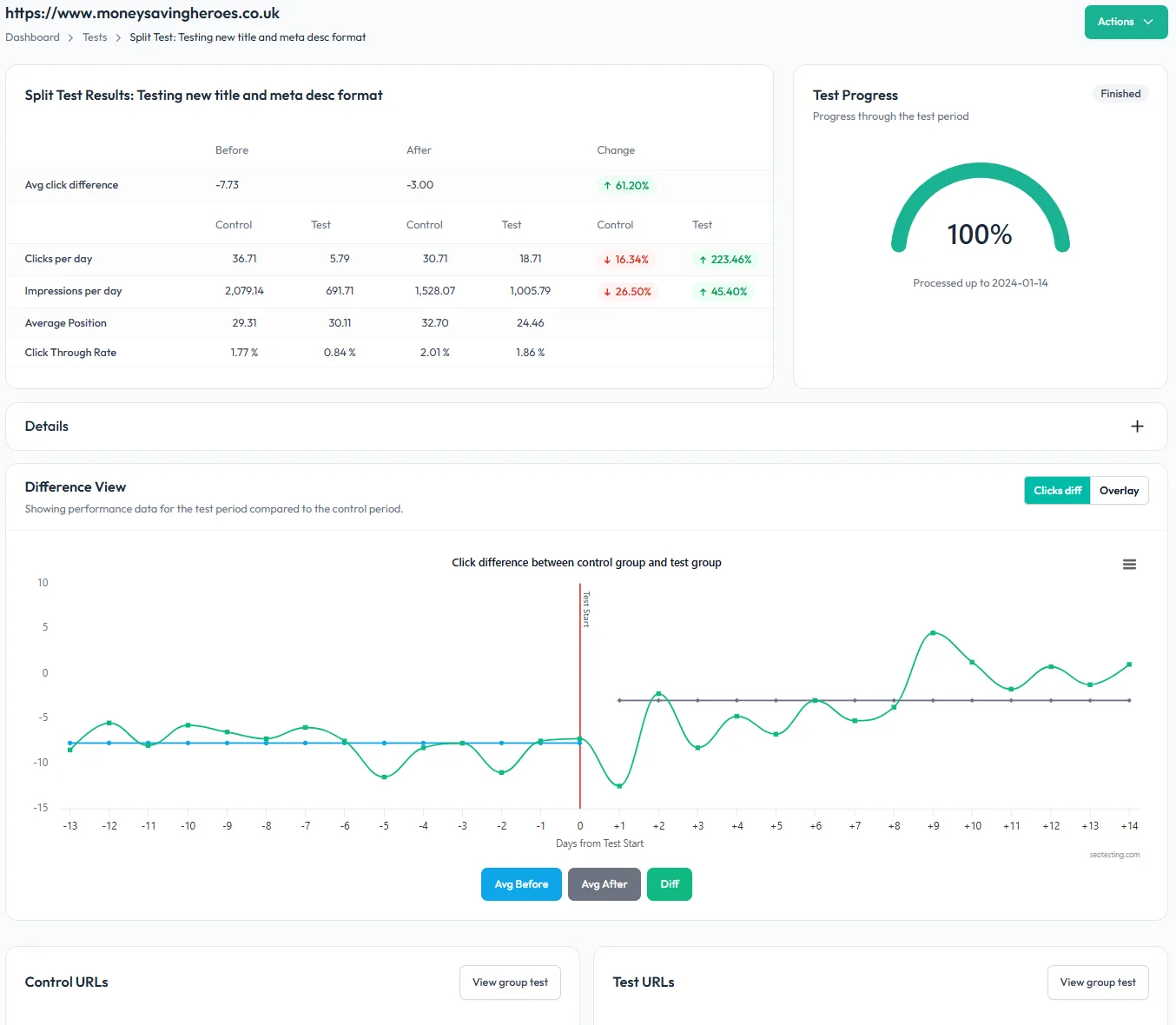
AI algorithms continuously monitor key metrics including organic impressions, click-through rates, average position, and conversion rates. The system applies statistical tests to determine whether observed differences are significant or merely the result of random variation. Most platforms require a minimum of 95% statistical confidence before declaring a winner.
Step 5: Implementation and Scaling
Once a test reaches statistical significance, the winning variation is automatically implemented across the test pages. The AI system then identifies other pages on your site that share similar characteristics and suggests scaling the successful change to those pages as well.
Key Metrics to Track in AI SEO Split Testing
Measuring the success of your split tests requires attention to multiple performance indicators. While organic rankings are important, they represent only one dimension of SEO success. A comprehensive testing strategy considers the following metrics:
- Organic Click-Through Rate (CTR): The percentage of users who click on your listing after seeing it in search results. This metric directly reflects the appeal of your title tags and meta descriptions.
- Average Position: Your page’s average ranking for target keywords. Changes in position indicate how search engines evaluate your page’s relevance and authority.
- Organic Impressions: The number of times your listing appears in search results. This metric helps you understand visibility changes.
- Dwell Time: How long users spend on your page after clicking through. This signals content quality and relevance to search engines.
- Conversion Rate: The percentage of organic visitors who complete a desired action, such as making a purchase or filling out a form.
- Bounce Rate: The percentage of visitors who leave your page without interacting further. High bounce rates can indicate poor content alignment with search intent.
- Patience is essential: Meaningful results take time. Resist the urge to check results daily and make impulsive decisions based on incomplete data.
- Focus on user intent: While rankings matter, the ultimate goal is satisfying user needs. Prioritize tests that improve user experience and content quality, not just those that chase algorithmic signals.
- Combine quantitative and qualitative data: Pair your split testing results with user feedback, heatmaps, and session recordings to understand the why behind the numbers.
- Stay informed about algorithm updates: Major Google updates can invalidate test results. Monitor industry news and pause tests during significant algorithm changes.
- Build a culture of experimentation: Successful split testing requires organizational buy-in and a willingness to accept that some hypotheses will fail. Celebrate learning, not just winning tests.
What Elements Can You Test with AI SEO Split Testing?
The scope of AI SEO split testing extends across virtually every on-page element that influences search performance. Understanding what you can test helps you prioritize your experimentation efforts for maximum impact.
Title Tags and Meta Descriptions
Title tags remain one of the most influential on-page ranking factors. AI SEO split testing allows you to experiment with different title formats, keyword placements, and emotional triggers. You might test whether including a year in your title improves CTR, or whether a question-based title generates more clicks than a statement-based one.
Heading Structure and Content Layout
Search engines use heading tags to understand the hierarchical structure of your content. Testing different H1 and H2 configurations can reveal how Google interprets your page’s main topics and subtopics. You might experiment with including target keywords in H2 tags or restructuring your content to better match featured snippet opportunities.
Content Length and Depth
AI SEO split testing can help you determine the optimal content length for your target keywords. Some pages perform better with comprehensive, long-form content exceeding 2,000 words, while others benefit from concise, focused copy. Testing different content depths across similar pages provides data-driven guidance for your content strategy.
Internal Linking Patterns
The way you link between pages on your site influences how search engines distribute authority and understand topical relationships. You can test different anchor text variations, link placements, and the number of internal links pointing to a specific page.
Schema Markup and Structured Data
Adding structured data can enhance your search listings with rich snippets, star ratings, and other visual elements. AI SEO split testing allows you to measure the impact of different schema implementations on CTR and visibility.
Benefits of AI SEO Split Testing
The advantages of implementing a systematic split testing program extend far beyond simple ranking improvements. Organizations that embrace this methodology gain a significant competitive edge in the search landscape.
Eliminates Guesswork and Subjectivity
Traditional SEO often relies on best practices and industry heuristics that may not apply to your specific situation. AI SEO split testing replaces opinion with evidence, ensuring that every optimization decision is backed by data from your own website’s performance.
Reduces Risk of Algorithmic Penalties
Making sweeping changes to your website without testing can trigger negative signals that result in ranking drops. Split testing allows you to validate changes on a small scale before rolling them out site-wide, minimizing the potential for damage.
Accelerates Learning and Optimization Cycles
AI-powered platforms can run multiple tests simultaneously across different page groups, dramatically accelerating your optimization timeline. Instead of waiting weeks for a single test to complete, you can validate dozens of hypotheses in the same period.
Provides Competitive Intelligence
By systematically testing different approaches, you gain insights into what works for your specific niche and audience. This knowledge helps you outperform competitors who rely on generic best practices without validation.
Limitations and Challenges of AI SEO Split Testing
While the benefits are substantial, AI SEO split testing is not without its challenges. Understanding these limitations helps you set realistic expectations and design more effective experiments.
Statistical Significance Requirements
Obtaining statistically significant results requires sufficient traffic volume. Low-traffic pages may take months to produce reliable data, making split testing impractical for smaller websites. Most platforms recommend a minimum of 1,000 organic clicks per month per test group for reliable results.
External Variables and Confounding Factors
Search engine algorithms change frequently, and competitor actions can influence your rankings independent of your testing efforts. AI systems attempt to control for these variables, but perfect isolation is impossible in the dynamic search environment.
Implementation Complexity
Setting up AI SEO split testing requires technical expertise and often involves working with specialized platforms that integrate with your content management system. Organizations without dedicated SEO technical resources may struggle with implementation.
Cost Considerations
Enterprise-grade AI SEO split testing platforms can be expensive, with annual subscriptions ranging from $10,000 to over $50,000 depending on features and traffic volume. Smaller organizations may need to explore more affordable alternatives or manual testing approaches.
AI SEO Split Testing vs. Traditional SEO Auditing
Understanding the distinction between split testing and traditional auditing helps clarify when each approach is most appropriate. Both methodologies have their place in a comprehensive SEO strategy.
| Aspect | AI SEO Split Testing | Traditional SEO Auditing |
|---|---|---|
| Primary Focus | Validating specific changes through experimentation | Identifying issues and opportunities across the entire site |
| Methodology | Controlled experiments with statistical analysis | Comprehensive crawl and manual review |
| Timeframe | Ongoing, continuous testing cycles | Periodic, often quarterly or annually |
| Output | Data-driven recommendations for specific changes | Prioritized list of issues and optimization opportunities |
| Risk Level | Low risk due to controlled implementation | Variable risk depending on how recommendations are implemented |
| Best For | Validating hypotheses and fine-tuning existing pages | Discovering new opportunities and identifying technical problems |
Both approaches complement each other. Audits reveal potential areas for improvement, while split testing validates whether those improvements actually deliver results in your specific context.
Practical Guide: Implementing AI SEO Split Testing for Your Website
Implementing a successful AI SEO split testing program requires careful planning and execution. The following practical steps will help you get started regardless of your organization’s size or technical capabilities.
Step 1: Assess Your Traffic Volume and Page Inventory
Begin by analyzing your organic traffic data to identify pages with sufficient volume for meaningful testing. Pages receiving at least 500 to 1,000 organic clicks per month are ideal candidates. Group similar pages together based on characteristics like page type, content length, and target keyword intent.
Step 2: Choose the Right Testing Platform
Evaluate AI SEO split testing platforms based on your budget, technical requirements, and traffic volume. SearchPilot offers robust features for enterprise organizations, while smaller sites might consider Distilled ODN or custom-built solutions using Google Optimize combined with statistical analysis tools.
Step 3: Prioritize High-Impact Test Hypotheses
Focus your initial testing efforts on elements with the highest potential impact on your organic performance. Title tags and meta descriptions typically offer the quickest wins because they directly influence CTR. Content restructuring and internal linking changes may take longer to show results but can have more substantial long-term effects.
Step 4: Establish Clear Success Metrics
Define what success looks like for each test before implementation begins. Are you aiming for a 10% improvement in CTR? A 5% increase in average position? Setting specific, measurable targets helps you evaluate results objectively and decide when to implement changes.
Step 5: Document Everything
Maintain detailed records of every test you run, including the hypothesis, implementation details, duration, and results. This documentation becomes an invaluable knowledge base that informs future optimization decisions and helps you avoid repeating unsuccessful experiments.
Common Mistakes in AI SEO Split Testing and How to Avoid Them
Even experienced SEO professionals make errors when implementing split testing programs. Recognizing these common pitfalls helps you avoid wasting time and resources on flawed experiments.
Testing Too Many Variables Simultaneously
Changing multiple elements at once makes it impossible to determine which specific change caused any observed performance difference. Always isolate a single variable per test. If you want to test both title tags and content length, run two separate experiments.
Ending Tests Too Early
Impatience leads to premature conclusions. Many practitioners declare a winner as soon as one variation shows a slight advantage, even when the difference is not statistically significant. Trust the AI system’s statistical analysis and wait for the recommended confidence level before making decisions.
Ignoring Seasonal and External Factors
Search behavior fluctuates with seasons, holidays, and industry events. A test run during a major shopping season may produce results that do not apply during slower periods. Run tests for at least one full business cycle to account for these variations.
Applying Results Universally
What works for one page may not work for another, even if they appear similar. Different keywords, search intents, and audience segments respond differently to the same changes. Validate results on each page group before scaling changes site-wide.
Neglecting Mobile vs. Desktop Differences
Search results and user behavior differ significantly between mobile and desktop devices. Ensure your testing platform tracks these segments separately and analyze results accordingly. A title tag that performs well on desktop may underperform on mobile due to character display limitations.
Important Notes for Successful AI SEO Split Testing
Several considerations deserve special attention as you develop your split testing program. These notes reflect lessons learned from years of practical experience in the field.
Frequently Asked Questions About AI SEO Split Testing
How long does an AI SEO split test take to produce reliable results?
The duration depends on your traffic volume and the magnitude of the performance difference between variations. High-traffic pages may produce statistically significant results in two to four weeks, while lower-traffic pages can require eight to twelve weeks or longer. The AI platform calculates the required sample size based on your historical traffic data and the minimum effect size you want to detect.
Can AI SEO split testing work for new websites with low traffic?
Split testing requires sufficient data to draw valid conclusions, making it challenging for new or low-traffic websites. If your site receives fewer than 1,000 organic clicks per month, consider focusing on content creation and basic on-page optimization first. As your traffic grows, you can gradually introduce split testing to validate your optimization strategies.
What is the difference between AI SEO split testing and multivariate testing?
Split testing compares two complete versions of a page element, while multivariate testing examines multiple combinations of several elements simultaneously. Multivariate testing requires significantly more traffic to produce reliable results because it must evaluate many possible combinations. For most SEO applications, simple split testing is more practical and easier to interpret.
Does Google penalize websites that use AI SEO split testing?
Google does not penalize split testing when implemented correctly. The key is ensuring that you do not show search engine crawlers content that differs from what users see in a deceptive manner. Reputable AI SEO split testing platforms use techniques like cloaking detection avoidance and proper canonical tags to ensure compliance with Google’s guidelines.
How much does AI SEO split testing software cost?
Pricing varies widely based on features and traffic volume. Entry-level solutions may cost around $500 per month, while enterprise platforms with advanced AI capabilities and dedicated support can exceed $5,000 per month. Some platforms offer tiered pricing based on the number of tests you run or the volume of organic traffic you manage.
Can AI SEO split testing improve featured snippet rankings?
Yes, split testing can help you optimize for featured snippet opportunities. You can test different content structures, question-based headings, and answer formats to determine which variations are more likely to be selected for position zero. The AI system helps you identify which pages have the highest potential for featured snippet acquisition based on current SERP analysis.
Conclusion: Making AI SEO Split Testing a Core Part of Your Strategy
AI SEO split testing represents the maturation of search engine optimization from an art form to a data-driven science. Organizations that embrace this methodology gain a significant competitive advantage by making decisions based on evidence rather than assumption. The ability to validate changes before implementation reduces risk, accelerates learning, and ultimately leads to more sustainable organic growth.
The future of SEO belongs to those who can adapt quickly to algorithmic changes and evolving user behaviors. AI SEO split testing provides the framework for continuous improvement, allowing you to systematically discover what works for your specific audience and market context. While the initial investment in time and resources may seem substantial, the long-term returns in terms of improved rankings, increased traffic, and higher conversion rates far outweigh the costs.
Start small by identifying your highest-traffic pages and testing one element at a time. Build your experimentation muscle gradually, document your findings, and scale successful changes across your site. With consistent effort and the power of AI-driven analysis, you will transform your SEO program into a precision optimization engine that delivers measurable, repeatable results.
Xem thêm:
- AI SEO Ranking Predictions: The Complete Guide to Future-Proofing Your Search Strategy
- AI SEO People Also Ask Generator: The Complete Guide to Unlocking PAA Insights
- AI SEO Keyword Intent: The Complete Guide to Search Intent Optimization in 2025
- AI SEO Standard Operating Procedures: The Definitive Playbook for 2025
- AI SEO Content Consistency: The Complete Guide to Scaling Quality Without Losing Your Voice
Bài viết cùng chủ đề:

AI SEO SEO Automation with Make: The Complete Workflow Guide

AI SEO SEO Automation with Zapier: The Complete Workflow Guide

AI SEO SEO Automation with n8n: The Complete Workflow Guide
AI SEO SEO Automation with Gemini: The Complete Guide to Scaling Organic Growth

AI SEO SEO Automation with Claude: The Complete Guide to Scaling Content in 2025

AI SEO SEO Automation with ChatGPT: The Complete Playbook for 2025

AI SEO & SEO Automation for Affiliate Sites: The 2025 Playbook for Passive Income Growth
AI SEO & SEO Automation for Bloggers: The Complete Guide to Scaling Your Content

AI SEO & SEO Automation for Agencies: The Complete 2025 Playbook

AI SEO and SEO Automation for Ecommerce: The Complete Playbook for 2025

AI SEO & SEO Automation for WordPress: The Complete Playbook for 2025
AI SEO SEO Automation Strategy: The Complete Playbook for 2025

Mastering the AI SEO SEO Automation Process: A Complete Guide to Scaling Organic Growth
AI SEO SEO Automation System: The Complete Guide to Scaling Organic Growth in 2025
AI SEO SEO Automation Platform: The Complete Guide to Scaling Organic Growth in 2025
AI SEO SEO Automation Software: The Complete Guide to Scaling Organic Growth in 2025















