
No products in the cart.
AI SEO Knowledge Graph SEO: The Complete Guide to Dominating Search in 2025
10
Aug
Aug
The digital marketing landscape is shifting at an unprecedented pace. Traditional keyword stuffing and backlink schemes are no longer sufficient to secure top rankings. The new frontier is AI SEO Knowledge Graph SEO, a sophisticated approach that leverages artificial intelligence to optimize your content for both search engine algorithms and the structured data systems that power modern search results. This guide provides a comprehensive, in-depth look at how these technologies converge, why they matter, and how you can implement a winning strategy today.
Understanding the Core Concepts: What is AI SEO and the Knowledge Graph?
To master AI SEO Knowledge Graph SEO, you must first understand the two pillars that support it. These are not separate disciplines but rather two sides of the same coin, working together to deliver the most relevant answers to users.
Defining AI SEO
AI SEO refers to the use of artificial intelligence and machine learning algorithms to improve a website’s visibility in search engine results pages (SERPs). It moves beyond simple automation. AI can analyze massive datasets to identify patterns, predict user behavior, and generate content that aligns with the searcher’s intent. Tools powered by AI can now perform semantic analysis, optimize for voice search, and even predict the future performance of content based on historical data. The goal is to create a user experience that is so aligned with the algorithm’s understanding of quality that rankings improve organically.
Defining the Knowledge Graph
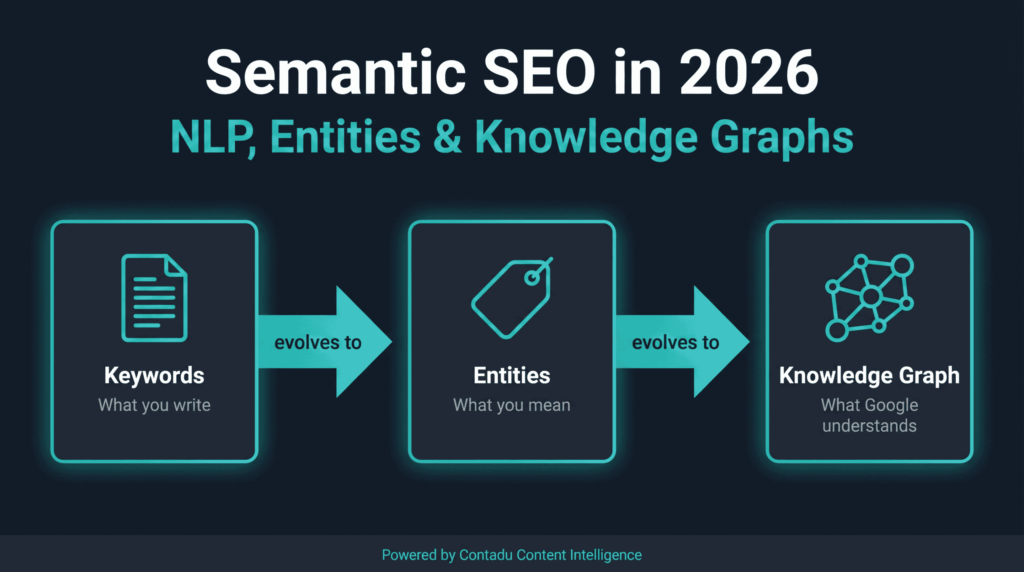
The Knowledge Graph is Google’s massive database of entities and the relationships between them. It is not a search index of web pages; rather, it is a database of facts about people, places, things, and concepts. When you search for “Leonardo da Vinci,” the Knowledge Panel on the right side of the results page is populated with data from this graph. It understands that Leonardo was a painter, an inventor, and a scientist, and it links him to the Mona Lisa, the Renaissance, and Italy. This allows Google to move from matching keywords to understanding the meaning and context of a query.
The Synergy: How AI and the Knowledge Graph Work Together
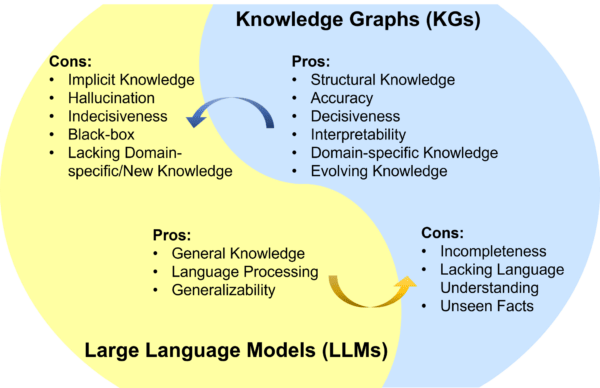
The relationship between AI and the Knowledge Graph is symbiotic. AI algorithms are used to build, maintain, and expand the Knowledge Graph. They extract entities and relationships from billions of web pages, articles, and structured data feeds. Conversely, the Knowledge Graph provides the semantic context that AI algorithms use to rank content. When you optimize for AI SEO Knowledge Graph SEO, you are essentially teaching these AI algorithms how to categorize your content within their vast web of knowledge.
This synergy means that search engines are no longer just looking for pages that contain the right words. They are looking for pages that demonstrate authority on a subject by covering the entities and concepts related to that subject. A page about “apple” that discusses fruit, nutrition, and recipes will be categorized differently than a page about “Apple” that discusses the tech company, its products, and its history. AI determines this distinction based on the co-occurrence of related entities.
Why AI SEO Knowledge Graph SEO is Critical for Modern Rankings
Ignoring this convergence is a critical mistake. The days of optimizing for a single keyword are over. The modern search engine is an answer engine, and it relies on the Knowledge Graph to provide those answers.
Enhanced Search Intent Matching
AI algorithms are incredibly adept at deciphering user intent. They can distinguish between a user who wants to buy a product, a user who wants to learn a concept, and a user who is looking for a specific website. By optimizing your content to align with the entities and relationships in the Knowledge Graph, you are helping the AI understand exactly what your page is about and who it is for. This leads to higher click-through rates and lower bounce rates, both of which are positive ranking signals.
Improved Entity Association
When you create content that thoroughly covers a topic, you naturally mention related entities. For example, an article about “digital marketing” might mention “SEO,” “content marketing,” “social media,” and “Google Analytics.” By ensuring these entities are clearly defined and connected in your content, you are helping the AI build a stronger profile of your page’s relevance. This increases your chances of appearing in the “People also ask” boxes and the Knowledge Panel itself.
Voice Search and Conversational Queries
Voice search queries are typically longer and more conversational than text-based searches. Users ask questions like, “What is the best way to optimize for AI SEO Knowledge Graph SEO?” To answer these queries, the search engine must understand the semantic meaning behind the words. A strategy focused on entities and relationships is perfectly positioned to capture this traffic, as it focuses on answering questions comprehensively rather than just targeting keywords.
Key Components of an AI SEO Knowledge Graph SEO Strategy
Implementing this strategy requires a shift in mindset and a new set of tactics. It is about building a digital footprint that is both human-friendly and machine-readable. Below are the core components you need to focus on.
1. Structured Data and Schema Markup
Schema markup is the language of the Knowledge Graph. It is a code that you place on your website to tell search engines exactly what your content means. Using the schema.org vocabulary, you can define entities like “Article,” “Person,” “Product,” “Organization,” and “Event.” This removes any guesswork for the AI. For example, if you have a recipe page, you can use the “Recipe” schema to provide the cooking time, ingredients, and calorie count in a structured format. This makes it much easier for the AI to feature your content in a rich snippet.
2. Topical Authority and Entity Coverage
Search engines reward websites that demonstrate comprehensive knowledge on a topic. This is known as topical authority. To build this, you need to create content that covers all the major entities and subtopics within your niche. If you are writing about “AI SEO,” you should also create content about “machine learning,” “natural language processing,” “semantic search,” and “data modeling.” This creates a web of interconnected content that signals to the AI that you are a leading resource on the subject.
3. Semantic HTML and Content Structure
The structure of your HTML code plays a vital role in how AI interprets your content. Using proper heading tags (H1, H2, H3) creates a logical hierarchy. Using bullet points and numbered lists makes your content easier to parse. The AI looks for these signals to understand the main points of your article and how they relate to each other. A well-structured article is more likely to be featured in a “position zero” featured snippet.
Practical Implementation: A Step-by-Step Guide
Now that you understand the theory, it is time to put it into practice. This is a detailed guide on how to execute an AI SEO Knowledge Graph SEO strategy for your website.
Step 1: Conduct an Entity-Based Keyword Audit
Start by identifying the core entities relevant to your business. Use AI-powered SEO tools to analyze the SERPs for your primary keywords. Look at the “People also ask” section, the related searches, and the Knowledge Panel. This will give you a list of related entities and concepts that you need to cover. For example, if your primary keyword is “AI SEO Knowledge Graph SEO,” your entity list might include: “Google Knowledge Graph,” “Schema.org,” “Semantic Search,” “Machine Learning,” “Entity Extraction,” and “Natural Language Processing.”
Step 2: Map Out a Topic Cluster Strategy
Organize your content into topic clusters. You will have one “pillar” page that covers the main topic in depth, and then multiple “cluster” pages that cover specific subtopics in detail. All of these pages should be interlinked. The pillar page for “AI SEO Knowledge Graph SEO” could link to cluster pages about “How to Implement Schema Markup,” “The Role of NLP in Search,” and “Building Topical Authority.” This internal linking structure helps the AI understand the relationship between all your pages.
Step 3: Implement Schema Markup
This is a technical task, but it is essential. Use the schema.org vocabulary to mark up your content. At a minimum, you should implement the following types of schema:
- Organization: This tells the search engine who you are.
- WebSite: This provides information about your site as a whole.
- Article: This marks up your blog posts and news articles.
- BreadcrumbList: This helps the AI understand your site’s hierarchy.
- FAQPage: This can help you win rich results for frequently asked questions.
- Higher Click-Through Rates: Rich snippets and Knowledge Panels are visually prominent and attract more clicks than standard blue links.
- Increased Brand Authority: Being featured in the Knowledge Graph positions your brand as a trusted source of information.
- Future-Proofing: As AI becomes more sophisticated, this approach will only become more important. You are building a foundation for the future of search.
- Better User Experience: Content optimized for entities is typically more organized, comprehensive, and useful for the reader.
- Technical Complexity: Implementing schema markup and understanding entity-based SEO requires a certain level of technical skill.
- Time-Consuming: Building topical authority takes time. It is not a quick fix. You need to consistently produce high-quality, in-depth content.
- Lack of Direct Control: You cannot directly edit the Knowledge Graph. You can only influence it by providing clear signals through your content and structured data.
- Constant Evolution: The algorithms are constantly changing. What works today may not work tomorrow, requiring continuous learning and adaptation.
Use Google’s Rich Results Test to validate your markup and ensure it is implemented correctly.
Step 4: Optimize for Semantic Search
Write content that is comprehensive and covers the topic from every angle. Use synonyms and related terms naturally. Do not just repeat the same keyword over and over. The AI is looking for semantic richness. For example, instead of just saying “AI SEO,” you might also say “artificial intelligence in search,” “machine learning algorithms,” and “algorithmic optimization.” This helps the AI understand the context of your content.
Step 5: Build Your Digital Footprint
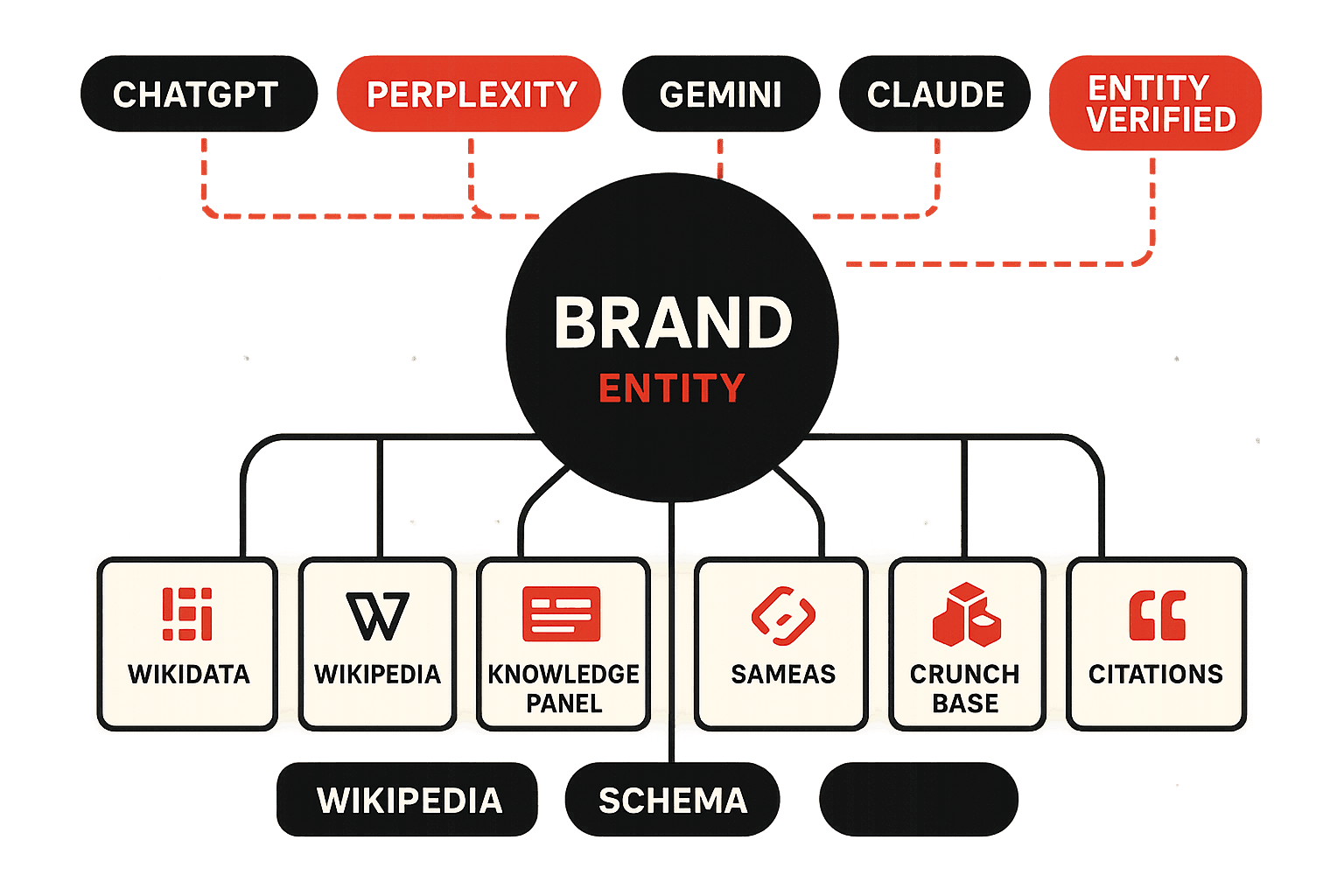
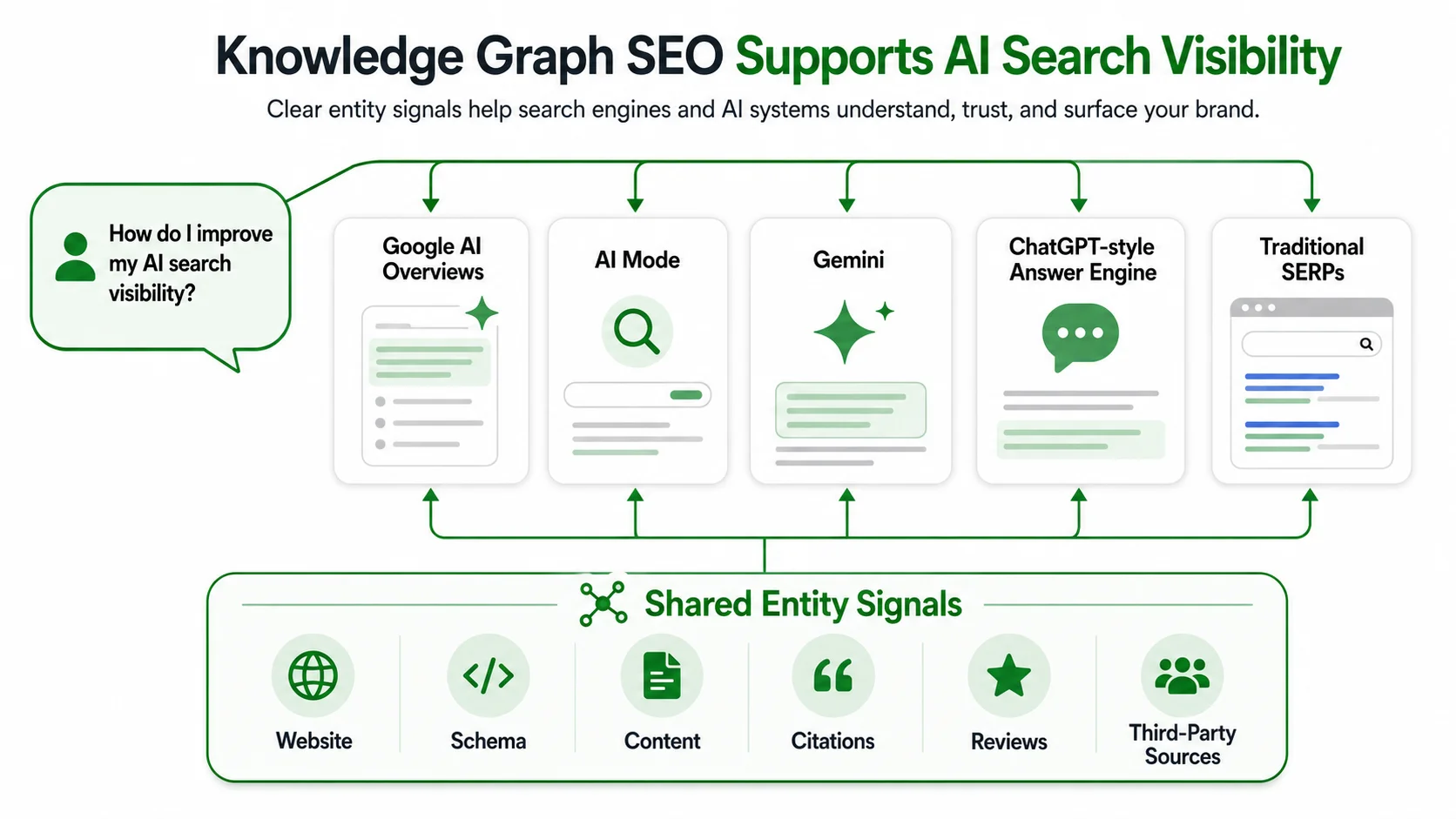
Your website is not the only place you can build entities. Create profiles on reputable platforms like LinkedIn, Crunchbase, and industry-specific directories. Ensure your business information is consistent across all these platforms. This helps the AI connect the dots and build a stronger, more authoritative profile for your brand. This is a crucial part of off-page AI SEO Knowledge Graph SEO.
Benefits and Limitations of This Approach
Like any strategy, this approach has its advantages and its challenges. Understanding both is key to setting realistic expectations.
The Benefits
The Limitations
Comparison: Traditional SEO vs. AI SEO Knowledge Graph SEO
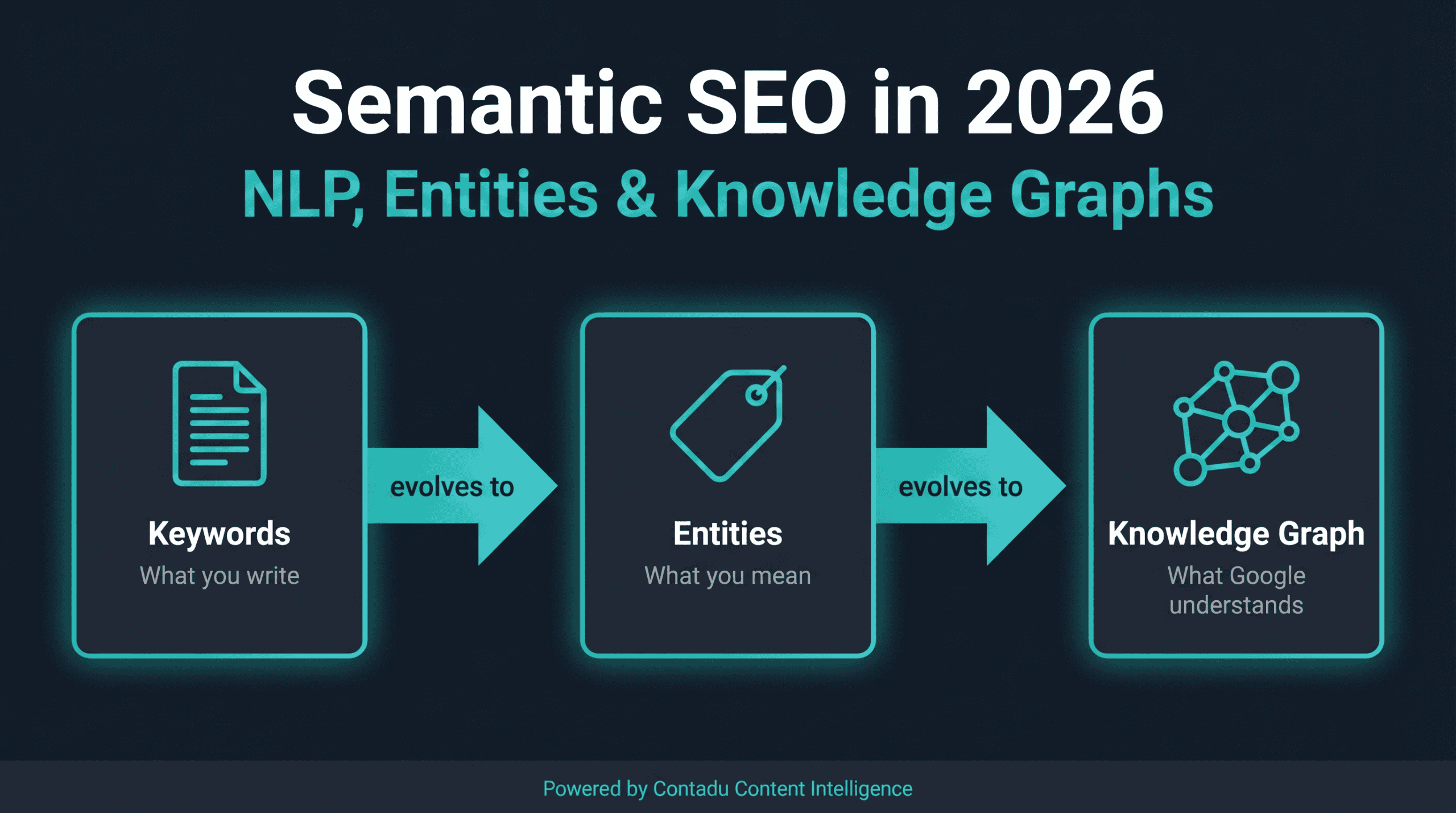
To fully appreciate the power of this new approach, it is helpful to compare it directly with traditional methods.
| Feature | Traditional SEO | AI SEO Knowledge Graph SEO |
|---|---|---|
| Primary Focus | Keywords and backlinks | Entities and relationships |
| Content Strategy | Targeting specific keyword phrases | Covering topics comprehensively |
| Data Interpretation | Relies on analytics and rankings | Uses AI to predict and understand intent |
| Technical SEO | Focus on site speed and meta tags | Focus on structured data and semantic HTML |
| Goal | Rank for a specific keyword | Become the authoritative source on a topic |
| User Intent | Inferred from keyword modifiers | Understood through semantic context |
Common Mistakes and How to Avoid Them
Many marketers make critical errors when trying to implement this strategy. Being aware of these pitfalls can save you time and resources.
Mistake 1: Keyword Stuffing in a Semantic World
Continuing to stuff your content with the exact keyword is a surefire way to fail. The AI is smart enough to recognize this as a manipulative tactic. Instead, focus on writing naturally and covering the topic in depth. Use variations and related terms to build semantic context.
Mistake 2: Ignoring Structured Data
Some website owners believe that schema markup is too technical or unnecessary. This is a huge mistake. Structured data is the most direct way to communicate with the Knowledge Graph. Without it, you are forcing the AI to guess what your content is about, which is a recipe for poor rankings.
Mistake 3: Creating Thin Content
Publishing short, superficial articles that only scratch the surface of a topic will not build topical authority. The AI is looking for comprehensive, in-depth content that provides real value to the user. You need to be the best answer on the internet for your chosen topic.
Mistake 4: Neglecting Internal Linking
Your content should be a web of interconnected pages. If you do not link your cluster pages to your pillar page and vice versa, you are missing out on a major opportunity to help the AI understand the structure of your knowledge. A strong internal linking strategy is essential for distributing authority.
Important Notes for Long-Term Success
This is not a one-time project; it is an ongoing process. To maintain and grow your visibility, you need to adopt a long-term mindset. The search landscape is dynamic, and your strategy must evolve with it.
Regularly audit your existing content to ensure it is still accurate and up-to-date. The Knowledge Graph is constantly being updated with new information. If your content becomes outdated, the A Also, pay close attention to your performance data. Use tools like Google Search Console to see which queries are driving impressions and clicks. This data can reveal new entity opportunities you have not yet explored.
Collaboration between your content writers, technical SEO specialists, and data analysts is crucial. A successful AI SEO Knowledge Graph SEO strategy requires a unified effort. The content team must understand the importance of entities, the technical team must implement the structured data correctly, and the data team must analyze the results to inform future strategies.
Frequently Asked Questions (FAQ)
What is the difference between SEO and Knowledge Graph SEO?
Traditional SEO focuses on optimizing web pages to rank for specific keywords. Knowledge Graph SEO is a more advanced strategy that focuses on optimizing your digital footprint so that search engines can identify your brand, people, and content as distinct entities and understand the relationships between them. It is about being recognized as an authority on a topic, not just a page with the right words.
How does AI impact the Knowledge Graph?
AI is the engine that builds and maintains the Knowledge Graph. Machine learning algorithms are used to extract entities and relationships from unstructured data like web pages and articles. AI also uses the Knowledge Graph to better understand user queries and deliver more relevant, contextual results. In essence, AI is the brain, and the Knowledge Graph is the memory.
What is the best way to start with AI SEO Knowledge Graph SEO?
The best starting point is to conduct an entity-based audit of your niche. Identify the key entities and concepts that are relevant to your business. Then, map out a content strategy that covers these entities comprehensively. Simultaneously, begin implementing schema markup on your most important pages to help search engines understand your content. Start small, learn, and scale your efforts over time.
Is schema markup essential for this strategy?
Yes, schema markup is a critical component. It is the most explicit way to communicate with the search engine’s AI. While the AI can infer meaning from your content, schema markup removes all ambiguity. It is the standard language for describing entities on the web and is a prerequisite for appearing in rich results and the Knowledge Panel.
How long does it take to see results from this approach?
This is a long-term strategy. Unlike traditional SEO, which might show results in a few weeks, building entity authority takes time. You need to consistently produce high-quality content and build a strong digital footprint. It is not uncommon to see significant improvements in rankings and visibility over a period of 6 to 12 months. Patience and consistency are key.
Conclusion
The convergence of artificial intelligence and the Knowledge Graph represents a fundamental shift in how search engines operate. The era of simple keyword matching is over. To succeed in this new landscape, you must adopt a holistic strategy that focuses on entities, relationships, and semantic meaning. AI SEO Knowledge Graph SEO is not just a trend; it is the new standard for digital visibility.
By implementing structured data, building topical authority, and optimizing for user intent, you can position your brand as a leading voice in your industry. This approach requires effort, technical skill, and a commitment to creating exceptional content. However, the rewards are substantial: higher rankings, increased brand trust, and a sustainable competitive advantage in the age of intelligent search. The future of search is here, and it is powered by the intelligent connection of knowledge.
Xem thêm:
- WP Trove AI Content: The Complete Guide to Automated WordPress Publishing
- AI SEO Agents: The Future of Automated Search Optimization
- AI SEO Website Architecture: The Complete Blueprint for 2025
- AI SEO Hyperlocal SEO: The Complete Guide to Dominating Local Search in 2025
- AI SEO for Publishers: The Complete Playbook for Sustainable Traffic Growth
Bài viết cùng chủ đề:

AI SEO SEO Automation with Make: The Complete Workflow Guide

AI SEO SEO Automation with Zapier: The Complete Workflow Guide

AI SEO SEO Automation with n8n: The Complete Workflow Guide
AI SEO SEO Automation with Gemini: The Complete Guide to Scaling Organic Growth

AI SEO SEO Automation with Claude: The Complete Guide to Scaling Content in 2025

AI SEO SEO Automation with ChatGPT: The Complete Playbook for 2025

AI SEO & SEO Automation for Affiliate Sites: The 2025 Playbook for Passive Income Growth
AI SEO & SEO Automation for Bloggers: The Complete Guide to Scaling Your Content

AI SEO & SEO Automation for Agencies: The Complete 2025 Playbook

AI SEO and SEO Automation for Ecommerce: The Complete Playbook for 2025

AI SEO & SEO Automation for WordPress: The Complete Playbook for 2025
AI SEO SEO Automation Strategy: The Complete Playbook for 2025

Mastering the AI SEO SEO Automation Process: A Complete Guide to Scaling Organic Growth
AI SEO SEO Automation System: The Complete Guide to Scaling Organic Growth in 2025
AI SEO SEO Automation Platform: The Complete Guide to Scaling Organic Growth in 2025
AI SEO SEO Automation Software: The Complete Guide to Scaling Organic Growth in 2025















