
No products in the cart.
AI SEO Heading Generator: The Complete Guide to Higher Rankings in 2025
10
Aug
Aug
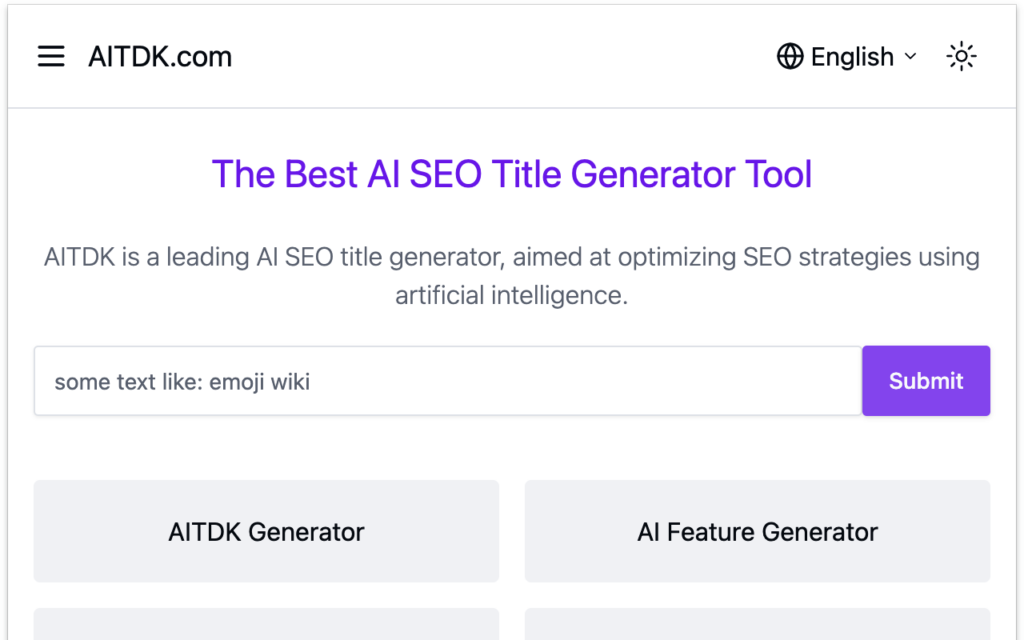
An AI SEO Heading Generator is a specialized tool that uses artificial intelligence and natural language processing to create optimized title tags, H1s, H2s, and H3s for web content. These tools analyze search engine algorithms, competitor data, and user intent to produce headings that improve organic visibility. For digital marketers and content creators, mastering this technology has become essential for scaling content production without sacrificing quality or search performance.
What Is an AI SEO Heading Generator and How Does It Work?
An AI SEO Heading Generator is a software application that leverages machine learning models, typically based on large language models like GPT-4 or custom-trained transformer architectures, to generate heading structures for articles, blog posts, and landing pages. The core function is to produce headings that are both human-readable and algorithmically optimized for search engines like Google, Bing, and Yahoo.
The underlying technology works by processing massive datasets of top-ranking pages, analyzing patterns in keyword placement, semantic relevance, and content hierarchy. When you input a primary keyword or topic, the AI evaluates search intent, related queries, and competitive landscape to generate a logical heading structure that mirrors what successful pages in that niche use.
The Technical Process Behind AI Heading Generation
Modern AI heading generators follow a multi-step process. First, the tool performs keyword analysis to identify primary and secondary terms. Second, it scans the search engine results page (SERP) for the target keyword to understand what type of content currently ranks. Third, the AI model generates a content outline with H1, H2, and H3 tags that incorporate the keyword naturally while covering subtopics that satisfy user intent.
Most advanced tools also integrate with Google Search Console and Google Analytics to pull real-time performance data. This allows the AI to suggest headings based on what has historically driven traffic for your specific domain, not just generic best practices.
Why You Need an AI SEO Heading Generator for Content Strategy
The days of manually brainstorming headings for every blog post are fading. With content teams producing dozens of articles per month, the time cost of crafting optimized headings manually is substantial. An AI SEO Heading Generator reduces this time from hours to minutes while often outperforming human-generated headings in terms of click-through rate (CTR) and keyword coverage.
Search engines have evolved to prioritize semantic search and user experience. This means headings must do more than contain keywords; they must accurately reflect the content that follows, answer questions, and create a logical flow. AI tools excel at this because they can process thousands of data points simultaneously, something no human can replicate at scale.
Key Benefits of Using AI for Heading Optimization
- Speed and Scalability: Generate complete heading structures for 10, 20, or 50 articles in minutes, not days.
- Data-Driven Decisions: AI tools base suggestions on real SERP analysis, not guesswork or outdated formulas.
- Consistency Across Content: Maintain a uniform heading style and keyword usage across all your published pieces.
- Improved CTR: AI-generated headings are designed to be compelling and click-worthy, increasing organic click-through rates.
- Semantic Coverage: The AI identifies related terms and LSI keywords that you might miss, ensuring comprehensive topic coverage.
- Competitor Analysis: Many tools automatically analyze top-ranking competitors and reverse-engineer their heading structures.
Core Features to Look for in an AI SEO Heading Generator
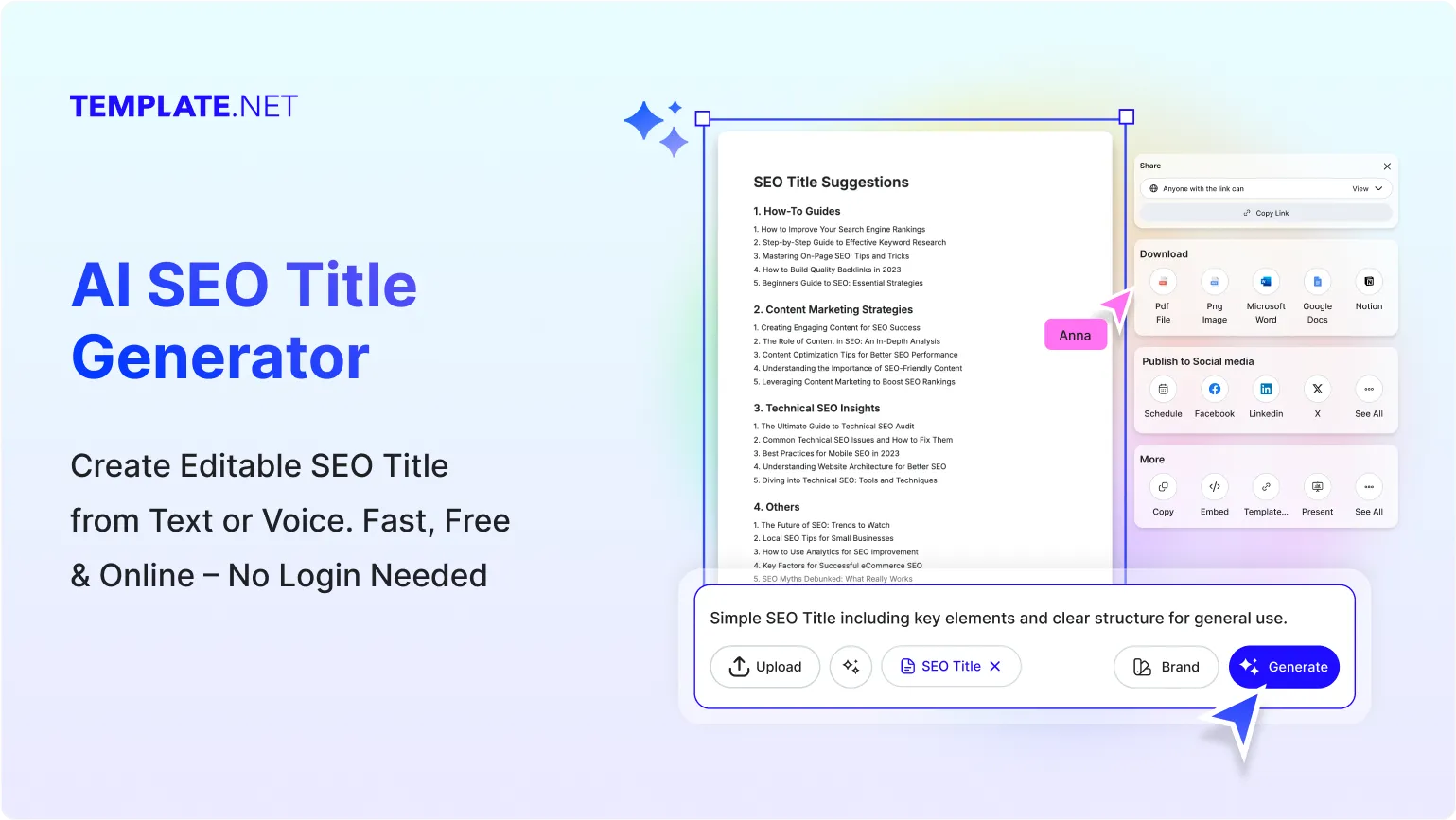
Not all AI heading generators are created equal. When evaluating tools, you need to consider specific features that directly impact your content performance. The best tools offer a combination of automation, customization, and integration capabilities.
Real-Time SERP Analysis
A premium AI SEO Heading Generator should pull live data from Google to show you what headings top-ranking pages are using for your target keyword. This feature helps you identify gaps in your content and understand the exact format that is currently winning in your niche. Tools like Surfer SEO and Frase excel in this area, providing detailed breakdowns of competitor heading structures.
Keyword Clustering and Semantic Mapping
Advanced generators group related keywords into clusters and suggest headings that cover each cluster comprehensively. This approach ensures that your article addresses all facets of the topic, which is critical for ranking for multiple related queries. For example, if your main keyword is “AI SEO Heading Generator,” the tool might suggest H2s for “benefits,” “features,” “pricing,” and “alternatives.”
Customization and Brand Voice Control
The best tools allow you to input your brand guidelines, tone of voice, and target audience. This ensures that the generated headings do not sound robotic or generic. Some tools even let you specify the desired reading level, from elementary to expert, which is crucial for matching your audience’s expectations.
Top AI SEO Heading Generator Tools Compared
The market offers several powerful options, each with unique strengths. Below is a comparison of the most popular tools based on features, pricing, and use cases.
| Tool | Key Features | Pricing Model | Best For |
|---|---|---|---|
| Surfer SEO | Real-time SERP analysis, content outline generation, integration with Google Docs | Subscription from $79/month | Enterprise teams and agencies needing deep data |
| Frase | AI content briefs, heading suggestions, competitor analysis, writing assistant | Subscription from $40/month | Content marketers and freelancers |
| Jasper (formerly Jarvis) | Generative AI for headings and full content, brand voice customization | Subscription from $49/month | Marketing teams creating high-volume content |
| Copy.ai | Quick heading generation, multiple templates, free tier available | Freemium, paid from $36/month | Startups and solo entrepreneurs |
| Clearscope | Content optimization, keyword recommendations, heading scoring | Subscription from $170/month | SEO agencies and content teams |
How to Use an AI SEO Heading Generator: Step-by-Step Guide

Implementing an AI SEO Heading Generator into your workflow requires a structured approach. Follow these steps to maximize the value of the tool and produce content that ranks.
Step 1: Define Your Primary Keyword and Search Intent
Before you open any tool, you need clarity on your target keyword and the intent behind it. Are users looking for information, a product review, or a tutorial? The A Input your primary keyword into the tool and specify the intent if the tool allows it.
Step 2: Generate the Initial Heading Outline
Run the AI generator to produce a first draft of your H1, H2, and H3 structure. Most tools will give you 5 to 15 heading suggestions. Do not accept these blindly. Review each heading for relevance, clarity, and keyword usage. Remove any that feel forced or off-topic.
Step 3: Cross-Reference with Competitor Content
Use the tool’s SERP analysis feature to compare your generated headings with those of the top 5 ranking pages. Look for subtopics that your competitors cover but your outline misses. Add those as H2s or H3s. Also, identify headings that are overused in your niche and find ways to differentiate your content.
Step 4: Optimize for Readability and Flow
AI-generated headings can sometimes be too long or contain awkward phrasing. Edit each heading to ensure it is under 60 characters for H1s and under 70 characters for H2s. Ensure that the headings follow a logical progression, guiding the reader from introduction to conclusion naturally.
Step 5: Integrate Keywords Naturally
Your primary keyword should appear in the H1 and at least one H2. Secondary keywords and LSI terms should be distributed across other headings. Avoid keyword stuffing; the AI tool should help you place keywords naturally, but you still need to review for over-optimization.
Step 6: Test and Iterate
After publishing, monitor your page’s performance in Google Search Console. Track impressions, clicks, and average position for your target keyword. If your CTR is low, generate new heading variations with the AI tool and A/B test them by updating the page.
Common Mistakes When Using an AI SEO Heading Generator
Even with powerful AI tools, many content creators fail to achieve desired results due to avoidable errors. Understanding these pitfalls will save you time and improve your ranking outcomes.
Blindly Trusting AI Output Without Human Review
AI is not infallible. The tool might generate headings that are grammatically correct but semantically off-target. Always review the output for accuracy, especially for topics that require specialized knowledge. A heading that promises information you do not deliver will increase your bounce rate and hurt your rankings.
Ignoring User Intent
If you target a keyword with commercial intent but generate informational headings, your content will fail to convert. The AI tool needs clear guidance on intent. Some tools allow you to select intent; if not, you must manually adjust the headings to match what the user expects to find.
Over-Optimizing with Exact Match Keywords
Using the exact same keyword phrase in every heading is a recipe for a Google penalty. The AI generator should vary the phrasing and use synonyms and related terms. If your tool produces repetitive headings, edit them manually to add variety.
Neglecting Heading Hierarchy
Some AI tools generate headings without proper hierarchy, placing H3s before H2s or skipping levels. Search engines use heading structure to understand content organization. Ensure your H1 is the title, H2s are main sections, and H3s are subsections under H2s.
Best Practices for AI-Generated Headings in 2025

To stay ahead of the competition, you need to apply best practices that go beyond basic tool usage. These strategies will help you extract maximum value from your AI SEO Heading Generator.
Combine AI with Human Creativity
The best results come from a hybrid approach. Use the AI to generate a baseline outline, then inject your unique insights, data, and experiences. This adds a layer of authenticity that pure AI output lacks, which is crucial for E-E-A-T (Experience, Expertise, Authoritativeness, Trustworthiness).
Use Headings to Answer Featured Snippet Queries
Google often pulls content from H2s and H3s for featured snippets. Structure your headings as direct questions or concise statements that can be easily extracted. For example, instead of “Benefits of AI Headings,” use “What Are the Benefits of AI Headings?” This increases your chances of winning position zero.
Monitor Heading Performance Metrics
Use tools like Google Search Console and Ahrefs to track which headings drive the most impressions and clicks. Over time, you will identify patterns in what works for your niche. Feed this data back into your AI tool if it supports custom training or preferences.
Important Notes on AI SEO Heading Generator Limitations
While AI heading generators are powerful, they are not a silver bullet. Understanding their limitations will help you set realistic expectations and avoid disappointment.
First, AI tools cannot fully understand your brand’s unique voice or the nuances of your industry without significant customization. Second, they rely on historical data, which means they may not predict future algorithm updates. Third, the quality of output depends heavily on the quality of your input keyword and the specificity of your instructions.
Additionally, AI-generated headings can sometimes be too generic, especially for highly competitive niches where every page uses similar structures. To stand out, you must add unique angles, proprietary data, or expert opinions that the AI cannot generate on its own.
Frequently Asked Questions About AI SEO Heading Generator
Can an AI SEO Heading Generator replace human SEO specialists?
No, AI tools are designed to augment human work, not replace it. They handle repetitive tasks like keyword analysis and outline generation, but strategic decisions, content quality, and brand voice still require human oversight. The best results come from a collaboration between AI efficiency and human expertise.
How much does a good AI SEO Heading Generator cost?
Pricing varies widely. Basic tools start around $20 per month, while premium tools with advanced SERP analysis and integration features can cost $150 or more per month. Many tools offer free trials or limited free tiers, allowing you to test before committing.
Will AI-generated headings guarantee a #1 ranking on Google?
No tool can guarantee rankings. Headings are just one of hundreds of ranking factors. While optimized headings improve your chances by enhancing relevance and user experience, you still need high-quality content, backlinks, technical SEO, and site speed to compete effectively.
Is it safe to use AI-generated headings for YMYL (Your Money Your Life) topics?
Yes, but with caution. For topics related to health, finance, or legal advice, you must ensure that the AI-generated headings are factually accurate and align with expert guidelines. Always have a subject matter expert review the headings and the content before publishing.
How often should I update my headings using an AI tool?
Search trends and competitor strategies change frequently. It is advisable to review your top-performing pages every 3 to 6 months. Use the AI tool to generate new heading variations and test them against your current ones to see if you can improve CTR.
Conclusion: Elevate Your SEO Game with AI Heading Generation
An AI SEO Heading Generator is no longer a luxury; it is a necessity for teams that want to compete in the crowded digital landscape. By automating the tedious process of heading creation, these tools free up your time to focus on producing high-quality, authoritative content that resonates with your audience.
The key to success lies in using AI as a starting point, not the final product. Combine the data-driven insights of AI with your unique human perspective, industry knowledge, and creative flair. This hybrid approach will produce headings that not only satisfy search engine algorithms but also genuinely help and engage your readers.
Start by selecting a tool that fits your budget and needs, experiment with different keywords, and measure the results. Over time, you will develop a workflow that consistently produces well-structured, high-ranking content. The future of SEO is intelligent, and AI heading generators are a critical part of that future.
Xem thêm:
- AI SEO AI APIs: The Complete Guide to Automating Search Optimization in 2025
- WP Trove SEO Workflow: The Complete Guide to Streamlining WordPress Search Optimization
- AI Writing Assistants: The Complete 2025 Guide to Smarter, Faster Content Creation
- AI SEO AI Visibility Audit: The Complete Guide to Dominating Search in 2025
- AI SEO Image Captions: The Complete Guide to Boosting Search Visibility in 2025
Bài viết cùng chủ đề:

AI SEO SEO Automation with Make: The Complete Workflow Guide

AI SEO SEO Automation with Zapier: The Complete Workflow Guide

AI SEO SEO Automation with n8n: The Complete Workflow Guide
AI SEO SEO Automation with Gemini: The Complete Guide to Scaling Organic Growth

AI SEO SEO Automation with Claude: The Complete Guide to Scaling Content in 2025

AI SEO SEO Automation with ChatGPT: The Complete Playbook for 2025

AI SEO & SEO Automation for Affiliate Sites: The 2025 Playbook for Passive Income Growth
AI SEO & SEO Automation for Bloggers: The Complete Guide to Scaling Your Content

AI SEO & SEO Automation for Agencies: The Complete 2025 Playbook

AI SEO and SEO Automation for Ecommerce: The Complete Playbook for 2025

AI SEO & SEO Automation for WordPress: The Complete Playbook for 2025
AI SEO SEO Automation Strategy: The Complete Playbook for 2025

Mastering the AI SEO SEO Automation Process: A Complete Guide to Scaling Organic Growth
AI SEO SEO Automation System: The Complete Guide to Scaling Organic Growth in 2025
AI SEO SEO Automation Platform: The Complete Guide to Scaling Organic Growth in 2025
AI SEO SEO Automation Software: The Complete Guide to Scaling Organic Growth in 2025















