
No products in the cart.
WP Trove SEO Workflow: The Complete Guide to Streamlining WordPress Search Optimization
31
Jul
Jul
Managing search engine optimization for a WordPress website often feels like juggling dozens of moving parts. From keyword research and on-page optimization to technical audits and content refreshes, the process can quickly become chaotic without a structured approach. The WP Trove SEO Workflow offers a systematic method to bring order to this complexity, helping site owners and marketers achieve consistent, measurable results. This guide breaks down every stage of the workflow, explains its core components, and provides actionable steps to implement it effectively on your own WordPress site.
What Is the WP Trove SEO Workflow?

The WP Trove SEO Workflow is a structured, repeatable process designed specifically for optimizing WordPress websites. It combines technical best practices, content strategy, and performance monitoring into a single cohesive system. Unlike generic SEO advice that applies to any platform, this workflow leverages WordPress-specific tools, plugins, and architecture to maximize search visibility.
At its core, the workflow addresses the unique challenges WordPress users face: plugin conflicts, database bloat, theme performance issues, and the constant need for content updates. By following a defined sequence of steps, you can ensure that every page on your site receives consistent optimization attention without missing critical details.
Why a Structured SEO Workflow Matters for WordPress
WordPress powers over 43% of all websites on the internet. This popularity makes it a prime target for both search engine crawlers and malicious attacks. Without a clear workflow, common issues emerge: duplicate content from category archives, slow loading times due to unoptimized images, and broken internal links that confuse both users and search bots.
A defined workflow eliminates guesswork. It creates accountability, ensures nothing falls through the cracks, and allows you to scale your SEO efforts as your site grows. Whether you manage a small blog or a large e-commerce store, having a documented process means you can train team members, track progress, and adapt to algorithm updates with confidence.
Core Components of the WP Trove SEO Workflow
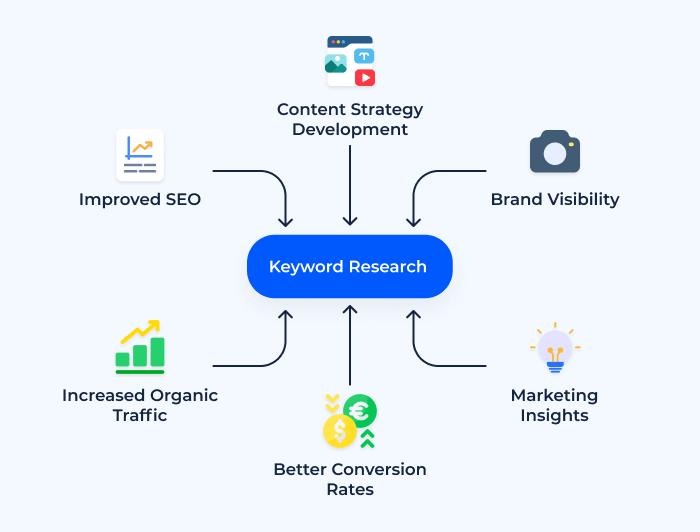
The workflow consists of five interconnected phases that form a continuous cycle. Each phase builds on the previous one, creating a self-improving system for long-term search success.
1. Technical Foundation Audit
Before creating content or building links, your site must be technically sound. This phase involves checking core web vitals, ensuring proper crawlability, and verifying that search engines can index your pages correctly. Key tasks include:
- Running a full site crawl to identify 404 errors, redirect chains, and broken links
- Checking XML sitemap generation and submission to Google Search Console
- Verifying robots.txt rules to prevent accidental blocking of important pages
- Testing page speed on both mobile and desktop using tools like PageSpeed Insights
- Ensuring SSL certificate is active and all pages load over HTTPS
- Writing unique, compelling title tags under 60 characters
- Crafting meta descriptions between 150-160 characters that include the target keyword
- Using a single H1 tag per page that matches the primary keyword
- Structuring content with logical H2 and H3 subheadings
- Optimizing images with descriptive alt text and compressed file sizes
- Internal linking to at least 3-5 related pages within your site
- Ensuring URL slugs are short, descriptive, and contain the keyword
- Pages with declining traffic and potential causes
- Keywords that moved up or down in rankings
- User behavior metrics like bounce rate and time on page
- Backlink profile changes and new referring domains
- Core web vitals scores and any performance regressions
- 404 errors that need redirects
- Pages with duplicate title tags or meta descriptions
- Slow-loading pages (over 3 seconds)
- Orphan pages with no internal links
- Mixed content warnings (HTTP resources on HTTPS pages)
- Target keyword
- Search intent (informational, transactional, navigational)
- Current ranking position (if any)
- Competitor URLs ranking on page one
- Assigned page or planned content
For WordPress specifically, this phase also involves auditing your theme and plugin stack. A bloated theme with excessive JavaScript can slow your site dramatically. Similarly, having too many SEO plugins running simultaneously can cause conflicts and duplicate meta tags. The goal is to establish a clean, fast, and secure foundation.
2. Keyword Research and Content Mapping
Once the technical foundation is solid, the next step is understanding what your target audience searches for. This goes beyond basic keyword volume data. The WP Trove SEO Workflow emphasizes search intent analysis, competitive gap identification, and content clustering.
Start by identifying your primary topic pillars. These are broad categories that define your niche. For each pillar, create a cluster of related subtopics that target long-tail keywords. This structure helps search engines understand your site’s authority on a subject and improves your chances of ranking for multiple related queries.
Use tools like Google Keyword Planner, Ahrefs, or SEMrush to gather data. Look for keywords with a reasonable search volume (at least 100 monthly searches) and low to medium difficulty. Pay close attention to the “People Also Ask” section in Google results to uncover additional questions your content should answer.
3. On-Page Optimization Framework
With your keyword map in place, you can now optimize individual pages. The WP Trove SEO Workflow applies a consistent on-page framework to every piece of content. This includes:
For WordPress, plugins like Yoast SEO or Rank Math can automate many of these checks. However, the workflow emphasizes manual review over blind trust in plugin scores. A green light from a plugin does not guarantee a well-optimized page if the content itself lacks depth or relevance.
4. Content Creation and Optimization
Content remains the most significant ranking factor. The workflow prioritizes creating comprehensive, original content that directly answers user queries. Each piece should target a specific keyword cluster and provide more value than the current top-ranking pages.
When writing new content, aim for at least 1,500 words for competitive topics. Include data, examples, and practical steps that readers can implement. Use tables, bullet points, and images to break up text and improve readability. Most importantly, ensure your content matches the search intent behind the keyword. If users want a list, provide a list. If they want a tutorial, provide step-by-step instructions.
For existing content, the workflow includes a regular refresh schedule. Review your top 20 performing pages every quarter. Update statistics, add new examples, improve internal links, and ensure all information remains accurate. This signals freshness to search engines and keeps your site competitive.
5. Monitoring, Measurement, and Iteration
The final phase is continuous improvement. Set up Google Analytics 4 and Google Search Console to track organic traffic, keyword rankings, click-through rates, and conversion metrics. The workflow recommends a monthly review process where you analyze:
Based on this data, you adjust your strategy. If a page ranks on page two, improve its content and internal links. If a keyword cluster shows growing demand, create additional supporting content. The workflow is never static; it evolves with your site’s performance and search engine algorithm changes.
Benefits of Implementing the WP Trove SEO Workflow
Adopting this structured approach offers several tangible advantages for WordPress site owners.
Consistency Across Your Entire Site
Without a workflow, optimization efforts tend to be sporadic. Some pages get detailed attention while others are neglected. The workflow ensures every page receives the same baseline level of optimization, reducing the risk of weak spots that drag down overall site performance.
Time Efficiency and Resource Management
By following a defined sequence, you avoid redundant work. You don’t optimize content before fixing technical issues that might prevent indexing. You don’t build links to pages that will be rewritten next month. This efficiency saves hours of work each week and allows you to focus on high-impact activities.
Improved Scalability
As your WordPress site grows, the workflow scales with it. You can train new team members on the process, delegate specific phases, and maintain quality control. The documented steps make it easy to onboard freelancers or agencies without losing your SEO strategy’s core principles.
Limitations and Challenges to Consider

No workflow is perfect, and the WP Trove SEO Workflow has its constraints. Understanding these helps you set realistic expectations and adapt the system to your specific situation.
Time Investment for Initial Setup
The first full audit and content mapping phase can take several weeks, especially for larger sites. If you have hundreds of pages, completing the technical audit and keyword research requires significant upfront effort. However, this investment pays off through improved efficiency in subsequent months.
Requires Ongoing Discipline
Maintaining the workflow demands consistent effort. Monthly reviews, quarterly content refreshes, and continuous monitoring are non-negotiable. If you skip these steps, the system breaks down and your site’s performance may stagnate or decline.
Not a Substitute for Quality Content
The workflow optimizes your process, but it cannot create great content for you. If your writing is thin, generic, or unhelpful, no amount of technical optimization will earn top rankings. The workflow amplifies quality; it does not replace it.
WP Trove SEO Workflow vs. Traditional SEO Approaches
Understanding how this workflow differs from conventional methods helps clarify its value proposition.
| Aspect | WP Trove SEO Workflow | Traditional SEO Approach |
|---|---|---|
| Platform Focus | WordPress-specific, addresses plugin and theme issues | Generic, applies to any CMS |
| Process Structure | Defined five-phase cycle with clear deliverables | Often ad-hoc, task-based without a sequence |
| Content Strategy | Topic clusters and keyword mapping before writing | Individual keyword targeting without broader context |
| Technical Audits | Integrated as a recurring phase, not a one-time fix | Often performed only when issues arise |
| Measurement | Monthly reviews with specific metrics and adjustments | Periodic reporting without a defined action loop |
The key differentiator is the cyclical nature of the workflow. Traditional approaches often treat SEO as a one-time project. The WP Trove SEO Workflow recognizes that search optimization is an ongoing process requiring continuous attention and adaptation.
Practical Implementation Guide: Step-by-Step
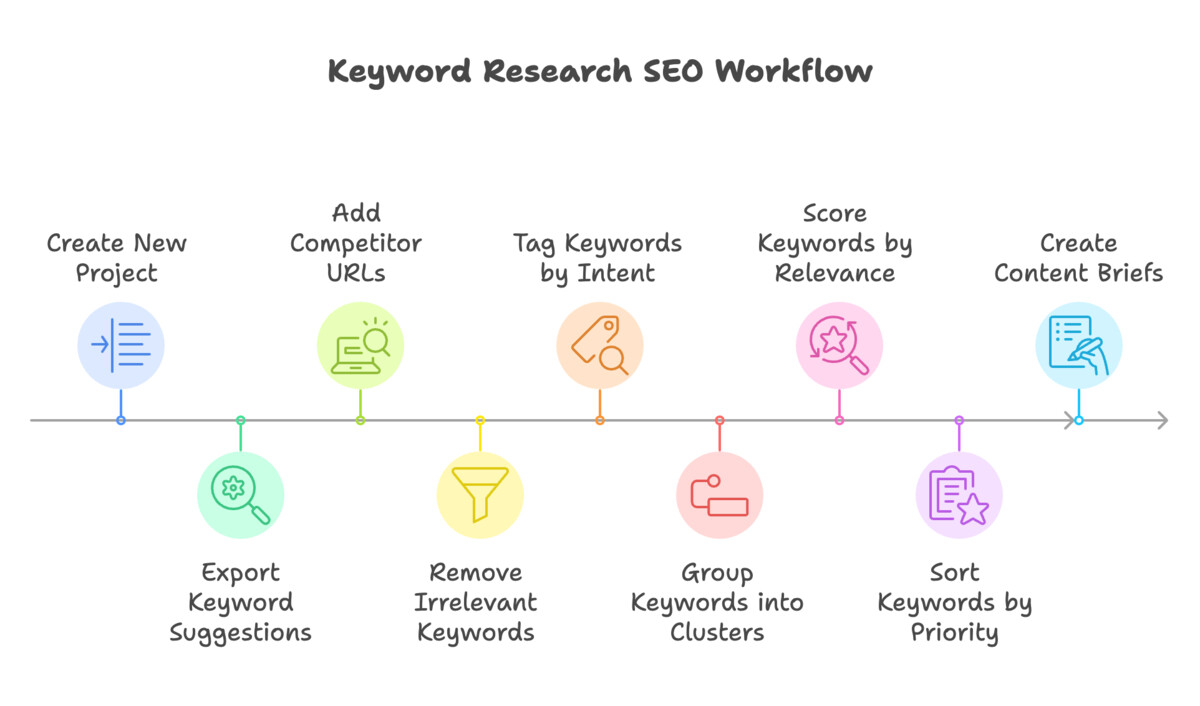
Implementing the workflow on your WordPress site involves concrete actions. Follow these steps to get started.
Step 1: Conduct Your Technical Audit
Install a crawl tool like Screaming Frog or use the free version of Sitebulb. Run a full crawl of your site and export the results. Look for:
Fix critical issues first. Set up 301 redirects for broken URLs, remove or consolidate duplicate content, and compress images using a plugin like Smush or ShortPixel. Verify your sitemap in Google Search Console and request indexing for your most important pages.
Step 2: Build Your Keyword Map
List your main products, services, or content categories. For each, brainstorm 10-15 related long-tail keywords. Use a tool like Ubersuggest or Google’s free keyword planner to validate search volume. Create a spreadsheet with columns for:
Prioritize keywords with commercial intent if you run an e-commerce site. For blogs, focus on informational keywords that attract top-of-funnel traffic.
Step 3: Optimize Existing Pages
Start with your homepage and top five money pages. Apply the on-page framework described earlier. Rewrite title tags and meta descriptions if they are weak. Improve internal linking by adding contextual links from other relevant pages. Ensure every image has descriptive alt text.
For blog posts, update the content itself. Add a table of contents for long articles, include a summary section, and refresh any outdated statistics. Check that your target keyword appears in the first 100 words naturally.
Step 4: Create New Content Based on Gaps
Review your keyword map for topics you haven’t covered. Prioritize gaps where competitors rank but you have no content. Write comprehensive articles that exceed the word count and depth of current top results. Include original data, screenshots, or case studies where possible.
After publishing, share the content on social media and reach out to relevant websites for backlinks. Use the workflow’s internal linking rules to connect new posts to existing pillar pages.
Step 5: Set Up Monthly Monitoring
Create a dashboard in Google Analytics that shows organic sessions, top landing pages, and conversion rates. Set up Google Search Console alerts for indexing issues and manual actions. Schedule a recurring monthly meeting to review this data and decide on next steps.
During the review, ask yourself: which pages lost traffic and why? Which keywords improved? What content gaps remain? Use these answers to plan the next month’s content and optimization tasks.
Common Mistakes and How to Avoid Them
Even with a solid workflow, mistakes happen. Being aware of these pitfalls helps you stay on track.
Ignoring Mobile Performance
Over 60% of organic search traffic comes from mobile devices. If your WordPress theme is not fully responsive or your images are too large, mobile users will bounce. Always test your site on an actual smartphone, not just in browser developer tools. Use Google’s mobile-friendly test to identify issues.
Keyword Stuffing in Content
Repeating your target keyword excessively does not help rankings and harms readability. The workflow emphasizes natural language and semantic variations. Use synonyms, related terms, and long-tail variations instead of forcing the exact match phrase repeatedly.
Neglecting Internal Links
Internal links distribute page authority and help search engines understand site structure. Many site owners focus on external backlinks and forget this simple tactic. Add at least 3-5 internal links to every new piece of content. Use descriptive anchor text that includes relevant keywords.
Skipping Regular Content Updates
Publishing new content is important, but refreshing old content often yields faster results. A page that ranked on page two can jump to page one with updated information and improved internal links. Schedule quarterly reviews of your top 20 pages and make meaningful updates.
Important Notes for Long-Term Success
Several factors determine whether the WP Trove SEO Workflow delivers lasting results. Keep these considerations in mind.
Search engine algorithms change frequently. What works today may not work next year. The workflow’s monitoring phase helps you detect shifts early and adapt. Stay informed about major Google updates by following reputable SEO news sources.
User experience is increasingly tied to search rankings. Core web vitals, including loading speed, interactivity, and visual stability, are official ranking factors. Prioritize performance improvements alongside content optimization.
Backlinks remain a strong authority signal. The workflow includes link building as part of content promotion. Focus on earning links from relevant, high-authority sites through guest posts, digital PR, and resource page outreach.
Finally, be patient. SEO results take time. Most keywords require 3-6 months of consistent effort to see meaningful movement. The workflow provides a system, but it cannot accelerate the natural timeline of search engine trust building.
Frequently Asked Questions
How long does it take to see results with the WP Trove SEO Workflow?
Most sites see initial improvements within 4-8 weeks for low-competition keywords. For competitive terms, expect 3-6 months of consistent effort. The workflow’s monthly review process helps you identify what is working and adjust quickly, but search engines need time to crawl, index, and evaluate your changes.
Do I need to use specific WordPress plugins for this workflow?
No, the workflow is plugin-agnostic. You can use any SEO plugin like Yoast, Rank Math, or All in One SEO. The key is to use one primary plugin and avoid stacking multiple SEO tools that conflict. For technical audits, Screaming Frog or Sitebulb work well. For performance, caching plugins like WP Rocket or W3 Total Cache are recommended.
Can this workflow work for a small blog with limited resources?
Yes, the workflow scales down effectively. A solo blogger can complete the technical audit in a weekend and focus on one content cluster per month. The key is consistency. Even spending 2-3 hours per week on SEO tasks following the workflow will produce better results than sporadic, unfocused efforts.
How often should I update my existing content?
At minimum, review your top 20 performing pages every quarter. For pages targeting highly competitive keywords, consider monthly updates if you have the resources. Focus updates on adding new data, improving readability, and strengthening internal links. Avoid making changes just for the sake of change; each update should add genuine value.
What is the most critical phase of the workflow?
The technical foundation audit is the most critical because everything else depends on it. If search engines cannot crawl or index your pages, content optimization and link building are wasted effort. Always start with technical health and maintain it as an ongoing priority.
Conclusion
The WP Trove SEO Workflow provides a comprehensive, repeatable system for optimizing WordPress websites. By breaking the process into five clear phases—technical audit, keyword research, on-page optimization, content creation, and monitoring—you can achieve consistent search visibility without the chaos of ad-hoc efforts. The workflow’s WordPress-specific focus addresses the unique challenges of the platform, from plugin conflicts to theme performance.
Success requires discipline and patience. Implementing the full workflow takes time, and results accumulate over months rather than days. However, the structured approach ensures that every hour you invest in SEO produces maximum impact. Start with a technical audit of your site today, build your keyword map, and commit to the monthly review cycle. Over time, you will build a self-improving system that keeps your WordPress site competitive in search results.
Xem thêm:
- Mastering AI SEO Prompt Engineering: A Complete Guide to Smarter Content Strategies
- AI SEO vs Traditional SEO: How Automation Is Rewriting the Rules of Search Visibility
- AI SEO Brand Signals: The Complete Guide to Building a Future-Proof Digital Presence
- AI SEO Generative Search Optimization Tools: The Complete Guide to Winning SGE in 2025
- AI SEO NLP Keyword Analysis: The Complete Guide to Smarter Search Rankings
Bài viết cùng chủ đề:

AI SEO SEO Automation with Make: The Complete Workflow Guide

AI SEO SEO Automation with Zapier: The Complete Workflow Guide

AI SEO SEO Automation with n8n: The Complete Workflow Guide
AI SEO SEO Automation with Gemini: The Complete Guide to Scaling Organic Growth

AI SEO SEO Automation with Claude: The Complete Guide to Scaling Content in 2025

AI SEO SEO Automation with ChatGPT: The Complete Playbook for 2025

AI SEO & SEO Automation for Affiliate Sites: The 2025 Playbook for Passive Income Growth
AI SEO & SEO Automation for Bloggers: The Complete Guide to Scaling Your Content

AI SEO & SEO Automation for Agencies: The Complete 2025 Playbook

AI SEO and SEO Automation for Ecommerce: The Complete Playbook for 2025

AI SEO & SEO Automation for WordPress: The Complete Playbook for 2025
AI SEO SEO Automation Strategy: The Complete Playbook for 2025

Mastering the AI SEO SEO Automation Process: A Complete Guide to Scaling Organic Growth
AI SEO SEO Automation System: The Complete Guide to Scaling Organic Growth in 2025
AI SEO SEO Automation Platform: The Complete Guide to Scaling Organic Growth in 2025
AI SEO SEO Automation Software: The Complete Guide to Scaling Organic Growth in 2025















