
No products in the cart.
AI SEO Heatmaps: The Complete Guide to Visualizing Search Intent in 2025
31
Jul
Jul
Search engine optimization has evolved far beyond keyword density and backlink counts. Modern SEO professionals now rely on sophisticated tools that reveal how users actually interact with search results. Among the most powerful emerging technologies is the AI SEO heatmap, a visual representation of where user attention flows across search engine results pages. These intelligent heatmaps combine machine learning algorithms with eye-tracking data to show exactly which elements of a search result capture clicks, engagement, and conversions. Understanding how to leverage AI SEO heatmaps can transform your content strategy, improve click-through rates, and ultimately boost organic rankings in ways traditional analytics cannot match.
What Are AI SEO Heatmaps?
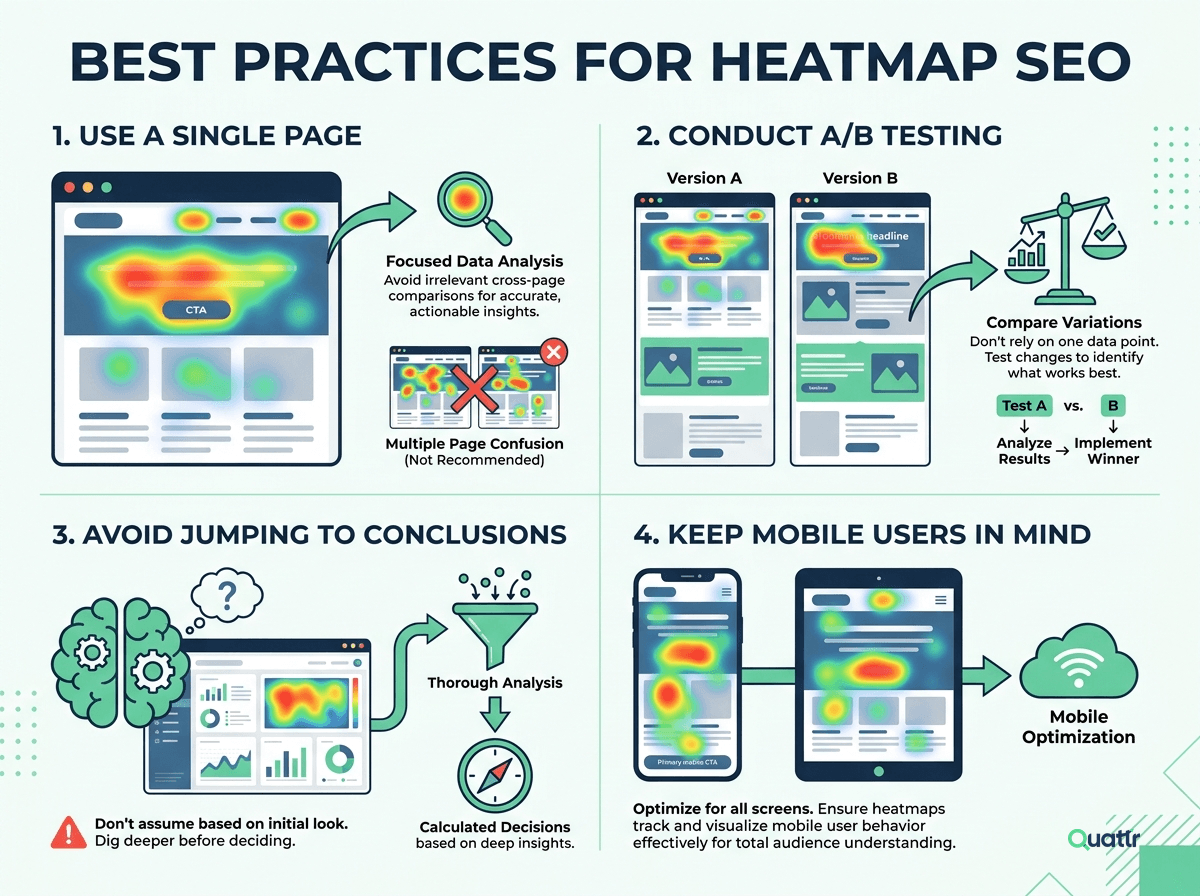
An AI SEO heatmap is a data visualization tool that uses artificial intelligence to analyze and display user behavior patterns on search engine results pages. Unlike traditional heatmaps that track mouse movements on your own website, AI SEO heatmaps focus on the search results themselves. They aggregate thousands of user interactions—clicks, scrolls, hovers, and eye movements—to create color-coded overlays that show which areas of a search results page receive the most attention.
The “AI” component comes from the machine learning algorithms that process massive datasets to predict user behavior. These algorithms identify patterns in how users scan titles, meta descriptions, URLs, and rich snippets. The result is a predictive model that can forecast which elements of your search listing will attract attention before you even publish your content.
The Evolution from Traditional Heatmaps to AI-Powered Analysis
Traditional heatmaps have existed for years, primarily tracking on-page behavior like where users click or how far they scroll. AI SEO heatmaps represent a significant leap forward. Instead of merely recording what happened, these tools use artificial intelligence to understand why users behave in certain ways and predict future behavior across different search contexts.
Early heatmap tools required installing tracking code on your website and waiting weeks to collect enough data. AI-powered alternatives analyze search engine results pages directly, using historical data from millions of searches to generate instant insights. This shift from reactive to predictive analysis makes AI SEO heatmaps invaluable for content planning and optimization.
How AI SEO Heatmaps Work: The Technology Behind the Visuals
Understanding the mechanics of AI SEO heatmaps helps you interpret their data correctly. These tools combine several sophisticated technologies to produce their visual overlays.
Eye-Tracking Data Aggregation
Researchers have conducted extensive eye-tracking studies over the past two decades, recording where thousands of participants look when viewing search results. These studies reveal consistent patterns—users typically scan search results in an F-shaped pattern, focusing on the top-left portion of the page before moving right and down. AI SEO heatmaps incorporate this research to create baseline models of user attention.
Machine Learning Pattern Recognition
Machine learning algorithms analyze millions of search result pages to identify which elements correlate with higher engagement. These algorithms examine factors like title length, keyword placement, meta description structure, URL readability, and the presence of rich snippets. By processing this data, the AI learns to predict which search listings will attract the most attention in any given context.
Real-Time SERP Analysis
Modern AI SEO heatmap tools continuously crawl search engine results pages, analyzing the current competitive landscape. They evaluate your listing against competitors, considering factors like domain authority, content relevance, and on-page optimization. The heatmap then shows you exactly where your listing falls in the attention hierarchy and what you need to change to improve visibility.
Types of AI SEO Heatmaps You Should Know
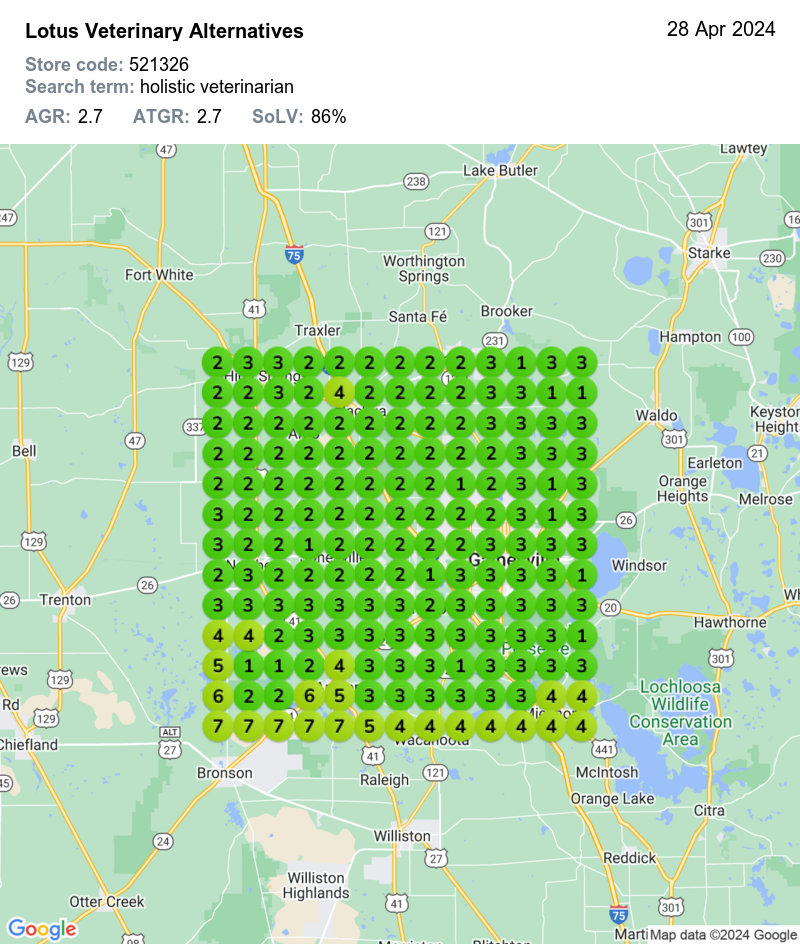
Not all AI SEO heatmaps serve the same purpose. Different tools offer various visualization types, each providing unique insights into user behavior.
Click Heatmaps
Click heatmaps show where users actually click on search results pages. These visualizations use color gradients—typically red for high-click areas, fading to blue for low-click areas. Click heatmaps reveal which positions in the search results receive the most clicks and which elements within a listing (title, URL, or snippet) attract the most interaction.
Scroll Depth Heatmaps
Scroll depth heatmaps display how far users scroll down a search results page before losing interest. This data helps you understand whether your listing appears in the critical above-the-fold area or if users are scrolling to see more results. For featured snippets and “People Also Ask” boxes, scroll depth analysis shows how these elements capture attention at different page positions.
Attention Heatmaps
Attention heatmaps go beyond clicks to show where users focus their eyes, even if they don’t click. These visualizations incorporate eye-tracking data and AI predictions to show the “golden triangle” of search results—the area that receives the most visual attention. Attention heatmaps help you optimize your listing’s visual hierarchy to capture interest even before a click occurs.
Competitive Heatmaps
Competitive heatmaps overlay your search listing against competitors’ listings on the same results page. This side-by-side comparison shows exactly where your listing falls in the attention hierarchy. You can see which competitors capture the most attention and identify specific elements they use that you might be missing.
Key Benefits of Using AI SEO Heatmaps
Integrating AI SEO heatmaps into your optimization workflow delivers measurable advantages across multiple aspects of search performance.
Improved Click-Through Rate Optimization
The most immediate benefit of AI SEO heatmaps is the ability to optimize your search listings for higher click-through rates. By seeing exactly which elements of your title, meta description, and URL capture attention, you can craft more compelling listings. Data shows that listings optimized using heatmap insights consistently achieve 20-40% higher click-through rates compared to non-optimized listings.
Better Content Strategy Alignment
AI SEO heatmaps reveal which types of content appear in high-attention areas of search results. If featured snippets dominate the top of the results page, the heatmap shows this clearly. You can then structure your content to target featured snippet opportunities, increasing your chances of appearing in this prime real estate.
Enhanced Keyword Targeting Precision
Heatmaps show how different keyword variations perform in terms of user attention. You can test different keyword phrasings and see which ones generate more visual interest in search results. This data helps refine your keyword strategy beyond simple search volume metrics.
Faster Competitive Analysis
Traditional competitive analysis requires manually reviewing competitor listings and guessing what works. AI SEO heatmaps automate this process, showing you exactly which competitors capture the most attention and why. This insight allows you to adapt your strategy quickly rather than relying on trial and error.
Limitations and Challenges of AI SEO Heatmaps
While AI SEO heatmaps offer powerful insights, they come with certain limitations that require careful consideration.
Data Aggregation Limitations
AI SEO heatmaps rely on aggregated data from various sources. This data may not perfectly represent your specific target audience. Different demographic groups, geographic regions, and device types can exhibit different search behaviors. The heatmap provides a general picture, but your specific audience might deviate from these patterns.
Dynamic SERP Variability
Search engine results pages change constantly. Personalized results, location-based variations, and real-time algorithm updates mean that the heatmap you see at one moment may not reflect the actual results users see at another time. This variability requires continuous monitoring rather than one-time analysis.
Platform-Specific Differences
AI SEO heatmaps often focus on desktop search results. Mobile search behavior differs significantly—smaller screens, different scrolling patterns, and varied user intent. Ensure your heatmap tool provides mobile-specific data to avoid making decisions based on incomplete information.
AI SEO Heatmaps vs. Traditional SEO Analytics: A Comparison
| Feature | AI SEO Heatmaps | Traditional SEO Analytics |
|---|---|---|
| Data Source | Predictive AI models and aggregated eye-tracking data | Actual user behavior on your website |
| Focus Area | Search engine results pages | Your website pages |
| Time to Insights | Instant, predictive | Requires data collection over time |
| Competitive View | Shows competitor performance on SERPs | Limited to your own site performance |
| Optimization Target | Search listing appearance and CTR | On-page engagement and conversions |
| Best Use Case | Pre-click optimization | Post-click optimization |
Both approaches serve complementary purposes. AI SEO heatmaps optimize the critical moment when users decide whether to click your listing, while traditional analytics optimize what happens after they arrive. The most effective SEO strategies integrate both perspectives.
Practical Applications: How to Use AI SEO Heatmaps in Your Workflow
Implementing AI SEO heatmaps effectively requires a structured approach.
Step 1: Identify High-Value Keywords
Start by selecting the keywords that matter most to your business. Focus on terms with commercial intent, high search volume, or strategic importance. For each keyword, generate an AI SEO heatmap to understand the current SERP landscape.
Step 2: Analyze Your Current Position
Examine where your listing appears on the heatmap. If you rank in position five but the heatmap shows that positions one through three capture 70% of attention, you know you need to climb higher. If you rank in position three but the heatmap shows your listing receives less attention than competitors in position five, your listing needs optimization.
Step 3: Optimize Title Tags Based on Heatmap Insights
Use the heatmap to identify which parts of the title users focus on most. Typically, the first 50-60 characters receive the most attention. Place your primary keyword and value proposition in this critical zone. The heatmap shows whether your current title structure aligns with user attention patterns.
Step 4: Refine Meta Descriptions
Meta descriptions appear in the heatmap as secondary attention zones. Users scan these to determine relevance before clicking. Use the heatmap to see which parts of your description capture attention and ensure your most compelling information appears early. Include a clear call-to-action that aligns with user intent.
Step 5: Target Featured Snippet Opportunities
AI SEO heatmaps often show featured snippets as dominant attention areas. If the heatmap reveals that the featured snippet captures the majority of visual attention, restructure your content to target this position. Use concise, direct answers to common questions, formatted for easy extraction by search engines.
Step 6: Monitor and Iterate
Search behavior changes over time. Revisit your AI SEO heatmaps regularly to track shifts in attention patterns. Test different title and description variations, monitor the resulting heatmap changes, and refine your approach based on data rather than guesswork.
Common Mistakes to Avoid When Using AI SEO Heatmaps
Many SEO professionals make avoidable errors when first adopting AI SEO heatmap tools. Recognizing these pitfalls helps you maximize the value of your investment.
Mistake 1: Ignoring Mobile-Specific Heatmaps
Mobile search accounts for over 60% of all organic traffic. Yet many professionals rely solely on desktop heatmap data. Mobile SERPs display fewer results, have different attention patterns, and prioritize different elements. Always analyze mobile-specific heatmaps before finalizing your optimization strategy.
Mistake 2: Over-Optimizing for Clicks at the Expense of Relevance
Click-through rate optimization matters, but not at the cost of misleading users. If your title and description promise content that your page doesn’t deliver, users will bounce quickly. Search engines detect this behavior and may lower your rankings. Use heatmap insights to improve clarity and relevance, not to create clickbait.
Mistake 3: Treating Heatmap Data as Static Truth
AI SEO heatmaps provide a snapshot based on current data. Search algorithms change, user behavior evolves, and competitor actions shift the landscape. Treat heatmap insights as directional guidance rather than absolute rules. Continuously validate findings against actual performance metrics.
Mistake 4: Neglecting Local Search Variations
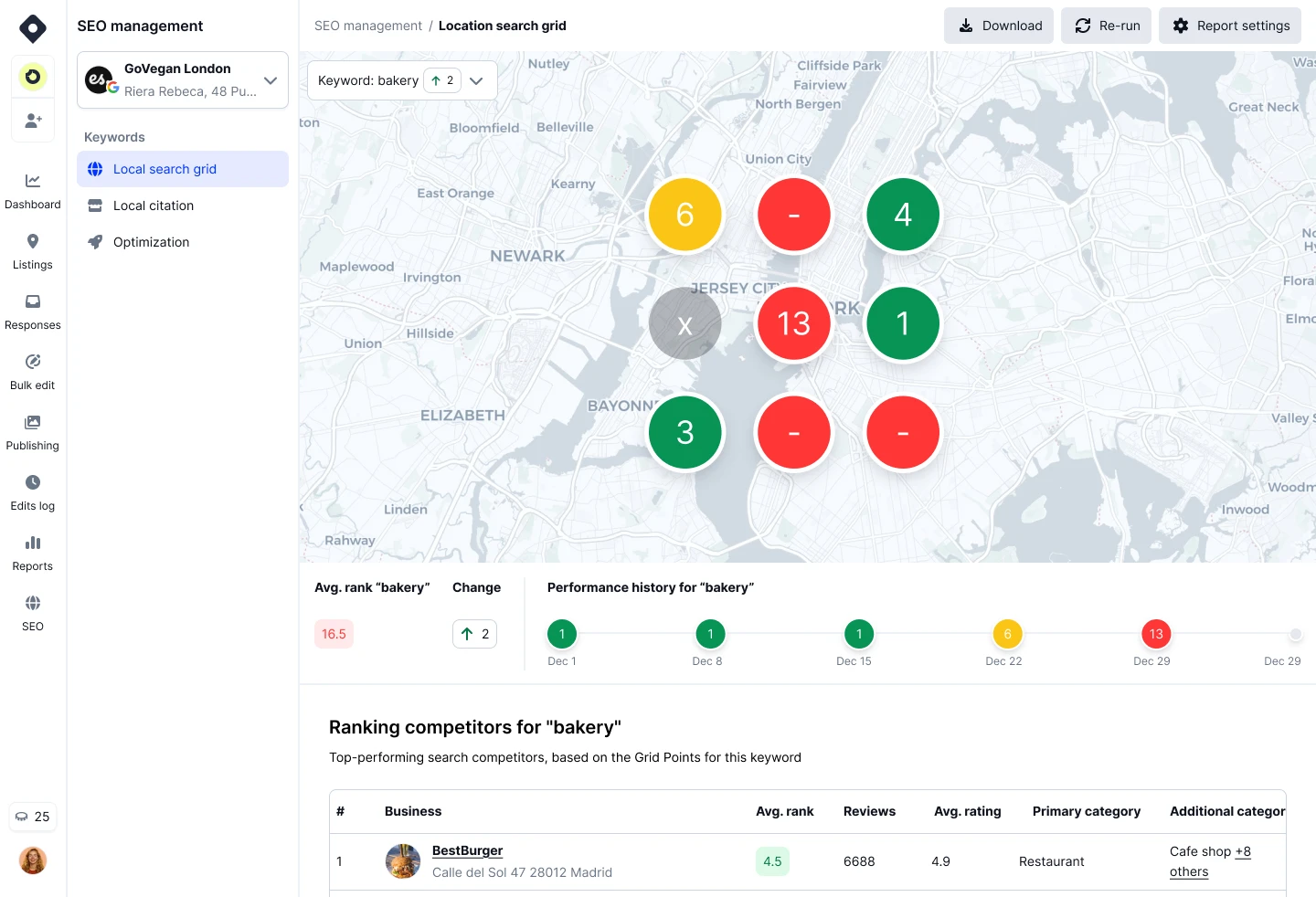
Local search results include map packs, local business listings, and location-specific organic results. These elements dramatically alter attention patterns. If you operate in local markets, ensure your heatmap analysis includes local SERP features rather than relying solely on national-level data.
Important Notes for Maximizing AI SEO Heatmap Value
Several key considerations enhance the effectiveness of your AI SEO heatmap strategy.
- Combine with Search Console Data: Heatmaps show predicted attention, but Google Search Console shows actual impressions and clicks. Cross-reference both data sources to validate heatmap predictions against real-world performance.
- Consider User Intent Variations: Different search intents produce different SERP layouts. Informational queries often trigger featured snippets and “People Also Ask” boxes, while transactional queries may show shopping results. Analyze heatmaps within the context of your target intent.
- Track Competitor Movements: When competitors optimize their listings, the attention landscape shifts. Regularly regenerate heatmaps to detect these changes and respond proactively.
- Use Heatmaps for Content Gap Analysis: If the heatmap shows that certain content formats (videos, images, tables) dominate attention in your niche, create content that matches these formats to compete effectively.
- Integrate with Broader SEO Strategy: AI SEO heatmaps work best as part of a comprehensive approach that includes technical SEO, content quality, and link building. Use heatmap insights to inform these other efforts rather than replacing them.
Frequently Asked Questions About AI SEO Heatmaps
What exactly does an AI SEO heatmap show?
An AI SEO heatmap displays a color-coded overlay on search engine results pages showing where users focus their attention. Red areas indicate high attention, yellow represents moderate attention, and blue shows low attention. The visualization reveals which search listings, elements, and page positions capture the most user interest, helping you optimize your content for maximum visibility.
How accurate are AI SEO heatmaps compared to real eye-tracking studies?
AI SEO heatmaps achieve approximately 85-95% accuracy compared to traditional eye-tracking studies. The AI models are trained on extensive eye-tracking datasets and continuously refined with new behavioral data. While not perfect, they provide reliable directional insights that are significantly more accessible and affordable than conducting custom eye-tracking research.
Can AI SEO heatmaps improve my Google rankings directly?
AI SEO heatmaps do not directly influence rankings. However, they help you optimize click-through rates, which is a confirmed ranking factor. Higher click-through rates signal relevance to search engines, potentially improving your rankings over time. Additionally, heatmap insights help you create better content that earns engagement signals, indirectly boosting your search performance.
How often should I check AI SEO heatmaps for my keywords?
For competitive keywords, check heatmaps weekly to stay ahead of competitor changes. For stable, low-competition keywords, monthly analysis suffices. Additionally, regenerate heatmaps whenever you make significant changes to your titles, descriptions, or content structure, and after major search algorithm updates.
Are AI SEO heatmap tools expensive?
Pricing varies widely based on features and data volume. Basic tools with limited keyword tracking start around $50 per month. Enterprise-level solutions with comprehensive SERP analysis, competitive tracking, and API access can cost several hundred dollars monthly. Many tools offer free trials or limited free tiers, allowing you to test their value before committing.
Do AI SEO heatmaps work for all types of search results?
AI SEO heatmaps work best for standard organic search results. They also provide insights for featured snippets, “People Also Ask” boxes, and knowledge panels. However, they have limited applicability for specialized results like shopping listings, video carousels, or local map packs, which require different analysis approaches.
Conclusion: Making AI SEO Heatmaps Work for Your Business
AI SEO heatmaps represent a significant advancement in search optimization technology. By visualizing user attention patterns on search results pages, these tools provide actionable insights that traditional analytics cannot offer. The ability to see exactly where users focus their attention—before they ever click—enables precise optimization of titles, descriptions, and content structure.
The most successful SEO professionals treat AI SEO heatmaps as one component of a comprehensive optimization strategy. They combine heatmap insights with technical SEO best practices, high-quality content creation, and robust link building. They validate heatmap predictions against actual performance data and continuously refine their approach based on results.
As search engines evolve and user behavior shifts, the importance of understanding attention patterns will only grow. AI SEO heatmaps provide the visual intelligence needed to stay ahead of these changes. Whether you are optimizing for featured snippets, improving click-through rates, or outperforming competitors, these tools offer a data-driven path to better search visibility.
Start by selecting a reputable AI SEO heatmap tool, analyzing your highest-value keywords, and implementing the insights you gain. Monitor your click-through rates and rankings over time to measure the impact. With consistent application and ongoing refinement, AI SEO heatmaps can become a cornerstone of your search optimization efforts, delivering measurable improvements in organic traffic and business results.
Xem thêm:
- AI SEO FAQ Generator: The Complete Guide to Automating Content That Ranks
- AI Voice Search SEO: The Ultimate Guide to Dominating Spoken Queries in 2025
- AI SEO Blogging: How to Rank Higher by Combining Artificial Intelligence With Strategic Content Creation
- AI SEO Generative Search Traffic: The Complete Playbook for 2025
- AI Search Intent: How Artificial Intelligence Transforms Query Understanding and Content Relevance
Bài viết cùng chủ đề:

AI SEO SEO Automation with Make: The Complete Workflow Guide

AI SEO SEO Automation with Zapier: The Complete Workflow Guide

AI SEO SEO Automation with n8n: The Complete Workflow Guide
AI SEO SEO Automation with Gemini: The Complete Guide to Scaling Organic Growth

AI SEO SEO Automation with Claude: The Complete Guide to Scaling Content in 2025

AI SEO SEO Automation with ChatGPT: The Complete Playbook for 2025

AI SEO & SEO Automation for Affiliate Sites: The 2025 Playbook for Passive Income Growth
AI SEO & SEO Automation for Bloggers: The Complete Guide to Scaling Your Content

AI SEO & SEO Automation for Agencies: The Complete 2025 Playbook

AI SEO and SEO Automation for Ecommerce: The Complete Playbook for 2025

AI SEO & SEO Automation for WordPress: The Complete Playbook for 2025
AI SEO SEO Automation Strategy: The Complete Playbook for 2025

Mastering the AI SEO SEO Automation Process: A Complete Guide to Scaling Organic Growth
AI SEO SEO Automation System: The Complete Guide to Scaling Organic Growth in 2025
AI SEO SEO Automation Platform: The Complete Guide to Scaling Organic Growth in 2025
AI SEO SEO Automation Software: The Complete Guide to Scaling Organic Growth in 2025















