
No products in the cart.
AI Search Intent: How Artificial Intelligence Transforms Query Understanding and Content Relevance
29
Jul
Jul
Every time a person types a query into a search box, they carry a purpose that goes far beyond the words themselves. This purpose—AI search intent—has become the central pillar of modern information retrieval. By applying artificial intelligence, search engines can now decode the hidden meaning behind a query, predict the user’s goal, and deliver results that feel almost intuitive. Understanding AI search intent isn’t just for engineers; it’s the competitive edge that separates content that ranks from content that disappears.
What Is AI Search Intent?
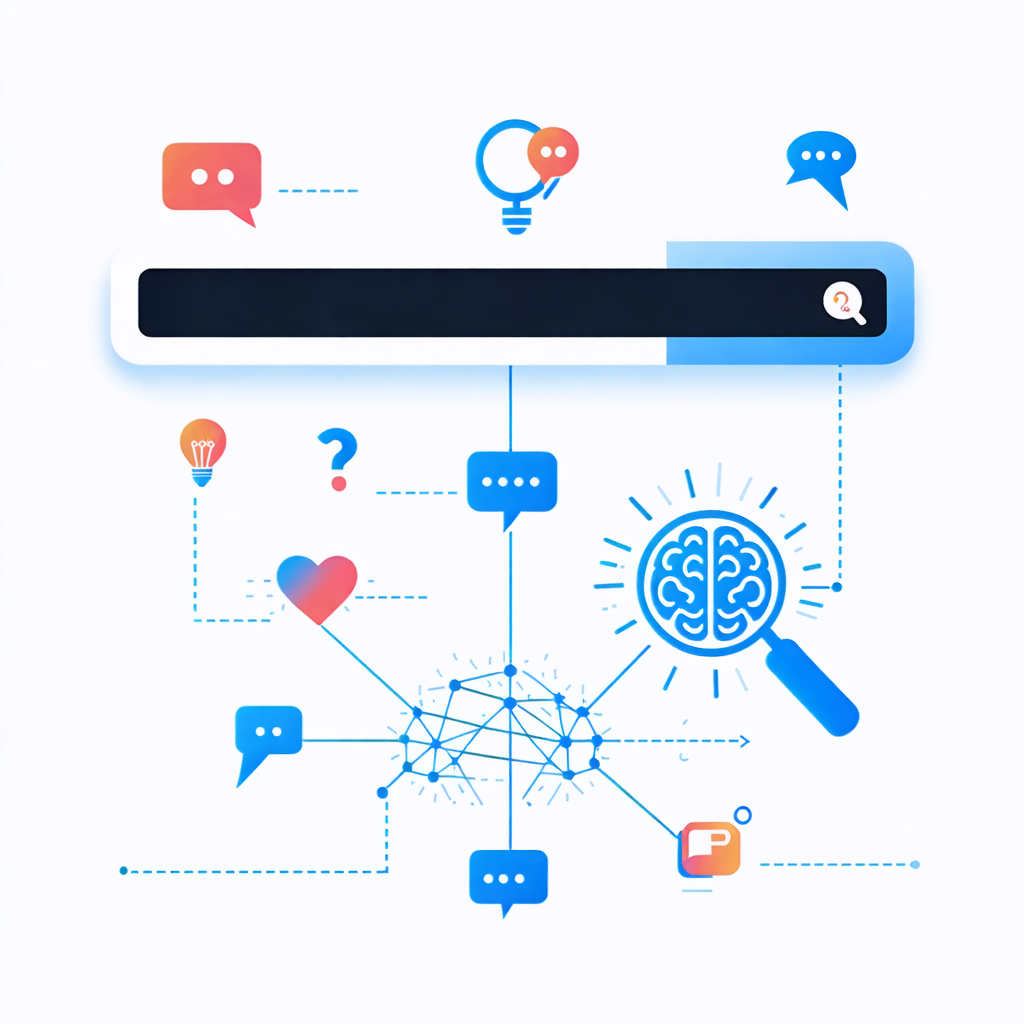
Search intent, at its core, is the “why” behind a query. It answers whether someone wants to learn, buy, navigate, or compare. AI search intent takes this concept and supercharges it with machine learning models that analyze language patterns, user context, and behavioral signals in real time. Instead of matching keywords rigidly, AI interprets the semantic relationship between words, the sentiment behind a phrase, and even the implied expectations of a searcher.
Traditional intent detection relied on manual classification and surface-level signals like word frequency. Now, with technologies like RankBrain, BERT, and MUM, search engines build a dynamic understanding of intent that evolves with every interaction. This shift means that the old tactic of stuffing exact-match keywords no longer works; content must align with the true AI search intent to earn visibility.
The Evolution of Search Intent: From Rigid Rules to AI Precision
In the early days of search, algorithms counted keyword occurrences and checked backlinks. Intent classification was rudimentary—if a page contained the right words, it was considered relevant. The Hummingbird update in 2013 marked a turning point, emphasizing meaning over mere terms. RankBrain, introduced in 2015, added a machine learning layer that could interpret never-before-seen queries and associate them with known intents.
The real leap came with natural language processing models like BERT in 2019, which could read entire sentences bidirectionally, grasping nuances like prepositions and context. MUM, announced in 2021, is multimodal and can understand information across text, images, and languages. These advances made AI search intent not just a buzzword, but the engine driving every SERP feature—from featured snippets to People Also Ask boxes.
The Core Types of Search Intent and How AI Refines Them
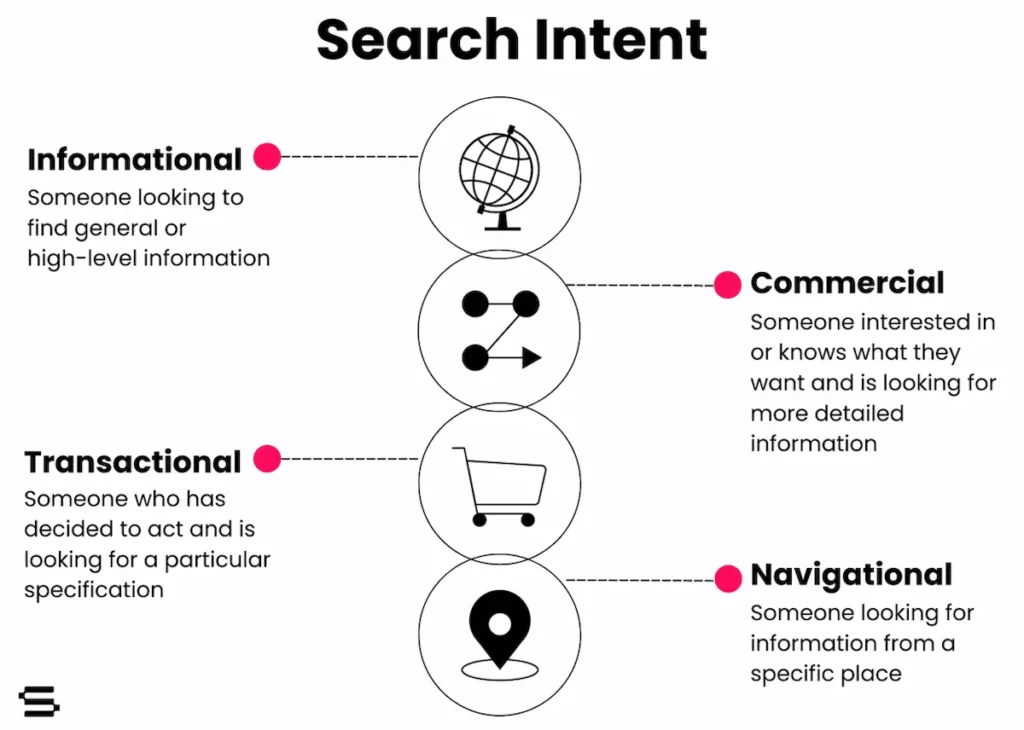
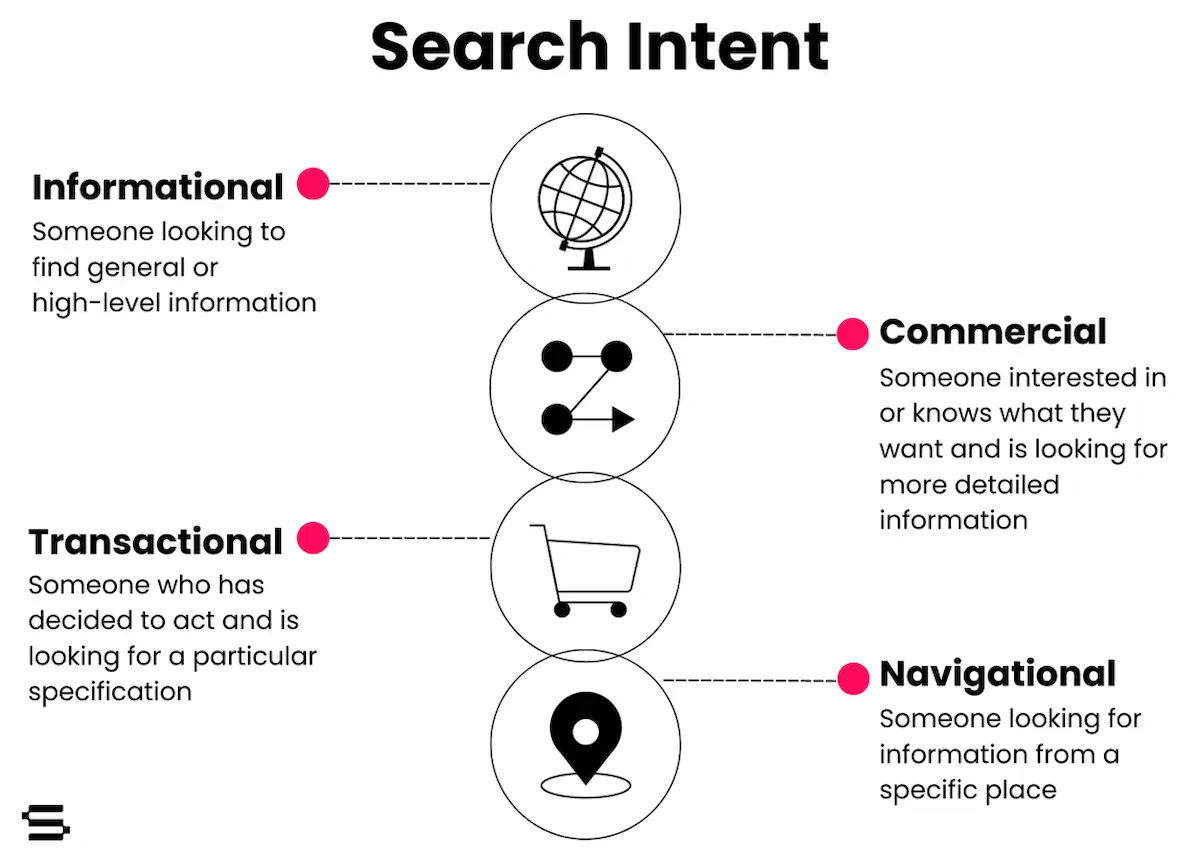
While human-trained classifiers identified four primary intent categories, AI can now detect hybrid, implied, and micro-intents within them. The main categories remain the foundation, but AI search intent adds layers of subtlety.
Informational Intent
Queries seeking knowledge, answers, or explanations fall here. Users might type “what is AI search intent” or “how does BERT work.” AI models don’t just recognize the question format; they assess the expected depth. A long-form guide satisfies a broad informational need, while a short definition may serve a quick-fact searcher. AI interprets the query’s granularity, sometimes identifying whether the user needs a beginner tutorial or expert-level research based on phrasing like “introduction to” versus “advanced techniques in.”
Navigational Intent
When someone wants to reach a specific website or page, they express navigational intent. “YouTube login” or “Semrush blog” are classic examples. AI search intent handles brand misspellings, ambiguous brand names, and personalized navigation—factoring in the user’s location and search history to route them directly to the correct destination, even if the query is imperfect.
Transactional Intent
This signals a readiness to complete an action, typically a purchase, sign-up, or download. AI evaluates not only commercial keywords like “buy,” “discount,” or “pricing” but also sequential query patterns. A user searching “best noise-canceling headphones under $200” then “Sony WH-1000XM5 review” then “Sony WH-1000XM5 price” exhibits a transactional journey. AI maps these micro-intents together and may prioritize product pages over blog posts for the final query.
Commercial Investigation Intent
Often called the “messy middle,” this intent involves comparing options before a transaction. “iPhone 15 vs Samsung S24 camera” or “top CRM software for small business” are investigation queries. AI search intent models now understand attribute comparison, sentiment around specific features, and the user’s stage in the decision cycle. They surface review roundups, comparison tables, and expert analyses accordingly.
How AI Models Understand Search Intent
The magic behind AI search intent lies in a combination of deep learning, natural language understanding, and massive behavioral datasets. Here are the key components driving this capability.
Natural Language Processing and Transformer Architectures
At the heart of modern query interpretation are transformer models like BERT and its successors. Unlike older models that processed words left to right, BERT examines the entire query context simultaneously. This enables it to disambiguate a word like “bank” based on surrounding words—whether it’s a financial institution or a riverbank. For search intent, that means “apple” connected to “nutrition” triggers informational intent about the fruit, while “apple” near “store hours” signals navigational intent toward the brand.
Semantic Search and Entity Recognition
AI doesn’t see queries as strings; it maps them to entities in a knowledge graph. When a user types “who directed Inception,” the model identifies the film entity and the “directed by” relationship, immediately inferring an informational intent seeking a person entity. Entity recognition allows AI search intent classification to be incredibly precise, handling even long-tail conversational queries that lack obvious intent markers.
User Behavior Signals and Reinforcement Learning
Search engines continuously refine intent understanding through user interactions. Click-through rate, dwell time, pogo-sticking, and session continuation are powerful feedback loops. AI models learn that a page with high engagement for a given query likely satisfies the intent, while a page with quick bounces may not. Over time, this shapes ranking algorithms to favor content that consistently meets AI search intent, not just content that uses the right phrases.
Benefits of AI-Powered Search Intent Recognition
The transition to AI-driven intent analysis delivers profound advantages for search engines, businesses, and users alike.
- Higher precision in ambiguous queries: A term like “jaguar” can mean an animal, a car, or a sports team. AI uses personalized signals and query context to pick the most likely intent without requiring the user to refine the search.
- Improved SERP feature matching: AI determines when to show a featured snippet, knowledge panel, local pack, or image carousel based on the nuanced intent, enriching the user experience.
- Voice search compatibility: Natural language queries spoken to assistants often have conversational phrasing. AI search intent bridges the gap between spoken language patterns and written content, making optimization for voice search a reality.
- Content creators gain clearer direction: Auditing SERPs for a target keyword now reveals the dominant intent type, content format, and depth expected. Tools leveraging AI can scale this analysis, allowing marketers to align content precisely.
- Evolving language and slang: Internet culture invents new terms, memes, and abbreviations constantly. AI models must be retrained continuously to keep up, and delays can lead to misinterpretation of trending queries.
- Sarcasm and subtle emotional nuance: Written sarcasm or double meanings can still confuse even advanced NLP. A query like “great another flat tire” might be tagged as positive intent if the model misreads the sentiment.
- Privacy and data dependency: Personalization improves intent accuracy but requires user data. Stricter privacy regulations and cookie limitations reduce the signals available, potentially degrading intent predictions in anonymized scenarios.
- Multi-intent queries: Some queries contain two or more distinct intents. For example, “best smartphone 2024 and how to transfer data” mixes commercial investigation and informational intent. Deciding which intent to prioritize in rankings remains a complex optimization problem.
- Assuming one page fits all intents: A single page cannot effectively serve both “what is CRM” and “best CRM for startups” equally. Create dedicated pages for distinct intents, even if they share a topic.
- Ignoring mixed intent signals: A query like “Asana vs Trello free” has both comparison and transactional undertones. Ignoring the “free” aspect by not discussing pricing tiers misses a critical part of the intent. A
- Over-optimizing for keywords instead of problem-solving: Adding terms like “buy” or “guide” in meta tags without actually delivering the expected experience leads to quick bounces. AI rapidly demotes such pages.
- Neglecting mobile and voice search nuances: AI interprets queries differently based on device. Mobile searches often have higher local intent; voice queries are more conversational. Failing to optimize for these contexts can cause a page to miss the intent entirely.
- Static content in a dynamic intent landscape: Intent shifts over time. For example, “coronavirus” intent moved from informational (what is it) to transactional (where to buy masks) and local (vaccine locations). Regular content audits keep pacing with AI search intent evolution.
Limitations and Challenges in AI Search Intent
Despite impressive advancements, AI search intent recognition isn’t flawless. Several challenges persist.
AI Search Intent vs Traditional Keyword-Based Intent: A Comparison
The difference between old-school intent guessing and AI-powered understanding is stark. The table below highlights key contrasts.
| Aspect | Traditional Keyword-Based Intent | AI Search Intent |
|---|---|---|
| Method | Rule-based, exact match, limited synonym recognition | Machine learning, deep neural nets, context-aware |
| Handling of Ambiguity | Poor; often returns mixed results | Excellent; uses entity linking and user context |
| Long-Tail Queries | Struggles with rare word combinations | Thrives using semantic vector representations |
| Intent Evolution | Static, requires manual updates | Dynamic, learns from real-time user behavior |
| Content Alignment | Relies heavily on on-page keyword density | Rewards topical depth, structure, and user satisfaction signals |
| Personalization | Minimal, mostly location-based | Significant, including search history and device |
Practical Applications of AI Search Intent in SEO and Content Strategy
For marketers, content strategists, and business owners, harnessing AI search intent is not optional—it’s the core of modern SEO. The following applications move theory into tangible results.
Intent-Based Keyword Clustering
Instead of treating keywords in isolation, advanced SEOs group them by the underlying intent AI assigns. A cluster around “running shoes” might contain “best running shoes for flat feet” (commercial investigation), “how to choose running shoes” (informational), and “buy Nike Pegasus” (transactional). Creating pillar pages and supporting content tailored to each cluster satisfies the full user journey, signaling topical authority to AI-driven algorithms.
Content Format and SERP Feature Targeting
Analyzing the SERP for a target query reveals what AI considers the dominant format. If the top results are video carousels, the intent may demand visual content. If a featured snippet with a numbered list appears, the AI rewards direct, structured answers. Crafting content that matches these patterns improves the likelihood of capturing AI search intent-driven features like People Also Ask, knowledge panels, and rich snippets.
Filling the Content Gap with Micro-Intent Analysis
AI search intent enables a granular look at subtopics that users seek after an initial query. Tools that map “People Also Search For” and related questions can reveal micro-intents—smaller, specific needs within a broader topic. Addressing these in a comprehensive article not only extends dwell time but also signals to AI that the page provides holistic satisfaction, boosting rankings for multiple queries.
How to Optimize Content for AI-Driven Search Intent
Optimizing for AI search intent requires a shift from keyword-centric thinking to user-centric delivery. Here are actionable steps.
1. Deconstruct the SERP with an Intent Lens: For your target query, manually review the top 10 results. Note the content type (guide, listicle, product page, video), the depth of information, and common subheadings. Let this audit dictate your content’s structure.
2. Address the “Why” Immediately: Within the first 100 words, clarify which intent your page serves. If transactional, lead with product benefits and a clear CTA. If informational, state the question you’ll answer upfront. This alignment reduces bounce rate—a crucial AI signal.
3. Use Formatting That Mirrors AI Preferences: AI often pulls answers from well-structured HTML. Implement schema markup where relevant (FAQ, HowTo, Article), use descriptive alt text for images, and employ lists and tables to present data. These elements help AI search intent models parse and display your content in rich results.
4. Build Topic Clusters, Not Isolated Pages: AI values contextual authority. Interlink pages that cover related intents—guide a user from an informational blog post to a commercial comparison and then to a transactional product page seamlessly. This internal linking mimics the natural user journey and reinforces intent signals.
5. Monitor Engagement Metrics and Iterate: Use analytics to see which pages satisfy intent (high time on page, low bounce) and which don’t. Refine underperforming content by strengthening its alignment with AI search intent—maybe the page is too shallow for an informational query or too salesy for a research stage.
Common Mistakes When Targeting Search Intent and How to Avoid Them
Even well-intentioned strategies can fail due to subtle misinterpretations of AI search intent. Avoid these pitfalls.
Frequently Asked Questions About AI Search Intent
What exactly is AI search intent?
AI search intent is the process by which artificial intelligence models analyze a user’s query to determine the underlying goal—whether informational, navigational, transactional, or commercial investigation—using natural language understanding, context, and behavioral signals rather than keyword matching alone.
How does AI differ from traditional methods in identifying search intent?
Traditional methods relied on static rules and exact keyword matches. AI uses deep learning and semantic analysis to understand context, synonyms, and user history, enabling it to handle ambiguous, long-tail, and conversational queries with far greater accuracy.
Why is understanding AI search intent important for SEO?
Search engines now reward content that best satisfies the user’s true intent, not just content with targeted keywords. Aligning with AI search intent improves rankings, click-through rates, and engagement metrics, ultimately driving more qualified traffic and conversions.
Can AI search intent handle multiple intents in one query?
Yes, but it remains challenging. AI models may prioritize the dominant intent or display mixed SERP features. Content that addresses layered intents within a single, well-structured piece can perform well, especially for research-heavy topics.
How can I check the AI search intent for my target keyword?
Manually examine the current SERP for the keyword: note the types of pages ranking (blogs, product pages, videos), the format of top results, and the presence of featured snippets or People Also Ask. This reveals the intent AI has assigned to that query.
The Future of AI Search Intent
As models become multimodal and generative AI integrates into search, AI search intent will expand to interpret image, video, and even voice tone inputs. The Search Generative Experience (SGE) and similar innovations will rely on profound intent understanding to synthesize answers from multiple sources. Content creators will need to focus not just on answering queries but on providing unique, experience-based insights that AI alone cannot replicate. The relationship between human expression and machine interpretation will continue to tighten, making mastery of AI search intent a foundational skill for the next decade of digital visibility.
Conclusion
AI search intent has fundamentally redefined how search engines connect people with information. By moving beyond words to grasp the genuine purpose behind a query, AI delivers a more intuitive, efficient, and rewarding search experience. For businesses and content creators, this evolution demands a deep commitment to understanding audiences, structuring answers authentically, and staying agile as algorithms learn and adapt. The brands that invest in true intent alignment today will be the ones users trust tomorrow—and that trust is the ultimate currency in an AI-driven world.
Xem thêm:
- AI SEO Link Juice: The Complete Guide to Automating Authority Transfer in 2025
- AI SEO Course: The Definitive Guide to Automating and Dominating Search Rankings
- The Ultimate AI SEO Workflow for Ecommerce: Drive More Traffic and Sales
- AI SEO Analytics: Turning Raw Search Data Into Unstoppable Organic Growth
- AI SEO Content Freshness: The Complete Guide to Keeping Your Rankings Alive in 2025
Bài viết cùng chủ đề:

AI SEO SEO Automation with Make: The Complete Workflow Guide

AI SEO SEO Automation with Zapier: The Complete Workflow Guide

AI SEO SEO Automation with n8n: The Complete Workflow Guide
AI SEO SEO Automation with Gemini: The Complete Guide to Scaling Organic Growth

AI SEO SEO Automation with Claude: The Complete Guide to Scaling Content in 2025

AI SEO SEO Automation with ChatGPT: The Complete Playbook for 2025

AI SEO & SEO Automation for Affiliate Sites: The 2025 Playbook for Passive Income Growth
AI SEO & SEO Automation for Bloggers: The Complete Guide to Scaling Your Content

AI SEO & SEO Automation for Agencies: The Complete 2025 Playbook

AI SEO and SEO Automation for Ecommerce: The Complete Playbook for 2025

AI SEO & SEO Automation for WordPress: The Complete Playbook for 2025
AI SEO SEO Automation Strategy: The Complete Playbook for 2025

Mastering the AI SEO SEO Automation Process: A Complete Guide to Scaling Organic Growth
AI SEO SEO Automation System: The Complete Guide to Scaling Organic Growth in 2025
AI SEO SEO Automation Platform: The Complete Guide to Scaling Organic Growth in 2025
AI SEO SEO Automation Software: The Complete Guide to Scaling Organic Growth in 2025















