
No products in the cart.
AI SEO Indexability: The Complete Guide to Making Your Content Visible to AI Search Engines
31
Jul
Jul
The digital landscape is shifting beneath our feet. Traditional search engine optimization focused on crawlers like Googlebot. Today, a new force dominates the conversation: artificial intelligence. AI SEO Indexability is the process of ensuring that AI systems, including large language models and AI-powered search engines, can successfully discover, crawl, parse, and understand your web content. Without proper indexability in this new context, your website becomes invisible to the fastest-growing segment of online discovery. This guide breaks down everything you need to know, from the technical foundations to advanced strategies for the AI era.
What is AI SEO Indexability?

AI SEO Indexability refers to the technical and strategic capability of a website to be accessed, read, and interpreted by artificial intelligence algorithms. These algorithms power tools like ChatGPT, Perplexity, Google’s Search Generative Experience (SGE), and Bing Chat. While traditional indexability focuses on database inclusion, AI indexability focuses on semantic understanding and context extraction.
When an AI system queries your site, it does not just look for keywords. It analyzes the structure, the relationships between entities, the clarity of the information, and the authority of the source. If your site is blocked by robots.txt, buried under heavy JavaScript, or lacks structured data, the AI cannot use your content. The result is a loss of referral traffic, brand visibility, and market share.
The Difference Between Traditional Indexability and AI Indexability
Traditional SEO indexability is binary. A page is either in the index or it is not. AI indexability is nuanced. An AI might read your page but fail to understand the main point. It might see the text but ignore the images. It might access the content but not trust it enough to cite it.
The second step is implementing a technical architecture that welcomes AI crawlers while maintaining performance for human users.
Why AI Indexability Matters for Your SEO Strategy
The rise of zero-click searches has changed the game. Users now ask ChatGPT for recommendations instead of scrolling through Google results. When an AI answers a question, it typically cites three to five sources. If your site is not indexable by AI, you are excluded from these citations entirely.
Data from recent industry analyses suggests that AI-powered search engines are already driving significant referral traffic to websites that appear in their answers. Early adopters report increases in branded search volume and direct traffic after being cited by AI tools. This is not a future trend; it is a current reality.
Furthermore, AI indexability affects your visibility in traditional search. Google’s algorithms increasingly use AI to understand content. If your site is structured in a way that confuses AI models, it will likely confuse Google’s ranking systems as well. Optimizing for AI indexability often improves your core web vitals, content clarity, and overall user experience.
Core Components of AI SEO Indexability
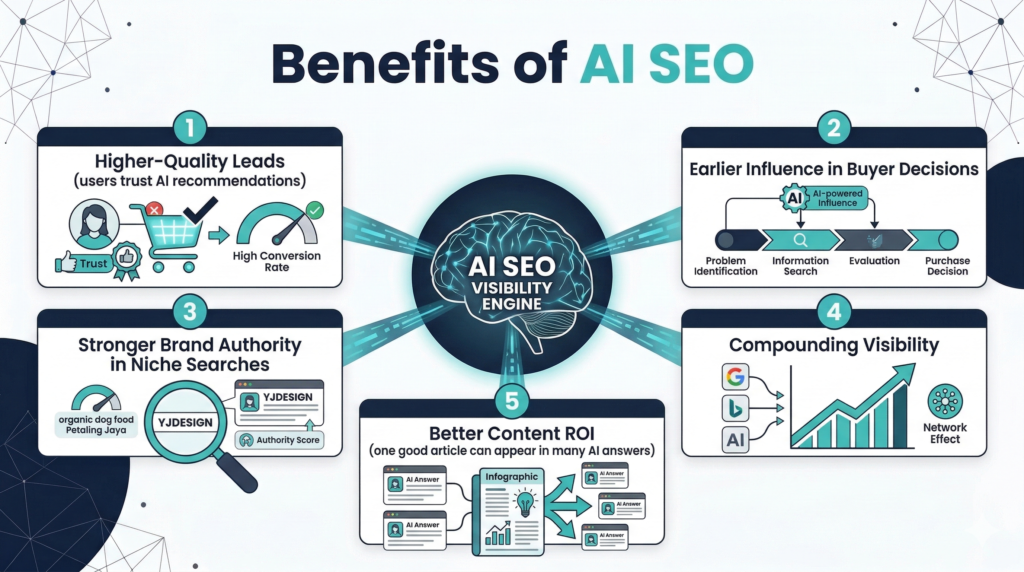
To make your site fully indexable by AI, you must address several technical and content-based components. These elements work together to create a clear, accessible, and authoritative digital presence.
1. Crawlability for AI Bots
AI systems use dedicated crawlers to gather data. These include GPTBot (OpenAI), Google-Extended (Google), and ClaudeBot (Anthropic). Your robots.txt file must explicitly allow these bots to access your site. Many websites inadvertently block these crawlers while trying to block other scrapers.
Check your server logs to see if these bots are visiting. If they are not, review your robots.txt file. A common mistake is using a wildcard block that prevents all bots except Googlebot. You need to whitelist AI crawlers specifically.
Example of a proper robots.txt configuration:
- User-agent: GPTBot
- Allow: /
- User-agent: Google-Extended
- Allow: /
- User-agent: ClaudeBot
- Allow: /
- Article and NewsArticle
- Product and Offer
- FAQPage
- HowTo
- Organization and Person
- BreadcrumbList
Do not block these bots unless you have a specific privacy or legal reason. If you do block them, understand that you are forfeiting all AI-driven visibility.
2. Server-Side Rendering and Static HTML
AI crawlers are improving, but they still struggle with heavy JavaScript frameworks. If your site is built with React, Angular, or Vue, and the content is rendered client-side, AI bots may see an empty shell. They cannot execute complex scripts as efficiently as a modern browser.
The solution is server-side rendering (SSR) or static site generation (SSG). These methods deliver fully rendered HTML to the crawler. If you cannot change your architecture, implement dynamic rendering. This serves a simplified version of your page to bots while maintaining the full experience for users.
Test your pages using a tool that renders JavaScript. If the rendered HTML contains your main content, you are safe. If not, you need to fix your rendering strategy immediately.
3. Structured Data and Schema Markup
Schema markup is the language that AI understands best. It provides explicit signals about the type of content on your page. For example, if you have a recipe, use Recipe schema. If you have a product, use Product schema. If you have an article, use Article schema.
Structured data helps AI systems extract key entities, such as the author, the date, the main subject, and the relationships between concepts. This reduces ambiguity and increases the likelihood of your content being cited accurately.
Focus on these schema types for AI indexability:
Validate your markup using Google’s Rich Results Test. Ensure there are no errors or warnings. Clean, valid schema is a direct signal to AI that your content is trustworthy and well-organized.
4. Content Clarity and Entity Density
AI models rely on semantic understanding. They look for clear entities (people, places, things, concepts) and the relationships between them. Your content should be written in a way that defines these entities explicitly.
Avoid vague pronouns and ambiguous references. If you mention a tool, a methodology, or a statistic, provide the full context. Use synonyms and related terms naturally to help the AI build a semantic map of your topic.
For example, if you are writing about “AI SEO Indexability,” you should also mention related concepts like “crawler access,” “semantic search,” “natural language processing,” and “knowledge graphs.” This creates a dense web of meaning that AI can navigate.
How to Audit Your Website for AI Indexability
Performing a technical audit with an AI focus requires a different checklist than a traditional SEO audit.
Step 1: Check Crawler Access
Use your server logs or a tool like Screaming Frog to see which bots have visited recently. Look for GPTBot, Google-Extended, and other AI crawlers. If they are absent, check your robots.txt and your server firewall settings. Some security plugins block unknown user agents by default.
You can also use a simple curl command to fetch your robots.txt and verify the rules. Ensure that the AI bots are not being redirected to a login page or a CAPTCHA challenge.
Step 2: Render Test Your Key Pages
Use a headless browser tool to render your most important pages. Compare the raw HTML source with the rendered output. If the rendered output contains significantly more content, you have a JavaScript rendering problem.
Pay special attention to pages that are dynamically generated, such as product pages, blog posts, and category pages. These are the pages you want AI to index.
Step 3: Analyze Your Internal Linking Structure
AI crawlers follow links just like traditional crawlers. If your important pages are buried under five or more clicks from the homepage, they may not be discovered. Use a flat architecture where every page is reachable within three clicks.
Ensure that your internal links use descriptive anchor text. Avoid generic phrases like “click here” or “read more.” Use keywords that describe the target page’s content. This helps AI understand the context of the link.
Step 4: Review Your Content Formatting
AI models prefer content that is well-structured. Use short paragraphs, clear headings, and bullet points. Break up long blocks of text. This makes it easier for AI to parse the main ideas and extract key facts.
Include a clear thesis statement in the first paragraph. Summarize the main points in a conclusion. This structure mirrors the way AI training data is organized, making your content more accessible.
Practical Strategies to Improve AI SEO Indexability
Once you have completed the audit, implement these strategies to enhance your site’s AI visibility. These are actionable steps that produce measurable results.
Optimize for Natural Language Queries
AI search engines are conversational. Users ask full questions, not just keywords. Your content should answer these questions directly. Use the “People Also Ask” boxes and “Related Questions” from Google to identify common queries in your niche.
Create dedicated FAQ sections on your pages. Answer each question in a clear, concise paragraph. This increases your chances of being featured in AI-generated answers.
Build a Strong Entity Reputation
AI systems trust sources that are consistently cited across the web. Build your brand as an authority in your niche. Publish original research, get mentioned in reputable publications, and maintain a consistent presence on social media.
Ensure your Organization schema is accurate and complete. Include your logo, social profiles, and contact information. This helps AI verify your identity and associate your content with your brand.
Create Multi-Modal Content
AI models are becoming increasingly multi-modal. They can process images, videos, and audio. Provide alt text for all images. Transcribe your videos and podcasts. This gives AI more data points to understand your content.
Use descriptive file names for your media. Instead of “IMG_1234.jpg,” use “ai-seo-indexability-guide.jpg.” This reinforces the topic of your page.
Monitor Your AI Visibility
You cannot improve what you do not measure. Use tools like Google Search Console to track your performance in traditional search. For AI visibility, manually test your brand and key terms in ChatGPT and Perplexity.
Set up alerts for when your brand is mentioned in AI responses. This helps you understand what content is being cited and why. Adjust your strategy based on these insights.
Common Mistakes That Destroy AI Indexability
Many website owners unknowingly sabotage their AI visibility. Here are the most common mistakes and how to avoid them.
Blocking AI Crawlers with Outdated Rules
Some robots.txt files still contain rules that block all bots except Googlebot. This was a common practice to save server resources. In the AI era, this is a fatal error. Review your robots.txt file quarterly and ensure AI bots are allowed.
Relying on Infinite Scroll
Infinite scroll is terrible for AI indexability. AI crawlers cannot easily navigate paginated content that loads dynamically. Use traditional pagination with clear URLs. If you must use infinite scroll, implement a “View All” link that contains all content on a single page.
Using Paywalls and Login Walls
If your content is behind a paywall, AI cannot access it. Some AI systems respect metered paywalls, but most do not. If you want AI visibility, you need to provide free access to at least a portion of your content.
Ignoring Core Web Vitals
Slow, janky websites are penalized by both Google and AI systems. AI crawlers have time limits. If your page takes too long to load, they will abandon it. Optimize your images, use a content delivery network, and minimize render-blocking resources.
Important Notes for Long-Term AI Indexability Success
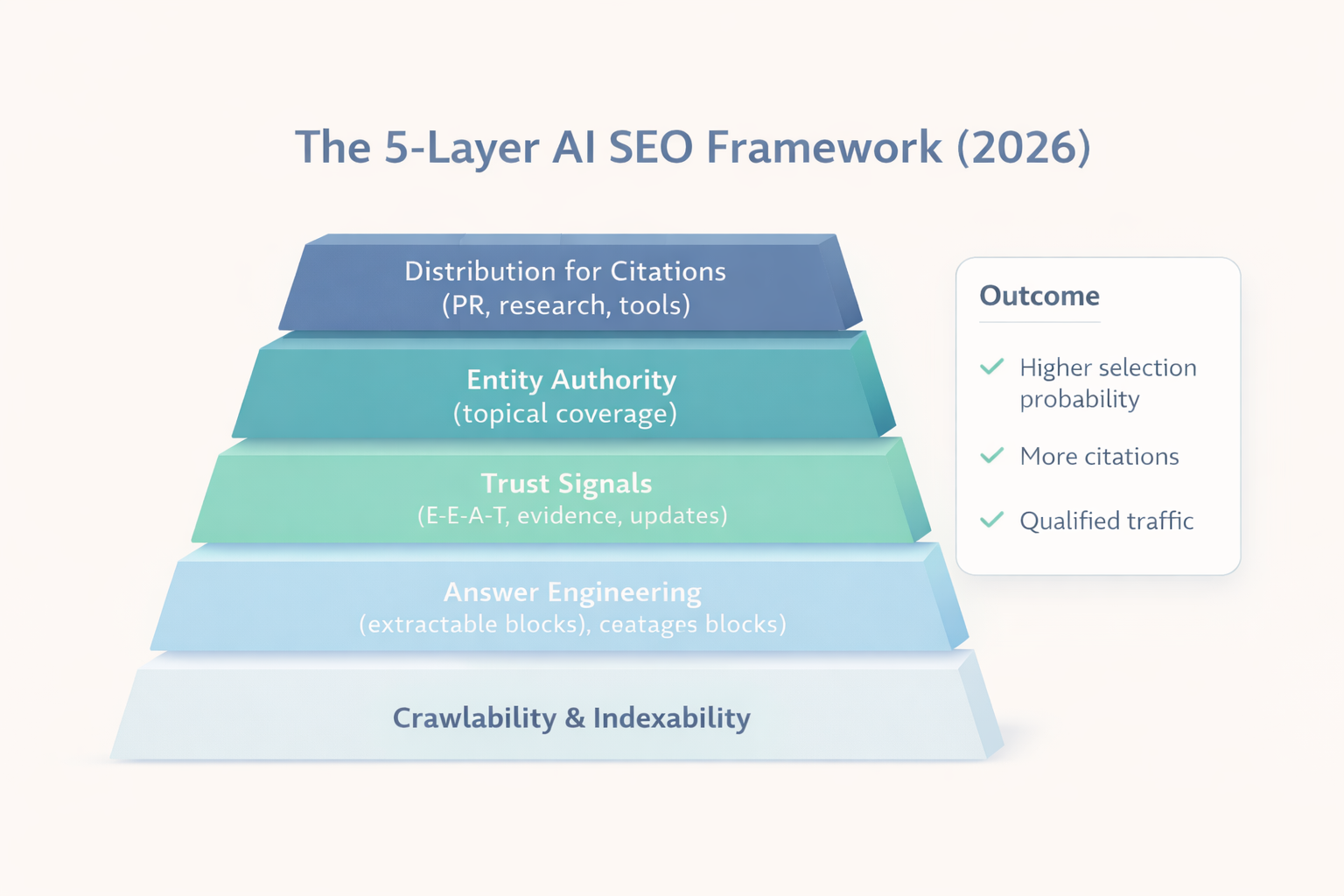
AI technology evolves rapidly. What works today may not work tomorrow. Stay informed about updates to major AI crawlers and search engines. Follow official documentation from OpenAI, Google, and Microsoft.
Do not try to game the system. AI models are trained to detect manipulation. Focus on creating genuinely useful, accurate, and well-structured content. This is the only sustainable strategy.
Remember that AI indexability is not just about being read. It is about being understood and trusted. Build your site as a reliable source of information, and the AI systems will reward you with visibility.
Frequently Asked Questions About AI SEO Indexability
What is the difference between AI indexability and traditional SEO indexability?
Traditional indexability focuses on whether a search engine can store and retrieve a page. AI indexability focuses on whether an AI model can understand the meaning, context, and relationships within the content. AI indexability requires cleaner code, structured data, and semantic clarity.
How do I check if AI bots can crawl my website?
Check your server logs for user agents like GPTBot, Google-Extended, and ClaudeBot. You can also use a tool like Screaming Frog to simulate a crawl. Review your robots.txt file to ensure these bots are not blocked.
Does blocking GPTBot affect my Google rankings?
Blocking GPTBot does not directly affect your Google rankings. However, it removes your content from OpenAI’s training data and ChatGPT’s responses. This can reduce your brand visibility and referral traffic from AI platforms.
What is the best way to structure content for AI indexability?
Use a clear hierarchy with one H1 tag, descriptive H2 and H3 tags, and short paragraphs. Include a summary at the beginning and a conclusion at the end. Use bullet points and tables to break up complex information. Add FAQ schema to answer common questions.
Is AI indexability more important than traditional SEO?
Both are important. Traditional SEO drives traffic from Google and Bing. AI indexability drives traffic from ChatGPT and other AI tools. The best strategy is to optimize for both simultaneously, as they share many common requirements like page speed and content quality.
Conclusion
AI SEO Indexability is no longer an optional technical detail. It is a fundamental requirement for digital visibility in the age of artificial intelligence. The shift from keyword matching to semantic understanding demands a new approach to web architecture and content creation.
Start by auditing your robots.txt file and server logs. Ensure AI crawlers can access your site. Move away from heavy client-side rendering. Implement comprehensive schema markup. Write content that is clear, structured, and entity-rich.
The websites that adapt to this new reality will dominate the next decade of search. Those that ignore it will fade into obscurity, invisible to the very systems designed to connect users with information. Take action today to secure your place in the AI-driven future of discovery.
Xem thêm:
- AI Backlink Analysis: Smarter Link Audits, Stronger Rankings, Faster Growth
- AI SEO Future: How Intelligent Algorithms Are Reshaping Search Rankings in 2025 and Beyond
- AI SEO Content Updates: The Complete Guide to Staying Ahead in 2025
- WP Trove Keyword Research: The Complete Guide to Finding High-Value WordPress Niche Keywords
- AI Topic Clusters: The Smarter Way to Build Authority and Rank Higher With Semantic SEO
Bài viết cùng chủ đề:

AI SEO SEO Automation with Make: The Complete Workflow Guide

AI SEO SEO Automation with Zapier: The Complete Workflow Guide

AI SEO SEO Automation with n8n: The Complete Workflow Guide
AI SEO SEO Automation with Gemini: The Complete Guide to Scaling Organic Growth

AI SEO SEO Automation with Claude: The Complete Guide to Scaling Content in 2025

AI SEO SEO Automation with ChatGPT: The Complete Playbook for 2025

AI SEO & SEO Automation for Affiliate Sites: The 2025 Playbook for Passive Income Growth
AI SEO & SEO Automation for Bloggers: The Complete Guide to Scaling Your Content

AI SEO & SEO Automation for Agencies: The Complete 2025 Playbook

AI SEO and SEO Automation for Ecommerce: The Complete Playbook for 2025

AI SEO & SEO Automation for WordPress: The Complete Playbook for 2025
AI SEO SEO Automation Strategy: The Complete Playbook for 2025

Mastering the AI SEO SEO Automation Process: A Complete Guide to Scaling Organic Growth
AI SEO SEO Automation System: The Complete Guide to Scaling Organic Growth in 2025
AI SEO SEO Automation Platform: The Complete Guide to Scaling Organic Growth in 2025
AI SEO SEO Automation Software: The Complete Guide to Scaling Organic Growth in 2025















