
No products in the cart.
AI SEO Short Form Content: The Complete Playbook for 2025
10
Aug
Aug
The digital marketing landscape has shifted dramatically. Attention spans are shrinking, and the demand for quick, digestible information is at an all-time high. This is where AI SEO short form content becomes a game-changer. It combines the efficiency of artificial intelligence with the precision of search engine optimization, all packaged into bite-sized pieces of content that users actually want to consume. This guide breaks down everything you need to know about leveraging this powerful strategy, from the core concepts to advanced execution tactics.
What is AI SEO Short Form Content?
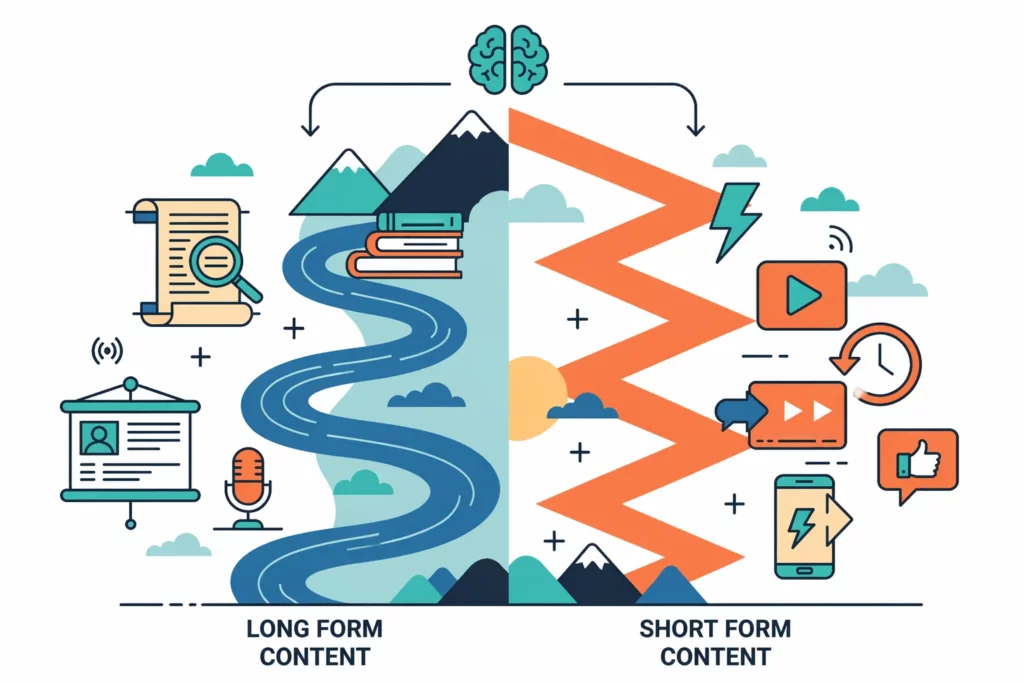
AI SEO short form content refers to concise, focused pieces of digital media—typically under 1,000 words—that are created with the assistance of artificial intelligence tools and optimized for search engines. This includes social media posts, video scripts for platforms like TikTok and Instagram Reels, product descriptions, email newsletters, and quick-answer blog posts. The primary goal is to capture user intent quickly, provide immediate value, and rank for specific, often long-tail, keywords.
Unlike traditional long-form articles that aim to cover a topic exhaustively, short form content targets a single, specific query. The AI component helps marketers generate variations, optimize for readability, and scale production without sacrificing quality. The SEO component ensures that this rapid-fire content is discoverable, relevant, and aligned with what users are actively searching for.
The Rise of Bite-Sized Information Consumption
The preference for short content is not a trend; it is a behavioral shift. Mobile devices dominate web traffic, and users often search for answers while on the go. A study by Microsoft found that the average human attention span has decreased significantly over the past two decades. This means that content must deliver value within the first few seconds. AI SEO short form content is designed to meet this demand, offering immediate answers without the fluff.
Search engines have also adapted. Google’s algorithms now prioritize “passage indexing,” which allows them to rank specific sections of a page, not just the entire page. This means that a well-structured short answer can outrank a lengthy, less-focused article. Furthermore, the rise of voice search has made conversational, direct answers more critical. Users ask questions like “What is the best time to post on Instagram?” and expect a concise, accurate reply. AI helps craft these replies at scale.
Key Components of Effective AI-Generated Short Content
Creating effective AI SEO short form content requires more than just prompting a tool to “write a post.” It involves a strategic blend of data, creativity, and technical optimization. The following components are essential for success.
Precision Targeting with Long-Tail Keywords
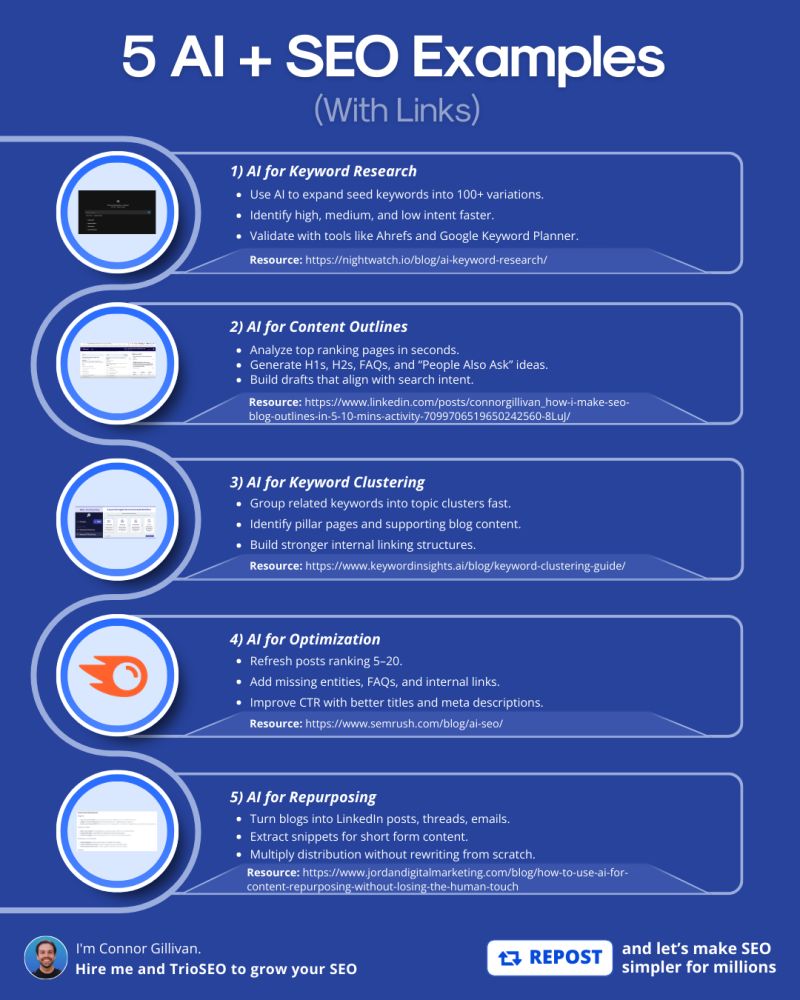
Short content cannot afford to be generic. It must target specific, high-intent keywords. Long-tail keywords, which are longer and more specific phrases, are perfect for this format. For example, instead of targeting “SEO tools,” you would target “best free AI SEO tools for small business.” The AI can help generate a list of these niche phrases based on seed keywords, allowing you to create highly relevant content that faces less competition.
Structured Data and Schema Markup
To help search engines understand the context of your short content, implementing structured data is vital. Schema markup, such as FAQPage or HowTo, can make your content eligible for rich snippets. These enhanced results take up more space on the search engine results page (SERP) and significantly increase click-through rates. AI tools can assist in generating the necessary JSON-LD code to implement this markup without needing a developer.
Optimized Meta Descriptions and Titles
Even if the content is short, the title tag and meta description are your first impression. They must be compelling and contain the target keyword. AI can generate multiple variations of titles and descriptions, allowing you to A/B test which ones perform best. A well-crafted meta description acts as a mini-ad for your content, enticing users to click through from the SERP.
Visual and Multimedia Integration
Short form content often lives on visual platforms. Whether it is a static image for a blog post or a video for social media, the visual element must be engaging. AI tools can now generate images, suggest video clips, and even create infographics. Combining text with relevant visuals increases dwell time and user engagement, which are positive signals to search engines.
Benefits of Using AI for Short Form SEO
The integration of AI into your short form content strategy offers a multitude of advantages that go beyond simple time-saving. These benefits directly impact your bottom line and brand visibility.
- Scalability: AI allows you to produce a high volume of content in a fraction of the time it would take a human team. This is crucial for maintaining a consistent posting schedule across multiple platforms.
- Cost-Effectiveness: Reducing the hours spent on drafting and editing lowers operational costs. You can reallocate your budget to other areas like paid advertising or advanced analytics.
- Data-Driven Insights: AI tools analyze vast amounts of data to identify trending topics and content gaps. This ensures that your short content is always relevant and timely.
- Consistency in Brand Voice: By training AI models on your brand guidelines, you can ensure that every piece of content, regardless of volume, maintains a consistent tone and style.
- Enhanced Creativity: AI can act as a brainstorming partner, offering unique angles and perspectives that you might not have considered. It helps overcome writer’s block and generates fresh ideas.
- Lack of Human Nuance: AI models can sometimes produce content that feels robotic or lacks the emotional depth of human writing. It is essential to have a human editor review and refine the output.
- Risk of Duplicate Content: If many users prompt the AI with similar instructions, the output can become repetitive. This can lead to duplicate content issues, which harm SEO. Always add a unique perspective or personal experience.
- Factual Inaccuracies: AI models are not infallible. They can generate plausible-sounding but incorrect information. Fact-checking is non-negotiable, especially for topics related to health, finance, or law.
- Over-Optimization: Relying too heavily on AI for keyword placement can lead to keyword stuffing. Search engines penalize this practice. The content must still read naturally for the user.
- Keyword Research: Use tools like Google Keyword Planner or Ahrefs to identify long-tail keywords with high intent but low competition. Focus on questions that users are asking.
- Select the Right AI Tool: Choose a platform that suits your needs. Options include ChatGPT, Jasper, Copy.ai, and Surfer SEO. Each has different strengths, so test a few to find the best fit.
- Craft Detailed Prompts: The quality of the output depends on the quality of the input. Provide the AI with the target keyword, the desired tone, the target audience, and any specific points you want to cover.
- Generate and Review: Generate multiple versions of the content. Do not use the first draft. Review the outputs, select the best parts, and merge them into a cohesive piece.
- Human Editing and Fact-Checking: This is the most critical step. Add your personal experience, correct any factual errors, and ensure the content aligns with your brand voice. Make it sound human.
- Optimize On-Page Elements: Write a compelling title tag and meta description. Add relevant internal links to other pages on your site. Ensure the URL is clean and contains the keyword.
- Publish and Monitor: Publish the content and monitor its performance in Google Search Console. Track impressions, clicks, and average position. Use this data to refine your future content.
- Publishing Unedited AI Output: This is the biggest mistake. AI content is a starting point, not a finished product. Unedited content often lacks depth and can contain hallucinations. Always edit.
- Ignoring User Intent: Creating content for a keyword without understanding what the user actually wants will lead to high bounce rates. Ensure your content directly answers the query.
- Keyword Stuffing: Trying to force the keyword into every sentence makes the content unreadable. Use the keyword naturally in the title, first paragraph, and one or two other places.
- Neglecting to Add Internal Links: Short form content should still link to your longer, more comprehensive articles. This helps distribute link equity and guides users through your site.
- Not Using a Unique Perspective: If your content is exactly what the AI generated, it will be the same as everyone else’s. Add your own data, examples, or opinions to stand out.
Limitations and Challenges to Consider
While the benefits are substantial, it is equally important to acknowledge the limitations of AI SEO short form content. A balanced strategy requires understanding these potential pitfalls.
AI SEO Short Form vs. Traditional Long Form Content
Understanding the difference between these two content types is crucial for developing a holistic SEO strategy. They serve different purposes and cater to different stages of the buyer’s journey.
| Feature | AI SEO Short Form Content | Traditional Long Form Content |
|---|---|---|
| Word Count | Typically under 1,000 words | Typically 1,500 to 5,000+ words |
| Primary Goal | Quick answers, engagement, social shares | Comprehensive authority, backlinks, deep dives |
| Production Time | Minutes to a few hours | Days to weeks |
| Use Case | Social media posts, product blurbs, FAQs | Pillar pages, ultimate guides, case studies |
| SEO Focus | Long-tail keywords, featured snippets | Head terms, topic clusters, internal linking |
| User Intent | Informational, navigational | Informational, transactional, commercial |
The most effective SEO strategy uses both. Short form content can drive traffic and engagement, while long form content builds authority and trust. They work in tandem to create a comprehensive digital footprint.
Practical Applications: Where to Use AI Short Form Content
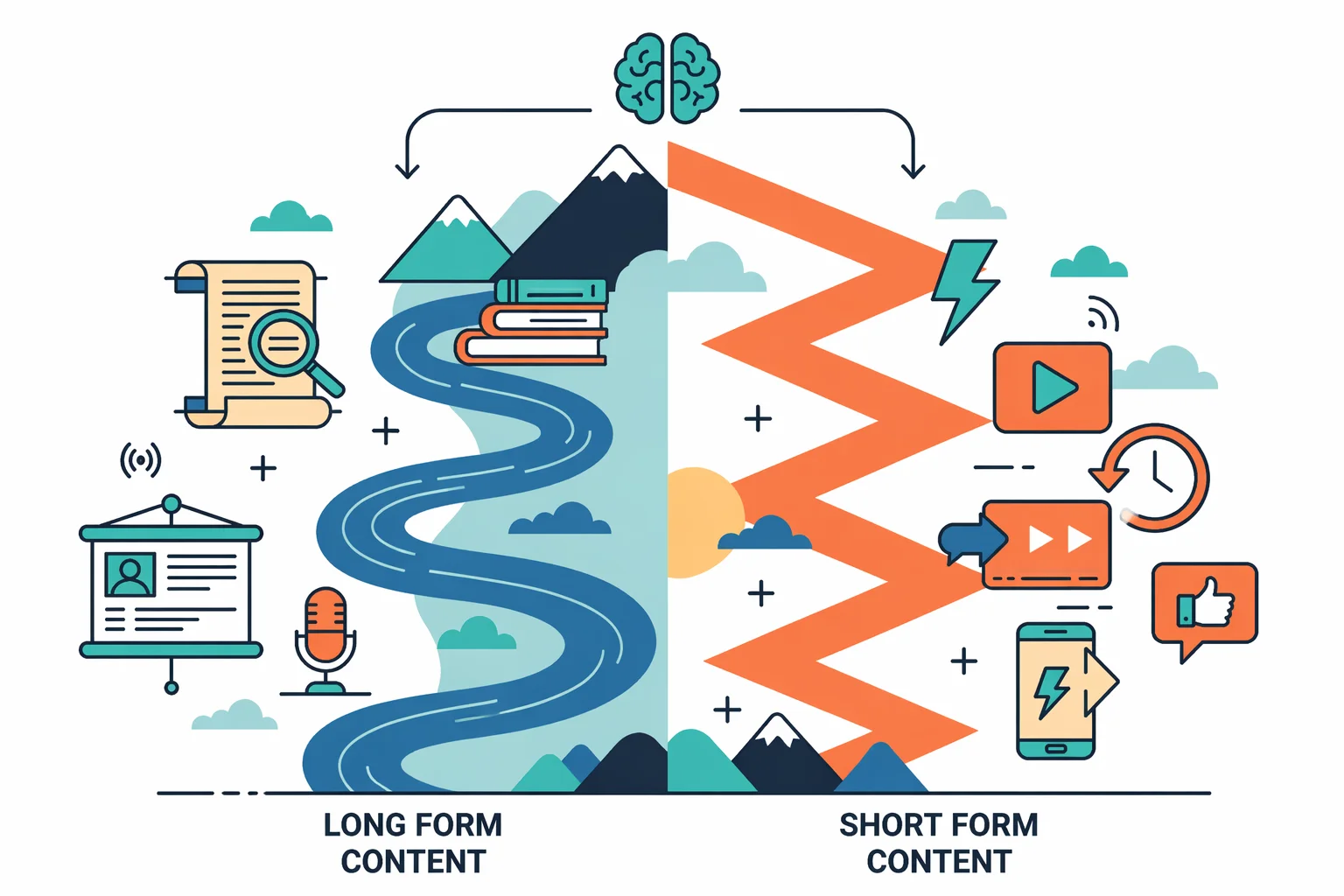
Knowing where to deploy this type of content is just as important as knowing how to create it. Here are the most effective channels and formats for AI SEO short form content.
Social Media Captions and Posts
Platforms like X (formerly Twitter), LinkedIn, and Instagram thrive on concise, impactful messages. AI can generate multiple caption variations for a single image, each optimized for different keywords and tones. These captions can include relevant hashtags that are also trending, increasing discoverability.
Video Scripts for Short-Form Video
TikTok and YouTube Shorts are dominating the digital space. Writing a script for a 30-second video requires precision. AI can help structure the hook, the value proposition, and the call to action within a tight timeframe. The SEO aspect comes from the video title, description, and the spoken words, which are transcribed by search engines.
Product Descriptions for E-commerce
E-commerce sites often have hundreds of products that need unique descriptions. AI can generate compelling, keyword-rich descriptions for each item, saving hours of manual work. These descriptions can highlight key features and benefits while also targeting specific search queries related to the product.
Email Newsletter Subject Lines
The subject line determines whether your email gets opened or sent to the trash. AI can analyze past performance data to generate subject lines that are more likely to be opened. These lines are short, punchy, and often include a sense of urgency or curiosity.
Step-by-Step Guide to Creating AI SEO Short Form Content
To get started, follow this practical workflow. This process ensures that you are using AI effectively while maintaining high standards of quality and SEO.
Common Mistakes and How to Avoid Them
Even with the best tools, mistakes happen. Being aware of these common pitfalls can save you time and prevent damage to your SEO efforts.
Important Notes on E-E-A-T and AI Content
Google’s guidelines emphasize Experience, Expertise, Authoritativeness, and Trustworthiness (E-E-A-T). AI content often struggles with the “Experience” component. To overcome this, you must layer human experience onto the AI-generated base. Share a personal anecdote, include a unique case study, or reference a specific industry event. This demonstrates to Google that the content is not just a regurgitation of data but is backed by real-world knowledge.
Furthermore, transparency is becoming increasingly important. While you do not need to label every piece of AI-assisted content, you should ensure that the final product provides genuine value. If the content is purely informational and generic, it will not rank well. The human touch is what elevates it from “AI-generated” to “expert-reviewed.”
Frequently Asked Questions (FAQ)
Is AI SEO short form content effective for ranking?
Yes, it can be highly effective when done correctly. By targeting specific long-tail keywords and providing direct answers, this content is well-positioned to rank for featured snippets and voice search queries. The key is to ensure the content is accurate, well-structured, and provides real value to the user.
How long should AI SEO short form content be?
T The length should be determined by the complexity of the topic. The goal is to fully answer the query without adding unnecessary fluff. If you find yourself writing more than 1,000 words, consider if the topic actually requires a long-form piece instead.
Can Google detect AI-generated content?
Google can detect AI-generated content, but its policy is not to ban it. Google’s focus is on content quality, regardless of how it is produced. If the content is helpful, original, and demonstrates E-E-A-T, it will rank. If it is spammy and created solely to manipulate rankings, it will be penalized.
What are the best AI tools for generating short form SEO content?
Several tools are excellent for this purpose. ChatGPT and Claude are great for generating text and brainstorming ideas. Jasper is designed specifically for marketing copy and includes SEO modes. Surfer SEO integrates with content generation tools to optimize for on-page factors in real-time. The best tool depends on your specific workflow and budget.
How do I make AI content sound more human?
To make AI content sound more human, you should read it aloud and edit for rhythm and flow. Add personal pronouns, contractions, and colloquialisms where appropriate. Inject your own opinions and experiences. Break up long sentences and vary your sentence structure. The goal is to make the text conversational and relatable.
Conclusion
AI SEO short form content is not just a passing fad; it is a fundamental shift in how digital marketing operates. It empowers brands to be more agile, responsive, and relevant in a fast-paced digital environment. By understanding the mechanics of AI generation, the nuances of SEO, and the importance of human oversight, you can create a powerful content engine that drives traffic, engages users, and builds lasting authority.
The future of SEO is not about choosing between human and machine; it is about leveraging the strengths of both. AI provides the speed and data analysis, while humans provide the creativity, empathy, and strategic direction. By mastering this balance, you position your brand at the forefront of the digital landscape, ready to capture the attention of a generation that demands value in seconds, not minutes. Start small, experiment, and refine your process to unlock the full potential of this dynamic approach.
Xem thêm:
- AI Metadata Generator: The Ultimate Tool for Streamlining Digital Asset Management
- The Ultimate AI SEO Roadmap: How to Rank in the Age of Intelligent Search
- AI SEO Keyword Discovery: The Complete Guide to Smarter Search Rankings
- Mastering AI SEO Prompt Engineering: A Complete Guide to Smarter Content Strategies
- WP Trove AI Landing Pages: The Complete Guide to High-Converting WordPress Pages
Bài viết cùng chủ đề:

AI SEO SEO Automation with Make: The Complete Workflow Guide

AI SEO SEO Automation with Zapier: The Complete Workflow Guide

AI SEO SEO Automation with n8n: The Complete Workflow Guide
AI SEO SEO Automation with Gemini: The Complete Guide to Scaling Organic Growth

AI SEO SEO Automation with Claude: The Complete Guide to Scaling Content in 2025

AI SEO SEO Automation with ChatGPT: The Complete Playbook for 2025

AI SEO & SEO Automation for Affiliate Sites: The 2025 Playbook for Passive Income Growth
AI SEO & SEO Automation for Bloggers: The Complete Guide to Scaling Your Content

AI SEO & SEO Automation for Agencies: The Complete 2025 Playbook

AI SEO and SEO Automation for Ecommerce: The Complete Playbook for 2025

AI SEO & SEO Automation for WordPress: The Complete Playbook for 2025
AI SEO SEO Automation Strategy: The Complete Playbook for 2025

Mastering the AI SEO SEO Automation Process: A Complete Guide to Scaling Organic Growth
AI SEO SEO Automation System: The Complete Guide to Scaling Organic Growth in 2025
AI SEO SEO Automation Platform: The Complete Guide to Scaling Organic Growth in 2025
AI SEO SEO Automation Software: The Complete Guide to Scaling Organic Growth in 2025















