
No products in the cart.
AI Topical Map: How to Build Unshakeable Topical Authority with Machine Intelligence
29
Jul
Jul
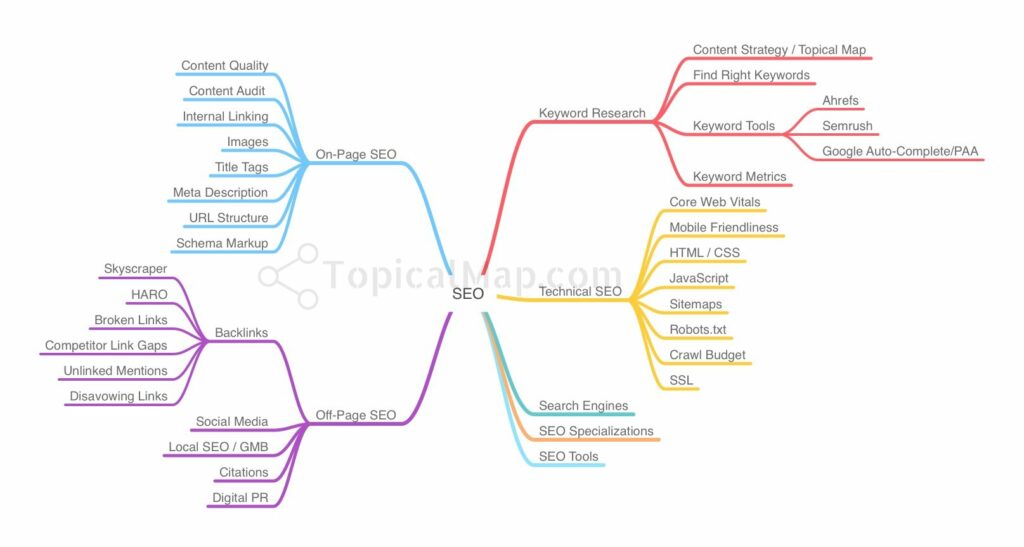
The AI topical map is reshaping how content strategists, SEO professionals, and brands plan their digital presence. Instead of relying on fragmented keyword lists, an AI topical map visualizes a complete subject landscape, identifying every subtopic, question, and entity connection a user might expect. This approach directly addresses Google’s increasing emphasis on topic comprehensiveness and E-E-A-T signals. Within the first few lines, it is essential to grasp that an AI topical map isn’t just a chart; it is a strategic blueprint for dominating a niche by leaving no content gap unfilled.
What Is an AI Topical Map?
An AI topical map is a structured, hierarchical representation of all concepts, subtopics, and entities related to a core subject. Unlike a simple mind map, it is generated or refined by machine learning algorithms that analyze search engine results, competitor content, user intent, and knowledge graph data. The goal is to produce a master document that guides content creation so thoroughly that a website becomes the undisputed authority on a topic.
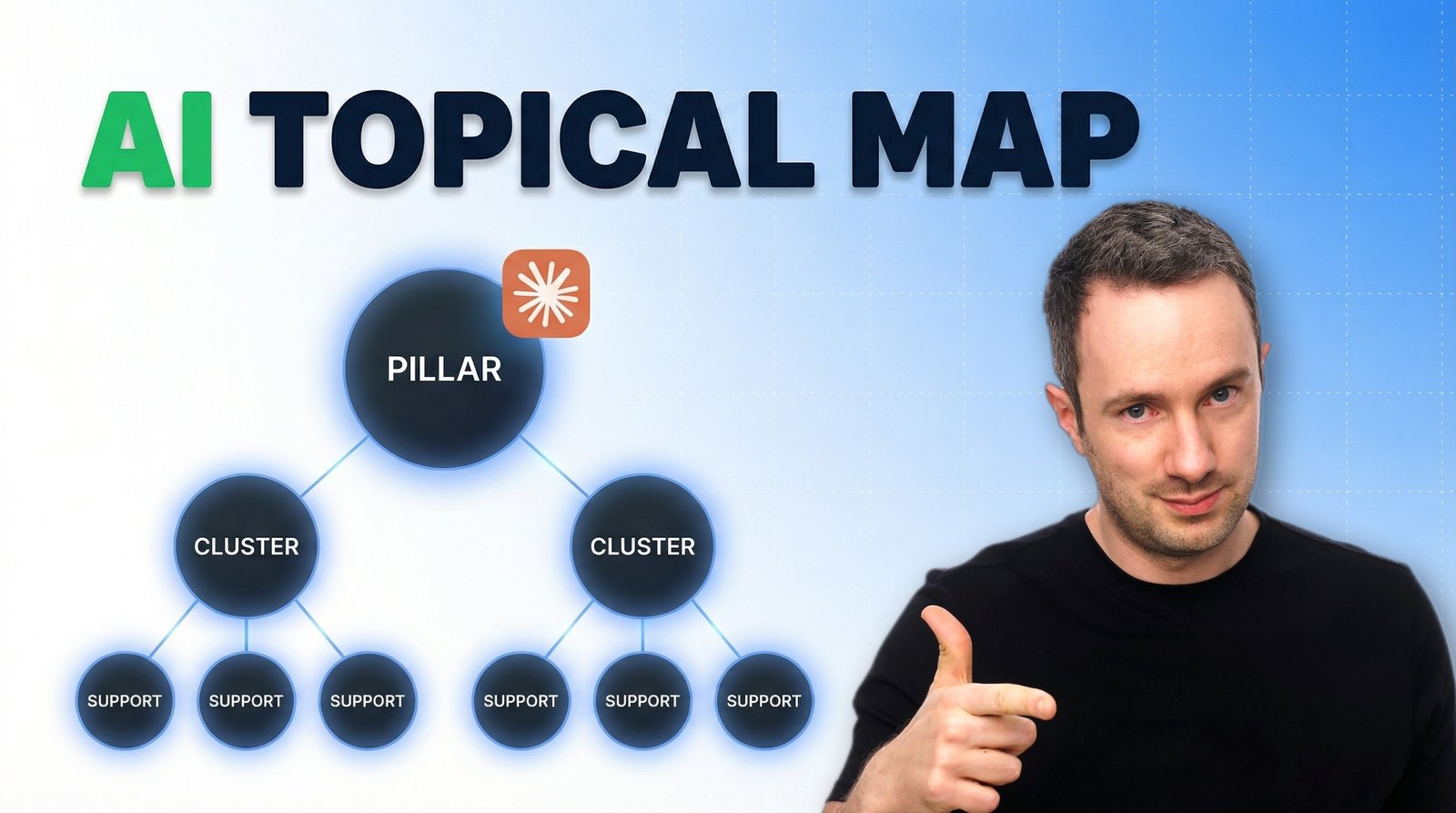
Traditional keyword research often isolates terms. An AI topical map, however, clusters semantically related phrases around pillar pages. For example, a map for “sustainable gardening” would branch into “soil health,” “water conservation,” “native plants,” “composting methods,” and even nuanced subtopics like “biochar application for urban gardens.” Each branch is backed by data, showing search volume, intent, and content format preferences.
The power lies in its ability to mirror how search engines understand the world. Google’s algorithms use natural language processing and entities to connect ideas. By aligning your site architecture with an AI topical map, you effectively pre-answer the cascade of follow-up questions a searcher might have, signaling deep expertise.
How Does an AI Topical Map Work?
The process typically blends large-scale data crawling with language model analysis. An AI tool begins with a seed keyword. It then scans top-ranking pages, extracts entities, parses autocomplete suggestions, and pulls “People Also Ask” queries. Advanced systems use embeddings to calculate semantic distances between terms, grouping them into coherent clusters automatically.
Natural language generation (NLG) and understanding (NLU) models then validate whether the clusters cover the full user journey. The AI topical map will often display a visual graph with nodes for pillar content, supporting articles, and internal linking pathways. This is not a static artifact; the map is iteratively refined as new trends emerge or algorithm updates shift the importance of certain subtopics.
Behind the scenes, the AI simulates an exhaustive exploration of a topic space. If a human were to manually map a complex domain like “life insurance,” it might take weeks. An AI topical map completes the initial structure in minutes, then surfaces gaps where no content exists, creating a prioritized editorial calendar.
Key Components of an AI Topical Map
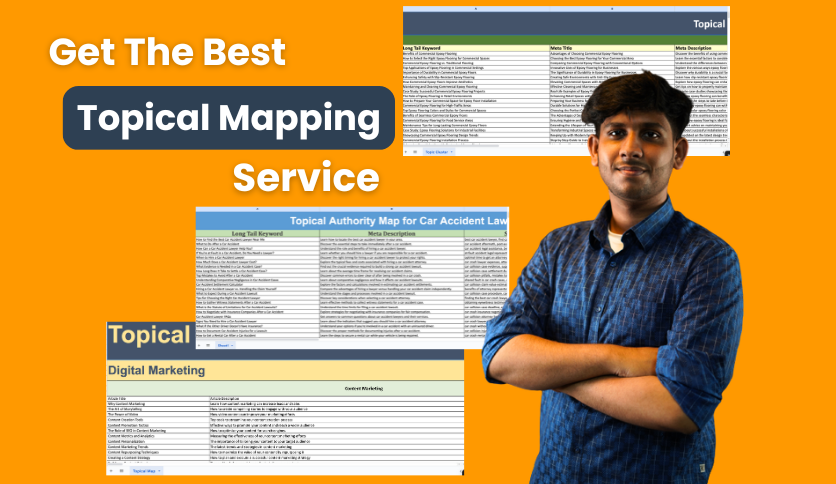
A robust AI topical map is built from several interconnected layers. Each layer adds a dimension of understanding, moving from broad themes down to transactional micro-topics. Understanding these components ensures the map is actionable, not just visually impressive.
- Pillar and Cluster Groups: The core architecture, defining a central high-level topic (pillar) and its supporting clusters. The AI groups articles that should interlink heavily.
- Entity Nodes: People, places, things, and concepts extracted from Google’s Knowledge Graph. These ensure your content uses precise language that matches machine understanding.
- Intent Labels: Each subtopic is tagged with dominant search intent—informational, commercial, navigational, or transactional. This dictates the content type (guide, product page, comparison).
- Semantic Relevance Scores: A metric indicating how closely related a subtopic is to the core pillar. This prevents content drift and maintains focus.
- Content Format Triggers: Based on SERP analysis, the map suggests whether a subtopic requires a video, an infographic, a long-form guide, or an interactive tool.
- Define the Core Entity: Start with a single, well-defined concept. Avoid broad terms like “marketing.” Instead, narrow to “B2B content marketing for SaaS.” This seed is what the AI expands.
- Run AI Data Collection: Use a dedicated topical mapping tool or a custom script that pulls data from search APIs, competitor sitemaps, and knowledge bases. Let the tool generate an initial graph with hundreds of node suggestions.
- Validate Intent and Relevance: Manually review the highest-volume nodes. Confirm that the user intent assigned by the AI matches your target customer’s journey. Remove any subtopic that does not directly support your commercial goals.
- Structure the Hierarchy: Organize nodes into parent-child-grandchild layers. A pillar page on “email marketing automation” might have children like “trigger-based sequences,” which then has grandchildren like “abandoned cart email examples.”
- Map Existing Content: Audit your current website. Map every existing URL to a node on the topical map. This immediately reveals content gaps where you have no coverage and consolidation opportunities where you have competing articles.
- Design the Internal Linking Web: Draw linking paths. Every child page should link back to its parent pillar. Sibling pages should interlink contextually. The map becomes a visual guide for your site’s navigational structure.
- Create the Editorial Calendar: Convert the map into a prioritized content brief. Assign due dates based on business impact. The AI topical map now drives every piece of content your team produces for the next quarter.
- Publishing Thin Content for Every Node: Seeing a map with 200 subtopics can trigger a volume obsession. Producing shallow, 300-word posts to fill every node destroys user trust. Only cover a subtopic if you can deliver genuine value.
- Ignoring the Information Gain Score: An AI topical map tells you what exists, but not what new insight you can bring. If you simply rewrite competitors’ points without adding original data, expert quotes, or unique analysis, the map becomes an echo chamber.
- Static Mapping: Treating the map as a one-time project. As Google updates its algorithms and new entities appear, the map must be refreshed. Failing to update leads to content rot, where once-authoritative pages lose relevance.
- Over-Automating the Writing: Using the map to generate AI-written articles end-to-end without human fact-checking is dangerous. Topical authority hinges on accuracy. A mistake in a medical or financial topical map can erase trust permanently.
When these components come together, an AI topical map transforms into a strategic command center. It informs not just what to write, but how to present it and how to connect it to existing assets.
Benefits of Using AI for Topical Mapping
Adopting an AI topical map delivers competitive advantages that go beyond simple traffic gains. The primary benefit is a dramatic increase in topical authority, a non-measurable but critically observed signal by quality raters and algorithms alike. A site that covers every nuanced angle of a subject naturally accrues higher dwell time and better brand recall.
Operational efficiency is another major gain. Content teams save hundreds of hours by eliminating manual brainstorming and competitor gap analysis. The AI identifies high-demand, low-competition subtopics that human analysis might miss, directly influencing resource allocation. Furthermore, internal linking strategies become data-driven. The map shows exactly which pages should link to each other based on semantic proximity, distributing PageRank effectively and reducing orphan pages.
For scaling content production, an AI topical map ensures every new article serves a defined purpose within the ecosystem. T For large enterprise sites with thousands of pages, this prevents redundant content creation and consolidates signals around the most authoritative pieces.
Limitations and Challenges
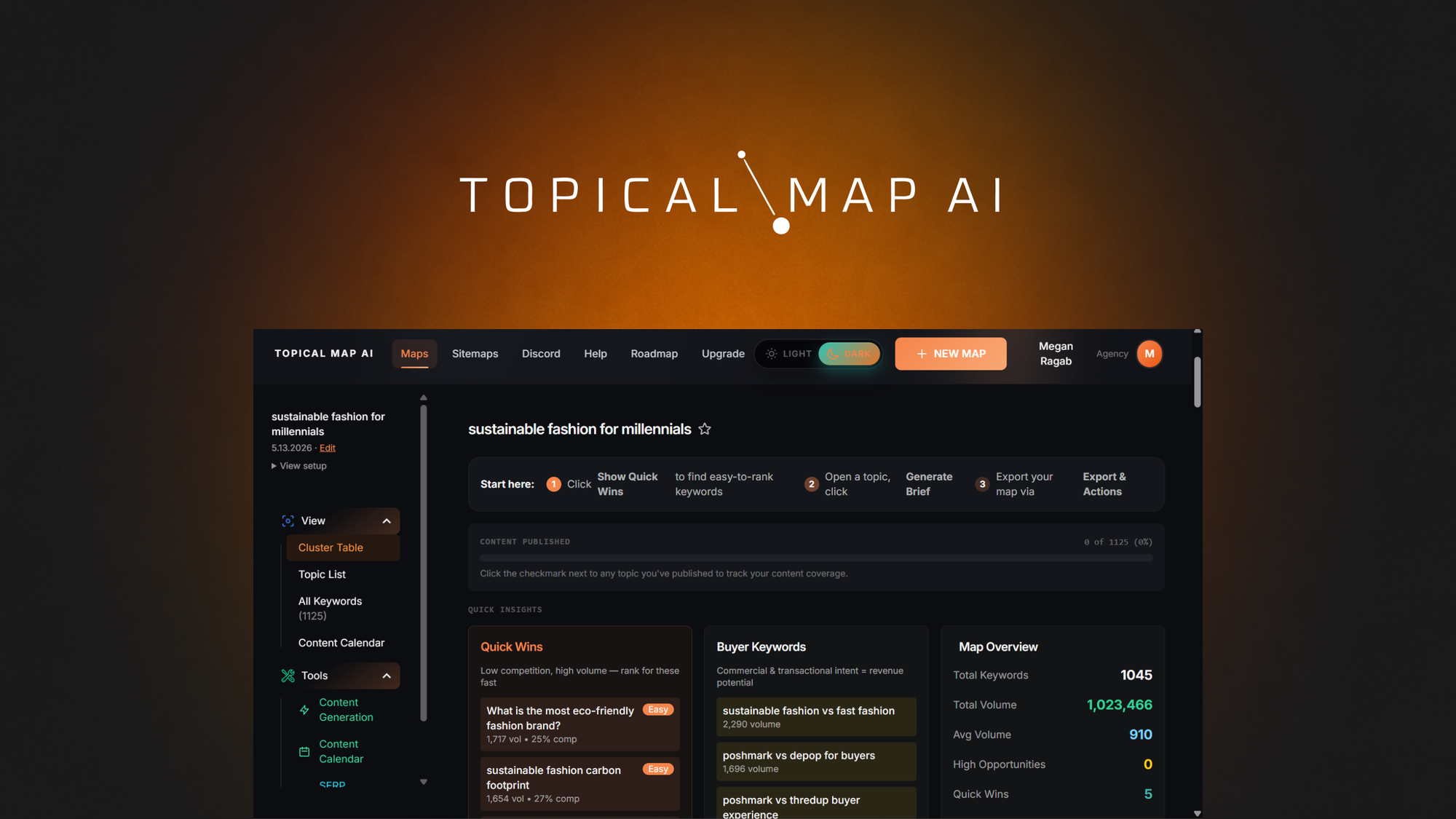
Relying solely on an AI topical map without human editorial oversight introduces risks. AI tools can surface low-quality, outdated, or irrelevant suggestions if they scrape unreliable sources. The map might prioritize technical completeness over engaging storytelling, leading to content that feels robotic and checklist-driven.
Another limitation is the potential for “topic bloat.” The AI may generate an overwhelming number of subtopics, making the map unactionable. Distilling this into a reasonably sized content plan requires strategic pruning based on brand relevance and business goals. Additionally, an AI topical map is only as current as its last data crawl. In fast-moving niches like crypto or AI itself, a map from two months ago may already be obsolete. Continuous recalibration is mandatory, and that requires dedicated human strategists who can interpret market shifts that algorithms have not yet indexed.
AI Topical Map vs. Traditional Keyword Clustering
While traditional keyword clustering groups terms by shared words or basic modifiers, an AI topical map operates on a conceptual level. The comparison below highlights why the shift is fundamental for modern SEO.
| Dimension | AI Topical Map | Traditional Keyword Clustering |
|---|---|---|
| Methodology | Entity and intent-based semantic analysis; uses NLP to understand relationships. | Phrase matching; groups exact and phrase-match terms based on shared root words. |
| Output Structure | Hierarchical tree with parent-child relationships, pillar-cluster visualization. | Flat groups or spreadsheets with loosely related keywords. |
| Coverage | Identifies latent topics and knowledge gaps a user expects. | Reflects only existing search queries, missing emerging concepts. |
| Intent Alignment | Tags each node with precise user intent and content format. | Often groups mixed intents unless manually filtered. |
| Scalability | Exponential; one seed generates a full network of topical ideas. | Linear; requires constant manual expansion from new seed lists. |
The table makes it clear that an AI topical map is a strategic evolution. Traditional clustering remains useful for quick wins, but building long-term authority demands the interconnected depth that AI provides.
Step-by-Step Guide to Building an AI Topical Map
Creating an effective AI topical map is a repeatable process. While automation handles the heavy lifting, the strategic framing must come from a human expert who understands the brand’s unique value proposition.
Common Mistakes When Implementing AI Topical Maps
Even with sophisticated tools, execution frequently falters due to a few recurring errors. Recognizing these pitfalls early prevents wasted effort and protects your site from algorithmic penalties.
Important Notes for Long-Term Success
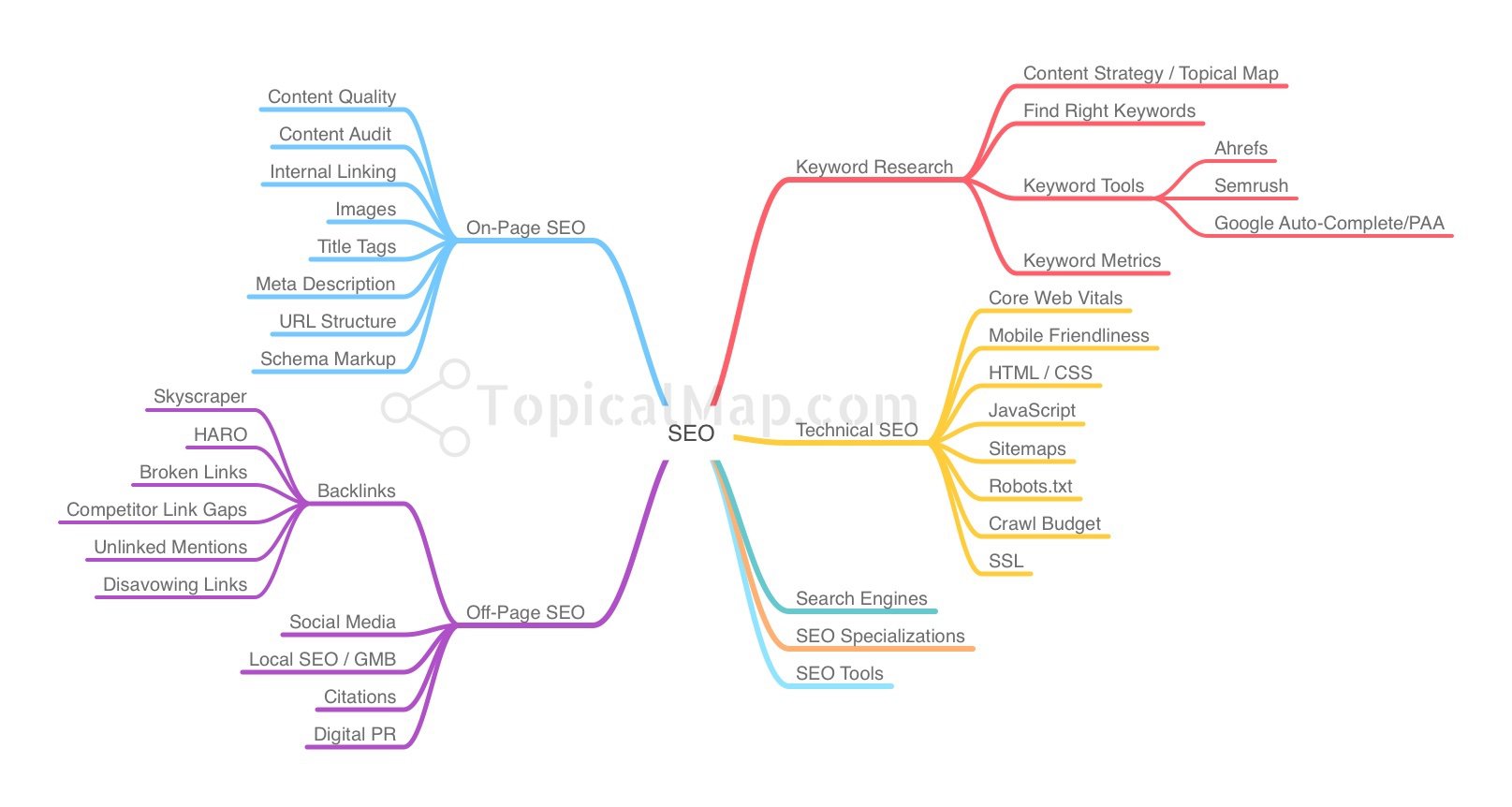
An AI topical map is a powerful accelerant, but the foundation rests on brand differentiation. The map must reflect your unique angle. If your brand champions radical transparency, that lens must color every subtopic in the map. Generic content, even if topically complete, rarely wins against entrenched competitors with established authority.
Additionally, treat internal linking from the map as a contract. Once you define a pillar-cluster relationship, you must physically build those links in the live site. Use descriptive anchor text that reinforces the entity relationship. Crawl budget optimization naturally follows, as search engines learn your site’s topic architecture and index your most important pages more frequently.
Finally, combine your AI topical map with performance data. After publishing, monitor organic traffic per cluster. If a branch of the map underperforms, investigate whether the intent was misidentified or if the supporting content lacks depth. This feedback loop turns the map into a living optimization engine.
Frequently Asked Questions
What exactly is an AI topical map?
An AI topical map is a data-driven blueprint that breaks down a broad subject into all its related subtopics, questions, and entities using machine learning. It helps organize website content so thoroughly that every aspect of a topic is covered, signaling complete authority to search engines.
How does an AI topical map improve SEO?
It improves SEO by eliminating content gaps and enforcing semantic internal linking. When search engines see that your site comprehensively answers every related question with proper hierarchy, they rank your pillar pages higher. This approach also increases dwell time and reduces bounce rate, strengthening behavioral signals.
Can I create an AI topical map without expensive tools?
Yes, a manual approach using free keyword research tools, Wikipedia outlines, and “People Also Ask” scrapers can yield a basic topical map. However, true AI topical maps rely on NLP embeddings and large-scale SERP analysis that are difficult to replicate manually. The time saved by paid tools often justifies the investment.
What is the difference between a topical map and a sitemap?
A sitemap is a simple list of URLs for crawlers, while an AI topical map is a strategic content plan showing the semantic relationships between topics. The topical map informs why pages should exist and how they interconnect conceptually, whereas a sitemap is a technical file for robots.
How often should an AI topical map be updated?
Quarterly updates are the minimum standard. For industries with high volatility, monthly reviews are recommended. Each update should incorporate new search queries, filter out declining topics, and adjust intent labels based on the latest SERP layouts.
Does an AI topical map help with voice search?
Absolutely. Voice search queries are often long-tail questions. An AI topical map specifically uncovers these question-based subtopics and structures answers concisely. By covering the full question graph, you increase the chance of being the featured snippet for voice assistants.
Conclusion
An AI topical map represents the convergence of machine intelligence and human editorial wisdom. It moves content strategy from reactive guesswork to proactive architectural design. When executed correctly, the result is a digital property that search engines cannot ignore. The web is saturated with stand-alone articles; what rises to the top are interconnected ecosystems of knowledge. By building your next campaign around a meticulously crafted AI topical map, you are not just publishing content—you are constructing the definitive resource on the subject. That is the sustainable path to authority, traffic, and trust.
Xem thêm:
- LLM SEO: The Ultimate Guide to Optimizing for Large Language Model Search
- AI SEO Commercial Intent: The Complete Guide to Converting Search Traffic
- AI SEO AI Referral Tracking: The Complete Guide to Smarter Attribution
- How to Use Claude for SEO: A Complete Guide to Ranking Higher with AI Assistance
- AI SEO Featured Snippet Opportunities: The Complete Playbook for 2025
Bài viết cùng chủ đề:

AI SEO SEO Automation with Make: The Complete Workflow Guide

AI SEO SEO Automation with Zapier: The Complete Workflow Guide

AI SEO SEO Automation with n8n: The Complete Workflow Guide
AI SEO SEO Automation with Gemini: The Complete Guide to Scaling Organic Growth

AI SEO SEO Automation with Claude: The Complete Guide to Scaling Content in 2025

AI SEO SEO Automation with ChatGPT: The Complete Playbook for 2025

AI SEO & SEO Automation for Affiliate Sites: The 2025 Playbook for Passive Income Growth
AI SEO & SEO Automation for Bloggers: The Complete Guide to Scaling Your Content

AI SEO & SEO Automation for Agencies: The Complete 2025 Playbook

AI SEO and SEO Automation for Ecommerce: The Complete Playbook for 2025

AI SEO & SEO Automation for WordPress: The Complete Playbook for 2025
AI SEO SEO Automation Strategy: The Complete Playbook for 2025

Mastering the AI SEO SEO Automation Process: A Complete Guide to Scaling Organic Growth
AI SEO SEO Automation System: The Complete Guide to Scaling Organic Growth in 2025
AI SEO SEO Automation Platform: The Complete Guide to Scaling Organic Growth in 2025
AI SEO SEO Automation Software: The Complete Guide to Scaling Organic Growth in 2025















