
No products in the cart.
AI SEO Keyword Semantics: The Complete Guide to Search Intent Optimization
10
Aug
Aug
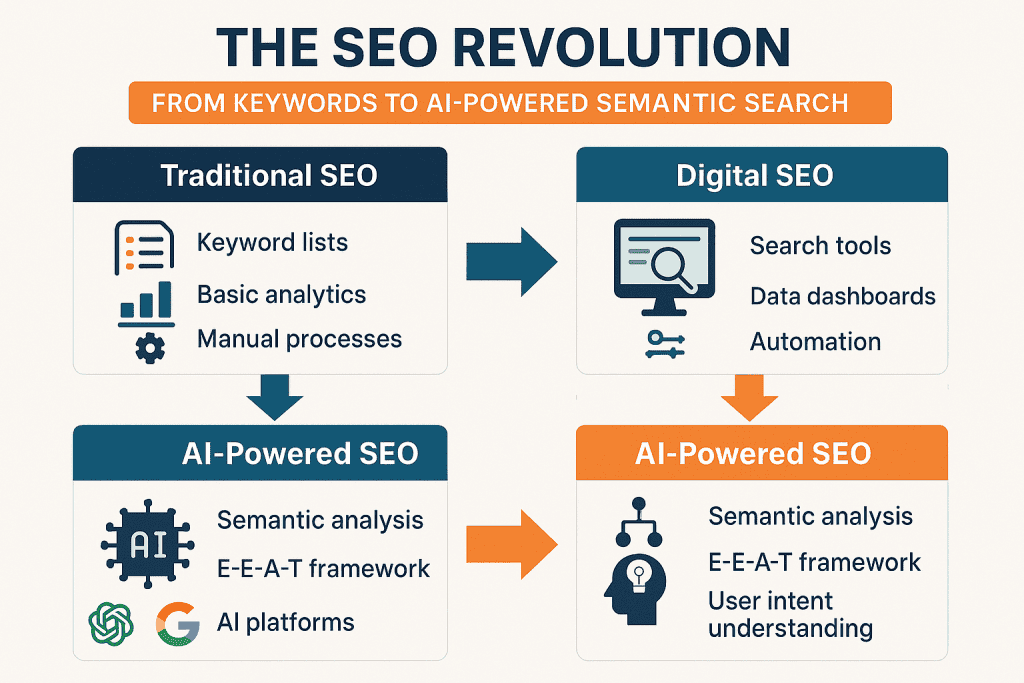
AI SEO keyword semantics has transformed how digital marketers approach search engine optimization. The days of simply matching exact-match phrases are fading, replaced by a sophisticated understanding of how search engines interpret meaning, context, and user intent. This comprehensive guide explores the intersection of artificial intelligence and semantic keyword analysis, providing actionable strategies to improve organic visibility in an increasingly competitive landscape.
Understanding AI SEO Keyword Semantics
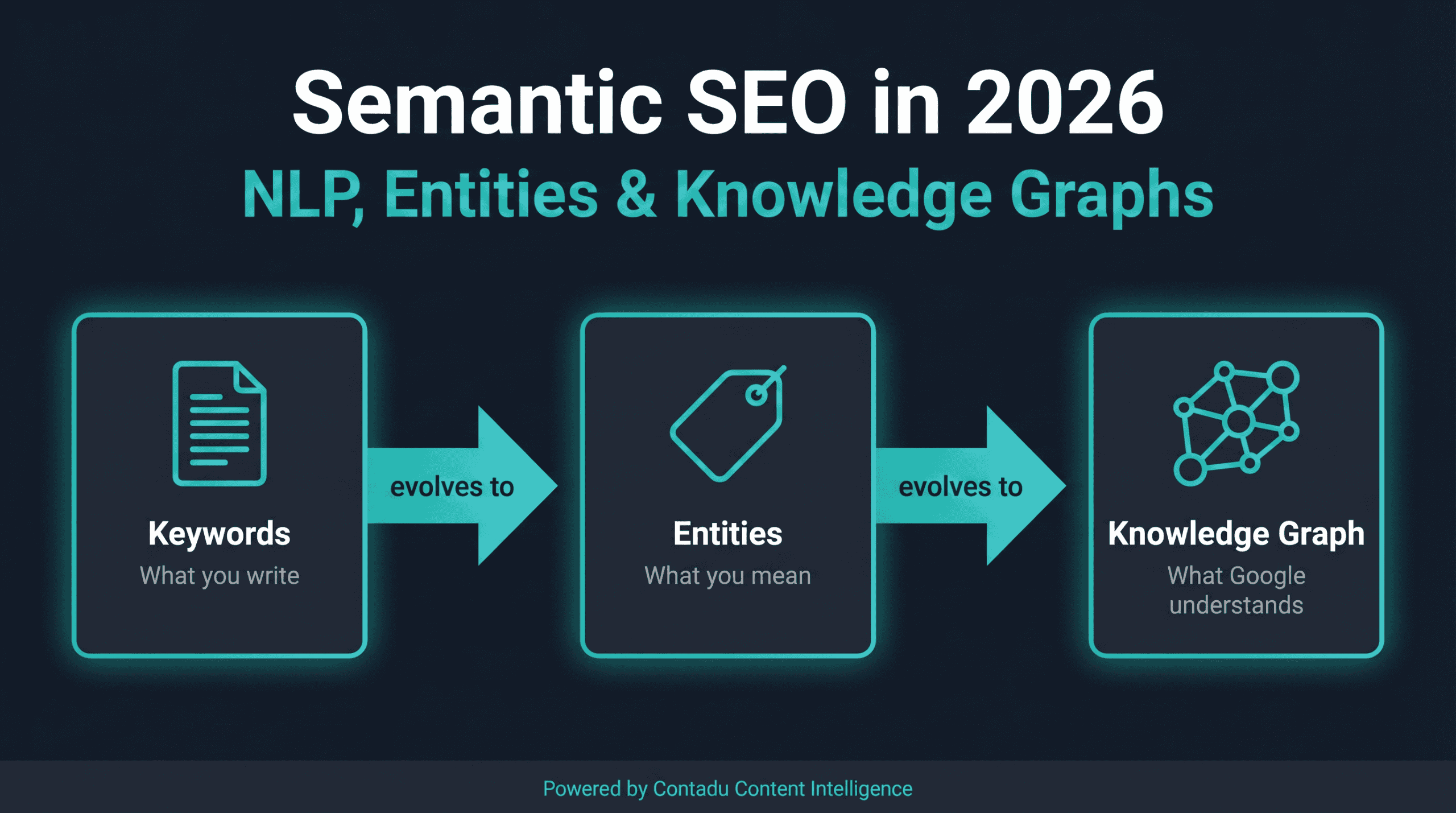
AI SEO keyword semantics refers to the application of artificial intelligence and machine learning algorithms to analyze, interpret, and optimize keyword usage based on meaning rather than literal text matching. Modern search engines like Google employ neural matching and natural language processing (NLP) to understand the relationships between words, phrases, and concepts within a query.
This approach moves beyond traditional keyword density metrics. Search engines now evaluate whether content genuinely satisfies the searcher’s underlying need, considering factors like topical relevance, entity relationships, and semantic context. For SEO professionals, this means optimizing for topics and concepts, not just individual keywords.
The Evolution from Keywords to Semantics
Early search engines relied heavily on exact keyword matching. A page containing the precise phrase “best running shoes” would rank for that query, regardless of content quality. The introduction of Hummingbird in 2013 marked a significant shift toward understanding conversational queries and synonyms. Subsequent updates like RankBrain and BERT further refined semantic understanding, enabling search engines to grasp context, nuance, and user intent with remarkable accuracy.
Today, AI-powered systems analyze billions of data points to determine how words relate to each other. They understand that “cheap flights to Paris” and “affordable airfare to France” share similar intent, even though they share no exact keywords. This semantic understanding forms the foundation of modern SEO strategy.
How AI Analyzes Keyword Semantics
Artificial intelligence processes keyword semantics through several sophisticated mechanisms. Understanding these processes helps content creators develop more effective optimization strategies.
Natural Language Processing (NLP)
NLP enables search engines to parse sentence structure, identify parts of speech, and understand grammatical relationships. This technology allows algorithms to distinguish between different meanings of the same word based on context. For example, “bank” could refer to a financial institution or a river’s edge, and NLP helps determine which meaning applies based on surrounding words.
Entity Recognition and Knowledge Graphs
Search engines maintain extensive knowledge graphs containing entities—people, places, organizations, and concepts—along with their relationships. When analyzing content, AI systems identify entities and cross-reference them against these graphs. This enables search engines to understand that “Apple” refers to the technology company when mentioned alongside “iPhone” or “MacBook,” but to the fruit when discussed with “orchard” or “pie.”
Contextual Embedding and Vector Representations
Modern AI models like BERT and GPT create mathematical representations of words called embeddings. These vectors capture semantic meaning by positioning words with similar meanings close together in multidimensional space. This allows search engines to identify related concepts and understand subtle differences in meaning across different contexts.
Core Components of Semantic Keyword Optimization
Implementing AI SEO keyword semantics requires attention to several interconnected elements that work together to signal topical authority and relevance.
Topic Clusters and Content Hubs
Organizing content into topic clusters helps search engines understand your site’s expertise in specific areas. A pillar page covering a broad topic links to multiple cluster pages exploring subtopics in detail. This structure creates clear semantic relationships that AI systems can interpret, establishing your site as an authoritative resource.
Latent Semantic Indexing (LSI) Keywords
LSI keywords are conceptually related terms that help search engines understand content context. For a page about “AI SEO keyword semantics,” relevant LSI terms might include “search intent,” “natural language processing,” “semantic search,” “entity optimization,” and “machine learning algorithms.” Including these related terms naturally throughout content strengthens semantic signals.
User Intent Classification
Search queries generally fall into four intent categories: informational, navigational, commercial, and transactional. AI systems classify queries to determine which results best satisfy user needs. Content optimized for informational intent should provide comprehensive answers, while transactional content should focus on product comparisons and purchase guidance.
Benefits of AI-Driven Semantic Optimization
Adopting AI SEO keyword semantics offers numerous advantages over traditional keyword-focused approaches. These benefits extend beyond rankings to impact overall content quality and user experience.
- Improved Search Relevance: Semantic optimization helps content match user intent more accurately, increasing the likelihood of ranking for relevant queries.
- Broader Keyword Coverage: Understanding semantic relationships enables content to rank for numerous related queries without keyword stuffing.
- Enhanced Content Quality: Focusing on topics rather than keywords naturally produces more comprehensive, valuable content that satisfies users.
- Voice Search Readiness: Semantic optimization aligns with conversational queries typical of voice search, capturing traffic from this growing segment.
- Future-Proof Strategy: As search engines continue advancing AI capabilities, semantic optimization positions sites for sustained visibility.
- Keyword Position Tracking: Monitor rankings for primary keywords and related semantic variations to assess visibility improvements.
- Organic Traffic Quality: Analyze engagement metrics like bounce rate, time on page, and pages per session to evaluate whether traffic matches intent.
- Featured Snippet Acquisition: Track how often your content appears in position zero, indicating strong semantic alignment with query intent.
- Topic Authority Metrics: Monitor the number of keywords your site ranks for within specific topic clusters to gauge semantic authority growth.
- Conversion Rate Analysis: Measure how effectively semantic traffic converts, ensuring that optimization efforts attract qualified visitors.
Practical Implementation Strategies
Translating semantic concepts into actionable SEO practices requires a systematic approach. The following strategies provide a framework for implementing AI SEO keyword semantics effectively.
Conduct Semantic Keyword Research
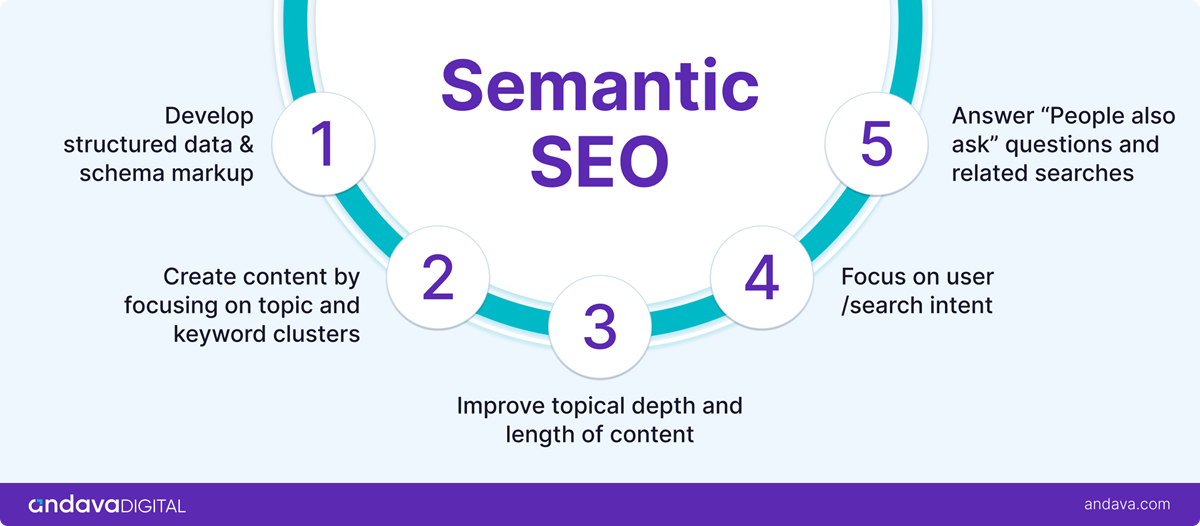
Traditional keyword research tools now incorporate AI-powered features that identify related concepts and semantic variations. Use these tools to build comprehensive keyword clusters around core topics. Analyze search engine results pages (SERPs) to identify common themes, related questions, and content patterns that indicate semantic relevance.
Analyze Search Intent Thoroughly
Before creating content, examine the current SERP for your target keyword. Identify whether results lean toward informational articles, product pages, or comparison content. Study the “People Also Ask” boxes and related searches to understand the full scope of user needs. This analysis reveals the semantic landscape surrounding your topic.
Structure Content for Semantic Clarity
Organize content using clear hierarchical headings that reflect logical topic progression. Use descriptive subheadings containing related terms and concepts. Ensure each section addresses a distinct aspect of the main topic, creating comprehensive coverage that AI systems recognize as authoritative.
Leverage Structured Data
Schema markup provides explicit semantic signals to search engines. Implement structured data for articles, FAQs, products, and other content types to clarify entity relationships and content purpose. This technical implementation enhances AI understanding of your content’s meaning and context.
Tools for AI Keyword Semantics Analysis
Several powerful tools leverage artificial intelligence to support semantic keyword optimization. These platforms provide insights that would be impossible to derive manually.
| Tool | Primary Function | Key Semantic Features |
|---|---|---|
| Surfer SEO | Content optimization | NLP analysis, semantic relevance scoring, content structure recommendations |
| Clearscope | Content optimization | Term frequency analysis, semantic keyword suggestions, readability optimization |
| MarketMuse | Content intelligence | Topical authority scoring, entity identification, content gap analysis |
| Frase.io | Content creation | SERP analysis, question extraction, AI-assisted content generation |
| Semrush | SEO suite | Topic research, semantic clustering, intent classification |
These tools analyze top-ranking content to identify semantic patterns and provide data-driven recommendations for improving topical relevance. While they cannot replace human judgment, they significantly enhance the efficiency and accuracy of semantic optimization efforts.
Common Mistakes in Semantic SEO
Even experienced SEO professionals make errors when implementing semantic strategies. Recognizing these pitfalls helps avoid wasted effort and potential penalties.
Keyword Stuffing with LSI Terms
Some practitioners mistakenly believe that adding numerous LSI keywords improves semantic relevance. This approach often results in unnatural content that harms user experience and may trigger spam detection. Semantic keywords should appear naturally within meaningful context, not forced into every paragraph.
Ignoring User Intent Variations
Failing to distinguish between different intent types leads to mismatched content. A page optimized for informational intent will not satisfy users seeking transactional information, regardless of semantic optimization quality. Always align content format and depth with the dominant intent for your target queries.
Neglecting Entity Relationships
Search engines increasingly rely on entity understanding to determine relevance. Content that fails to establish clear relationships between key entities misses opportunities for semantic recognition. Explicitly connect your main topic to related entities through natural language and structured data.
Overlooking Content Freshness
Semantic understanding evolves as search engines update their AI models. Content that was semantically optimized years ago may no longer align with current algorithms. Regularly audit and refresh existing content to maintain semantic relevance and topical authority.
Measuring Semantic SEO Success
Tracking the effectiveness of AI SEO keyword semantics requires metrics beyond traditional keyword rankings. Comprehensive measurement provides insights into whether semantic strategies are delivering expected results.
Future Trends in AI SEO Keyword Semantics
The field of semantic SEO continues evolving rapidly as artificial intelligence advances. Staying informed about emerging trends helps maintain competitive advantage.
Generative AI Integration
Large language models increasingly influence how search engines process and generate content. Understanding how these models interpret semantics will become essential for creating content that aligns with AI-driven ranking systems.
Multimodal Search Understanding
Search engines now process images, video, and audio alongside text. Semantic understanding will extend across these modalities, requiring optimization strategies that address visual and auditory content semantics.
Personalized Semantic Context
Search engines are moving toward delivering personalized results based on user history and preferences. Semantic optimization may need to account for varying interpretations of the same query across different user segments.
Frequently Asked Questions
What is the difference between keywords and semantics in SEO?
Keywords are specific words or phrases that users type into search engines, while semantics refers to the meaning and context behind those words. Semantic SEO focuses on understanding user intent and creating content that addresses the underlying topic comprehensively, rather than simply matching exact keyword phrases.
How does AI improve keyword research?
AI enhances keyword research by analyzing vast datasets to identify semantic relationships, predict search trends, and classify user intent. Machine learning algorithms can process millions of search queries to uncover related concepts and topics that traditional research methods might miss.
Can semantic SEO work for local businesses?
Semantic SEO is highly effective for local businesses. Search engines use semantic understanding to connect local queries with relevant businesses based on context, proximity, and user intent. Optimizing for local entities, landmarks, and neighborhood references improves semantic relevance for local searches.
How long does it take to see results from semantic optimization?
Results from semantic optimization typically appear within 2-4 months, depending on competition level and content quality. Comprehensive semantic improvements often produce compounding benefits as search engines increasingly recognize topical authority and content relevance.
Is semantic SEO the same as voice search optimization?
Semantic SEO and voice search optimization are related but distinct concepts. Voice search relies heavily on semantic understanding because conversational queries differ from typed searches. However, semantic SEO applies to all search types, while voice search optimization specifically addresses the unique characteristics of spoken queries.
Important Notes for Implementation
Successful implementation of AI SEO keyword semantics requires patience and consistent effort. Search engines take time to recognize and reward semantic improvements. Focus on creating genuinely valuable content that serves user needs rather than chasing algorithmic signals.
Maintain a balance between semantic optimization and readability. Content should flow naturally for human readers while providing clear semantic signals for AI systems. Avoid sacrificing user experience for perceived algorithmic benefits.
Stay informed about search engine algorithm updates and AI advancements. The semantic landscape continues shifting as technology evolves, and strategies that work today may require adjustment tomorrow. Continuous learning and adaptation remain essential for sustained SEO success.
Conclusion
AI SEO keyword semantics represents the current frontier of search engine optimization. Understanding how artificial intelligence interprets meaning, context, and user intent enables content creators to develop strategies that align with modern ranking systems. By focusing on topics rather than isolated keywords, implementing structured content hierarchies, and leveraging AI-powered tools, businesses can improve their organic visibility and attract qualified traffic.
The shift toward semantic understanding reflects a broader evolution in how search engines deliver value to users. Prioritizing comprehensive, intent-focused content benefits both search performance and user satisfaction. As AI capabilities continue advancing, the importance of semantic optimization will only grow, making it an essential component of any forward-thinking SEO strategy.
Xem thêm:
- AI SEO AI Citation Optimization: The Complete Guide to Dominating Local Search in 2025
- AI Search vs Google Search: The Complete Guide to How Modern Query Engines Actually Work
- AI Landing Page Optimization: Transform Your Conversion Rates with Smart Technology
- How to Use Gemini for SEO: The Ultimate Guide to Boosting Rankings with AI
- AI SEO Article Outline Generator: The Complete Guide to Smarter Content Planning
Bài viết cùng chủ đề:

AI SEO SEO Automation with Make: The Complete Workflow Guide

AI SEO SEO Automation with Zapier: The Complete Workflow Guide

AI SEO SEO Automation with n8n: The Complete Workflow Guide
AI SEO SEO Automation with Gemini: The Complete Guide to Scaling Organic Growth

AI SEO SEO Automation with Claude: The Complete Guide to Scaling Content in 2025

AI SEO SEO Automation with ChatGPT: The Complete Playbook for 2025

AI SEO & SEO Automation for Affiliate Sites: The 2025 Playbook for Passive Income Growth
AI SEO & SEO Automation for Bloggers: The Complete Guide to Scaling Your Content

AI SEO & SEO Automation for Agencies: The Complete 2025 Playbook

AI SEO and SEO Automation for Ecommerce: The Complete Playbook for 2025

AI SEO & SEO Automation for WordPress: The Complete Playbook for 2025
AI SEO SEO Automation Strategy: The Complete Playbook for 2025

Mastering the AI SEO SEO Automation Process: A Complete Guide to Scaling Organic Growth
AI SEO SEO Automation System: The Complete Guide to Scaling Organic Growth in 2025
AI SEO SEO Automation Platform: The Complete Guide to Scaling Organic Growth in 2025
AI SEO SEO Automation Software: The Complete Guide to Scaling Organic Growth in 2025















