
No products in the cart.
AI SEO Knowledge Base: The Complete Guide to Building and Using One in 2025
31
Jul
Jul
An AI SEO Knowledge Base is no longer a luxury for forward-thinking marketing teams; it is a necessity for anyone serious about organic growth. This centralized repository combines the analytical power of artificial intelligence with the structured wisdom of a traditional knowledge base, allowing teams to automate research, scale content production, and adapt to search engine algorithm updates in real time. This guide covers everything from the core components of an AI-driven SEO system to practical implementation strategies, common pitfalls, and future trends.
What is an AI SEO Knowledge Base?
At its core, an AI SEO Knowledge Base is a dynamic, interconnected system that stores, organizes, and retrieves SEO-related data using machine learning algorithms. Unlike a static folder of documents or a simple spreadsheet, this system learns from new data continuously. It ingests information from search engine result pages (SERPs), competitor backlink profiles, user behavior metrics, and your own website’s performance analytics.
The “knowledge” part refers to the structured entities, relationships, and patterns the AI identifies. For example, the system does not just store the keyword “best running shoes.” It understands that this keyword relates to “cushioning,” “heel drop,” “road running,” and “marathon training.” It maps these relationships automatically, creating a semantic web of information that informs content strategy.
This differs from a standard SEO tool dashboard. A tool shows you rankings and traffic. An AI SEO Knowledge Base tells you why rankings changed, predicts what content will perform next, and drafts briefs based on predictive models. It is the difference between reading a map and having a GPS that recalculates your route based on live traffic.
Why Traditional SEO Documentation Fails
Traditional SEO documentation relies on manual audits, static spreadsheets, and periodic updates. This approach breaks down for several reasons. First, search algorithms change thousands of times per year. A document updated quarterly is obsolete within weeks. Second, human analysis is subjective and slow. Two analysts will interpret the same drop in rankings differently, leading to inconsistent strategies.
Third, traditional documentation lacks context. A keyword list without intent data, competitor movement, or seasonal trends is just a list of words. It does not tell you whether to write a product page, a blog post, or a video script. Finally, scaling content production with manual research creates a bottleneck. You cannot produce 100 data-backed articles per month if you are manually checking SERPs for each one.
An AI SEO Knowledge Base solves these issues by automating data collection, standardizing analysis, and providing actionable recommendations instantly. It turns SEO from a reactive discipline into a proactive, predictive one.
Core Components of an AI SEO Knowledge Base
Building a functional AI SEO Knowledge Base requires several integrated layers. Each component serves a distinct purpose in the data-to-action pipeline.
1. Data Ingestion Layer
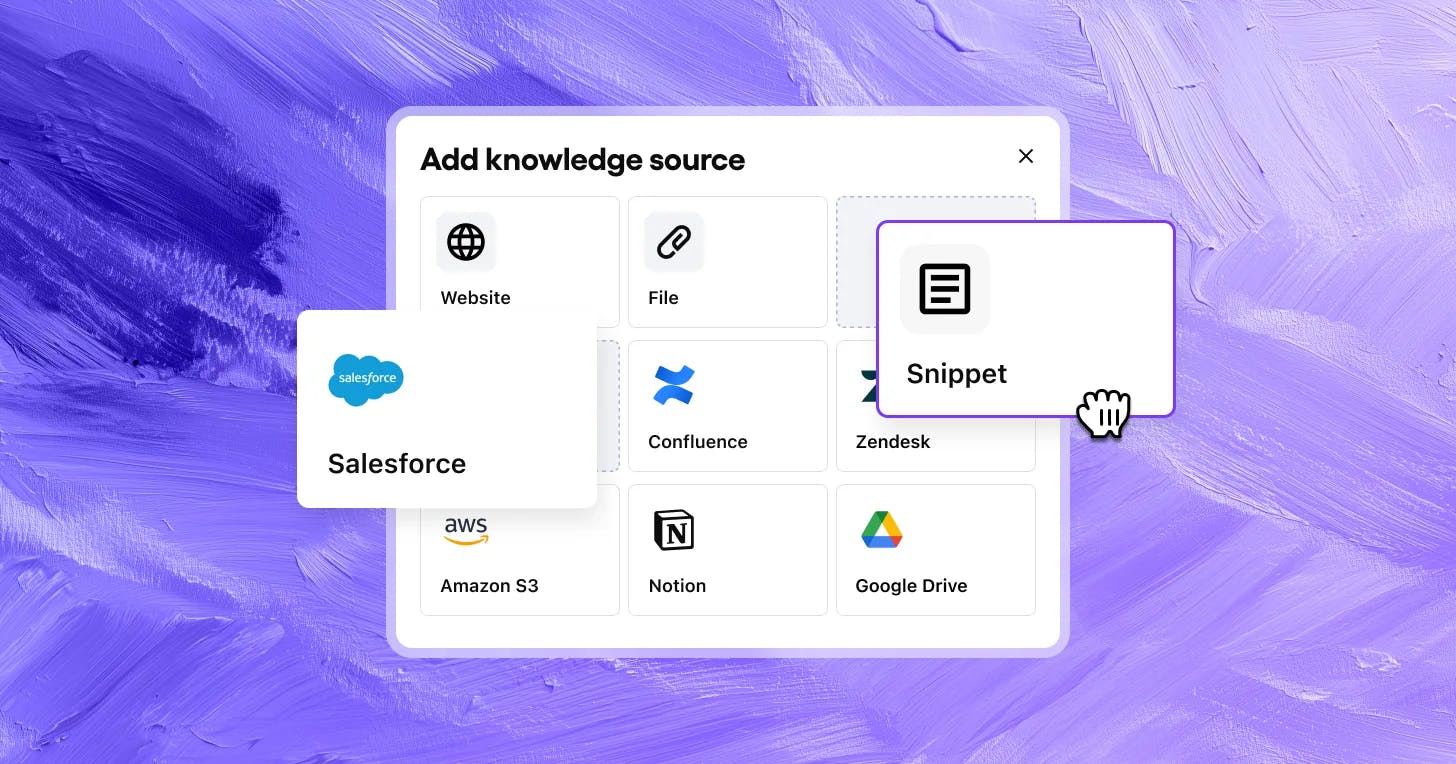
This is the foundation. The system must pull data from multiple sources simultaneously. This includes Google Search Console for impressions and clicks, Google Analytics for user behavior, Ahrefs or Semrush for backlinks and keyword difficulty, and your CMS for content performance. The AI cleans this data, deduplicates it, and standardizes formats so that different datasets can be compared.
2. Semantic Entity Recognition
This component uses Natural Language Processing (NLP) to identify entities within your content and the SERPs. Entities are things like people, places, products, and concepts. The AI extracts these entities and maps their relationships. For example, it recognizes that “Apple” (the company) is different from “apple” (the fruit) based on context. This allows the knowledge base to understand topical authority and identify content gaps.
3. Predictive Ranking Models
Using historical data, the AI builds models that predict how changes to content, backlinks, or page speed will affect rankings. These models use regression analysis and machine learning algorithms like Random Forest or Gradient Boosting. The output is a probability score, not a guarantee. For instance, the system might predict that adding a specific FAQ section to a page increases its chance of ranking for a featured snippet by 40%.
4. Content Brief Generator
This component transforms raw data into actionable briefs for writers. A brief generated by an AI SEO Knowledge Base includes target keywords, related entities, suggested headings, internal linking opportunities, and even a predicted word count based on the current top-ranking pages. It also includes sentiment analysis of the top results, telling the writer whether the tone should be professional, casual, or technical.
5. Automated Reporting and Alerts
Instead of waiting for a monthly report, the knowledge base sends real-time alerts. If a core page loses 20% of its traffic overnight, the system flags it, correlates it with a recent algorithm update or a competitor’s new content, and suggests a remediation plan. This component turns the knowledge base from a passive archive into an active monitoring system.
How to Build an AI SEO Knowledge Base: Step-by-Step
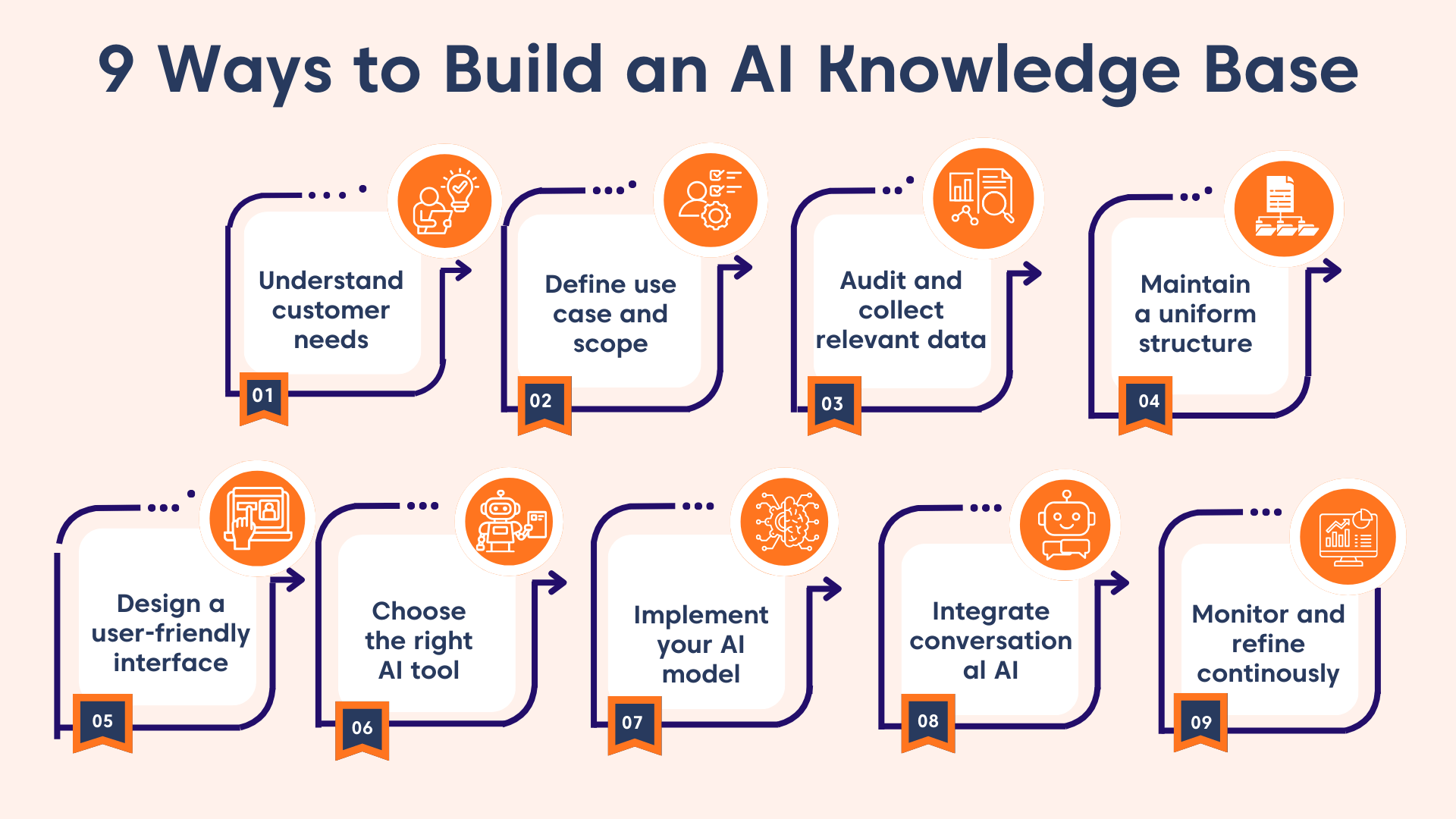
Building this system does not require a team of data scientists. Modern tools and APIs make it accessible to mid-sized businesses.
- Define Your Core Entities: List the main products, services, and topics your business covers. These are your primary entities. For a fitness brand, this might be “home gym equipment,” “HIIT workouts,” and “nutrition plans.”
- Choose a Central Repository: Use a cloud-based database like Airtable, Notion, or a custom SQL database. This is where all structured data will live. Ensure it has an API for automation.
- Connect Data Sources: Use integration tools like Zapier or Make to connect your SEO tools (Google Search Console, Ahrefs) to the repository. Set up daily or weekly syncs.
- Implement an NLP Layer: Use APIs like Google Cloud Natural Language or SpaCy to process your content and the SERPs. This extracts entities and relationships automatically.
- Train Your Prediction Model: Start with historical data from the past 12 months. Use a tool like BigQuery ML or a simple Python script to build a baseline model. The model should correlate on-page factors (word count, headings, schema) with rankings.
- Create Automated Briefs: Write a script that queries the database for a target keyword, pulls the top 10 SERP features, and generates a structured brief. Push these briefs to your project management tool.
- Set Up Alerting: Configure thresholds for traffic drops, ranking volatility, and indexation issues. Use Slack or email webhooks for notifications.
This process takes time to refine. Start with one content cluster, not your entire site. Test the predictions, adjust the model, and then scale.
Benefits of Using an AI SEO Knowledge Base
The advantages of this system extend beyond saving time. They fundamentally change the quality and consistency of your SEO output.
- Scalability: You can research and brief 100 articles per week without adding headcount. The AI handles the repetitive analysis.
- Consistency: Every brief follows the same data-backed format. T
- Speed of Adaptation: When Google updates its algorithm, the knowledge base detects the shift in SERP features and updates its recommendations within days, not months.
- Improved Internal Linking: The system identifies orphan pages and suggests contextual links based on entity relationships, boosting crawl efficiency and page authority distribution.
- Competitor Gap Analysis: The AI continuously monitors competitor content and backlinks, highlighting opportunities where you can outrank them.
- Reduced Keyword Cannibalization: By mapping entities and intents, the system flags when two of your pages target the same query, preventing self-competition.
Limitations and Challenges
Despite its power, an AI SEO Knowledge Base is not a silver bullet. Understanding its limitations prevents unrealistic expectations.
Data Quality Dependency: The system is only as good as the data it ingests. If your Google Analytics tracking is broken or your backlink data is incomplete, the A Garbage in, garbage out remains a fundamental rule.
Lack of Creativity: AI can analyze patterns but cannot generate truly novel ideas. It will suggest topics similar to what already ranks, which can lead to a “me-too” content strategy. Human oversight is required for breakthrough content.
Implementation Complexity: Setting up the initial infrastructure requires technical skills in APIs, databases, and basic machine learning. Small teams without these skills may struggle during the setup phase.
Cost: While open-source tools exist, the full stack (enterprise SEO tools, cloud computing, NLP APIs) can cost thousands of dollars per month. The ROI must be carefully calculated.
Over-Reliance on Historical Data: Predictive models work well in stable markets. In rapidly changing industries (e.g., cryptocurrency, AI software), historical data may not accurately predict future rankings.
AI SEO Knowledge Base vs. Traditional SEO Tools
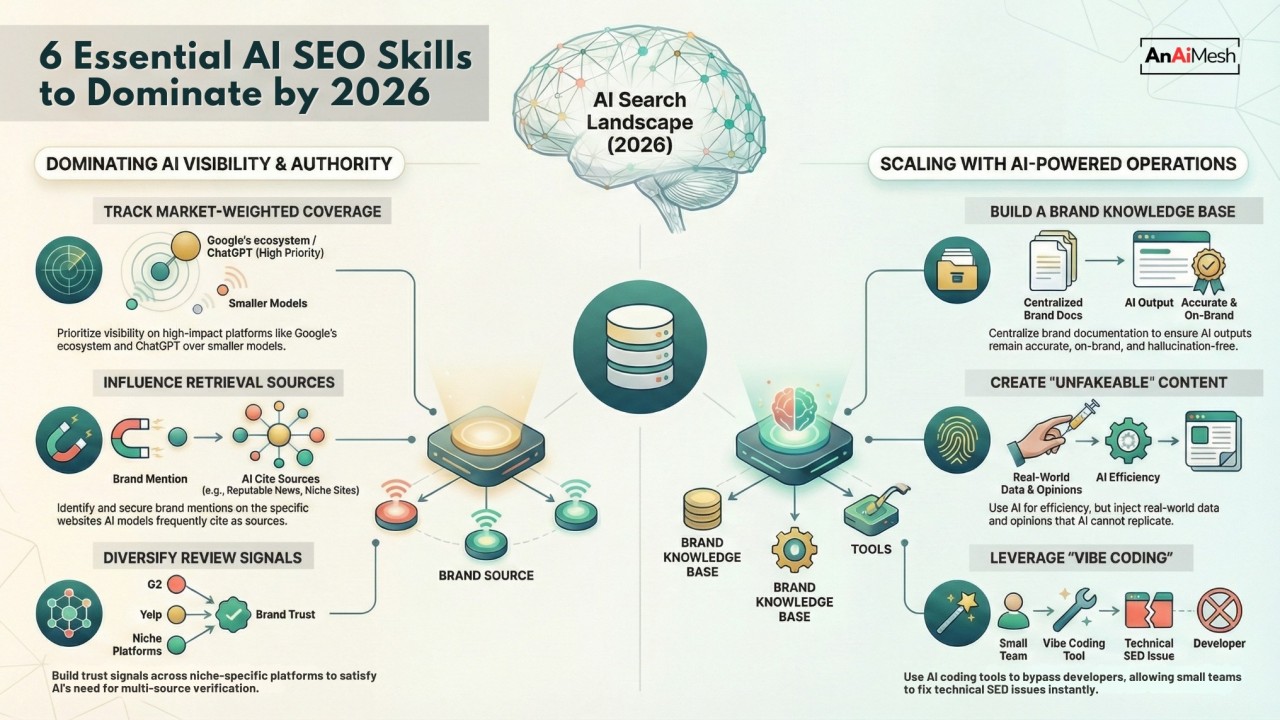
To understand the value proposition, compare a traditional tool suite with an AI knowledge base.
| Feature | Traditional SEO Tools | AI SEO Knowledge Base |
|---|---|---|
| Data Storage | Disconnected dashboards | Unified, relational database |
| Analysis Method | Manual review of reports | Automated pattern recognition |
| Content Briefs | Manually written | Auto-generated with predictions |
| Adaptation Speed | Weekly or monthly | Real-time alerts and updates |
| Scalability | Limited by human capacity | Virtually unlimited |
| Output | Data points and charts | Actionable recommendations |
The key difference is the shift from descriptive analytics (what happened) to prescriptive analytics (what to do next). Traditional tools tell you that page A lost traffic. The knowledge base tells you to update the introduction, add a comparison table, and build two specific backlinks to recover.
Practical Applications and Use Cases
Here are three concrete scenarios where an AI SEO Knowledge Base delivers measurable results.
Use Case 1: E-commerce Product Page Optimization
An online retailer with 10,000 products cannot manually optimize each page. The knowledge base analyzes search intent for every product category. It identifies that for “wireless headphones,” users expect a comparison table and a battery life specification. The AI automatically generates a brief for each product page, including schema markup suggestions for reviews and price. This results in a 30% increase in organic product page traffic within three months.
Use Case 2: B2B Content Cluster Expansion
A software company wants to dominate the “project management” niche. The knowledge base maps all related entities: “Gantt charts,” “resource allocation,” “agile methodology,” and “team collaboration.” It identifies that the company has no content covering “resource allocation.” The AI generates a brief with target keywords, suggested statistics to include, and internal links to existing software comparison pages. The resulting article ranks on page one within six weeks.
Use Case 3: Algorithm Update Recovery
After a core update, a news publisher sees a 50% drop in traffic. The knowledge base correlates the drop with a shift in SERP features towards “authority” and “factual accuracy.” It flags all articles with low author authority scores and thin content. The system prioritizes which articles to rewrite first based on predicted traffic recovery. The publisher recovers 80% of lost traffic in two months.
Common Mistakes and How to Avoid Them
Implementing an AI SEO Knowledge Base often fails due to avoidable errors. Here are the most frequent pitfalls.
Mistake 1: Ignoring Data Governance. Multiple teams inputting data without standards creates chaos. Avoid this by assigning a single data owner and defining clear naming conventions for all fields.
Mistake 2: Overcomplicating the Initial Model. Trying to predict every variable at once leads to paralysis. Start with a simple model that predicts rankings based on three factors: content length, number of referring domains, and page speed. Add complexity later.
Mistake 3: Treating AI Output as Final. The briefs are starting points, not gospel. A human editor must review every AI-generated brief for brand voice, factual accuracy, and strategic alignment. The AI does not know your company’s unique value proposition.
Mistake 4: Neglecting Training Data. The AI needs high-quality historical data to learn from. If you only have three months of data, the predictions will be unreliable. Wait until you have at least 12 months of consistent data before relying on the model.
Mistake 5: Failing to Update the Model. Search behavior changes. The model must be retrained quarterly with new data. Automate this retraining process to ensure the system does not become stale.
Important Notes for Implementation
Before you start building, consider these critical factors to ensure success.
- Start Small: Pilot the system on one content cluster or one product category. Prove the ROI before expanding to the entire site.
- Invest in Clean Data: Audit your analytics and search console for spam, bot traffic, and misconfigured filters. Clean data is the foundation of accurate predictions.
- Human-in-the-Loop: Always maintain a human review step for content publication. AI can suggest, but humans must approve.
- Document Everything: Create a user manual for your knowledge base. Document how to add new data sources, interpret alerts, and retrain models. This ensures continuity if team members leave.
- Monitor Ethical Boundaries: Use AI to analyze public data, not to scrape private competitor data or manipulate rankings through black-hat tactics. Stay within Google’s guidelines.
Frequently Asked Questions
What is the difference between an AI SEO Knowledge Base and a regular SEO dashboard?
A regular SEO dashboard displays metrics like rankings, traffic, and backlinks in charts and tables. An AI SEO Knowledge Base goes further by storing this data in a structured, relational format, identifying patterns, and generating predictive recommendations. The dashboard answers “what happened,” while the knowledge base answers “what should we do next.”
Do I need to know how to code to build an AI SEO Knowledge Base?
Not necessarily. No-code tools like Airtable, Zapier, and Make can handle data integration and basic automation. However, for advanced predictive modeling and custom NLP analysis, some Python or SQL knowledge is beneficial. Many teams hire a freelance data analyst for the initial setup.
How long does it take to see results from an AI SEO Knowledge Base?
The setup phase typically takes 4-8 weeks, including data integration and model training. After that, you should see improvements in content production speed within the first month. Ranking improvements depend on how quickly you implement the AI’s recommendations, but most teams see measurable organic traffic growth within 3-6 months.
Can small businesses afford an AI SEO Knowledge Base?
Yes, but with caveats. A basic setup using free tiers of Google Search Console, Google Analytics, and open-source NLP libraries can cost less than $100 per month in cloud computing fees. However, the time investment is significant. Small businesses with limited time may prefer to use a SaaS platform that offers AI-powered content briefs, such as Surfer SEO or Frase, which provide a simplified version of this concept.
Will AI replace SEO professionals?
No. AI automates data analysis and repetitive tasks, but it cannot replace strategic thinking, creative storytelling, or relationship building for backlinks. SEO professionals who learn to work with AI tools will become more efficient and valuable. Those who ignore A
Conclusion
An AI SEO Knowledge Base represents the evolution of search optimization from a manual, reactive craft to a data-driven, predictive science. By centralizing data, automating analysis, and generating actionable briefs, this system empowers teams to scale content production, adapt to algorithm changes faster, and make decisions based on evidence rather than intuition. The implementation requires an upfront investment in time and technology, but the long-term benefits in efficiency, consistency, and organic growth are substantial. Start small, focus on clean data, and keep a human editor in the loop. The future of SEO belongs to those who can harness the power of artificial intelligence to build a living, learning repository of knowledge.
Xem thêm:
- AI SEO Automated Keyword Clustering: The Complete Guide to Smarter Content Architecture
- AI SEO MCP: The Complete Guide to Model Context Protocol for Search Optimization
- AI SEO AI Overview Visibility: The Complete Playbook for 2025
- AI SEO Entity Authority: The Complete Guide to Dominating Search in 2025
- Best AI SEO Software: The Ultimate Guide to Automating Your Search Growth in 2025
Bài viết cùng chủ đề:

AI SEO SEO Automation with Make: The Complete Workflow Guide

AI SEO SEO Automation with Zapier: The Complete Workflow Guide

AI SEO SEO Automation with n8n: The Complete Workflow Guide
AI SEO SEO Automation with Gemini: The Complete Guide to Scaling Organic Growth

AI SEO SEO Automation with Claude: The Complete Guide to Scaling Content in 2025

AI SEO SEO Automation with ChatGPT: The Complete Playbook for 2025

AI SEO & SEO Automation for Affiliate Sites: The 2025 Playbook for Passive Income Growth
AI SEO & SEO Automation for Bloggers: The Complete Guide to Scaling Your Content

AI SEO & SEO Automation for Agencies: The Complete 2025 Playbook

AI SEO and SEO Automation for Ecommerce: The Complete Playbook for 2025

AI SEO & SEO Automation for WordPress: The Complete Playbook for 2025
AI SEO SEO Automation Strategy: The Complete Playbook for 2025

Mastering the AI SEO SEO Automation Process: A Complete Guide to Scaling Organic Growth
AI SEO SEO Automation System: The Complete Guide to Scaling Organic Growth in 2025
AI SEO SEO Automation Platform: The Complete Guide to Scaling Organic Growth in 2025
AI SEO SEO Automation Software: The Complete Guide to Scaling Organic Growth in 2025















