
No products in the cart.
AI SEO Link Prospecting: The Complete Guide to Automating High-Quality Backlink Discovery
10
Aug
Aug
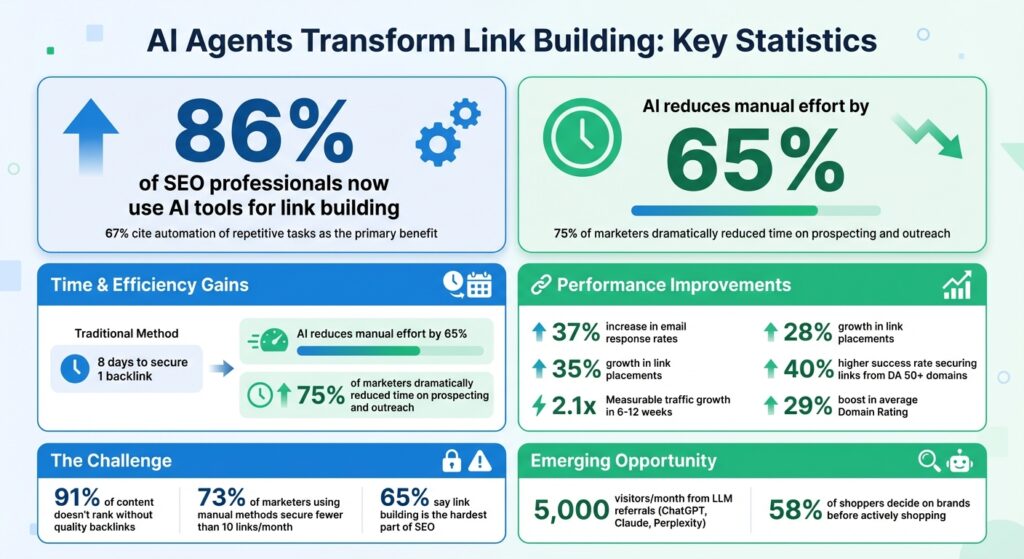
AI SEO Link Prospecting has transformed how digital marketers identify, evaluate, and acquire backlinks. Traditional link building relied on manual searches, spreadsheet tracking, and gut feeling. Artificial intelligence now processes millions of data points to surface link opportunities that human researchers would likely miss. This guide explains exactly how AI-powered prospecting works, why it outperforms manual methods, and how to implement it in your SEO strategy today.
What Is AI SEO Link Prospecting?
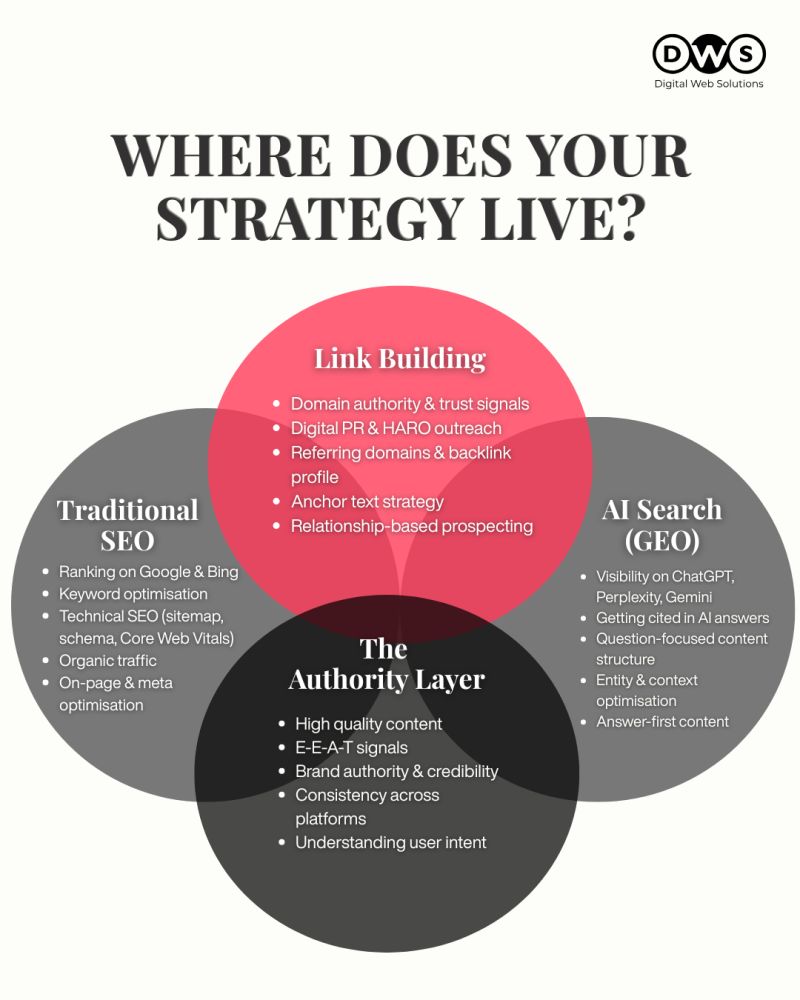
AI SEO Link Prospecting refers to using machine learning algorithms and natural language processing to automatically discover websites that offer valuable backlink opportunities. These systems analyze vast datasets including domain authority, content relevance, traffic patterns, and link profiles to identify sites where a backlink would provide the most SEO value.
Unlike traditional prospecting which relies on Boolean search operators and manual review, AI systems learn from your existing backlink profile and competitor links. They recognize patterns in what makes a link valuable for your specific niche and continuously refine their recommendations based on performance data.
How AI Prospecting Differs from Manual Methods
Manual link prospecting typically involves searching Google for relevant blogs, checking domain metrics one by one, and emailing site owners. This process takes hours per prospect and often yields low response rates. AI systems perform the same discovery in seconds, scoring thousands of potential targets against your specific criteria.
The key difference lies in predictive analysis. AI doesn’t just find sites with high domain authority. It evaluates contextual relevance, audience overlap, content freshness, and even the likelihood of a site accepting guest posts or link insertions. This predictive capability dramatically improves outreach success rates.
Why AI Link Prospecting Matters for Modern SEO
Google’s algorithms have grown sophisticated at detecting manipulative link patterns. Low-quality directory links and paid link schemes can trigger manual penalties. AI prospecting helps you avoid these risks by focusing on genuinely relevant, authoritative sources that pass Google’s quality guidelines.
The scalability factor also cannot be overstated. A single SEO professional can manually evaluate perhaps 50 prospects per day. AI systems evaluate thousands in the same timeframe, making it possible for small teams to compete with enterprise-level link building operations.
The Data Advantage
AI prospecting tools aggregate data from multiple sources including Google Search Console, Ahrefs, Moz, SEMrush, and proprietary crawlers. This comprehensive view reveals link opportunities that would remain invisible when using any single data source. The systems identify unlinked brand mentions, competitor backlink gaps, and resource page opportunities simultaneously.
Core Components of AI Link Prospecting Systems
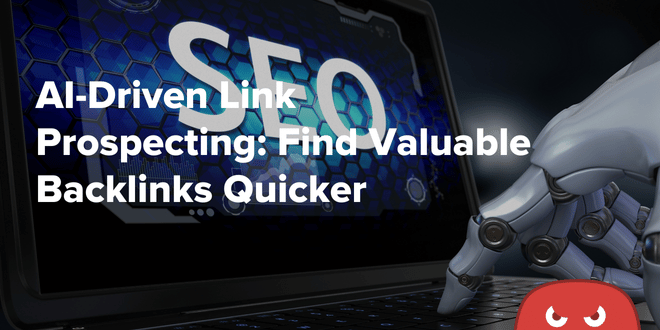
Understanding the technology behind AI prospecting helps you evaluate tools and implement strategies effectively. Every system shares several fundamental components.
Data Collection and Indexing
AI prospecting begins with massive data collection. Crawlers continuously scan the web, indexing pages, tracking link changes, and recording content updates. This creates a living database of potential link sources that reflects the current state of the web rather than a static snapshot.
Machine Learning Scoring Models
Scoring models assign values to potential prospects based on dozens of factors. These include domain authority, page authority, topical relevance, traffic estimates, spam scores, and engagement metrics. The models learn from your successful link acquisitions, weighting factors that correlate with positive outcomes for your specific niche.
Natural Language Processing for Relevance
NLP algorithms analyze the content surrounding potential link placements. They understand context, sentiment, and topical relationships. This ensures that a link from a high-authority site about cooking would not be recommended for a B2B software company, regardless of the domain’s metrics.
Outreach Integration
Most AI prospecting platforms integrate with email outreach tools. Once prospects are identified and scored, the system can automate personalized email sequences. Some advanced platforms even generate draft outreach messages tailored to each prospect’s content and tone.
Benefits of Using AI for Link Prospecting
The advantages of AI-driven prospecting extend beyond time savings. Organizations that adopt these systems report measurable improvements across multiple metrics.
- Increased efficiency: Reduce prospecting time by up to 80% compared to manual methods
- Higher conversion rates: AI-scored prospects respond to outreach at significantly higher rates
- Better link quality: Algorithms prioritize relevance and authority, reducing toxic link risks
- Competitive intelligence: Automatically track competitor link acquisition and identify gaps
- Scalability: Manage link building campaigns for multiple clients or websites simultaneously
- Continuous optimization: Systems learn from campaign data, improving recommendations over time
- Always verify AI recommendations: Spot-check at least 10% of AI-generated prospects manually
- Combine AI with human creativity: Use AI for discovery, but rely on human judgment for final decisions
- Focus on relevance over authority: A relevant link from a DA 30 site outperforms an irrelevant link from a DA 70 site
- Diversify your link sources: Avoid acquiring too many links from the same domain or IP range
- Monitor your anchor text distribution: AI tools can help track this, but manual review prevents over-optimization
- Stay updated on Google guidelines: AI tools change, and so do search engine algorithms
Measurable ROI Improvements
Case studies from SEO agencies show that AI prospecting increases the number of quality backlinks acquired per month by 300-500%. The cost per acquired link drops dramatically because fewer outreach emails are wasted on poor prospects. For in-house teams, this translates to faster ranking improvements for target keywords.
Limitations and Challenges
AI prospecting is not a complete replacement for human judgment. Understanding its limitations prevents over-reliance and disappointment.
Data Accuracy Issues
No database is perfectly current. AI systems may recommend sites that have recently lost authority or changed their content focus. Regular manual spot-checking of AI recommendations remains essential.
Lack of Relationship Building
AI can identify prospects and even draft emails, but it cannot build genuine relationships with site owners. Long-term link building success still requires human communication, negotiation, and rapport building.
Cost Considerations
Enterprise-grade AI prospecting tools cost between $200 and $1000 per month. For small businesses or freelancers, this expense may outweigh the benefits, especially when starting with a limited link building budget.
AI SEO Link Prospecting vs. Traditional Methods: A Comparison
| Factor | AI Prospecting | Traditional Prospecting |
|---|---|---|
| Speed | Thousands of prospects per hour | 50-100 prospects per day |
| Data sources | Multiple aggregated databases | Single tools and manual search |
| Relevance scoring | Automated NLP analysis | Manual review and judgment |
| Scalability | Unlimited campaigns | Limited by team capacity |
| Cost | Monthly subscription fees | Labor hours and tool costs |
| Learning capability | Improves with each campaign | Static process |
| Error rate | Lower due to data-driven scoring | Higher due to human bias |
How to Implement AI Link Prospecting in Your SEO Workflow
Implementing AI prospecting requires a structured approach. Follow these steps to integrate AI tools into your existing link building process.
Step 1: Define Your Link Target Profile
Before using any AI tool, clearly define what constitutes a valuable link for your website. Consider your niche, target audience, and SEO goals. Document criteria such as minimum domain authority, required topical relevance, and geographic targeting.
Step 2: Choose the Right AI Prospecting Tool
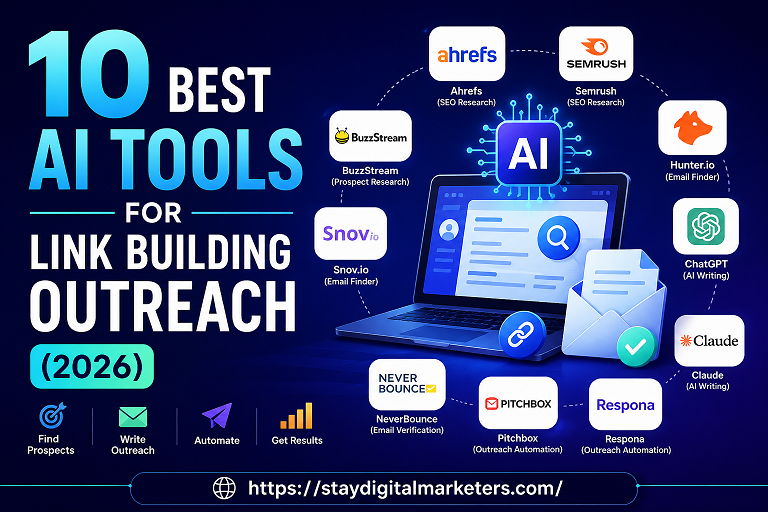
Several platforms offer AI-powered link prospecting features. Evaluate tools based on your budget, technical requirements, and integration needs. Popular options include Ahrefs with its Link Intersect feature, SEMrush’s Link Building Tool, and specialized platforms like Pitchbox and BuzzStream that incorporate AI scoring.
Step 3: Import Your Existing Link Data
Feed your current backlink profile into the AI system. This historical data helps the algorithms understand what types of links have worked for your site. Connect Google Search Console and export your competitor’s backlink profiles for comparative analysis.
Step 4: Run Initial Prospecting Campaigns
Start with a focused campaign targeting a specific content cluster or keyword group. Allow the AI to generate prospect lists, then manually review the top 20-30 recommendations. This validation step ensures the system’s scoring aligns with your quality standards.
Step 5: Integrate with Outreach Automation
Connect your prospecting tool with your email outreach platform. Set up automated follow-up sequences and track response rates. Use the data from these campaigns to refine your prospect criteria and messaging.
Step 6: Monitor and Refine
AI systems improve with feedback. Regularly review which prospects accepted your outreach and which ignored or rejected it. Update your scoring criteria based on this performance data. Most tools allow you to mark prospects as “good” or “bad” to train the algorithm.
Practical Applications of AI Link Prospecting
AI prospecting applies to various link building strategies beyond simple guest posting. Understanding these applications helps you maximize the value of your subscription.
Unlinked Brand Mention Discovery
AI tools scan the web for mentions of your brand that do not include a link. These mentions represent low-hanging fruit for link acquisition. The system identifies the exact page URL and provides contact information for the site owner, streamlining the outreach process.
Competitor Backlink Gap Analysis
AI systems compare your backlink profile against your top competitors. They identify sites that link to multiple competitors but not to you. These prospects have demonstrated a willingness to link to businesses in your niche, making them prime targets for outreach.
Resource Page and Link Roundup Opportunities
Many websites maintain curated resource pages or weekly link roundups. AI prospecting identifies these pages in your niche and tracks when they are updated. This allows you to pitch your content at the optimal time for inclusion.
Broken Link Building
AI crawlers continuously monitor for broken links on relevant websites. When a broken link is discovered, the system suggests your content as a replacement. This strategy provides value to the site owner while securing a high-quality backlink for your site.
Common Mistakes in AI Link Prospecting
Even with advanced technology, mistakes happen. Avoiding these common errors improves your results significantly.
Over-Reliance on Domain Authority
Focusing exclusively on high domain authority scores leads to missed opportunities. A relevant link from a smaller, niche-specific site often provides more value than a generic link from a large but unrelated domain. AI tools consider multiple factors, but you must also apply your own judgment.
Ignoring Content Quality
AI can identify a great prospect, but if your content is not link-worthy, outreach will fail. Before launching a prospecting campaign, ensure your website features high-quality, original content that provides genuine value to readers.
Neglecting Relationship Building
Treating AI prospecting as a fully automated process removes the human element that makes link building successful. Personalize your outreach emails, reference specific content on the prospect’s site, and focus on building long-term relationships rather than one-off links.
Failing to Track Results
Without proper tracking, you cannot know which prospecting strategies work. Use UTM parameters, link tracking tools, and regular reporting to measure the impact of your AI-driven campaigns. This data feeds back into the AI system, improving future recommendations.
Important Notes for Maximizing AI Prospecting Success
Several best practices separate successful AI prospecting campaigns from failed ones. Keep these notes in mind as you implement your strategy.
Frequently Asked Questions
What is the best AI tool for link prospecting?
The best tool depends on your specific needs and budget. Ahrefs offers robust link intersect features, SEMrush provides comprehensive prospecting with outreach integration, and specialized tools like Pitchbox excel at workflow automation. Many professionals use a combination of tools for optimal results.
Can AI completely replace manual link prospecting?
No, AI cannot completely replace manual prospecting. While AI excels at data analysis and pattern recognition, human judgment remains essential for evaluating subjective factors like content quality and relationship potential. The most effective approach combines AI discovery with human review and outreach.
How much does AI link prospecting cost?
Costs vary widely depending on the tool and features. Basic AI prospecting features are included in standard SEO tool subscriptions ranging from $99 to $200 per month. Advanced enterprise solutions with full automation and outreach integration can cost $500 to $1000 or more per month.
Is AI link prospecting considered black hat SEO?
AI link prospecting is not inherently black hat. The technology simply identifies potential link opportunities. Whether the resulting links are white hat or black hat depends on how you acquire them. Focusing on relevant, high-quality links through legitimate outreach keeps your strategy within Google’s guidelines.
How long does it take to see results from AI link prospecting?
Results depend on your niche, content quality, and outreach effectiveness. Most campaigns see initial link acquisitions within 2-4 weeks. Ranking improvements typically become visible within 2-3 months as search engines crawl and index the new links.
Conclusion
AI SEO Link Prospecting represents a significant advancement in how digital marketers approach backlink acquisition. The technology eliminates hours of tedious manual research, surfaces opportunities that would otherwise remain hidden, and continuously learns from campaign performance to improve recommendations over time.
Success with AI prospecting requires a balanced approach. Leverage the technology for discovery and scoring, but maintain human oversight for quality control and relationship building. Define clear criteria for valuable links, choose tools that fit your workflow, and commit to ongoing refinement based on performance data.
The competitive advantage of AI prospecting will only grow as the technology improves. Early adopters who integrate these systems into their SEO operations now will be well-positioned to outrank competitors who continue relying on manual methods. Start with a focused campaign, measure your results, and scale what works for your specific niche and goals.
Xem thêm:
- Best AI Keyword Tools: Unlock Hidden Search Opportunities in 2025
- AI SEO Generative Search Content: The Complete Playbook for Ranking in the Age of SGE
- AI SEO Forums: The Hidden Hubs Where Search Strategy Gets Rewired by Machine Intelligence
- AI SEO Database Optimization: The Complete Guide to Smarter Data-Driven Rankings
- AI SEO Content Creation: The Complete Playbook for Ranking in 2025
Bài viết cùng chủ đề:

AI SEO SEO Automation with Make: The Complete Workflow Guide

AI SEO SEO Automation with Zapier: The Complete Workflow Guide

AI SEO SEO Automation with n8n: The Complete Workflow Guide
AI SEO SEO Automation with Gemini: The Complete Guide to Scaling Organic Growth

AI SEO SEO Automation with Claude: The Complete Guide to Scaling Content in 2025

AI SEO SEO Automation with ChatGPT: The Complete Playbook for 2025

AI SEO & SEO Automation for Affiliate Sites: The 2025 Playbook for Passive Income Growth
AI SEO & SEO Automation for Bloggers: The Complete Guide to Scaling Your Content

AI SEO & SEO Automation for Agencies: The Complete 2025 Playbook

AI SEO and SEO Automation for Ecommerce: The Complete Playbook for 2025

AI SEO & SEO Automation for WordPress: The Complete Playbook for 2025
AI SEO SEO Automation Strategy: The Complete Playbook for 2025

Mastering the AI SEO SEO Automation Process: A Complete Guide to Scaling Organic Growth
AI SEO SEO Automation System: The Complete Guide to Scaling Organic Growth in 2025
AI SEO SEO Automation Platform: The Complete Guide to Scaling Organic Growth in 2025
AI SEO SEO Automation Software: The Complete Guide to Scaling Organic Growth in 2025















