
No products in the cart.
AI SEO Trust Signals: The Complete Guide to Building Authority in the Age of Machine-Driven Search
31
Jul
Jul
The digital landscape has shifted dramatically. Search engines no longer simply crawl links and count keywords; they interpret content through sophisticated machine learning models. This transformation has given rise to a new critical concept: AI SEO Trust Signals. These are the specific data points and content characteristics that artificial intelligence systems use to determine whether your website is credible, authoritative, and worthy of ranking. Understanding these signals is no longer optional for marketers; it is the core requirement for sustainable organic visibility in 2025 and beyond.
What Are AI SEO Trust Signals?
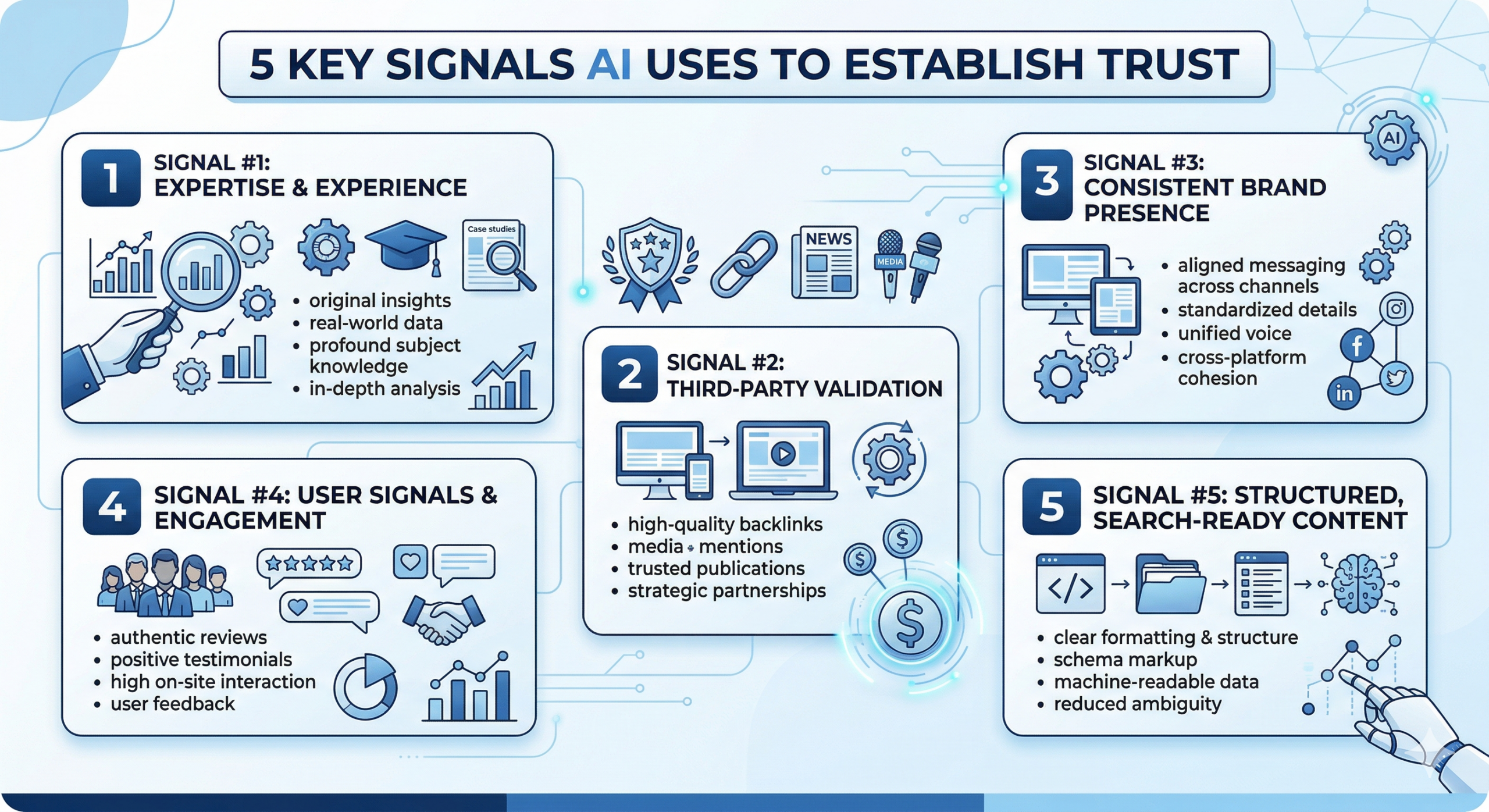
AI SEO Trust Signals are the measurable elements that machine learning algorithms, such as Google’s RankBrain and MUM, evaluate to assess the reliability and expertise of a webpage. Unlike traditional ranking factors that focused on backlinks and exact-match keywords, these signals focus on semantic relevance, user interaction patterns, and the consistency of factual information across the web.
At their core, these signals help AI answer a fundamental question: “Can this source be trusted to provide the correct answer?” The AI cross-references your content against established knowledge graphs, checks the credentials of the author, and analyzes how users interact with your page. If the signals are strong, the AI rewards you with higher rankings. If they are weak, your content gets buried, regardless of how well-written it might be.
The Core Components of AI SEO Trust Signals
To effectively optimize for AI-driven search, you must break down the concept into actionable components. These are the pillars that machine learning models rely on to separate authoritative sources from spam.
1. Entity Consistency and Knowledge Graph Alignment
AI systems build a web of entities (people, places, organizations, concepts) and their relationships. Your website must clearly align with this graph. This means using consistent naming conventions for your brand, your founders, and your products across every page. If your site refers to your company as “Tech Solutions” on one page and “Tech Sol” on another, the AI struggles to connect the dots. Ensure your NAP (Name, Address, Phone) data is consistent, and use structured data markup (schema.org) to explicitly tell the AI who you are and what you represent.
2. Author Expertise and E-E-A-T Metrics
Experience, Expertise, Authoritativeness, and Trustworthiness (E-E-A-T) are the human-centric values that AI tries to quantify. The AI looks for clear author bios, credentials, and a history of publishing in a specific niche. A page about medical advice written by a cardiologist carries more trust weight than one written by a freelance writer with no medical background. You must display author bylines prominently, link to their professional profiles, and ensure they have a track record of producing accurate, cited work.
3. Content Freshness and Factual Accuracy
AI models are trained on time-sensitive data. If your content is outdated, the AI assumes it is less trustworthy. However, freshness is not just about changing the date. It involves updating statistics, replacing broken links with current sources, and revising sections to reflect new industry standards. The AI also cross-references your claims with other high-authority sites. If your facts contradict the consensus, your trust score plummets.
4. User Interaction and Engagement Metrics
How users interact with your site in the search results and on the page itself is a powerful trust signal. The AI monitors dwell time (how long a user stays), bounce rate (if they leave immediately), and pogo-sticking (clicking back to search results quickly). High engagement indicates that your content satisfies the user’s query. If users consistently stay on your page for five minutes, the AI interprets this as a sign of high value and trust.
5. Technical Security and Accessibility
A secure, technically sound website is a baseline trust requirement. AI algorithms penalize sites with SSL certificate errors, intrusive pop-ups, or slow loading speeds. These technical flaws signal poor user experience, which correlates with low trust. Accessibility also plays a role; pages that are readable by screen readers and have proper heading hierarchies are viewed as more user-centric and, therefore, more trustworthy.
How AI Algorithms Evaluate Trust: The Process
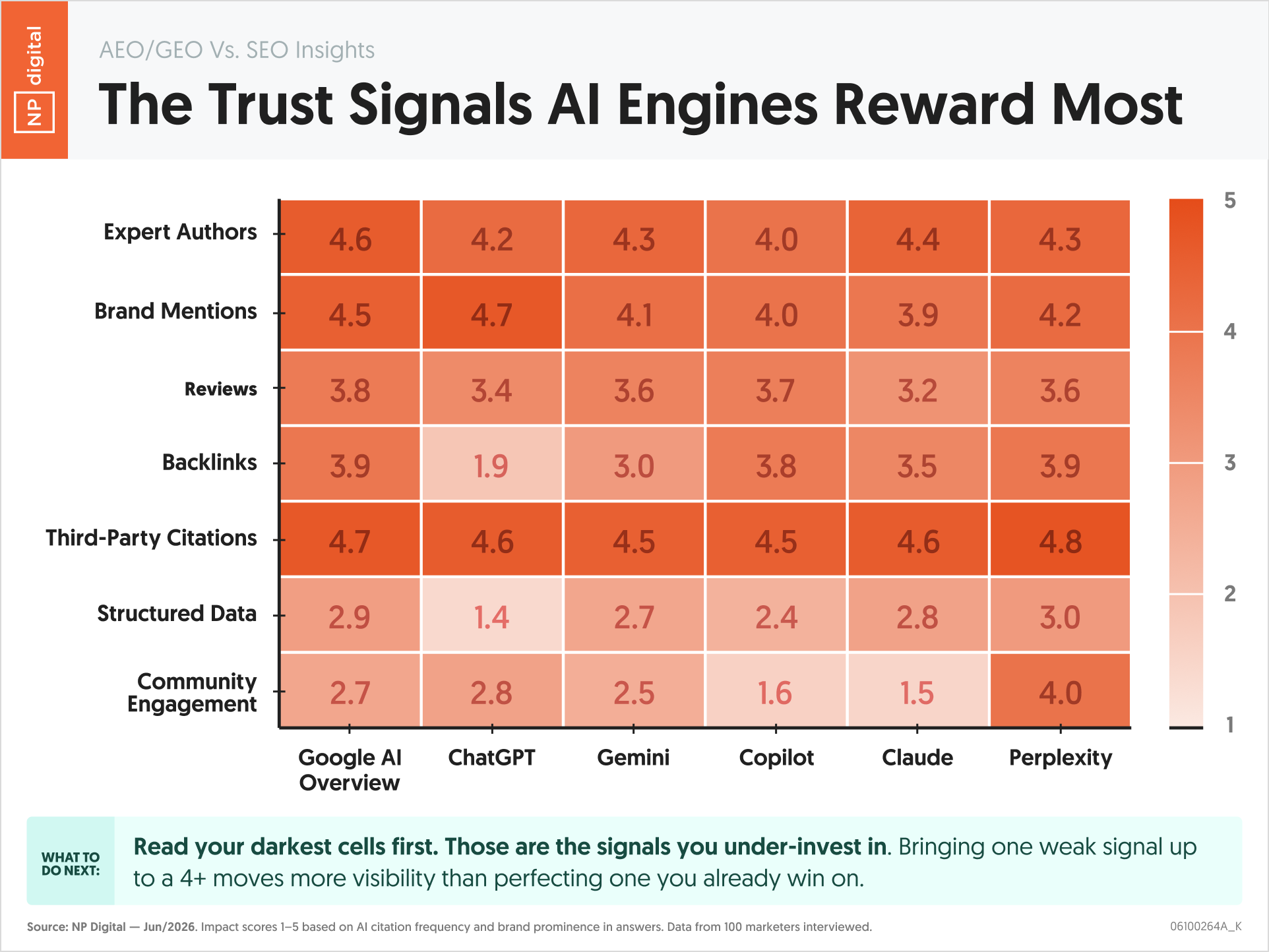
Understanding the evaluation process helps you prioritize your optimization efforts. The AI does not look at your site in a vacuum; it uses a multi-layered approach to build a trust profile.
- Query Interpretation: The AI determines the user’s intent (informational, transactional, navigational) and the level of expertise required to answer it.
- Candidate Retrieval: The AI pulls a list of potential pages based on keyword relevance and topical authority.
- Signal Scoring: Each candidate page is scored against the trust components listed above. This is where your E-E-A-T and entity consistency are weighed heavily.
- Cross-Validation: The AI checks your content against other sources, including Wikipedia, government databases, and industry publications, to verify factual accuracy.
- User Feedback Loop: After the results are served, the AI analyzes click-through rates and post-click behavior to refine future rankings.
This process is continuous. The AI is constantly learning from user behavior, which means your trust signals can improve or degrade over time based on real-world interaction.
Benefits of Optimizing for AI SEO Trust Signals
Investing in these signals yields returns that go beyond simple keyword rankings. The benefits compound over time, creating a moat around your digital presence.
- Resilience to Algorithm Updates: Sites with high trust signals are less likely to be hit by core updates because they align with the fundamental goal of search: providing reliable answers.
- Higher Click-Through Rates (CTR): Trustworthy sites often earn rich snippets and sit in the “Position Zero” spot, which dramatically increases visibility.
- Brand Authority: When AI consistently validates your content, users begin to see you as a thought leader, leading to direct traffic and branded searches.
- Improved Conversion Rates: Trust is transferable. Users who trust your content are more likely to trust your product or service, leading to higher conversion rates.
Limitations and Challenges of AI Trust Signals
While the benefits are clear, there are significant challenges in optimizing for these signals. Acknowledging these limitations helps set realistic expectations.
| Challenge | Impact on SEO Strategy |
|---|---|
| Lack of Transparency | Google does not publish the exact weight of each signal, making it a guessing game for marketers. |
| Time-Intensive | Building genuine authority and expertise takes months or years, not weeks. |
| Subjectivity of “Expertise” | What constitutes an expert in one niche may not translate to another, making it hard to standardize. |
| Risk of Over-Optimization | Faking trust signals (e.g., fake author bios) can lead to severe penalties if detected. |
These challenges mean that t” The strategy requires a long-term commitment to quality and transparency.
Practical Application: A Step-by-Step Guide to Building Trust Signals
This is not theoretical advice; these are actionable steps you can implement immediately.
Step 1: Audit Your Current Entity Consistency
Search for your brand name and your key personnel. Note any inconsistencies in how you are described. Update your “About Us” page, footer, and social profiles to use the exact same phrasing and logos. Implement Organization and Person schema markup to provide explicit clues to the AI.
Step 2: Upgrade Your Author Bylines
Every article on your site must have a named author with a bio that includes their credentials, experience, and links to their professional social media (LinkedIn, Twitter). If you are using ghostwriters, have the expert review and co-sign the content. The AI looks for a direct link between the author’s stated expertise and the content topic.
Step 3: Implement a Content Refreshing Schedule
Do not let your content rot. Create a quarterly review process for your top 20% of pages. Update statistics, add new examples, and remove outdated references. Change the “Last Updated” date only when you have made substantial changes, not just a typo fix.
Step 4: Optimize for User Engagement
Structure your content to encourage deep reading. Use short paragraphs, bullet points, and subheadings to break up text. Embed relevant videos or infographics to increase dwell time. Ensure your page loads in under 2.5 seconds on mobile devices, as slow pages trigger high bounce rates.
Step 5: Build a Citation Network
Link to high-authority external sources (government sites, academic journals, industry reports) to show the AI that you are part of a credible web. Conversely, ensure that other reputable sites link to you. This is not about quantity of links but the quality and relevance of the network.
Common Mistakes and How to Avoid Them
Many SEO professionals inadvertently damage their trust signals while trying to improve them. Here are the most common pitfalls and the strategies to avoid them.
Mistake 1: Keyword Stuffing in Headings
Forcing the main keyword into every H2 and H3 makes the content read unnaturally. The AI detects this as a manipulative pattern.
Solution: Use semantic variations and synonyms. Focus on the topic, not the exact phrase. Write headings that describe the content naturally.
Mistake 2: Ignoring Negative User Signals
If your bounce rate is high, the AI assumes your content is irrelevant. Many marketers ignore this data, focusing only on rankings.
Solution: Analyze your Search Console data for pages with high impressions but low CTR. Rewrite the meta description and title tag to better match the search intent. If the content itself is weak, rewrite it entirely.
Mistake 3: Faking Author Credentials
Creating a fake “Dr. Smith” to write about medical topics is a catastrophic error. AI systems are increasingly adept at verifying identities through cross-referencing.
Solution: Use real experts. If you cannot afford a full-time expert, interview one and quote them directly, or curate content from verified industry leaders with their permission.
Mistake 4: Overlooking Technical Trust
Focusing solely on content while ignoring site security and performance is a common oversight. A single security warning in the browser can destroy all your content trust.
Solution: Run a technical SEO audit monthly. Check for mixed content issues, ensure your SSL certificate is valid, and fix any crawl errors immediately.
Important Notes for Long-Term Success
Building AI SEO Trust Signals is a marathon, not a sprint. There are a few key principles to keep in mind as you refine your strategy.
First, consistency beats intensity. Publishing one high-quality, deeply researched article per week is better than publishing five thin posts. The AI rewards depth and accuracy over volume. Second, monitor your brand mentions across the web. Unlinked mentions of your brand are a trust signal that the AI can detect. Use tools to track these and reach out to request links where appropriate.
Third, do not neglect the human element. While the AI is the gatekeeper, the end-user is the ultimate judge. If your content does not satisfy a human reader, they will leave, and the A Always write for humans first, and optimize for the AI second.
Finally, understand that trust is fragile. One major factual error or a single negative user experience can undo months of progress. Maintain rigorous editorial standards and a culture of accuracy within your content team.
Frequently Asked Questions (FAQ)
What is the difference between traditional SEO signals and AI SEO Trust Signals?
Traditional signals focus on technical elements like meta tags, backlink quantity, and exact-match keywords. AI SEO Trust Signals focus on semantic meaning, user engagement, entity consistency, and the verifiable expertise of the author. The former is about telling the search engine what your page is about; the latter is about proving that your page is the best and most reliable answer.
How long does it take to build strong AI SEO Trust Signals?
T This involves publishing authoritative content, building a consistent brand presence, and earning high-quality citations. The timeline depends on the competitiveness of your niche and the current state of your domain authority.
Can small websites compete with large brands on AI trust signals?
Yes, but they must focus on niche expertise. A small site can outrank a large brand if it demonstrates deeper, more specific knowledge on a narrow topic. The AI values relevance and expertise over sheer domain size. A specialized blog with a real expert author can beat a generalist news site for a specific query.
Does social media presence affect AI SEO Trust Signals?
Indirectly, yes. While social signals are not a direct ranking factor, a strong social presence helps build brand recognition and entity consistency. When users search for your brand after seeing it on social media, that branded search volume is a positive trust signal to the AI. It indicates real-world relevance.
How do I check my current AI SEO Trust Score?
T However, you can gauge your trust level by analyzing your E-E-A-T signals manually. Check your author pages, your site’s security, your content freshness, and your user engagement metrics in Google Analytics. Tools like Semrush and Ahrefs offer “Authority Score” metrics that approximate this, but they are not official Google metrics.
Conclusion
The era of gaming the algorithm with keyword density is over. The future of search is defined by AI SEO Trust Signals, a complex interplay of factual accuracy, demonstrated expertise, and user satisfaction. By focusing on entity consistency, author credentials, content freshness, and technical reliability, you align your website with the core objectives of machine learning models. This alignment does not just improve rankings; it builds a durable digital asset that withstands algorithm changes and fosters genuine user loyalty. Start auditing your trust signals today, because in the AI-driven search landscape, trust is the only currency that matters.
Xem thêm:
- AI SEO Books: The Essential Guide to Mastering Search Engine Optimization in the Age of Artificial Intelligence
- AI SEO LLM Brand Mentions: The Complete Guide to Dominating AI Search Results
- AI SEO Broken Links: The Complete Guide to Automated Link Repair in 2025
- AI SEO Content Hierarchy: The Complete Blueprint for 2025 Rankings
- AI SEO Roadmap: The Complete 12-Month Strategy for 2025 and Beyond
Bài viết cùng chủ đề:

AI SEO SEO Automation with Make: The Complete Workflow Guide

AI SEO SEO Automation with Zapier: The Complete Workflow Guide

AI SEO SEO Automation with n8n: The Complete Workflow Guide
AI SEO SEO Automation with Gemini: The Complete Guide to Scaling Organic Growth

AI SEO SEO Automation with Claude: The Complete Guide to Scaling Content in 2025

AI SEO SEO Automation with ChatGPT: The Complete Playbook for 2025

AI SEO & SEO Automation for Affiliate Sites: The 2025 Playbook for Passive Income Growth
AI SEO & SEO Automation for Bloggers: The Complete Guide to Scaling Your Content

AI SEO & SEO Automation for Agencies: The Complete 2025 Playbook

AI SEO and SEO Automation for Ecommerce: The Complete Playbook for 2025

AI SEO & SEO Automation for WordPress: The Complete Playbook for 2025
AI SEO SEO Automation Strategy: The Complete Playbook for 2025

Mastering the AI SEO SEO Automation Process: A Complete Guide to Scaling Organic Growth
AI SEO SEO Automation System: The Complete Guide to Scaling Organic Growth in 2025
AI SEO SEO Automation Platform: The Complete Guide to Scaling Organic Growth in 2025
AI SEO SEO Automation Software: The Complete Guide to Scaling Organic Growth in 2025















