
No products in the cart.
AI SEO Ranking Signals: The Complete Guide to Google’s Machine Learning Algorithms

10
Aug
Aug
Search engine optimization has transformed dramatically with the integration of artificial intelligence into Google’s core ranking systems. The term AI SEO Ranking Signals refers to the set of algorithmic factors that machine learning models like RankBrain, BERT, and MUM use to evaluate content quality, relevance, and user satisfaction. Understanding these signals is no longer optional for digital marketers who want sustainable organic traffic. This comprehensive guide breaks down how AI interprets content, what signals matter most, and how to optimize your website for machine learning systems.
What Are AI SEO Ranking Signals?
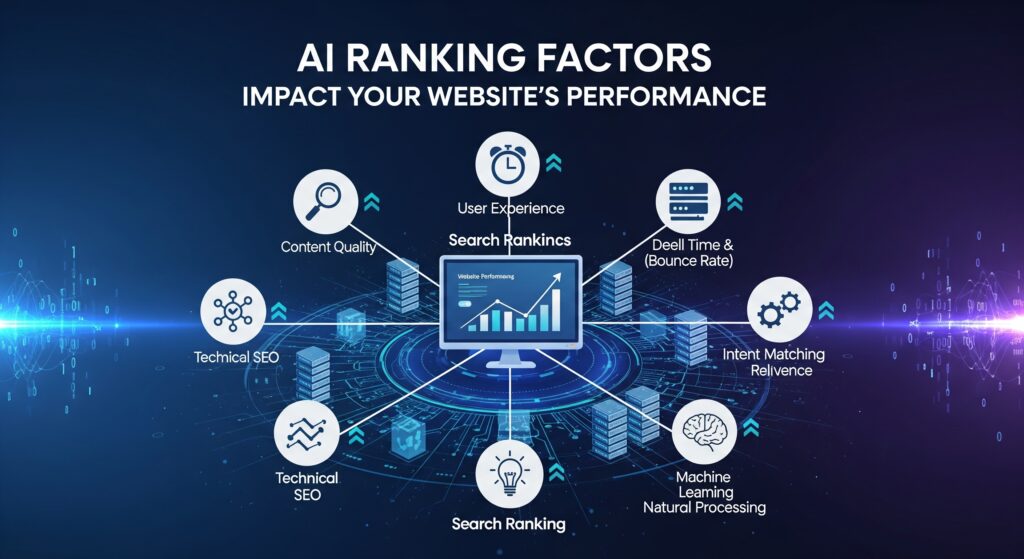
AI SEO ranking signals are the data points and patterns that artificial intelligence systems analyze to determine where a webpage should appear in search results. Unlike traditional ranking factors such as keyword density or exact-match domains, AI signals focus on understanding user intent, semantic relevance, and content comprehensiveness. Google’s machine learning models process billions of pages daily, learning from user interactions to refine how they rank content.
These signals operate on a different level than conventional SEO metrics. While backlinks and meta tags remain important, AI systems now evaluate the contextual meaning behind words, the structure of information, and how well a page satisfies a searcher’s underlying need. The shift from keyword matching to concept understanding represents the most significant change in search technology since the introduction of PageRank.
The Core AI Algorithms Behind Modern Search Rankings
RankBrain: The Query Interpretation Engine
RankBrain, introduced in 2015, was Google’s first major AI system for search. It processes unfamiliar or ambiguous queries by mapping them to known concepts. When a user types a search that has never been seen before, RankBrain uses vector embeddings to understand the relationship between words and match the query to pages that address the same underlying topic. This system has become one of the top three ranking signals, alongside content quality and backlinks.
BERT: Understanding Natural Language Context
The Bidirectional Encoder Representations from Transformers (BERT) model, launched in 2019, allows Google to understand the nuances of language, including prepositions, conjunctions, and contextual clues. BERT helps the search engine grasp how word order affects meaning. For example, the query “can you get medicine for someone pharmacy” versus “can you get medicine at a pharmacy” produces different results because BERT understands the distinction in intent. This affects how AI SEO ranking signals evaluate content that uses natural, conversational language.
MUM: Multitask Unified Model
MUM, announced in 2021, represents the next generation of AI ranking systems. It is 1,000 times more powerful than BERT and can understand information across multiple languages and formats, including text, images, and video. MUM can generate language and analyze complex tasks, allowing Google to provide answers to questions that require combining information from multiple sources. For SEO professionals, MUM means that content must be comprehensive, multilingual, and capable of answering related follow-up questions within a single piece.
Key AI SEO Ranking Signals You Must Optimize For
Understanding the specific signals that AI systems evaluate helps you prioritize your optimization efforts. These signals fall into several categories, each contributing to how machine learning models assess your content.
Content Relevance and Semantic Depth
AI systems evaluate whether your content truly covers a topic in depth. This goes beyond using the right keywords. Semantic depth means including related concepts, answering secondary questions, and providing context that helps the AI understand your page’s expertise. For instance, an article about “Mediterranean diet benefits” should also address meal planning, specific foods, scientific studies, and potential drawbacks to signal comprehensive coverage.
User Engagement Metrics
Machine learning models heavily weight how users interact with your pages. Click-through rate (CTR) from search results, dwell time (how long a visitor stays), bounce rate, and pogo-sticking (clicking back to search results quickly) all serve as AI SEO ranking signals. Google’s systems interpret high engagement as evidence that your content satisfies user intent. Pages that consistently keep visitors engaged for several minutes signal to AI that they provide value.
Content Freshness and Recency
AI systems evaluate the timeliness of information, particularly for topics that change frequently. The recency signal is not just about the publish date but also about how regularly you update content with new data, examples, and statistics. Google’s “freshness algorithm” works alongside AI models to prioritize current information for queries about news, technology, health, and finance.
Entity Association and Topical Authority
Google’s Knowledge Graph and AI systems track entities—people, places, organizations, and concepts—and their relationships. When your content consistently mentions relevant entities and connects them logically, AI recognizes your page as an authority on that topic cluster. Building topical authority through interlinked content that covers various aspects of a subject strengthens your entity associations and improves rankings.
Structured Data and Machine Readability
Schema markup helps AI systems understand the structure and meaning of your content. While structured data is not a direct ranking factor, it enables AI to interpret your page more accurately, which influences how other signals are evaluated. Rich snippets generated from schema can improve CTR, which then feeds back into engagement signals.
How AI Evaluates Content Quality: E-E-A-T Signals
Google’s Search Quality Evaluator Guidelines emphasize Experience, Expertise, Authoritativeness, and Trustworthiness (E-E-A-T). AI systems use these concepts as proxy signals to assess content quality. The machine learning models cannot truly understand expertise, but they evaluate measurable indicators that correlate with it.
| E-E-A-T Component | AI Ranking Signals | Optimization Strategy |
|---|---|---|
| Experience | First-hand accounts, original research, case studies | Include personal examples, photos, and specific details from real usage |
| Expertise | Author bios, credentials, depth of knowledge demonstrated | Showcase author qualifications, link to professional profiles, cite credible sources |
| Authoritativeness | Mentions from other sites, brand recognition, consistent NAP data | Build digital PR, earn quality backlinks, maintain consistent brand information |
| Trustworthiness | Transparent contact info, clear privacy policy, factual accuracy | Add author pages, disclose affiliations, cite primary sources for claims |
Practical Strategies to Optimize for AI SEO Ranking Signals
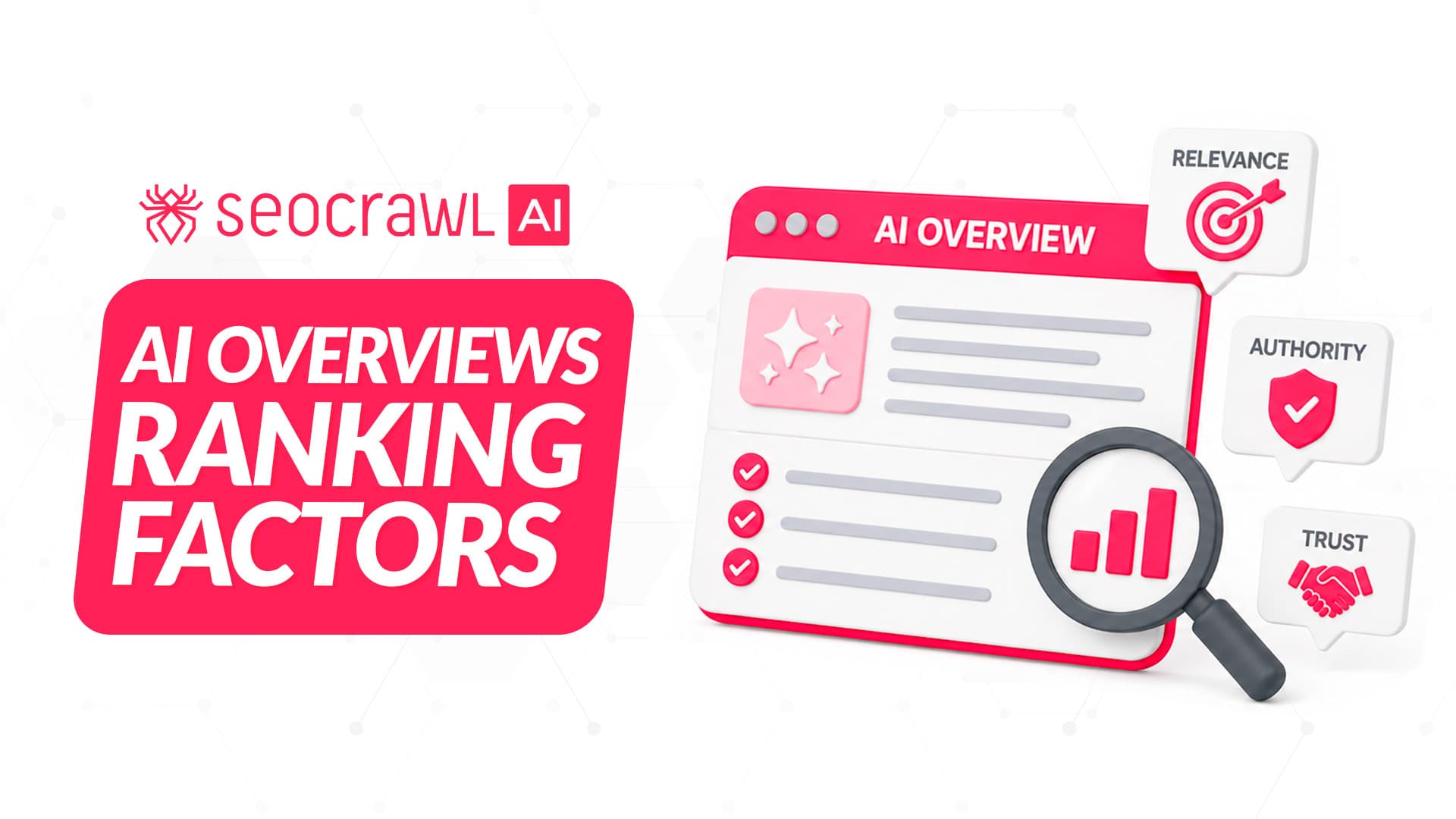
Applying AI-focused optimization requires a shift from traditional SEO tactics. The following strategies help you align your content with how machine learning models evaluate pages.
Write for Semantic Search, Not Just Keywords
Create content that covers a topic comprehensively using natural language variations. Use synonyms, related terms, and answer questions that users might ask about the subject. For example, if your target keyword is “best running shoes,” include sections on pronation, cushioning types, shoe materials, and how to measure foot size. This semantic coverage helps AI understand your page’s relevance to a wide range of related queries.
Structure Content for Featured Snippets and AI Answers
AI systems often pull content for featured snippets and direct answers. Format your content to be easily extractable: use clear headings, concise paragraphs, bullet points, and tables. Answer the primary question within the first 100 words of your article. This increases the likelihood that A
Optimize for Passage Ranking
Google’s passage ranking system, powered by AI, can rank individual sections of a long article for specific queries. This means every section of your content should be self-contained and valuable. Write each subsection as if it could appear independently in search results, with clear context and complete information.
Improve Core Web Vitals and Technical Performance
While not exclusively AI signals, page speed, mobile responsiveness, and visual stability influence how AI systems evaluate user experience. Slow pages increase bounce rates, which AI interprets as poor satisfaction. Optimize images, leverage browser caching, and ensure your site passes Core Web Vitals thresholds.
Build Topical Clusters with Internal Linking
Create pillar pages that cover broad topics and link to detailed cluster pages that address specific subtopics. This structure helps AI understand your site’s architecture and topical authority. Use descriptive anchor text that includes relevant keywords and clearly indicates the linked page’s content.
Common Mistakes That Hurt Your AI SEO Ranking Signals
Many websites inadvertently weaken their AI ranking signals through outdated practices or misunderstandings about how machine learning works.
- Keyword stuffing: Repeating exact-match keywords unnaturally signals low quality to AI systems that understand semantic variation.
- Thin content: Pages with minimal information fail to demonstrate expertise or comprehensive coverage, resulting in poor relevance scores.
- Ignoring user intent: Creating content that does not match what users actually want from a query leads to high bounce rates and negative engagement signals.
- Duplicate content: AI systems penalize pages that offer no unique value, especially when scraping or spinning content from other sources.
- Neglecting mobile experience: With mobile-first indexing, AI evaluates your mobile version as the primary version, and poor mobile usability hurts rankings.
- Over-optimizing anchor text: Unnatural link profiles with exact-match anchors trigger spam detection algorithms within AI systems.
Measuring Your AI SEO Ranking Signals Performance
Tracking how well your content aligns with AI ranking signals requires monitoring specific metrics in Google Search Console and analytics platforms.
Key Metrics to Track
Monitor your average position for target keywords, but also pay attention to impression growth, which indicates that AI recognizes your content as relevant. Track your CTR to see if your titles and meta descriptions effectively attract clicks. Analyze dwell time through Google Analytics by measuring average session duration for organic traffic. A high percentage of returning visitors also signals content value to AI systems.
Using Search Console Insights
Google Search Console provides data on queries that trigger your pages, even those not containing your exact target keywords. Review the “Queries” report to identify semantic variations that AI associates with your content. If you see impressions for related terms you did not target, your semantic optimization is working. Expand content to cover these discovered queries to strengthen your topical authority.
Future Trends in AI SEO Ranking Signals
The evolution of AI in search continues at a rapid pace. Google’s Search Generative Experience (SGE) and other AI-powered features are changing how users interact with search results. These developments will introduce new ranking signals while modifying the importance of existing ones.
Generative AI answers will likely reduce traditional CTR for some queries, but they also create opportunities for content that is cited as a source. To be referenced by AI systems, your content must be exceptionally well-structured, factual, and comprehensive. The concept of “information gain” is becoming more critical—AI rewards content that adds new information beyond what already exists in the top results.
Multimodal optimization will also grow in importance. As MUM and similar models understand images and video, optimizing visual content with descriptive alt text, transcripts, and surrounding context will become essential AI SEO ranking signals.
Important Notes for Long-Term Success

AI SEO ranking signals are not static. Google continuously updates its algorithms, and what works today may change tomorrow. Focus on fundamental principles that have remained consistent: creating genuinely helpful content, providing excellent user experience, and building a trustworthy brand. These elements align with what AI systems are ultimately trying to measure.
Avoid chasing algorithmic loopholes or attempting to trick AI systems. Google’s machine learning models are designed to detect manipulative patterns and reward authentic content. The most sustainable approach is to invest in understanding your audience deeply and creating content that serves their needs better than any competing page.
Regularly audit your existing content to ensure it remains accurate, current, and comprehensive. Update statistics, refresh examples, and add new information as your industry evolves. This practice signals freshness to AI systems and maintains your relevance over time.
Frequently Asked Questions About AI SEO Ranking Signals
What is the difference between traditional ranking factors and AI SEO ranking signals?
Traditional ranking factors include measurable elements like backlinks, keyword usage, and meta tags. AI SEO ranking signals involve how machine learning models interpret content meaning, user behavior, and contextual relevance. AI signals are dynamic and learned from data patterns rather than being fixed rules.
How can I check if my content is optimized for AI ranking signals?
Review your content for semantic depth, user engagement metrics, and topical authority. Use tools like Google Search Console to see which queries trigger your pages. Analyze your dwell time and bounce rate in analytics. Compare your content’s comprehensiveness against top-ranking pages for your target keywords.
Do AI SEO ranking signals replace backlinks?
No, backlinks remain an important signal, but AI systems now evaluate link quality more intelligently. The context of links, the authority of linking domains, and the relevance of the surrounding content all matter. AI uses links as one of many signals to assess authority, not as the sole determinant of rankings.
How often does Google update its AI ranking algorithms?
Google makes thousands of changes to its search systems each year. Major AI algorithm updates, like BERT and MUM, are announced periodically, but the machine learning models continuously learn and adapt. This means AI SEO ranking signals evolve constantly, requiring ongoing optimization rather than one-time fixes.
Can small websites compete with large brands for AI ranking signals?
Yes, because AI systems prioritize content quality and relevance over domain authority alone. Small websites can outrank larger competitors by creating more comprehensive, better-structured content that demonstrates genuine expertise. Niche focus and unique insights often outperform broad, generic content from established brands.
Conclusion
AI SEO ranking signals represent the current and future state of search engine optimization. Understanding how machine learning models evaluate content, user behavior, and topical authority is essential for achieving and maintaining high rankings. The shift from keyword-based optimization to semantic, intent-focused content creation requires a fundamental change in approach.
Focus on creating content that genuinely helps users, covers topics comprehensively, and demonstrates real expertise. Structure your pages for easy machine readability, build topical authority through interconnected content, and continuously monitor your performance metrics. By aligning your strategy with how AI systems actually work, you position your website for sustainable organic growth in an increasingly intelligent search landscape.
The websites that thrive will be those that embrace AI as a tool for understanding user needs better, not as an obstacle to overcome. By prioritizing user satisfaction, content depth, and technical excellence, you naturally optimize for the AI SEO ranking signals that drive modern search performance.
Xem thêm:
- AI SEO LLM Optimization: The Complete Guide to Ranking in Generative Search
- AI SEO Internal Linking Strategy: The Complete Guide to Smarter Link Architecture
- AI SEO Automated SEO Reports: The Complete Guide to Smarter Reporting in 2025
- AI Topical Authority: The Ultimate Guide to Dominating Search with Expert-Level Content
- AI SEO LLM Search: The Complete Guide to Optimizing for AI-Driven Discovery
Bài viết cùng chủ đề:

AI SEO SEO Automation with Make: The Complete Workflow Guide

AI SEO SEO Automation with Zapier: The Complete Workflow Guide

AI SEO SEO Automation with n8n: The Complete Workflow Guide
AI SEO SEO Automation with Gemini: The Complete Guide to Scaling Organic Growth

AI SEO SEO Automation with Claude: The Complete Guide to Scaling Content in 2025

AI SEO SEO Automation with ChatGPT: The Complete Playbook for 2025

AI SEO & SEO Automation for Affiliate Sites: The 2025 Playbook for Passive Income Growth
AI SEO & SEO Automation for Bloggers: The Complete Guide to Scaling Your Content

AI SEO & SEO Automation for Agencies: The Complete 2025 Playbook

AI SEO and SEO Automation for Ecommerce: The Complete Playbook for 2025

AI SEO & SEO Automation for WordPress: The Complete Playbook for 2025
AI SEO SEO Automation Strategy: The Complete Playbook for 2025

Mastering the AI SEO SEO Automation Process: A Complete Guide to Scaling Organic Growth
AI SEO SEO Automation System: The Complete Guide to Scaling Organic Growth in 2025
AI SEO SEO Automation Platform: The Complete Guide to Scaling Organic Growth in 2025
AI SEO SEO Automation Software: The Complete Guide to Scaling Organic Growth in 2025















