
No products in the cart.
AI SEO LLM Optimization: The Complete Guide to Ranking in Generative Search
10
Aug
Aug
The digital marketing landscape is shifting beneath our feet. Traditional search engine optimization focused on ranking in a list of blue links. Today, a new discipline has emerged: AI SEO LLM Optimization. This practice involves tailoring your content and technical infrastructure so that large language models (LLMs) like ChatGPT, Google Gemini, and Perplexity can accurately understand, cite, and recommend your brand. As AI Overviews and answer engines become the primary gateway for information discovery, mastering this optimization is no longer optional—it is a survival strategy for organic visibility.
What is AI SEO LLM Optimization?
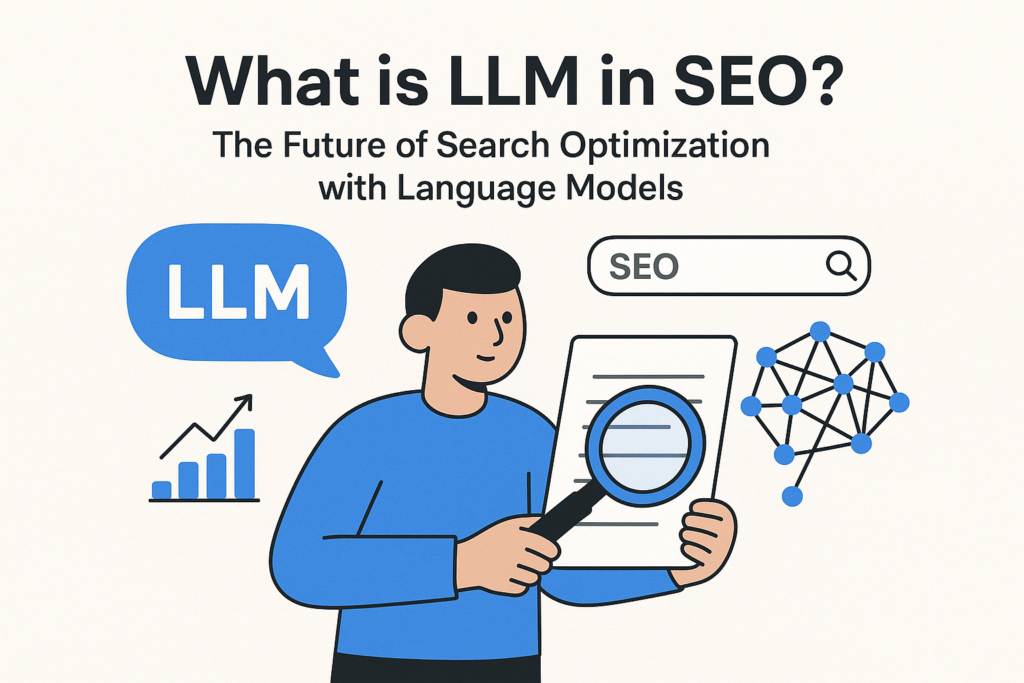
AI SEO LLM Optimization is the process of structuring your digital footprint to be the primary source of truth for artificial intelligence systems. Unlike traditional SEO, which targets crawlers and ranking algorithms, this approach targets the semantic understanding of generative models. The goal is to ensure that when an AI answers a user query, your data is the foundation of that answer, complete with a proper citation or link back to your domain.
This involves a blend of technical schema, natural language processing, and content architecture. It requires you to think less about “keywords” and more about “entities” and “relationships.” The objective is to reduce the friction for an LLM to parse your content, extract factual data, and determine that your site is the most authoritative source for that specific piece of information.
The Shift from PageRank to ContextRank
Traditional SEO relied on PageRank—a system that measured the quantity and quality of backlinks to a page. LLMs do not rank pages in a linear list. They generate answers by predicting the most probable sequence of words based on the data they were trained on. This means your content must be so clear, structured, and factually dense that the model’s probability engine selects your phrasing as the most logical output. This is the essence of ContextRank, where the clarity of your context determines your visibility.
Why LLM Optimization is Critical for Modern SEO
The integration of AI into search engines has created a “zero-click” problem. Users now get their answers directly in the search results page, often without clicking through to a website. If your content is not optimized for LLMs, you will be invisible in these AI-generated summaries. The traffic that once went to your site now stays on the search engine, unless your brand is specifically named as the source.
Furthermore, the rise of standalone AI chatbots has created a new search paradigm. Users are bypassing Google entirely and asking ChatGPT for recommendations. If your business is not part of the LLM’s training data or its real-time retrieval index, you are effectively absent from this rapidly growing market. AI SEO LLM Optimization ensures you are present in both the traditional search results and the new conversational interfaces.
Core Components of AI SEO LLM Optimization
To succeed in this new environment, you must address several technical and editorial components. These elements work together to create a “machine-readable” version of your expertise.
1. Structured Data and Schema Markup
Schema markup is the vocabulary that helps search engines and LLMs understand the context of your content. While standard SEO uses schema for rich snippets, LLM optimization requires a more granular approach. You must implement Entity Schema (Person, Organization, Product) and Factual Schema (FAQPage, HowTo, Article). This provides the explicit signals that tell an AI exactly what your data represents, removing any ambiguity.
For example, if you are a financial advisor, you need to mark up your credentials, your service area, and your fee structure with specific schema properties. This allows an LLM to confidently state, “John Smith is a certified financial planner in Austin, Texas,” with your site as the cited source.
2. Entity Clarity and Topical Authority
LLMs build knowledge graphs based on entities and their relationships. Your content must clearly define who you are, what you do, and how you relate to other entities in your industry. This means moving away from generic “best practices” content and toward specific, first-hand experience. You need to establish yourself as the definitive authority on a narrow topic.
This involves creating “hub and spoke” content structures. The hub is a comprehensive pillar page that covers a broad topic, while the spokes are detailed articles that cover specific subtopics. Each spoke must link back to the hub, and the hub must link out to the spokes. This creates a dense web of internal links that helps AI crawlers map your expertise.
3. Natural Language Processing (NLP) Friendly Writing
LLMs are trained on natural human language. They struggle with overly optimized, keyword-stuffed text that sounds robotic. Your writing must be conversational, direct, and answer questions in a straightforward manner. Use the “inverted pyramid” style: put the conclusion first, then the supporting details. This ensures that the most important facts are extracted even if the AI truncates the content.
You should also explicitly state the “who, what, when, where, and why” in your introduction. Do not make the AI guess the context. If you are writing about a specific software update, state the version number, the release date, and the vendor name in the first paragraph.
How to Optimize Content for LLM Extraction
Optimizing for extraction means making it easy for the AI to pull a specific quote or fact from your page. This requires a specific formatting strategy that differs from human-only readability.
Use Direct Answer Formats
Structure your content to include a “Direct Answer” box. This is a paragraph that begins with the exact question and provides a concise answer in 40-60 words. This is the text that is most likely to be pulled verbatim into an AI Overview. For instance, if your target keyword is “AI SEO LLM Optimization,” you might have a section that starts with: “AI SEO LLM Optimization is the practice of structuring content and technical metadata to improve visibility and citation within large language model outputs.”
Implement FAQ Sections with Precision
FAQ sections are goldmines for LLM extraction. When you write an FAQ, use the exact phrasing of the question as the heading (H3 or H4). The answer must be a single, self-contained paragraph that does not rely on context from other parts of the page. This allows the AI to treat each Q&A pair as an independent, citable entity.
Leverage Lists and Tables
LLMs are particularly good at parsing structured data like lists and tables. When you present information in a bulleted list or a comparison table, the AI can easily convert that into a structured response. For example, if you are comparing two software tools, use a table with columns for “Feature,” “Tool A,” and “Tool B.” This makes it trivial for the AI to generate a side-by-side comparison in its answer.
Technical SEO for AI Crawlers
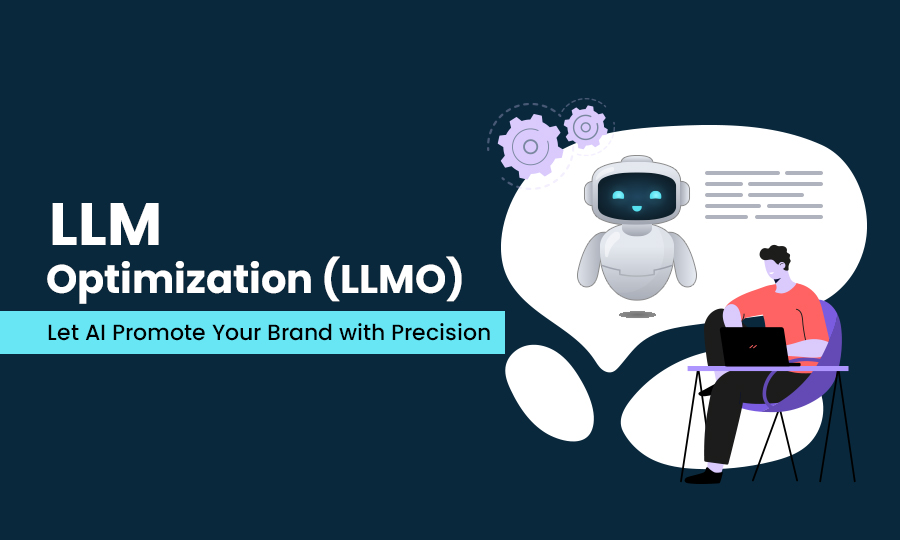
Beyond content, the technical health of your site determines whether AI crawlers can even access your content. These crawlers, such as GPTBot and Google-Extended, have specific behaviors that you must accommodate.
Robots.txt and Crawl Budget
You must explicitly allow AI crawlers in your robots.txt file. While some sites block these bots to prevent content scraping, this is a mistake for visibility. If you block GPTBot, you are telling OpenAI that your content is not available for training or retrieval. This ensures you will never be cited in ChatGPT. You should monitor your server logs to see how often these bots visit and ensure they are not hitting server errors.
Page Speed and Core Web Vitals
AI crawlers are impatient. If your page takes too long to load, the crawler may abandon the request. Ensure your site loads in under 2 seconds. Optimize images, use lazy loading, and minimize JavaScript. A fast, clean HTML structure is the most efficient way to ensure your content is fully rendered and indexed by AI systems.
XML Sitemaps for AI
While standard sitemaps are useful, consider creating a dedicated “LLM Sitemap” that lists your most authoritative pages. This helps AI crawlers prioritize your content. You can also use the lastmod tag to signal when your content was last updated, which is crucial for LLMs that rely on freshness for real-time information.
Benefits and Limitations of LLM Optimization
Understanding the pros and cons of this strategy helps set realistic expectations for your team.
| Benefits | Limitations |
|---|---|
| Increased brand visibility in AI chat interfaces | Difficult to track ROI with traditional analytics |
| Higher click-through rates from AI citations | Requires constant content updates to maintain accuracy |
| Establishes authority as a “source of truth” | No guaranteed placement; AI responses are probabilistic |
| Future-proofs your strategy against search changes | Technical implementation can be complex |
The primary limitation is the lack of control. You cannot “bribe” an LLM to rank you higher. The only lever you have is the quality and clarity of your content. However, the benefit of being the cited source in an AI answer is immense, as it positions you as the expert in front of millions of users.
Practical Application: A Step-by-Step Guide
Implementing this strategy requires a systematic approach. Follow these steps to begin your LLM optimization journey.
- Audit Your Current Visibility: Use tools like ChatGPT and Perplexity to ask questions related to your industry. Note which websites are cited. If your site is absent, identify gaps in your content.
- Map Your Entities: List the key people, products, and concepts in your business. Create a knowledge graph document that defines each entity and its relationship to others.
- Upgrade Your Schema: Implement JSON-LD schema for all your key pages. Focus on Organization, Product, FAQPage, and Person schemas.
- Rewrite for Clarity: Edit your top 10 pages to include direct answers at the top. Break down complex paragraphs into bullet points. Ensure every claim is backed by a specific data point or date.
- Create “Citation Magnets”: Develop unique research studies, original data reports, or comprehensive guides that are so valuable that LLMs must reference them to answer questions accurately.
- Monitor AI Crawlers: Check your server logs for GPTBot and Google-Extended. Ensure they are not being blocked and that they are successfully crawling your key pages.
Common Mistakes in AI SEO LLM Optimization
Many marketers make critical errors when trying to optimize for AI. Avoiding these pitfalls will save you time and resources.
Blocking AI Crawlers
This is the most fatal mistake. Some website owners block GPTBot to prevent “theft” of their content. This ensures you are invisible in ChatGPT. The risk of being cited is worth the benefit of being seen. Unless you have a specific legal or competitive reason, allow these crawlers.
Focusing on Keywords Instead of Questions
Traditional SEO targets keywords like “best CRM software.” LLM optimization targets questions like “What is the best CRM software for a small marketing agency in 2024?” Your content must answer the specific, long-tail conversational queries that users type into AI chatbots.
Ignoring Content Freshness
LLMs have a knowledge cutoff, but they also use real-time retrieval to get current data. If your content is outdated, the A You must establish a regular content update schedule to ensure your data is always current and accurate.
Neglecting Internal Linking
AI crawlers use internal links to discover new content and understand site hierarchy. If your pages are orphaned (no links pointing to them), they will be ignored. Ensure every page is linked to from at least one other relevant page on your site.
Important Notes for Long-Term Success
AI SEO LLM Optimization is not a one-time project. It is an ongoing process of refinement. The algorithms that govern LLMs are constantly evolving. What works today may not work next month. You must stay agile and continuously test how AI models respond to your content.
Also, remember that E-E-A-T (Experience, Expertise, Authoritativeness, Trustworthiness) is more critical than ever. LLMs are designed to avoid spreading misinformation. They are more likely to cite sources that demonstrate first-hand experience and verifiable credentials. Showcasing author bios, certifications, and original research is essential.
Finally, do not abandon traditional SEO. The two disciplines work in tandem. A strong backlink profile still signals authority to LLMs. A well-structured site with clear navigation helps AI crawlers map your content. Treat LLM optimization as an enhancement to your existing SEO strategy, not a replacement.
Frequently Asked Questions (FAQ)
What is the difference between traditional SEO and AI SEO LLM Optimization?
Traditional SEO focuses on ranking in search engine results pages (SERPs) by optimizing for crawlers and algorithms. AI SEO LLM Optimization focuses on being cited and recommended by large language models in generative answers. Traditional SEO targets keywords and backlinks, while LLM optimization targets entity clarity, structured data, and direct answer formats.
How do I check if my website is visible in AI search results?
You can manually test by asking ChatGPT, Google Gemini, or Perplexity specific questions about your industry. If your brand does not appear, you can also use tools like “ChatGPT Site Audit” or “AI Search Visibility” tools that simulate queries and track brand mentions. Checking your server logs for GPTBot and Google-Extended crawler activity is also a good indicator of visibility.
Does AI SEO LLM Optimization require coding skills?
Basic implementation requires some familiarity with HTML and JSON-LD schema. However, most content management systems (like WordPress) offer plugins that generate schema automatically. The more important skill is editorial—the ability to write clear, factual, and structured content that an AI can easily parse.
Will AI SEO LLM Optimization replace traditional link building?
No. Link building remains a strong authority signal. LLMs are trained on data that includes web links, and they use the connectivity of the web to determine trust. A site with high-quality, relevant backlinks is still considered more authoritative than one without them. However, the focus shifts from quantity to the relevance and context of the linking domain.
How long does it take to see results from LLM optimization?
Results vary. If you are updating existing content and fixing technical issues, you may see changes in AI citations within a few weeks. However, building the level of authority required to be a consistent source in AI answers can take several months of consistent content creation and digital PR.
Conclusion
The era of the “answer engine” is here. Users are increasingly relying on AI to synthesize information and make decisions. AI SEO LLM Optimization is the bridge that connects your expertise to these new digital assistants. By focusing on entity clarity, structured data, and direct answer formats, you position your brand as the definitive source of truth in your niche. This is not about chasing algorithms; it is about establishing a digital footprint so clear and authoritative that machines cannot ignore it. Start implementing these strategies today to secure your visibility in the generative search landscape of tomorrow.
Xem thêm:
- AI SEO Meta Description Generator: The Complete Guide to Higher Click-Through Rates
- AI SEO for Affiliate Marketing: The 2025 Playbook for Dominating Search and Commissions
- AI SEO H1 Optimization: The Complete Guide to Dominating Search Rankings in 2025
- AI SEO AI Search Audit Tool: The Complete Guide to Modern Search Visibility
- AI SEO Keyword Modifiers: The Complete Guide to Smarter Search Optimization
Bài viết cùng chủ đề:

AI SEO SEO Automation with Make: The Complete Workflow Guide

AI SEO SEO Automation with Zapier: The Complete Workflow Guide

AI SEO SEO Automation with n8n: The Complete Workflow Guide
AI SEO SEO Automation with Gemini: The Complete Guide to Scaling Organic Growth

AI SEO SEO Automation with Claude: The Complete Guide to Scaling Content in 2025

AI SEO SEO Automation with ChatGPT: The Complete Playbook for 2025

AI SEO & SEO Automation for Affiliate Sites: The 2025 Playbook for Passive Income Growth
AI SEO & SEO Automation for Bloggers: The Complete Guide to Scaling Your Content

AI SEO & SEO Automation for Agencies: The Complete 2025 Playbook

AI SEO and SEO Automation for Ecommerce: The Complete Playbook for 2025

AI SEO & SEO Automation for WordPress: The Complete Playbook for 2025
AI SEO SEO Automation Strategy: The Complete Playbook for 2025

Mastering the AI SEO SEO Automation Process: A Complete Guide to Scaling Organic Growth
AI SEO SEO Automation System: The Complete Guide to Scaling Organic Growth in 2025
AI SEO SEO Automation Platform: The Complete Guide to Scaling Organic Growth in 2025
AI SEO SEO Automation Software: The Complete Guide to Scaling Organic Growth in 2025















