No products in the cart.
AI Technical SEO: The Ultimate Guide to Automating Site Audits, Crawl Optimization, and Indexing Strategies
29
Jul
Jul
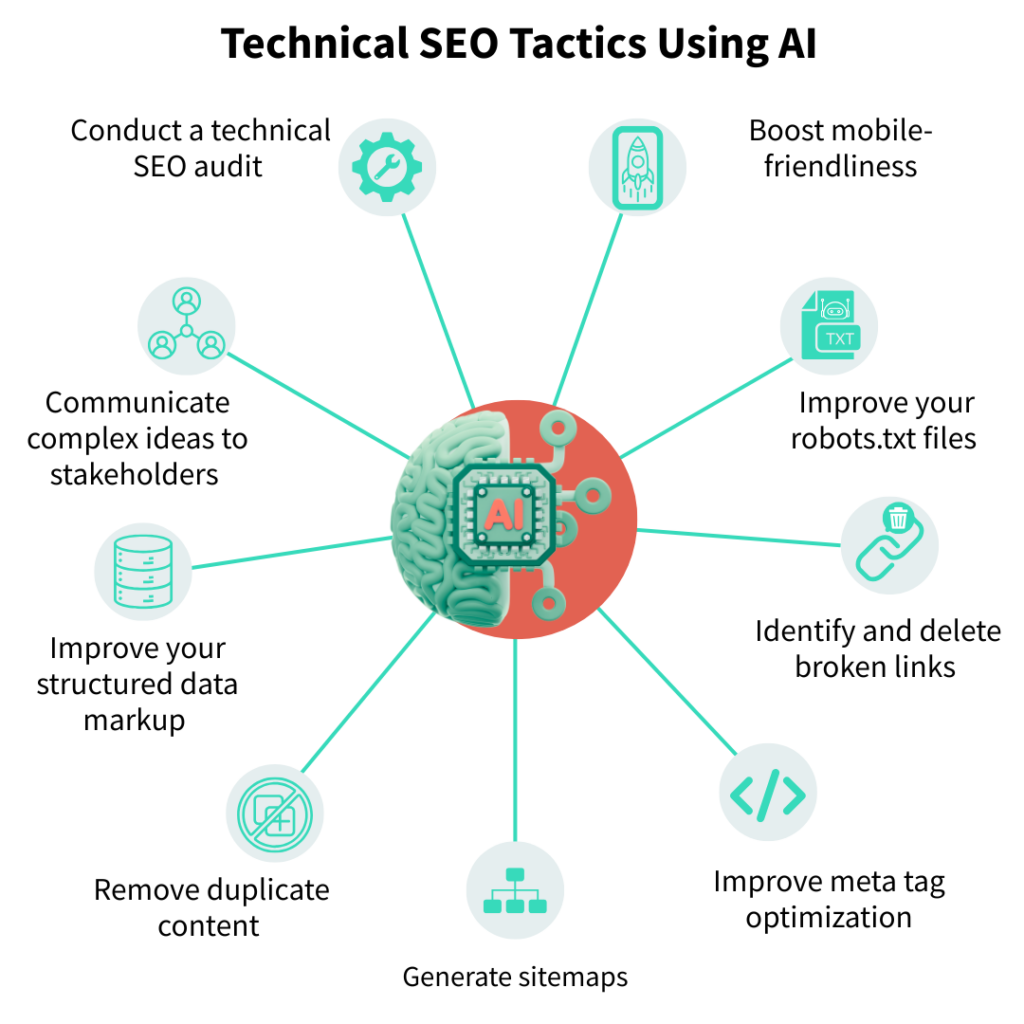
Technical SEO has always been the behind-the-scenes engine that powers search visibility. In the last two years, the landscape has shifted dramatically. Manual log file reviews, spreadsheet-driven audits, and scripted hreflang checks can no longer keep pace with modern, dynamic websites. AI technical SEO has emerged as the discipline’s next evolution—where machine learning, natural language processing, and intelligent automation handle the heavy lifting of crawl optimization, indexing, and site architecture. This guide unpacks what AI technical SEO actually means, how it works, which mistakes to avoid, and how to fold it into a measurable organic search strategy.
What Is AI Technical SEO?

AI technical SEO refers to the integration of artificial intelligence technologies—primarily machine learning models, natural language understanding, and pattern recognition—into the core technical optimization workflow of a website. Instead of manually auditing URLs, analyzing crawl logs, or writing structured data templates, SEO professionals use AI-powered platforms that learn from massive datasets, detect anomalies, generate recommendations, and sometimes execute fixes autonomously. The goal remains the same as classic technical SEO: make a site accessible, crawlable, understandable, and efficiently indexable by search engines. The difference is speed, scale, and the ability to uncover patterns invisible to the human eye.
At its heart, AI technical SEO takes repetitive technical tasks and layers predictive intelligence on top of them. A machine learning model might identify that pages with a specific internal linking depth consistently underperform in terms of crawl budget consumption, then propose a restructuring plan. Or an NLP system can read server logs across millions of requests, immediately flagging wasted crawl on parameter-heavy URLs and suggesting the correct canonicalization approach. This is not speculative—it is being deployed daily by enterprise SEO teams and forward-thinking agencies.
How AI Transforms Core Technical SEO Workflows
Traditional technical SEO relies heavily on deterministic rules: if a status code equals 404, flag it; if a title tag exceeds 60 characters, shorten it. AI shifts the paradigm from rule-based detection to context-aware evaluation. The models account for site maturity, historical crawl patterns, seasonal traffic shifts, and even algorithm update signals. This makes every technical recommendation more precise and less likely to trigger false positives.
Below are the five pillars where AI technical SEO creates immediate, measurable impact.
1. Intelligent Crawl Optimization and Log File Analysis
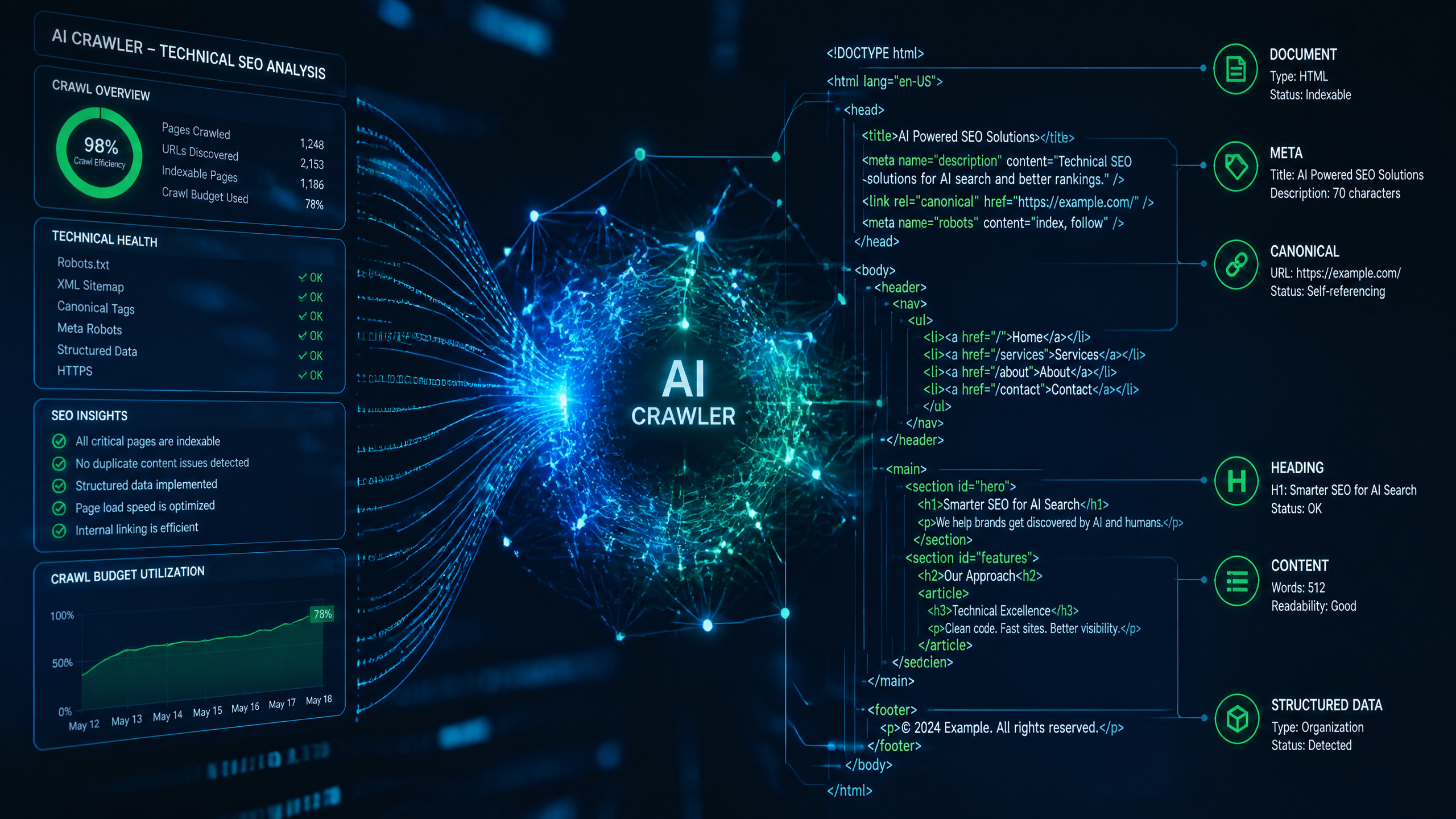
Server log data is the ultimate source of truth for how search engine bots interact with a site. Traditionally, an SEO engineer would sample log lines, pivot them in Excel, and manually identify crawl traps. AI models can ingest terabytes of log files, automatically classify bot behavior, compare it against organic traffic patterns, and surface actionable insights in minutes. For example, an AI-driven tool from a major cloud platform detected that Googlebot was spending 37% of its crawl budget on filtered facet URLs that had no organic traffic history. The system recommended a noindex, follow approach on those parameter combinations, coupled with an updated robots.txt directive. Within four weeks, indexable page discovery increased by 22%.
2. Automated Structured Data and Schema Markup Generation
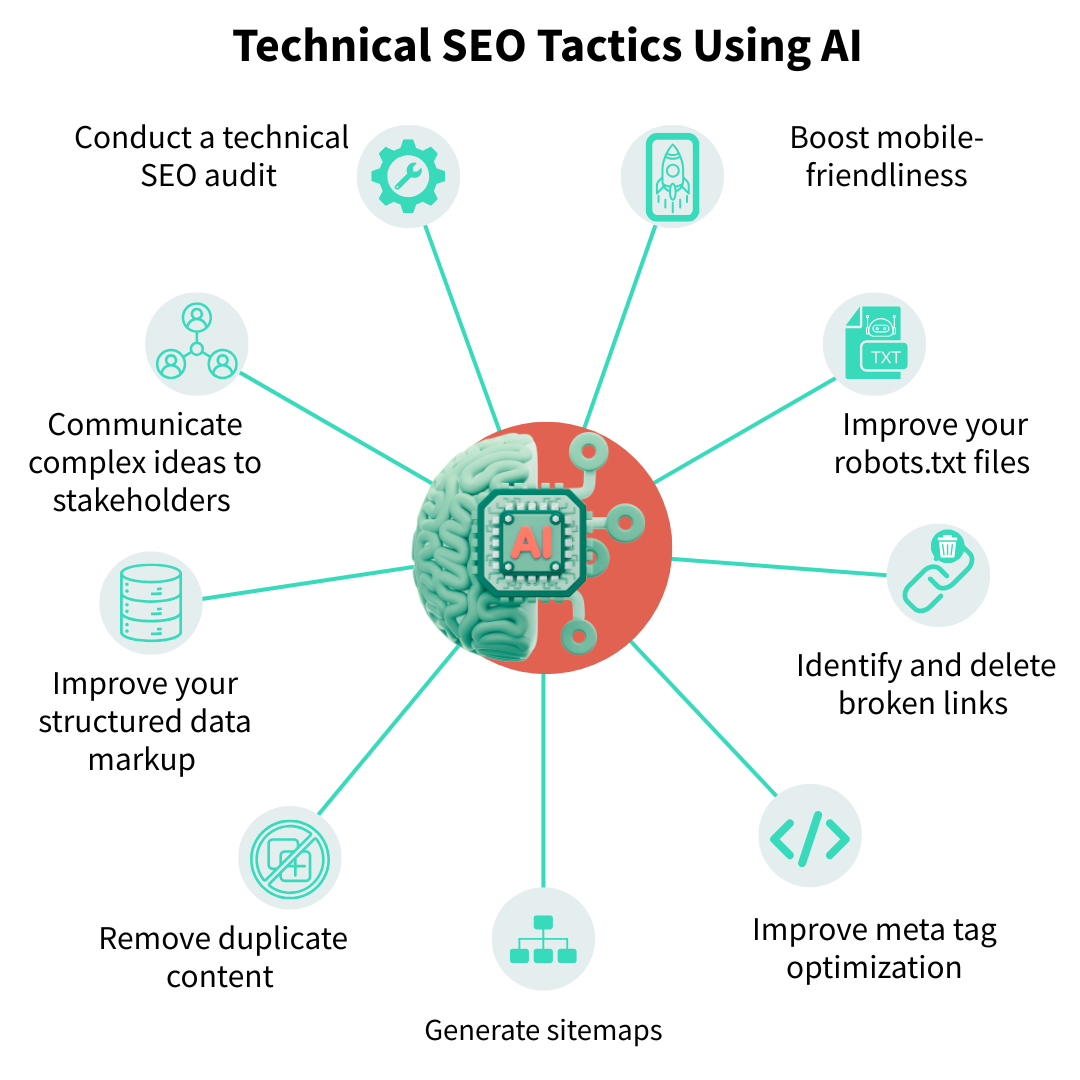
Manual schema implementation is error-prone, especially for large product catalogs, recipe databases, or job listings. AI technical SEO tools now use natural language processing to extract entities from page content automatically, generate valid JSON-LD with the correct schema.org types, and even validate against Google’s Rich Results Test pre-deployment. This not only saves developer hours but ensures the markup remains consistent across thousands of dynamically generated pages. Some platforms monitor search console rich result reports and adjust property values in real time if errors spike—a fully closed-loop system.
3. Predictive Site Architecture and Internal Linking
Internal link structures are typically built on assumptions. AI uses graph theory and reinforcement learning to test millions of link configurations virtually. It computes PageRank flow, identifies orphan pages, and predicts which clusters will yield the largest crawl efficiency gain. Instead of manual breadcrumb audits, SEOs run an AI model that outputs a prioritized list of internal linking actions, complete with anchor text recommendations that balance relevance and over-optimization risk.
4. Dynamic XML Sitemaps and Indexing Strategy
Static sitemaps often degrade quickly. AI-driven sitemap generation evaluates freshness, content quality change velocity, and crawl priority signals to build a live sitemap index that self-updates. When a page’s content substantially changes or its backlink profile strengthens, the model increases its priority. Conversely, thin content pages automatically drop out of the sitemap, reducing bloat. This dynamic prioritization aligns your most valuable URLs with search engine crawl attention.
5. Real-Time Technical Health Monitoring with Anomaly Detection
Regular technical audits are snapshots in time. AI-based monitoring platforms run continuous crawls and apply unsupervised learning to detect deviations. If a site suddenly has 500 new 3xx redirect chains after a CMS update, the system triggers an alert before a human would ever notice. Some enterprise setups even auto-rollback problematic XML sitemap deployments when anomalies exceed a threshold. This level of responsiveness is unattainable with manual processes.
Benefits and Limitations of AI Technical SEO
The practical gains far exceed simple time savings, but no technology is without trade-offs. Understanding both sides is essential for anyone vetting these tools.
| Benefits | Limitations |
|---|---|
| Exponential scalability: Handle millions of URLs without linear cost increase. | Black-box decision-making: Some models lack transparency, making it hard to explain why a specific recommendation was generated. |
| Proactive issue resolution: Predict regressions before they harm rankings. | Data dependency: Models trained on insufficient or biased data produce unreliable outputs. |
| Pattern discovery: Identify hidden relationships between technical signals and ranking drops. | Over-automation risk: Removing human review entirely can lead to automated errors at scale—a robots.txt misconfiguration propagated instantly is dangerous. |
| Resource reallocation: Free senior technical SEOs to work on architecture and innovation. | Onboarding complexity: Requires integration with internal data pipelines and a skill upshift in the team. |
| Continuous learning: Models improve as they ingest more search console, crawl, and conversion data. | Cost: Enterprise-grade AI platforms can be expensive and require managed infrastructure. |
Traditional Technical SEO vs. AI Technical SEO
A side-by-side comparison clarifies where AI fundamentally changes the game.
| Dimension | Traditional Technical SEO | AI Technical SEO |
|---|---|---|
| Crawl analysis | Manual log sampling, spreadsheet filtering | Full log ingestion, anomaly detection, crawl budget modeling |
| Issue identification | Rule-based crawler flags | Pattern-based anomaly detection with context |
| Schema markup | Manually coded or template-driven | NLP-generated, self-validating JSON-LD |
| Sitemap management | Static XML lists, manual updates | Dynamic, priority-weighted, auto-published |
| Internal linking | Ad-hoc audits, guesswork | Graph-based predictive recommendations |
| Response time to issues | Days to weeks | Minutes to hours, sometimes real-time |
| Scalability ceiling | Limited by human bandwidth | Virtually unlimited for well-trained models |
Practical Applications and a Step-by-Step Integration Guide
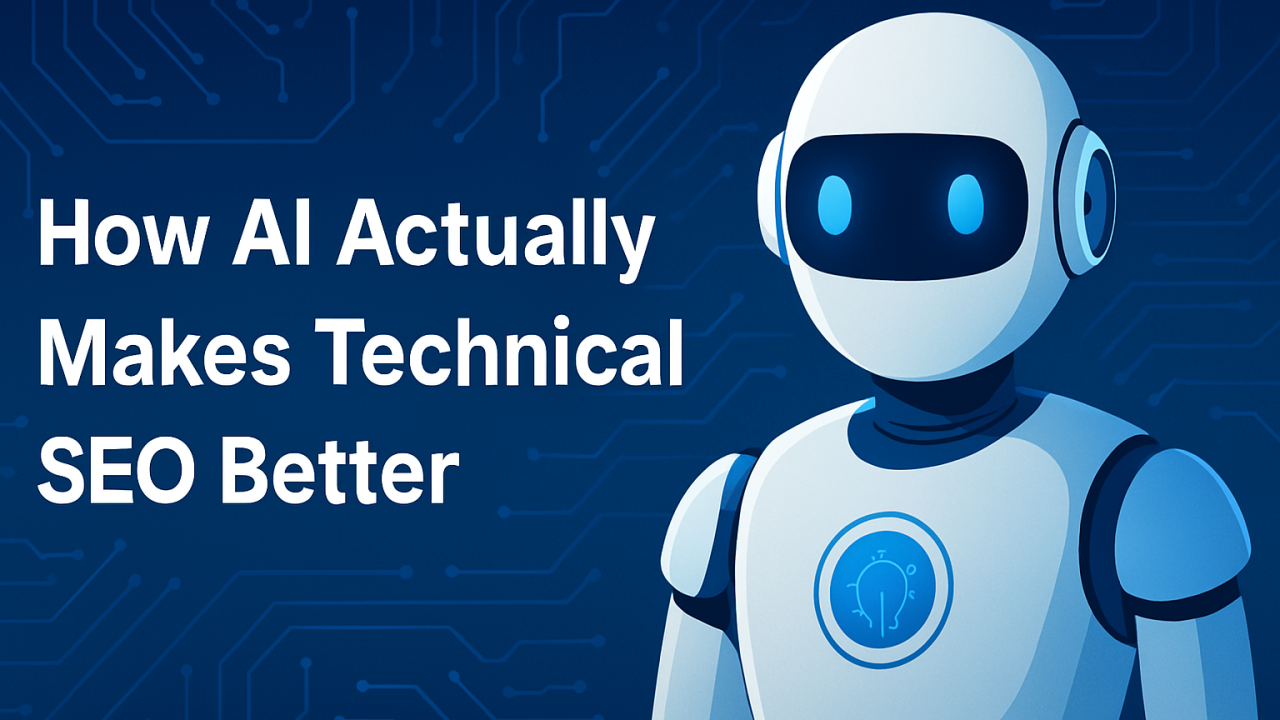
Deploying AI technical SEO is not about flipping a switch—it’s an iterative layer that sits on top of a fundamentally sound technical foundation. The following guide walks through a proven implementation sequence.
Step 1: Centralize Your Data
AI models are only as good as the data they learn from. Aggregate your server logs, crawl data from enterprise crawlers, Google Search Console performance and coverage reports, XML sitemap history, and CDN analytics into a unified data warehouse. Clean the data, standardize URL formats, and remove bot traffic noise. Many organizations use Google BigQuery or Snowflake as the repository, with scheduled ETL jobs that feed data hourly.
Step 2: Map Technical KPIs to Business Outcomes
Before selecting any tool, define exactly what you need the AI to optimize. Typical KPIs include crawl budget waste ratio, index bloat percentage, page discovery time from publish to indexation, and structured data error rate. Align these with revenue metrics—if location pages drive 40% of store traffic, prioritize local business schema monitoring and crawl efficiency for those URL segments.
Step 3: Choose an AI Technical SEO Platform or Build Custom Models
For most teams, off-the-shelf enterprise tools like Botify Intelligence, DeepCrawl’s automated insights, or Lumar’s anomaly detection will provide immediate value without heavy ML engineering. For highly custom needs—such as proprietary content management systems with unique rendering challenges—developing lightweight models using TensorFlow or PyTorch on internal data may be worthwhile. The key is to start narrow, prove value on one use case like automated hreflang validation, then expand.
Step 4: Run Parallel Testing
Never automate critical technical directives without a safety net. Run the AI recommendations in a shadow mode: the model flags issues, but a senior engineer reviews and approves bulk actions for at least two full crawl cycles. Compare the model’s suggestions against manual audit findings. Track the precision and recall rates. Once the false positive rate drops below 5%, you can shift to automated execution with human oversight on exceptions.
Step 5: Close the Feedback Loop
The true power of AI technical SEO emerges when the system learns from outcomes. Whenever a recommendation is applied, track the before-and-after metrics—crawl frequency, indexation rate, organic clicks, and impressions for affected pages. Feed these results back into the model to refine future predictions. This reinforcement loop turns a static tool into an asset that improves every month.
Common Mistakes and How to Avoid Them
Enthusiasm for AI often leads teams to skip critical governance steps. Here are the most frequent pitfalls and practical safeguards.
- Mistake: Blindly trusting AI-generated canonicals. An NLP model might suggest a canonical target based on textual similarity without considering backlink signals or existing ranking data. Solution: Always cross-check canonical recommendations against your link graph and top pages by traffic before implementation.
- Mistake: Over-automating without a rollback plan. Unsupervised agents can propagate robots.txt disallows that accidentally block critical assets. Solution: Implement version-controlled configuration management for all search directives and require human approval for any change affecting more than 1% of indexed pages.
- Mistake: Training on non-representative log data. If you only analyze log files during a quiet season, the model won’t understand peak crawler behavior. Solution: Use continuous, year-round data streams and weight recent activity appropriately.
- Mistake: Neglecting the fundamentals. AI cannot fix a broken server-side rendering setup or an improper HTTP status code implementation. Solution: Maintain a strong baseline technical health check before letting AI optimize nuances.
- Mistake: Ignoring model drift. Search engine algorithms change, and AI models can become stale. Solution: Set up monthly performance evaluations against fresh holdout data and retrain as needed.
Important Notes for Sustainable AI Technical SEO

This technology does not replace SEO expertise—it amplifies it. The most successful implementations keep a senior technical SEO in the loop who understands crawler behavior at a granular level and can sanity-check AI outputs. Always document the rationale behind automated decisions so that future team members or during audits, the logic is traceable.
Privacy and compliance must be woven into the architecture. When using cloud-based AI platforms, ensure that server logs are anonymized and that no personally identifiable information from users leaks into the model training set. GDPR and similar regulations extend to log data processing. Finally, respect search engine guidelines. Using AI to generate thousands of doorway pages or cloaked content violates webmaster policies and will result in manual actions—no amount of smart automation can undo that damage.
Frequently Asked Questions
What exactly is AI technical SEO?
AI technical SEO is the application of machine learning, natural language processing, and pattern recognition to automate and enhance technical optimization tasks such as crawl analysis, indexation management, structured data deployment, and internal linking. It moves beyond static rule checks to context-aware, predictive recommendations that scale across millions of pages.
Can AI completely replace a human technical SEO expert?
No. AI handles repetitive analysis and large-scale pattern detection, but strategic decisions, understanding nuanced ranking contexts, and creative problem-solving still require human expertise. The most effective approach is human-in-the-loop, where AI surfaces insights and executes routine actions under expert supervision.
Which technical SEO tasks benefit most from artificial intelligence?
Log file analysis, crawl budget optimization, automated hreflang implementation, schema markup generation, and real-time anomaly detection yield the highest return. These areas involve massive data volumes and rule-heavy processes that machine learning models can process far faster and more accurately than manual methods.
What data is needed to train an AI technical SEO model?
Clean server logs, historical crawl data, Google Search Console coverage and performance exports, XML sitemap snapshots, internal link graphs, and content change logs form the essential dataset. The quality and granularity of this data directly impact model accuracy; incomplete or noisy data leads to unreliable outputs.
Are there open-source tools for AI technical SEO?
While most end-to-end platforms are commercial, several open-source components exist. TensorFlow or scikit-learn can be used to build custom anomaly detectors on log data. Python libraries like spaCy support NLP-based content classification for schema generation. However, ready-to-deploy open-source AI technical SEO suites remain rare—most teams combine custom scripts with commercial APIs.
How do I measure the ROI of AI technical SEO?
Track the reduction in manual audit hours (time saved multiplied by team cost), the decrease in crawl budget waste, the improvement in page indexation speed, and the drop in structured data errors. Ultimately, translate these into organic traffic and revenue gains from better-indexed, better-optimized pages. In enterprise deployments, AI-driven changes have shown a 15–30% improvement in crawl efficiency and a measurable lift in non-brand clicks from long-tail template pages.
Conclusion
AI technical SEO is not a futuristic concept—it is the operational backbone of high-performing search programs today. By infusing systematic crawl analysis, automated structured data, dynamic sitemap management, and predictive link optimization with machine intelligence, teams can move from reactive firefighting to proactive architectural leadership. The winners in organic search will be those who embrace this shift responsibly: combining clean, centralized data with robust human oversight and a continuous improvement loop. Start small, validate aggressively, and scale the intelligence that turns technical SEO from a maintenance cost into a strategic growth lever.
Xem thêm:
- AI SEO Topical Depth: The Complete Guide to Dominating Search Rankings
- Unlock the Power of AI Prompt Templates: A Complete Guide to Crafting Perfect Prompts Every Time
- AI SEO Tutorial: How to Master Search Rankings with Artificial Intelligence
- AI SEO Chatbots: The Complete Guide to Automating Search Optimization With Conversational Intelligence
- AI SEO Website Architecture: The Complete Blueprint for 2025
Bài viết cùng chủ đề:

AI SEO SEO Automation with Make: The Complete Workflow Guide

AI SEO SEO Automation with Zapier: The Complete Workflow Guide

AI SEO SEO Automation with n8n: The Complete Workflow Guide
AI SEO SEO Automation with Gemini: The Complete Guide to Scaling Organic Growth

AI SEO SEO Automation with Claude: The Complete Guide to Scaling Content in 2025

AI SEO SEO Automation with ChatGPT: The Complete Playbook for 2025

AI SEO & SEO Automation for Affiliate Sites: The 2025 Playbook for Passive Income Growth
AI SEO & SEO Automation for Bloggers: The Complete Guide to Scaling Your Content

AI SEO & SEO Automation for Agencies: The Complete 2025 Playbook

AI SEO and SEO Automation for Ecommerce: The Complete Playbook for 2025

AI SEO & SEO Automation for WordPress: The Complete Playbook for 2025
AI SEO SEO Automation Strategy: The Complete Playbook for 2025

Mastering the AI SEO SEO Automation Process: A Complete Guide to Scaling Organic Growth
AI SEO SEO Automation System: The Complete Guide to Scaling Organic Growth in 2025
AI SEO SEO Automation Platform: The Complete Guide to Scaling Organic Growth in 2025
AI SEO SEO Automation Software: The Complete Guide to Scaling Organic Growth in 2025