
No products in the cart.
AI SEO Long Form Content: The Complete Guide to Scaling High-Ranking Articles
10
Aug
Aug
AI SEO long form content has transformed how digital marketing teams approach organic growth. The ability to produce comprehensive, data-driven articles at scale while maintaining quality is no longer a luxury—it is a competitive necessity. This guide examines the mechanics of using artificial intelligence to create in-depth content that ranks, converts, and builds authority. You will learn the exact workflows, tools, and editorial standards required to succeed in this new landscape.
What Is AI SEO Long Form Content?
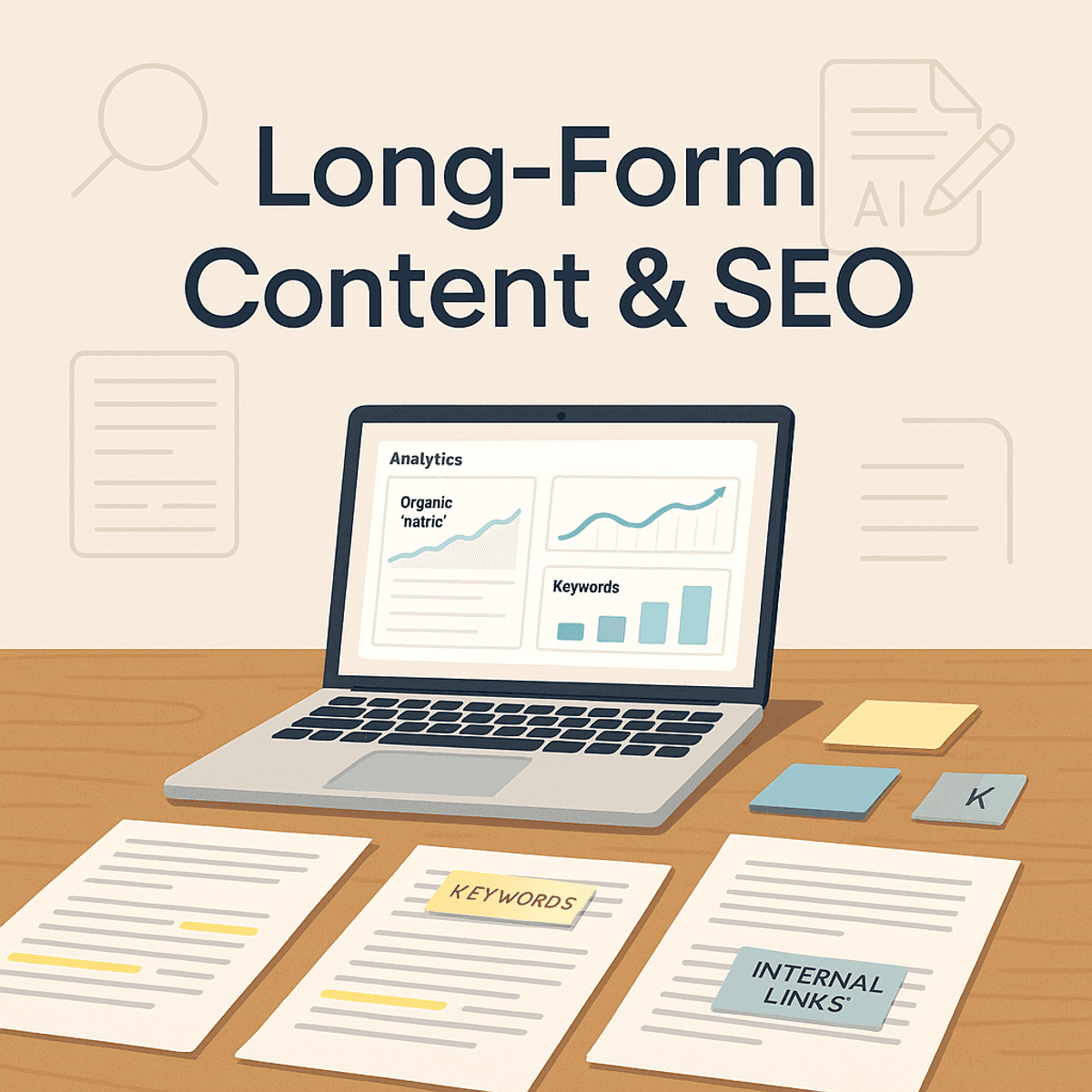
AI SEO long form content refers to articles, guides, and pillar pages typically exceeding 1,500 words that are drafted, optimized, or fully generated using machine learning models. These systems analyze search intent, competitor rankings, and semantic relevance to produce text that mirrors human expertise. The output is then refined by editors to ensure factual accuracy, brand voice, and strategic alignment.
The core value proposition is efficiency. A human writer might spend eight hours researching and drafting a 3,000-word guide. An AI assistant can produce a structured first draft in minutes. This speed allows teams to target more keywords, refresh existing assets, and maintain consistent publishing schedules without expanding headcount.
The Evolution from Short-Form to Long-Form
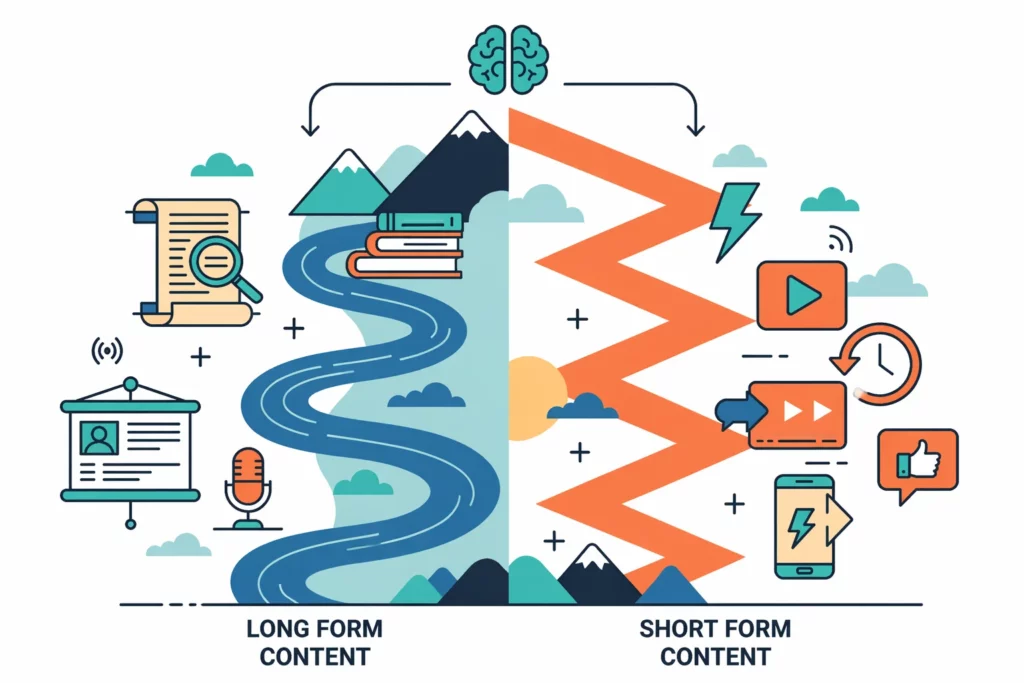
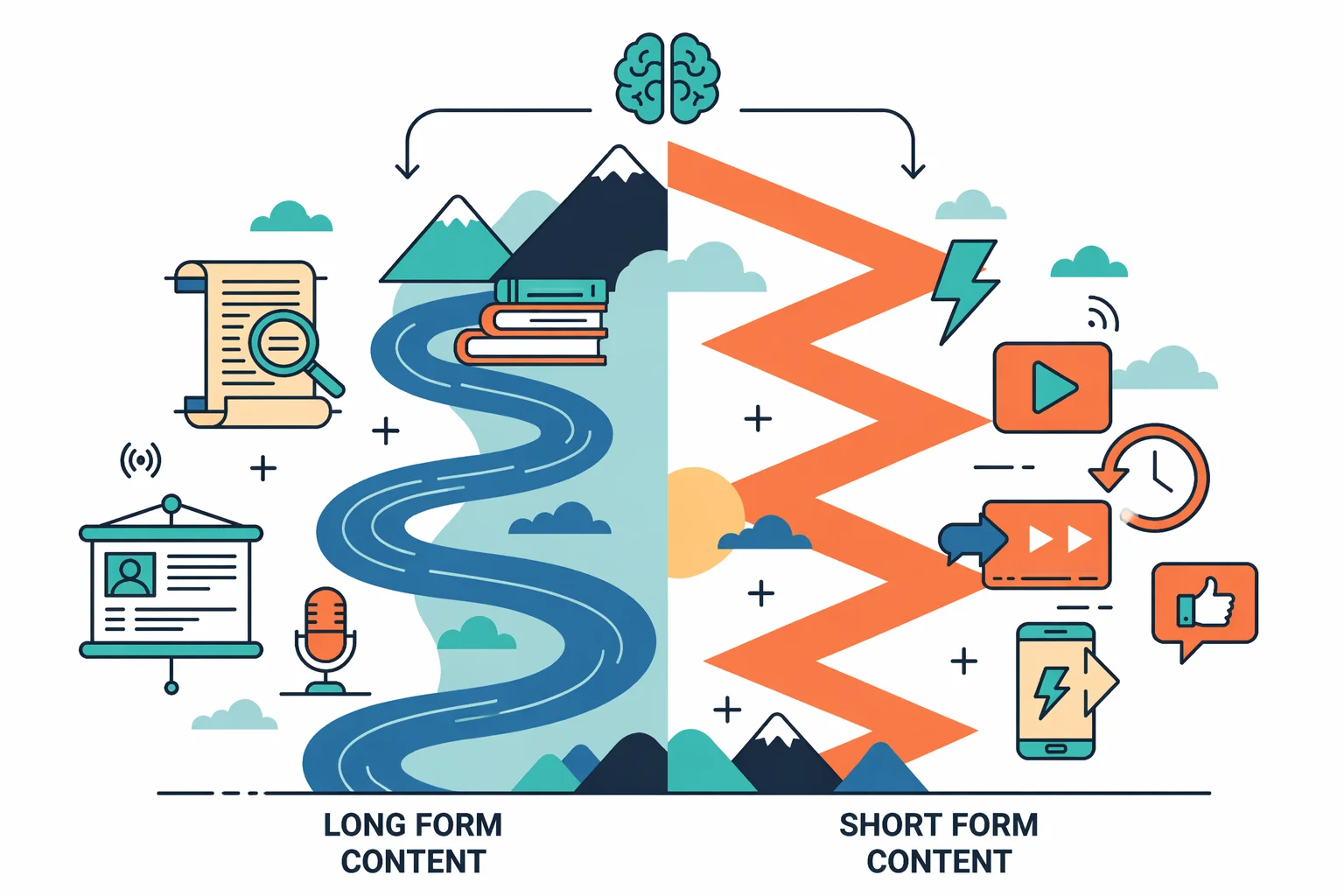
Early AI content tools focused on short product descriptions and social media captions. The shift toward long-form came from search engine behavior. Google’s algorithms increasingly reward comprehensive coverage of a topic. Pages that answer multiple related questions in one document tend to outperform thin, fragmented posts. AI models trained on vast datasets can now generate the necessary depth, complete with subheadings, examples, and logical transitions.
Why Google Rewards Long-Form Content
Search engines prioritize user satisfaction. When a searcher clicks a result, they want immediate, complete answers. Long-form content provides the space to cover a subject thoroughly, reducing the likelihood that the user bounces back to the SERP. This dwell time and reduced bounce rate signal quality to Google.
Additionally, long-form articles naturally accumulate backlinks. Other websites reference comprehensive guides as authoritative sources. Each backlink acts as a vote of confidence, boosting domain authority and rankings for the entire site. AI SEO long form content enables you to create these linkable assets consistently.
Semantic Depth and Entity Coverage
Modern search algorithms use natural language processing to understand entities and their relationships. A 2,000-word article allows you to naturally include related terms, synonyms, and contextual variations. This semantic richness helps search engines categorize your page correctly and match it to a wider range of queries.
For example, an article about “project management software” can naturally discuss “task dependencies,” “Gantt charts,” “resource allocation,” and “stakeholder communication.” Each term reinforces the topic’s relevance. AI tools excel at generating these semantic webs because they have ingested millions of documents on similar subjects.
Key Benefits of Using AI for Long-Form SEO
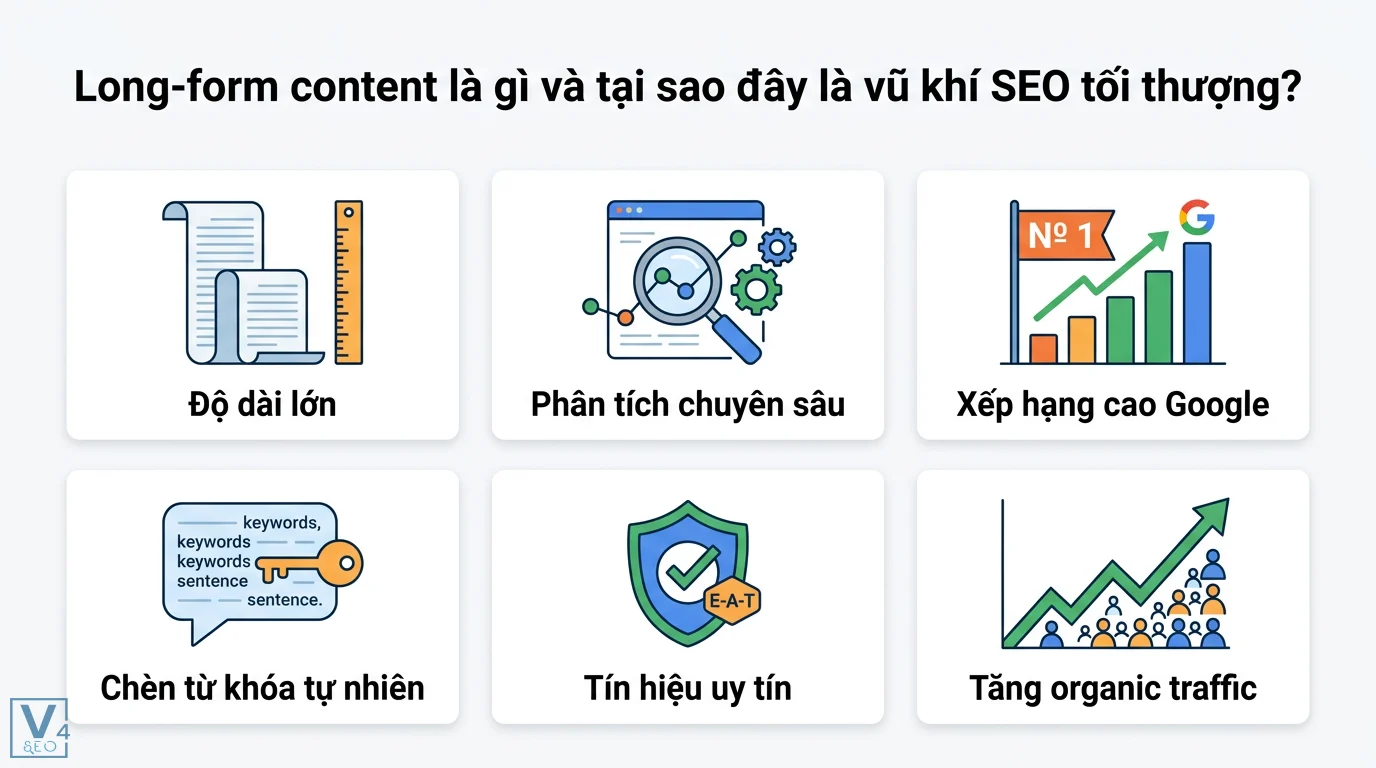
The advantages extend beyond simple time savings. Teams that adopt AI SEO long form content workflows report improvements in several measurable areas.
- Scalability: Publish 10 to 20 comprehensive articles per week instead of two or three.
- Consistency: Maintain a uniform structure, tone, and formatting across all posts.
- Cost Efficiency: Reduce per-word production costs compared to traditional freelance writing.
- Data Integration: Feed current analytics and keyword data directly into the generation prompt.
- Rapid Iteration: Test different angles and headlines without waiting days for drafts.
- Role: “Act as an experienced SEO copywriter with expertise in B2B technology.”
- Task: “Write a 2,500-word guide on AI SEO long form content.”
- Audience: “The reader is a marketing manager with basic SEO knowledge.”
- Structure: “Use H2 for main sections and H3 for subsections. Include a comparison table.”
- Constraints: “Do not use jargon. Provide practical examples. Avoid making unverifiable claims.”
- Verify all statistics and claims against primary sources.
- Add personal experience, case studies, or proprietary data.
- Rewrite sentences that sound robotic or awkward.
- Ensure the content aligns with the brand’s style guide.
- Check for factual consistency across all sections.
- Optimizing the title tag and meta description for click-through rate.
- Using descriptive, keyword-rich alt text for all images.
- Creating a logical internal linking structure to related posts.
- Ensuring the URL slug is short and contains the primary keyword.
- Adding schema markup for articles, FAQs, or how-to content.
Overcoming Writer’s Block and Research Fatigue
Even experienced writers face creative burnout. AI serves as an infinite brainstorming partner. When you need to cover a complex topic, the model can generate outlines, suggest subtopics, and provide introductory paragraphs. This jumpstart reduces the cognitive load on human writers, allowing them to focus on adding unique insights and real-world examples.
Limitations and Risks You Must Manage
AI is not a magic bullet. Unedited AI output often contains inaccuracies, outdated information, and a generic tone. Search engines can detect low-quality automated content, and Google’s spam policies explicitly target scaled content abuse. Understanding these risks is essential for long-term success.
Factual Accuracy and Hallucinations
Large language models generate text based on probabilities, not verified facts. They may invent statistics, misattribute quotes, or describe non-existent studies. Every claim must be checked against reliable sources. This is particularly critical for YMYL (Your Money or Your Life) topics like health, finance, and legal advice. Publishing false information can damage your reputation and lead to penalties.
The “Generic Voice” Problem
AI models default to a neutral, corporate tone. This voice lacks the personality and unique perspective that builds brand loyalty. Readers can often spot AI-generated content because it feels impersonal and repetitive. Human editors must inject anecdotes, opinions, and specific case studies to differentiate the content.
How to Create AI SEO Long Form Content: A Step-by-Step Process

Successful implementation requires a structured workflow. Follow these steps to produce articles that rank and engage.
Step 1: Keyword and Intent Research
Start with a primary keyword that has commercial or informational value. Use tools like Ahrefs, SEMrush, or Google Keyword Planner to identify search volume and difficulty. Then, analyze the current top 10 results. Look at the subheadings they use, the questions they answer, and the media they include. This analysis forms the blueprint for your article structure.
Create a list of 10 to 15 secondary keywords and LSI terms. These should be integrated naturally throughout the content. For example, if your primary keyword is “AI SEO long form content,” secondary terms might include “AI writing tools,” “content optimization,” “search intent,” and “editorial workflow.”
Step 2: Crafting the Perfect Prompt
The quality of AI output depends entirely on the input. A vague prompt yields vague content. Your prompt should include the target keyword, the target audience, the desired tone, the article outline, and specific instructions for each section.
A strong prompt structure includes:
Step 3: Generating the First Draft
Use the AI tool to generate the article section by section rather than all at once. This approach gives you more control over the flow and allows you to adjust the prompt based on the output quality. Generate the introduction first, review it, then proceed to the body sections.
Most platforms like ChatGPT, Claude, or Jasper allow you to continue the conversation. Use follow-up prompts to expand on specific points or request alternative phrasings. This iterative process produces a more coherent draft than a single long generation.
Step 4: The Human Editorial Pass
This is the most critical step. The human editor must:
Editing is not just proofreading. It is the process of transforming generic AI text into authoritative, original content. Plan to spend at least 30 to 60 minutes editing a 2,000-word draft.
Step 5: On-Page SEO Optimization
After the text is finalized, apply technical on-page elements. This includes:
Comparison: AI-Generated vs. Human-Written Content
Understanding the strengths and weaknesses of each approach helps you decide where to allocate resources.
| Aspect | AI-Generated (with Editing) | Human-Written |
|---|---|---|
| Production Speed | Very fast (hours) | Slow (days) |
| Cost per Article | Low to moderate | High |
| Originality | Requires heavy editing to be unique | Naturally unique |
| Factual Accuracy | Risk of hallucination | High, if writer researches |
| Brand Voice | Generic unless prompted | Easily tailored |
| Scalability | Excellent | Limited by team size |
| SEO Structure | Excellent, follows patterns | Variable |
The best strategy is hybrid. Use AI for the heavy lifting of research and drafting, then use human expertise for refinement and strategic insight.
Common Mistakes and How to Avoid Them
Many teams fail to see results from AI SEO long form content because they repeat the same errors. Recognizing these pitfalls early will save you time and resources.
Publishing Unedited AI Output
This is the most common and damaging mistake. Raw AI text is often repetitive, generic, and occasionally wrong. Publishing it directly signals low quality to both readers and search engines. Always enforce a mandatory editorial review process before anything goes live.
Targeting the Wrong Keywords
AI can generate content for any keyword, but not all keywords are worth targeting. Avoid keywords with zero search volume or those that are too broad to rank for. Focus on long-tail keywords with clear user intent. Use AI to scale your efforts, not to replace strategic keyword selection.
Ignoring Search Intent
If a user searches for “best CRM software,” they want a comparison list, not a history of CRM development. AI tools may generate content that is topically relevant but misaligned with intent. Always analyze the current SERP to understand what format and angle the user expects.
Neglecting Internal Linking
Long-form articles are powerful hubs for internal links. Failing to link to other relevant pages on your site misses a major SEO opportunity. Each new article should link to at least three to five existing posts, and you should update older posts to link back to the new one.
Important Notes for Sustainable Success
Search engine algorithms are constantly evolving. What works today may not work next year. Stay informed about Google’s guidelines regarding AI-generated content. As of the latest updates, Google rewards high-quality content regardless of how it is produced, but it penalizes content created primarily to manipulate rankings.
Transparency is also becoming important. Some publishers disclose their use of AI. While not required, this can build trust with your audience. More importantly, ensure that your content provides genuine value. If a reader feels deceived by generic, low-effort AI text, they will not return to your site.
Measuring Performance and Iterating
Track the performance of your AI-generated articles just as you would any other content. Monitor rankings, organic traffic, engagement metrics, and conversion rates. Use this data to refine your prompts and editorial guidelines. If a particular article structure performs well, replicate it for other topics.
Set up a regular content audit schedule. Review your top-performing pages and update them with new information. AI makes it easy to refresh outdated statistics and add new sections, keeping your content evergreen.
Frequently Asked Questions
Is AI SEO long form content considered spam by Google?
Google’s guidelines prohibit “scaled content abuse,” which refers to producing large volumes of low-quality content regardless of whether AI or humans create it. If your AI-generated content is accurate, original, and helpful, it does not violate guidelines. The key is to ensure human oversight and editorial quality.
How long should an AI-generated article be for SEO?
T The ideal length depends on the topic and the depth of information required to satisfy user intent. For competitive commercial topics, 2,000 to 3,000 words are common. For simpler queries, 1,000 words may suffice. Focus on comprehensiveness rather than hitting a specific number.
What are the best AI tools for long-form content?
Several platforms offer robust long-form generation. ChatGPT and Claude are versatile for drafting and brainstorming. Jasper and Copy.ai provide templates specifically for SEO workflows. Surfer SEO and Frase integrate AI writing with real-time SERP analysis to optimize content for specific keywords. The best choice depends on your budget and existing tech stack.
Can AI replace human SEO writers?
AI replaces the mechanical aspects of writing, such as generating first drafts and researching background information. It does not replace the strategic thinking, subject matter expertise, and creative storytelling that top writers bring. The most effective teams use AI to augment human capabilities, not replace them.
How do I make AI content sound more human?
Inject personal anecdotes, specific examples, and a conversational tone. Edit the AI’s output to remove overly formal phrases. Use contractions, ask rhetorical questions (in the text, not to the reader), and vary sentence length. Reading the content aloud helps identify robotic phrasing.
Conclusion
AI SEO long form content represents a significant opportunity for businesses to scale their organic visibility. The technology enables rapid production of comprehensive, structured articles that meet modern search engine requirements. However, success depends entirely on the human element. Strategic keyword research, detailed prompting, rigorous editing, and continuous performance analysis are non-negotiable components of a winning workflow.
By combining the speed of AI with the discernment of experienced editors, you can build a content library that attracts backlinks, engages readers, and drives sustainable traffic growth. Start with a pilot project, measure the results, and refine your process. The brands that master this balance will define the future of search marketing.
Xem thêm:
- AI Keyword Difficulty: The Smarter Way to Gauge Search Competition in the Age of Machine Learning
- AI SEO Keyword Prioritization: The Complete Guide to Smarter Content Planning
- How to Find Keywords with AI: The Modern Marketer’s Blueprint for Smarter Research
- AI SEO for Publishers: The Complete Playbook for Sustainable Traffic Growth
- AI SEO vs Traditional SEO: How Automation Is Rewriting the Rules of Search Visibility
Bài viết cùng chủ đề:

AI SEO SEO Automation with Make: The Complete Workflow Guide

AI SEO SEO Automation with Zapier: The Complete Workflow Guide

AI SEO SEO Automation with n8n: The Complete Workflow Guide
AI SEO SEO Automation with Gemini: The Complete Guide to Scaling Organic Growth

AI SEO SEO Automation with Claude: The Complete Guide to Scaling Content in 2025

AI SEO SEO Automation with ChatGPT: The Complete Playbook for 2025

AI SEO & SEO Automation for Affiliate Sites: The 2025 Playbook for Passive Income Growth
AI SEO & SEO Automation for Bloggers: The Complete Guide to Scaling Your Content

AI SEO & SEO Automation for Agencies: The Complete 2025 Playbook

AI SEO and SEO Automation for Ecommerce: The Complete Playbook for 2025

AI SEO & SEO Automation for WordPress: The Complete Playbook for 2025
AI SEO SEO Automation Strategy: The Complete Playbook for 2025

Mastering the AI SEO SEO Automation Process: A Complete Guide to Scaling Organic Growth
AI SEO SEO Automation System: The Complete Guide to Scaling Organic Growth in 2025
AI SEO SEO Automation Platform: The Complete Guide to Scaling Organic Growth in 2025
AI SEO SEO Automation Software: The Complete Guide to Scaling Organic Growth in 2025















