
No products in the cart.
AI Keyword Difficulty: The Smarter Way to Gauge Search Competition in the Age of Machine Learning
29
Jul
Jul
The way we evaluate competition for organic keywords has shifted dramatically. Traditional keyword difficulty scores relied on a handful of static metrics, often leaving SEO professionals guessing about the true effort required to rank. AI keyword difficulty now transforms that guesswork into a data-driven forecast by analyzing hundreds of signals in real time, from user intent to content depth and SERP volatility. This new approach moves beyond simple backlink counts and delivers a more human understanding of what it really takes to capture a top position. Understanding how AI models calculate difficulty is essential for any marketer who wants to allocate resources intelligently and uncover opportunities that legacy tools miss.
What Is AI Keyword Difficulty?
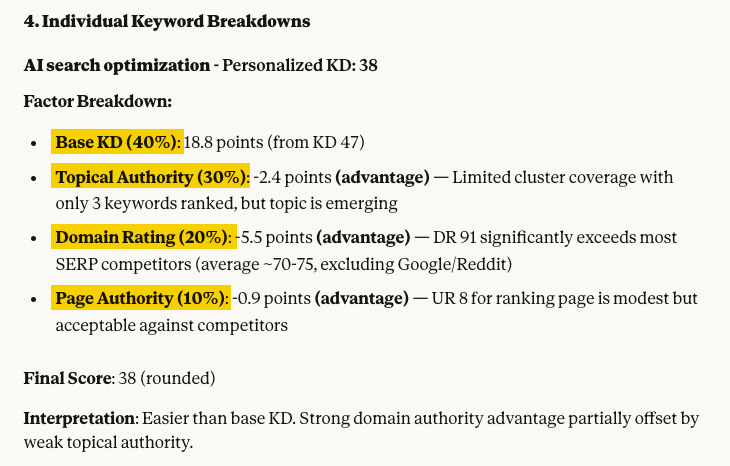
AI keyword difficulty is an advanced metric generated by machine learning algorithms that predicts how hard it will be to rank on the first page of search results for a given query. Unlike older formulas that leaned heavily on the number of referring domains pointing to competing pages, AI-driven difficulty considers a multidimensional picture. It interprets the actual composition of the search engine results page, the authority and relevance patterns of ranking URLs, user engagement signals, and the freshness of content. The output is not a static number but a context-aware score that adjusts as Google’s algorithms evolve.
At its core, AI keyword difficulty measures competitiveness by simulating how a search engine weighs ranking factors. Sophisticated models crawl the top results, extract semantic topics, gauge content comprehensiveness, and even assess the likelihood that a new page can close the authority gap. This means a keyword with many strong backlinks but thin content might show a lower AI difficulty than a keyword where every ranking page demonstrates deep expertise and topical authority. The metric reflects the real workload: building topical clusters, matching intent, and earning trust, not just acquiring links.
The Evolution from Traditional to AI-Powered Difficulty Scores
Traditional keyword difficulty was born from a world where link volume reigned supreme. Most tools calculated a ratio: the domain authority or PageRank of the top-ranking pages versus the link strength of the pages, then averaged them into a single number. That approach often ignored the nuances of informational versus transactional intent, video carousels, featured snippets, and “People Also Ask” boxes. A keyword that looked easy on paper could be dominated by government sites or giants like Wikipedia, making organic ranking nearly impossible for a commercial blog.
AI-powered difficulty introduced a paradigm shift. Machine learning models now train on thousands of SERPs, learning which combinations of factors correlate with ranking volatility. They process semantic similarity between the query and the content, identify content gaps, and estimate the probability that a new domain can break into the top ten. The result is a difficulty score that feels more predictive and less descriptive, giving SEO strategists a real-time view of where effort will pay off.
How AI Calculates Keyword Difficulty
The engine behind AI keyword difficulty ingests massive data sets and applies natural language processing, classification, and regression models. The calculation unfolds in several stages, each adding a layer of nuance. The goal is not to mimic a human analyst but to outperform them in volume and speed, surfacing correlations invisible to the naked eye.
Key Factors That AI Considers Beyond Backlinks
- Search intent classification – AI labels the query as informational, navigational, commercial, or transactional and adjusts competition weight accordingly. A transactional keyword with e-commerce giants ranking hard demands a different difficulty calculation than an informational query where forums and long-tail guides appear.
- Content depth and entity analysis – Machine learning extracts entities, subtopics, and the question-answer structure of top-ranking content. Pages that cover the topic comprehensively with expert-level nuance increase the difficulty score because a new entrant must match or exceed that depth.
- SERP feature saturation – The presence of featured snippets, knowledge panels, image packs, and video carousels is factored in. A keyword with a dominant featured snippet may push organic links below the fold, effectively raising the organic difficulty even if the links themselves are not extraordinarily authoritative.
- Topical authority signals – AI evaluates whether ranking domains are specialized topic hubs. A travel site ranking for “best running shoes” might produce a lower difficulty signal than a dedicated running publication because the latter displays stronger topical cohesion, which the algorithm captures.
- Click-through rate distribution – Some difficulty models incorporate estimated CTR curves. If the top three results capture 85% of clicks, the real competition is fiercer than what a pure link-based score would indicate.
- Content freshness requirements – Certain queries demand up-to-date information. AI detects rapid turnover in ranking pages and adjusts difficulty upward for static content that may struggle to stay relevant.
- Correlation, not causation: AI difficulty scores predict ranking effort but cannot guarantee results. They reflect the competitive landscape as the model understands it, not a promise of success.
- Locale matters: A global difficulty score may not hold for a specific country or language SERP. Always set geographic targeting in your tool and, if possible, choose an AI model that differentiates by region.
- Device differences: Mobile and desktop SERPs can vary dramatically. An AI difficulty score based on desktop data may misguide mobile-first strategies. Cross-check both environments when feasible.
- Personalization blind spot: AI difficulty tools typically analyze depersonalized SERPs. Real-world results are influenced by user history, location, and browsing behavior. The actual click landscape can be more or less competitive than the model suggests.
- Model drift: Over time, the training corpus ages. If a tool does not frequently update its ML model, its difficulty scores become less reflective of current search engine behavior, so select platforms known for regular updates.
The table below illustrates how traditional and AI-driven difficulty assessments differ in the signals they prioritize.
| Factor | Traditional Keyword Difficulty | AI Keyword Difficulty |
|---|---|---|
| Backlink count and domain authority | Primary input | One signal among many |
| Search intent alignment | Rarely analyzed | Core classification step |
| SERP feature interference | Manual observation required | Automatically weighted |
| Content comprehensiveness | Not considered | Analyzed via NLP entity mapping |
| Topical authority of ranking domains | Limited to generic authority metrics | Assessed through semantic clustering |
| Freshness and query trends | Often static snapshot | Dynamic, time-sensitive scoring |
| User engagement predictions | Absent | Incorporated via CTR and dwell time estimates |
Benefits of AI Keyword Difficulty Over Traditional Methods
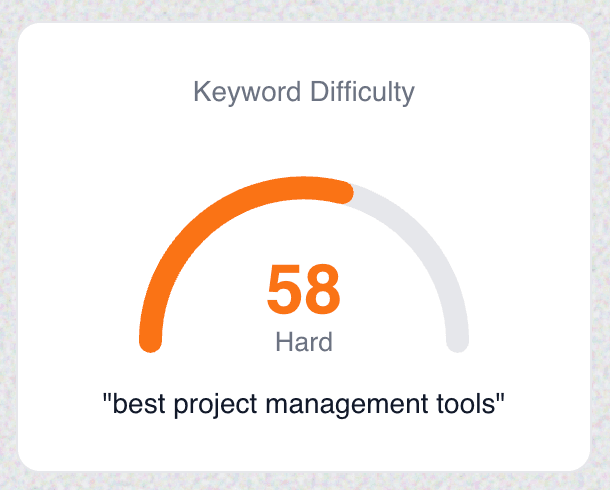
Adopting AI keyword difficulty brings immediate strategic advantages. The foremost benefit is intent-driven accuracy. Instead of asking whether a keyword is “easy” or “hard” in a vacuum, you learn why it is hard and what type of content can realistically compete. That single insight prevents wasted investment in content that cannot match user expectations.
Another powerful advantage is dynamic recalibration. As Google rolls out updates like helpful content or core algorithm shifts, AI difficulty models that retrain on fresh SERP data will detect new patterns. Manual difficulty benchmarks frequently become stale; machine-generated scores adapt much faster, giving you a near real-time picture of competition. Marketers can pivot content strategies before traffic dips become severe.
AI keyword difficulty also enables competitive gap analysis at scale. By comparing difficulty scores across a full keyword universe, you can spot clusters where your domain shows topical authority potential versus spaces dominated by entrenched brands. The AI highlights low-difficulty pockets where your existing topical equity can accelerate ranking, something a traditional domain authority filter would overlook.
Limitations and Pitfalls of Relying on AI Keyword Difficulty
Despite its sophistication, AI keyword difficulty is not flawless. One key limitation is the opacity of the models. Most commercial tools provide a single number without fully revealing the weightings behind it, making it hard to diagnose whether a high score stems from a specific SERP feature or content gap. This black-box nature demands manual verification to avoid misinterpretation.
Data freshness and training lag present another concern. If an AI model relies on a SERP corpus that is days or weeks old, it may miss sudden shifts caused by a new core update or a competitor’s aggressive content push. Practitioners who treat the score as absolute truth risk acting on outdated intelligence. Pairing AI difficulty with real-time SERP checks is essential.
T When every SEO team targets keywords with low AI difficulty according to the same models, previously untapped opportunities quickly become saturated. An overreliance on a single difficulty score can funnel the market toward the same set of terms, artificially inflating the real competition. Strategic intuition and deep niche knowledge must still guide keyword selection.
AI Keyword Difficulty Tools and How They Differ
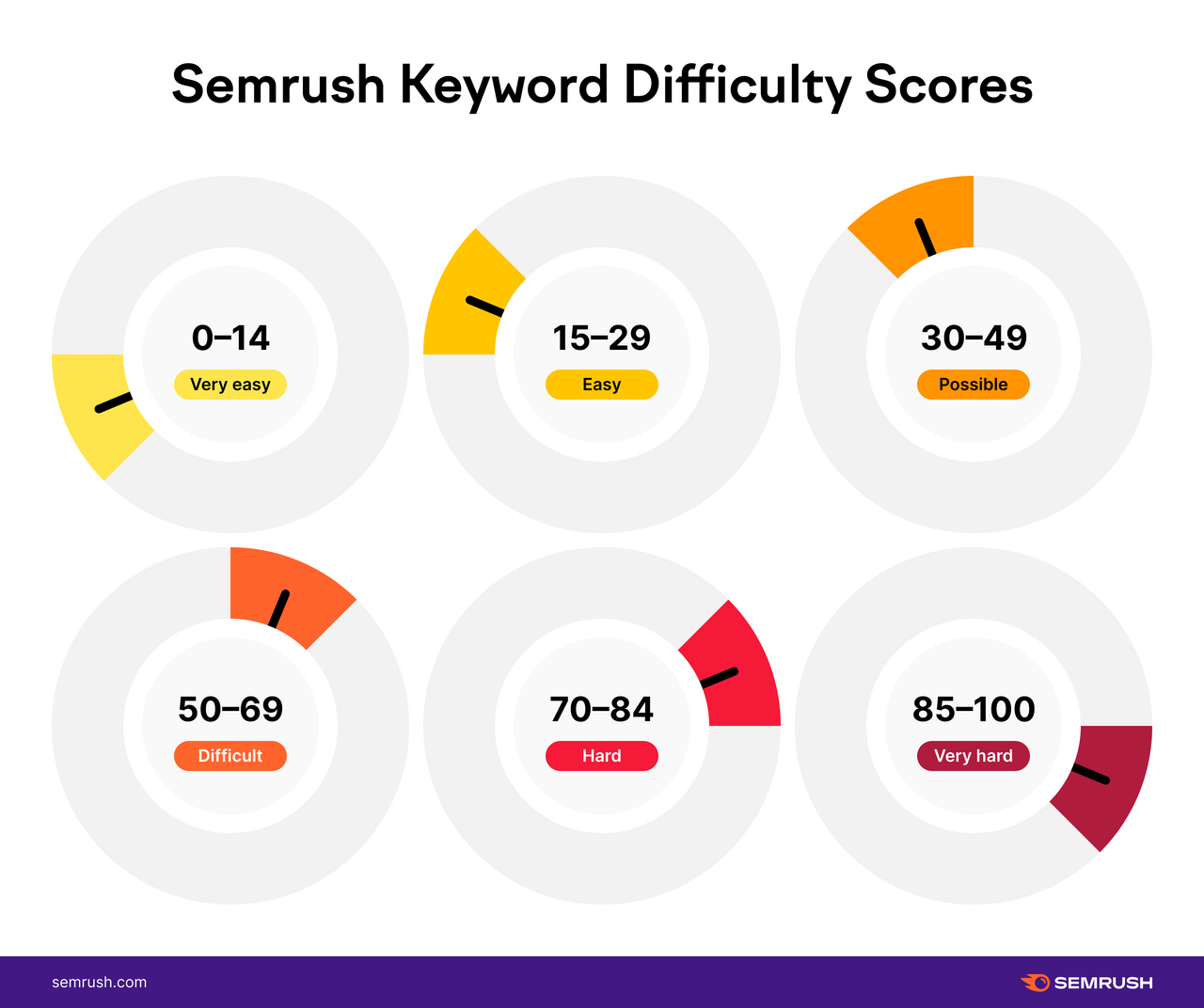
Modern SEO platforms approach AI-driven difficulty in distinct ways. Some build proprietary machine learning models trained on clickstream data, while others fuse backlink analysis with natural language processing of on-page content. The divergence means that a keyword may display a difficulty of 40% in one tool and 65% in another. This variance is not a flaw but a reflection of different algorithmic philosophies.
A few suites integrate AI difficulty directly into their content brief generators, recommending the ideal word count, media types, and semantic entities needed to compete. Others embed difficulty scores into keyword clustering workflows, automatically grouping low-competition terms where a single piece of pillar content could rank for dozens of long-tail variations. Savvy SEO professionals compare outputs from multiple AI difficulty models to triangulate a realistic picture before committing to a content play.
Practical Guide: Incorporating AI Keyword Difficulty into Your SEO Strategy
Blending AI difficulty scores into your workflow transforms how you prioritize content investment. The following steps outline a repeatable process that connects the AI metric to tangible ranking outcomes.
Step 1 – Identify Seed Keywords with AI-Assisted Research
Begin by feeding broad topics into an AI-powered keyword research tool and filtering by the generated difficulty score. Look for a sweet spot: difficulty levels that are low enough for your domain yet high enough to indicate meaningful search volume. Avoid the trap of chasing only the easiest keywords; a score that is too low might reflect a query with no real buyer intent or informational depth worth pursuing. Let the AI suggest semantically related variations that share similarly balanced difficulty profiles.
Step 2 – Evaluate Difficulty Scores in Context of Search Intent
For each shortlisted keyword, examine the SERP manually. Even the best AI model can miscategorize mixed-intent queries. If the top results are all product pages but your content plan targets a blog post, the AI difficulty may underestimate the chasm between formats. Align the difficulty score with intent fit, and adjust your content type accordingly. A keyword with moderate difficulty but mismatched intent is actually harder than the number suggests.
Step 3 – Cross-Reference with Your Site’s Authority and Topical Relevance
AI difficulty scores are relative to an average domain. If your site already holds strong topical authority in a niche, you can realistically tackle keywords with slightly higher difficulty scores than a new entrant could. Map your existing content clusters against the proposed keyword. When you find overlaps – where your site already ranks for related terms – the effective difficulty drops because the AI model may not fully account for your accumulated topical trust.
Step 4 – Prioritize Opportunities Using AI-Powered Difficulty Clusters
Instead of evaluating keywords in isolation, use an AI tool that groups them by semantic similarity and difficulty band. Look for clusters where the average difficulty is low but the combined search volume is substantial. These represent area where a comprehensive resource page can dominate. By focusing on clusters rather than individual terms, you maximize the return on each piece of content, addressing dozens of queries that the AI flags as moderately competitive but highly synergistic.
Step 5 – Monitor and Adapt as AI Scores Evolve
Set a routine calendar review. Every month, reassess the difficulty scores of your target keywords. A rising difficulty alerts you that stronger competitors have entered the space, signaling a need to refresh your content or build more topical links. A dropping score may reveal that incumbents have weakened, creating a window to push more aggressively. Integrating AI difficulty into your monitoring dashboard keeps your strategy reactive to market shifts without requiring manual reanalysis of hundreds of SERPs.
Common Mistakes When Using AI Keyword Difficulty (and How to Avoid Them)
Even experienced SEO professionals can misuse AI difficulty metrics. Recognizing these pitfalls upfront saves time and budget.
Mistake 1: Chasing Low Difficulty Keywords Irrespective of Intent Fulfillment. A keyword with a score of 20 might look appealing, but if it does not align with a genuine business goal or a clear stage in the user journey, ranking for it will generate traffic that never converts. Always filter by relevance before difficulty. The AI provides a signal, not a strategy.
Mistake 2: Ignoring Keyword Difficulty Fluctuations from Algorithm Updates. After a core update, difficulty models may take days to reflect new ranking realities. Rushing to claim keywords based on pre-update difficulty scores can lead to targeting terms that have suddenly become much harder. Always manually inspect a live SERP before publishing tier-one content.
Mistake 3: Treating AI Scores as Absolute Truth Without Manual SERP Inspection. No algorithm can fully replicate Google’s secret ranking mechanism. An AI might indicate low difficulty for a query that actually returns a featured snippet from a.gov site that cannot be outranked. A five-minute manual check confirms whether the difficulty score aligns with observable reality.
Mistake 4: Overlooking Long-Tail Variations Where AI Might Underestimate Traffic Potential. Some AI models struggle with ultra-specific long-tail queries because of limited search volume data. They may assign a high difficulty score incorrectly, dissuading you from creating content that could capture highly qualified visitors with minimal real competition. Validate long-tails by checking whether the ranking pages are weak or off-topic before discarding them.
Important Notes on AI Keyword Difficulty Accuracy
Frequently Asked Questions
What exactly is AI keyword difficulty?
AI keyword difficulty is a competition score generated by machine learning algorithms that analyze a wide range of SERP signals, including content depth, intent classification, domain authority patterns, and SERP features. It provides a more nuanced estimate of how hard it is to rank for a specific keyword compared to traditional link-based metrics.
How does AI improve keyword difficulty accuracy over traditional metrics?
Traditional metrics rely mostly on backlink counts and domain authority averages. AI incorporates semantic content analysis, intent matching, SERP feature density, click-through probability, and topical authority signals. This multidimensional view reduces the blind spots that make legacy scores misleading for complex modern SERPs.
Can AI keyword difficulty predict future ranking opportunities?
To some extent, yes. Because AI models detect patterns like declining content freshness or weakening topical relevance among incumbents, they can highlight keywords where competition may be vulnerable. However, a truly predictive difficulty score would need to forecast competitor behavior, which remains uncertain. The metric is best used as an early warning rather than a crystal ball.
Which factors do AI keyword difficulty tools analyze that traditional tools miss?
They commonly evaluate semantic entity gaps, comprehensive topic coverage, the presence and type of rich results, branded vs. non-branded ranking ratios, and temporal factors like content age and update frequency. Some models also factor in user interaction proxies, such as typical pogo-sticking rates derived from clickstream data.
Is it safe to rely solely on AI keyword difficulty for content planning?
No single metric should drive a content strategy. AI keyword difficulty is most powerful when paired with manual SERP analysis, brand relevance checks, and an understanding of your own site’s unique strengths. Relying on it alone can lead to overlooking intent mismatches or local SERP nuances.
How often do AI keyword difficulty scores get updated?
Update frequency varies by tool. Some platforms refresh difficulty scores weekly, while others recalculate daily or even in near real-time. The most responsive tools pull fresh SERP data multiple times per week, ensuring the scores reflect recent algorithm shifts and content turnover.
Can AI keyword difficulty scores vary between different tools?
Yes, significantly. Each tool trains its AI on a different data set and uses proprietary weighting of signals. A score of 45 in one platform might be equivalent to 65 in another. The key is to understand the relative consistency within your chosen tool and to use it as a comparative gauge rather than an absolute number.
Is AI keyword difficulty useful for local SEO?
It is useful but requires careful localization. Local SERPs involve proximity and Google Business Profile factors that global AI models may not fully capture. Some advanced AI tools now offer local difficulty scores that consider map pack presence and localized domain authority, making them far more relevant for brick-and-mortar strategies.
Conclusion
AI keyword difficulty has matured into an indispensable lens for competitive SEO planning. It moves the discipline beyond counting links and into a holistic assessment of what Google values in real time – authoritative depth, precise intent alignment, and a content experience that satisfies modern searchers. The metric alone does not replace human judgment, but it dramatically amplifies it, pointing strategists toward opportunities that hide beneath the surface of old-school scores.
To wield AI difficulty effectively, blend it with manual SERP scrutiny, a clear understanding of your domain’s topical strengths, and a process that revisits scores regularly. When applied with nuance, this intelligent metric helps you allocate resources where they can generate the highest organic return, turning the complexity of modern search into a navigable map for growth.
Xem thêm:
- AI SEO Internal Link Suggestions: The Complete Guide to Smarter Site Architecture
- AI SEO Reputation Management: The Complete Guide to Protecting Your Brand in 2025
- AI SEO Metrics: The Definitive Guide to Measuring Success in an AI‑Driven Search World
- AI SEO Integrations: The Complete Guide to Smart Automation and Higher Rankings
- AI Affiliate Content: How to Automate Reviews, Comparisons, and Earn Commissions Faster
Bài viết cùng chủ đề:

AI SEO SEO Automation with Make: The Complete Workflow Guide

AI SEO SEO Automation with Zapier: The Complete Workflow Guide

AI SEO SEO Automation with n8n: The Complete Workflow Guide
AI SEO SEO Automation with Gemini: The Complete Guide to Scaling Organic Growth

AI SEO SEO Automation with Claude: The Complete Guide to Scaling Content in 2025

AI SEO SEO Automation with ChatGPT: The Complete Playbook for 2025

AI SEO & SEO Automation for Affiliate Sites: The 2025 Playbook for Passive Income Growth
AI SEO & SEO Automation for Bloggers: The Complete Guide to Scaling Your Content

AI SEO & SEO Automation for Agencies: The Complete 2025 Playbook

AI SEO and SEO Automation for Ecommerce: The Complete Playbook for 2025

AI SEO & SEO Automation for WordPress: The Complete Playbook for 2025
AI SEO SEO Automation Strategy: The Complete Playbook for 2025

Mastering the AI SEO SEO Automation Process: A Complete Guide to Scaling Organic Growth
AI SEO SEO Automation System: The Complete Guide to Scaling Organic Growth in 2025
AI SEO SEO Automation Platform: The Complete Guide to Scaling Organic Growth in 2025
AI SEO SEO Automation Software: The Complete Guide to Scaling Organic Growth in 2025















