
No products in the cart.
AI SEO LowFruits: The Complete Guide to Automated Low-Hanging Keyword Wins

31
Jul
Jul
Search engine optimization has entered a new era where artificial intelligence tools can identify opportunities that human analysts often overlook. The concept of AI SEO LowFruits represents a strategic approach that combines machine learning algorithms with the classic “low-hanging fruit” methodology. This guide explores how automated systems can pinpoint high-intent keywords with low competition, allowing businesses to achieve meaningful rankings without exhausting their content budgets. Understanding this intersection of technology and traditional SEO practice is essential for marketers who want to stay competitive in 2025 and beyond.
What Exactly Is AI SEO LowFruits?
AI SEO LowFruits refers to the practice of using artificial intelligence tools to automatically discover and prioritize search terms that offer the best return on investment. These are typically keywords that have decent search volume but face minimal competition from established domains. The “low fruit” metaphor comes from agriculture, where pickers first gather the easiest-to-reach produce before using ladders for higher branches. In SEO terms, these are the queries that can be targeted with less effort, fewer backlinks, and shorter content while still generating meaningful traffic.
The AI component adds a layer of predictive analysis that goes beyond traditional keyword research tools. Machine learning models analyze thousands of data points, including domain authority, content freshness, user engagement metrics, and competitor behavior. This allows the system to forecast which keywords are likely to rank with minimal investment. The result is a prioritized list of opportunities that aligns with business goals and resource availability.
The Core Components of an AI-Driven LowFruits Strategy
To fully grasp how this approach works, it helps to break down the system into its fundamental parts. Each component plays a specific role in identifying and capitalizing on easy ranking opportunities.
- Data Aggregation: The AI pulls data from search engine result pages, Google Search Console, keyword databases, and competitor analysis tools. This creates a comprehensive dataset that reflects the current search landscape.
- Predictive Scoring: Algorithms assign a difficulty score to each keyword based on factors like domain authority of current ranking pages, content length, and backlink profiles. A low score indicates a high probability of ranking success.
- Intent Classification: The system categorizes keywords by user intent, such as informational, transactional, or navigational. This ensures that the identified opportunities align with conversion goals.
- Opportunity Ranking: The final output is a prioritized list that balances search volume, difficulty, and business relevance. This list serves as the roadmap for content creation and optimization.
- Data Quality Dependence: The accuracy of AI predictions depends on the quality of the input data. Outdated or incomplete datasets can produce misleading recommendations.
- Over-Optimization Risk: Focusing exclusively on low-competition keywords can result in a portfolio that lacks authority-building opportunities. High-value head terms may be neglected.
- Algorithm Updates: Search engine algorithms change frequently. A keyword that is easy to rank for today may become highly competitive after an update.
- Content Quality Concerns: The emphasis on speed and efficiency might lead to thin or generic content that fails to provide genuine value to users.
- Tool Costs: Advanced AI SEO platforms often come with significant subscription fees, which may be prohibitive for small businesses.
- Audit Current Performance: Use Google Search Console and analytics tools to identify pages that are already ranking on page two or three. These are prime candidates for optimization.
- Select an AI Tool: Choose a platform that offers keyword difficulty scoring, content gap analysis, and predictive ranking features. Popular options include Clearscope, Surfer SEO, and MarketMuse.
- Generate Keyword Clusters: Use the AI to group related keywords into topical clusters. This helps in creating comprehensive content that addresses multiple related queries.
- Prioritize by Business Impact: Filter the AI recommendations based on relevance to products or services, potential revenue, and alignment with marketing goals.
- Create Optimized Content: Develop content that satisfies the search intent for the selected keywords. Use the AI’s recommendations for structure, length, and semantic coverage.
- Monitor and Iterate: Track rankings and traffic for the targeted keywords. Use the data to refine the strategy and identify new opportunities.
- Ignoring Search Intent: A keyword might have low competition, but if the user intent does not match the content, the page will not perform well. Always verify that the query aligns with the purpose of the page.
- Chasing Zero-Volume Keywords: Some tools flag keywords with no search volume as low difficulty. These are useless for driving traffic. Focus on terms with at least some measurable demand.
- Neglecting Content Quality: Ranking for a keyword is only the first step. If the content is poorly written or lacks depth, users will bounce, and rankings will eventually drop.
- Failing to Update: Low-competition keywords can become saturated quickly. Regularly revisit the content to ensure it remains accurate and relevant.
- Overlooking Internal Linking: New pages targeting lowfruits keywords need internal links from authoritative pages to gain traction. Without this, they may remain invisible to search engines.
Why Traditional Keyword Research Falls Short
Conventional keyword research methods rely heavily on manual analysis and static data. Tools like Google Keyword Planner provide volume estimates and competition levels, but they lack the predictive power needed to identify emerging trends. A human analyst might spend hours reviewing spreadsheets, yet still miss opportunities that an AI system can flag in seconds. The fundamental problem is that traditional methods treat keywords as isolated data points rather than dynamic elements within a competitive ecosystem.
Another limitation is the time lag between data collection and implementation. By the time a human team identifies a keyword and creates content, the competitive landscape may have shifted. AI systems continuously monitor changes, allowing for real-time adjustments to strategy. This agility is particularly valuable in niches where search behavior evolves rapidly, such as technology, finance, and health.
The Role of Machine Learning in Opportunity Detection
Machine learning models excel at pattern recognition. They can identify correlations between content features and ranking performance that are not immediately obvious to human observers. For example, an AI might discover that pages with a specific word count, image ratio, and internal linking structure consistently rank well for a particular keyword cluster. This insight enables the creation of content that is optimized for algorithmic success from the outset.
Natural language processing (NLP) further enhances this capability by analyzing the semantic relationships between words. The AI can understand that a page about “best running shoes” should also address topics like “heel support” and “breathable materials” to fully satisfy user intent. This level of understanding goes beyond simple keyword matching and produces content that genuinely answers user questions.
Practical Benefits of Implementing AI SEO LowFruits

Businesses that adopt this approach typically see several measurable improvements in their organic search performance. The benefits extend beyond simple traffic increases and touch on efficiency, cost-effectiveness, and strategic planning.
| Benefit | Description | Impact |
|---|---|---|
| Faster Time to Rank | Targeting low-competition terms reduces the time needed to achieve top positions. | Visible results in weeks, not months |
| Reduced Content Costs | Less research time and shorter content requirements lower production expenses. | Higher ROI on content marketing |
| Improved Click-Through Rates | High-intent keywords attract users who are more likely to engage with the page. | Better conversion potential |
| Data-Driven Decisions | AI provides objective evidence for keyword selection, reducing guesswork. | More predictable outcomes |
| Scalable Strategy | Automated processes allow for expansion across multiple niches and markets. | Growth without proportional resource increases |
Real-World Example: E-Commerce Product Pages
Consider an online retailer selling eco-friendly home goods. A traditional approach might target broad terms like “sustainable products” which have high volume but intense competition from major retailers. An AI-driven lowfruits strategy would instead identify specific long-tail queries such as “biodegradable bamboo toothbrush holder” or “compostable kitchen sponge.” These terms have lower search volume but attract users who are ready to purchase. The AI can also detect seasonal spikes or emerging trends, allowing the retailer to create timely content that captures demand before competitors notice.
Limitations and Challenges to Consider
While the benefits are compelling, it is important to acknowledge the limitations of an AI-driven approach. No system is perfect, and relying solely on automated recommendations can lead to suboptimal outcomes if not properly managed.
Balancing Automation with Human Oversight
The most effective strategies combine AI insights with human judgment. An experienced SEO professional can review the AI-generated list and apply contextual knowledge that the algorithm lacks. For instance, the AI might flag a keyword as low difficulty, but a human expert might recognize that the topic is controversial or that the brand lacks the authority to address it credibly. This collaborative approach ensures that the final keyword selection aligns with brand values and long-term objectives.
How to Implement an AI SEO LowFruits Workflow
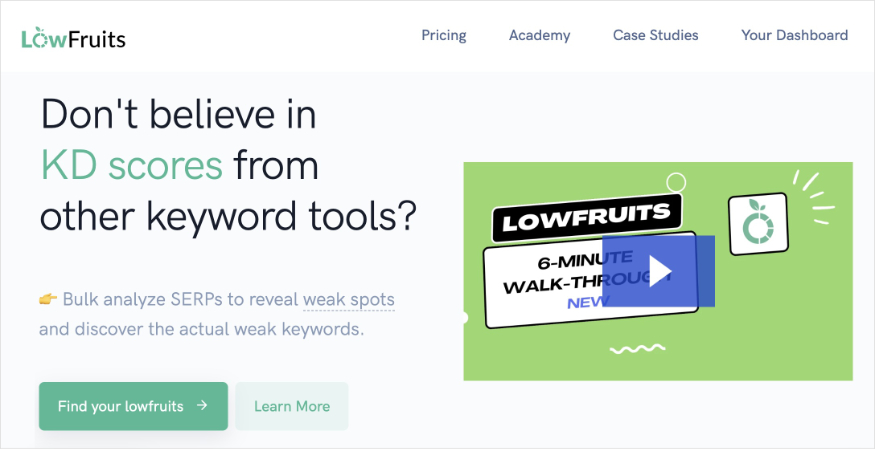
Implementing this strategy requires a structured process that integrates AI tools into existing SEO workflows. The following steps provide a practical framework for getting started.
Integrating with Existing Content Marketing
The lowfruits approach should not replace a comprehensive content strategy. Instead, it should complement it. Use the AI-identified keywords to fill gaps in the existing content library. For example, if a blog already covers “how to start a garden,” the AI might identify a related low-competition query like “best soil for raised beds in clay areas.” Creating a dedicated page for this specific query captures traffic that would otherwise go to competitors.
Common Mistakes to Avoid with AI-Driven Keyword Selection
Even with advanced tools, there are pitfalls that can undermine the effectiveness of a lowfruits strategy. Being aware of these mistakes helps in avoiding them.
Case Study: A B2B Software Company
A SaaS company specializing in project management tools used an AI SEO lowfruits approach to expand its organic reach. The AI identified a cluster of keywords related to “agile team collaboration templates” and “sprint planning spreadsheets.” These terms had moderate volume but were dominated by low-authority blogs. The company created a series of detailed guides and downloadable templates targeting these queries. Within three months, the pages ranked on the first page for over 40 keywords, generating a 25% increase in demo requests. The key was that the AI identified the gap between user demand and content supply, allowing the company to fill it efficiently.
Important Notes on Ethical Implementation
Using AI for SEO is not about manipulating search engines. It is about understanding user needs and delivering content that satisfies them. The algorithms are designed to identify opportunities where the current search results are inadequate. By creating better content, businesses improve the overall quality of the web. This ethical approach ensures long-term sustainability and avoids penalties associated with black-hat tactics.
Transparency is also crucial. If the AI tool uses data from competitor analysis, it is important to ensure that the data is obtained legally and ethically. Most reputable tools aggregate publicly available information, but it is wise to review the terms of service for any platform used.
Frequently Asked Questions
What is the difference between AI SEO LowFruits and traditional keyword research?
Traditional keyword research relies on manual analysis of volume and competition metrics. AI SEO LowFruits uses machine learning to predict ranking difficulty, analyze user intent, and identify emerging opportunities that are not visible through standard tools. The AI processes vast amounts of data to provide a prioritized list of actionable keywords.
How long does it take to see results from an AI-driven lowfruits strategy?
Results vary based on the niche, the quality of content, and the current authority of the website. In general, targeting low-competition keywords can yield visible ranking improvements within 4 to 8 weeks. However, consistent effort and regular content updates are necessary to maintain and build on these gains.
Can small businesses benefit from AI SEO LowFruits?
Yes, small businesses often benefit the most. They typically lack the domain authority to compete for high-volume keywords. The AI identifies terms where the competition is weak, allowing smaller sites to achieve visibility and attract targeted traffic without a massive marketing budget.
What are the best AI tools for finding low-competition keywords?
Several tools offer AI-powered keyword analysis, including Clearscope, Surfer SEO, MarketMuse, and Frase. Each has its strengths, and the best choice depends on specific needs such as budget, integration with existing workflows, and the depth of analysis required.
Is it necessary to hire an SEO expert to use AI tools effectively?
While the tools are user-friendly, having an experienced SEO professional can significantly improve results. An expert can interpret the AI’s recommendations, apply contextual knowledge, and avoid common pitfalls. For businesses without in-house expertise, consulting with a specialist is a worthwhile investment.
Conclusion

AI SEO LowFruits represents a powerful evolution in search engine optimization. By leveraging machine learning to identify and prioritize easy-to-win keywords, businesses can achieve meaningful traffic growth with less effort and cost. The approach is not a replacement for comprehensive SEO strategy but rather a smart addition that maximizes efficiency. The key to success lies in balancing automated insights with human judgment, maintaining high content standards, and continuously monitoring performance. As search algorithms become more sophisticated, the ability to quickly adapt and target the right opportunities will separate successful brands from those that struggle to gain visibility. Adopting an AI-driven lowfruits mindset is a forward-thinking move that positions any website for sustainable organic growth.
Xem thêm:
- AI SEO Automated SEO Monitoring: The Complete Guide to 24/7 Rank Tracking
- AI SEO Split Testing: The Complete Guide to Data-Driven Search Optimization
- AI SEO Ubersuggest: The Complete Guide to Smarter Keyword Research in 2025
- AI SEO Bing Webmaster Tools: The Complete Guide to Smarter Search Optimization
- AI Landing Page Optimization: Transform Your Conversion Rates with Smart Technology
Bài viết cùng chủ đề:

AI SEO SEO Automation with Make: The Complete Workflow Guide

AI SEO SEO Automation with Zapier: The Complete Workflow Guide

AI SEO SEO Automation with n8n: The Complete Workflow Guide
AI SEO SEO Automation with Gemini: The Complete Guide to Scaling Organic Growth

AI SEO SEO Automation with Claude: The Complete Guide to Scaling Content in 2025

AI SEO SEO Automation with ChatGPT: The Complete Playbook for 2025

AI SEO & SEO Automation for Affiliate Sites: The 2025 Playbook for Passive Income Growth
AI SEO & SEO Automation for Bloggers: The Complete Guide to Scaling Your Content

AI SEO & SEO Automation for Agencies: The Complete 2025 Playbook

AI SEO and SEO Automation for Ecommerce: The Complete Playbook for 2025

AI SEO & SEO Automation for WordPress: The Complete Playbook for 2025
AI SEO SEO Automation Strategy: The Complete Playbook for 2025

Mastering the AI SEO SEO Automation Process: A Complete Guide to Scaling Organic Growth
AI SEO SEO Automation System: The Complete Guide to Scaling Organic Growth in 2025
AI SEO SEO Automation Platform: The Complete Guide to Scaling Organic Growth in 2025
AI SEO SEO Automation Software: The Complete Guide to Scaling Organic Growth in 2025















