
No products in the cart.
AI SEO Pagination: The Complete Guide to Smarter Site Architecture in 2025
31
Jul
Jul
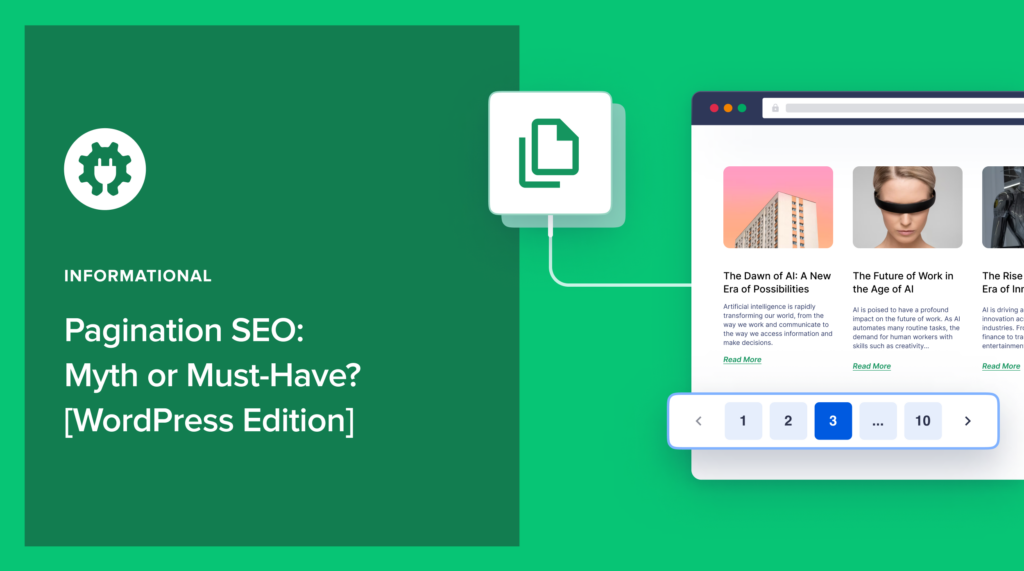
Pagination has always been a necessary evil for websites with large catalogs, blog archives, or product listings. But with the rise of artificial intelligence in search algorithms, the rules of the game have changed. AI SEO pagination is no longer just about adding rel=”next” and rel=”prev” tags. It is about understanding how machine learning models crawl, interpret, and rank paginated content in a world where user intent and contextual relevance matter more than raw URL structure. This guide dives deep into what AI SEO pagination means, why it matters for your rankings, and how to implement a strategy that aligns with modern search engine behavior.
What Is AI SEO Pagination?
AI SEO pagination refers to the practice of optimizing paginated content—series of pages that split a larger dataset into smaller, sequential chunks—using principles that align with how artificial intelligence systems in search engines process information. Traditional pagination focused on crawl efficiency and duplicate content signals. AI-driven pagination goes further by considering semantic relationships, user engagement patterns, and the predictive modeling that Google and Bing use to determine which pages deserve indexation and ranking power. In essence, AI SEO pagination is about treating each page in a series not as a separate entity, but as part of a cohesive narrative that machine learning algorithms can understand. Search engines now use neural networks to assess whether a paginated series should be treated as a single document or as distinct pages with unique value. This shift requires webmasters to rethink how they structure URLs, internal links, and content distribution across paginated sequences.
How AI Has Changed Search Engine Crawling and Indexing
Google’s shift to a mobile-first index and the continuous updates to its core algorithm have made the crawling process more intelligent. AI models like RankBrain and the more recent Multitask Unified Model (MUM) analyze content at a deeper level. These systems do not simply look at keywords; they evaluate the completeness of information, the relationship between pages, and the overall user journey. For paginated sites, this means that search engines now attempt to understand the full scope of your content. If you have a paginated product category with 50 pages, AI algorithms will try to determine whether page 3 offers unique value or if it is just a thinner version of page 1. The old approach of blocking paginated pages with robots.txt or noindex tags is now considered harmful because it prevents AI systems from seeing the full picture. Instead, the focus has shifted to creating a clear, logical hierarchy that AI can parse without confusion.
The Core Components of an AI-Friendly Pagination Strategy

To optimize for AI SEO pagination, you need to address several technical and content-related components. Each element plays a role in how machine learning models interpret your site structure.
View-All Pages vs. Sequential Pagination
One of the oldest debates in SEO is whether to use a view-all page that displays every item on a single URL or to use sequential pagination. AI has tilted the scale in favor of sequential pagination for most large sites. View-all pages often become too heavy, leading to slow load times and poor Core Web Vitals scores. AI algorithms prioritize user experience signals, and a page that takes five seconds to load will be penalized regardless of its content depth. Sequential pagination, when done correctly, allows AI to see a logical progression. Each page can be optimized for specific long-tail keywords, and the internal linking structure can guide crawlers through the series. However, you must ensure that each page has enough unique content to justify its existence. Thin pages with only product thumbnails and no descriptive text will be treated as low-value by AI systems.
Rel=Prev and Rel=Next: Are They Still Relevant?
Google officially deprecated support for rel=”prev” and rel=”next” in 2019. This was a significant shift because these tags were the primary signal for pagination. In the AI era, Google relies on on-page signals and internal linking to understand pagination. This does not mean you should ignore these tags entirely, as Bing still supports them, but your primary strategy should not depend on them. Instead, focus on creating a clear hierarchy through internal links. Use descriptive anchor text that tells AI what the next page contains. For example, instead of “Next Page,” use “Next Page: Men’s Running Shoes Under $100.” This provides semantic context that machine learning models can use to associate the pages in a series.
Canonical Tags and Self-Referencing URLs

A common mistake in AI SEO pagination is using a canonical tag that points to the first page of a series on every subsequent page. This tells search engines that all pages are duplicates of page 1, which defeats the purpose of pagination. Each page in the series should have a self-referencing canonical tag. This signals to AI that each URL is a distinct entity with its own value. For example, if you have a paginated blog archive, page 2 should have a canonical pointing to page 2, not page 1. This allows AI to evaluate each page independently and decide whether to index it based on its unique content and user engagement metrics.
Structured Data for Pagination
Schema markup plays a crucial role in helping AI understand paginated content. The “ItemList” schema is particularly useful for product categories and article lists. By implementing this structured data, you provide explicit signals about the order and relationship of items across pages. This helps AI systems create rich snippets and improves the chances of your paginated pages appearing in featured snippets or carousels. Additionally, you can use “BreadcrumbList” schema to reinforce the hierarchical structure. This is especially important for e-commerce sites where pagination is common. Breadcrumbs help AI understand where a page sits within the overall site architecture, which improves crawl budget allocation and contextual relevance.
Benefits of AI-Optimized Pagination
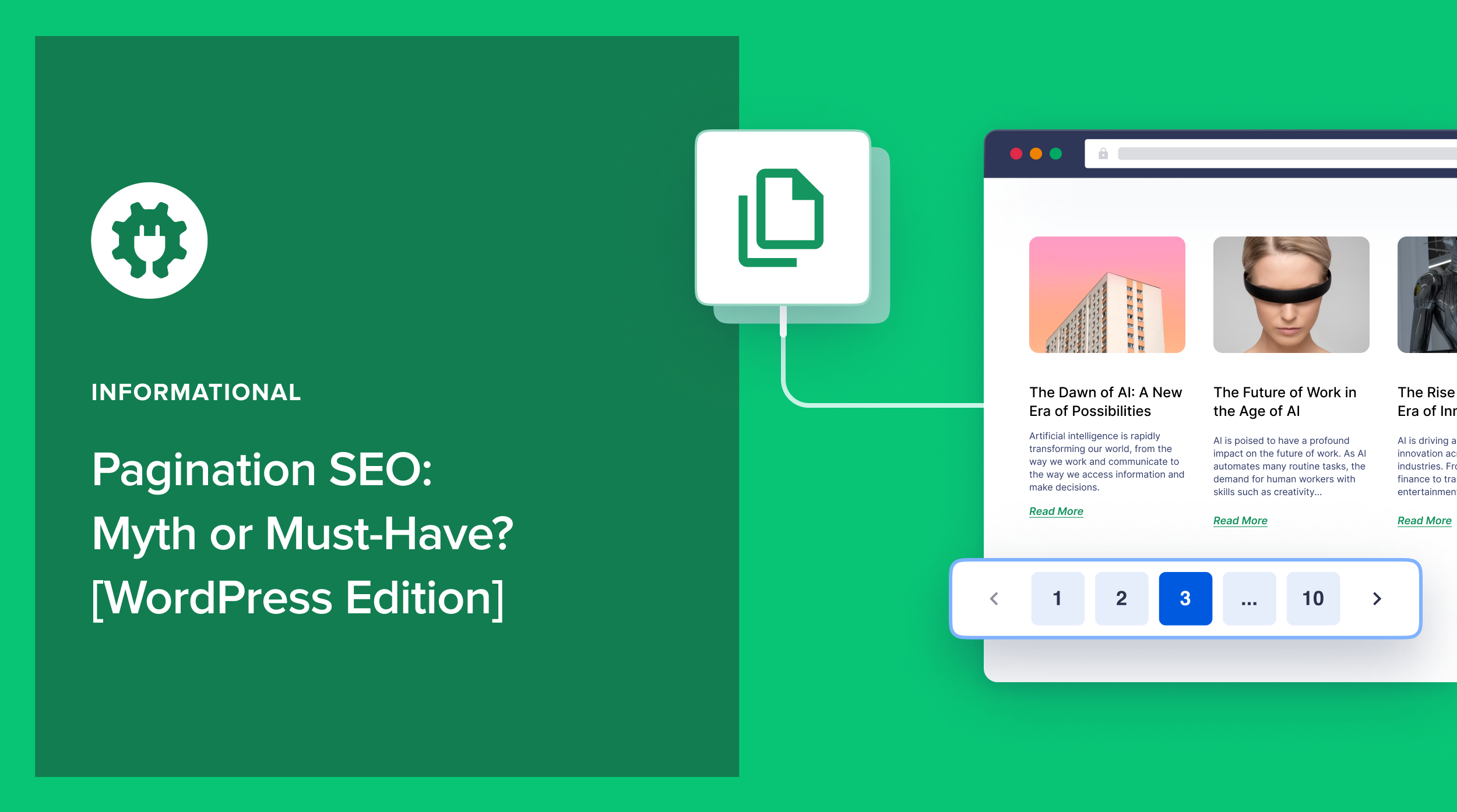
Implementing a pagination strategy that aligns with AI algorithms offers several tangible benefits.
Improved Crawl Efficiency
AI systems allocate crawl budget based on the perceived value of pages. When your pagination is structured logically, with clear internal links and unique content on each page, search engines will crawl deeper into your series. This ensures that all your products or articles are discovered and indexed, which is critical for long-tail search visibility.
Enhanced User Engagement Signals
AI ranking factors heavily weight user behavior. If users click through multiple pages of your pagination, it signals to search engines that your content is engaging and relevant. Conversely, if users bounce immediately from page 1, AI interprets this as a lack of value. By optimizing each paginated page with compelling content and clear navigation, you encourage deeper engagement, which boosts your overall site authority.
Better Keyword Coverage
Each paginated page gives you an opportunity to target a specific set of keywords. For example, a paginated product category can have page 1 targeting “wireless headphones,” page 2 targeting “wireless headphones with noise cancellation,” and page 3 targeting “wireless headphones for running.” AI algorithms can associate these related keywords across the series, strengthening your topical authority.
Limitations and Challenges of AI SEO Pagination
While the benefits are clear, there are also challenges that webmasters face when optimizing pagination for AI.
Content Duplication Risks
Even with self-referencing canonicals, AI systems may still detect similarities between paginated pages, especially if the only difference is the product order. To mitigate this, you need to add unique descriptive content to each page. This could be a paragraph at the top of the page that discusses the specific subset of items shown, or it could be unique meta descriptions and title tags.
Index Bloat
If you have thousands of paginated pages, indexing all of them may not be desirable. AI algorithms are smart enough to identify when a page adds no value. In such cases, you may want to use the “noindex, follow” directive on pages that are truly thin, while allowing AI to crawl them for link equity. This is a nuanced approach that requires careful monitoring of your search console data.
Practical Guide: Implementing AI SEO Pagination
Step 1: Audit Your Current Pagination Structure
Start by identifying all paginated series on your site. Use tools like Screaming Frog or Ahrefs to find URLs with pagination parameters. Check for common issues such as missing canonicals, duplicate title tags, or broken next/prev links.
Step 2: Ensure Each Page Has Unique Content
For product categories, add a short introductory paragraph that describes the specific items on that page. For blog archives, consider adding a brief summary of the most important article on that page. This gives AI systems a reason to index and rank the page.
Step 3: Optimize Internal Links with Descriptive Anchors
Replace generic “Next” and “Previous” links with descriptive text. Use keywords that reflect the content of the target page. Also, add links to the first and last pages of the series to help AI understand the full scope.
Step 4: Implement Self-Referencing Canonicals
Ensure that each paginated page has a canonical tag pointing to itself. This is a critical signal that prevents AI from treating the pages as duplicates.
Step 5: Add ItemList and Breadcrumb Schema
Use JSON-LD structured data to mark up your paginated series. This provides explicit machine-readable signals that enhance AI understanding.
Step 6: Monitor Performance in Search Console
Track how your paginated pages perform in search results. Look for pages that are not being indexed or that have high impressions but low click-through rates. Use this data to refine your content and internal linking.
Common Mistakes in AI SEO Pagination and How to Avoid Them
Many webmasters make errors that undermine their pagination strategy. Here are the most common pitfalls.
Blocking Paginated Pages in Robots.txt
This is a legacy tactic that is now harmful. Blocking paginated pages prevents AI from crawling them, which means you lose the opportunity to have those pages indexed. It also creates a poor user experience if users land on a blocked page from an external link.
Using Noindex on All Paginated Pages
While noindex is appropriate for truly thin pages, applying it to all paginated pages is a mistake. You are essentially telling AI that your content is not valuable, which can negatively impact the authority of the entire series.
Ignoring Mobile Performance
AI algorithms prioritize mobile user experience. If your paginated pages load slowly on mobile devices or have intrusive interstitials, your rankings will suffer. Ensure that your pagination controls are easy to use on touchscreens and that pages are optimized for Core Web Vitals.
Failing to Update Pagination After Site Changes
If you change your URL structure or merge categories, your pagination may break. Regularly audit your paginated series to ensure that internal links are not pointing to 404 pages and that canonicals are still accurate.
Important Notes for Advanced AI SEO Pagination
For sites with complex pagination needs, there are additional considerations.
Handling Infinite Scroll with Pagination
Many modern sites use infinite scroll, which loads new content dynamically as the user scrolls. This creates a challenge for AI because the content is not on a distinct URL. The recommended approach is to use infinite scroll for users but maintain a paginated URL structure underneath. When a user scrolls, the URL should update to reflect the current page number, and each page should be crawlable.
Pagination for Faceted Navigation
E-commerce sites often use faceted navigation, which creates multiple paginated series based on filters like size, color, or price. This can lead to massive index bloat. Use AI-driven analytics to identify which filter combinations generate actual search traffic and only allow those to be indexed. Use robots.txt or noindex for low-value combinations.
Leveraging AI Tools for Pagination Analysis
There are now AI-powered SEO tools that can analyze your pagination structure and recommend improvements. These tools use machine learning to predict which pages are likely to rank and which are wasting crawl budget. Integrating these tools into your workflow can save time and improve accuracy.
Frequently Asked Questions
Does Google still use rel=prev and rel=next for pagination?
No, Google officially deprecated support for rel=”prev” and rel=”next” in 2019. Google now relies on on-page signals, internal linking, and canonical tags to understand pagination. Bing still supports these tags, so you can keep them for that search engine, but they should not be your primary strategy.
Should I use a view-all page or sequential pagination for SEO?
For most sites, sequential pagination is the better choice. View-all pages often become too large, leading to slow load times and poor user experience, which AI algorithms penalize. Sequential pagination allows you to target more keywords and provides a better user journey.
How many items should I display per page for optimal AI SEO pagination?
T For product listings, 20 to 50 items per page is common. For blog archives, 10 to 15 posts per page is typical. Test different numbers and monitor your Core Web Vitals and user engagement metrics.
Can AI SEO pagination help with featured snippets?
Yes, by using ItemList schema and providing clear, structured content on each paginated page, you increase the chances of appearing in rich results. AI systems look for well-organized data to populate featured snippets and carousels.
What is the best way to handle pagination for a site with thousands of pages?
For very large sites, focus on crawl efficiency. Use descriptive internal links, self-referencing canonicals, and ensure each page has at least a small amount of unique content. Consider using noindex on pages that are truly thin but allow them to be crawled for link equity. Monitor your index coverage in Google Search Console regularly.
Conclusion
AI SEO pagination is not a one-time fix but an ongoing strategy that requires alignment with how machine learning algorithms understand content. The days of relying solely on meta tags are over. Modern search engines use AI to evaluate the semantic richness, user engagement, and structural clarity of your paginated series. By implementing self-referencing canonicals, descriptive internal links, unique content per page, and structured data, you create a pagination architecture that AI systems can parse and reward. Regular audits and performance monitoring are essential to adapt to algorithm updates and changing user behavior. Sites that embrace AI-driven pagination will see improved crawl efficiency, better keyword rankings, and a stronger overall search presence.
Xem thêm:
- AI SEO Content Silos: The Complete Guide to Building Topical Authority in 2025
- AI SEO Comparison Table Generator: The Ultimate Guide to Smarter Content in 2025
- AI SEO Google Gemini SEO: The Complete Playbook for 2025
- AI Voice Search SEO: The Ultimate Guide to Dominating Spoken Queries in 2025
- The Future of AI SEO: How Artificial Intelligence Is Reshaping Search Optimization
Bài viết cùng chủ đề:

AI SEO SEO Automation with Make: The Complete Workflow Guide

AI SEO SEO Automation with Zapier: The Complete Workflow Guide

AI SEO SEO Automation with n8n: The Complete Workflow Guide
AI SEO SEO Automation with Gemini: The Complete Guide to Scaling Organic Growth

AI SEO SEO Automation with Claude: The Complete Guide to Scaling Content in 2025

AI SEO SEO Automation with ChatGPT: The Complete Playbook for 2025

AI SEO & SEO Automation for Affiliate Sites: The 2025 Playbook for Passive Income Growth
AI SEO & SEO Automation for Bloggers: The Complete Guide to Scaling Your Content

AI SEO & SEO Automation for Agencies: The Complete 2025 Playbook

AI SEO and SEO Automation for Ecommerce: The Complete Playbook for 2025

AI SEO & SEO Automation for WordPress: The Complete Playbook for 2025
AI SEO SEO Automation Strategy: The Complete Playbook for 2025

Mastering the AI SEO SEO Automation Process: A Complete Guide to Scaling Organic Growth
AI SEO SEO Automation System: The Complete Guide to Scaling Organic Growth in 2025
AI SEO SEO Automation Platform: The Complete Guide to Scaling Organic Growth in 2025
AI SEO SEO Automation Software: The Complete Guide to Scaling Organic Growth in 2025















