
No products in the cart.
AI SEO People Also Ask Generator: The Complete Guide to Unlocking PAA Insights
10
Aug
Aug
The way users search for information has evolved dramatically, and the “People Also Ask” (PAA) box has become one of the most valuable real estate on Google’s search engine results page (SERP). For digital marketers and content creators, manually mining these questions is tedious and time-consuming. This is where an AI SEO People Also Ask Generator becomes an indispensable tool. This guide explores how these intelligent systems work, why they matter for your SEO strategy, and how you can leverage them to dominate featured snippets and build content that truly answers user intent.
What is an AI SEO People Also Ask Generator?

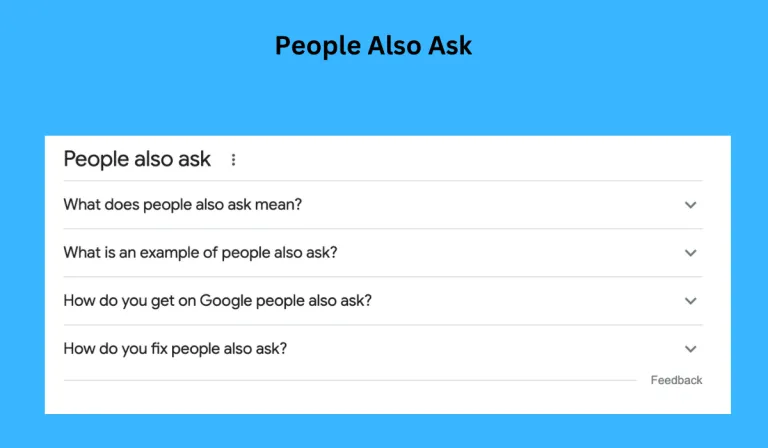
An AI SEO People Also Ask Generator is a software tool that uses artificial intelligence and natural language processing (NLP) to automatically extract, analyze, and generate questions related to a specific seed keyword. Unlike manual research, which involves scrolling through multiple SERPs, these tools scrape the PAA boxes, related searches, and even autocomplete suggestions to compile a comprehensive list of user queries.
The “AI” component goes beyond simple scraping. These generators use machine learning models to understand the semantic relationship between questions. They can cluster similar queries, identify question intent (informational, navigational, or transactional), and even predict follow-up questions that users are likely to ask. The output is a structured dataset that serves as a blueprint for content creation, FAQ schema markup, and internal linking strategies.
How Does an AI People Also Ask Generator Work?
Understanding the mechanics behind these tools helps you use them more effectively. The process typically involves three distinct stages:
1. Data Extraction and SERP Analysis
The tool inputs your target keyword and queries search engines. It captures the live PAA boxes, which usually contain 4-8 initial questions. It also records “Related Searches” at the bottom of the SERP. Advanced tools will click on these PAA boxes to expand them, revealing nested questions that are often long-tail and highly specific.
2. Semantic Processing and Clustering
Once the raw data is collected, the AI engine processes the text. It uses NLP to lemmatize words and identify entities. The system then clusters questions by topic. For example, if you search for “coffee brewing,” the generator might create clusters for “equipment,” “techniques,” “ratios,” and “troubleshooting.” This clustering is crucial because it helps you structure your content into logical sections.
3. Question Generation and Expansion
This is where the “generator” aspect shines. The AI doesn’t just list scraped questions; it generates new ones based on the semantic context. It uses language models to rephrase existing questions, create variations, and fill gaps in the topic coverage. This ensures you get a 360-degree view of the topic, not just the questions that happen to be displayed on page one of Google.
Why You Need an AI SEO People Also Ask Generator
The benefits of using these tools extend far beyond saving time. They provide a strategic advantage in a competitive digital landscape.
Uncovering High-Intent Keywords
PAA questions are goldmines for long-tail keywords. These are the exact phrases users type or speak into their devices. By targeting these questions in your H2 and H3 headings, you align your content directly with the user’s query. This increases the relevance score of your page and boosts your chances of ranking for those specific terms.
Optimizing for Featured Snippets
Google often pulls the answer for a PAA question from a page that directly addresses it. An AI generator helps you identify which questions are most likely to trigger a featured snippet. By structuring your content to answer these questions concisely (typically in 40-60 words) and placing them in a clear paragraph or list, you significantly increase your chances of winning “Position Zero.”
Building a Robust FAQ Section
An FAQ section is no longer just a nice-to-have. It is a requirement for modern SEO. An AI generator provides you with a ready-made list of questions to populate your FAQ page. This not only improves user experience but also allows you to implement FAQPage schema markup, which can make your listing eligible for rich results.
Key Features to Look For in a PAA Generator
Not all tools are created equal. When evaluating an AI SEO People Also Ask Generator, consider the following features to ensure you get the best return on investment.
| Feature | Importance | What to Look For |
|---|---|---|
| Data Freshness | Critical | Does the tool pull live data or use a cached database? Live data is essential for tracking algorithm updates. |
| Question Volume | High | Does it generate 10 questions or 100? More data points allow for deeper content clusters. |
| Intent Classification | High | Can it filter questions by intent (e.g., “How to” vs. “What is”)? This helps tailor content formats. |
| Export Capabilities | Medium | Can you export to CSV or Google Sheets? This is vital for team collaboration and workflow integration. |
| Nested Question Depth | Medium | Does it automatically expand PAA boxes to capture second and third-level questions? |
Practical Application: How to Use the Generator for Content Strategy
Having the tool is only half the battle.
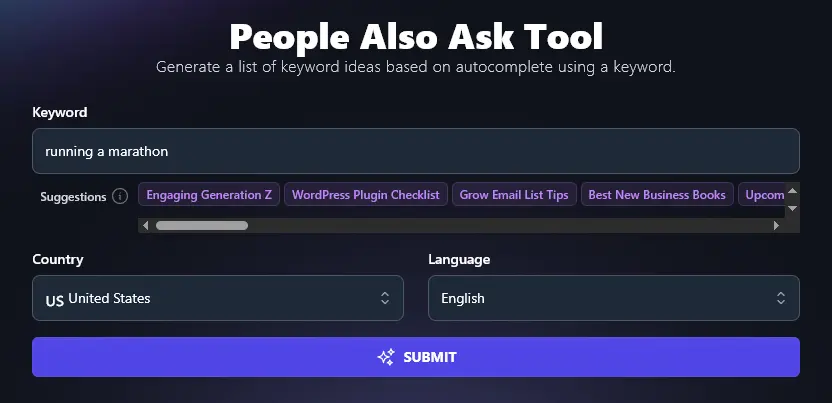
Step 1: Seed Keyword Research
Start with a broad seed keyword relevant to your business. For example, “vegan protein powder.” Run this through the generator to get a comprehensive list of questions.
Step 2: Map Questions to the Buyer’s Journey
Analyze the generated questions and categorize them. “What is vegan protein?” is top-of-funnel. “Best vegan protein for weight loss” is middle-of-funnel. “Vegan protein vs. whey protein” is comparison-based. This mapping helps you decide which questions to answer on a single pillar page and which to spin off into separate blog posts.
Step 3: Create Content Silos
Use the clustering feature to build content silos. If the generator clusters questions around “digestion,” create a dedicated article about vegan protein and digestion. Link this article back to your main pillar page. This internal linking structure signals authority to Google.
Step 4: Optimize On-Page Elements
Use the exact phrasing of the PAA questions in your H2 tags. If a question is “How much protein do I need daily?”, use that exact string as a heading. Follow the heading with a direct, concise answer. Use bullet points or a table to present data, as these formats are favored for featured snippets.
Common Mistakes to Avoid When Using PAA Data
Even with the best AI tool, there are pitfalls that can undermine your SEO efforts. Being aware of these will save you from wasted time and missed opportunities.
- Keyword Stuffing in Headings: Do not force every generated question into your content. Select the most relevant ones that fit the natural flow of your article. Overloading with questions makes the content look spammy and disjointed.
- Ignoring Search Intent: A question like “Why is my coffee bitter?” has a different intent than “How to make cold brew.” Ensure your answer matches the intent. If the user is troubleshooting, provide a solution, not a history lesson.
- Neglecting Answer Format: Google prefers specific formats for specific questions. “How to” questions often favor step-by-step lists. “What is” questions favor short definitions. Match your format to the query type.
- Forgetting to Update: PAA boxes change frequently. A question that is popular today might disappear tomorrow. Set a schedule to re-run your keywords through the generator every quarter to keep your content fresh.
Benefits and Limitations of AI-Powered PAA Tools
To set realistic expectations, it is important to understand what these tools can and cannot do.
The Benefits
The primary benefit is efficiency. What takes a human analyst hours to compile, an AI does in seconds. This speed allows you to scale your content production without sacrificing research quality. Additionally, the AI’s ability to generate novel questions helps you discover angles that competitors might have missed, giving you a unique edge in content differentiation.
The Limitations
AI is not a replacement for human judgment. The generator provides the questions, but it does not provide the answers. You still need subject matter expertise to write accurate, valuable responses. Furthermore, the AI cannot determine the commercial value of a question. A question might have high search volume but zero conversion potential. You must apply your business acumen to filter the data.
Integrating PAA Data with Other SEO Tools
An AI SEO People Also Ask Generator works best when combined with a broader SEO tech stack.
Pairing with Keyword Research Tools
Use traditional keyword tools (like Ahrefs or SEMrush) to get search volume and keyword difficulty scores for the questions generated. This helps you prioritize which questions to target first. High volume with low difficulty is the sweet spot.
Pairing with Rank Tracking Software
After publishing content targeting PAA questions, use rank trackers to monitor your position for those specific queries. Track whether you appear in the PAA box itself or just in the organic results. This data helps you refine your answer formatting.
Pairing with Analytics
Monitor user behavior on pages that target PAA questions. Look at metrics like time on page and bounce rate. If users are bouncing quickly, it means your answer is not satisfying their query, even if you rank well. Use this feedback to improve the content.
Important Notes on Data Accuracy and Ethics
When using any AI-driven SEO tool, it is crucial to maintain a standard of integrity. The data provided by these tools is a reflection of current search trends, but it is not a guarantee of ranking success. Google’s algorithms are complex and constantly evolving.
Furthermore, avoid the temptation to copy-paste the generated questions verbatim into your content without adding value. The goal is to answer the question better than anyone else. Use the AI to understand the user’s pain point, then craft a response that demonstrates your expertise and experience. Always fact-check the information you provide, especially for YMYL (Your Money or Your Life) topics like health and finance.
Frequently Asked Questions (FAQ)
What is the difference between a PAA scraper and an AI generator?
A scraper simply extracts the questions currently displayed on the SERP. An AI generator goes further by analyzing the semantics, clustering related queries, and generating new, predictive questions that are not currently displayed. The generator provides a deeper level of insight.
Can an AI People Also Ask Generator help with voice search optimization?
Yes. Voice search queries are typically longer and phrased as full questions. PAA boxes often contain these conversational queries. By targeting these questions, you align your content with the natural language patterns used in voice searches, increasing your chances of being the source of the answer.
How often should I run my keywords through the generator?
It depends on the volatility of your niche. For trending topics, run it monthly. For evergreen topics, quarterly is sufficient. Regular monitoring ensures you catch new questions that arise from current events or algorithm updates.
Is it necessary to use a paid tool, or are free options available?
Free options exist, but they are often limited in the number of queries per day and lack the advanced clustering and generation features. For serious SEO professionals, a paid tool is a worthwhile investment due to the time saved and the depth of data provided.
Does targeting PAA questions guarantee a featured snippet?
No. It increases your chances, but it is not a guarantee. You must also have a well-structured page, fast loading speed, and high domain authority. The snippet is awarded to the page that provides the best user experience and the most direct answer.
Conclusion
The AI SEO People Also Ask Generator is more than just a time-saving gadget; it is a strategic asset for understanding user intent and optimizing for the modern search landscape. By leveraging AI to uncover the exact questions your audience is asking, you can create content that is highly relevant, structured for featured snippets, and aligned with voice search trends. While the tool provides the data, your expertise provides the value. Combine the efficiency of AI with the nuance of human insight to build a content strategy that not only ranks well but genuinely serves your users. Start integrating this technology into your workflow today to stay ahead of the curve in the ever-competitive world of search engine optimization.
Xem thêm:
- AI B2C SEO: Mastering Consumer Search with Artificial Intelligence for Unmatched Growth
- AI SEO vs Surfer SEO: The Complete Guide to AI-Powered Search Optimization
- The Rise of AI SEO Experts: Redefining Search Engine Strategy in the Age of Artificial Intelligence
- AI Semantic SEO: Mastering the Next Evolution of Search Engine Optimization
- AI SEO Outranking: The Complete Playbook for Dominating Search in 2025
Bài viết cùng chủ đề:

AI SEO SEO Automation with Make: The Complete Workflow Guide

AI SEO SEO Automation with Zapier: The Complete Workflow Guide

AI SEO SEO Automation with n8n: The Complete Workflow Guide
AI SEO SEO Automation with Gemini: The Complete Guide to Scaling Organic Growth

AI SEO SEO Automation with Claude: The Complete Guide to Scaling Content in 2025

AI SEO SEO Automation with ChatGPT: The Complete Playbook for 2025

AI SEO & SEO Automation for Affiliate Sites: The 2025 Playbook for Passive Income Growth
AI SEO & SEO Automation for Bloggers: The Complete Guide to Scaling Your Content

AI SEO & SEO Automation for Agencies: The Complete 2025 Playbook

AI SEO and SEO Automation for Ecommerce: The Complete Playbook for 2025

AI SEO & SEO Automation for WordPress: The Complete Playbook for 2025
AI SEO SEO Automation Strategy: The Complete Playbook for 2025

Mastering the AI SEO SEO Automation Process: A Complete Guide to Scaling Organic Growth
AI SEO SEO Automation System: The Complete Guide to Scaling Organic Growth in 2025
AI SEO SEO Automation Platform: The Complete Guide to Scaling Organic Growth in 2025
AI SEO SEO Automation Software: The Complete Guide to Scaling Organic Growth in 2025















