
No products in the cart.
AI SEO vs Surfer SEO: The Complete Guide to AI-Powered Search Optimization
31
Jul
Jul
The digital marketing landscape has shifted dramatically with the rise of artificial intelligence, and the tools we use to rank on Google have evolved alongside it. When discussing AI SEO and Surfer SEO, we are talking about two distinct yet interconnected approaches to search engine optimization. Surfer SEO has long been a favorite for on-page optimization, while newer AI SEO tools are changing how content is researched, written, and optimized. This guide breaks down the differences, synergies, and practical strategies for using both to dominate search rankings in 2025.
Understanding the Core Concepts: What is AI SEO and Surfer SEO?
AI SEO refers to the application of machine learning algorithms and natural language processing to automate and enhance search engine optimization tasks. These tools analyze search engine result pages (SERPs), predict ranking factors, generate content briefs, and even write full articles. The goal is to reduce manual work while improving accuracy in targeting user intent.
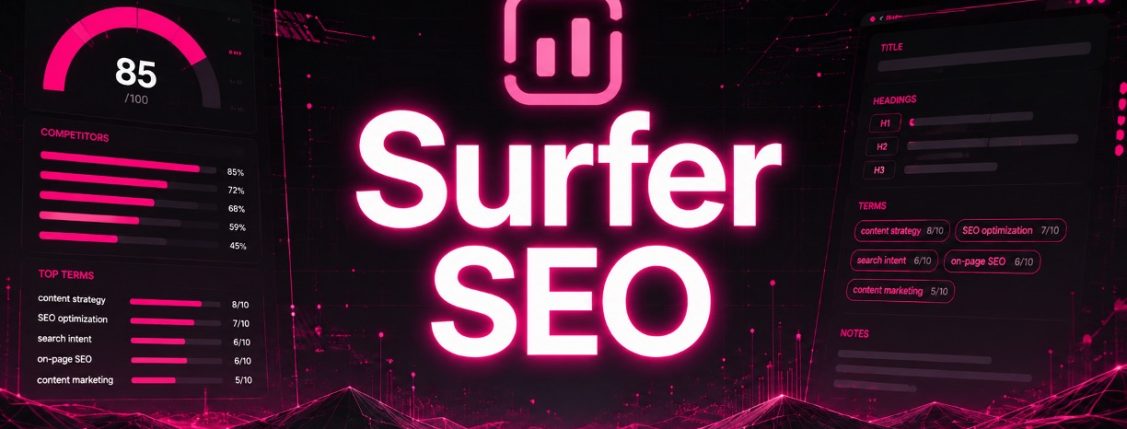
Surfer SEO, on the other hand, is a specific on-page optimization platform that uses real-time SERP data to guide content creation. It analyzes the top-ranking pages for a given keyword and provides a detailed content score based on factors like word count, keyword density, heading structure, and semantic relevance. While Surfer SEO is a form of AI-driven software, the term “AI SEO” typically refers to broader generative AI tools like ChatGPT, Jasper, or specialized platforms like Frase or Outranking.
The primary difference lies in scope. Surfer SEO focuses on optimizing existing or new content against a live SERP benchmark. General AI SEO tools focus on content generation, keyword clustering, and predictive analytics. When used together, they form a powerful workflow: AI generates the draft, and Surfer optimizes it for search engines.
How Surfer SEO Works: A Deep Dive into Its Algorithm
Surfer SEO operates by crawling the top 20 to 50 results for a target keyword. It extracts hundreds of on-page signals, including text length, number of images, title tag structure, meta descriptions, and the frequency of related terms (LSI keywords). The platform then builds a content editor that scores your draft in real-time.
The scoring system is based on a correlation analysis. If most top-ranking pages have 2,500 words, Surfer will flag your 1,200-word draft as under-optimized. If they use specific headings like “best practices” or “common mistakes,” the tool will suggest adding those exact phrases. This data-driven approach removes guesswork, but it also has a limitation: it optimizes for what is currently ranking, not necessarily for what could rank better with a novel approach.
Surfer SEO also includes a SERP analyzer that shows the domain authority of competitors, estimated monthly search volume, and the number of backlinks required to compete. This helps set realistic expectations. For example, if the top result has 50 referring domains and you have none, you know you need a link-building campaign alongside your on-page work.
The Rise of Generative AI in SEO: Beyond Traditional Tools
Generative AI has introduced a new paradigm where content is created at scale. Tools like ChatGPT, Claude, and Perplexity can produce outlines, drafts, and even complete articles in seconds. However, raw AI output often lacks the nuance required for high rankings. This is where the concept of “AI SEO” becomes critical: using AI not just to write, but to understand search intent, cluster topics, and structure content for featured snippets.
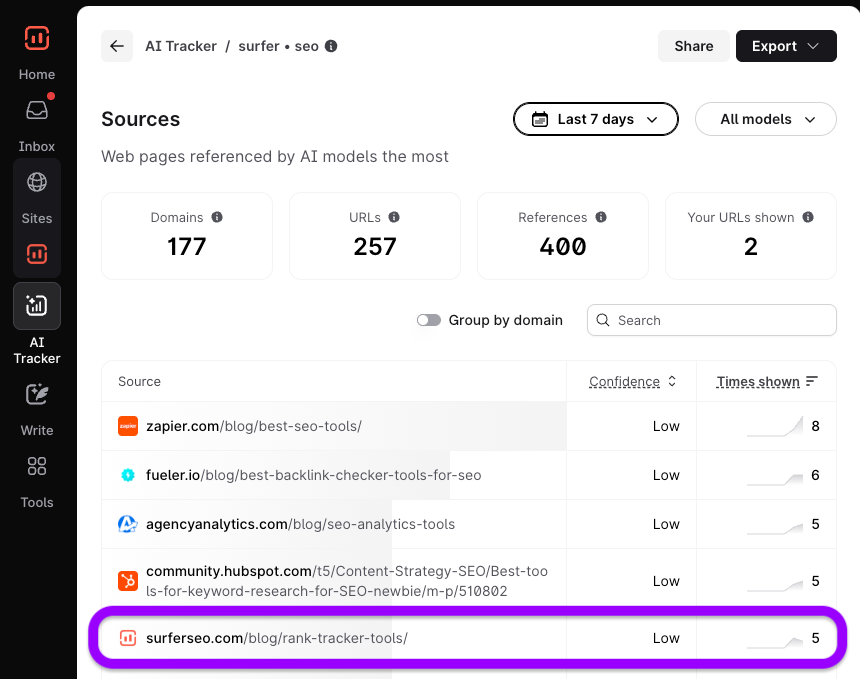
Modern AI SEO platforms go beyond simple text generation. They analyze the entire search ecosystem, including “People Also Ask” boxes, related searches, and video results. They can suggest internal linking structures, predict click-through rates, and even recommend schema markup. The best AI SEO tools integrate with Google Search Console to identify content gaps and opportunities for existing pages.
One significant advantage of AI SEO is its ability to handle semantic search. Google’s algorithms now understand context and relationships between entities, not just exact-match keywords. AI tools can generate content that covers a topic comprehensively, naturally including synonyms, variations, and related concepts that satisfy both users and crawlers.
Surfer SEO vs AI SEO: A Detailed Comparison
To make an informed decision, it helps to compare these approaches across several dimensions. The table below outlines the key differences in functionality, output, and use cases.
| Feature | Surfer SEO | General AI SEO Tools |
|---|---|---|
| Primary Function | On-page optimization against live SERP data | Content generation, keyword research, predictive analysis |
| Content Creation | Provides guidelines and outlines, but does not write full articles | Generates full drafts, paragraphs, and meta descriptions |
| Data Source | Real-time SERP scraping and correlation analysis | Training data (up to a certain date) plus user-provided context |
| Keyword Focus | Exact keyword density and term frequency | Semantic relevance and topic clustering |
| Best For | Polishing existing drafts and ensuring structural alignment | Ideation, scaling content production, and overcoming writer’s block |
| Learning Curve | Moderate; requires understanding of content editor | Low for basic use; high for advanced prompt engineering |
| Cost | Subscription-based, typically $79-$199 per month | Varies widely from free (ChatGPT) to $99+ for specialized platforms |
Surfer SEO excels in precision. It tells you exactly how many times to use a keyword, how many headings to include, and what the ideal word count is. AI SEO tools excel in creativity and speed. They can produce a 2,000-word article in minutes, but that article may lack the specific keyword placement that Surfer demands.
The most effective strategy is not to choose one over the other, but to use them in sequence. Start with an AI tool to generate a comprehensive draft based on your expertise and research. Then, run that draft through Surfer SEO to adjust the structure, add missing semantic terms, and align the word count with the current SERP winners.
Practical Application: A Step-by-Step Workflow Using Both
This process has been used by digital marketing agencies to cut content production time by 50% while improving average rankings.
Step 1: Keyword and Intent Research
Use an AI tool to generate a list of long-tail keywords and questions related to your main topic. For example, if your main keyword is “AI SEO Surfer SEO,” ask the AI to list related queries like “how to use Surfer SEO with ChatGPT” or “best Surfer SEO alternatives for AI content.” This gives you a content map that covers multiple search intents.
Step 2: Generate a Comprehensive Draft
Prompt your AI tool with a detailed brief. Include the target keyword, the desired word count, the target audience, and the key points you want to cover. Ask for an outline first, then expand each section. The output will be a solid first draft, but it will likely be generic. This is expected.
Step 3: Optimize with Surfer SEO
Open the Surfer SEO Content Editor and paste your AI-generated draft. The tool will immediately show a content score, usually in the 30-50 range for raw AI text. Review the recommendations: add more headings, increase keyword density, include specific terms like “content score” or “SERP analyzer” that you missed. Edit the draft to incorporate these suggestions.
Step 4: Human Editing and Fact-Checking
This is the most critical step. AI can hallucinate facts, and Surfer cannot verify the truthfulness of your claims. Manually review every statistic, quote, and example. Add your own experience and insights. This is what elevates your content from “AI-generated” to “expert-authored,” which is a key factor in Google’s E-E-A-T guidelines.
Step 5: Technical SEO Checks
Before publishing, run the final draft through a technical SEO tool. Check your title tag length, meta description, image alt text, and internal links. Surfer provides some of this, but a dedicated tool like Screaming Frog or Ahrefs will catch issues like duplicate content or slow page speed.
Benefits and Limitations of Each Approach
Understanding the pros and cons helps set realistic expectations. Surfer SEO offers several distinct benefits. It provides a clear, data-backed benchmark for what is working in your niche. It reduces the risk of over-optimization by showing you the natural keyword density of top pages. It also saves time on competitor analysis, as the tool does the heavy lifting of SERP crawling.
However, Surfer SEO has limitations. It is reactive, not proactive. It tells you what is ranking now, not what will rank in six months. It also struggles with brand-new topics where t Additionally, over-reliance on Surfer can lead to homogenized content, where every article on a topic looks and sounds the same because they are all optimized for the same signals.
AI SEO tools offer the benefit of scale. You can generate dozens of content briefs in an hour, which is invaluable for large e-commerce sites or news publishers. They also excel at creating content for lower-funnel queries, like product comparisons or troubleshooting guides. The limitation is quality control. AI output requires significant editing to avoid factual errors, repetitive phrasing, and a lack of original insight.
Another limitation of AI SEO is the potential for algorithmic detection. While Google does not penalize AI content per se, it does penalize unhelpful content, regardless of how it was produced. If your AI-generated articles do not provide unique value, they will not rank, no matter how well they are optimized with Surfer.
Common Mistakes and How to Avoid Them

Many marketers fail to get results because they make predictable errors when combining AI and Surfer SEO. The first mistake is treating Surfer’s content score as the ultimate goal. A score of 80 does not guarantee a #1 ranking. It only means your content is structurally similar to the current top pages. You still need high-quality backlinks, strong domain authority, and a good user experience.
The second mistake is using AI to generate content without a clear strategy. If you ask ChatGPT to “write an article about AI SEO,” you will get a generic, 500-word overview that ranks for nothing. Instead, you must provide specific instructions, target keywords, and a unique angle. The more context you give the AI, the better the output.
A third mistake is ignoring the search intent behind the keyword. Surfer SEO might tell you to write 3,000 words, but if the user is looking for a quick answer, a 3,000-word article will hurt your bounce rate. Always check the current SERP to see if the top results are blog posts, product pages, or videos. Match your content format to the dominant intent.
Finally, many people forget to update their content. Both AI and Surfer SEO are based on data that changes. Google’s algorithms update, competitors publish new content, and search trends shift. Set a schedule to review your top pages every quarter. Re-run them through Surfer and use AI to refresh outdated sections.
Important Notes on E-E-A-T and AI-Generated Content
Google’s Quality Rater Guidelines emphasize Experience, Expertise, Authoritativeness, and Trustworthiness. AI-generated content inherently lacks first-hand experience. If you are writing about a topic that requires personal testing, like a software review or a travel guide, you must add your own observations. Do not rely on AI to describe the user interface of a tool you have never used.
To build trust, include author bios, cite credible sources, and link to original research. If you use AI to draft content, be transparent with your team, but you do not need to disclose it to readers unless asked. What matters is the final quality, not the method of production.
Another important note is the risk of AI plagiarism. Large language models can inadvertently reproduce sentences from their training data. Always run your final draft through a plagiarism checker like Copyscape or Grammarly Premium. This protects you from duplicate content penalties.
Frequently Asked Questions
Is Surfer SEO considered an AI tool?
Yes, Surfer SEO uses machine learning and natural language processing to analyze SERPs and provide optimization recommendations. However, it is not a generative AI tool. It does not write content; it guides you on how to improve content that already exists.
Can I use ChatGPT with Surfer SEO?
Absolutely. This is one of the most effective combinations. Use ChatGPT to generate a draft based on your keyword research, then paste that draft into Surfer SEO’s Content Editor. Surfer will show you exactly which terms to add, which headings to change, and how to adjust the word count to match the top-ranking pages.
Will Google penalize AI-generated content optimized with Surfer SEO?
Google does not penalize content simply because it is AI-generated. It penalizes content that is unhelpful, spammy, or lacks originality. If you use AI to create a draft and then add substantial human expertise, fact-checking, and unique insights, your content can rank well. The combination of AI for drafting and Surfer for optimization is a legitimate workflow.
What is a good Surfer SEO content score?
A score above 70 is generally considered good, and above 80 is excellent. However, the score is not a ranking guarantee. It is a correlation metric. Focus on achieving a score in the 70-85 range, then invest your remaining effort in link building and improving user engagement metrics like dwell time and click-through rate.
How much does Surfer SEO cost compared to AI writing tools?
Surfer SEO pricing starts at around $79 per month for the Essential plan, which includes a limited number of content edits. AI writing tools range from free (ChatGPT) to $99 per month for advanced platforms like Jasper. A combined budget of $150-$200 per month is realistic for a solo marketer or small agency.
Which is better for local SEO: Surfer or AI tools?
For local SEO, Surfer SEO is more useful because it can analyze local SERPs and show you what competitors are doing in your specific geographic area. AI tools can help generate localized content, but they lack the real-time SERP data that Surfer provides. Use both: AI for drafting location-specific pages, and Surfer to optimize them for local search signals.
Conclusion
The debate between AI SEO and Surfer SEO is not about which is superior, but about how to integrate them for maximum efficiency. Surfer SEO provides the data-driven guardrails needed to ensure your content aligns with current ranking factors. AI SEO provides the speed and scalability needed to produce content at a competitive pace. Together, they address the two biggest challenges in modern SEO: creating enough content and making sure that content is technically optimized.
The future of search optimization lies in this hybrid approach. As Google’s algorithms become more sophisticated, the tools we use must also evolve. By mastering both AI generation and Surfer’s on-page analysis, you position yourself to adapt to algorithm updates, satisfy user intent, and maintain a competitive edge in your niche. Start with a small project, test the workflow, and measure the results. The data will show you what works best for your specific industry.
Xem thêm:
- AI SEO Attribution: The Complete Guide to Measuring What Actually Drives Rankings
- How to Use Gemini for SEO: The Ultimate Guide to Boosting Rankings with AI
- AI SEO Keyword Grouping: The Complete Guide to Smarter Content Clusters
- AI SEO Slug Generator: The Complete Guide to Perfect URLs in 2025
- AI SEO for News Websites: The Complete Playbook for 2025 and Beyond
Bài viết cùng chủ đề:

AI SEO SEO Automation with Make: The Complete Workflow Guide

AI SEO SEO Automation with Zapier: The Complete Workflow Guide

AI SEO SEO Automation with n8n: The Complete Workflow Guide
AI SEO SEO Automation with Gemini: The Complete Guide to Scaling Organic Growth

AI SEO SEO Automation with Claude: The Complete Guide to Scaling Content in 2025

AI SEO SEO Automation with ChatGPT: The Complete Playbook for 2025

AI SEO & SEO Automation for Affiliate Sites: The 2025 Playbook for Passive Income Growth
AI SEO & SEO Automation for Bloggers: The Complete Guide to Scaling Your Content

AI SEO & SEO Automation for Agencies: The Complete 2025 Playbook

AI SEO and SEO Automation for Ecommerce: The Complete Playbook for 2025

AI SEO & SEO Automation for WordPress: The Complete Playbook for 2025
AI SEO SEO Automation Strategy: The Complete Playbook for 2025

Mastering the AI SEO SEO Automation Process: A Complete Guide to Scaling Organic Growth
AI SEO SEO Automation System: The Complete Guide to Scaling Organic Growth in 2025
AI SEO SEO Automation Platform: The Complete Guide to Scaling Organic Growth in 2025
AI SEO SEO Automation Software: The Complete Guide to Scaling Organic Growth in 2025















