
No products in the cart.
AI SEO Planning: How Machine Intelligence Transforms Search Strategy from Reactive to Predictive
29
Jul
Jul
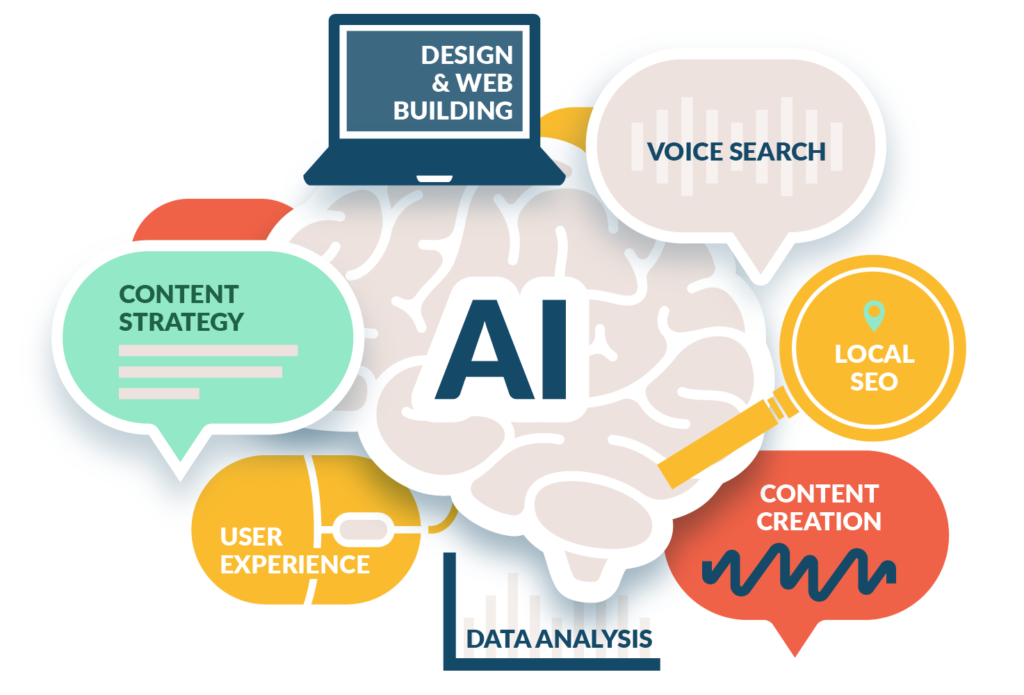
Modern search engine optimization no longer unfolds as a sequence of manual keyword lists and gut-feel content calendars. AI SEO planning redefines the entire workflow by embedding machine learning, natural language processing, and predictive analytics into every stage—from opportunity discovery through performance forecasting. This shift does not replace human strategists; it amplifies their ability to parse billions of search signals, detect intent shifts before competitors, and allocate resources where they will generate the highest organic return. The planning layer that once took weeks can now surface actionable roadmaps in hours, making the discipline more scientific and less speculative.
What Exactly Is AI SEO Planning?

AI SEO planning is the systematic use of artificial intelligence to design, prioritize, validate, and adapt search optimization strategies. Instead of assembling a content calendar based on manual keyword difficulty scores and approximate search volumes, teams feed algorithms with historical site performance, competitor landscapes, SERP volatility, user behavior signals, and even seasonality patterns. The AI then models multiple “what-if” scenarios, clusters topics by semantic relevance, and recommends a ranked sequence of actions optimized for long-term authority growth rather than short-term traffic spikes.
At its core, this approach treats the website as a dynamic portfolio. The planning engine continually evaluates which pages need refreshing, where content gaps widen, and how external factors—like a Google core update or a new competitor entering the niche—should pivot the entire strategy. The output is a living plan that learns and tightens its recommendations over time.
How Traditional SEO Planning Differs from the AI-Driven Approach
Conventional planning relies heavily on human analysts interpreting static data exports. Keyword research often stops at monthly search volume and a keyword difficulty metric that fails to capture real-time SERP quality. Content briefs are templated, internal linking is manual, and technical audits happen quarterly. The result is a slow cycle where decisions lag behind market shifts.
AI SEO planning injects speed and granularity. It processes thousands of SERP features—featured snippets, people also ask boxes, image packs, video carousels—and correlates them with user intent models. A single planning cycle can test which topics will drive not just traffic but conversions, factoring in session duration, scroll depth, and micro-conversion data from analytics. The difference is not incremental; it is a fundamental move from hindsight-based reporting to forward-looking orchestration.
| Aspect | Traditional Planning | AI SEO Planning |
|---|---|---|
| Data Source | Static CSV exports, sporadic rank checks | Real-time crawling, clickstream panels, SERP feature APIs, CRM/analytics integration |
| Keyword Analysis | Volume + difficulty only; grouping by head terms | Semantic topic clustering, intent classification, trend forecasting, SERP volatility scoring |
| Content Calendaring | Manual spreadsheets, fixed dates | Dynamic priority queues adjusted by predicted ROI, freshness models, and cannibalization risk |
| Competitor Intelligence | Periodic backlink and content audits | Continuous monitoring of competitor content velocity, topic gaps, and feature ownership shifts |
| Adaptability | Reactive after update impact | Predictive alerts that suggest plan pivots before traffic drops |
| Reporting | Retrospective rank reports | Prescriptive dashboards showing next best actions tied to business KPIs |
The Core Components of AI SEO Planning
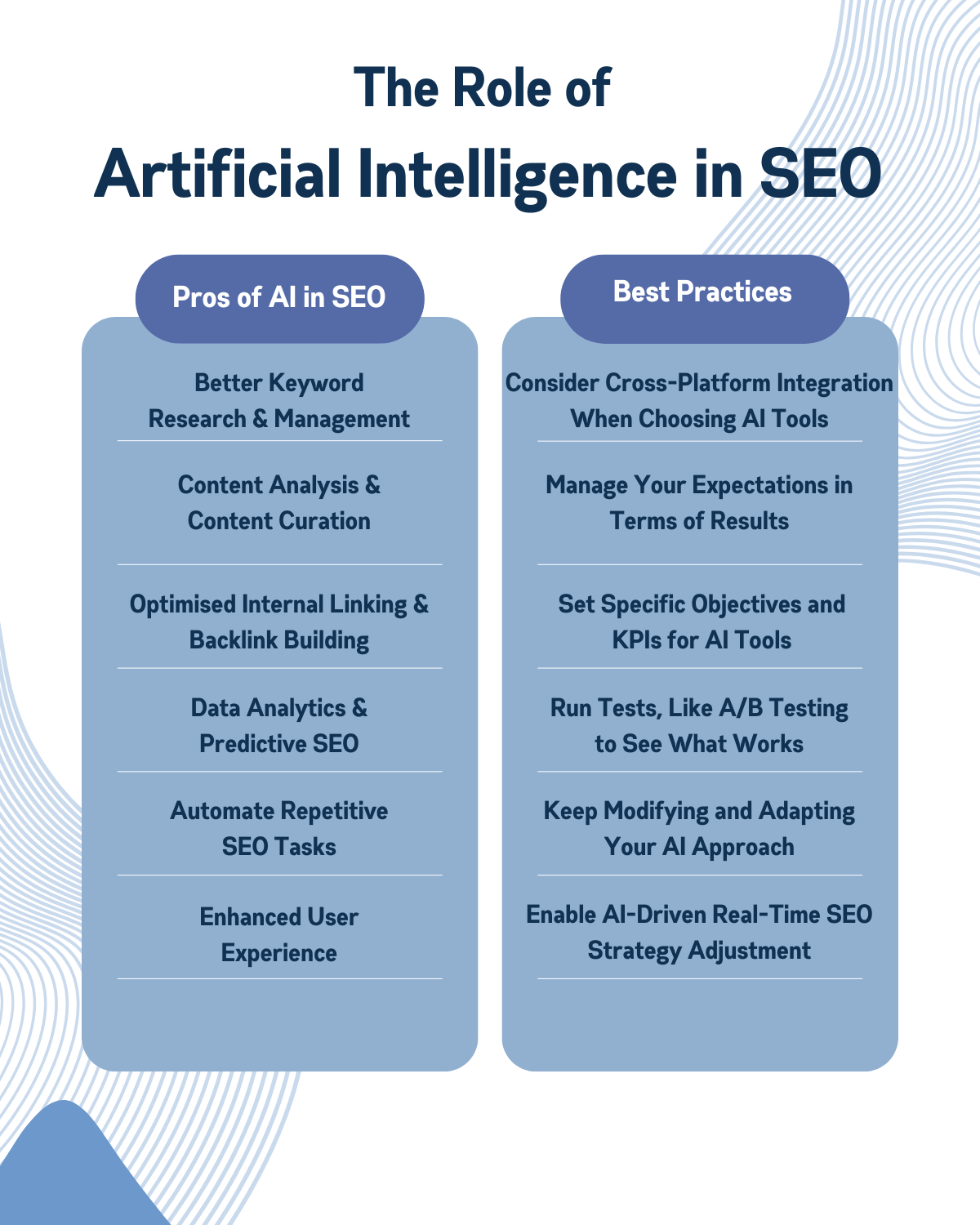
Effective implementation breaks into interconnected modules. Each feeds the next, creating a planning cycle that tightens with every iteration.
1. Predictive Keyword and Topic Modeling
Instead of chasing individual keywords, the planning engine builds expansive topic graphs. It uses algorithms similar to Google’s own language models to understand how concepts relate, how searcher intent fractures across long-tail queries, and which topic clusters offer white space. The system can forecast demand curves for emerging terms by analyzing news cycles, social listening, and historical seasonal data—giving planners a head start on high-opportunity content months in advance.
2. Automated Technical SEO Audits with Prioritization Intelligence
AI planning tools crawl sites continuously, scanning for issues like orphan pages, render-blocking scripts, or climbing core web vitals scores. The crucial addition is intelligent triage: the AI weighs each technical flaw against its traffic impact and implementation complexity, then proposes a sprint-ready backlog. Instead of a 500-item PDF that paralyzes the team, the plan surfaces the three fixes that will genuinely move the needle this week.
3. Content Strategy and Resource Allocation Engine
Content is planned by modeling the investment-to-reward ratio. The engine simulates how a new pillar page will accumulate links, how updating a declining blog post can reclaim rankings, and how many supporting cluster articles are optimal. It also recommends the media mix—video, infographics, interactive tools—based on what is winning in the SERPs today. Plans evolve from “publish 4 articles per month” to “refresh the A/B testing guide with new stats, build a comparison tool for X vs Y, and delay the announcement post until seasonal demand peaks in October.”
4. Link and Authority Acquisition Planning
The AI maps the competitive link graph and pinpoints where the domain lacks authority relative to peers. It identifies placements that would most efficiently close the gap and can even draft outreach priorities. The plan layers in digital PR calendar syncing: if a key dataset will be published in March, the AI recommends building pre-outreach now and aligning internal linking to amplify the asset when it launches.
5. Rank Tracking and Scenario Simulation
AI planning goes beyond “position 5.” It simulates what would happen if a page moved to position 3 for a specific intent cluster, factoring in CTR curves, click diversity, and cannibalization effects. Teams can test hypotheses before commissioning a $2000 piece of content, reducing wasted investment on pages that will never break through a dominant SERP feature.
Key Benefits of Embedding AI into Your SEO Roadmap
- Reduced time from insight to action: Weeks of manual analysis collapse into hours, allowing strategists to respond to algorithm shifts and competitive moves before they lose ground.
- Higher content efficiency: Every planned piece has a quantifiable confidence score tied to business outcomes, minimizing the spray-and-pray approach that plagues blogs with hundreds of low-traffic posts.
- Improved cross-team alignment: Data-rich visual roadmaps make it easier to communicate with executives, content teams, and developers, translating technical SEO needs into revenue forecasts.
- Ruthless prioritization: AI eliminates the human bias of tackling easy tasks first. It sequences work by predicted impact, ensuring the hardest, highest-value projects get tackled when resources are available.
- Dynamic adaptation: The plan is never finished. When a competitor launches a new product page that steals a featured snippet, the planning tool recalculates the next best move and reshuffles the queue automatically.
Limitations and Real-World Caveats
While AI SEO planning brings transformative power, it is not magic. Data quality dictates output quality. If your analytics suffer from bot traffic or misconfigured events, the A T A viral cultural moment that doesn’t fit any historical pattern might be ignored entirely. Human oversight remains essential to inject creativity, ethical judgment, and brand voice. Furthermore, AI tools can amplify existing biases in training data—over-indexing on commercial queries while neglecting informational queries that build long-term trust. The smartest planning teams treat AI as a decision-support system, not a decision-maker.
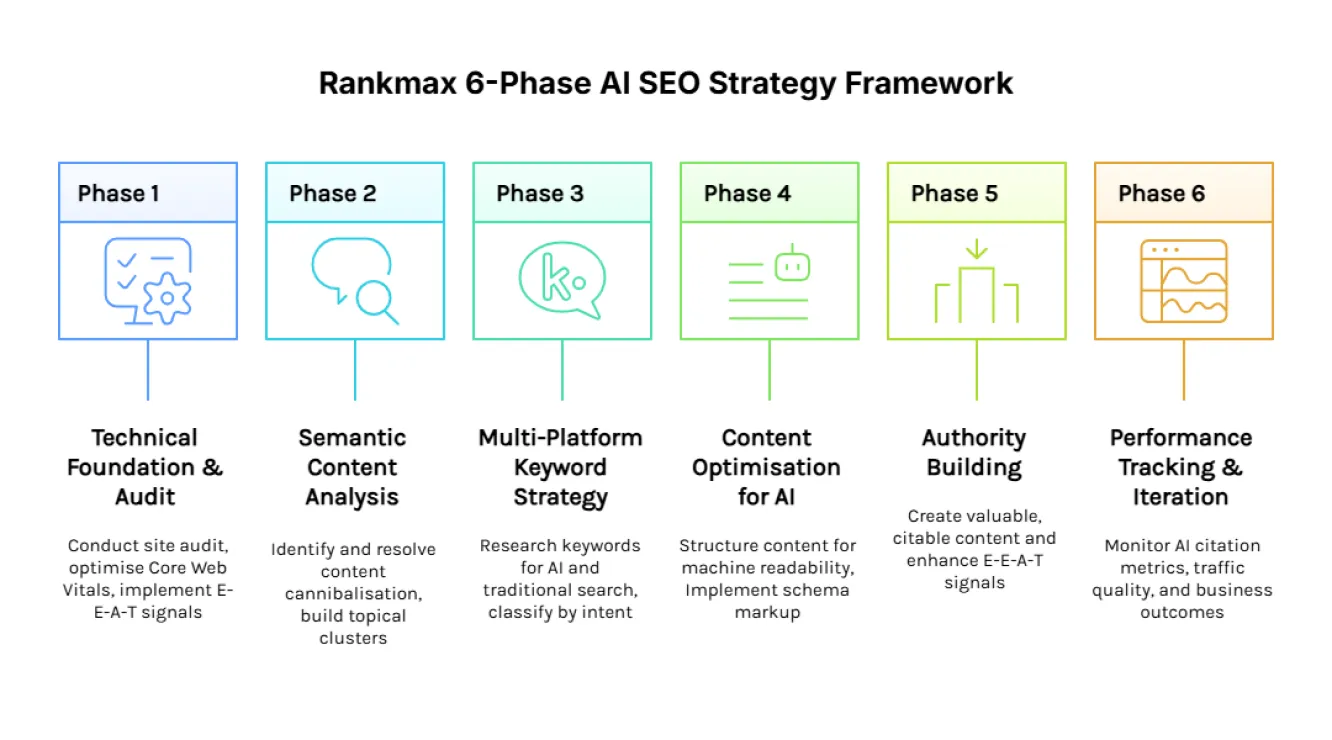
Practical Implementation: A 5-Phase AI SEO Planning Framework
Phase 1: Data Unification and Readiness
Connect all data sources: Google Search Console, Google Analytics 4, CRM, advertising platforms, and at least one robust third-party SEO suite. Validate data hygiene. This phase often takes 2–4 weeks but is the foundation; without clean, unified data, the AI model hallucinates correlations. Establish event tracking for micro-conversions like PDF downloads or tool usage, as these become the AI’s north star for value realization.
Phase 2: Baseline Intelligence and Benchmarking
Run a comprehensive crawl of your own site and your known competitors. Let the AI build the initial keyword universe, cluster it into topics, and generate a baseline authority map. This delivers a “current state” report that quantifies the organic share of voice, the content debt (pages that haven’t been updated in 18+ months), and the technical health score.
Phase 3: Opportunity Modeling and Strategy Generation
Define your business objectives—not just “more traffic” but margin-aware goals. The AI then generates multiple plan scenarios: an aggressive growth plan targeting new topic areas, a defensive plan to patch cannibalization and refresh aging content, and a balanced hybrid. Each scenario shows projected traffic, conversions, and required resource hours. The team selects and refines the chosen path.
Phase 4: Execution Playbooks and Sprint Integration
The AI converts the strategic plan into weekly sprint cards. Each card includes: the task title (e.g., “Consolidate 3 overlapping articles on CRM implementation into one pillar”), the supporting data (current rankings, cannibalized pages, target keyword cluster), a content brief drafted by LLM, technical specifications for developers, and a success metric. Integration with project management tools like Jira or Asana ensures the plan doesn’t stay in a dashboard.
Phase 5: Continuous Learning and Plan Re-optimization
Every two weeks, the AI compares actual performance against forecasts. It flags deviations: if a new page hasn’t indexed within the expected window, it triggers a crawl budget investigation. If a competitor’s page surges due to an unplanned backlink spike, the AI suggests a PR countermeasure. The roadmap rebalances itself, deprioritizing what no longer makes sense and surfacing emergent opportunities.
Common Mistakes When Adopting AI SEO Planning
Relying entirely on a black-box AI without understanding its logic leads to fragile strategies. Teams often ignore model-calibration: the AI might undervalue informational content because conversion metrics are its primary optimization target, starving the top-of-funnel engine. Another mistake is skipping the data-cleaning step, resulting in plans that chase bot traffic surges. Over-reacting to daily AI suggestions creates whiplash; a good planning cadence is weekly strategic review and daily monitoring for true anomalies. Finally, many organizations treat the output as a fixed mandate rather than a conversation starter, missing the nuanced human expertise that only a seasoned SEO strategist can bring.
How to Vet AI SEO Planning Tools
Not all platforms deliver genuine planning intelligence. Look for tools that show their work: explainability dashboards that reveal why a specific content update was ranked above another. Evaluate their forecasting track record by running backtests on your historical data. Demand the ability to adjust confidence thresholds and manually override priority scores. A capable AI planning system also handles multi-language sites without collapsing all markets into a single English-centric model. Finally, check integration depth—the tool must be able to pull from your CMS, log files, and conversion APIs; surface-level rank trackers dressed as A
Key Considerations for Long-Term Success
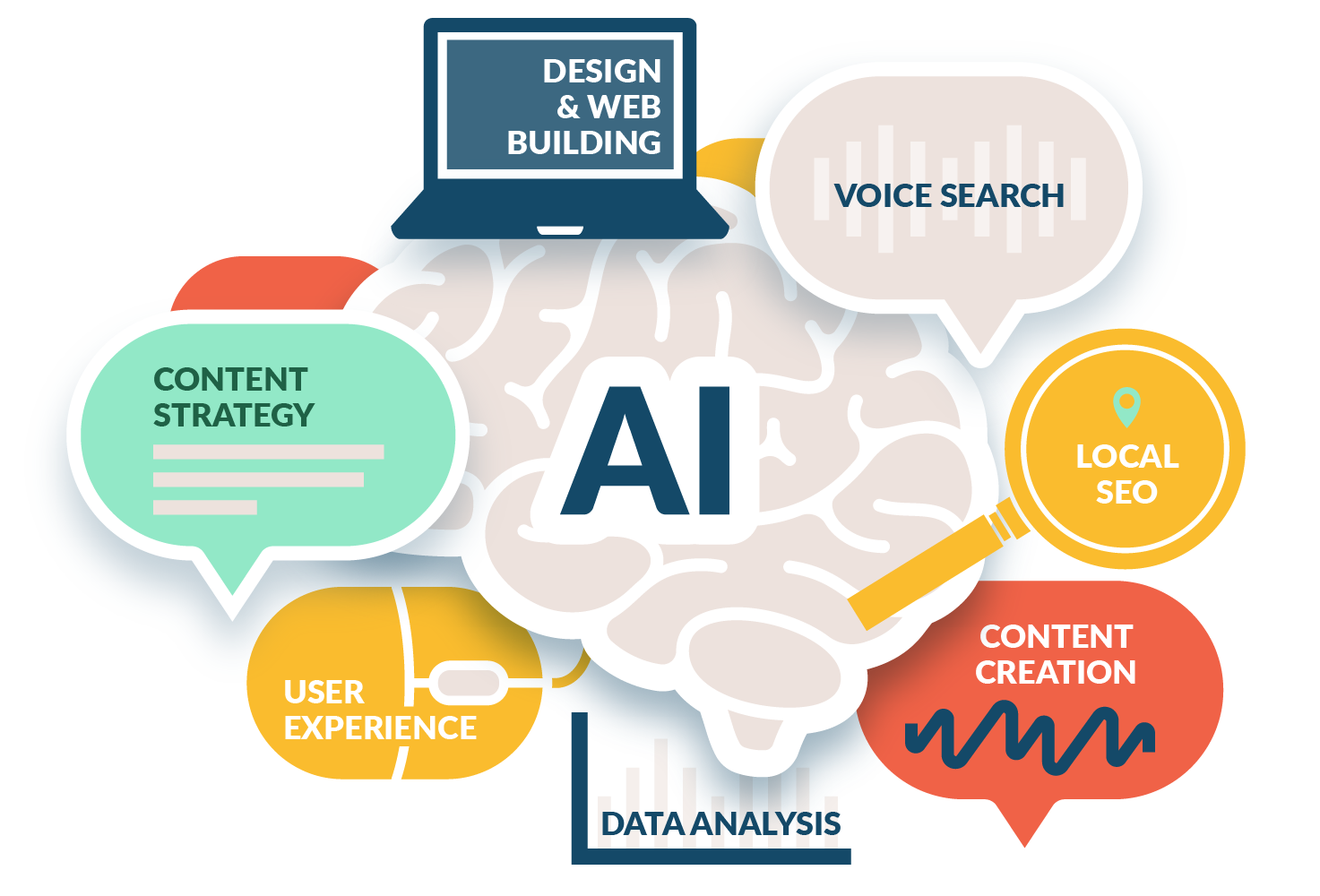
AI SEO planning works best when the entire organization commits to a data-driven culture. Train content creators to read and act on AI-generated briefs without losing humanity. Encourage developers to trust AI-generated technical tickets because they are backed by tangible impact metrics. Keep the feedback loop tight: whenever the AI makes a prediction, log the outcome, and feed that back so the model sharpens. Remember that Google’s algorithm is itself an AI system; planning with AI puts you on a more equal playing field, able to anticipate what a semantic search engine will reward next.
Frequently Asked Questions
What is AI SEO planning exactly?
AI SEO planning is the application of machine learning and predictive analytics to create, prioritize, and continuously adapt a search optimization strategy. It moves beyond manual keyword lists to model SERP dynamics, intent shifts, and content ROI before resources are committed.
Can small businesses benefit from AI SEO planning?
Absolutely. Even a solo operator can use lightweight AI tools to uncover low-competition topic clusters and automate technical audits. The planning scales down elegantly: instead of a massive enterprise dashboard, a small business might get a curated monthly roadmap with three high-impact actions, saving time and preventing wasted effort.
Does AI SEO planning replace human SEO strategists?
No. It enhances their capabilities. Humans set the strategic vision, ensure brand alignment, manage stakeholder relationships, and apply creative judgment that algorithms cannot replicate. The AI handles the heavy data lifting and pattern recognition, freeing strategists to focus on innovation and nuance.
How often should the AI plan be updated?
The underlying model should be fed continuous data, but strategic replanning typically occurs on a monthly cadence with short weekly check-ins. Major shifts—like a core algorithm update or a merger—should trigger an immediate reforecast. The key is to avoid daily strategy flip-flops while still responding quickly to material changes.
Which metrics matter most for AI-driven plan performance?
Look beyond rankings. Measure organic share of voice within your defined topic clusters, revenue per session for landing pages, and the percentage of planned content that achieves its predicted CTR range. Track plan adherence: a high-quality plan is one that the team can realistically execute and that self-corrects reliably.
Is AI SEO planning safe from Google penalties?
When used for planning (strategy, prioritization, forecasting) and not for manipulating rankings with automated content generation, it is entirely safe. Google penalizes low-value, scaled content abuse. Using AI to inform human-led strategy and to identify genuine user needs aligns with Google’s quality guidelines.
Conclusion
AI SEO planning transforms search strategy from a hopeful collection of tactics into a precise, evidence-based discipline. It factors in hundreds of signals that overwhelm human analysts, surfaces the highest-leverage actions, and learns from every outcome. The result is not a static 12-month spreadsheet but a living, breathing roadmap that gains sophistication the longer it runs. As search engines become more unpredictable and user expectations rise, the ability to plan with machine-velocity intelligence will separate the brands that own their SERP presence from those that merely chase it. The technology is ready—the only remaining step is to implement with disciplined data hygiene, clear human judgment, and a commitment to treat planning as an ongoing conversation between intelligent systems and experienced strategists.
Xem thêm:
- AI SEO for Lawyers: The Complete Guide to Dominating Legal Search in 2025
- AI SEO Unlinked Mentions: The Complete Guide to Turning Brand Mentions into Backlinks
- AI SEO Content Hubs: The Complete Guide to Building Automated Topic Clusters
- AI SEO Dashboards: The Complete Guide to Data-Driven Search Optimization in 2025
- AI SEO JSON-LD Generator: The Complete Guide to Automated Structured Data
Bài viết cùng chủ đề:

AI SEO SEO Automation with Make: The Complete Workflow Guide

AI SEO SEO Automation with Zapier: The Complete Workflow Guide

AI SEO SEO Automation with n8n: The Complete Workflow Guide
AI SEO SEO Automation with Gemini: The Complete Guide to Scaling Organic Growth

AI SEO SEO Automation with Claude: The Complete Guide to Scaling Content in 2025

AI SEO SEO Automation with ChatGPT: The Complete Playbook for 2025

AI SEO & SEO Automation for Affiliate Sites: The 2025 Playbook for Passive Income Growth
AI SEO & SEO Automation for Bloggers: The Complete Guide to Scaling Your Content

AI SEO & SEO Automation for Agencies: The Complete 2025 Playbook

AI SEO and SEO Automation for Ecommerce: The Complete Playbook for 2025

AI SEO & SEO Automation for WordPress: The Complete Playbook for 2025
AI SEO SEO Automation Strategy: The Complete Playbook for 2025

Mastering the AI SEO SEO Automation Process: A Complete Guide to Scaling Organic Growth
AI SEO SEO Automation System: The Complete Guide to Scaling Organic Growth in 2025
AI SEO SEO Automation Platform: The Complete Guide to Scaling Organic Growth in 2025
AI SEO SEO Automation Software: The Complete Guide to Scaling Organic Growth in 2025















