
No products in the cart.
AI SEO Product Category SEO: The Complete Guide to Scaling Category Pages
10
Aug
Aug
AI SEO Product Category SEO represents the convergence of machine learning, natural language processing, and automated content optimization applied specifically to e-commerce category pages. In the current digital landscape, category pages serve as the primary entry points for commercial queries, yet they remain the most under-optimized assets on most online stores. This guide examines how artificial intelligence transforms the way retailers structure, write, and continuously improve these critical pages to capture high-intent traffic and convert visitors into customers.
Understanding AI SEO Product Category SEO
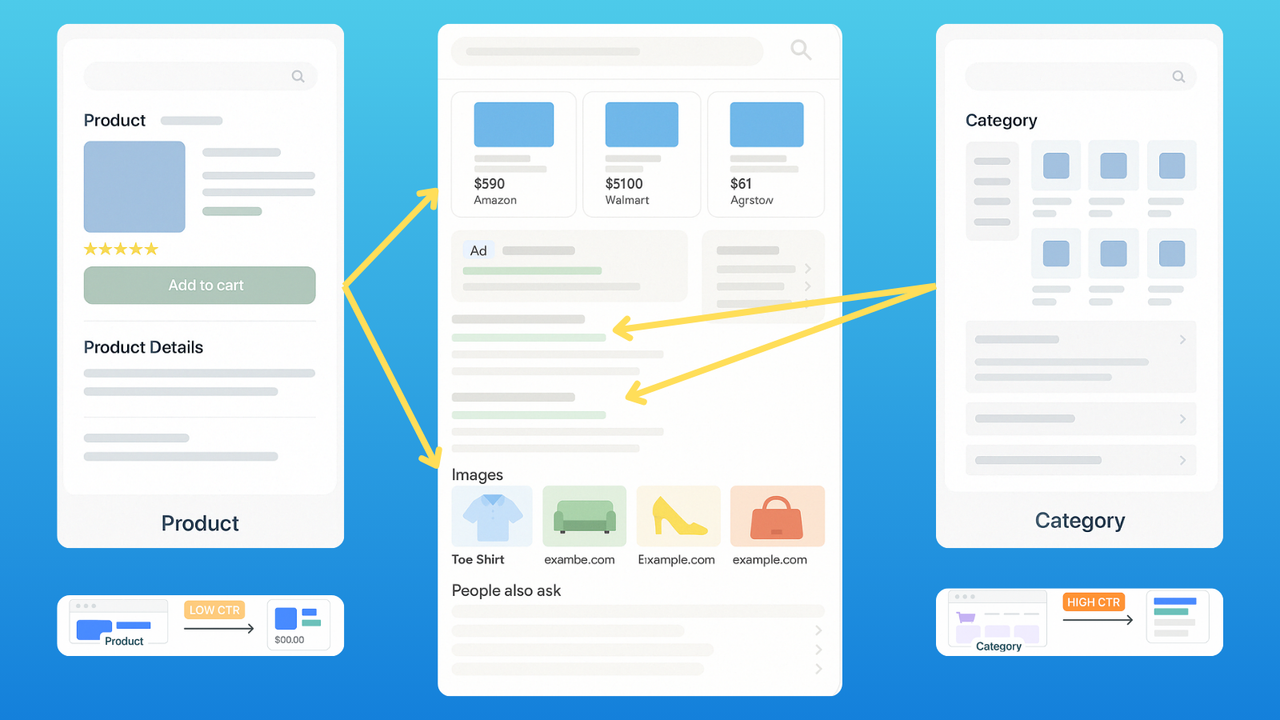
AI SEO Product Category SEO refers to the systematic use of artificial intelligence tools and algorithms to optimize product listing pages for search engines. Unlike traditional SEO approaches that rely on manual keyword research and static content creation, AI-driven strategies leverage predictive analytics, semantic understanding, and automated testing to create category pages that align with evolving search behavior.
The core principle involves treating each category page as a dynamic entity that adapts to user intent, seasonal trends, and competitive movements. AI systems analyze thousands of data points—from click-through rates to dwell time—to recommend structural changes, content additions, and internal linking adjustments that improve visibility for both head terms and long-tail variations.
Why Category Pages Matter More Than Product Pages
Category pages typically target broader, higher-volume keywords than individual product pages. A product page might target “men’s waterproof trail running shoe size 10,” while the category page targets “men’s trail running shoes.” The latter attracts significantly more search volume and serves as a hub that distributes authority to subcategories and products.
Search engines view category pages as the organizational backbone of an e-commerce site. When properly optimized, they communicate topical relevance, site structure, and content depth. AI SEO Product Category SEO ensures these pages capture both navigational queries (users looking for a specific section) and informational queries (users researching options before purchase).
How AI Transforms Category Page Optimization
Traditional category page optimization relied on manual processes: writing a 300-word introduction, stuffing keywords into meta tags, and hoping for rankings. AI changes this equation through several distinct mechanisms that work together to produce measurable results.
Automated Keyword Clustering and Intent Mapping
AI algorithms process vast keyword datasets to identify patterns that human analysts might miss. Instead of targeting “running shoes” as a single keyword, AI systems cluster related terms—”best running shoes for flat feet,” “running shoes for marathon training,” “lightweight running shoes”—and map them to specific user intents.
This clustering enables category pages to address multiple search intents within a single URL structure. The AI recommends subheadings, FAQ sections, and product filters that align with these clustered keywords, creating a page that satisfies both search engines and users seeking specific solutions.
Dynamic Content Generation and Optimization
Modern AI tools generate category descriptions, meta titles, and product snippets that maintain brand voice while incorporating semantic variations. These systems learn from top-ranking competitors, analyzing their content structure, readability scores, and keyword density to produce optimized copy that outperforms generic templates.
For example, an AI-powered tool might analyze 50 top-ranking category pages for “wireless headphones” and identify that successful pages include comparison tables, buying guides, and technical specifications. The AI then generates content recommendations that mirror these successful patterns while maintaining originality.
Real-Time Performance Monitoring and Adjustment
AI SEO Product Category SEO does not stop at content creation. Sophisticated platforms continuously monitor ranking positions, organic traffic, conversion rates, and user engagement metrics. When a category page underperforms, the AI identifies the likely cause—whether it’s thin content, slow loading speed, or poor internal linking—and suggests specific corrective actions.
This feedback loop creates a self-improving system. Each adjustment generates new data, which informs future optimization decisions. Over time, category pages evolve from static assets into living documents that consistently outperform manually managed counterparts.
Core Components of an AI-Optimized Category Page
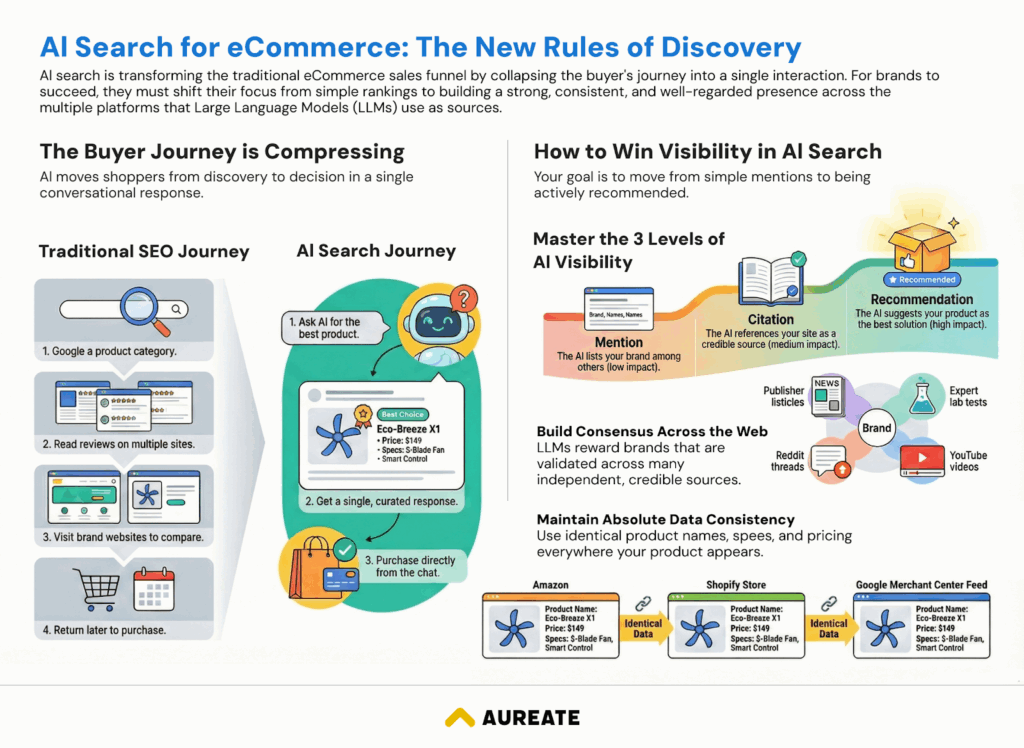
Successful AI SEO Product Category SEO requires attention to several structural and content elements. Each component serves a distinct purpose in signaling relevance to search engines while enhancing user experience.
Optimized Title Tags and Meta Descriptions
AI tools generate multiple title tag variations and test them against historical performance data. The optimal title tag typically includes the primary category keyword, a modifier (such as “best,” “top-rated,” or “affordable”), and a unique selling proposition. Meta descriptions, while not direct ranking factors, influence click-through rates, which indirectly affect rankings.
| Element | Traditional Approach | AI-Optimized Approach |
|---|---|---|
| Title Tag | Static, keyword-stuffed | Dynamic, tested variations |
| Meta Description | Generic 160-character text | Intent-based, CTR-optimized |
| Content Length | Fixed word count | Adaptive based on competition |
| Internal Links | Manual placement | Algorithm-driven distribution |
| Product Filters | Standard attributes | Predictive, intent-based filters |
Structured Data and Schema Markup
AI systems automatically generate and implement schema markup for category pages, including BreadcrumbList, ItemList, and Offer schemas. This structured data helps search engines understand the page’s content hierarchy and display rich snippets in search results, increasing visibility and click-through rates.
Product category schema also enables features like faceted navigation markup, which helps search engines crawl and index filter combinations without creating duplicate content issues. AI tools identify which filter combinations generate unique value and recommend appropriate canonical tags and noindex directives.
Faceted Navigation Optimization
Faceted navigation presents a significant challenge in AI SEO Product Category SEO. Each filter combination creates a unique URL, potentially generating thousands of near-duplicate pages. AI algorithms analyze these combinations to determine which ones deserve indexing and which should be blocked.
The AI evaluates factors such as search volume for specific filter combinations, user engagement metrics, and conversion rates. High-performing combinations receive indexation and internal linking support, while low-value combinations receive noindex tags or canonical redirects to the parent category.
Content Strategies for AI-Driven Category Pages
Content remains the foundation of any successful SEO strategy, and AI enhances content creation through data-driven insights and automated generation capabilities.
Category Descriptions That Convert
AI-generated category descriptions go beyond simple keyword placement. These descriptions incorporate buyer psychology, addressing common objections, highlighting unique value propositions, and guiding users toward product selection. The AI analyzes customer reviews, support tickets, and social media mentions to identify the language customers actually use when discussing products in the category.
Effective category descriptions typically range from 300 to 800 words, depending on the category’s competitiveness and the depth of information needed to satisfy user intent. AI tools determine the optimal length by analyzing top-ranking competitors and user engagement patterns.
Buying Guides and Educational Content
Embedding buying guides within category pages serves dual purposes: it provides valuable information that keeps users engaged, and it creates opportunities to target informational keywords that complement commercial terms. AI systems generate these guides by analyzing product specifications, customer questions, and industry expertise.
For instance, a category page for “digital cameras” might include a buying guide covering sensor types, megapixel counts, and lens compatibility. This content targets users in the research phase while the product grid captures users ready to purchase, creating a comprehensive page that serves multiple segments of the buyer journey.
User-Generated Content Integration
AI tools aggregate and display user-generated content—reviews, ratings, Q&A sections—in ways that enhance both SEO and conversion rates. The AI identifies high-value reviews that mention specific product attributes and surfaces them prominently within the category page structure.
This approach adds fresh, unique content to category pages without requiring manual curation. Search engines reward regularly updated pages, and user-generated content provides a continuous stream of new text that keeps category pages relevant.
Technical SEO Considerations for Category Pages

Technical implementation determines whether AI-optimized content achieves its intended rankings. Several technical factors require careful attention when implementing AI SEO Product Category SEO strategies.
Site Architecture and Internal Linking
AI algorithms analyze site architecture to recommend optimal internal linking structures. Category pages should receive links from the homepage, related categories, and relevant blog content. AI tools identify which pages hold the most authority and recommend strategic link placement to distribute that authority effectively.
Internal linking also helps search engines discover new category pages and understand their relationship to other site sections. AI systems generate anchor text variations that incorporate relevant keywords while maintaining natural language patterns.
Page Speed and Core Web Vitals
Category pages often contain numerous product images, filters, and dynamic elements that slow page loading. AI SEO Product Category SEO includes performance optimization recommendations, such as image compression, lazy loading, and code minification. Google’s Core Web Vitals directly impact rankings, making speed optimization a critical component of any AI-driven strategy.
AI tools monitor page speed metrics and identify specific elements causing delays. They might recommend converting product images to next-generation formats, implementing content delivery networks, or reducing JavaScript execution time.
Mobile Optimization and Responsive Design
Mobile commerce accounts for a substantial portion of online sales, and Google uses mobile-first indexing. AI systems analyze mobile user behavior to recommend layout adjustments, simplified navigation, and touch-friendly filter interfaces. Category pages must provide seamless experiences across all device types to maintain rankings and conversions.
Measuring Success in AI SEO Product Category SEO
Tracking the right metrics ensures that AI optimization efforts produce tangible business results. While rankings and traffic matter, the ultimate goal is revenue generation.
Key Performance Indicators
- Organic traffic to category pages (session count and growth rate)
- Keyword rankings for target terms and semantic variations
- Click-through rate from search engine results pages
- Conversion rate (purchases divided by total sessions)
- Average order value for category page visitors
- Bounce rate and time on page as engagement proxies
- Indexation rate for category and faceted navigation URLs
AI platforms consolidate these metrics into dashboards that highlight trends and anomalies. When a category page experiences a traffic drop, the AI correlates the decline with algorithm updates, competitor actions, or internal changes to identify the root cause.
Attribution and Multi-Touch Analysis
Category pages often serve as entry points that lead to product pages before conversion. AI attribution models track the complete user journey, assigning appropriate credit to category pages for their role in the conversion path. This analysis informs budget allocation and optimization priorities.
Common Mistakes in AI SEO Product Category SEO
Even with advanced AI tools, retailers make predictable errors that undermine their optimization efforts. Recognizing these mistakes helps prevent wasted resources and missed opportunities.
Over-Optimization and Keyword Cannibalization
Applying AI-generated keywords too aggressively creates unnatural content that triggers search engine penalties. Additionally, optimizing multiple category pages for the same keyword causes cannibalization, where pages compete against each other for the same search terms. AI tools should include cannibalization detection to identify and resolve these conflicts.
Ignoring User Experience in Favor of Rankings
Some AI strategies prioritize keyword placement over user experience, resulting in pages that rank well but fail to convert. AI SEO Product Category SEO must balance search engine requirements with human usability. Product grids should load quickly, filters should respond instantly, and content should be scannable and informative.
Neglecting Content Freshness
Category pages that remain unchanged for months lose relevance as products, prices, and customer preferences evolve. AI systems should schedule regular content audits and updates, incorporating new products, refreshed descriptions, and updated buying guides to maintain freshness signals.
Practical Implementation Guide
Implementing AI SEO Product Category SEO requires a systematic approach that combines technology adoption with strategic planning.
Step 1: Audit Existing Category Pages
Begin by evaluating current category page performance. Identify pages with high impressions but low click-through rates, pages with declining traffic, and pages that fail to rank for obvious target keywords. This audit establishes a baseline for measuring AI optimization impact.
Step 2: Select Appropriate AI Tools
Choose AI platforms that align with your specific needs. Some tools specialize in content generation, others focus on technical audits, and comprehensive platforms offer end-to-end optimization. Evaluate tools based on integration capabilities, data accuracy, and ease of use.
Step 3: Implement Structured Data and Technical Fixes
Before generating new content, ensure technical foundations are solid. Implement schema markup, resolve duplicate content issues, and optimize page speed. AI tools can automate many of these technical implementations.
Step 4: Generate and Deploy AI-Optimized Content
Use AI tools to create category descriptions, buying guides, and meta tags. Review AI-generated content for accuracy and brand alignment before publishing. Deploy changes incrementally to measure impact accurately.
Step 5: Monitor, Test, and Iterate
Continuous monitoring reveals what works and what needs adjustment. Run A/B tests on title tags, content variations, and page layouts. AI systems learn from these tests and refine future recommendations.
Important Notes for Long-Term Success
AI SEO Product Category SEO is not a one-time project but an ongoing process. Search algorithms evolve, competitors adapt, and customer behavior shifts. Maintaining a competitive edge requires regular review and adjustment of AI strategies.
Data privacy regulations affect how AI tools collect and process user data. Ensure compliance with GDPR, CCPA, and other applicable laws when implementing AI-driven personalization and tracking features.
Human oversight remains essential. AI generates recommendations based on historical data, but human judgment provides context that algorithms cannot replicate. Review AI suggestions critically and apply them selectively based on business knowledge and strategic priorities.
Frequently Asked Questions
What is the difference between AI SEO and traditional SEO for category pages?
Traditional SEO relies on manual keyword research, static content creation, and periodic audits. AI SEO uses machine learning algorithms to analyze large datasets, predict search trends, automate content generation, and continuously optimize pages based on real-time performance data. AI approaches are faster, more scalable, and better equipped to handle the complexity of modern search algorithms.
How long does it take to see results from AI SEO Product Category SEO?
Results vary based on competition, site authority, and implementation quality. Some improvements, such as technical fixes and meta tag optimization, can show impact within weeks. Content-related changes typically require one to three months to influence rankings. Comprehensive AI optimization programs often demonstrate significant traffic growth within three to six months of consistent implementation.
Can small e-commerce businesses benefit from AI SEO tools?
Yes. Many AI SEO tools offer tiered pricing that accommodates small businesses. Even basic AI features, such as automated keyword clustering and content suggestions, provide substantial value. Small businesses can start with free or low-cost tools and scale up as revenue grows.
Does AI-generated content risk Google penalties?
Google penalizes low-quality, spammy content regardless of how it is produced. AI-generated content that provides genuine value, accurate information, and good user experience does not violate Google guidelines. The key is to use AI as an assistant rather than relying entirely on automated output without human review and editing.
How does AI handle seasonal changes in category page optimization?
AI systems analyze historical seasonal patterns and adjust content recommendations accordingly. For example, a category page for “swimwear” might receive updated content emphasizing summer trends during spring months. AI also monitors real-time search trends to capture emerging opportunities before competitors.
Conclusion
AI SEO Product Category SEO represents a fundamental shift in how e-commerce businesses approach category page optimization. By leveraging machine learning, predictive analytics, and automation, retailers can create category pages that consistently outperform manually optimized counterparts. The technology handles the heavy lifting of data analysis, content generation, and performance monitoring, freeing human teams to focus on strategic decisions and creative direction.
The most successful implementations combine AI capabilities with human expertise, creating a partnership that maximizes strengths of both. As search technology continues to evolve, AI SEO Product Category SEO will become increasingly essential for maintaining competitive visibility in crowded e-commerce markets. Retailers who adopt these strategies now position themselves for sustained organic growth and improved conversion performance in the years ahead.
Xem thêm:
- AI Search Traffic: Your Complete Guide to Organic Visibility in the Age of Generative AI
- AI Outreach: The Ultimate Guide to Automating and Personalizing Your Sales Engagement
- How to Use Perplexity for SEO: The Ultimate Guide to AI-Powered Search Insights
- AI Landing Page Optimization: Transform Your Conversion Rates with Smart Technology
- Mastering AI SEO Competitor Keywords: The Complete Guide to Outranking Your Rivals
Bài viết cùng chủ đề:

AI SEO SEO Automation with Make: The Complete Workflow Guide

AI SEO SEO Automation with Zapier: The Complete Workflow Guide

AI SEO SEO Automation with n8n: The Complete Workflow Guide
AI SEO SEO Automation with Gemini: The Complete Guide to Scaling Organic Growth

AI SEO SEO Automation with Claude: The Complete Guide to Scaling Content in 2025

AI SEO SEO Automation with ChatGPT: The Complete Playbook for 2025

AI SEO & SEO Automation for Affiliate Sites: The 2025 Playbook for Passive Income Growth
AI SEO & SEO Automation for Bloggers: The Complete Guide to Scaling Your Content

AI SEO & SEO Automation for Agencies: The Complete 2025 Playbook

AI SEO and SEO Automation for Ecommerce: The Complete Playbook for 2025

AI SEO & SEO Automation for WordPress: The Complete Playbook for 2025
AI SEO SEO Automation Strategy: The Complete Playbook for 2025

Mastering the AI SEO SEO Automation Process: A Complete Guide to Scaling Organic Growth
AI SEO SEO Automation System: The Complete Guide to Scaling Organic Growth in 2025
AI SEO SEO Automation Platform: The Complete Guide to Scaling Organic Growth in 2025
AI SEO SEO Automation Software: The Complete Guide to Scaling Organic Growth in 2025















