
No products in the cart.
AI SEO Product Description Optimization: The Complete Playbook for Higher Rankings and Conversions
10
Aug
Aug
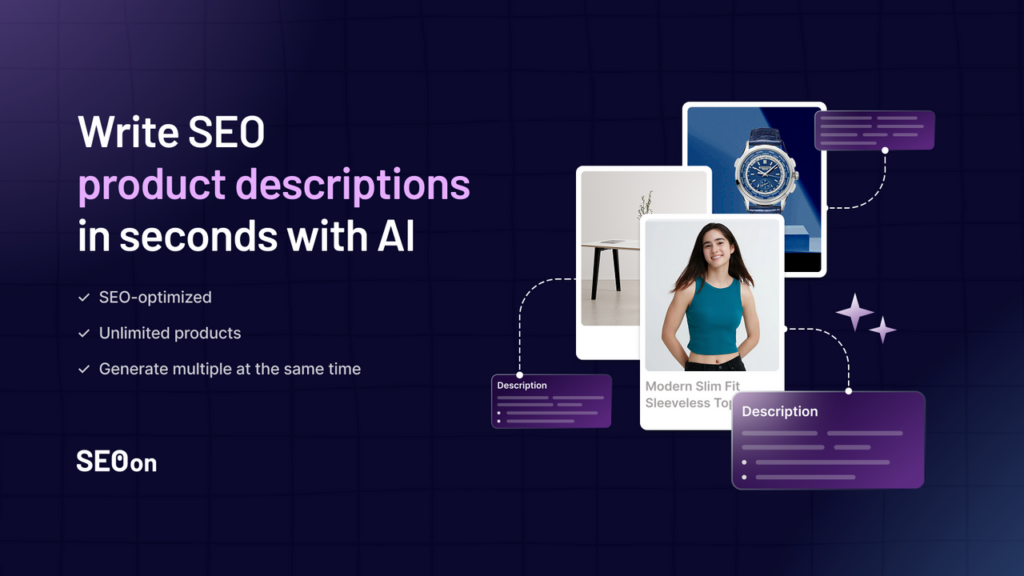
AI SEO product description optimization has transformed how e-commerce brands create, refine, and scale their product copy. Instead of manually rewriting hundreds of product pages, businesses now use machine learning models to generate unique descriptions that satisfy both search engine algorithms and human shoppers. This approach combines natural language processing with structured data to produce content that ranks well, reads naturally, and drives sales. In this comprehensive guide, you will learn exactly how to implement AI-driven optimization for your product catalog, what tools and techniques work best, and how to avoid the common pitfalls that lead to duplicate content penalties or robotic-sounding copy.
What Is AI SEO Product Description Optimization?
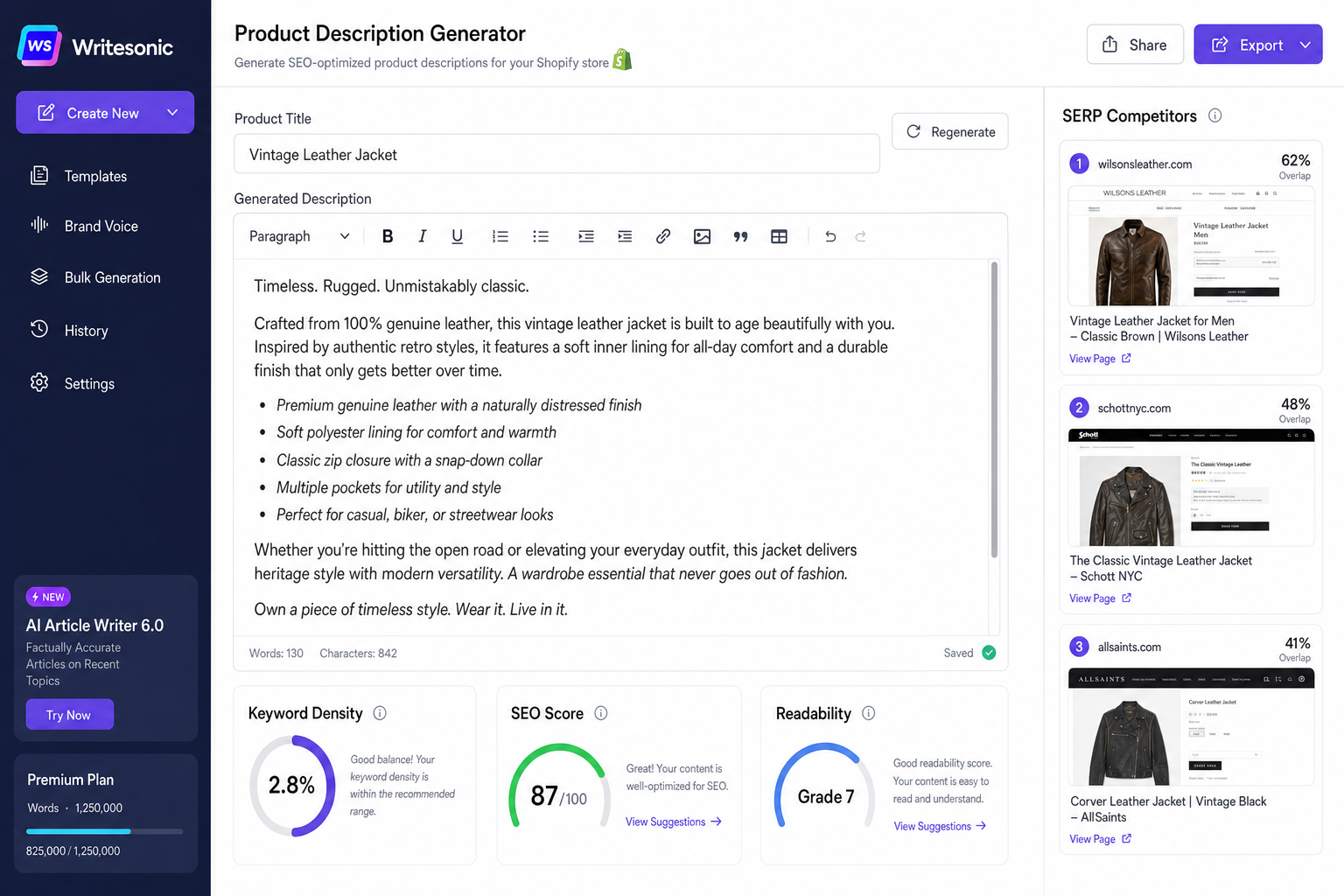
AI SEO product description optimization refers to the process of using artificial intelligence tools to create, rewrite, or enhance product descriptions with the goal of improving organic search visibility and conversion rates. Unlike traditional copywriting, where a human writes each description manually, AI systems analyze existing product data, search queries, and competitor content to generate optimized text at scale.
The core idea is not simply to automate writing. The real value lies in the AI’s ability to understand search intent, incorporate relevant keywords naturally, and structure information in a way that search engines can easily parse. Modern AI models can also adapt tone and style to match your brand voice, ensuring consistency across thousands of product pages.
How AI Understands Product Context
AI systems use natural language processing (NLP) to break down product attributes, features, and benefits. When you feed a product title, specifications, and category data into a well-trained model, it can identify the most important selling points and match them with the search terms your target audience actually uses. This goes beyond simple keyword insertion. The AI understands semantic relationships, so it knows that “waterproof hiking boots” and “water-resistant trail shoes” are related concepts that should appear in similar contexts.
Why Traditional Product Descriptions Fail in Modern SEO
Before diving deeper into AI optimization, it is important to understand why conventional approaches no longer deliver strong results. Many e-commerce sites still rely on manufacturer-provided descriptions. These are often duplicated across dozens of retailers, creating a massive duplicate content problem. Search engines struggle to determine which page should rank, and often none of them perform well.
Another common issue is thin content. A product page with only a short paragraph and a list of specifications provides little value to search engines. Google’s algorithms increasingly reward comprehensive, informative content that answers user questions. Short descriptions simply do not provide enough context for the search engine to understand the product’s relevance to a query.
Finally, manual rewriting at scale is simply not feasible. A store with 5,000 products would need weeks of dedicated copywriting time to produce unique, optimized descriptions. AI solves this scalability problem while maintaining quality.
Key Benefits of AI SEO Product Description Optimization
Implementing AI for product description optimization offers several measurable advantages over manual methods. These benefits extend beyond just rankings and touch on operational efficiency, user experience, and revenue growth.
Scalability Without Quality Loss
AI can generate hundreds of unique product descriptions in minutes. The quality remains consistent because the model applies the same rules and guidelines to every product. This is impossible for human writers, who naturally vary in performance based on fatigue, time constraints, and familiarity with the product category.
Improved Keyword Coverage
AI tools can analyze search volume data and automatically incorporate long-tail keywords that human writers might overlook. For example, a description for a coffee maker might naturally include phrases like “programmable brew strength” or “thermal carafe for 12 cups” based on actual search queries, not just generic terms like “best coffee maker.”
Enhanced Readability and User Engagement
Well-optimized AI descriptions are structured with clear headings, bullet points, and short paragraphs. This formatting improves readability, which directly impacts dwell time and bounce rate. When users stay longer on your page and interact with the content, search engines interpret this as a positive signal.
Consistent Brand Voice
AI models can be fine-tuned to match your specific brand tone. Whether you sell luxury skincare products or budget camping gear, the AI can adjust its vocabulary, sentence structure, and emotional appeal to align with your existing marketing materials.
How AI SEO Product Description Optimization Works: A Step-by-Step Process
Understanding the technical workflow helps you implement this strategy effectively. The process involves several distinct stages, from data preparation to final publication.
Step 1: Data Collection and Structuring
Start by gathering all available product information. This includes titles, SKUs, categories, attributes (color, size, material), specifications, and any existing descriptions. The quality of your input data directly determines the quality of the AI output. Clean, structured data produces better results than messy, incomplete information.
Organize this data in a spreadsheet or a product information management (PIM) system. Each product should have a clear set of attributes that the AI can reference when generating copy.
Step 2: Keyword Research and Intent Mapping
Before generating descriptions, you need to know which keywords to target. Use SEO tools like Ahrefs, SEMrush, or Google Keyword Planner to identify relevant search terms for each product category. Focus on long-tail keywords with commercial intent, such as “lightweight backpack for day hikes” rather than just “backpack.”
Map these keywords to specific products based on relevance. The A
Step 3: AI Model Selection and Configuration
Several AI tools specialize in e-commerce content generation. Popular options include ChatGPT with custom prompts, Jasper, Copy.ai, and specialized platforms like Writesonic or Frase. Each has its strengths, so choose based on your budget, technical expertise, and volume requirements.
Configure the model with your brand guidelines, target audience, and keyword lists. Provide examples of your best-performing existing descriptions so the AI can learn your preferred style.
Step 4: Generation and Review
Run the AI to generate draft descriptions for your entire catalog. Do not publish these drafts immediately. Instead, have a human editor review a sample to check for factual accuracy, brand alignment, and natural language flow. AI can occasionally produce awkward phrasing or hallucinate specifications, so human oversight remains essential.
Once you approve the quality, you can scale the process to the full catalog.
Step 5: Implementation and Technical SEO Integration
Publish the new descriptions on your product pages. Ensure that the content is properly structured with HTML tags. Use H1 for the product title, H2 for key sections like “Features” and “Specifications,” and bullet points for scannable information.
Also, update your meta descriptions and title tags to align with the new on-page content. This reinforces the relevance signals for search engines.
Comparison: AI-Generated vs. Human-Written Product Descriptions
To make an informed decision, it helps to compare the two approaches across several dimensions. The table below summarizes the key differences.
| Aspect | AI-Generated Descriptions | Human-Written Descriptions |
|---|---|---|
| Speed | Very fast, hundreds per hour | Slow, typically 5-10 per day |
| Cost per Description | Low, pennies per unit | High, $10-$50 per unit |
| Scalability | Excellent for large catalogs | Poor for catalogs over 1,000 products |
| Creativity | Good, but can be formulaic | Excellent, unique storytelling |
| Keyword Optimization | Excellent, data-driven | Variable, depends on writer skill |
| Brand Voice | Requires careful training | Naturally consistent |
| Factual Accuracy | Risk of hallucination | High, if writer has product access |
In practice, the best results often come from a hybrid approach. Use AI to generate the initial draft, then have a human editor refine the most important product pages, such as bestsellers or new arrivals.
Common Mistakes in AI SEO Product Description Optimization
Many businesses jump into AI content generation without proper planning, leading to poor results and even search engine penalties. Being aware of these common mistakes will help you avoid them.
Publishing Unedited AI Output
The biggest mistake is treating AI-generated text as final. AI models can produce grammatically correct but factually wrong statements. For example, an AI might describe a product as “waterproof” when it is only “water-resistant,” leading to customer complaints and returns. Always have a human verify specifications and claims before publishing.
Keyword Stuffing
Some AI tools, when given a long list of keywords, will try to include all of them in every description. This results in unnatural, spammy text that hurts user experience and violates Google’s guidelines. Limit each description to one primary keyword and two or three secondary terms.
Ignoring Duplicate Content Risks
If you use the same AI prompt for all products in a category, the generated descriptions may be too similar to each other. This creates internal duplicate content, which confuses search engines. Vary your prompts and include unique product attributes to ensure each description is distinct.
Neglecting User Intent
AI can generate text that ranks for keywords but fails to answer the user’s actual question. For example, a description that focuses on technical specifications may not help a user who wants to know if the product is easy to clean. Balance keyword optimization with informative, benefit-oriented content.
Best Practices for Implementing AI Product Description Optimization
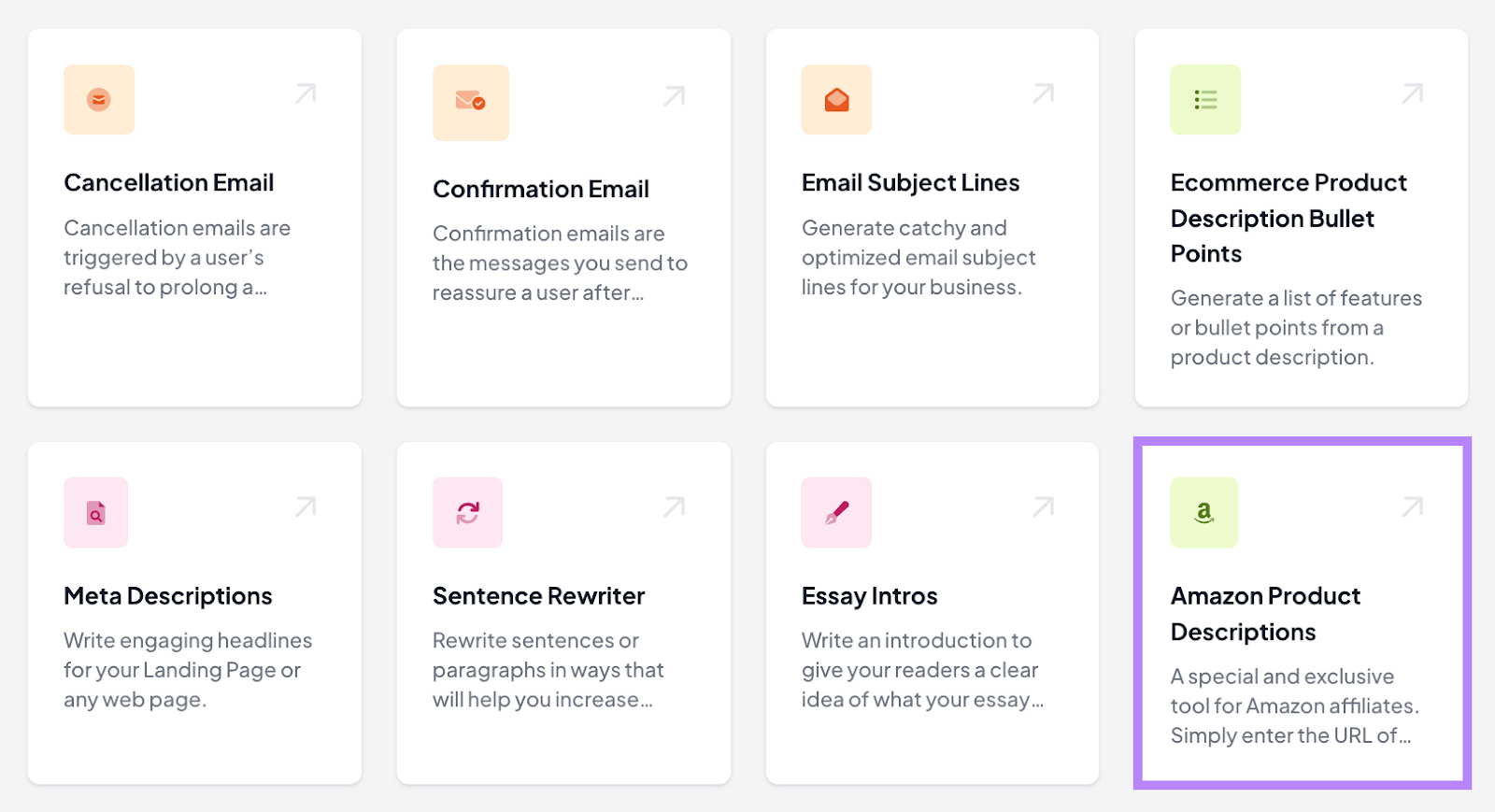
To get the most out of AI SEO product description optimization, follow these proven best practices. They cover everything from prompt engineering to ongoing maintenance.
Use Detailed, Specific Prompts
The quality of AI output depends heavily on the prompt. Instead of saying “write a description for this product,” provide the AI with the product name, key features, target audience, tone, and primary keyword. For example: “Write a 150-word description for a stainless steel travel mug. Target audience: commuters. Tone: friendly and practical. Include the keyword ‘leak-proof travel mug’ naturally. Highlight the double-wall insulation and 12-hour heat retention.”
Incorporate Structured Data
While AI writes the visible text, you should also implement schema markup (Product schema, Review schema) to help search engines understand your page. AI-generated content works best when combined with proper technical SEO.
Regularly Update and Refresh Content
Search trends change, and so should your product descriptions. Use AI to periodically refresh older descriptions with new keywords or updated product information. This signals freshness to search engines and keeps your content relevant.
Monitor Performance Metrics
Track key performance indicators (KPIs) after implementing AI descriptions. Monitor organic traffic, keyword rankings, conversion rate, and time on page. Compare these metrics against your baseline to measure the impact of your optimization efforts.
Practical Application: A Step-by-Step Guide for Your Store
- Audit your current catalog: Identify products with thin, duplicate, or poorly performing descriptions. Prioritize these for AI optimization.
- Export your product data: Create a CSV file with columns for product name, category, attributes, and current description.
- Select your AI tool: Choose a platform that allows bulk processing. ChatGPT with API access, Jasper, or a dedicated e-commerce tool like Intellibrand are good options.
- Create a prompt template: Develop a reusable prompt that includes placeholders for product-specific information. This ensures consistency across your catalog.
- Generate and review: Run the AI on a small batch of 20-30 products. Review the output, make adjustments to your prompt, and then scale to the full catalog.
- Publish and monitor: Upload the new descriptions to your site. Use Google Search Console to track indexing and rankings over the next 4-6 weeks.
Important Notes on AI Content and Google’s Guidelines
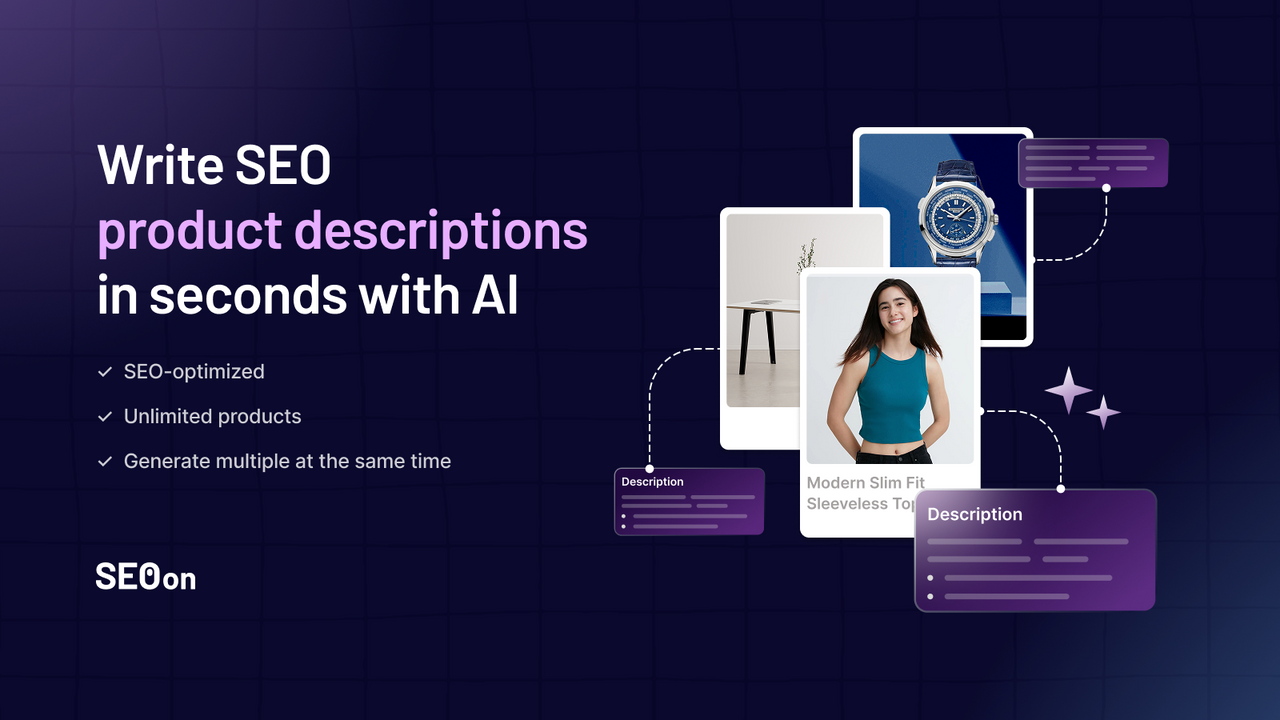
Google’s official stance on AI-generated content is that it is acceptable as long as it is helpful, original, and demonstrates E-E-A-T (Experience, Expertise, Authoritativeness, Trustworthiness). The search engine does not penalize AI content simply because it was generated by a machine. However, it does penalize content that is created solely to manipulate rankings without providing value to users.
To stay in Google’s good graces, ensure your AI descriptions are factually accurate, add unique value beyond what is available on the manufacturer’s site, and are not mass-produced without any human oversight. Adding original photos, videos, and customer reviews alongside AI text further strengthens your page’s quality signals.
Frequently Asked Questions
Can Google detect AI-generated product descriptions?
Google does not specifically label content as “AI-generated” in its ranking algorithms. Instead, it evaluates content quality based on usefulness, originality, and relevance. AI descriptions that are well-written and informative can rank just as well as human-written ones. The key is to avoid low-quality, spammy AI output.
What is the best AI tool for product description optimization?
T ChatGPT (GPT-4) is highly flexible and can be customized with detailed prompts. Jasper is user-friendly and designed for marketing copy. Frase integrates SEO research with content generation. For large e-commerce catalogs, specialized platforms like Intellibrand or Writesonic offer bulk processing features.
How long should an AI-optimized product description be?
For most products, a description of 150-300 words is ideal. This length allows you to cover key features, benefits, and specifications without overwhelming the reader. For complex or high-ticket items, you may need 400-500 words. Always prioritize clarity over length.
Will AI replace human copywriters for e-commerce?
A Copywriters will shift from writing every description from scratch to editing and refining AI-generated drafts, developing brand voice guidelines, and focusing on high-level strategy. This hybrid approach is more efficient and cost-effective.
How do I avoid duplicate content when using AI for many similar products?
To avoid duplicate content, ensure your prompts include unique attributes for each product. For example, if you sell t-shirts in different colors, mention the specific color name, any color-specific features, and how that color fits into the overall product line. Additionally, use AI to generate different introductory paragraphs for each product based on its unique selling points.
Conclusion
AI SEO product description optimization is no longer a futuristic concept; it is a practical, proven strategy for e-commerce businesses of all sizes. By leveraging AI to generate scalable, keyword-rich, and user-friendly descriptions, you can significantly improve your organic search visibility, reduce manual workload, and increase conversion rates. The key to success lies in proper implementation: use detailed prompts, maintain human oversight, avoid common pitfalls like keyword stuffing, and always prioritize the user’s needs over search engine tricks. Start with a small pilot project, measure the results, and then scale your efforts across your entire catalog. With the right approach, AI becomes your most powerful ally in the competitive world of e-commerce SEO.
Xem thêm:
- AI SEO Blog Outline Generator: The Complete Guide to Faster, Smarter Content Planning
- AI SEO Trends 2027: The Complete Blueprint for Search Dominance
- AI SEO Question Generator: The Complete Guide to Dominating Google’s People Also Ask
- AI SEO Search Intent Mapping: The Complete Guide to Ranking in 2025
- AI SEO Entity Authority: The Complete Guide to Dominating Search in 2025
Bài viết cùng chủ đề:

AI SEO SEO Automation with Make: The Complete Workflow Guide

AI SEO SEO Automation with Zapier: The Complete Workflow Guide

AI SEO SEO Automation with n8n: The Complete Workflow Guide
AI SEO SEO Automation with Gemini: The Complete Guide to Scaling Organic Growth

AI SEO SEO Automation with Claude: The Complete Guide to Scaling Content in 2025

AI SEO SEO Automation with ChatGPT: The Complete Playbook for 2025

AI SEO & SEO Automation for Affiliate Sites: The 2025 Playbook for Passive Income Growth
AI SEO & SEO Automation for Bloggers: The Complete Guide to Scaling Your Content

AI SEO & SEO Automation for Agencies: The Complete 2025 Playbook

AI SEO and SEO Automation for Ecommerce: The Complete Playbook for 2025

AI SEO & SEO Automation for WordPress: The Complete Playbook for 2025
AI SEO SEO Automation Strategy: The Complete Playbook for 2025

Mastering the AI SEO SEO Automation Process: A Complete Guide to Scaling Organic Growth
AI SEO SEO Automation System: The Complete Guide to Scaling Organic Growth in 2025
AI SEO SEO Automation Platform: The Complete Guide to Scaling Organic Growth in 2025
AI SEO SEO Automation Software: The Complete Guide to Scaling Organic Growth in 2025















