
No products in the cart.
AI SEO AI Overview Optimization Strategy: The Complete Playbook for 2025
10
Aug
Aug
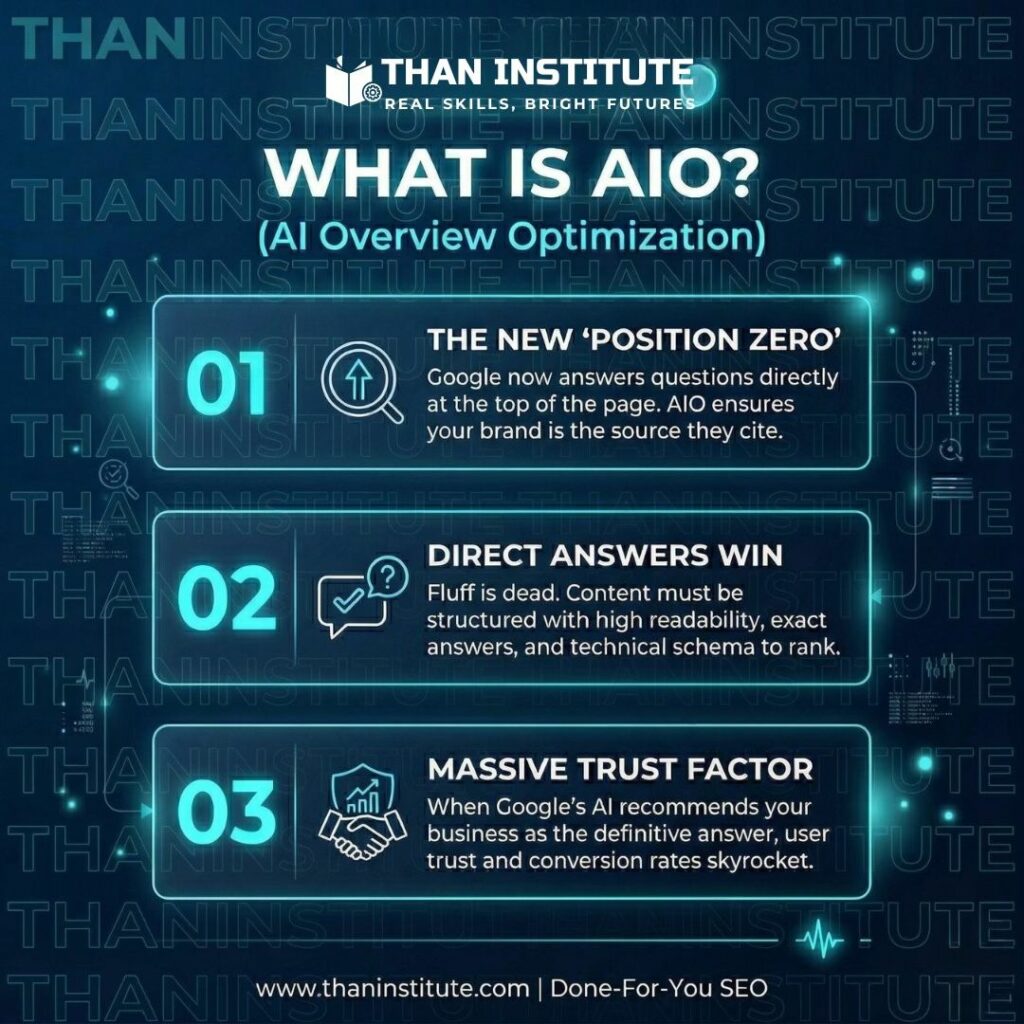
The digital landscape has shifted dramatically with the introduction of AI Overviews in search results. For businesses and content creators, understanding the AI SEO AI Overview Optimization Strategy is no longer optional—it is essential for maintaining visibility. This comprehensive guide breaks down exactly how to adapt your SEO approach to thrive in an environment where Google’s artificial intelligence curates answers directly on the search engine results page (SERP). We will move beyond traditional ranking tactics to focus on becoming the primary source that AI systems trust and cite.
Understanding AI Overviews and Their Impact on Search
AI Overviews, formerly known as Search Generative Experience (SGE), are AI-generated summaries that appear at the top of Google search results. They synthesize information from multiple sources to answer a user’s query directly, without requiring a click to a website. This fundamentally changes the user journey, as the SERP itself becomes the landing page for many informational queries.
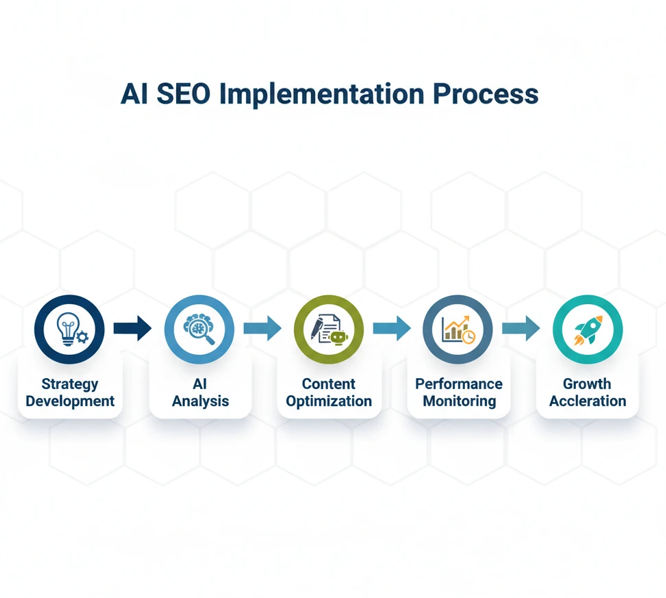
For SEO professionals, this means the battle is no longer just for the #1 position in the blue links. The battle is now for inclusion in the AI-generated summary. If your content is not cited within this overview, your organic click-through rates may plummet, especially for high-volume informational keywords. The core of an AI SEO AI Overview Optimization Strategy involves restructuring content to be easily digestible, authoritative, and directly answerable to the query at hand.
The Core Principles of an AI SEO AI Overview Optimization Strategy
To succeed, you must understand that AI models do not read content the way humans do. They parse text for entities, relationships, and clear, concise answers. Your strategy must align with these algorithmic reading patterns.
Entity Clarity and Semantic Relevance
Search engines use knowledge graphs to understand the relationship between entities (people, places, things, concepts). Your content must clearly define the main entities and use consistent terminology. If you are writing about “content marketing,” ensure you also cover related entities like “brand awareness,” “lead generation,” and “SEO.” This helps the AI connect your content to the broader context of the query.
Direct Answer Formatting
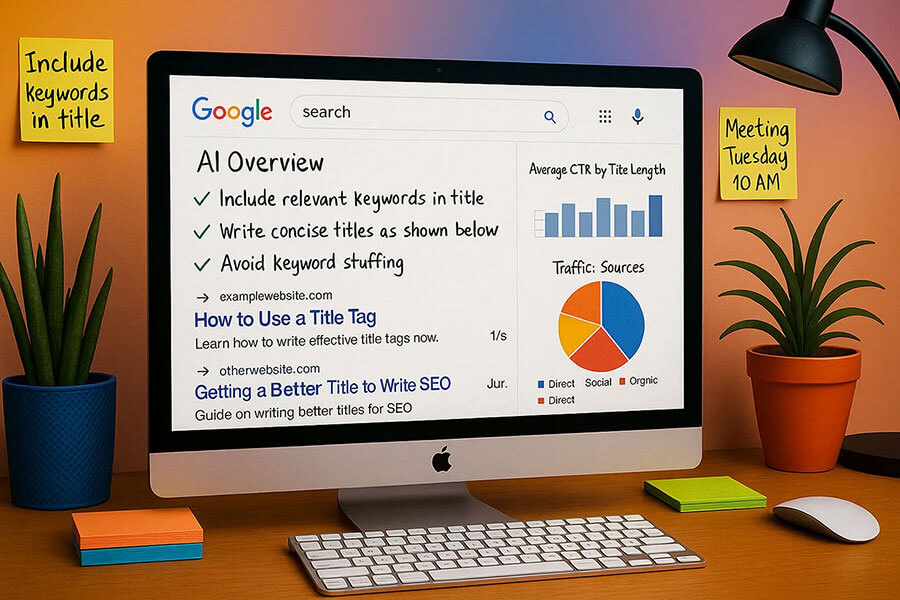
AI Overviews favor content that provides immediate, direct answers. The “People Also Ask” boxes and featured snippets have long rewarded this style, but AI Overviews take it a step further. Your content should include a concise, 40-60 word summary paragraph at the top of the article that directly answers the primary question. This acts as a “hook” for the AI to pull from.
Structured Data and Schema Markup
While not a direct ranking factor for AI Overviews, structured data helps search engines understand the context of your content. Implementing FAQPage, HowTo, and Article schema can increase the chances of your content being used in rich results, which often feed into AI-generated responses. Ensure your schema is valid and matches the visible content on the page.
Technical Foundation: Preparing Your Site for AI Crawling
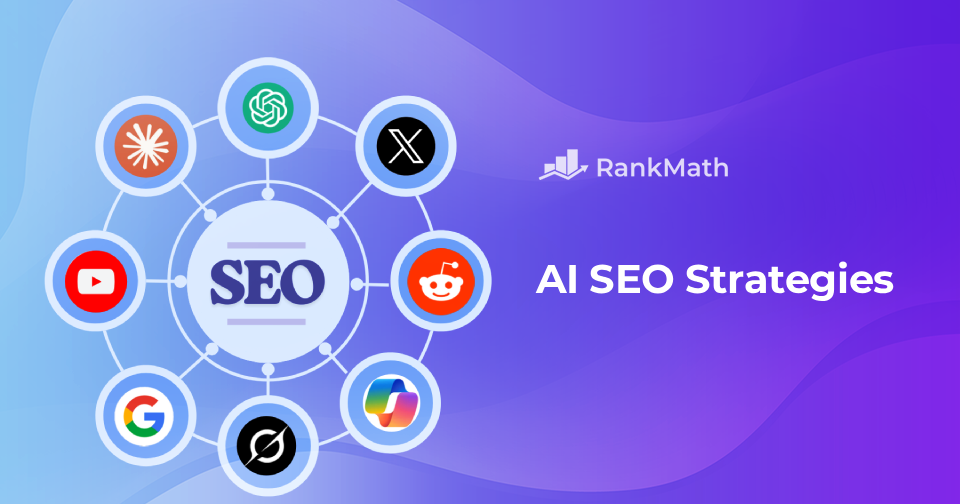
Before you can optimize content, the technical infrastructure must be sound. AI crawlers, like Google’s GPTBot and ClaudeBot, have specific behaviors that differ from the main Googlebot. Your server must be able to handle these additional crawls without slowing down your site.
Server Response and Crawl Budget
AI crawlers can be aggressive. If your server is slow to respond, these crawlers may abandon the crawl, leaving your newest content undiscovered. Monitor your server logs for AI bot activity and ensure your hosting can handle the load. A response time under 200ms is ideal. Additionally, do not block these bots in your robots.txt file if you want your content to be considered for AI Overviews.
Indexing and Content Freshness
AI models rely on the index to pull data. If your page is not indexed, it cannot be cited. Use Google Search Console to ensure your key pages are indexed. Furthermore, AI Overviews tend to favor recent data. Regularly updating your statistics, examples, and dates signals freshness to the algorithm, increasing the likelihood of selection.
Content Creation Strategies for AI Overview Optimization
The content itself must be structured for maximum clarity. This goes beyond simple keyword placement. It requires a modular approach to writing where each section can stand alone as a potential answer.
The Inverted Pyramid Approach
Place the most critical information at the very beginning of the article. The introduction should contain the answer to the main query, the definition of the topic, and the key takeaway. This is the opposite of the “teaser” style of writing. In the age of AI, clarity beats suspense.
Utilizing Lists and Tables
AI systems find it easier to extract data from structured lists and tables than from dense paragraphs. When comparing features, use a table. When listing steps, use an ordered list. This formatting not only improves user experience but also provides clear data points for AI to parse and cite.
Comprehensive Coverage of Subtopics
An AI SEO AI Overview Optimization Strategy requires content that is more comprehensive than the competition. If your keyword is “best running shoes,” you must cover not just the shoes themselves, but also sizing, materials, terrain types, and pronation. The AI looks for content that covers all angles of the query to provide a holistic answer.
Benefits and Limitations of AI Overview Optimization
Understanding the pros and cons of this new landscape helps set realistic expectations for your SEO campaigns.
| Benefits | Limitations |
|---|---|
| Increased brand visibility even without clicks (brand exposure in the AI box). | Lower organic click-through rates (CTR) for informational queries. |
| Opportunity to become the “source of truth” for your niche. | Difficulty in tracking attribution and ROI from AI citations. |
| Higher authority signals if cited consistently across multiple queries. | Increased competition for a smaller number of “citation slots.” |
| Potential for traffic growth if the AI overview links to your site for “deeper dive” content. | Loss of direct traffic for simple, fact-based queries. |
While the loss of clicks is a concern, the benefit of being the cited source builds long-term brand authority. Users who see your brand cited by Google’s AI are more likely to trust you in the future, leading to branded searches and direct traffic.
Comparison: Traditional SEO vs. AI Overview SEO
It is a mistake to view AI SEO as a replacement for traditional SEO. Instead, it is an evolution. The fundamentals of quality content and backlinks remain, but the execution differs.
| Traditional SEO | AI Overview SEO |
|---|---|
| Focus on ranking for keywords to get clicks. | Focus on being cited as a source for answers. |
| Optimize for user dwell time and engagement. | Optimize for data extraction and semantic clarity. |
| Backlinks are the primary authority signal. | Entity consistency and topical authority are primary. |
| Content length is often a ranking factor. | Content structure and directness are more critical. |
The shift is from “writing for humans who will click” to “writing for machines that will cite.” The best strategy combines both: write clearly for humans, but structure the data so machines can easily understand and reference it.
Practical Application: A Step-by-Step Guide to Implementation
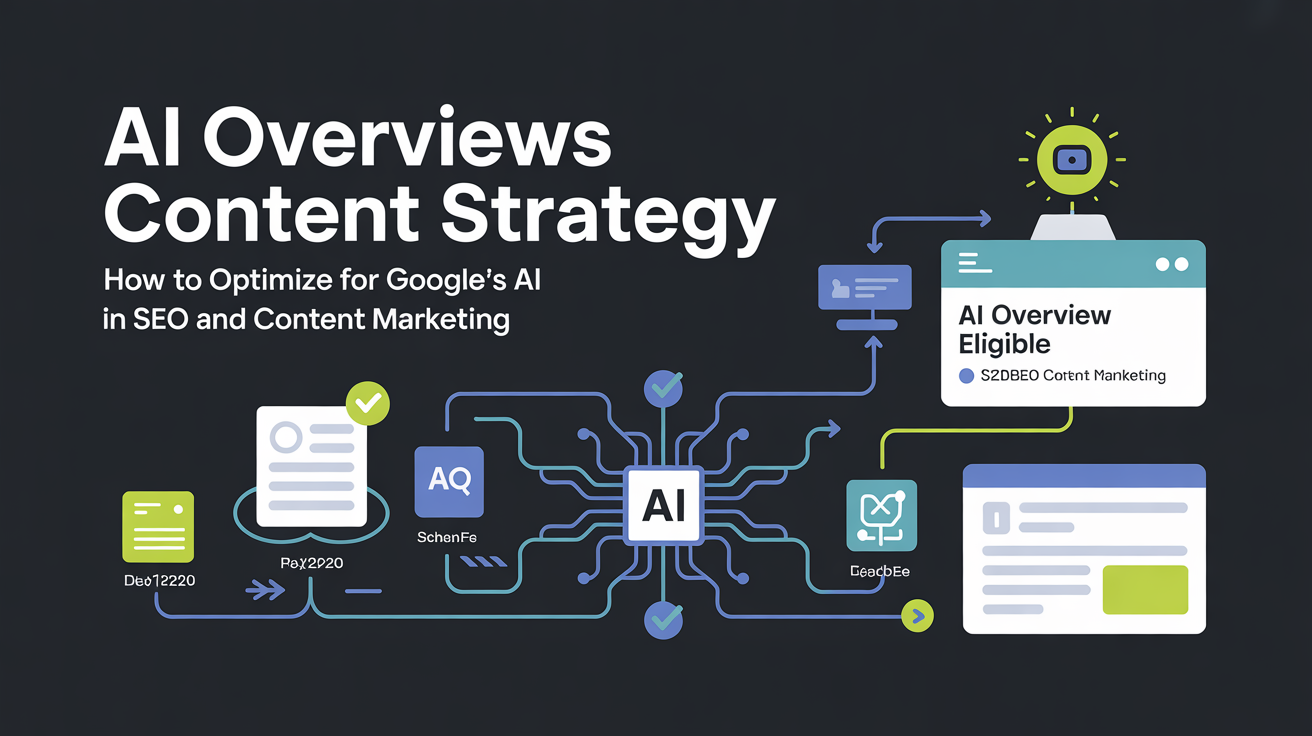
Implementing this strategy requires a systematic audit of your existing content and a new framework for future content.
Step 1: Audit Your Current SERP Presence
Search for your primary keywords and observe the AI Overview. What sources are being cited? Are they large publications or niche experts? What format is the answer in (list, paragraph, table)? This gives you a benchmark for what Google considers “cite-worthy” in your niche.
Step 2: Reverse-Engineer the AI Answer
Take the AI Overview text and break it down. Identify the specific claims, statistics, and entities mentioned. Your goal is to create content that covers these exact points in a more detailed and authoritative manner. If the AI cites a statistic, find the original source and add your own analysis to it.
Step 3: Restructure Existing High-Performing Pages
Do not rewrite everything. Focus on pages that are already ranking on page one but are not being cited in the AI Overview. Add a clear “Summary” section at the top. Break down long paragraphs into bullet points. Add a comparison table if relevant. This “surgical” update signals to Google that your content is more relevant than the current citation.
Step 4: Build Topical Authority Clusters
AI Overviews favor sites that demonstrate deep knowledge on a topic. Instead of writing one article about “AI SEO,” write a cluster of articles covering “AI SEO tools,” “AI SEO case studies,” “AI SEO for ecommerce,” and “AI SEO mistakes.” Interlink these articles with descriptive anchor text. This builds a web of entities that AI can crawl to understand your expertise.
Common Mistakes and How to Avoid Them
Many SEO professionals are making critical errors in their rush to adapt. Avoiding these pitfalls is just as important as implementing the correct tactics.
- Mistake: Chasing “Zero-Click” Queries exclusively. Avoid abandoning transactional keywords. Focus on informational queries for AI Overviews, but maintain a strong strategy for commercial and transactional keywords where clicks are still the primary goal.
- Mistake: Keyword Stuffing in AI Era. Avoid forcing the exact keyword into every paragraph. AI models detect unnatural language. Use synonyms and related terms naturally to build semantic context.
- Mistake: Ignoring User Intent. Avoid creating content that answers a question the user did not ask. If the query is “best budget laptops,” do not write an article about “how laptops are made.” The A
- Mistake: Neglecting E-E-A-T. Avoid anonymous content. AI Overviews prioritize content with clear authorship, cited sources, and factual accuracy. Ensure your content includes author bios and links to primary research.
Important Notes on Measuring Success
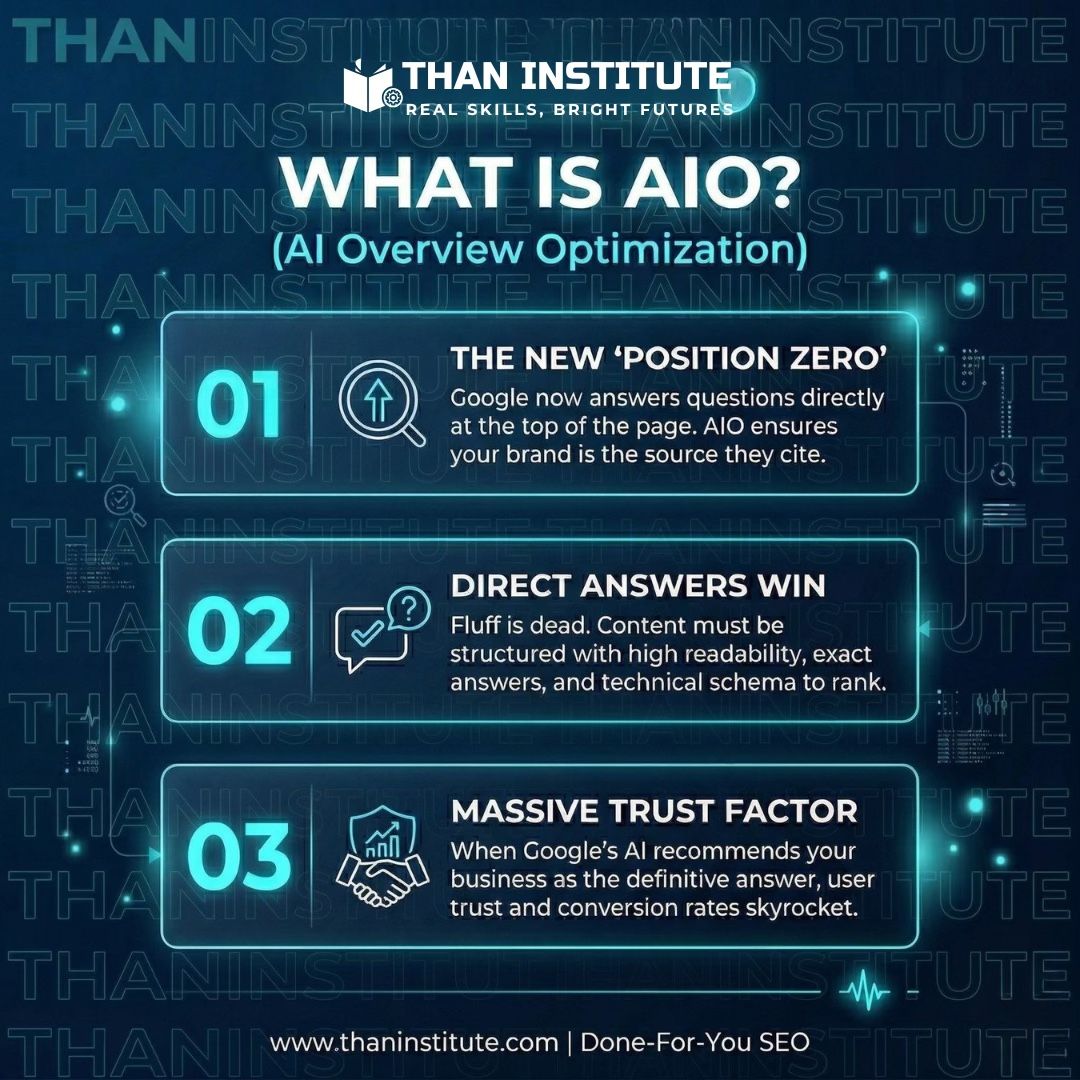
Traditional metrics like “Keyword Ranking” are becoming less relevant. You must shift your reporting to focus on visibility and brand mentions.
Track your “AI Overview Share of Voice.” Use tools to monitor which of your keywords trigger an AI Overview and whether your brand is mentioned within it. This is a more accurate metric than position tracking. Additionally, monitor branded search volume. An increase in branded searches often correlates with being cited in AI Overviews, as users seek out the source they saw in the AI answer.
Finally, do not neglect the quality of your traffic. While clicks may decrease, the conversion rate of the clicks you do receive should increase. Users who click through from an AI Overview are often further down the funnel, having already received the basic answer, and are looking for specific solutions or products.
Frequently Asked Questions (FAQ)
What is the difference between Featured Snippets and AI Overviews?
Featured Snippets are a specific block of content pulled from a single webpage, displayed at the top of the SERP. AI Overviews are a synthesized summary generated by AI, which may pull information from multiple sources and combine them into a unique paragraph or list. AI Overviews are more dynamic and can answer complex, multi-faceted queries, while Featured Snippets are typically for single, direct queries.
How do I check if my content is cited in an AI Overview?
Perform a manual search for your target keywords in an incognito browser. Scroll to the top of the SERP and look for the AI Overview box. Click on the citation icons (usually a small carousel or numbered links) within the overview to see which URLs are referenced. You can also use third-party SEO tools that track AI Overview visibility and citations.
Does having a high Domain Authority guarantee inclusion in AI Overviews?
No. While Domain Authority (DA) is a signal of overall site trust, AI Overviews prioritize relevance and clarity for the specific query. A small, niche blog with a clear, well-structured answer can outrank a high-DA site with a generic, poorly structured article. The AI looks for the most direct and comprehensive answer, not just the most authoritative domain.
Should I block AI crawlers like GPTBot from my site?
Generally, no. If you block AI crawlers, you prevent your content from being considered for AI Overviews and other AI-powered search features. However, if you have concerns about content scraping for training models, you can block specific bots. For SEO purposes, allowing these crawlers is beneficial for visibility in the AI-driven search landscape.
How often should I update my content for AI Overview optimization?
AI Overviews favor fresh data. For statistics-heavy or news-related content, update it monthly. For evergreen “how-to” content, review it quarterly to ensure the steps and examples are still accurate. Regular updates signal to the AI that your content is maintained and reliable, increasing the likelihood of citation.
Conclusion
The rise of AI Overviews marks a pivotal moment in search history. The AI SEO AI Overview Optimization Strategy outlined By focusing on entity clarity, direct answers, and structured data, you position your brand as the authoritative source that AI systems trust. While the metrics of success have changed, the core principle remains: provide exceptional value. By optimizing for the machine, you inevitably create a better, more concise, and more useful experience for the human reader. Embrace this change, audit your content, and implement these strategies to secure your place at the top of the AI-driven search results.
Xem thêm:
- AI SEO Heading Structure: The Complete Guide to Optimizing Headings for Search Engines
- AI SEO Automated Keyword Research: The Complete Guide to Scaling Content Strategy
- AI SEO Content Silos: The Complete Guide to Building Topical Authority in 2025
- Small Business AI SEO: The Complete Guide to Dominating Search in 2025
- AI SEO Dynamic Pages: The Complete Guide to Automated Search Optimization
Bài viết cùng chủ đề:

AI SEO SEO Automation with Make: The Complete Workflow Guide

AI SEO SEO Automation with Zapier: The Complete Workflow Guide

AI SEO SEO Automation with n8n: The Complete Workflow Guide
AI SEO SEO Automation with Gemini: The Complete Guide to Scaling Organic Growth

AI SEO SEO Automation with Claude: The Complete Guide to Scaling Content in 2025

AI SEO SEO Automation with ChatGPT: The Complete Playbook for 2025

AI SEO & SEO Automation for Affiliate Sites: The 2025 Playbook for Passive Income Growth
AI SEO & SEO Automation for Bloggers: The Complete Guide to Scaling Your Content

AI SEO & SEO Automation for Agencies: The Complete 2025 Playbook

AI SEO and SEO Automation for Ecommerce: The Complete Playbook for 2025

AI SEO & SEO Automation for WordPress: The Complete Playbook for 2025
AI SEO SEO Automation Strategy: The Complete Playbook for 2025

Mastering the AI SEO SEO Automation Process: A Complete Guide to Scaling Organic Growth
AI SEO SEO Automation System: The Complete Guide to Scaling Organic Growth in 2025
AI SEO SEO Automation Platform: The Complete Guide to Scaling Organic Growth in 2025
AI SEO SEO Automation Software: The Complete Guide to Scaling Organic Growth in 2025















