
No products in the cart.
AI SEO Quality Score: The Complete Guide to Scoring Higher in 2025
31
Jul
Jul
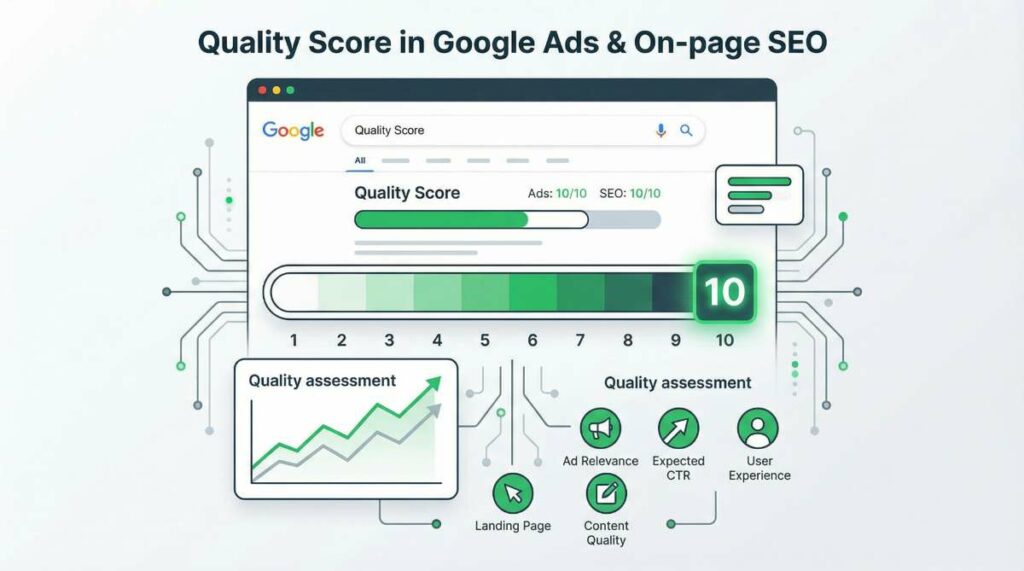
The digital marketing landscape has shifted dramatically. Search engines now use machine learning algorithms to evaluate content quality, relevance, and user experience in real time. This is where the concept of an AI SEO Quality Score comes into play. This metric, calculated by artificial intelligence systems, determines how well your page satisfies search intent compared to competing results. Understanding this score is no longer optional; it is the foundation of sustainable organic growth.
Unlike the traditional PageRank or simple keyword density checks, an AI SEO Quality Score evaluates hundreds of signals simultaneously. It looks at semantic depth, entity consistency, readability, engagement metrics, and technical performance. Search engines like Google use systems like BERT and MUM to understand the nuance of language. Consequently, your content must be optimized for both humans and the AI models that rank it.
This guide breaks down everything you need to know about the AI SEO Quality Score. You will learn what it is, how it is calculated, why it matters, and exactly how to improve your score. We will cover practical strategies, common pitfalls, and answer the most pressing questions about this evolving metric.
What Exactly is an AI SEO Quality Score?
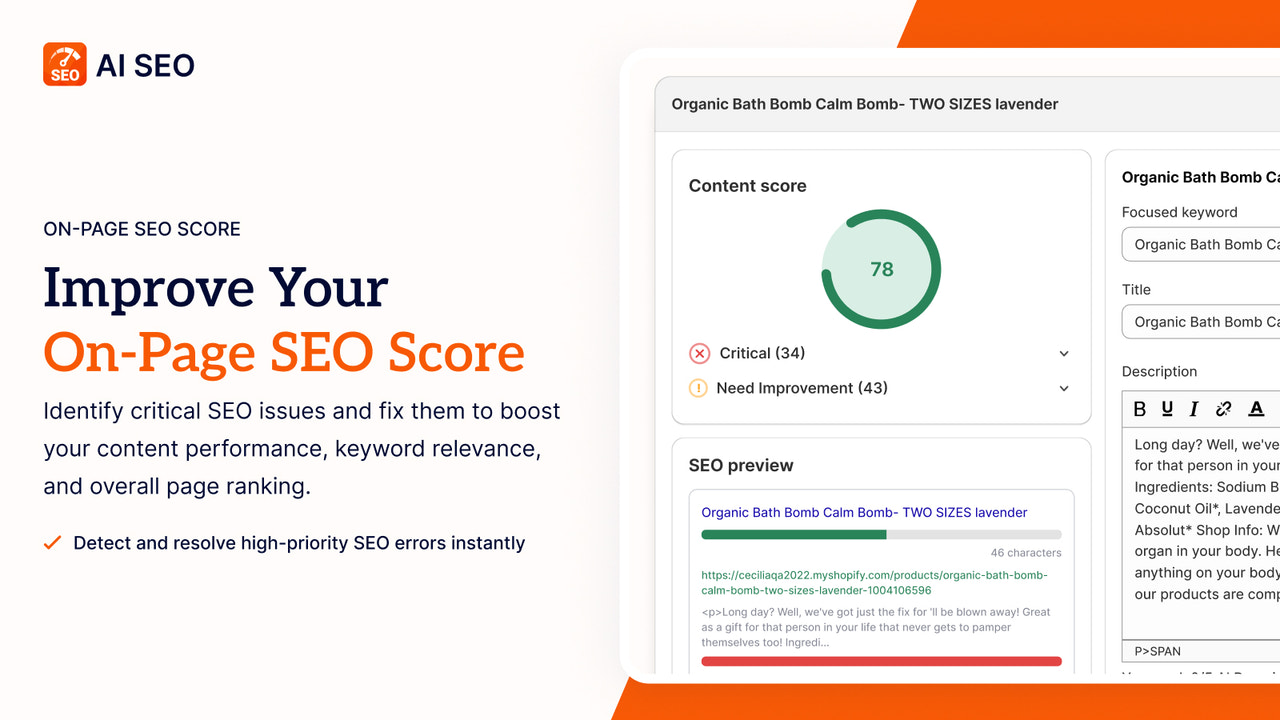
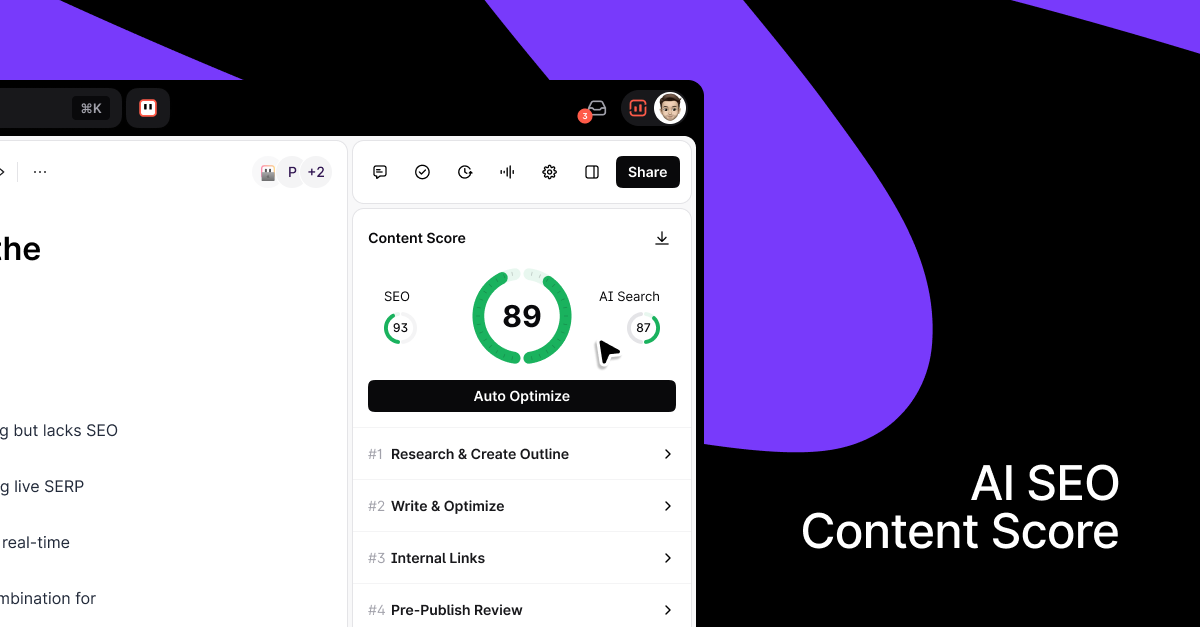
An AI SEO Quality Score is a data-driven assessment of a webpage’s potential to rank well in search engine results. It is generated by artificial intelligence models that analyze a page against the top-ranking competitors for a given query. The score typically ranges from 0 to 100, with higher numbers indicating a greater likelihood of ranking on the first page.
This score is not a single number but a composite of several sub-scores. These sub-scores evaluate different aspects of your page, including content relevance, authority signals, user engagement, and technical health. The AI models are trained on massive datasets of high-ranking pages, learning the patterns that correlate with success.
Third-party SEO tools like Semrush, Ahrefs, and Clearscope provide their own versions of this score. However, the core principles remain consistent across platforms. The goal is to predict how well a piece of content will perform before you publish it, allowing for data-driven optimization.
The Core Components of an AI SEO Quality Score
To understand the score, you must break it down into its fundamental parts. Each component carries a different weight depending on the search query and the industry. Here are the primary factors that AI models evaluate:
- Content Relevance: How closely your content matches the search intent. This includes semantic coverage of related topics, not just the primary keyword.
- Entity Optimization: The use of recognized people, places, things, and concepts that search engines already understand.
- Readability and Structure: The clarity of your writing, use of headings, paragraph length, and overall logical flow.
- Technical Performance: Page speed, mobile-friendliness, Core Web Vitals, and crawlability.
- Engagement Metrics: Predicted click-through rate (CTR), dwell time, and bounce rate based on historical data.
- Authority Signals: The strength of your domain and the quality of backlinks pointing to the page.
Each of these components is scored individually. The AI then combines them using a weighted formula to produce the final AI SEO Quality Score. If one component is severely lacking, it can drag down the entire score, even if other areas are strong.
How is the AI SEO Quality Score Calculated?
The calculation process is complex and proprietary to each search engine or SEO tool. However, the underlying methodology involves natural language processing (NLP) and machine learning regression models. The AI compares your content to the current top 10 results for your target keyword.
First, the AI extracts the main entities and topics from the top-ranking pages. It creates a semantic map of what a comprehensive article should cover. Then, it analyzes your content against this map. Missing topics or thin coverage will result in a lower relevance score.
Second, the AI evaluates the linguistic quality. It checks for grammatical errors, passive voice, and sentence complexity. Content that is too difficult to read for the target audience will score lower. The AI also looks at the use of related keywords and synonyms to ensure the content feels natural and not stuffed with exact-match phrases.
Third, the model predicts user behavior. Based on the title tag and meta description, it estimates the CTR. Based on the content structure, it predicts how long a user will stay on the page. These predictive metrics are highly correlated with actual ranking positions.
The Role of Natural Language Processing (NLP)
NLP is the engine that powers the AI SEO Quality Score. It allows the algorithm to understand the meaning behind the words, not just the words themselves. For example, if you write about “apple,” the AI can determine if you mean the fruit or the technology company based on the surrounding context.
NLP models like BERT (Bidirectional Encoder Representations from Transformers) analyze the relationships between words in a sentence. This helps the AI understand nuances like sarcasm, intent, and sentiment. For SEO, this means your content must be written clearly and unambiguously to avoid misinterpretation by the AI.
Furthermore, NLP enables the AI to identify “topical authority.” If your article covers a topic comprehensively, including subtopics that a user might expect, the AI recognizes this as a high-quality signal. This is why long-form content often scores higher than short, superficial posts.
Why the AI SEO Quality Score Matters for Your Rankings
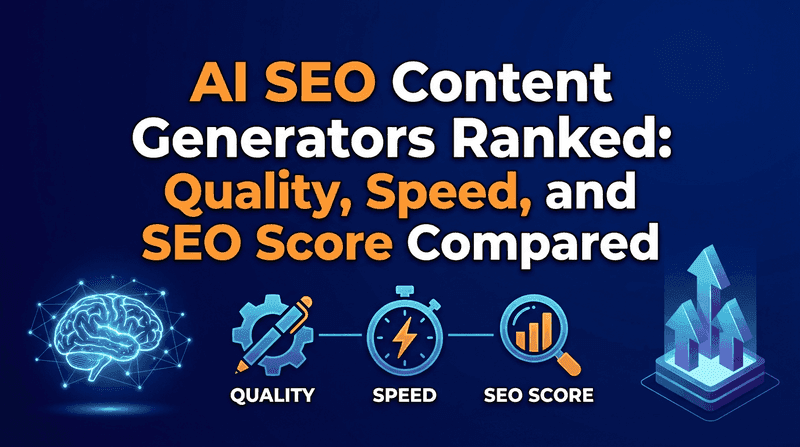
The direct correlation between this score and actual search rankings is strong. Google has confirmed that its systems use AI to evaluate content quality. While they do not use a single “quality score” number, the underlying signals are the same. Therefore, optimizing for the AI SEO Quality Score effectively optimizes for Google’s ranking algorithms.
A high score indicates that your content is well-aligned with user intent. This leads to better engagement, which sends positive signals back to the search engine. Over time, this creates a flywheel effect where high-quality content earns more links, more shares, and higher rankings.
Conversely, a low score means your content is likely missing key elements. It might be too thin, poorly structured, or off-topic. Publishing content with a low score is a wasted opportunity. You will spend time and resources creating content that fails to gain traction.
How AI Scores Differ from Traditional SEO Metrics
Traditional SEO focused on metrics like keyword density, exact-match anchor text, and page count. These were easy to manipulate, leading to spammy practices. The AI SEO Quality Score is designed to resist such manipulation. It focuses on the holistic quality of the page and the experience it provides.
For instance, you could rank for a keyword with a 500-word article in the past. Today, the AI expects a comprehensive resource that covers the topic in depth. The score reflects this expectation. It penalizes thin content, even if it contains the exact keyword.
Another difference is the focus on user engagement. Traditional metrics did not consider how long a user stayed on the page. The AI score does. It uses historical data to predict whether users will find your content valuable. This shift forces marketers to create genuinely useful content, not just optimized text.
Practical Strategies to Improve Your AI SEO Quality Score
Improving your score requires a systematic approach. You cannot simply add more keywords or increase word count. You must align your content with what the AI models consider high quality. Here are actionable strategies that work across all major SEO tools.
1. Conduct a Semantic Gap Analysis
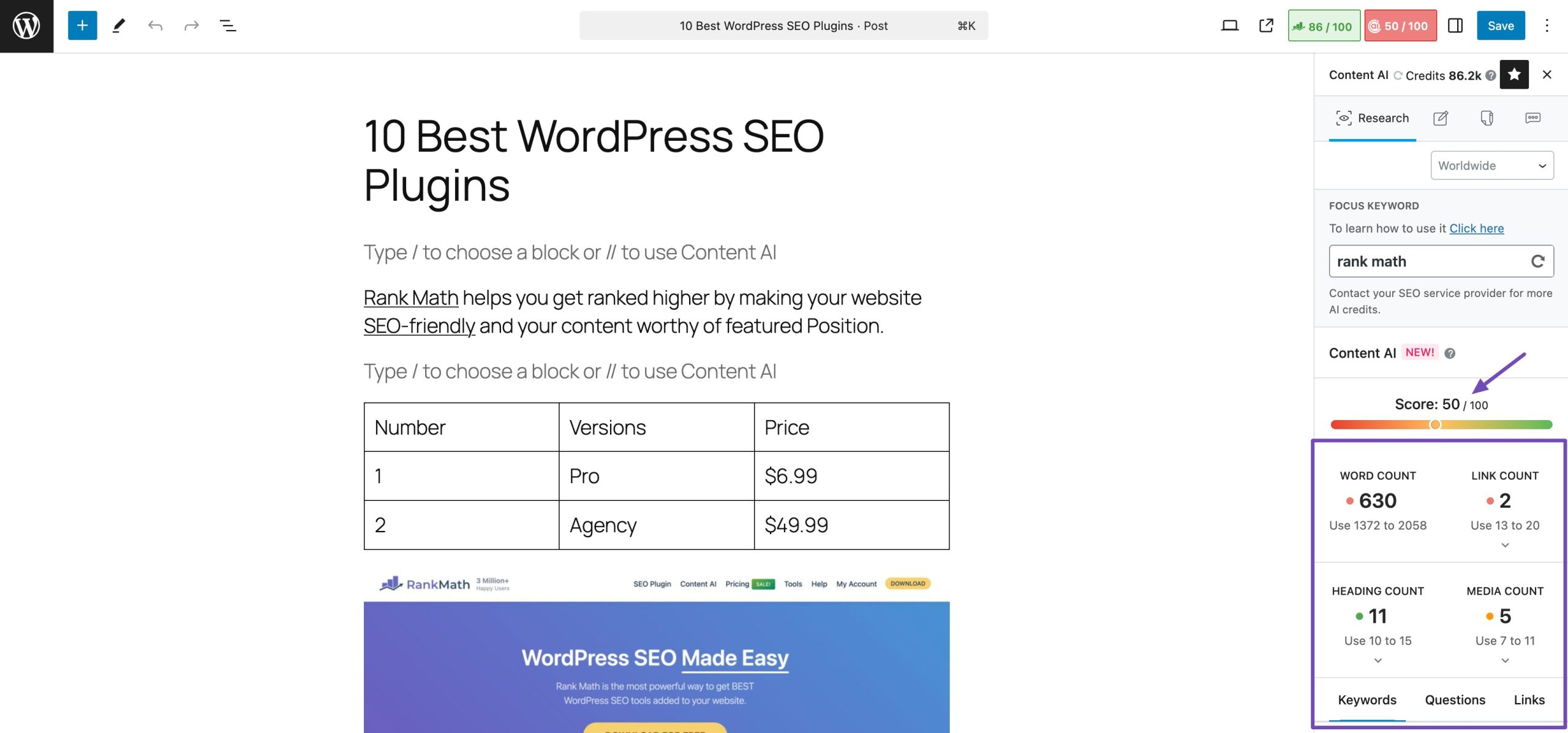
Before writing, analyze the top 5 to 10 ranking pages for your target keyword. Use an AI-powered SEO tool to extract the key entities and subtopics they cover. Create a list of these topics. Then, ensure your content covers every single one of them, plus a few additional unique angles.
This process is called “closing the semantic gap.” It ensures your content is as comprehensive as the current leaders. The A
2. Optimize for Readability and Flow
Write in short paragraphs of 2 to 3 sentences. Use clear headings (H2, H3) to break up the text. Avoid complex jargon unless your audience is highly technical. The AI models reward content that is easy to scan and understand.
Use transition words like “however,” “therefore,” and “additionally” to improve the flow. This makes the text more natural for NLP models to parse. A readability score of 60-70 on the Flesch Reading Ease scale is generally a good target for most B2B and B2C topics.
3. Strengthen Your Entity Coverage
Identify the main entities related to your topic. For example, if you are writing about “digital marketing,” the entities might include “SEO,” “content marketing,” “social media,” and “PPC.” Ensure these entities are clearly defined and connected within your text.
Use structured data (schema markup) to help the AI understand the relationships between entities. This is especially important for product pages, reviews, and FAQs. Structured data provides explicit signals that the AI can use to improve your score.
4. Improve Technical Performance
Your AI SEO Quality Score is heavily influenced by page speed and mobile usability. Use Google’s PageSpeed Insights to check your Core Web Vitals. Aim for a Largest Contentful Paint (LCP) of under 2.5 seconds and a Cumulative Layout Shift (CLS) of less than 0.1.
Compress images, leverage browser caching, and use a content delivery network (CDN). A fast-loading page keeps users engaged, which positively impacts the predictive engagement metrics in the AI score.
5. Craft Compelling Title Tags and Meta Descriptions
The AI predicts your CTR based on your title and meta description. If these are boring or misleading, your score will suffer. Write titles that include your primary keyword and a value proposition. Use numbers, brackets, or emotional triggers to increase curiosity.
Your meta description should be a concise summary of the article’s value. Include a call to action. While meta descriptions do not directly affect rankings, they significantly affect the predicted CTR, which is a component of the AI SEO Quality Score.
Common Mistakes That Lower Your AI SEO Quality Score
Many marketers unknowingly sabotage their scores. Understanding these common pitfalls can save you from wasting effort. Here are the most frequent mistakes and how to avoid them.
Keyword Stuffing and Over-Optimization
Repeating your primary keyword in every paragraph is a surefire way to lower your score. The AI detects this as unnatural language. It will flag your content as spammy, reducing your relevance and readability scores.
Instead, use variations of your keyword and related synonyms. Write naturally, as if you are explaining the topic to a colleague. The AI is sophisticated enough to understand your topic without you repeating the exact phrase.
Ignoring Search Intent
If the user wants a tutorial, do not give them a product comparison. The AI analyzes the top-ranking pages to determine the dominant intent. If your content does not match that intent, your score will be low, regardless of the content quality.
Always check the current search engine results page (SERP) for your keyword. Look at the format of the top results. Are they listicles, guides, videos, or product pages? Match that format to align with user expectations.
Thin Content and Missing Subtopics
Writing a 500-word article for a topic that requires 2,000 words will result in a low score. The AI compares your content’s depth to the competition. If you are missing key sections that other pages have, your semantic coverage score drops.
Use the “People Also Ask” box and related searches to find subtopics. Include these in your article. This not only improves your score but also increases your chances of appearing in featured snippets.
Neglecting Internal Linking
Internal links help the AI understand the structure of your site and the relationship between pages. A page with no internal links is seen as an orphan, which lowers its authority score. Link to relevant, high-authority pages within your content.
Use descriptive anchor text that includes relevant keywords. This provides additional context to the AI about the linked page’s topic. A strong internal linking structure boosts the overall quality score of your entire domain.
Comparing AI SEO Quality Score Tools
Several tools offer their own version of the AI SEO Quality Score. Each has its own methodology and scoring scale. It is important to understand the differences so you can choose the right tool for your needs.
| Tool | Score Range | Key Focus | Best For |
|---|---|---|---|
| Semrush (Content Marketing Platform) | 0-100 | Readability, SEO recommendations, tone of voice | Comprehensive content optimization |
| Clearscope | A+ to F | Keyword relevance, content grading | Improving topical coverage |
| Surfer SEO | 0-100 | On-page signals, NLP terms, structure | Matching top-ranking pages |
| MarketMuse | 0-100 | Topical authority, entity density | Building pillar pages |
While the scores may differ numerically, the underlying recommendations are similar. They all push you towards longer, more comprehensive, and better-structured content. It is wise to use one primary tool consistently to track your progress over time.
The Future of AI SEO Quality Scores
As search engines evolve, so will the AI models that calculate these scores. We are moving towards a more predictive and personalized search experience. The A
We can expect the AI SEO Quality Score to incorporate more user experience signals. This includes metrics like scroll depth, mouse movement, and even sentiment analysis from user comments. The score will become more dynamic, changing in real-time based on user interaction.
Another trend is the integration of generative AI. Tools will not only score your content but also suggest improvements in real-time. They will generate paragraphs, suggest headings, and even rewrite sentences to improve clarity. This will make content optimization faster and more accessible.
Preparing for AI-Driven Search (SGE)
Google’s Search Generative Experience (SGE) is changing how users interact with search results. Instead of a list of links, users may see an AI-generated summary. This means your content must be structured to be easily extracted by AI for these summaries.
To prepare, focus on clear, concise answers to common questions. Use bullet points and tables to present data. Ensure your key points are in the first paragraph of each section. This makes it easier for AI to pull your content into a generated answer, increasing your visibility even if you are not in the top 3 organic results.
Important Notes for E-E-A-T and AI Scores
Google’s guidelines emphasize Experience, Expertise, Authoritativeness, and Trustworthiness (E-E-A-T). The AI SEO Quality Score is increasingly aligned with these principles. Content that demonstrates first-hand experience and cites credible sources will score higher.
Include author bios with credentials. Link to reputable external sources for statistics and claims. Show that you have real-world experience with the topic. This builds trust with both the AI and the user.
Do not hide your identity. A clear “About Us” page and contact information contribute to your site’s trustworthiness score. The AI checks for these signals when evaluating your domain authority.
Frequently Asked Questions About AI SEO Quality Score
What is a good AI SEO Quality Score?
A score of 80 or above is generally considered excellent. It indicates that your content is well-optimized and likely to rank. Scores between 60 and 79 are average and need improvement. Anything below 60 requires significant revision to compete effectively.
Does Google use the AI SEO Quality Score?
Google does not use a single public metric called a “quality score.” However, the underlying signals that third-party tools use to calculate the score are the same signals Google’s algorithms evaluate. Optimizing for the AI SEO Quality Score aligns your content with Google’s ranking criteria.
How often should I check my AI SEO Quality Score?
Check the score before publishing to ensure your content is ready. After publishing, monitor it weekly for the first month. As your content gains backlinks and engagement, the score should improve. Re-optimize if the score drops below your target threshold.
Can I improve my score after publishing?
Yes, you can update your content at any time. Add new sections, improve readability, and fix technical issues. After making changes, request re-indexing in Google Search Console. The A
Is the AI SEO Quality Score the same as Google Ads Quality Score?
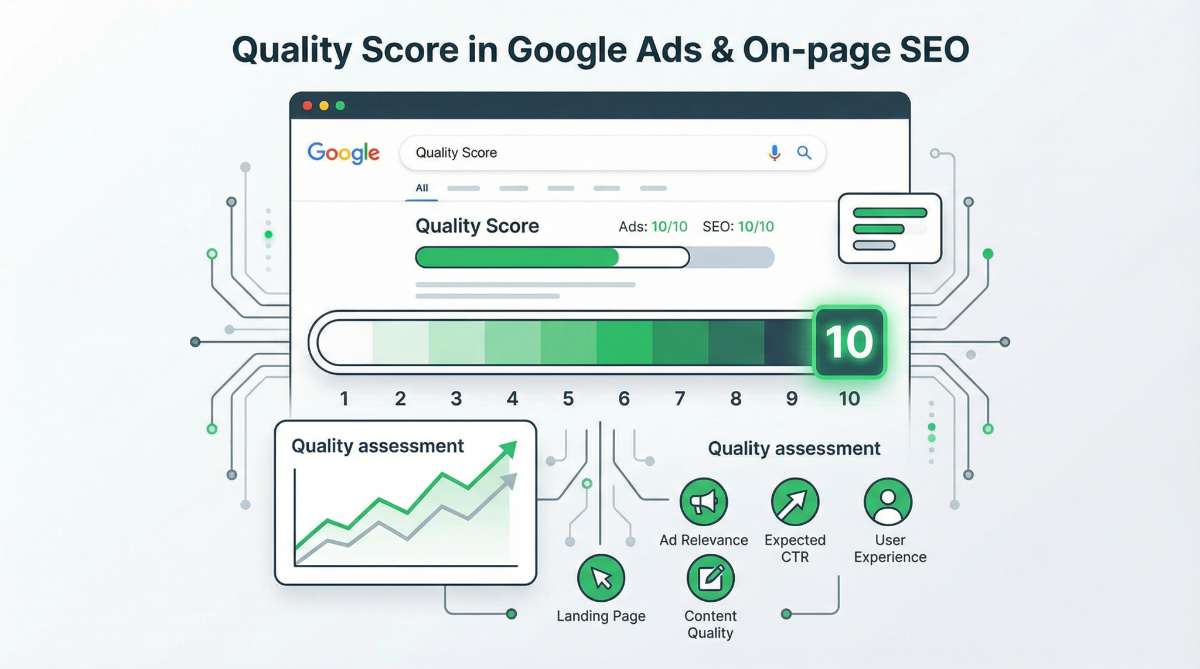
No, they are completely different. Google Ads Quality Score is a metric for paid search ads, based on CTR, ad relevance, and landing page experience. The AI SEO Quality Score is for organic search, focusing on content quality and topical authority.
Conclusion: Making the AI SEO Quality Score Your Competitive Advantage
The AI SEO Quality Score is the new currency of organic search. It represents the intersection of advanced machine learning and user-centric content creation. Marketers who embrace this metric will outperform those who rely on outdated tactics.
Start by auditing your existing top pages. Run them through an AI-powered SEO tool to see their current scores. Identify the weakest components, whether it is readability, semantic coverage, or technical performance. Create a plan to address these gaps systematically.
For new content, make the score a key performance indicator (KPI) in your workflow. Do not publish until you reach a target score of 80 or higher. This discipline will ensure that every piece of content you produce has the best possible chance of ranking.
The landscape of SEO is complex, but the path forward is clear. Focus on creating comprehensive, well-structured, and genuinely helpful content. Let the AI SEO Quality Score be your guide. By doing so, you will not only satisfy the algorithms but also deliver real value to your audience, which is the ultimate goal of any digital strategy.
Xem thêm:
- AI SEO H3 Optimization: The Complete Guide to Structuring Content for AI Search
- AI SEO Accessibility: The Complete Guide to Inclusive Search Optimization
- AI SEO Intent Optimization: The Complete Guide to Ranking in the Modern Search Era
- AI SEO Long Tail Keyword Research: The Complete Guide to Smarter Rankings
- AI SEO Comparison Generator: The Complete Guide to Smarter Competitive Analysis
Bài viết cùng chủ đề:

AI SEO SEO Automation with Make: The Complete Workflow Guide

AI SEO SEO Automation with Zapier: The Complete Workflow Guide

AI SEO SEO Automation with n8n: The Complete Workflow Guide
AI SEO SEO Automation with Gemini: The Complete Guide to Scaling Organic Growth

AI SEO SEO Automation with Claude: The Complete Guide to Scaling Content in 2025

AI SEO SEO Automation with ChatGPT: The Complete Playbook for 2025

AI SEO & SEO Automation for Affiliate Sites: The 2025 Playbook for Passive Income Growth
AI SEO & SEO Automation for Bloggers: The Complete Guide to Scaling Your Content

AI SEO & SEO Automation for Agencies: The Complete 2025 Playbook

AI SEO and SEO Automation for Ecommerce: The Complete Playbook for 2025

AI SEO & SEO Automation for WordPress: The Complete Playbook for 2025
AI SEO SEO Automation Strategy: The Complete Playbook for 2025

Mastering the AI SEO SEO Automation Process: A Complete Guide to Scaling Organic Growth
AI SEO SEO Automation System: The Complete Guide to Scaling Organic Growth in 2025
AI SEO SEO Automation Platform: The Complete Guide to Scaling Organic Growth in 2025
AI SEO SEO Automation Software: The Complete Guide to Scaling Organic Growth in 2025















