
No products in the cart.
AI SEO RAG: The Complete Guide to Retrieval-Augmented Generation for Search Dominance
31
Jul
Jul
The digital marketing landscape is shifting beneath our feet. Traditional search engine optimization relied on keywords, backlinks, and technical audits. Today, a new force is reshaping how content is discovered, ranked, and consumed: AI SEO RAG. This technology, which stands for Retrieval-Augmented Generation, is not just a buzzword. It is the engine powering the next generation of search experiences, from AI Overviews in Google to enterprise knowledge management systems. Understanding AI SEO RAG is no longer optional for marketers who want to maintain visibility. This guide breaks down the mechanics, the strategic implications, and the actionable steps you need to take to optimize for a world where machines read, retrieve, and generate answers in real-time.
What is AI SEO RAG? Defining the Core Concept
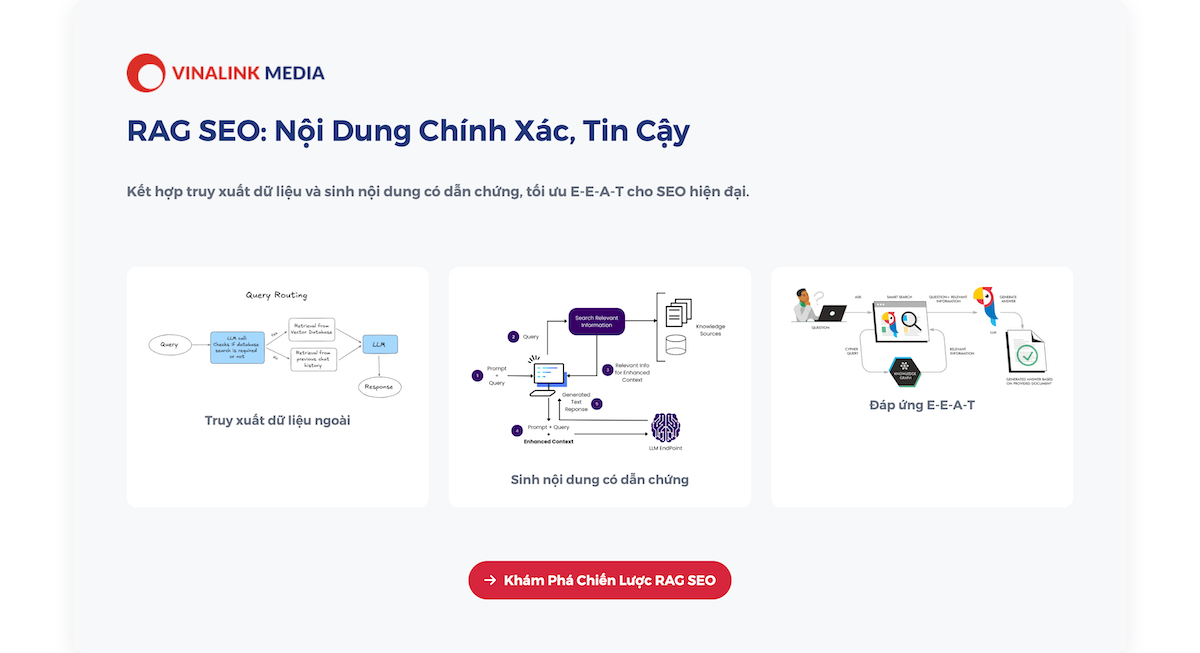
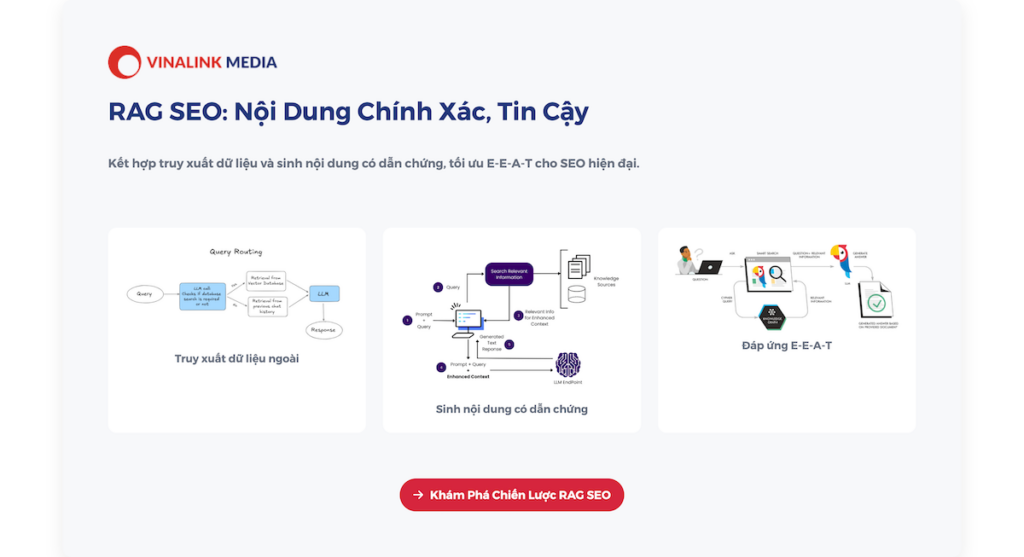
At its most fundamental level, AI SEO RAG is a framework that combines a retrieval system with a generative AI model. The “retrieval” part searches through a vast database of documents, web pages, or proprietary data to find the most relevant information related to a user’s query. The “augmented” part feeds that specific, retrieved information into a large language model (LLM) as context. Finally, the “generation” part is where the LLM crafts a coherent, human-like answer based solely on that retrieved data, rather than relying on its static training data alone.
This architecture solves a critical problem with standard AI models: hallucination and staleness. A standard LLM might generate a plausible-sounding but factually incorrect answer because it is predicting the next word based on patterns. AI SEO RAG grounds the generation process in verifiable, current facts. For SEO professionals, this means the goal is no longer just to rank for a keyword, but to become the primary source of truth that a retrieval system pulls from. If your content is not structured for retrieval, it will be invisible to the AI engines that now mediate user access to information.
How AI SEO RAG Works: The Technical Process Explained
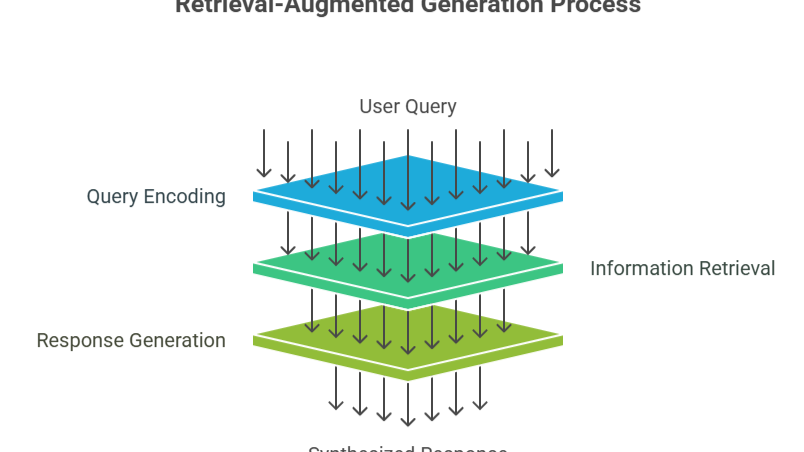
To optimize for AI SEO RAG, you must understand the pipeline. It is a multi-stage process that determines whether your content gets cited or ignored. The process involves three primary stages: ingestion, indexing, and retrieval-augmented generation.
Stage 1: Ingestion and Chunking
Search engines and AI platforms crawl your website, but they do not store the entire page as one blob. They break it down into “chunks.” These are semantic segments of text, usually between 150 and 500 words. The algorithm analyzes the content to find natural breakpoints, such as paragraph changes or heading transitions. The quality of your HTML structure directly impacts this process. If your content is a wall of text with no clear subheadings, the A
Stage 2: Embedding and Vector Indexing
Once the content is chunked, it is converted into mathematical representations called “vectors.” These vectors capture the semantic meaning of the text, not just the keywords. Similar concepts are placed closer together in a multi-dimensional vector space. This creates a vector index, which is essentially a massive, searchable database of meanings. When a user asks a question, the AI SEO RAG system converts that query into a vector as well and performs a similarity search. It looks for chunks in the index that are closest in meaning to the query, not just in exact wording.
Stage 3: Generation with Context
The retrieval system pulls the top 5 to 10 most relevant chunks from the index. These chunks are then inserted into the prompt for the LLM. The LLM is instructed to answer the user’s query using only the provided context. This is why your content must be self-contained. If a chunk relies on information from a previous paragraph that was not retrieved, the A The output is a synthesized response, often with citations linking back to the source URLs of the retrieved chunks.
Why AI SEO RAG is Critical for Modern Search Rankings
The shift from link-based algorithms to entity-based, semantic retrieval is profound. Google’s AI Overviews, Bing Chat, and Perplexity all utilize variations of this RAG architecture. They do not simply rank a list of blue links anymore; they generate an answer. This means the “position zero” is no longer a snippet of text. It is a fully generated paragraph that synthesizes information from multiple sources.
If your content is not optimized for retrieval, you lose the click. Even if you rank on page one, the AI might generate the answer directly in the search results, satisfying the user’s query without them ever visiting your site. However, if your content is the source that the AI cites, you gain brand authority and referral traffic from the citation link. The strategic goal of AI SEO RAG is to become the “ground truth” that these systems trust. This requires a shift from writing for human skimmers to writing for machine parsers and human readers simultaneously.
Key Components of an AI SEO RAG Optimization Strategy
Optimizing for this new paradigm requires a technical and editorial overhaul. You cannot just sprinkle in more keywords. You must architect your content for semantic clarity and structural precision. Below are the core components of a successful strategy.
Structured Data and Schema Markup
Schema markup is the vocabulary that helps search engines understand the context of your content. For AI SEO RAG, this is non-negotiable. You need to implement schema types like Article, FAQPage, HowTo, and Product. This provides explicit signals to the crawler about what the content means. It helps the retrieval system identify the exact chunk that answers a specific query. For example, marking up a list of steps with the “HowTo” schema ensures that the AI can easily extract that procedural list as a coherent chunk, rather than misinterpreting it as random paragraphs.
Semantic HTML Hierarchy
The way you structure your HTML tags tells the AI what is important. An H1 should be the only main title. H2s should represent major topics, and H3s should be subtopics. This creates a clear outline that the chunking algorithm uses to define boundaries. Avoid using multiple H1 tags. Ensure that your headings are descriptive and contain the primary keyword or a close variant. A well-structured hierarchy ensures that each chunk is topically focused, which increases its relevance score during the retrieval phase.
Entity Clarity and Co-occurrence
AI models understand the relationship between entities (people, places, things, concepts). To optimize for AI SEO RAG, you must clearly define the entities in your content. If you are writing about “AI SEO RAG,” you should also naturally mention related entities like “vector databases,” “large language models,” “semantic search,” and “natural language processing.” This co-occurrence helps the embedding model place your content in the correct semantic neighborhood. It tells the AI that your content is about the broader topic, not just a single keyword string.
Benefits of Implementing AI SEO RAG Techniques
The advantages of this approach extend beyond just surviving the AI transition. It improves the overall quality and reach of your digital assets. Here are the primary benefits:
- Enhanced Visibility in AI Overviews: Content structured for retrieval is more likely to be cited in AI-generated search summaries, capturing high-intent traffic.
- Improved Content Relevance: The focus on semantic clarity forces you to write more comprehensive, authoritative content that covers topics in depth, which also satisfies traditional ranking signals.
- Future-Proofing: As voice search and conversational AI grow, having a RAG-optimized knowledge base ensures your brand is the answer source for smart assistants.
- Reduced Hallucination Risk: When your content is the retrieved context, the AI generates answers based on your data, ensuring that the information presented to users aligns with your brand’s messaging and facts.
- Better User Experience: Content that is easy for AI to parse is usually easy for humans to read. Clear headings, concise paragraphs, and logical flow reduce bounce rates and increase dwell time.
- Loss of Direct Traffic: If the AI generates a complete answer, users may not click through to your website. The traffic shifts from clicks to brand impressions and citations.
- Technical Complexity: Implementing schema, optimizing for vector search, and maintaining a clean site architecture requires technical expertise that many small teams lack.
- Content Cannibalization: If you have multiple pages covering the same topic, the retrieval system might get confused about which chunk to pull. This dilutes your authority and leads to inconsistent AI answers.
- Dynamic Content Issues: If your content changes frequently, the vector index needs to be updated. Stale indexes can lead to the AI retrieving outdated information, damaging your credibility.
Limitations and Challenges of AI SEO RAG
While powerful, this technology is not a silver bullet. There are significant challenges that marketers must navigate to avoid wasting resources. Understanding these limitations is crucial for setting realistic expectations.
AI SEO RAG vs. Traditional SEO: A Comparative Analysis
To fully grasp the shift, it is helpful to compare the old methodology with the new RAG-driven approach. The table below highlights the fundamental differences in strategy and execution.
| Aspect | Traditional SEO | AI SEO RAG |
|---|---|---|
| Primary Focus | Keyword rankings and backlinks | Semantic relevance and entity extraction |
| Content Structure | Optimized for skimming and CTR | Optimized for chunking and retrieval accuracy |
| Success Metric | Organic sessions and page views | Citation frequency and AI answer inclusion |
| Data Interpretation | Exact match keywords | Vector embeddings and contextual meaning |
| User Intent | Inferred from keyword modifiers | Understood through conversational query analysis |
| Content Updates | Periodic refreshes | Continuous indexing and re-embedding |
The table illustrates a clear evolution. Traditional SEO is about winning the click. AI SEO RAG is about winning the answer. The latter requires a deeper investment in content quality and technical hygiene, but it offers a more sustainable competitive advantage as search becomes increasingly automated.
Practical Guide: How to Optimize Your Content for AI SEO RAG
Now that the theory is clear, let’s move to implementation. This is a step-by-step guide to restructuring your content workflow to align with retrieval-augmented generation systems. Follow these steps to transform your existing content and guide your new production.
Step 1: Conduct an Entity-Based Keyword Audit
Stop focusing solely on keywords. Start mapping out entities. Use tools like Google’s Natural Language API or Semrush to identify the key entities in your niche. For a topic like “AI SEO RAG,” the entities are “retrieval,” “generation,” “vector index,” “LLM,” and “semantic search.” Build your content clusters around these entities. Ensure that each piece of content thoroughly explains one primary entity and links out to other pieces that explain related entities. This creates a web of knowledge that retrieval systems can navigate easily.
Step 2: Restructure Your Content for Chunking
Write with the “chunk” in mind. Each H2 section should be a standalone mini-article. It should have an introduction, a body, and a conclusion within itself. If someone reads only that H2 section, they should get a complete answer to a specific question. Avoid using pronouns that refer to previous sections. For example, instead of writing “This process is complex,” write “The retrieval process is complex.” This ensures that when the AI pulls that chunk, it has all the necessary context to generate an accurate answer.
Step 3: Implement FAQ Schema for Direct Answers
FAQ sections are goldmines for AI SEO RAG. They are naturally structured as question-and-answer pairs, which is exactly how retrieval systems operate. Create a dedicated FAQ section on your page for each major subtopic. Use the FAQPage schema markup. Keep the answers concise, between 40 and 60 words. This increases the probability that the A
Step 4: Optimize for Conversational Queries
People use natural language when talking to AI. They ask full questions. Your content must include these long-tail, conversational phrases. Include a “People Also Ask” section that addresses variations of your main query. For example, if your main keyword is “AI SEO RAG,” include questions like “How does RAG improve search accuracy?” and “What is the difference between RAG and fine-tuning?” This aligns your content with the way the retrieval system parses user intent.
Step 5: Build Topical Authority with Internal Linking
Internal links are the pathways that crawlers use to discover related content. For AI SEO RAG, they also help the embedding model understand the relationship between different chunks on your site. Use descriptive anchor text that includes the target keyword. Link from your high-authority pillar page to your cluster pages and vice versa. This creates a dense network of semantically related content, which increases the likelihood that the retrieval system will find multiple relevant chunks from your domain for a single query.
Common Mistakes in AI SEO RAG Optimization and How to Avoid Them
Many marketers are making critical errors as they rush to adapt. These mistakes can severely hamper your visibility in AI-driven search. Recognizing and correcting them is essential for success.
Mistake 1: Keyword Stuffing in Headings
Some try to force the exact keyword into every H2 and H3. This creates unnatural language that confuses the embedding model. The AI looks for semantic variety. Instead of repeating “AI SEO RAG” ten times, use synonyms like “retrieval-augmented generation,” “RAG architecture,” or “AI search optimization.” This provides a richer semantic profile for the vector index.
Mistake 2: Ignoring the “Answer” Format
Writing long, winding introductions before getting to the point is a death sentence for RAG. The retrieval system wants to find the answer immediately. Use the “inverted pyramid” style. Put the conclusion and the direct answer in the first paragraph of each section. Then, provide the supporting details. This ensures that the most important information is captured in the first chunk of the section.
Mistake 3: Neglecting Technical Crawlability
If a crawler cannot access your page, it cannot index it. JavaScript-heavy sites that render content dynamically are often invisible to the initial crawl. Ensure that your content is available in the raw HTML. Use server-side rendering or static HTML generation. Check your robots.txt file to ensure you are not blocking the AI crawlers like GPTBot or Google-Extended. These crawlers are the ones building the vector indexes.
Mistake 4: Creating Thin Content for the Sake of Volume
Publishing hundreds of short, low-value posts dilutes your domain authority. The retrieval system will rank your site lower if it consistently pulls thin chunks that do not fully answer queries. Focus on creating fewer, longer, and more comprehensive pieces. A single 3,000-word definitive guide is worth more than ten 300-word blog posts in the RAG ecosystem.
Important Notes for Long-Term Success with AI SEO RAG
This is an evolving field. What works today might change tomorrow as algorithms update. However, certain principles remain constant. Focus on the fundamentals of quality and clarity. The retrieval systems are designed to find the best answer, and the best answer is usually the most clear, factual, and well-structured content.
Monitor your performance using Search Console and AI-specific analytics tools. Track how often your content appears in AI Overviews. Use tools that simulate RAG retrieval to see which chunks of your content are being pulled. This data will guide your optimization efforts. Remember that E-E-A-T (Experience, Expertise, Authoritativeness, Trustworthiness) is more critical than ever. AI models are trained to prefer content from authoritative sources. Build your brand as a reliable source of information through citations, author bios, and transparent fact-checking.
Frequently Asked Questions (FAQ)
What is the difference between AI SEO RAG and traditional SEO?
Traditional SEO focuses on ranking web pages for specific keywords to drive clicks. AI SEO RAG focuses on making content easily retrievable and understandable by AI systems so that it can be used to generate direct answers. It prioritizes semantic structure and entity clarity over exact-match keywords.
How does RAG reduce AI hallucinations?
RAG reduces hallucinations by grounding the AI’s response in retrieved, factual data. Instead of relying solely on the model’s internal memory, the system pulls specific chunks of text from a database and forces the LLM to generate an answer based only on that context. This ensures the output is verifiable and current.
Do I need to use schema markup for AI SEO RAG?
Yes, schema markup is highly recommended. It provides explicit signals to search engines about the meaning and structure of your content. It helps the retrieval system identify the exact sections of your page that answer specific queries, increasing the chances of your content being cited.
Will AI SEO RAG replace the need for backlinks?
No, backlinks still matter, but their role is changing. Backlinks are a signal of authority and trust. AI models use them to determine which sources are credible. However, the relevance of the content and its semantic structure are becoming more important than the sheer quantity of links.
How long does it take to see results from AI SEO RAG optimization?
It depends on the crawl frequency and the competition in your niche. Generally, you can expect to see changes in your AI visibility within 4 to 8 weeks after restructuring your content. However, building the authority needed to be a primary source can take several months of consistent, high-quality output.
Conclusion: The Future is Retrieval-Based
The era of guessing what an algorithm wants is over. AI SEO RAG represents a shift towards a more logical, data-driven approach to content creation. It rewards clarity, depth, and technical precision. By implementing the strategies outlined in this guide, you are not just optimizing for a search engine; you are building a knowledge asset that can be leveraged by any AI system, present or future. The brands that succeed will be those that view their content not as marketing collateral, but as a structured database of truth that powers the answers of tomorrow. Start restructuring your content today to secure your place in the AI-driven search landscape.
Xem thêm:
- AI SEO NeuronWriter: The Complete Guide to Data-Driven Content Optimization
- AI SEO Fundamentals: The Complete Guide to Mastering Search in the Age of Artificial Intelligence
- AI SEO Keyword Lists: The Complete Guide to Building High-Performance Keyword Sets
- AI SEO Landing Pages: The Complete Guide to Automated Conversion Optimization
- AI SEO BI Reports: The Complete Guide to Data-Driven Search Optimization
Bài viết cùng chủ đề:

AI SEO SEO Automation with Make: The Complete Workflow Guide

AI SEO SEO Automation with Zapier: The Complete Workflow Guide

AI SEO SEO Automation with n8n: The Complete Workflow Guide
AI SEO SEO Automation with Gemini: The Complete Guide to Scaling Organic Growth

AI SEO SEO Automation with Claude: The Complete Guide to Scaling Content in 2025

AI SEO SEO Automation with ChatGPT: The Complete Playbook for 2025

AI SEO & SEO Automation for Affiliate Sites: The 2025 Playbook for Passive Income Growth
AI SEO & SEO Automation for Bloggers: The Complete Guide to Scaling Your Content

AI SEO & SEO Automation for Agencies: The Complete 2025 Playbook

AI SEO and SEO Automation for Ecommerce: The Complete Playbook for 2025

AI SEO & SEO Automation for WordPress: The Complete Playbook for 2025
AI SEO SEO Automation Strategy: The Complete Playbook for 2025

Mastering the AI SEO SEO Automation Process: A Complete Guide to Scaling Organic Growth
AI SEO SEO Automation System: The Complete Guide to Scaling Organic Growth in 2025
AI SEO SEO Automation Platform: The Complete Guide to Scaling Organic Growth in 2025
AI SEO SEO Automation Software: The Complete Guide to Scaling Organic Growth in 2025















