
No products in the cart.
AI SEO Fundamentals: The Complete Guide to Mastering Search in the Age of Artificial Intelligence
31
Jul
Jul
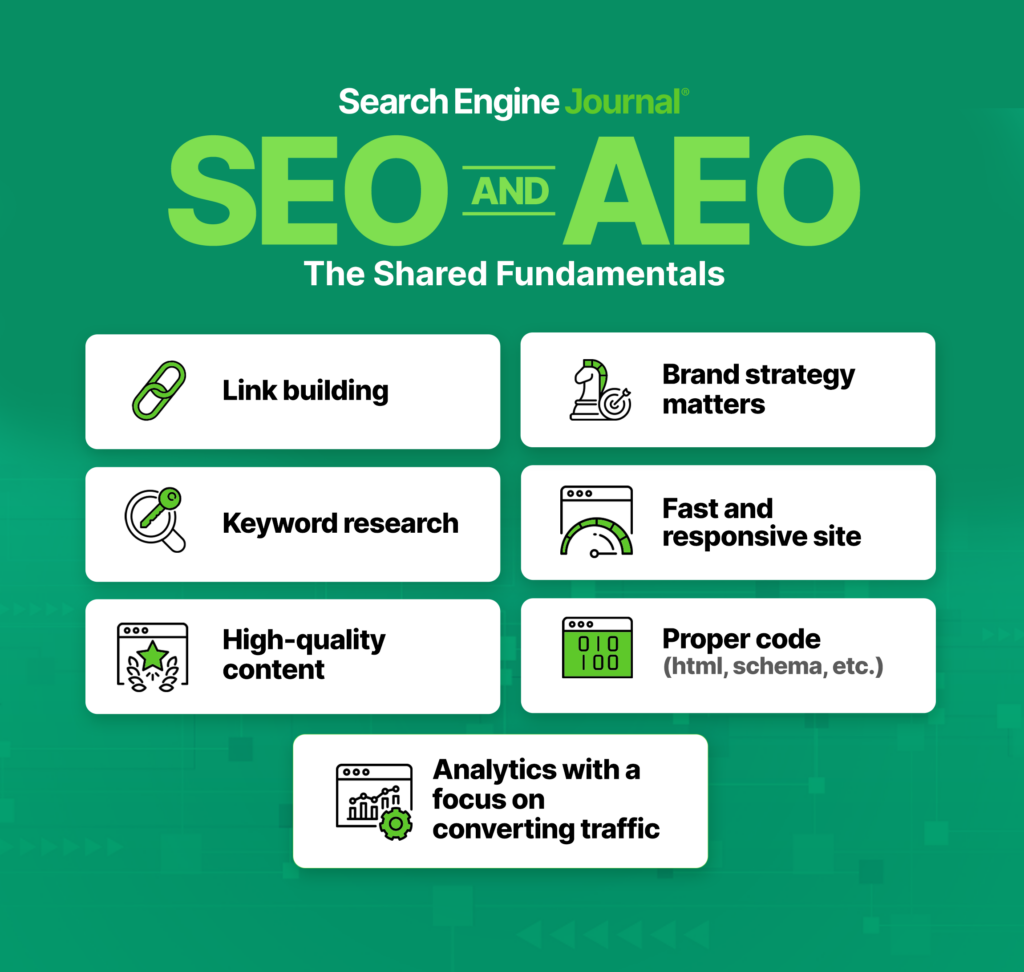
The landscape of search engine optimization has undergone a seismic shift. Gone are the days when stuffing keywords and building spammy backlinks could guarantee top rankings. Today, the discipline is defined by AI SEO fundamentals, a framework that merges traditional optimization principles with the capabilities of machine learning, natural language processing, and predictive analytics. Understanding these fundamentals is no longer optional; it is the prerequisite for visibility in a digital ecosystem where Google’s algorithms, like RankBrain and MUM, interpret queries with near-human nuance. This guide breaks down the core concepts, practical applications, and strategic advantages of integrating AI into your SEO workflow, ensuring your content not only ranks but resonates.
What Are AI SEO Fundamentals?

At its core, AI SEO fundamentals refer to the application of artificial intelligence technologies to automate, enhance, and predict search engine optimization tasks. This is not about replacing human judgment but augmenting it with data-driven insights that are impossible to compute manually. The concept encompasses everything from using AI to analyze user intent and generate content outlines, to automating technical audits and predicting the click-through rate of a meta description before it is published.
The shift from traditional SEO to AI-driven SEO is profound. Traditional methods rely heavily on historical data and manual testing. AI, however, operates in real-time, learning from user interactions to adjust ranking factors dynamically. For instance, while a human might spend hours analyzing backlink profiles, an AI tool can process millions of links in seconds, identifying toxic patterns and opportunities for digital PR. The true essence of these fundamentals lies in the synergy between human creativity and machine efficiency.
The Evolution from Keywords to Intent
For decades, SEO revolved around exact-match keywords. You targeted “best running shoes” and optimized your page to rank for that specific string. AI has dismantled this approach. Modern search engines use neural networks to understand the semantic relationship between words. They now recognize that “best running shoes,” “top trainers for marathons,” and “footwear for long-distance running” all share the same search intent. AI SEO fundamentals teach you to optimize for topics and entities, not just keywords. This involves structuring content to answer questions comprehensively, using related terms naturally, and building topical authority through interlinked clusters of content.
Core Components of AI SEO Fundamentals
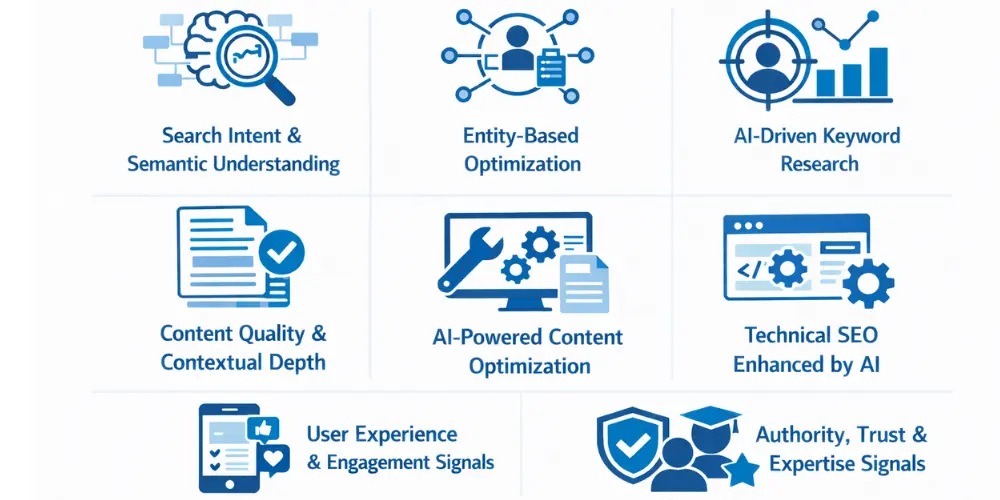
To master this discipline, you must understand its key pillars. These components form the foundation of any successful AI-driven strategy, moving beyond simple automation to strategic intelligence.
Natural Language Processing (NLP) and Content Optimization
NLP is the engine that allows machines to understand human language. In the context of SEO, it helps search engines parse your content to determine if it truly answers a query. Tools like Surfer SEO and Frase utilize NLP to analyze top-ranking pages and provide recommendations for related terms, entities, and questions to include. The practical application is straightforward: you write for humans, but you structure your content in a way that NLP algorithms can easily digest. This means using clear headings, defining acronyms, and ensuring your paragraphs follow a logical flow that a machine can map to a knowledge graph.
Predictive Analytics and Performance Forecasting
One of the most powerful aspects of AI is its ability to forecast. Instead of waiting three months to see if a strategy works, AI tools can predict the potential traffic and ranking of a piece of content before you hit publish. These models analyze thousands of data points, including competitor performance, seasonal trends, and current SERP features. This allows SEO professionals to prioritize tasks with the highest ROI. If the AI predicts a low chance of ranking for a highly competitive keyword, you can pivot to a long-tail variant with a higher success probability, saving time and resources.
Automated Technical SEO Audits
Technical SEO is often tedious, involving crawling websites to find broken links, duplicate content, and slow-loading pages. AI has revolutionized this process. Platforms like Semrush and Ahrefs now use machine learning to prioritize technical issues based on their impact on revenue and crawl budget. Instead of a list of 500 errors, you get a prioritized list of 10 critical fixes. Furthermore, AI can detect issues that are invisible to the human eye, such as subtle changes in page structure that confuse Google’s rendering engine or JavaScript frameworks that block crawlers.
Practical Applications: How to Implement AI SEO Fundamentals
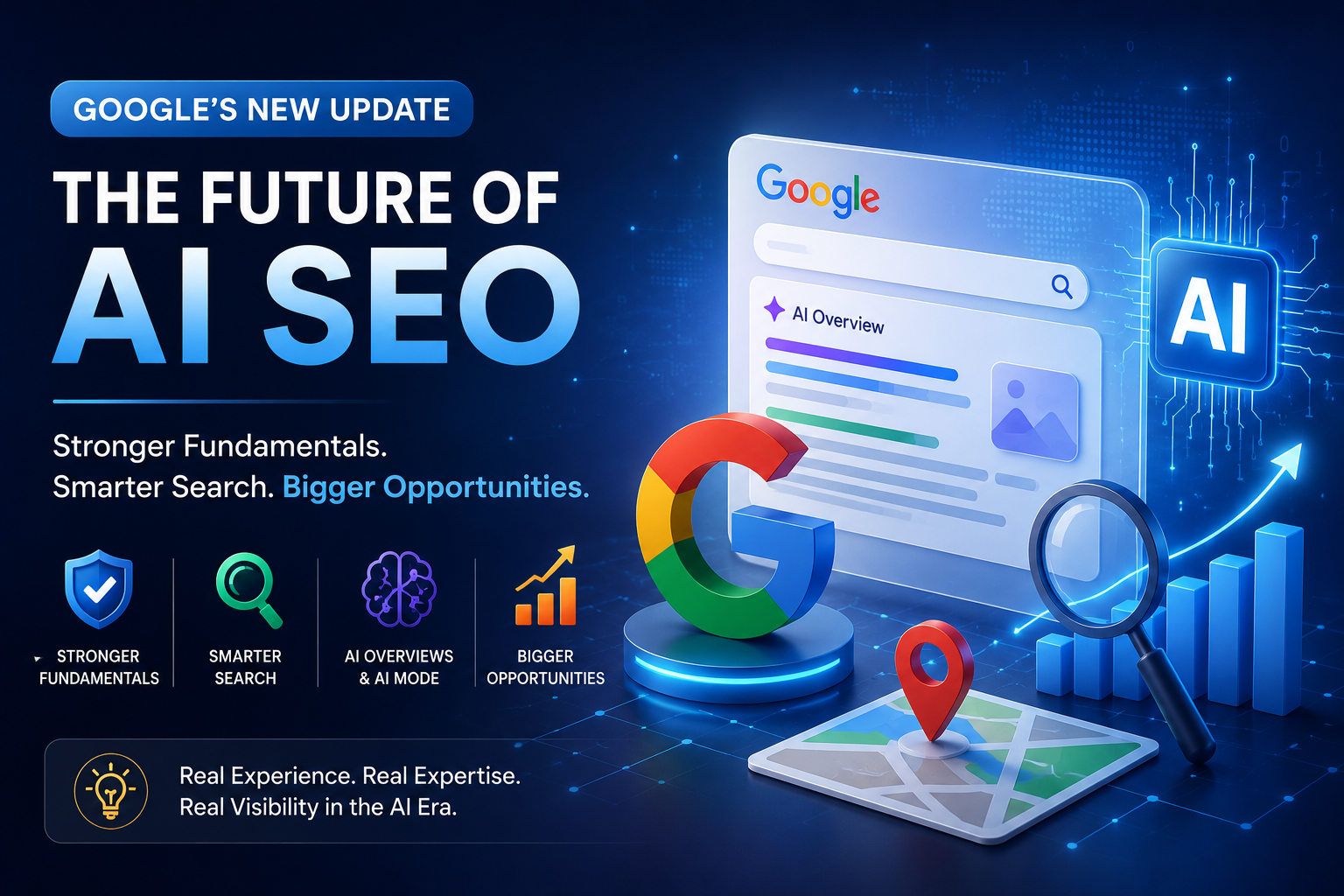
Understanding the theory is one thing; applying it is another.
Step 1: AI-Powered Keyword and Topic Clustering
Start with a seed keyword. Instead of using a traditional keyword tool, use an AI-powered platform that clusters keywords by search intent and topic. For example, if your seed is “project management software,” the A” This gives you a content map. You can then create a pillar page for the main topic and cluster pages for each subgroup, interlinking them to build topical authority. This approach aligns perfectly with Google’s entity-based ranking system.
Step 2: Content Brief Generation with AI
Once you have your clusters, use AI to generate comprehensive content briefs. These briefs go beyond just keywords. They include the questions people are asking, the entities mentioned by competitors, the ideal word count, and suggested headings. Tools like Clearscope and MarketMuse analyze the top 20 results for your target keyword and extract the commonalities. The result is a brief that ensures your writer covers every angle the search engine expects, significantly increasing the chances of ranking on the first page.
Step 3: Real-Time On-Page Optimization
As you write, use AI-powered editors that provide real-time feedback. These tools analyze your draft against the top-ranking pages and suggest improvements. They might flag that you are missing a key entity, that your title tag is too long, or that your introduction lacks a clear thesis statement. This is the practical application of AI SEO fundamentals—moving from guesswork to data-backed writing. The goal is to create content that is not only readable but also perfectly aligned with the algorithmic requirements of the search engine.
Step 4: Automating Link Building Outreach
Link building remains a vital ranking factor, but it is time-consuming. AI can automate the prospecting phase. Tools can analyze millions of websites to find those with high domain authority, relevant content, and a broken link that you can replace. AI can even draft personalized outreach emails based on the target site’s content style. While the final relationship building requires a human touch, AI handles the heavy lifting of data collection and initial contact, allowing you to focus on closing the deal.
Benefits and Limitations of AI in SEO
Adopting AI SEO fundamentals offers significant advantages, but it is not a silver bullet. A balanced perspective is crucial for setting realistic expectations and avoiding common pitfalls.
| Aspect | Benefits | Limitations |
|---|---|---|
| Efficiency | Automates repetitive tasks like audits and reporting, saving hundreds of hours. | Requires initial setup time and a learning curve for the software. |
| Accuracy | Processes vast datasets to identify patterns humans miss, reducing guesswork. | AI models can be biased based on training data, leading to skewed recommendations. |
| Scalability | Easily scales content optimization across thousands of pages. | High-end AI tools are expensive, making them less accessible for small businesses. |
| Creativity | Provides data-driven inspiration for new content angles and topics. | Cannot replicate human empathy, storytelling, or unique brand voice. |
The primary limitation is the risk of homogenization. If everyone uses the same AI tools to optimize for the same keywords, all content starts to look the same. The “human element”—your unique experiences, opinions, and data—becomes the differentiator. AI should be used to inform your strategy, not dictate your voice. The most successful practitioners use AI to handle the analysis and use the freed-up time to inject genuine expertise and personality into their content.
Common Mistakes in AI SEO and How to Avoid Them
As with any technology, there are common missteps that can derail your strategy. Being aware of these pitfalls is a fundamental part of mastering AI SEO.
Mistake 1: Over-Optimizing for AI, Not Humans
Many marketers fall into the trap of writing solely for the algorithm. They stuff their content with every entity and keyword the AI tool suggests, resulting in robotic, unreadable prose. Google’s algorithms are sophisticated enough to detect this. The solution is to use AI suggestions as a checklist, not a script. If a suggested term does not fit naturally into the sentence, leave it out. User engagement metrics like dwell time and bounce rate are still critical ranking factors, and they suffer when content is unreadable.
Mistake 2: Ignoring the Data Quality
AI is only as good as the data it is fed. If you are using an AI tool that pulls data from low-quality sources, your recommendations will be flawed. Always ensure your tools are using reliable, up-to-date data sets. Additionally, do not blindly trust the AI’s output. If a tool suggests a keyword that is completely irrelevant to your business, it is likely a data error. Human oversight is non-negotiable.
Mistake 3: Neglecting Traditional SEO Basics
AI does not replace the fundamentals of SEO; it enhances them. You still need fast-loading pages, mobile responsiveness, and a secure HTTPS connection. Some practitioners get so caught up in the “AI magic” that they forget the basics. A page that is perfectly optimized for NLP but takes 10 seconds to load will not rank. Ensure your technical foundation is solid before layering AI on top.
Important Notes for Long-Term Success
To sustain success with AI SEO fundamentals, you must adopt a mindset of continuous learning. The algorithms are constantly evolving, and the tools are updated frequently. Here are some key considerations to keep in mind.
- Focus on E-E-A-T: Experience, Expertise, Authoritativeness, and Trustworthiness remain the gold standard. AI can help you identify gaps in your content, but it cannot create genuine expertise. Ensure your content includes first-hand experience, expert quotes, and verifiable citations.
- Monitor Zero-Click Searches: AI is driving the growth of featured snippets and answer boxes. Optimize your content to be “scraped” by these features. Use clear, concise answers to questions in your text, often in the form of a paragraph followed by a list.
- Leverage Generative Engine Optimization (GEO): With the rise of AI chatbots like ChatGPT and Perplexity, you must optimize for these platforms as well. This involves ensuring your brand is mentioned in the context of relevant queries within these AI models. This is a new frontier of AI SEO fundamentals.
- Data Privacy Compliance: When using AI to analyze user behavior, ensure you are compliant with GDPR and CCPA. Anonymize data and prioritize user consent to avoid legal pitfalls.
Frequently Asked Questions (FAQ)
What is the difference between traditional SEO and AI SEO?
Traditional SEO relies on manual analysis, historical data, and static rules. AI SEO uses machine learning algorithms to analyze real-time data, predict outcomes, and automate tasks. While traditional SEO focuses on keywords, AI SEO focuses on search intent and semantic relevance. AI SEO is more dynamic and scalable, but it requires a foundational understanding of traditional principles to be effective.
Will AI replace SEO professionals?
No, A AI automates the repetitive, data-heavy tasks, freeing up professionals to focus on strategy, creative content, and relationship building. The demand for SEO experts who can interpret AI data and apply human judgment is increasing. The role shifts from “doer” to “strategist.”
How does Google use AI in its ranking algorithms?
Google uses several AI systems, most notably RankBrain and the Multitask Unified Model (MUM). RankBrain helps process search queries by interpreting the relationships between words, allowing Google to understand unfamiliar queries. MUM is multimodal, meaning it can understand text, images, and video simultaneously. These systems help Google assess the quality and relevance of content beyond simple keyword matching.
What are the best AI tools for SEO beginners?
For beginners, starting with user-friendly tools is best. Google’s own Search Console and Analytics are essential for understanding performance. For content optimization, tools like Surfer SEO or Frase offer guided recommendations. For keyword research, Semrush and Ahrefs have integrated AI features that are intuitive. Start with one tool, master it, and then expand your toolkit.
How can I measure the ROI of AI SEO?
Measure ROI by tracking the same metrics as traditional SEO: organic traffic, keyword rankings, conversion rates, and lead generation. The key difference is the speed and efficiency of achieving these results. Compare your time-to-rank and cost-per-acquisition against your previous baseline. If AI tools reduce your content production time by 50% and increase your traffic by 30%, the ROI is clear.
Conclusion
The fundamentals of AI SEO are reshaping the digital marketing landscape, demanding a blend of technical proficiency and strategic creativity. By embracing AI for data analysis, content optimization, and predictive forecasting, you can achieve levels of efficiency and accuracy that were previously unimaginable. However, the core of SEO remains unchanged: delivering value to the user. AI is the most powerful tool in your arsenal, but it is the human insight, experience, and authenticity that will ultimately win the trust of both search engines and your audience. Start by integrating one AI tool into your workflow, learn its capabilities, and gradually expand your use. The future of search is intelligent, and those who master these fundamentals will lead the way.
Xem thêm:
- AI SEO Edge SEO: The Complete Guide to Gaining a Competitive Advantage in 2025
- WP Trove AI Content: The Complete Guide to Automated WordPress Publishing
- AI SEO Keyword Categorization: The Complete Guide to Smarter Search Strategy
- AI SEO for Google Business Profile: The Complete Guide to Ranking in 2025
- AI SEO Accessibility: The Complete Guide to Inclusive Search Optimization
Bài viết cùng chủ đề:

AI SEO SEO Automation with Make: The Complete Workflow Guide

AI SEO SEO Automation with Zapier: The Complete Workflow Guide

AI SEO SEO Automation with n8n: The Complete Workflow Guide
AI SEO SEO Automation with Gemini: The Complete Guide to Scaling Organic Growth

AI SEO SEO Automation with Claude: The Complete Guide to Scaling Content in 2025

AI SEO SEO Automation with ChatGPT: The Complete Playbook for 2025

AI SEO & SEO Automation for Affiliate Sites: The 2025 Playbook for Passive Income Growth
AI SEO & SEO Automation for Bloggers: The Complete Guide to Scaling Your Content

AI SEO & SEO Automation for Agencies: The Complete 2025 Playbook

AI SEO and SEO Automation for Ecommerce: The Complete Playbook for 2025

AI SEO & SEO Automation for WordPress: The Complete Playbook for 2025
AI SEO SEO Automation Strategy: The Complete Playbook for 2025

Mastering the AI SEO SEO Automation Process: A Complete Guide to Scaling Organic Growth
AI SEO SEO Automation System: The Complete Guide to Scaling Organic Growth in 2025
AI SEO SEO Automation Platform: The Complete Guide to Scaling Organic Growth in 2025
AI SEO SEO Automation Software: The Complete Guide to Scaling Organic Growth in 2025















