
No products in the cart.
AI SEO Research Workflow: The Complete Guide to Scaling Organic Growth
31
Jul
Jul
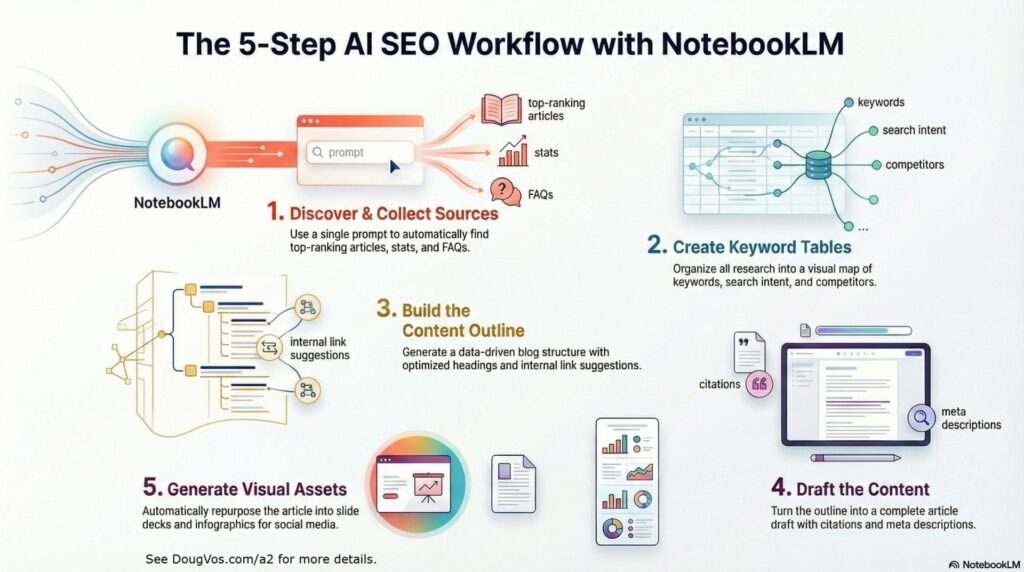
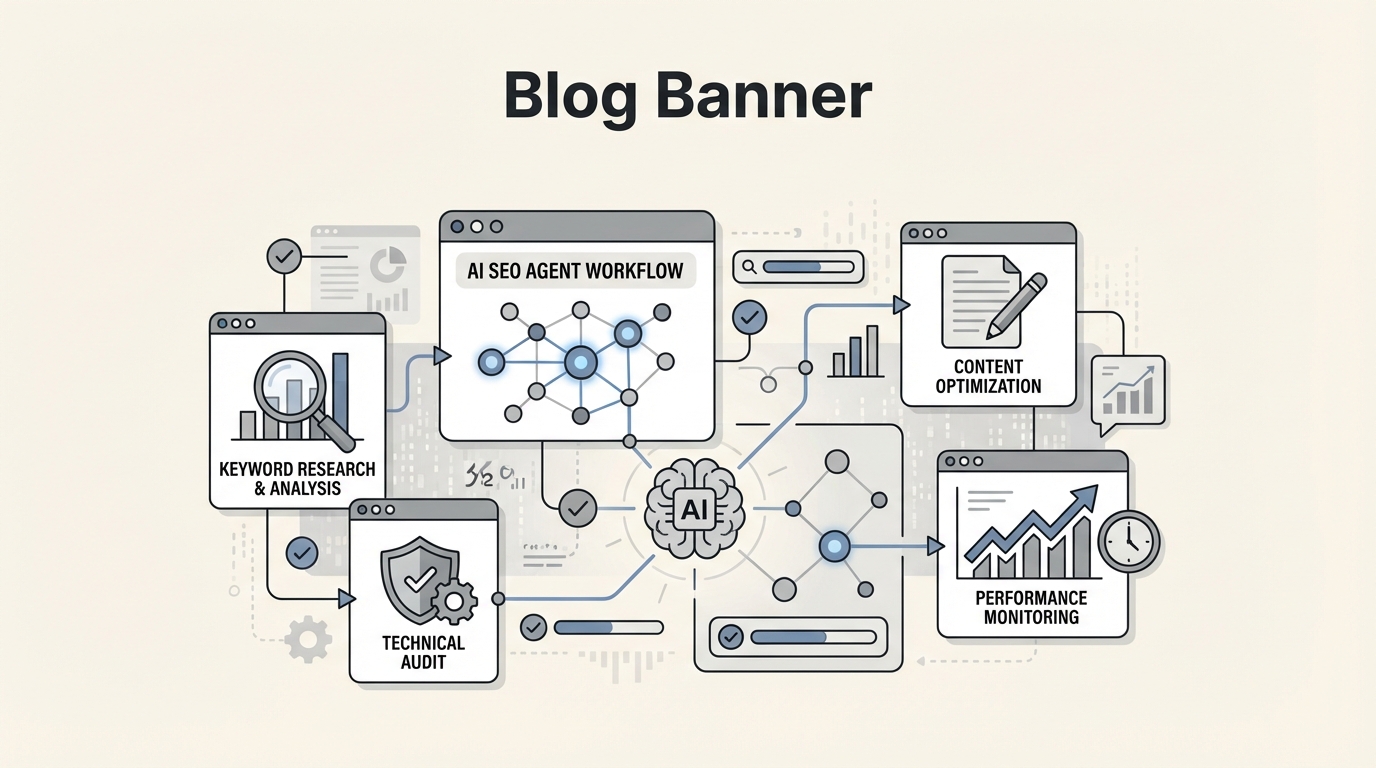
The modern SEO landscape has shifted dramatically. What once took a team of analysts several weeks—keyword mining, SERP analysis, content gap identification—can now be accomplished in a matter of hours. The catalyst is the AI SEO research workflow, a structured process that leverages machine learning, natural language processing, and predictive analytics to inform every stage of organic search strategy. This guide breaks down the exact components, tools, and execution steps required to build a workflow that not only saves time but also uncovers opportunities invisible to traditional methods.
What is an AI SEO Research Workflow?
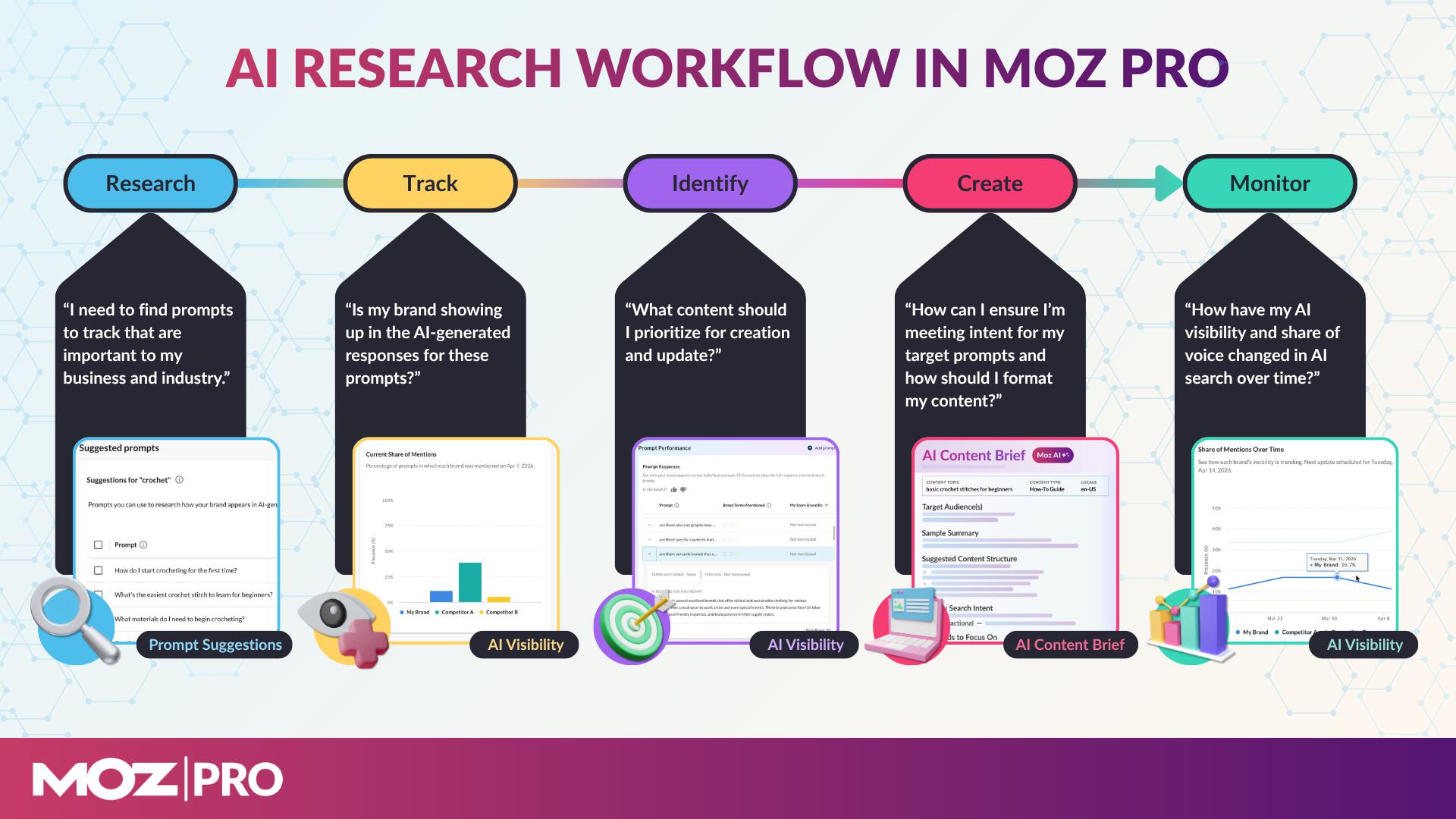
An AI SEO research workflow is a systematic sequence of tasks where artificial intelligence tools assist in collecting, processing, and interpreting search data. Unlike manual research, which relies on human intuition and static spreadsheets, this workflow uses algorithms to analyze vast datasets—search queries, competitor pages, user behavior signals, and content performance—to generate actionable insights.
The core distinction lies in the speed and depth of analysis. A human researcher might review 50 keywords in an hour. An AI system can process 50,000 keywords, cluster them by search intent, and predict click-through rates based on historical patterns. The workflow is not about replacing human judgment but about augmenting it with computational power. The output is a prioritized roadmap for content creation, technical fixes, and authority building.
Why Traditional SEO Research Falls Short
Legacy research methods rely heavily on exact-match keywords and volume metrics. This approach fails to account for semantic variations, user intent nuances, and the dynamic nature of search engine result pages (SERPs). Traditional tools often provide raw data but leave the interpretation to the user, leading to subjective decisions.
Moreover, manual research is linear. It examines one keyword at a time, one competitor at a time. This creates blind spots. For instance, a competitor might rank for a topic cluster that includes hundreds of long-tail variations. Identifying that cluster manually would take days. AI models, trained on transformer architectures, understand the contextual relationship between terms, allowing them to map entire topic ecosystems instantly.
The shift is also driven by Google’s own algorithms. With the introduction of BERT and MUM, search engines prioritize understanding over matching. An AI SEO research workflow aligns your strategy with this reality by focusing on topical authority and entity coverage rather than isolated keywords.
Core Components of an AI-Driven Research System
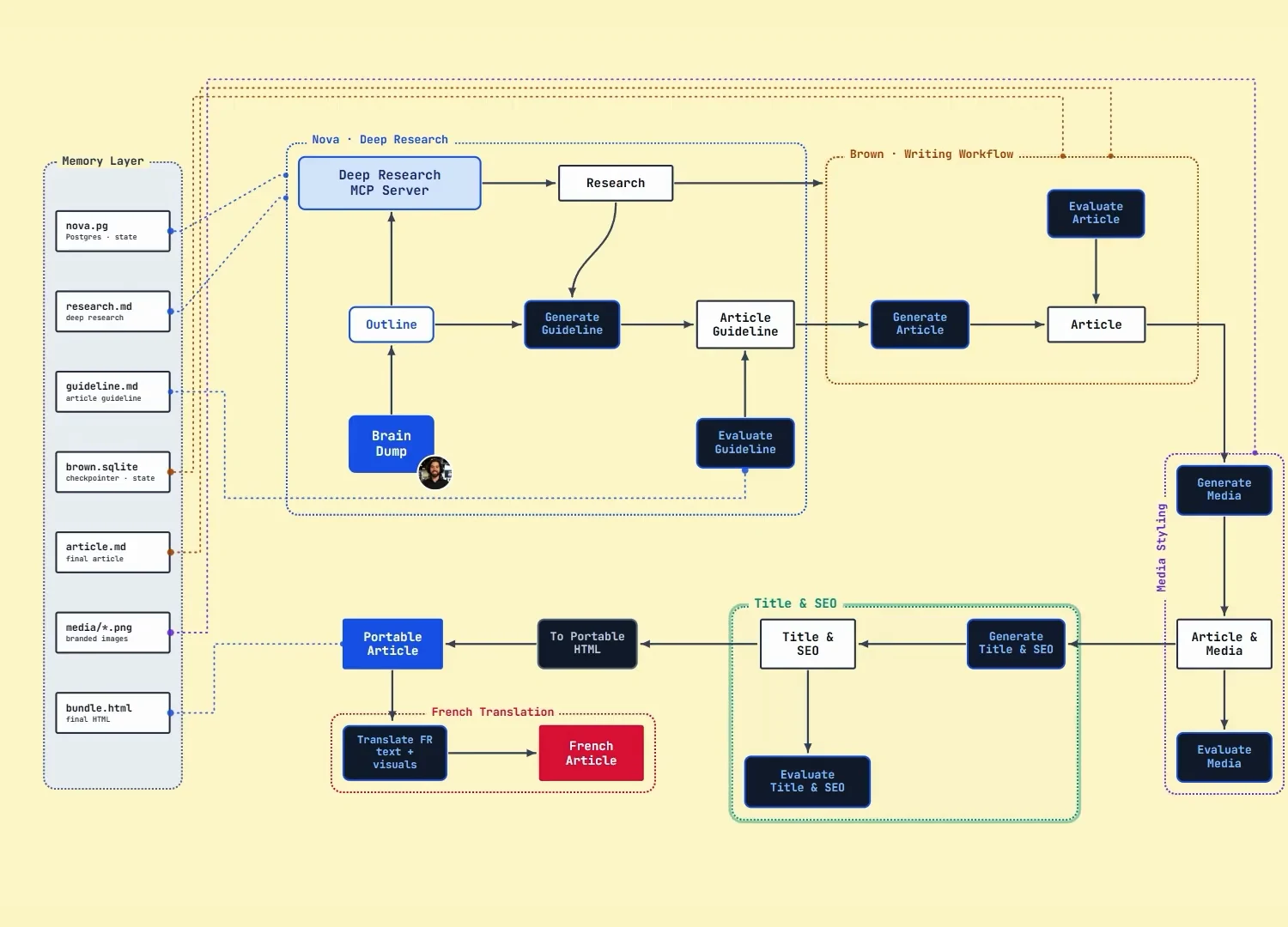
Building a robust workflow requires integrating several distinct components. Each serves a specific function in the research pipeline.
1. Automated Keyword Discovery and Clustering
This is the foundation. AI tools like Surfer SEO, Frase, and Clearscope use machine learning to scrape search engine autocomplete, related searches, and “People Also Ask” boxes. They then group these queries into clusters based on semantic similarity. For example, “best running shoes” and “top running sneakers 2024” are grouped under the same intent umbrella, even though the exact phrasing differs.
The benefit is twofold. First, it prevents keyword cannibalization by showing you which terms target the same page. Second, it reveals content gaps—topics your competitors cover but you do not. The clustering algorithm calculates a “content score” that tells you how comprehensively you have covered a subject compared to the top-ranking pages.
2. SERP Feature Analysis and Intent Prediction
Not all searches are created equal. Some queries trigger featured snippets, others show video carousels, and some display local packs. An AI workflow analyzes the current SERP layout for your target keywords to determine the dominant intent. Is the user looking for a quick answer (informational), a specific product (transactional), or a comparison (commercial investigation)?
This analysis dictates your content format. If the SERP is dominated by listicles, writing a long-form guide will likely fail. The AI model predicts the probability of ranking for each content type based on historical data from millions of pages. This removes the guesswork from format selection.
3. Competitor Content Gap Analysis
AI tools can crawl the top 10 ranking pages for any keyword set and extract their structure, word count, headings, and entity usage. This goes beyond simple “word count” comparisons. The system identifies which entities (people, places, concepts) are mentioned in high-ranking content but missing from yours. It also flags the reading level and tone that resonates with the target audience.
For example, if all top-ranking pages for “project management software” include a comparison table and a section on pricing tiers, the AI flags these as “required elements.” Your workflow then ensures these elements are included in your brief, increasing the likelihood of ranking.
4. Predictive Performance Modeling
Advanced workflows incorporate predictive analytics. By feeding historical data on your own content performance (traffic, rankings, conversions) into a machine learning model, the system can forecast the potential ROI of a new piece of content. It estimates how many clicks a page might receive based on the target keyword difficulty, domain authority, and projected backlinks.
This component transforms SEO from a cost center into a measurable investment. You can prioritize content that offers the highest predicted return, rather than chasing high-volume keywords that are impossible to rank for.
Step-by-Step Implementation of the Workflow
Understanding the components is one thing; executing them in a repeatable process is another.
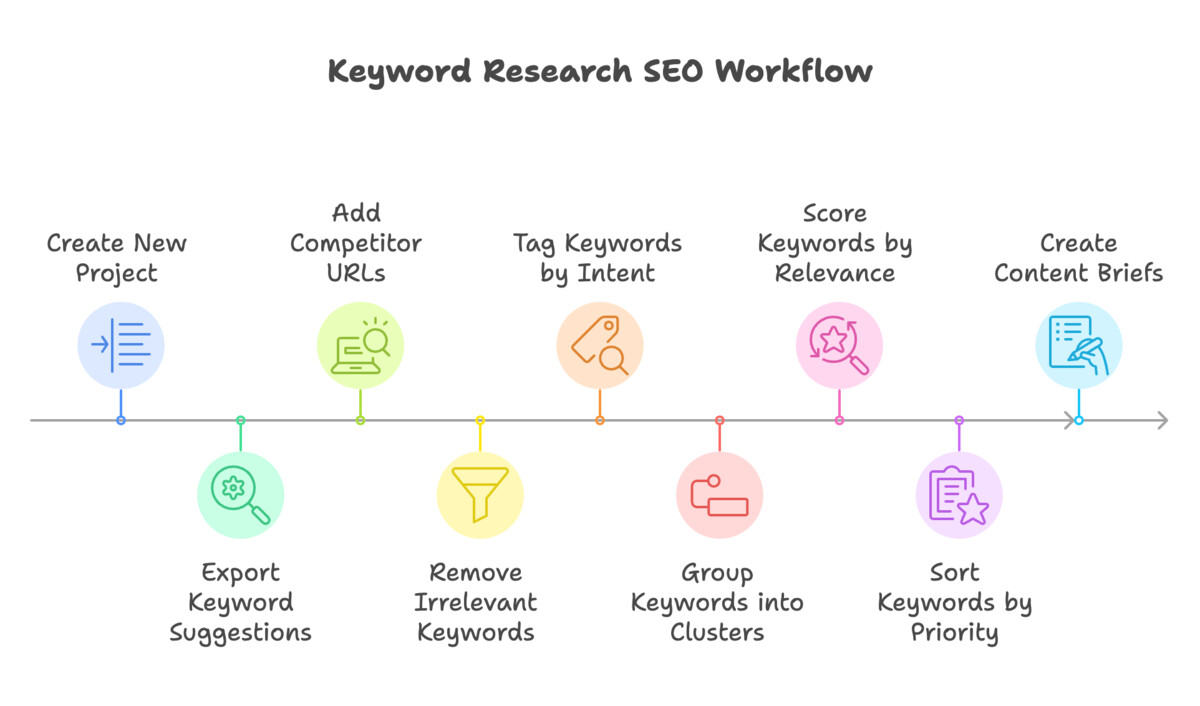
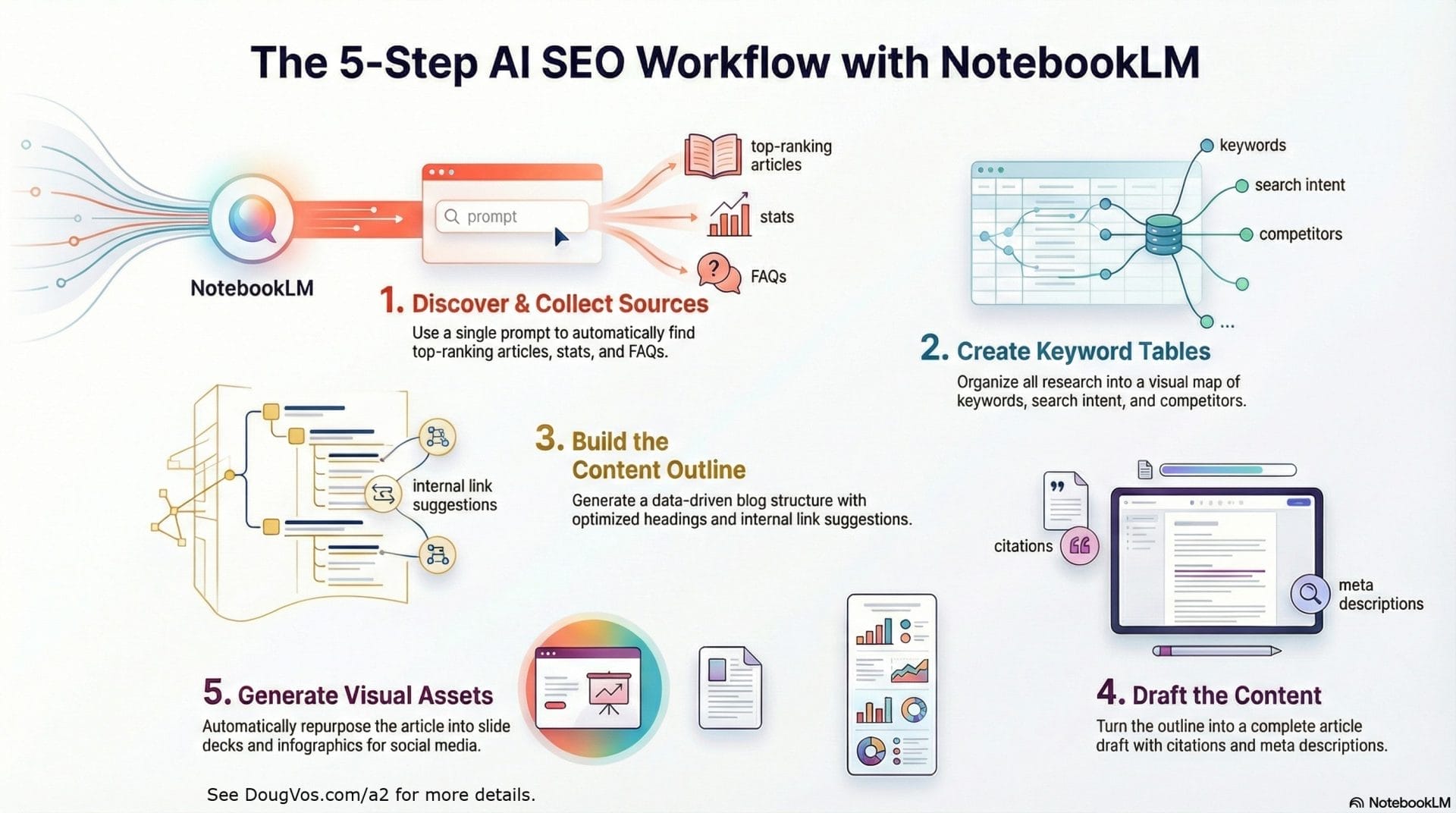
Step 1: Define Your Seed Topics and Goals
Start with your business objectives. Are you looking to increase brand awareness, drive product sales, or capture high-intent leads? Translate these goals into 5-10 seed topics. For a B2B SaaS company, this might be “customer onboarding automation” or “churn reduction strategies.” These seeds are the input for the AI algorithms.
Step 2: Run AI-Powered Keyword Expansion
Input your seed topics into a tool like Ahrefs’ Content Gap or Semrush’s Topic Research. These platforms use AI to generate hundreds of related queries. Do not just look at volume. Examine the “question modifiers” (how, why, what, best) and the “comparison modifiers” (vs, alternative, review). Export this list into a spreadsheet or directly into your project management tool.
Step 3: Cluster and Map Keywords to User Intent
Use a clustering tool like Keyword Insights or the built-in clustering feature in Surfer SEO. The A For each cluster, assign a primary intent: informational, commercial, transactional, or navigational. This step is critical because it determines the type of content you will create. A cluster with high commercial intent (e.g., “best CRM for small business“) requires a comparison guide, while an informational cluster (e.g., “what is CRM”) requires a definitional article.
Step 4: Analyze the SERP Landscape with AI
For each cluster, run a SERP analysis. The AI tool will show you the current top 10 results. Pay attention to the following data points: domain authority of ranking pages, content length, number of images, presence of videos, and the specific entities mentioned. The A
Step 5: Generate Content Briefs and Outlines
This is where the workflow saves the most time. Instead of manually outlining an article, the AI generates a comprehensive brief. It includes the target keyword, secondary keywords, suggested headings, word count, and even example questions to answer. The brief acts as a blueprint for your writers, ensuring they cover all necessary aspects without missing critical subtopics.
Step 6: Validate with Human Expertise
The AI provides the data, but human expertise validates the strategy. Review the AI-generated briefs. Does the suggested structure make sense for your audience? Are there industry-specific nuances the AI missed? This step is non-negotiable. AI models are trained on general web data, not your specific customer base. Your experience fills the gap.
Step 7: Monitor, Measure, and Iterate
Once the content is published, the workflow does not end. Use AI-powered rank tracking tools to monitor your positions daily. These tools use predictive algorithms to alert you to ranking drops before they become critical. Feed the performance data back into your initial model. If a piece of content underperforms, the AI analyzes why—was the intent wrong, the structure weak, or the internal linking insufficient?
Benefits of an AI-Powered Research Workflow
The advantages of adopting this workflow extend beyond simple time savings. They fundamentally change the quality and predictability of your SEO efforts.
- Scalability: You can research hundreds of topics in the time it takes to manually research one. This allows you to expand your content footprint rapidly without increasing headcount.
- Objectivity: AI removes personal bias. It does not favor a keyword because it “sounds good.” It relies on data patterns, leading to more rational prioritization.
- Comprehensive Coverage: The semantic analysis ensures you cover all related subtopics, building topical authority that Google rewards.
- Faster Time-to-Market: Content briefs are generated in minutes, not days. This allows you to publish on trending topics while they are still relevant.
- Improved Content Quality: By aligning your content structure with what is already ranking, you meet user expectations more effectively, reducing bounce rates and increasing dwell time.
- Centralize Your Data: Use a single dashboard (like Looker Studio) to integrate data from your AI tools, Google Search Console, and analytics. This prevents data silos and allows for holistic analysis.
- Document Your Process: Create a standard operating procedure (SOP) for your workflow. This ensures consistency when new team members join and allows for continuous improvement.
- Combine AI with Human Feedback: Regularly survey your sales team and customer support. They know the questions real customers ask. This qualitative data is invaluable for refining your AI prompts and keyword lists.
- Focus on Search Intent Over Volume: A keyword with 100 monthly searches and high commercial intent is often more valuable than a keyword with 10,000 searches and informational intent. Let the AI help you identify the conversion potential, not just the traffic potential.
Limitations and Risks to Consider
Despite the power of AI, the workflow has inherent limitations that must be managed.
Data Dependency: AI models are only as good as their training data. If the data is outdated or biased, the recommendations will be flawed. Always cross-reference AI suggestions with real-time SERP checks.
Lack of Creativity: AI is excellent at optimizing for the status quo. It tells you what is working now. It does not invent new angles or disruptive content formats. True differentiation still requires human creativity.
Over-Optimization Risk: Following AI briefs too literally can lead to homogenized content. If every competitor uses the same AI tool, every page will look the same. You must inject unique insights, original data, and personal experience to stand out.
Cost of Tools: High-quality AI SEO tools are not cheap. A subscription to multiple platforms (Surfer, Frase, Clearscope, Ahrefs) can cost hundreds of dollars per month. For small businesses, this may be prohibitive.
AI SEO Research Workflow vs. Traditional Methods: A Comparison
| Aspect | Traditional Research | AI-Powered Workflow |
|---|---|---|
| Keyword Discovery | Manual entry, exact match focus | Semantic clustering, intent-based |
| Competitor Analysis | Manual review of top 5 pages | Automated crawl of top 100 pages |
| Content Brief Creation | Hours of manual outlining | Instant generation with entity mapping |
| Data Processing Speed | Limited to human reading speed | Millions of data points per second |
| Predictive Insights | Rarely available | Forecasts CTR and ranking probability |
| Scalability | Linear (requires more staff) | Exponential (software scales) |
| Cost | High labor cost | High software cost, lower labor |
Common Mistakes in Implementing the Workflow
Many teams adopt AI tools but fail to see results because of specific implementation errors. Avoiding these pitfalls is crucial for success.
Mistake 1: Ignoring the “Why” Behind the Data
AI tells you that a keyword has high difficulty. It does not tell you why. Perhaps the top results are from government domains with massive authority. Or perhaps the SERP is filled with outdated content that is ripe for disruption. Blindly trusting the difficulty score leads to missed opportunities. You must manually investigate the SERP to understand the competitive landscape.
Mistake 2: Using AI for Everything
Do not use AI to write the entire article. The research workflow is about strategy, not execution. AI-generated text often lacks the nuance, voice, and factual accuracy required for E-E-A-T. Use AI for research, outlining, and optimization, but let human writers create the final draft.
Mistake 3: Failing to Update the Model
Search trends change monthly. Your AI workflow must be fed with new data continuously. If you run the same keyword expansion once a year, your strategy will be stale. Set up automated monthly reports that track ranking changes and content performance, and feed those insights back into your research phase.
Mistake 4: Neglecting Entity Optimization
Modern AI tools emphasize entities (people, places, things) over keywords. If your workflow only focuses on keyword density, you will miss the semantic signals that Google uses to understand context. Ensure your content briefs include a list of related entities to mention naturally throughout the text.
Important Notes for Maximizing Workflow Efficiency
To get the most out of your AI SEO research workflow, consider these operational best practices.
Frequently Asked Questions
What is the difference between AI SEO and traditional SEO?
Traditional SEO relies on manual analysis of keywords and backlinks, often using simple metrics like search volume and domain authority. AI SEO uses machine learning algorithms to analyze semantic relationships, predict user intent, and automate repetitive tasks like content brief generation and SERP feature analysis. The key difference is the depth of understanding and the speed of execution.
How long does it take to implement an AI SEO research workflow?
The initial setup can take one to two weeks. This includes selecting tools, integrating APIs, and training your team on the new process. However, the ongoing workflow is continuous. Once the system is in place, the daily research tasks are automated, reducing the time spent on manual data gathering by up to 80%.
Can AI SEO research replace human SEO experts?
No. AI is a tool that augments human expertise. It provides data and predictions, but it cannot make strategic decisions based on brand values, industry nuances, or long-term business goals. Human experts are needed to interpret the AI’s output, validate its recommendations, and inject creative thinking that algorithms cannot replicate.
What are the best AI tools for SEO research in 2024?
Several tools lead the market. Surfer SEO excels at on-page optimization and content briefs. Frase is strong for content strategy and answering user questions. Ahrefs and Semrush have integrated AI features for keyword clustering and content gap analysis. For predictive analytics, tools like BrightEdge and Conductor offer enterprise-level solutions. The best choice depends on your budget and specific needs.
How does AI handle local SEO research?
AI workflows can analyze local search patterns by processing data from Google Business Profile, local citations, and review sites. The AI can identify local keywords with high conversion potential, analyze competitor local strategies, and even predict the impact of local algorithm updates. This allows businesses to tailor their content to specific geographic regions with greater precision.
Conclusion
The AI SEO research workflow is not a futuristic concept; it is a present-day necessity for teams looking to maintain a competitive edge. By automating the heavy lifting of data collection and analysis, it frees up human talent to focus on strategy, creativity, and relationship building. The workflow provides a clear, data-backed path from broad topic ideation to specific content execution, reducing the risk of wasted effort and missed opportunities.
However, the technology is only as effective as the strategy behind it. The most successful implementations treat AI as a powerful assistant, not an oracle. They combine the computational power of machine learning with the irreplaceable judgment of experienced marketers. By adopting this hybrid approach, you can build a research engine that consistently delivers organic growth, adapts to algorithm changes, and uncovers the hidden opportunities that others overlook. The future of SEO belongs to those who can harness the speed of AI without sacrificing the wisdom of human insight.
Xem thêm:
- AI SEO Experiments: Future-Proof Your Search Strategy with Data-Driven Insights
- AI SEO Roadmap: The Complete 12-Month Strategy for 2025 and Beyond
- AI SEO vs Traditional SEO: How Automation Is Rewriting the Rules of Search Visibility
- AI SEO & SEO Automation for WordPress: The Complete Playbook for 2025
- AI SEO Reports: How Intelligent Automation Redefines Search Performance Analysis
Bài viết cùng chủ đề:

AI SEO SEO Automation with Make: The Complete Workflow Guide

AI SEO SEO Automation with Zapier: The Complete Workflow Guide

AI SEO SEO Automation with n8n: The Complete Workflow Guide
AI SEO SEO Automation with Gemini: The Complete Guide to Scaling Organic Growth

AI SEO SEO Automation with Claude: The Complete Guide to Scaling Content in 2025

AI SEO SEO Automation with ChatGPT: The Complete Playbook for 2025

AI SEO & SEO Automation for Affiliate Sites: The 2025 Playbook for Passive Income Growth
AI SEO & SEO Automation for Bloggers: The Complete Guide to Scaling Your Content

AI SEO & SEO Automation for Agencies: The Complete 2025 Playbook

AI SEO and SEO Automation for Ecommerce: The Complete Playbook for 2025

AI SEO & SEO Automation for WordPress: The Complete Playbook for 2025
AI SEO SEO Automation Strategy: The Complete Playbook for 2025

Mastering the AI SEO SEO Automation Process: A Complete Guide to Scaling Organic Growth
AI SEO SEO Automation System: The Complete Guide to Scaling Organic Growth in 2025
AI SEO SEO Automation Platform: The Complete Guide to Scaling Organic Growth in 2025
AI SEO SEO Automation Software: The Complete Guide to Scaling Organic Growth in 2025















