
No products in the cart.
AI SEO Retrieval Augmented Generation: The Complete Guide to Smarter Search Rankings
31
Jul
Jul
AI SEO Retrieval Augmented Generation is transforming how content is created, optimized, and ranked in search engines. This technology combines large language models with real-time data retrieval systems, allowing businesses to generate content that is not only contextually relevant but also grounded in the most current, factual information available online. For SEO professionals, understanding this synergy is no longer optional; it is the new frontier for gaining a competitive edge in organic search.
What is AI SEO Retrieval Augmented Generation?
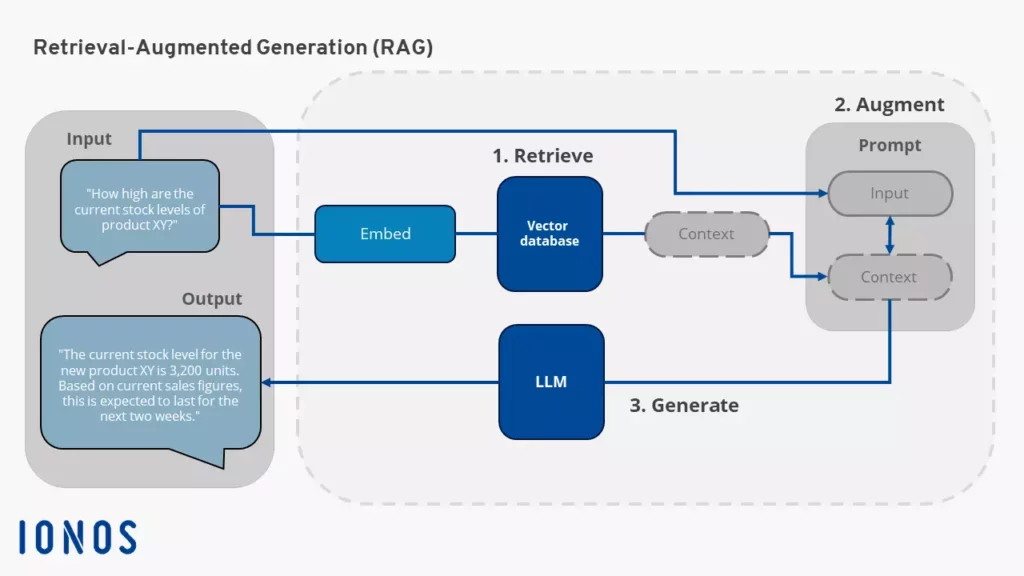
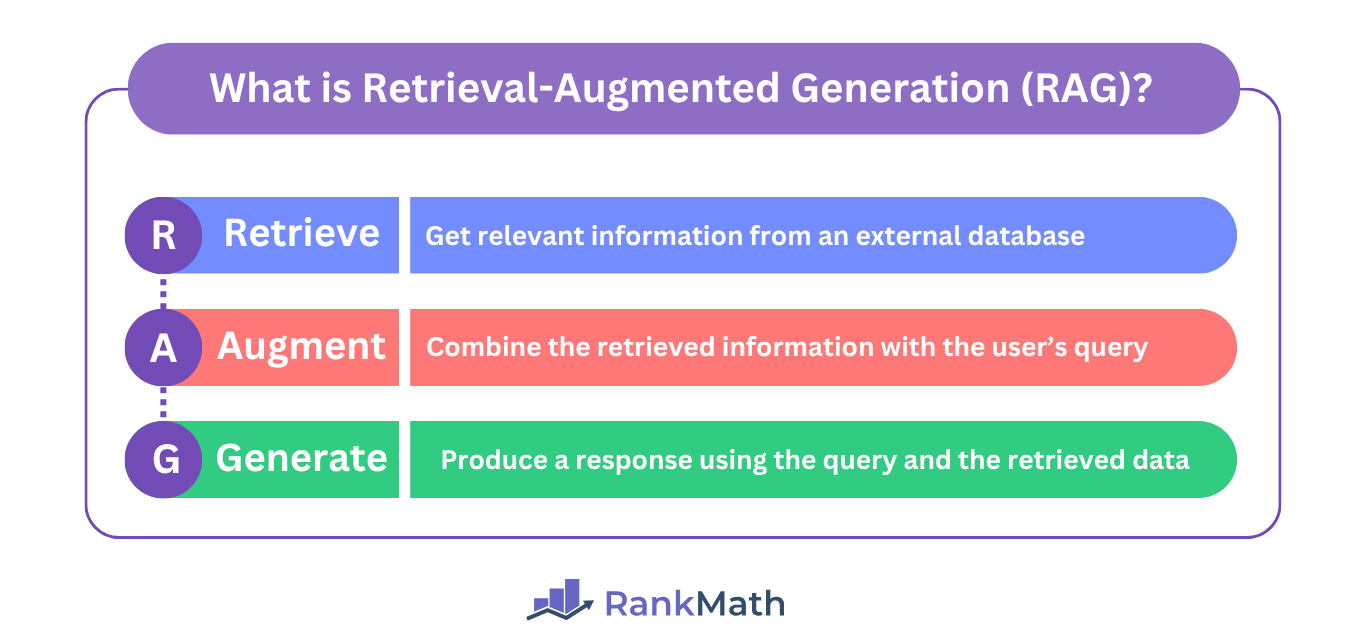
AI SEO Retrieval Augmented Generation, often abbreviated as RAG, is an architectural framework that enhances the output of generative AI models. Instead of relying solely on static training data, a RAG system connects the AI model to an external knowledge base or a live search index. When a query is received, the system first retrieves relevant documents or snippets from this external source. It then feeds that retrieved context to the generative model to produce a precise, accurate, and up-to-date answer.
In the context of SEO, this means the AI does not guess or hallucinate information. It pulls data from your website’s indexed pages, competitor analysis, or a curated database of industry statistics. The result is content that aligns perfectly with user intent and current search engine ranking factors, making it a powerful tool for any digital marketing strategy.
How Does RAG Differ from Traditional AI Content Generation?
Traditional AI models generate text based on patterns learned from historical data. This approach has a critical flaw: the information can become outdated, and the model may produce confident but incorrect statements, known as hallucinations. AI SEO Retrieval Augmented Generation solves this problem by introducing a verification step. The model does not answer from memory alone; it consults a retrieval layer first.
This distinction is crucial for SEO. Search engines like Google prioritize Experience, Expertise, Authoritativeness, and Trustworthiness (E-E-A-T). Content generated without retrieval often lacks the factual backing needed to pass these quality checks. RAG ensures that every claim made in your content can be traced back to a source, significantly improving the trustworthiness score of your pages.
The Core Components of a RAG System
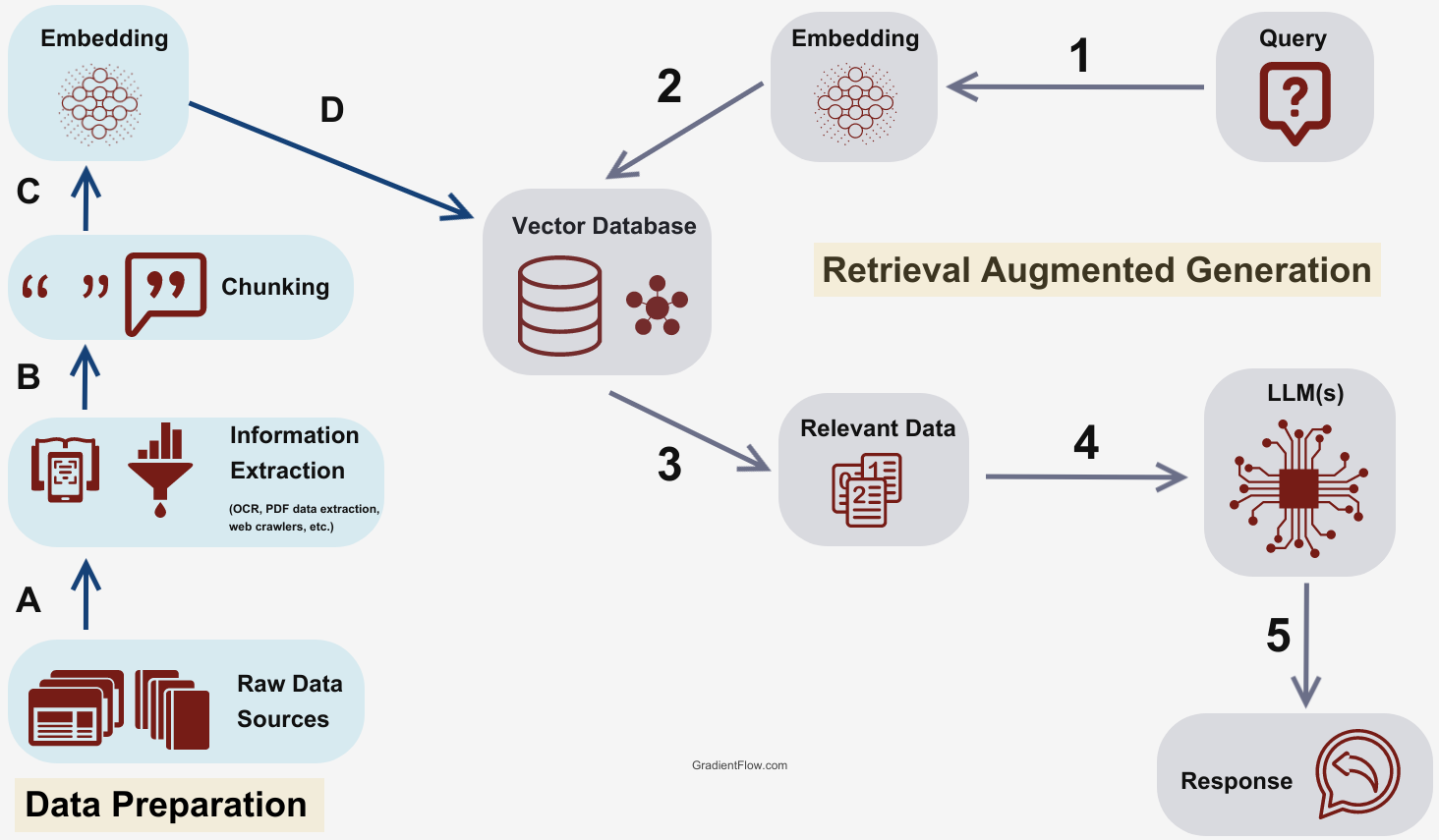
To fully grasp AI SEO Retrieval Augmented Generation, you must understand its three primary components. Each plays a distinct role in the pipeline, from understanding the query to delivering the final output.
- Ingestion Layer: This is where data is collected and prepared. It involves crawling websites, fetching APIs, or uploading documents. The data is then chunked into smaller, digestible pieces and converted into numerical representations called embeddings.
- Retrieval Layer: This is the search engine of the system. When a user submits a query, this layer uses vector search or keyword matching to find the most relevant chunks from the ingested data. It ranks these chunks based on semantic similarity to the query.
- Generation Layer: This is the large language model (LLM) itself. It takes the user’s query and the retrieved chunks as context. It synthesizes this information into a coherent, natural-sounding response, ensuring the answer is grounded in the provided data.
- Ignoring Data Chunking: If your data chunks are too large, the retrieval becomes slow and less accurate. If they are too small, the context is lost. Finding the right chunk size is crucial for performance.
- Using Unstructured Data: Feeding the system PDFs and messy HTML without parsing them properly leads to poor retrieval. You must structure your data with clear headings and metadata.
- Over-Reliance on AI Output: Publishing content directly without editing is a fatal mistake. Search engines can detect generic AI patterns. You must add unique insights, screenshots, and personal experiences to pass the “Helpful Content” test.
- Neglecting Query Complexity: Simple queries do not need RAG. RAG is most effective for complex, long-tail queries where the user expects a detailed, nuanced answer. Using it for simple definitions is a waste of resources.
Why AI SEO Retrieval Augmented Generation is Critical for Modern SEO
The search landscape has shifted from keyword matching to semantic understanding. Google’s algorithms, such as MUM and BERT, are designed to understand the context and depth of a topic. AI SEO Retrieval Augmented Generation aligns perfectly with this shift. It allows you to create comprehensive topic clusters that cover a subject from every angle, using verified data to support each point.
Furthermore, RAG enables real-time content optimization. If you are targeting a rapidly changing industry like finance or technology, you can connect your AI tool to live data feeds. This ensures your content reflects the latest trends, statistics, and news, which is a significant ranking factor for time-sensitive queries. This dynamic approach keeps your site fresh and authoritative without requiring constant manual rewriting.
Key Benefits of Implementing RAG in Your SEO Strategy
Adopting AI SEO Retrieval Augmented Generation offers a multitude of advantages that go beyond simple content generation. It fundamentally improves the efficiency and effectiveness of your entire content lifecycle.
Elimination of AI Hallucinations
The most significant benefit is the drastic reduction of factual errors. Because the AI is forced to use the retrieved context, it cannot invent statistics or cite non-existent studies. This is vital for building domain authority. A single factual error on a page can destroy your credibility with both users and search engines, and RAG prevents this from happening.
Enhanced Content Depth and Relevance
RAG allows you to analyze top-ranking pages and retrieve their key concepts. You can then instruct the AI to generate a piece that covers all those points and adds unique insights from your own proprietary data. This leads to content that is more comprehensive than your competitors, which is a strong signal for ranking higher.
Scalability of Content Production
Creating high-quality, data-backed content at scale is challenging. RAG automates the research phase. Instead of spending hours reading sources, you can have the system retrieve and summarize the necessary information. This allows your team to focus on strategy and editing, increasing your content output without sacrificing quality.
Limitations and Challenges of RAG in SEO
While powerful, AI SEO Retrieval Augmented Generation is not a silver bullet. There are technical and strategic hurdles that you must overcome to implement it successfully.
One major challenge is the quality of the retrieval index. If your data source is messy, outdated, or poorly structured, the A The “garbage in, garbage out” principle applies directly here. You need a clean, well-organized knowledge base for the system to work effectively.
Another limitation is computational cost. Running a RAG system involves maintaining a vector database and making multiple API calls to the LLM. This can be more expensive than simple prompt-based generation. However, the return on investment in terms of content quality often justifies the expense.
AI SEO Retrieval Augmented Generation vs. Traditional SEO Tools
To understand the value proposition, it is helpful to compare RAG-based tools with traditional SEO software. Traditional tools focus on data analysis and suggestions, while RAG tools focus on execution and creation.
| Feature | Traditional SEO Tools | AI SEO Retrieval Augmented Generation |
|---|---|---|
| Primary Function | Keyword research, rank tracking, audits | Content creation, optimization, and data grounding |
| Data Usage | Analyzes existing web data | Retrieves and synthesizes data into new content |
| Output | Reports and recommendations | Finished drafts and structured outlines |
| Adaptability | Static rules and algorithms | Dynamic learning from retrieved context |
| Focus | Finding opportunities | Executing on opportunities |
Traditional tools tell you what keywords to target. AI SEO Retrieval Augmented Generation takes those keywords and builds a fully optimized, fact-checked article around them. The most effective strategies use both in tandem.
Practical Implementation: How to Use RAG for Content Optimization
Implementing AI SEO Retrieval Augmented Generation requires a structured approach.
Step 1: Build Your Knowledge Base
Start by aggregating your best-performing content, industry reports, and internal data. This repository will serve as the source of truth for your AI. You can use tools like Pinecone, Weaviate, or even a simple vector store integrated into your existing tech stack. Ensure your data is clean and formatted consistently.
Step 2: Connect to a Search API
To keep your content current, connect your RAG system to a live search API like Google’s Programmable Search Engine or Bing Web Search API. This allows the AI to retrieve real-time data on SERP features, competitor content, and breaking news. This is essential for topics that require up-to-the-minute accuracy.
Step 3: Design Specific Prompts
The prompt is the instruction manual for the AI. You must design prompts that tell the system to use the retrieved context strictly. For example, you might prompt: “Using the provided data, write a 1500-word article on ‘best CRM software’ that includes the specific pricing points mentioned in the retrieved documents.” This ensures the output is grounded.
Step 4: Implement a Human Review Process
Even with RAG, human oversight is non-negotiable. An editor must review the AI-generated content for tone, brand voice, and narrative flow. The AI provides the raw material and factual basis, but the human adds the creative spark and emotional intelligence that resonates with readers.
Common Mistakes to Avoid When Using RAG for SEO
Many marketers fail to see results because they make critical errors during implementation. Avoiding these pitfalls will save you time and resources.
Important Notes on Data Privacy and Compliance
When using AI SEO Retrieval Augmented Generation, you must be mindful of data privacy. If you are ingesting user data or proprietary business information, ensure your RAG system is secure. Do not use public LLM APIs with sensitive data unless you have a privacy agreement in place.
Additionally, be aware of copyright issues. The retrieval layer might pull text from copyrighted sources. While the AI synthesizes the information, it is your responsibility to ensure the final output does not plagiarize. Use plagiarism checkers and ensure your prompts instruct the AI to paraphrase and add original commentary.
Measuring the Success of Your RAG SEO Strategy
To determine if your investment in AI SEO Retrieval Augmented Generation is paying off, you must track specific metrics. These go beyond simple keyword rankings.
Monitor your organic click-through rate (CTR) and dwell time. If the content is more relevant and accurate, users will stay longer on the page. Also, track the number of featured snippets you win. RAG-generated content is often structured in a way that is easy for Google to pull for position zero. Finally, measure the efficiency of your content production cycle. A successful RAG implementation should reduce the time from ideation to publication.
Frequently Asked Questions
What is the difference between RAG and fine-tuning for SEO?
Fine-tuning involves training a base model on a specific dataset to change its behavior. RAG does not change the model; it changes the input. RAG is more dynamic because you can update the knowledge base without retraining the model. For SEO, RAG is generally preferred because it allows for real-time updates and prevents the model from forgetting previous knowledge.
Can AI SEO Retrieval Augmented Generation help with local SEO?
Yes, it is highly effective for local SEO. You can build a knowledge base containing your business listings, customer reviews, and local event data. The RAG system can then generate location-specific landing pages that reference actual local landmarks, news, and customer testimonials, making your content highly relevant for “near me” searches.
Does Google penalize content generated with RAG?
Google does not penalize AI content per se; it penalizes spammy, low-quality content regardless of how it is made. Content generated with AI SEO Retrieval Augmented Generation is often higher quality than human-written content because it is factually accurate and comprehensive. As long as you add human value and follow Google’s guidelines, you will not be penalized.
What are the best tools for building a RAG system for SEO?
There are several options. For the retrieval layer, you can use vector databases like Pinecone, Weaviate, or Chroma. For the generation layer, you can use OpenAI’s GPT-4, Anthropic’s Claude, or open-source models like Llama 2. For a full-stack solution, platforms like Flowise AI or LangChain allow you to build custom pipelines without extensive coding.
Is RAG suitable for small businesses with limited budgets?
Initially, the cost of API calls and database hosting can be a barrier. However, open-source models and local vector databases have made it more accessible. Small businesses can start with a simple setup using free tiers of cloud services. The key is to start small, focus on a specific niche, and scale as you see a return on investment.
Conclusion
AI SEO Retrieval Augmented Generation represents a paradigm shift in how we approach content creation and search optimization. By grounding AI outputs in verifiable, real-time data, this technology solves the biggest problems of traditional AI: hallucinations and irrelevance. It empowers SEO professionals to build authoritative content libraries that satisfy both users and search engine algorithms.
The future of SEO is not about writing more; it is about retrieving smarter. By integrating RAG into your workflow, you ensure that your content is not only generated efficiently but is also strategically aligned with the current digital landscape. This is the definitive advantage for brands looking to dominate search results in an increasingly competitive environment.
Xem thêm:
- AI SEO Product Description Optimization: The Complete Playbook for Higher Rankings and Conversions
- AI SEO Long Form Article Generator: The Complete Guide to Scaling Content Production
- How to Create SEO Briefs with AI: A Step-by-Step System for Faster, Smarter Content Planning
- AI SEO WCAG: The Complete Guide to Accessible, AI-Optimized Content
- AI SEO SEO Automation Software: The Complete Guide to Scaling Organic Growth in 2025
Bài viết cùng chủ đề:

AI SEO SEO Automation with Make: The Complete Workflow Guide

AI SEO SEO Automation with Zapier: The Complete Workflow Guide

AI SEO SEO Automation with n8n: The Complete Workflow Guide
AI SEO SEO Automation with Gemini: The Complete Guide to Scaling Organic Growth

AI SEO SEO Automation with Claude: The Complete Guide to Scaling Content in 2025

AI SEO SEO Automation with ChatGPT: The Complete Playbook for 2025

AI SEO & SEO Automation for Affiliate Sites: The 2025 Playbook for Passive Income Growth
AI SEO & SEO Automation for Bloggers: The Complete Guide to Scaling Your Content

AI SEO & SEO Automation for Agencies: The Complete 2025 Playbook

AI SEO and SEO Automation for Ecommerce: The Complete Playbook for 2025

AI SEO & SEO Automation for WordPress: The Complete Playbook for 2025
AI SEO SEO Automation Strategy: The Complete Playbook for 2025

Mastering the AI SEO SEO Automation Process: A Complete Guide to Scaling Organic Growth
AI SEO SEO Automation System: The Complete Guide to Scaling Organic Growth in 2025
AI SEO SEO Automation Platform: The Complete Guide to Scaling Organic Growth in 2025
AI SEO SEO Automation Software: The Complete Guide to Scaling Organic Growth in 2025















