
No products in the cart.
How to Create SEO Briefs with AI: A Step-by-Step System for Faster, Smarter Content Planning
29
Jul
Jul
Learning how to create SEO briefs with AI transforms the way marketing teams produce search-optimized content. An SEO brief acts as the single source of truth for writers, outlining target keywords, search intent, recommended structure, and competitor insights. When you bring artificial intelligence into this process, you can generate comprehensive briefs in minutes instead of hours—while improving consistency and data depth. This guide walks through the entire system, from choosing the right AI tool to building a repeatable workflow that your whole team can trust.
What Is an AI-Powered SEO Brief?
An AI-powered SEO brief is a document that uses machine learning and natural language processing to assemble keyword data, SERP analysis, topic clusters, and content recommendations automatically. Rather than manually pulling information from Google Search Console, Ahrefs, or SEMrush, the AI aggregates this intelligence and formats it into a usable blueprint. The result still needs human oversight, but the drafting phase shrinks dramatically.
A modern SEO brief contains much more than a target keyword. It answers critical planning questions: What subtopics must the article cover? How long should the piece be? Which questions do searchers expect answered? AI platforms parse the top-ranking pages, extract common headings, identify content gaps, and even suggest a content outline that aligns with search engine expectations.
Why Marketers Are Turning to AI for SEO Brief Creation
Manual brief creation consumes a huge amount of strategic time. A senior SEO specialist might spend 40 minutes per brief researching competitors, pulling keyword variations, and formatting the document. Multiply that by dozens of articles each month, and the bottleneck becomes real. AI slashes this time without sacrificing quality when the process is set up correctly.
Beyond speed, AI delivers pattern recognition at scale. It can spot trending subtopics, semantic keyword clusters, and content structures that humans might overlook. For large content operations, this consistency ensures every writer gets the same depth of guidance, regardless of who builds the brief. The result is more predictable content performance and a smoother editorial workflow.
Core Components of an AI-Generated SEO Brief
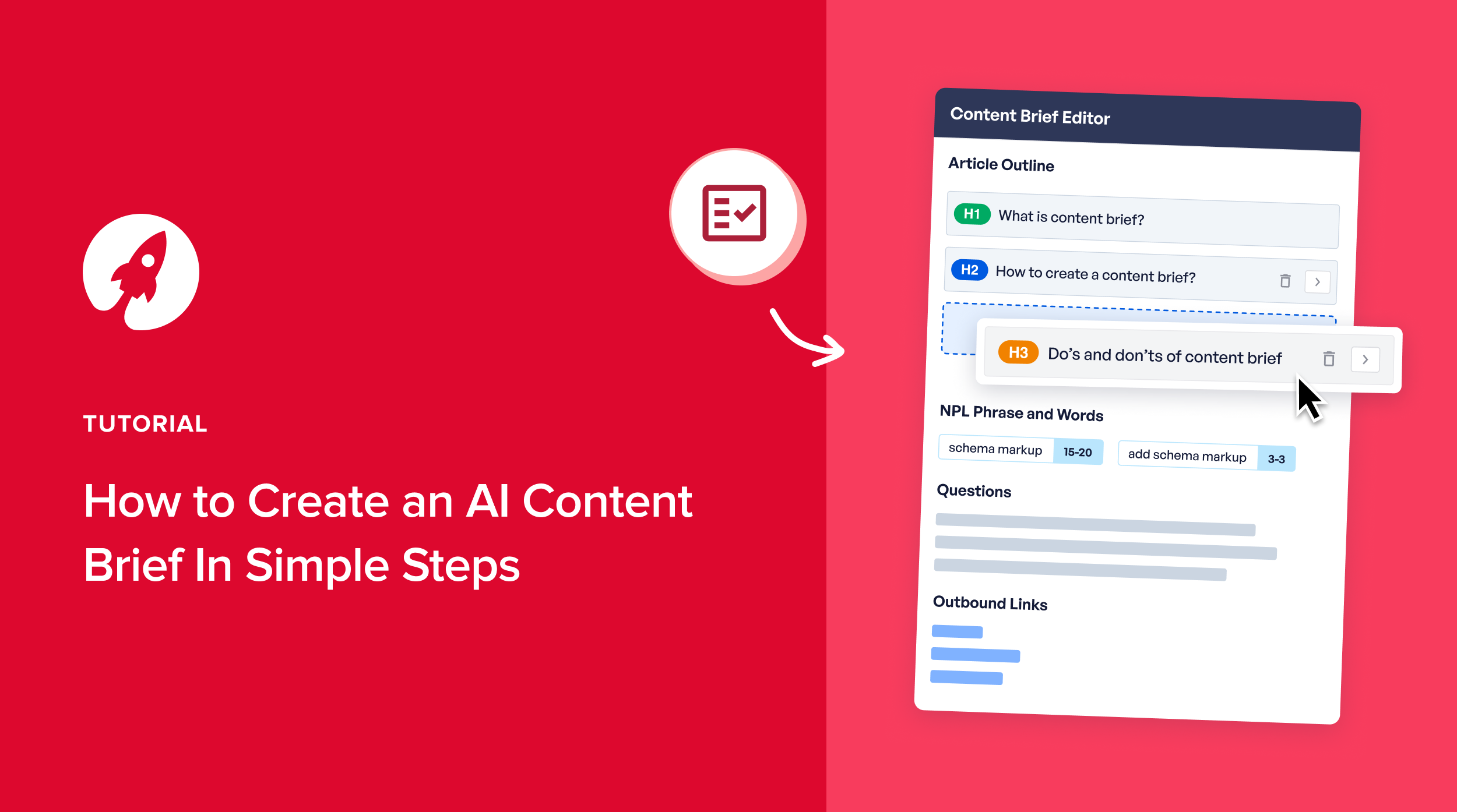
A properly structured AI brief includes several non-negotiable elements. Skipping any of these creates gaps that writers fill with guesswork, which leads to content that misses the mark. The following components form the backbone of every effective brief generated with AI assistance.
Primary and Secondary Keywords
The AI pulls the main keyword and a cluster of semantically related terms. These go beyond simple synonyms to include long-tail variations, questions, and comparison phrases that real searchers use. The best AI tools rank secondary keywords by search volume and difficulty, helping you prioritize which terms to weave into headings and body copy.
Search Intent Classification
Understanding whether a query is informational, commercial, navigational, or transactional dictates the article’s angle. AI analyzes the dominant intent of the SERP and suggests a content type—such as a how-to guide, listicle, or product comparison. This classification prevents mismatched content that fails to satisfy what users actually want.
Recommended Content Structure and Outline
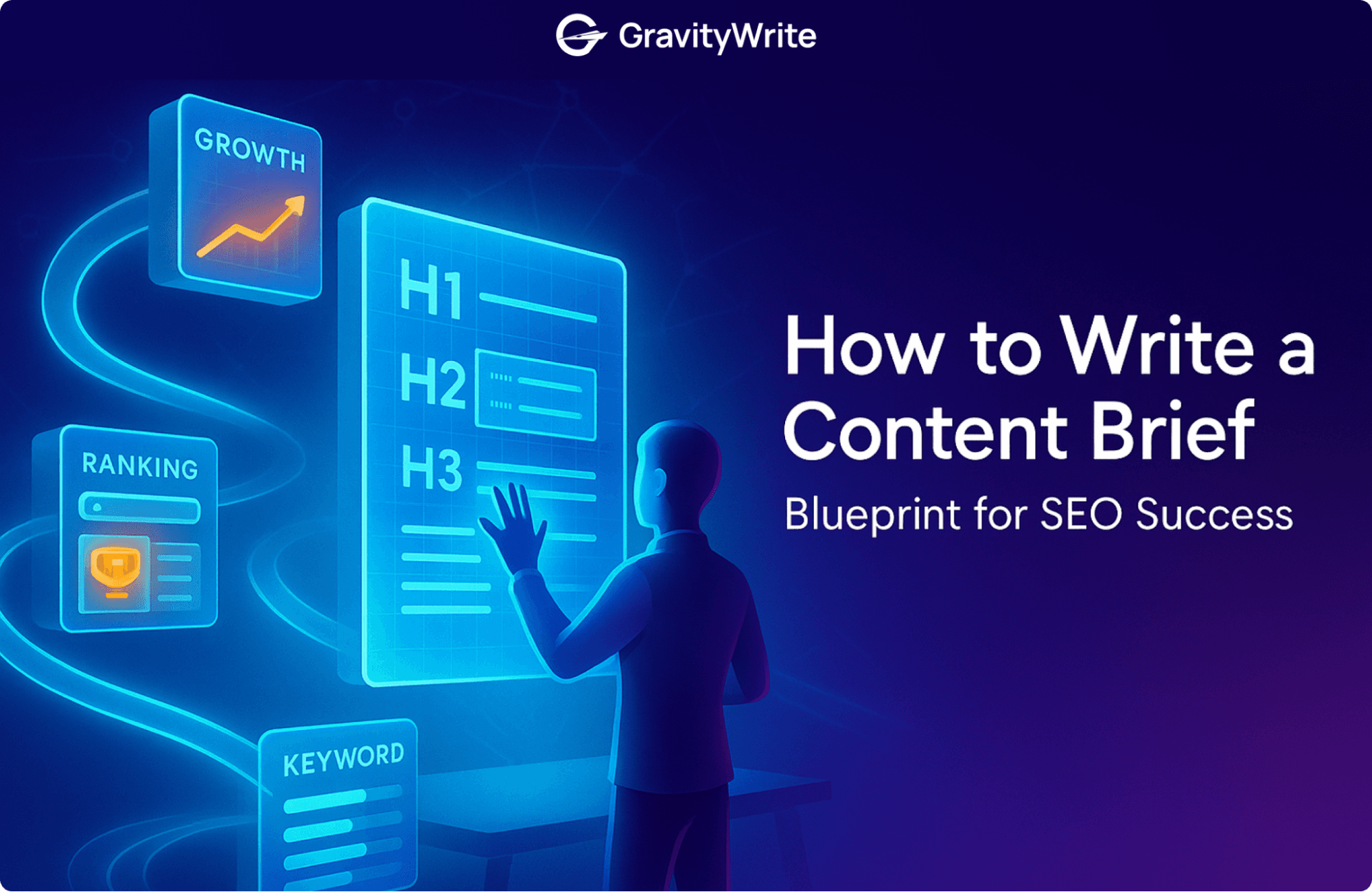
By scraping H2 and H3 tags from top-ranking pages, AI tools propose a logical outline. The suggested structure often includes an introduction, several main sections, and a conclusion that mirrors the depth competitors provide. Many tools also recommend an ideal word count range based on the average length of high-performing content.
Key Entities and Topics to Cover
Search engines use entity recognition to understand content. AI briefs highlight people, places, concepts, and tools that should appear in the article to establish topical authority. For example, a brief about content marketing might list entities like “content strategy,” “HubSpot,” “topic clusters,” and “pillar page.”
Internal and External Linking Suggestions
Quality AI tools surface relevant internal pages from your site that strengthen the content hub. They also may recommend authoritative external sources to cite, building trust signals and helping the article serve as a genuine resource.
FAQ and People Also Ask Integration
The brief should include questions from Google’s “People Also Ask” box and related searches. Answering these directly within the article increases the chance of capturing featured snippets and voice search queries.
The Full Process of Creating SEO Briefs with AI
Turning a vague topic into a polished, AI-assisted brief follows a repeatable sequence. Each step builds on the previous one, and skipping a validation stage almost always produces weaker content.
Step 1: Gather Core Topic and Audience Data
Start with a clear understanding of the article’s purpose, the primary keyword, and the target audience. Input these details into your AI tool along with any brand-specific requirements, such as tone of voice, word count goals, or compliance rules. The more context you provide upfront, the less editing you do later.
Step 2: Run SERP and Competitor Analysis with AI
Let the AI examine the current top 10 or 20 results. It identifies patterns: average word count, common subheadings, media usage (images, videos, infographics), and schema markup presence. Some tools even analyze the reading level and sentiment. This competitive intelligence becomes the foundation of the brief.
Step 3: Generate the Draft Brief
The AI now compiles all findings—keywords, intent, structure, entities, FAQs—into a formatted document. Many platforms offer templates that arrange this data under clear headings like “Target Keyword,” “Reader Intent,” “Suggested Outline,” and “Questions to Answer.” Review the draft for coherence and completeness.
Step 4: Human-Led Validation and Refinement
This is the non-negotiable step. AI sometimes misinterprets intent or suggests outdated stats. A senior editor or SEO strategist must verify keyword choices, check competitor outliers, confirm that the outline matches brand style, and adjust any tone mismatches. The refinement turns a good AI brief into a great strategic document.
Step 5: Assign to Writers with Clear Instructions
Package the validated brief in your project management tool. Include links to reference materials, style guides, and any custom instructions that go beyond the AI-generated content. Consistent formatting across all briefs helps writers internalize expectations quickly.
Popular AI Tools for SEO Brief Creation
The tool landscape is diverse, ranging from dedicated content workflow platforms to general-purpose AI assistants that require more manual prompting. Understanding the categories helps you pick the right fit for your team size, budget, and technical skill level.
| Tool | Best For | Key Briefing Features | Approximate Cost |
|---|---|---|---|
| Surfer SEO | Data-heavy content editors | Content Editor with real-time NLP guidelines, keyword density, structure recommendations, and competitor term analysis | Starts at $89/month |
| Frase | Topic research and AI outline generation | Automated research from SERPs, content brief builder, AI-generated outlines based on competitor analysis | Starts at $14.99/month |
| MarketMuse | Enterprise content strategy | AI-generated briefs with topic clusters, entity scoring, content gaps, and competitive heatmaps | Custom pricing |
| Jasper (with SEO mode) | Teams combining AI writing and briefs | SEO mode pulls Surfer-like data, suggests keywords and outline; brief generator template available | Starts at $39/month |
| ChatGPT + Custom Prompts | Flexible, low-cost DIY workflows | Requires building detailed prompts to simulate brief creation; needs manual SERP data input | Free / $20/month (ChatGPT Plus) |
Dedicated SEO briefing platforms like Surfer and Frase offer the most structured output with minimal manual work. General AI tools such as ChatGPT require careful prompt engineering but give you complete control over the brief format. Many teams combine both: using a specialized tool for research and then ChatGPT to refine language and structure.
Structuring an Effective Prompt to Generate SEO Briefs with ChatGPT
With a well-crafted prompt, ChatGPT can produce a usable brief skeleton. The key is specificity and structure. Provide the target keyword, desired headings, required sections, and any constraints. An example prompt that works reliably across projects looks like this:
“Act as an SEO strategist. Create a detailed SEO content brief for the keyword ‘how to start a vegetable garden’. Include: primary keyword with search intent, 15 secondary keywords, suggested H1, outline with H2s and H3s, five FAQs from Google PAA, ideal word count, internal link suggestions, and any entities that must be mentioned. Keep the tone conversational and informative.”
The AI response will typically hit every requested point. Always fact-check keyword data if the tool does not have live internet access. You can further refine the output by asking for alternative angles or to adjust based on a specific competitor URL.
Benefits of Using AI for SEO Briefs
- Drastic time savings: What used to take 30 to 45 minutes per brief can shrink to under 10 minutes, freeing strategists for higher-level analysis.
- Data consistency: Every brief uses the same template, the same data sources, and the same logic, reducing variability between different team members.
- Scalable content production: Agencies and large in-house teams can brief dozens of articles simultaneously without hiring additional researchers.
- Improved content quality: AI often surfaces relevant subtopics and questions that a human might miss, making articles more comprehensive.
- Faster writer onboarding: New writers receive detailed blueprints that need less back-and-forth clarification.
- Outdated or incorrect data: AI models trained on old datasets may suggest outdated statistics or competitors that no longer rank.
- Lack of nuance: AI can misinterpret subtle intent shifts, especially with keywords that have mixed meanings.
- Over-optimization tendencies: Some tools push keyword density targets mechanically, leading to unnatural content if followed blindly.
- Generic outlines: Without human customization, AI-generated structures can mirror competitors so closely that content lacks originality.
- Dependence risk: Relying entirely on AI erodes the team’s ability to manually perform strategic SERP analysis.
- Create a master brief template: Define sections that every brief must contain. This template becomes the target format whether you use AI or a manual process.
- Combine multiple data sources: Cross-reference AI suggestions with your own Google Search Console data, Ahrefs, or SEMrush to prioritize keywords you actually have a chance to rank for.
- Set up a review checklist: Every brief undergoes a quick audit: Is the intent correct? Are the keywords relevant? Is the suggested word count feasible? Does the outline cover the topic thoroughly?
- Train writers on how to read the brief: Briefs only work if writers understand how to translate the data into engaging prose. Host a workshop explaining each section and how to use the keyword list naturally.
- Iterate based on content performance: Track which briefs produce the best results. Adjust your AI settings, prompts, or data sources based on real-world ranking data.
- Never skip competitor manual spot-checks: AI might miss a recently published powerhouse article. Open the top three URLs yourself to validate the AI’s structural suggestions.
- Protect sensitive data: Avoid pasting proprietary business information into public AI tools. Use enterprise-grade solutions with data privacy guarantees if handling confidential content plans.
- Educate stakeholders about AI limitations: Manage expectations that AI briefs accelerate the process but do not replace human expertise. The strategist’s judgment remains the core quality control.
- Keep prompts updated: As search engine algorithms change, adjust the language you use in your AI prompts to reflect current best practices, such as emphasizing helpful content and E-E-A-T signals.
Limitations and Risks to Watch For
Common Mistakes When Learning How to Create SEO Briefs with AI
Even experienced marketers fall into traps that undermine the value of AI-assisted briefs. Recognizing these pitfalls upfront prevents wasted effort and poor performance.
Treating the AI Output as Final
The most frequent error is copying the AI brief and sending it directly to a writer without review. AI can hallucinate facts, include irrelevant keywords, or suggest a structure that does not align with your brand’s voice. Always budget time for human validation and refinement.
Using Only One Keyword
Some team members input only a seed keyword and expect the AI to do all the semantic expansion. While tools handle this well, manually adding a few high-priority secondary keywords from your own rank tracking data ensures the brief targets terms strategically important to your business, not just those the AI finds.
Ignoring User Intent Shifts
A keyword like “apple watch” could be informational (reviews), transactional (buy), or navigational (official site). If the AI misclassifies intent, the entire article angle misses. Always verify the intent against the actual SERP manually, especially for high-value topics.
Overloading the Brief with Data
A 12-page brief stuffed with every possible keyword variation and competitor link overwhelms writers. Keep the document focused on actionable guidance: the outline, top 10-15 secondary keywords, intent, and perhaps a few competitor examples to emulate or avoid.
Not Updating the AI Model or Data Source
SEO is dynamic. Rankings change, featured snippets evolve, and user behavior shifts. Using an AI tool that does not pull fresh SERP data yields stale briefs. Schedule regular re-briefing for ever-green content or topics subject to rapid change.
Best Practices for AI SEO Briefing Workflows
Building a sustainable system requires standard operating procedures and quality checkpoints. Documenting the process ensures anyone on the team can produce a high-quality brief, with or without an SEO background.
Comparing AI Briefing Tools: Native Features vs. Prompt-Based Approaches
The central decision point for many teams is whether to invest in a purpose-built AI SEO platform or to build a solution using large language models like GPT-4. Both paths work, but the experience, effort, and output differ significantly.
| Factor | Dedicated AI SEO Tool (e.g., Surfer, Frase) | ChatGPT with Custom Prompts |
|---|---|---|
| Setup Time | Minimal; log in and start | Requires building and testing prompts; no built-in SERP data |
| Data Freshness | Pulls live or frequently updated SERP data | Limited to knowledge cutoff unless using browsing plugin or manual input |
| Output Consistency | Very consistent; follows platform rules | Variable; depends on prompt quality |
| Customization Flexibility | Some template customization, but within platform constraints | Unlimited; you can format the brief exactly as needed |
| Cost | Subscription-based, per seat | Lower direct cost, higher time investment |
For teams producing 10 or more articles per week, a dedicated tool usually pays for itself quickly. Smaller teams or those with very specific formatting needs often start with prompt-based systems and scale up when volume demands.
Integrating AI Briefs into Your Existing Content Workflow
The true power of AI briefs emerges when they slot seamlessly into your project management tools. Connect your AI brief generator—or a Google Doc populated by AI output—with platforms like ClickUp, Asana, or Notion. Writers then receive assignments that already contain the full brief, so they never start research from scratch.
Version control matters. When a brief gets updated due to a keyword trend shift or algorithm change, notify all stakeholders. Some teams maintain a living brief document that evolves alongside the published article, serving as an ongoing reference for content refreshes.
Measurement closes the loop. Tag each piece of content in your analytics platform with the brief version or AI tool used. After three months, analyze which briefing approach correlated with higher organic traffic and engagement. This data-driven refinement tells you exactly how to tweak your AI settings for maximum ROI.
Important Notes When Using AI to Create SEO Briefs
Frequently Asked Questions About Creating SEO Briefs with AI
Can AI completely replace a human SEO strategist for brief creation?
No. AI accelerates research and formatting, but a human strategist must verify intent, validate keyword data, ensure brand alignment, and inject creative angles that differentiate content. The combination of AI efficiency and human expertise yields the strongest results.
What is the ideal length for an AI-generated SEO brief?
A practical brief runs between one and three pages. Include a clear H1 suggestion, an ordered outline with H2 and H3 tags, a list of 10 to 15 primary and secondary keywords, intent description, and up to five FAQs. Overloading the brief with excessive data reduces writer clarity.
Which AI tool is best for beginners learning to create SEO briefs?
Frase offers an accessible entry point with its automated research and content brief builder. Its interface is intuitive, and the pricing is beginner-friendly. Many new users start there, then explore Surfer SEO as their needs grow more sophisticated.
How often should I update an SEO brief using AI?
For fast-moving topics, update the brief every quarter or when you notice a ranking drop. For evergreen content, an annual review combined with a fresh AI SERP analysis usually suffices. Always re-brief when a page undergoes a major content refresh.
Do AI-generated briefs work for all types of content?
They excel for informational articles, how-to guides, and listicles. Transactional product pages and highly regulated content (medical, legal) require more human oversight, but AI can still assist with competitor structure analysis and keyword clustering.
Building a Future-Proof AI Briefing System
AI technology evolves rapidly, but the principles behind how to create SEO briefs with AI remain grounded in solid search strategy. Focus on building a flexible system where AI handles repetitive data gathering and pattern recognition, while your team sharpens strategy, creativity, and editorial judgment. Start with a single tool, document your process, train your writers, and iterate based on performance data. Within a few content cycles, the briefing workflow becomes a competitive advantage—delivering faster publishing times and content that genuinely resonates with both readers and search engines.
Xem thêm:
- AI SEO Category Descriptions: The Complete Guide to Automated Product Taxonomy
- AI SEO Table Generator: The Complete Guide to Smarter Content in 2025
- AI SEO AI Brand Monitoring: The Complete Guide to Protecting Your Digital Reputation
- AI SEO Duplicate Pages: The Complete Guide to Detection, Prevention, and Fixes
- AI SEO Strategy: The Complete Guide to Ranking with Artificial Intelligence in 2025
Bài viết cùng chủ đề:

AI SEO SEO Automation with Make: The Complete Workflow Guide

AI SEO SEO Automation with Zapier: The Complete Workflow Guide

AI SEO SEO Automation with n8n: The Complete Workflow Guide
AI SEO SEO Automation with Gemini: The Complete Guide to Scaling Organic Growth

AI SEO SEO Automation with Claude: The Complete Guide to Scaling Content in 2025

AI SEO SEO Automation with ChatGPT: The Complete Playbook for 2025

AI SEO & SEO Automation for Affiliate Sites: The 2025 Playbook for Passive Income Growth
AI SEO & SEO Automation for Bloggers: The Complete Guide to Scaling Your Content

AI SEO & SEO Automation for Agencies: The Complete 2025 Playbook

AI SEO and SEO Automation for Ecommerce: The Complete Playbook for 2025

AI SEO & SEO Automation for WordPress: The Complete Playbook for 2025
AI SEO SEO Automation Strategy: The Complete Playbook for 2025

Mastering the AI SEO SEO Automation Process: A Complete Guide to Scaling Organic Growth
AI SEO SEO Automation System: The Complete Guide to Scaling Organic Growth in 2025
AI SEO SEO Automation Platform: The Complete Guide to Scaling Organic Growth in 2025
AI SEO SEO Automation Software: The Complete Guide to Scaling Organic Growth in 2025















