
No products in the cart.
AI SEO Topical Gaps: The Complete Guide to Finding and Filling Content Voids
10
Aug
Aug
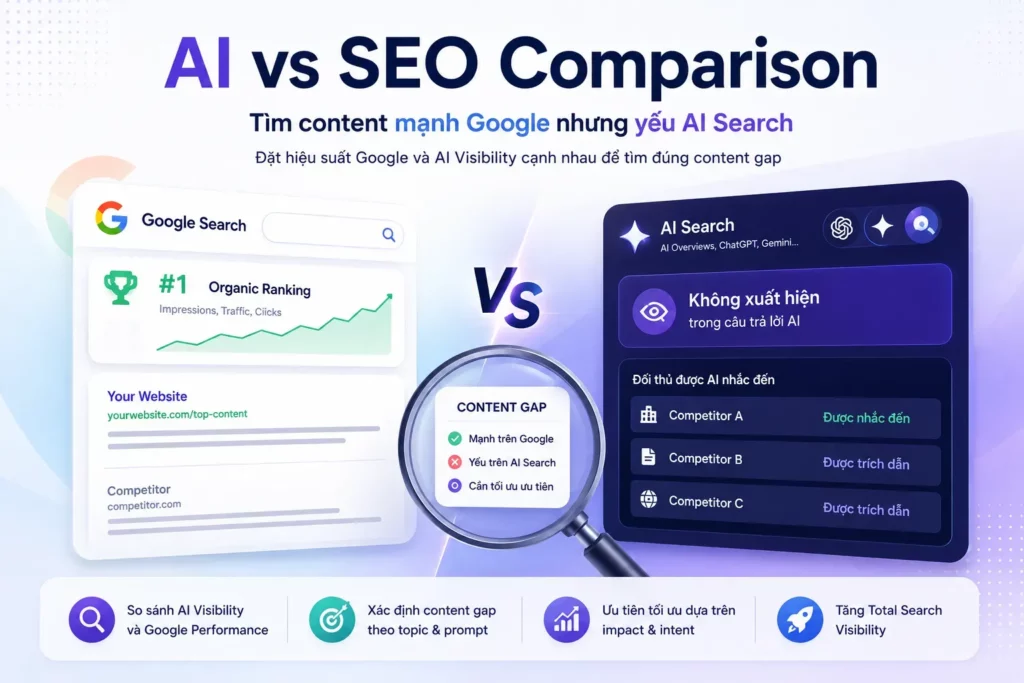
In the rapidly evolving landscape of search engine optimization, the term AI SEO Topical Gaps has emerged as a critical concept for digital marketers aiming to maintain competitive advantage. These gaps represent the missing pieces of content that your website does not cover but your competitors or search engines expect you to cover. As artificial intelligence reshapes how search algorithms interpret content, understanding and addressing these voids has become the difference between ranking on page one and being buried in obscurity. This comprehensive guide explores the nature of these gaps, how to identify them using modern tools, and the strategies required to fill them effectively.
Understanding AI SEO Topical Gaps

Topical gaps in SEO refer to the missing subtopics, questions, and related concepts that a comprehensive content strategy should address but currently does not. When we add the AI component, we are talking about the way machine learning algorithms analyze content clusters, semantic relationships, and user intent to determine which topics are underrepresented on your domain.
Traditional SEO focused on individual keywords. AI-driven SEO looks at entire topic ecosystems. Search engines like Google now use neural matching and natural language processing to understand the relationship between different pieces of content. If your website covers “digital marketing” but fails to address “email automation,” “social media analytics,” or “content personalization,” the algorithm may view your content as incomplete, reducing your authority on the broader subject.
The Role of Machine Learning in Identifying Gaps
Machine learning models analyze millions of search queries and content pieces to map out what a complete topical cluster looks like. These models identify patterns in how users search, what questions they ask, and which subtopics are consistently associated with a primary topic. When your content does not match this expected structure, the algorithm flags your site as less relevant or less authoritative.
For example, if you run a fitness blog and only write about weightlifting, the AI may expect content on nutrition, recovery, cardio, and supplementation. The absence of these related topics creates a topical gap that limits your ability to rank for the broader “fitness” keyword.
Why AI SEO Topical Gaps Matter for Your Rankings
The impact of unaddressed topical gaps extends far beyond missing a few keywords. Search engines evaluate your site’s overall relevance to a query based on the depth and breadth of your content. A site that covers a topic comprehensively signals expertise, which is a core component of Google’s E-E-A-T guidelines (Experience, Expertise, Authoritativeness, Trustworthiness).
When AI detects topical gaps, several negative consequences follow:
- Reduced Domain Authority: Your site is seen as less comprehensive, lowering its overall authority score.
- Lower Click-Through Rates: Your snippets may not match the full intent of the search query.
- Missed Long-Tail Opportunities: Each gap represents hundreds of potential long-tail keywords you are not capturing.
- Competitor Advantage: Rivals who fill these gaps will outrank you for related queries.
- Poor Internal Linking Structure: Gaps prevent the creation of a robust internal linking network that distributes authority.
- Higher Rankings: Comprehensive content consistently outperforms thin content in search results.
- Increased Organic Traffic: Each filled gap opens up new entry points for search traffic.
- Improved User Engagement: Users find all the information they need on your site, reducing bounce rates.
- Enhanced Brand Authority: Comprehensive coverage positions you as a thought leader in your niche.
- Better Internal Linking: More content creates more opportunities for natural internal links, distributing page authority.
- Resilience to Algorithm Updates: Sites with comprehensive coverage are less affected by algorithm changes.
- Audit Your Current Content: Create a complete inventory of all your existing content using a spreadsheet or content management tool.
- Run a Gap Analysis: Use tools like MarketMuse or Semrush to compare your content against top-ranking pages for your primary keywords.
- Compile a Gap List: Create a prioritized list of all missing subtopics, questions, and formats.
- Map Gaps to Business Goals: Identify which gaps align with your products, services, or conversion goals.
- Create a Content Calendar: Schedule content creation based on priority, starting with the highest-impact gaps.
- Write Comprehensive Content: For each gap, create content that is at least as detailed as the current top-ranking pages.
- Build Internal Links: Connect new content to relevant existing pages and update old content to link to new pages.
- Monitor and Iterate: Track your rankings and traffic for the targeted topics and adjust your strategy based on results.
How to Identify AI SEO Topical Gaps
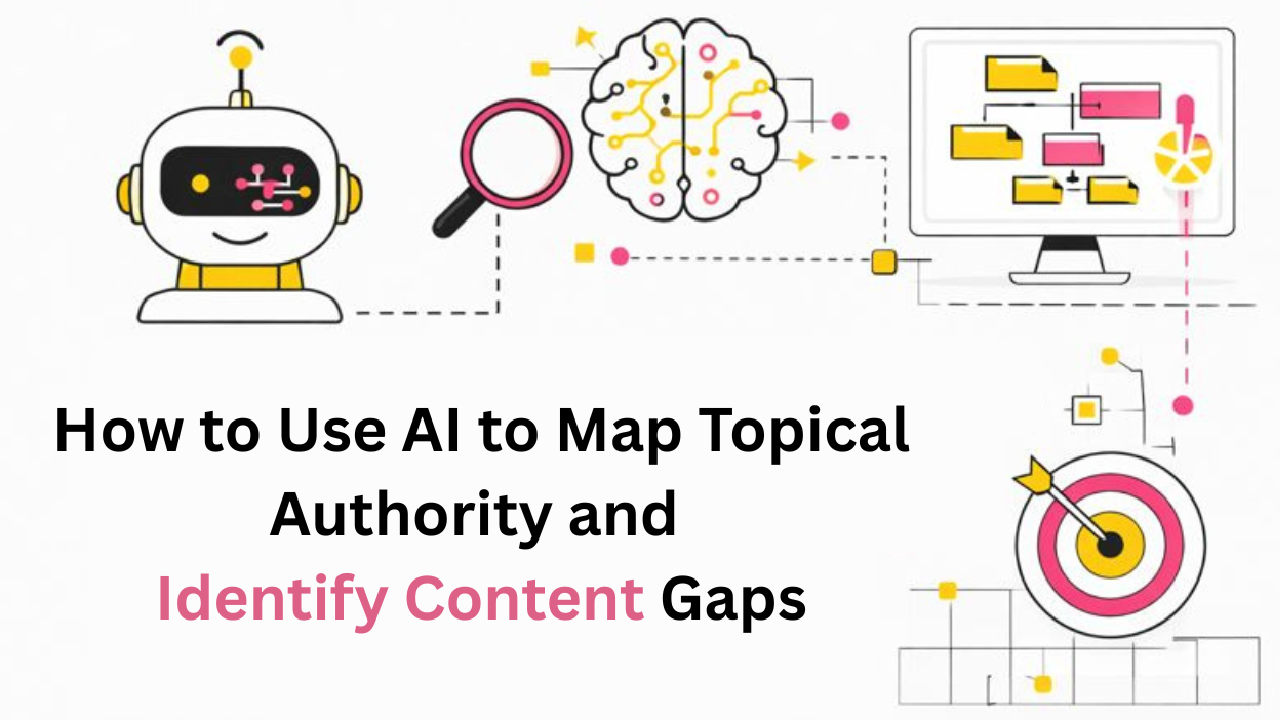
Finding these gaps requires a systematic approach that combines manual analysis with AI-powered tools. The process involves comparing your current content inventory against the expected topical structure for your niche.
1. Analyze Your Current Content Inventory
Start by creating a complete map of every piece of content on your website. Use a spreadsheet to list each URL, the primary topic, the target keywords, and the content format. This inventory serves as your baseline. Most websites discover they have significant gaps simply by visualizing their content in this way.
2. Use AI-Powered SEO Tools
Several platforms now offer specialized features for detecting topical gaps. Tools like Ahrefs, Semrush, and MarketMuse use machine learning to compare your content against the top-ranking pages for your target keywords. They identify which subtopics your competitors cover that you do not.
These tools generate a “content score” or “topical map” that shows you exactly where your coverage is thin. For instance, Semrush’s Topic Research feature clusters related questions and subtopics, while MarketMuse provides a detailed list of missing terms and concepts.
3. Analyze Competitor Content Clusters
Select your top three to five competitors and analyze their content architecture. Look at their blog categories, pillar pages, and supporting articles. Identify the subtopics they cover that you do not. Pay special attention to their internal linking structure, as this reveals how they connect related concepts.
4. Mine Search Engine Autocomplete and Related Searches
Google’s autocomplete suggestions and the “People Also Ask” boxes provide direct insight into what users expect to find. Type your main keyword into Google and note all the variations and questions that appear. Each one represents a potential gap in your content.
5. Review Your Search Console Data
Google Search Console reveals which queries your site already appears for but does not rank well. These are often queries where your content partially matches the intent but misses key subtopics. The queries with high impressions but low click-through rates are prime candidates for gap-filling.
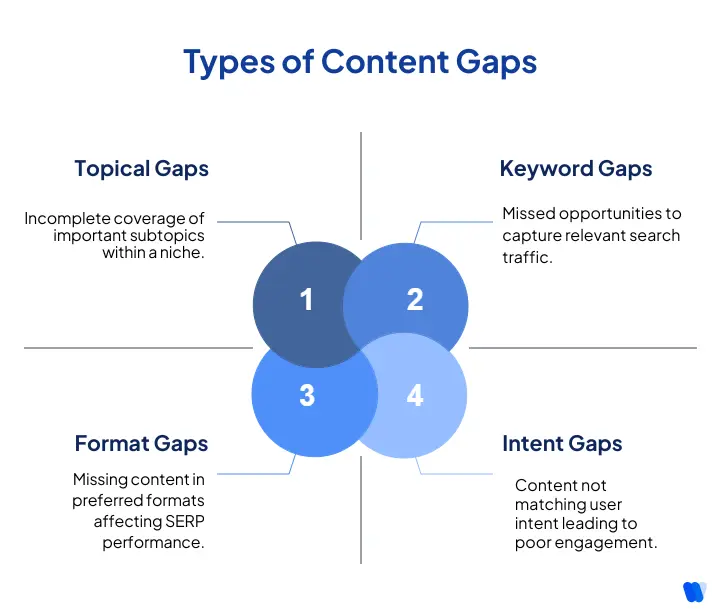
Types of Topical Gaps You Need to Address
Not all gaps are the same. Understanding the different types helps you prioritize your content creation efforts.
| Gap Type | Description | Example |
|---|---|---|
| Subtopic Gaps | Missing related concepts that support your main topic | A guide on “email marketing” missing “deliverability” |
| Question Gaps | Unanswered questions that users frequently ask | No content addressing “how often should I post on social media?” |
| Format Gaps | Content exists but in the wrong format (text vs. video vs. infographic) | Only having blog posts when users want video tutorials |
| Intent Gaps | Content targets the wrong search intent (informational vs. transactional) | Writing a product review when users want a comparison |
| Depth Gaps | Content covers a topic superficially without sufficient detail | A 500-word article on a topic that requires 2,000 words |
| Freshness Gaps | Outdated content that no longer reflects current information | An SEO guide referencing algorithms from 2019 |
Strategies for Filling AI SEO Topical Gaps

Once you have identified your gaps, the next step is to develop a systematic strategy for filling them. This requires more than just writing new articles; it demands a structured approach to content architecture.
Build Pillar Pages and Content Clusters
The pillar page model is the most effective way to address topical gaps. Create a comprehensive pillar page that covers your main topic in depth. Then, create cluster content that addresses each subtopic identified as a gap. Link every cluster piece back to the pillar page and vice versa. This structure signals to AI that you have comprehensive coverage of the topic.
Prioritize Based on Search Volume and Business Value
Not all gaps are worth filling. Prioritize based on the potential traffic and the relevance to your business goals. Use keyword research tools to estimate the search volume for each missing subtopic. Focus first on gaps that align with your products or services and have sufficient search demand.
Update and Expand Existing Content
Many gaps can be filled by expanding existing articles rather than creating new ones. If you have a blog post that covers a topic but misses several subtopics, update it to include those missing sections. This is often faster than creating new content and signals freshness to search engines.
Create Content for Different Formats
If your analysis reveals format gaps, diversify your content types. Create videos, infographics, podcasts, or interactive tools to match user preferences. AI algorithms increasingly favor diverse content formats as they better satisfy different user intents.
Benefits of Addressing Topical Gaps
The advantages of a comprehensive topical coverage strategy extend across all aspects of your digital presence.
Common Mistakes When Addressing Topical Gaps
Many marketers attempt to fill gaps but make critical errors that undermine their efforts. Avoid these common pitfalls.
Creating Thin Content Just to Fill a Gap
Writing a 300-word article on a subtopic just to say you covered it does more harm than good. Thin content is penalized by search engines and fails to satisfy user intent. Every piece of content you create must provide genuine value and depth.
Keyword Stuffing in New Content
Filling gaps does not mean cramming as many keywords as possible into your content. AI algorithms detect keyword stuffing and penalize it. Focus on natural language and genuine topic coverage.
Ignoring Content Updates
Topical gaps are not a one-time problem. As your industry evolves, new subtopics emerge and old ones become less relevant. You need an ongoing process for monitoring and updating your content coverage.
Neglecting Internal Linking
Creating new content without linking it to your existing content fails to build the topical authority you need. Every new piece should be integrated into your site’s internal linking structure.
Copying Competitor Content
Identifying gaps by analyzing competitors is smart, but copying their content is a mistake. You need to provide a unique perspective or add more value than what already exists.
Practical Guide: A Step-by-Step Process
Follow this practical process to systematically address AI SEO topical gaps on your website.
Important Notes for Long-Term Success
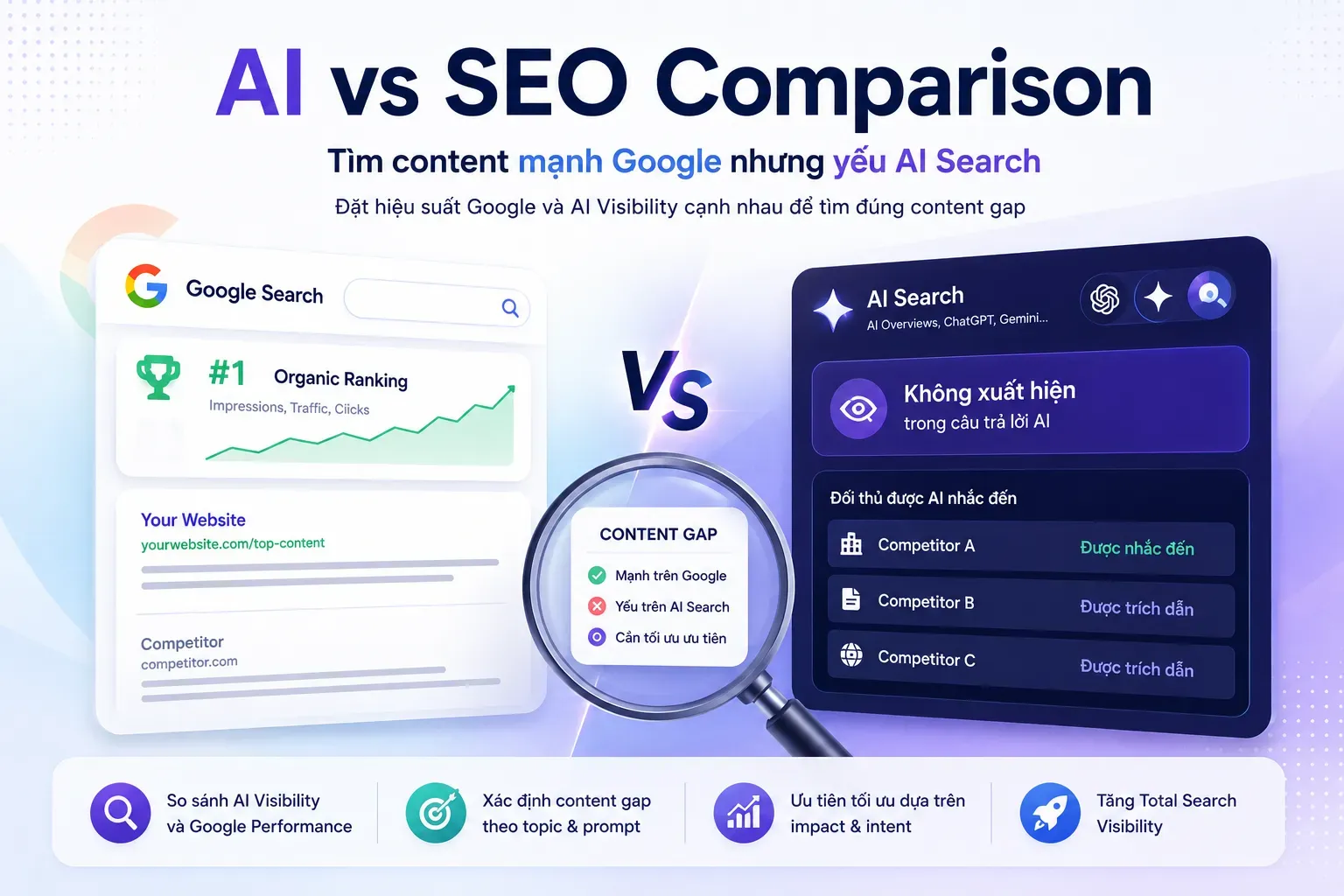
Addressing topical gaps is not a one-off project but an ongoing process. The AI algorithms that determine topical relevance are constantly evolving. What constitutes a complete topical cluster today may change tomorrow.
Regular content audits should be part of your quarterly SEO routine. Set aside time to review your content inventory, analyze new competitor content, and identify emerging subtopics in your industry. The brands that maintain comprehensive topical coverage are the ones that consistently rank well.
Also, remember that quality always trumps quantity. Filling a gap with mediocre content is worse than leaving it unfilled. Take the time to create genuinely useful, well-researched content that serves the user’s needs.
Frequently Asked Questions
What is the difference between a keyword gap and a topical gap?
A keyword gap refers to specific search terms that your competitors rank for but you do not. A topical gap is broader, referring to entire subtopics or concepts that are missing from your content. Topical gaps encompass multiple keyword gaps and represent a more strategic level of content planning.
How often should I conduct a topical gap analysis?
You should conduct a full topical gap analysis at least quarterly. However, you should monitor your content performance and competitor activity on a monthly basis. Industries that change rapidly, such as technology or healthcare, may require more frequent analysis.
Can AI tools completely automate the gap-filling process?
AI tools can identify gaps and even generate draft content, but they cannot replace human judgment. You still need to evaluate which gaps are worth filling based on business strategy, ensure content quality, and add unique insights that AI cannot generate. The best approach combines AI analysis with human expertise.
How long does it take to see results from filling topical gaps?
Results typically appear within 3 to 6 months after publishing comprehensive content. Search engines need time to crawl, index, and evaluate your new content. The speed of results depends on your domain authority, the competitiveness of your niche, and the quality of your content.
Do topical gaps affect local SEO?
Yes, topical gaps affect local SEO as well. Local businesses need to cover topics related to their service area, local regulations, and community-specific concerns. Missing these local subtopics can prevent you from ranking in local search results.
Conclusion
AI SEO topical gaps represent both a challenge and an opportunity for digital marketers. The challenge lies in the complexity of identifying these gaps across your entire content ecosystem. The opportunity is that filling them provides a clear path to higher rankings, increased traffic, and enhanced brand authority.
The key takeaway is that modern SEO is no longer about individual keywords but about comprehensive topic coverage. Search engines use AI to evaluate the depth and breadth of your content, rewarding sites that demonstrate true expertise on their subjects. By systematically identifying and filling your topical gaps, you align your content strategy with how AI algorithms actually work.
Start with a thorough audit of your current content, use AI-powered tools to identify your specific gaps, and create a prioritized plan to fill them with high-quality, comprehensive content. The effort you invest today will pay dividends in sustained search visibility and organic growth for years to come.
Xem thêm:
- AI SEO Ranking Predictions: The Complete Guide to Future-Proofing Your Search Strategy
- Perplexity SEO: How to Rank in AI‑Powered Search Engines and Get Cited
- AI SEO AI Search Audit: The Complete Guide to Future-Proofing Your Rankings
- AI SEO AI Search Reputation: The Complete Playbook for 2025
- AI SEO Data Visualization: Turning Complex Rankings into Actionable Insights
Bài viết cùng chủ đề:

AI SEO SEO Automation with Make: The Complete Workflow Guide

AI SEO SEO Automation with Zapier: The Complete Workflow Guide

AI SEO SEO Automation with n8n: The Complete Workflow Guide
AI SEO SEO Automation with Gemini: The Complete Guide to Scaling Organic Growth

AI SEO SEO Automation with Claude: The Complete Guide to Scaling Content in 2025

AI SEO SEO Automation with ChatGPT: The Complete Playbook for 2025

AI SEO & SEO Automation for Affiliate Sites: The 2025 Playbook for Passive Income Growth
AI SEO & SEO Automation for Bloggers: The Complete Guide to Scaling Your Content

AI SEO & SEO Automation for Agencies: The Complete 2025 Playbook

AI SEO and SEO Automation for Ecommerce: The Complete Playbook for 2025

AI SEO & SEO Automation for WordPress: The Complete Playbook for 2025
AI SEO SEO Automation Strategy: The Complete Playbook for 2025

Mastering the AI SEO SEO Automation Process: A Complete Guide to Scaling Organic Growth
AI SEO SEO Automation System: The Complete Guide to Scaling Organic Growth in 2025
AI SEO SEO Automation Platform: The Complete Guide to Scaling Organic Growth in 2025
AI SEO SEO Automation Software: The Complete Guide to Scaling Organic Growth in 2025















