
No products in the cart.
AI SEO Sales Funnel: The Complete Guide to Automating Leads and Revenue in 2025
31
Jul
Jul
The digital marketing landscape has shifted dramatically. Traditional funnels rely on manual keyword research, static content, and guesswork. The AI SEO sales funnel changes that entirely by using machine learning to predict user intent, automate content creation, and personalize the buyer journey at scale. This guide breaks down exactly how to build, optimize, and scale a funnel where artificial intelligence handles the heavy lifting of search optimization and conversion, freeing you to focus on strategy and closing deals.
What is an AI SEO Sales Funnel?
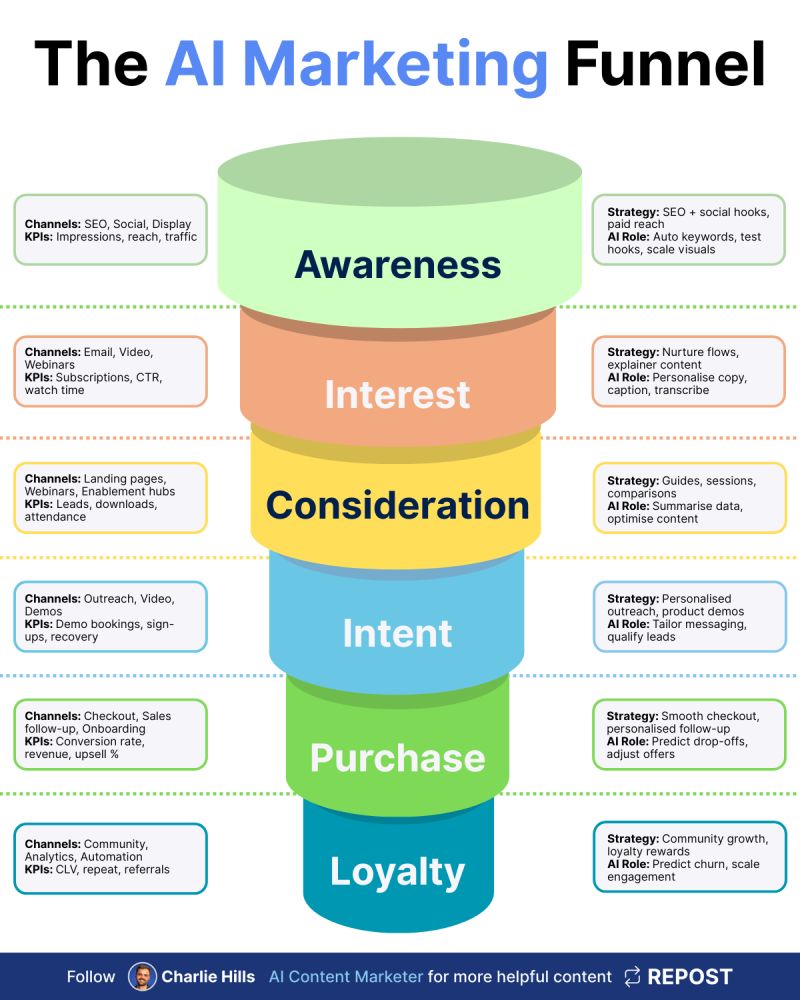
An AI SEO sales funnel is a strategic framework that integrates artificial intelligence tools into every stage of the buyer’s journey—from initial awareness to final purchase—specifically to improve search engine visibility and conversion rates. Unlike a traditional funnel where you manually analyze data and adjust campaigns, an AI-powered funnel uses algorithms to process vast amounts of search data, user behavior, and content performance in real time.
The core difference lies in automation and prediction. Standard SEO funnels react to what has already happened. AI funnels anticipate what users will search for next, which content will rank, and which leads are most likely to convert. This proactive approach reduces wasted ad spend, shortens the sales cycle, and creates a self-optimizing system that improves with every interaction.
Why Traditional Sales Funnels Fail Without AI
Traditional funnels have a fundamental flaw: they are static. You build a landing page, write a few blog posts, and run ads, hoping the traffic converts. But search algorithms like Google’s RankBrain and MUM now prioritize semantic relevance and user satisfaction over simple keyword matching. A static funnel cannot adapt to these dynamic ranking factors quickly enough.
Moreover, manual A/B testing is slow. By the time you discover that a headline works, your competitors have already moved ahead. AI eliminates this lag by testing hundreds of variations simultaneously. It analyzes click-through rates, dwell time, and bounce rates to instantly adjust content placement, meta descriptions, and even the color of your call-to-action buttons. The result is a funnel that evolves daily, not quarterly.
Core Components of an AI-Driven SEO Funnel
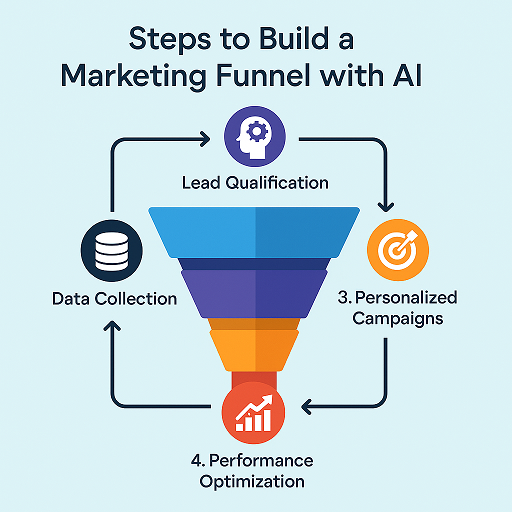
Building a successful AI SEO sales funnel requires understanding its four distinct layers. Each layer uses specific AI tools and strategies to move prospects closer to a purchase decision.
1. AI-Powered Keyword and Intent Discovery
This is the foundation. Instead of using basic keyword tools that show search volume, AI platforms like Clearscope, Surfer SEO, and MarketMuse analyze the entire search engine results page (SERP) to understand the topical depth required to rank. They identify entity relationships, question modifiers, and latent semantic indexing (LSI) keywords that human researchers often miss.
More importantly, AI classifies search intent. It distinguishes between informational queries (“what is SEO”), navigational queries (“Ahrefs login”), and transactional queries (“best SEO tool for small business“). This classification ensures you create content that matches what the user actually wants at that moment, drastically improving engagement metrics.
2. Automated Content Generation and Optimization
AI writing assistants like Jasper, Copy.ai, and ChatGPT can generate draft content in seconds. However, the true power lies in optimization. AI tools analyze your draft against the top 10 ranking pages for your target keyword. They provide real-time suggestions for keyword density, readability scores, internal linking opportunities, and missing subtopics.
This process ensures your content is not just written but engineered to satisfy Google’s E-E-A-T (Experience, Expertise, Authoritativeness, Trustworthiness) guidelines. AI can also automatically update older blog posts with new statistics and data, keeping your funnel fresh without manual rewriting.
3. Dynamic Lead Scoring and Segmentation
Once traffic arrives, AI takes over the qualification process. Machine learning algorithms track every user action: pages visited, time spent, downloads, email opens, and form submissions. This behavioral data is scored in real time. A user who reads three pricing pages and visits your case study section scores higher than one who only reads a blog post.
This dynamic scoring feeds directly into your Customer Relationship Management (CRM) system. Sales teams receive prioritized lists of hot leads, while marketing automation sends tailored email sequences to colder leads. This prevents the common mistake of treating all traffic equally.
4. Predictive Analytics for Conversion Optimization
The final component is prediction. AI models analyze historical conversion data to predict which current leads are most likely to become customers. This allows you to allocate resources efficiently. For example, if the AI predicts a 90% chance of conversion for a specific lead, you can offer a personalized discount or schedule a direct sales call immediately.
Predictive analytics also optimize your landing pages. AI tools like Unbounce and Landingi use A/B testing algorithms that automatically kill underperforming variations and shift traffic to the winning version, often within hours of launch.
Step-by-Step Guide to Building Your AI SEO Sales Funnel
Implementing this system is not about buying every tool on the market. It is about creating a streamlined workflow. Follow these five steps to build a functional AI SEO sales funnel from scratch.
Step 1: Map Your Buyer Persona with AI Insights
Start by feeding your existing customer data into an AI analytics tool. Platforms like HubSpot and Salesforce Einstein can identify common traits, pain points, and online behaviors of your best customers. Use this data to create detailed personas that go beyond demographics. Understand their search habits, the questions they ask on forums, and the content formats they prefer (video, long-form, or infographics).
Step 2: Create a Topical Authority Cluster
Do not write random blog posts. Use AI to build a topical map. Choose one pillar page for your main keyword (e.g., “AI SEO Sales Funnel”) and create 10-15 cluster pages targeting long-tail variations. AI tools will suggest the exact subtopics that your audience is searching for. This structure signals authority to Google, helping your entire domain rank higher.
Step 3: Automate Lead Capture with Smart Forms
Static forms asking for a name and email are outdated. Use AI-powered forms that adapt based on the user’s source. If a visitor comes from a high-intent keyword like “AI SEO pricing,” the form can ask for company size and budget. If they come from a blog post, the form can offer a lead magnet like a checklist. Tools like Typeform and OptinMonster use conditional logic to create these dynamic experiences.
Step 4: Implement AI Chatbots for Instant Qualification
Deploy a chatbot on your site that uses natural language processing (NLP). This bot can answer common questions, qualify leads by asking pre-set questions, and even book meetings directly into your sales calendar. This reduces response time from hours to seconds, which is critical since 78% of customers buy from the first responder.
Step 5: Use Predictive Lead Scoring for Sales Follow-Up
Integrate your AI scoring model with your email marketing platform. Set up automated workflows that send different messages based on the lead score. High-scoring leads receive a direct “book a demo” email. Mid-scoring leads receive a case study. Low-scoring leads receive a nurturing newsletter sequence. This ensures relevance and prevents list fatigue.
Benefits of Using AI in Your SEO Funnel
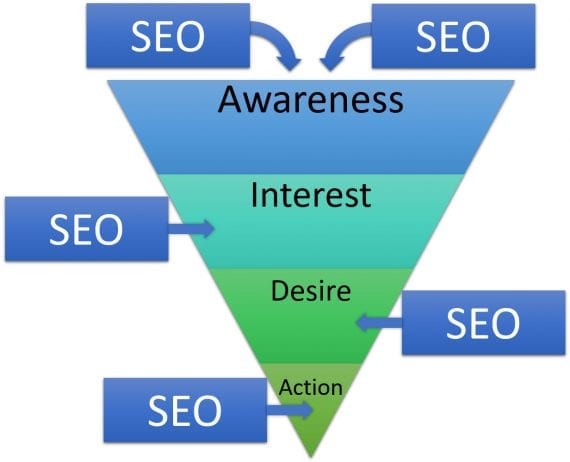
The advantages of this approach are measurable and significant. Here are the primary benefits you can expect to see within the first few months of implementation.
- Reduced Cost Per Acquisition: AI targets users who are already showing buying signals, reducing wasted ad spend on unqualified traffic.
- Faster Time-to-Market: Content that takes a human writer a week to research and draft can be outlined and optimized by AI in under an hour.
- Improved Personalization: Every user sees a different version of your site based on their behavior, increasing the likelihood of engagement.
- Scalable Content Production: AI allows you to produce 10x more content without sacrificing quality, covering more long-tail keywords.
- Data-Driven Decisions: Gut feelings are replaced by algorithmic predictions that have a proven track record of accuracy.
Limitations and Challenges to Consider
AI is not a magic bullet. There are significant challenges that must be managed to avoid failure.
Data Quality Issues: AI models are only as good as the data they are trained on. If your historical sales data is messy or incomplete, your predictive scoring will be inaccurate. You must invest time in cleaning your CRM and analytics data before implementing AI.
Lack of Human Creativity: AI-generated content often lacks the unique voice, storytelling, and emotional connection that human writers provide. If your entire funnel is AI-generated, it may sound robotic and fail to build trust. The best approach is a hybrid model where AI handles research and drafting, but humans edit and add personality.
Algorithm Updates: Google frequently updates its search algorithms. An AI model trained on last year’s ranking factors may become obsolete overnight. Continuous monitoring and retraining are necessary.
AI SEO Sales Funnel vs. Traditional Funnel: A Comparison
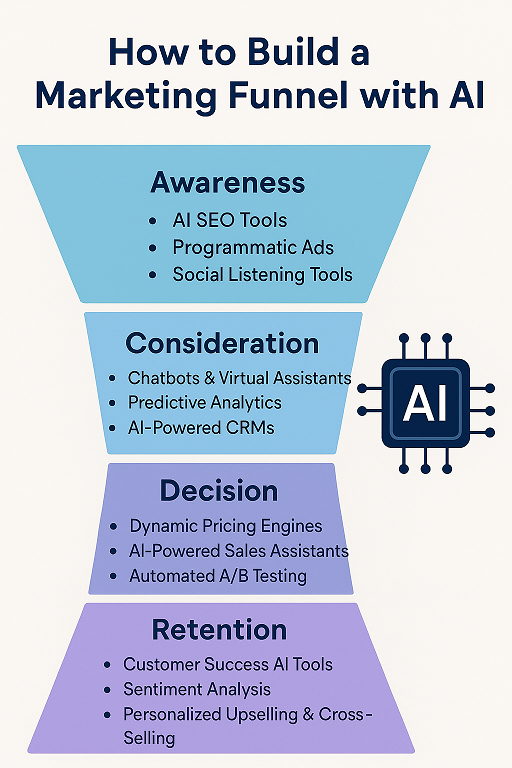
To understand the value proposition, consider the key differences in operational efficiency and outcomes.
| Feature | Traditional Funnel | AI SEO Sales Funnel |
|---|---|---|
| Keyword Research | Manual, based on historical volume | Predictive, based on intent and SERP analysis |
| Content Creation | Slow, human-only, prone to bias | Rapid, data-driven, optimized in real-time |
| Lead Scoring | Static rules (e.g., job title) | Dynamic behavioral scoring (e.g., page views) |
| A/B Testing | Takes weeks, limited variables | Continuous, tests hundreds of variables |
| Adaptability | Reacts to changes after they happen | Predicts and prepares for changes |
| Personalization | Basic (e.g., first name in email) | Deep (e.g., content tailored to industry) |
Common Mistakes to Avoid When Implementing AI
Many businesses fail to see ROI from AI not because the technology is bad, but because they make critical implementation errors. Avoid these pitfalls.
Mistake 1: Over-Reliance on AI for Everything
Delegating all strategy to AI without human oversight leads to generic branding. AI can tell you what to write, but it cannot tell you what your brand stands for. Always have a human editor review AI output for factual accuracy and brand voice alignment.
Mistake 2: Ignoring the Middle of the Funnel
Most AI tools focus on top-of-funnel content (blog posts) and bottom-of-funnel (sales emails). The middle—where leads compare options and build trust—is often neglected. Use AI to create comparison guides, webinars, and interactive tools that nurture leads during this critical evaluation phase.
Mistake 3: Not Integrating with Your CRM
If your AI SEO tool does not feed data directly into your CRM, you are creating data silos. The AI cannot score leads if it does not know what happens after a form submission. Ensure seamless integration between your analytics, content, and sales platforms.
Mistake 4: Chasing Vanity Metrics
Ranking for a high-volume keyword is useless if it does not convert. Focus on conversion rate, lead quality, and revenue per visitor. Use AI to filter out traffic that has no purchase intent, even if it inflates your page views.
Important Notes on Data Privacy and Ethics
Using AI to track user behavior raises significant privacy concerns. Regulations like GDPR and CCPA impose strict rules on data collection and consent. Your AI funnel must be transparent about what data it collects and why. Implement cookie consent banners that clearly explain your tracking methods.
Furthermore, avoid using AI to manipulate search rankings through spammy tactics like keyword stuffing or cloaking. Google’s spam policies are clear: AI-generated content that exists solely to manipulate rankings will be penalized. Use AI to enhance user experience, not to deceive search engines.
Frequently Asked Questions
How much does it cost to build an AI SEO sales funnel?
The cost varies widely. Entry-level tools like Surfer SEO and Jasper cost around $50-$100 per month. Mid-level automation platforms like HubSpot can cost $500-$1,000 per month. Enterprise solutions with custom machine learning models can exceed $10,000 per month. A small business can start with a basic stack for under $300 per month.
Can AI replace SEO specialists?
No. AI replaces repetitive tasks like data analysis and keyword grouping, but it cannot replace strategic thinking, creative storytelling, or relationship building. SEO specialists who use AI become more valuable because they can manage larger workloads and focus on high-level strategy.
How long does it take to see results from an AI SEO funnel?
Initial improvements in click-through rates and lead scoring can be seen within 2-4 weeks. However, significant organic traffic growth typically takes 3-6 months, as search engines need time to crawl and index your new AI-optimized content.
Is AI-generated content penalized by Google?
Google does not penalize AI content per se. It penalizes low-quality content that does not provide value to users. If your AI-generated content is factual, well-structured, and meets search intent, it can rank well. Always review and edit AI output to ensure it meets your quality standards.
What is the best AI tool for SEO in 2025?
T The optimal stack depends on your needs. For content optimization, Clearscope and Surfer SEO are leaders. For lead scoring, HubSpot and 6sense are powerful. For chatbots, Drift and Intercom excel. Test a few tools to find what integrates best with your existing workflow.
Conclusion
The AI SEO sales funnel represents a fundamental shift in how businesses acquire and convert customers online. It moves marketing from a reactive, manual process to a proactive, automated system that learns and improves continuously. By leveraging AI for keyword discovery, content optimization, lead scoring, and predictive analytics, you can achieve higher conversion rates, lower acquisition costs, and a significant competitive advantage.
The key to success lies in balance. Use AI to handle the data-heavy lifting, but retain human oversight for creativity, ethics, and strategy. Start small by integrating AI into one stage of your funnel, measure the results, and scale what works. The future of search marketing is not about replacing humans with machines; it is about empowering humans with machine intelligence to build funnels that truly understand and serve the customer.
Xem thêm:
- AI SEO Topical Relevance: The Complete Guide to Dominating Search in 2025
- AI SEO Log File Analysis: The Complete Guide to Unlocking Crawl Insights
- Mastering AI SEO Forecasting: Predict Rankings, Traffic, and Algorithm Shifts Before They Happen
- AI Outreach: The Ultimate Guide to Automating and Personalizing Your Sales Engagement
- AI SEO Writing: The Complete Guide to Ranking Smarter with Machine Assistance
Bài viết cùng chủ đề:

AI SEO SEO Automation with Make: The Complete Workflow Guide

AI SEO SEO Automation with Zapier: The Complete Workflow Guide

AI SEO SEO Automation with n8n: The Complete Workflow Guide
AI SEO SEO Automation with Gemini: The Complete Guide to Scaling Organic Growth

AI SEO SEO Automation with Claude: The Complete Guide to Scaling Content in 2025

AI SEO SEO Automation with ChatGPT: The Complete Playbook for 2025

AI SEO & SEO Automation for Affiliate Sites: The 2025 Playbook for Passive Income Growth
AI SEO & SEO Automation for Bloggers: The Complete Guide to Scaling Your Content

AI SEO & SEO Automation for Agencies: The Complete 2025 Playbook

AI SEO and SEO Automation for Ecommerce: The Complete Playbook for 2025

AI SEO & SEO Automation for WordPress: The Complete Playbook for 2025
AI SEO SEO Automation Strategy: The Complete Playbook for 2025

Mastering the AI SEO SEO Automation Process: A Complete Guide to Scaling Organic Growth
AI SEO SEO Automation System: The Complete Guide to Scaling Organic Growth in 2025
AI SEO SEO Automation Platform: The Complete Guide to Scaling Organic Growth in 2025
AI SEO SEO Automation Software: The Complete Guide to Scaling Organic Growth in 2025















