
No products in the cart.
AI SEO Topical Relevance: The Complete Guide to Dominating Search in 2025
10
Aug
Aug
AI SEO Topical Relevance has fundamentally changed how search engines evaluate and rank content. Gone are the days when sprinkling a keyword a dozen times across a page guaranteed visibility. Modern search algorithms, powered by machine learning models like BERT and MUM, now assess the depth, context, and interconnectedness of your content. This guide explains how to build topical authority that withstands algorithm updates and drives sustainable organic traffic.
What Is AI SEO Topical Relevance?
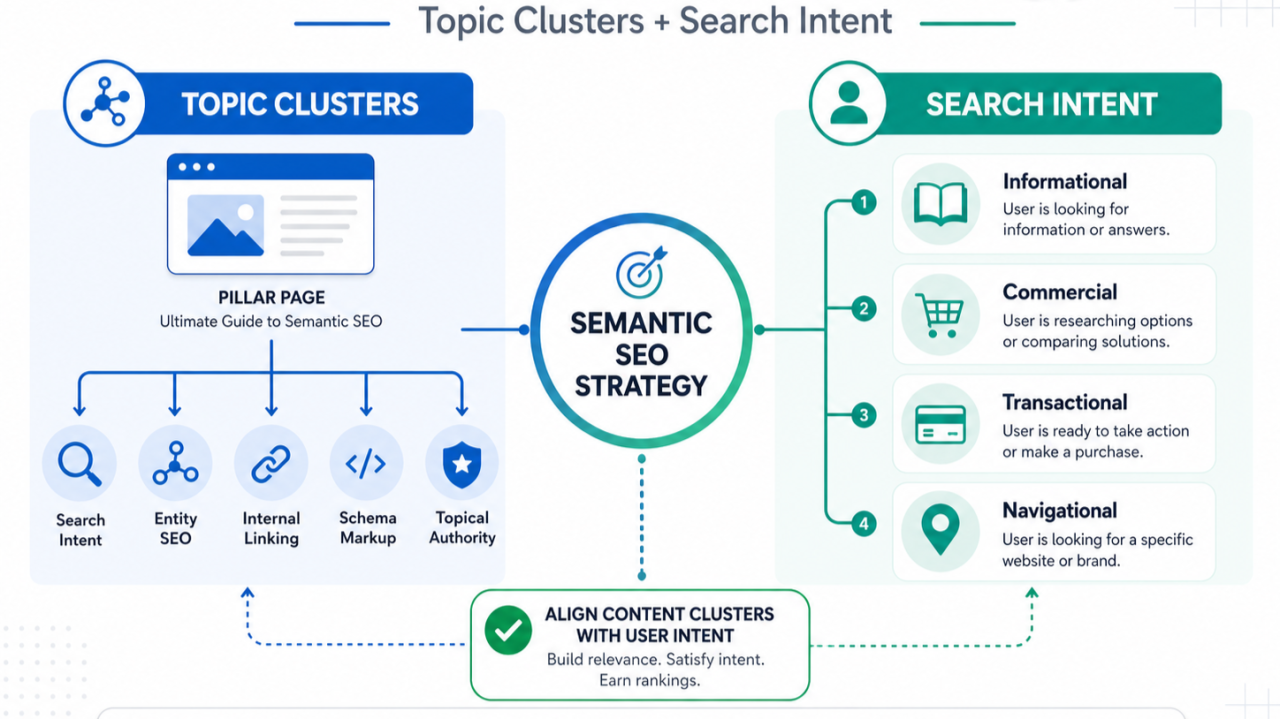
AI SEO Topical Relevance refers to the degree to which a piece of content comprehensively covers a specific subject area, as interpreted by artificial intelligence algorithms. Search engines no longer just match strings of text; they understand entities, concepts, and the relationships between them. When your website demonstrates deep knowledge across a topic cluster, the AI rewards you with higher rankings for both head terms and long-tail variations.
The shift from keyword matching to semantic understanding means that relevance is now measured by how well your content answers the user’s underlying intent. Google’s RankBrain and similar systems analyze user behavior signals to determine if your page satisfies the query. If visitors bounce quickly or search again for the same information, the AI interprets that as a lack of topical relevance.
How AI Algorithms Evaluate Topical Relevance
To optimize for AI SEO Topical Relevance, you must understand the mechanics behind the evaluation. The process involves several layers of analysis that work together to form a complete picture of your content’s authority.
Entity Recognition and Semantic Mapping
Search engines use natural language processing to identify key entities within your content—people, places, products, and concepts. They then map the relationships between these entities. For example, an article about “electric vehicle charging” should naturally mention related entities like “battery capacity,” “charging stations,” “kilowatt-hours,” and “regenerative braking.” The AI checks whether your content covers the full semantic field expected for that topic.
Content Depth and Coverage Analysis
AI systems measure how thoroughly you address a subject. A 500-word overview of a complex topic signals shallow expertise, while a 2,500-word comprehensive guide demonstrates authority. The algorithm evaluates whether you cover subtopics, answer follow-up questions, and provide actionable information. This is why pillar pages and supporting cluster content perform so well in modern search results.
Contextual Relevance Signals
Beyond the text itself, AI considers contextual factors like the freshness of information, the credibility of external links, and the engagement metrics of your page. Dwell time, scroll depth, and social shares all feed into the algorithm’s understanding of whether your content truly satisfies the query. These behavioral signals help the AI distinguish between content that merely mentions a topic and content that genuinely covers it.
The Connection Between Topical Authority and Search Rankings
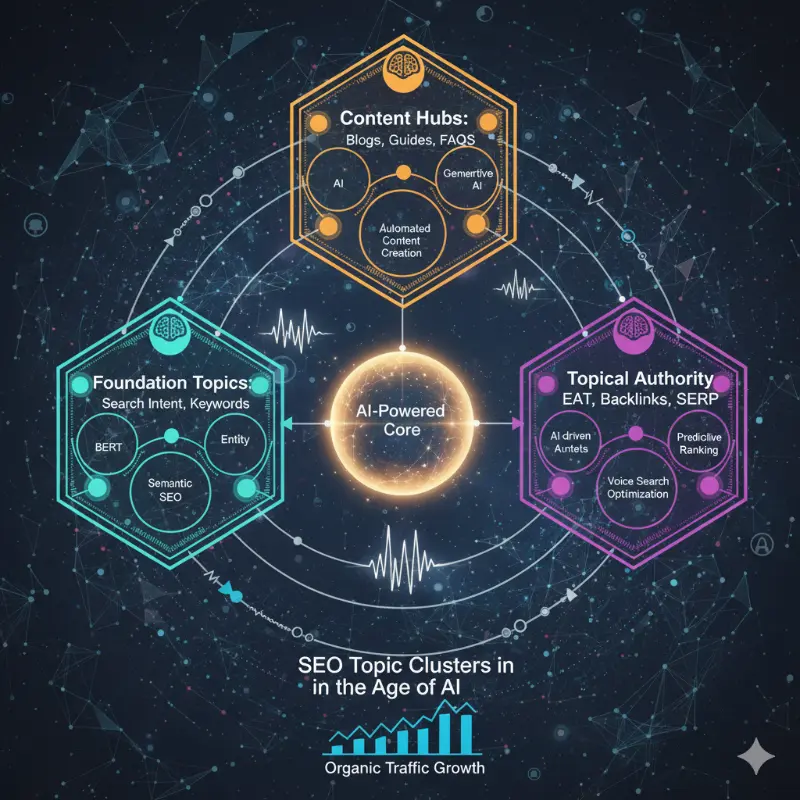
Topical authority is the cumulative result of consistently publishing high-quality, interconnected content on a specific subject. When you build topical authority, you create a web of information where each piece reinforces the others. This structure helps AI algorithms recognize your site as a reliable resource.
Consider how a medical website gains trust. A single article about heart health is useful, but a site with articles on symptoms, treatments, prevention, medications, and lifestyle changes for heart disease demonstrates comprehensive expertise. The AI sees the interlinking between these articles and understands that the site covers the topic from every angle. This holistic view drives higher rankings across the entire cluster.
Building a Topical Map for AI SEO Success
Creating a topical map is the first strategic step toward improving AI SEO Topical Relevance. This map outlines all the subtopics, questions, and related concepts that fall under your main subject area. It serves as your content blueprint.
Step 1: Identify Your Core Topic Pillars
Start by defining the main categories of your niche. If you run a fitness blog, your pillars might be strength training, cardiovascular health, nutrition, and recovery. Each pillar represents a broad area of expertise that you will build content around.
Step 2: Research Subtopics and Long-Tail Keywords
For each pillar, brainstorm every possible question your audience might ask. Use tools like AnswerThePublic, Google’s People Also Ask, and keyword research platforms to uncover related queries. Organize these into logical groups that will become your cluster content.
Step 3: Map Content to User Intent
Different subtopics serve different stages of the buyer’s journey. Some content should target informational queries, while other pieces should address commercial or transactional intent. Your topical map should reflect this variety, ensuring you capture users at every stage of their research process.
Practical Strategies to Improve AI SEO Topical Relevance
Understanding the theory is essential, but implementation is where the results happen. The following strategies will help you optimize your content for AI-driven search evaluation.
Create Comprehensive Pillar Content
Your pillar pages should be exhaustive guides that cover the broad topic in depth. Aim for 3,000 to 5,000 words, structured with clear headings, tables, and visual elements. These pages serve as the hub of your topical cluster, linking out to all related articles.
Develop Supporting Cluster Content
Each cluster article should target a specific subtopic or long-tail keyword. These pieces should be detailed enough to stand alone but clearly connected to the pillar page through internal links. The anchor text should be descriptive and relevant, helping both users and AI understand the relationship between the pages.
Use Semantic HTML and Structured Data
Proper HTML formatting helps AI parse your content more effectively. Use heading tags in a logical hierarchy, implement schema markup for articles and FAQs, and ensure your content is easily crawlable. Structured data explicitly tells search engines what your content is about, reinforcing your topical relevance signals.
Incorporate Multimedia and Diverse Content Formats
AI algorithms increasingly consider content variety when assessing relevance. Include images with descriptive alt text, embed videos, create infographics, and consider adding interactive elements like calculators or quizzes. These formats increase engagement metrics and provide additional signals of comprehensive coverage.
Benefits of Strong AI SEO Topical Relevance
The advantages of optimizing for topical relevance extend far beyond simple keyword rankings. When you commit to this approach, you build a sustainable SEO foundation that compounds over time.
- Higher click-through rates: Content that thoroughly covers a topic earns more prominent placement and richer snippets, attracting more clicks.
- Improved dwell time: Comprehensive content keeps users engaged longer, signaling satisfaction to AI algorithms.
- Natural backlink acquisition: Other websites link to authoritative resources that cover topics comprehensively, building your link profile organically.
- Resilience to algorithm updates: Sites with genuine topical authority rarely suffer from core updates because they provide real value to users.
- Broader keyword coverage: A well-structured topical cluster naturally ranks for hundreds of long-tail variations without separate optimization efforts.
- Keyword portfolio growth: Monitor how many keywords your site ranks for within your target topic area. This number should grow as your topical authority increases.
- Average position for cluster keywords: Track the mean ranking across all keywords in a specific cluster to see overall improvement.
- Organic traffic to pillar pages: Pillar pages should attract increasing traffic as they gain authority.
- Engagement metrics: Watch dwell time, pages per session, and bounce rate for your topical cluster pages.
- Featured snippet acquisition: Earning position zero for questions within your topic demonstrates strong relevance.
Limitations and Challenges of Topical Relevance Optimization
While the benefits are substantial, pursuing AI SEO Topical Relevance comes with challenges that require careful management.
Time and resource investment: Creating comprehensive content across multiple subtopics demands significant effort. A single topical cluster might require months of production. Smaller teams must prioritize which clusters to build first based on business value.
Content cannibalization risks: When multiple pages target similar keywords, they can compete against each other in search results. Careful planning of your topical map prevents this by ensuring each piece has a distinct focus and intent.
Keeping content current: AI algorithms favor fresh information. Maintaining topical relevance requires regular updates to existing content, which adds to the ongoing workload.
AI SEO Topical Relevance vs. Traditional Keyword Optimization
Understanding the difference between old-school SEO and the AI-driven approach clarifies why the shift matters.
| Aspect | Traditional Keyword Optimization | AI SEO Topical Relevance |
|---|---|---|
| Primary focus | Exact keyword matches | Semantic coverage and entity relationships |
| Content structure | Individual pages targeting single keywords | Interconnected clusters with pillar pages |
| Measurement | Keyword rankings and density | Topical authority and user engagement |
| Algorithm understanding | String matching | Natural language processing and intent recognition |
| Content length | Often short and superficial | Comprehensive and in-depth |
| Link strategy | Quantity of backlinks | Relevance and contextual placement |
The table illustrates a fundamental shift in how search engines evaluate value. Traditional methods focused on manipulating signals, while the AI approach rewards genuine expertise and user satisfaction.
Common Mistakes That Hurt Your Topical Relevance
Even well-intentioned SEO efforts can undermine your topical authority. Recognizing these pitfalls helps you avoid them.
Keyword Stuffing in the AI Era
Repeating the same keyword unnaturally throughout your content triggers AI spam detectors. Modern algorithms penalize this practice severely. Instead of forcing keywords, write naturally and let related terms appear organically within the context.
Publishing Thin Content to Fill Gaps
Rushing to cover every subtopic with shallow articles damages your credibility. AI algorithms recognize when a page lacks substance. A 300-word article that barely touches on a topic signals low expertise and can drag down the entire cluster’s performance.
Ignoring Internal Linking Opportunities
Publishing cluster content without proper internal links creates isolated pages that fail to build topical authority. Every new article should connect to relevant existing content, and pillar pages should be updated as new cluster pieces are published.
Focusing Only on Text Content
Search engines now evaluate the full user experience. Pages with only text, no images, no videos, and no interactive elements appear less comprehensive than multimedia-rich resources. Diversify your content formats to strengthen relevance signals.
How to Measure Your AI SEO Topical Relevance
Tracking your progress requires looking beyond traditional metrics. While rankings matter, they are a lagging indicator. Focus on these leading signals:
Tools to Support Your Topical Relevance Strategy
Several platforms help you research, plan, and execute a topical relevance strategy effectively.
Keyword research tools: Ahrefs, SEMrush, and Moz provide data on keyword difficulty, search volume, and related terms. Use their clustering features to group keywords into logical topics.
Content optimization platforms: Surfer SEO and Clearscope analyze top-ranking pages and suggest related terms to include. These tools help ensure your content covers the semantic field expected by AI algorithms.
Site audit tools: Screaming Frog and Sitebulb help you visualize your internal linking structure and identify orphaned content or weak topical clusters.
Rank tracking software: Tools like STAT or AccuRanker allow you to monitor keyword movements across your entire topical map, giving you a clear picture of progress.
Important Notes for Long-Term Success
Building AI SEO Topical Relevance is not a one-time project but an ongoing commitment. The following principles will guide your sustained efforts.
Consistency matters more than volume. Publishing one comprehensive, well-researched article per week outperforms five shallow posts. Each piece should genuinely advance your coverage of the topic.
User feedback is your best guide. Monitor comments, emails, and social media interactions to identify gaps in your content. Questions your audience asks repeatedly signal topics you need to cover.
Algorithm updates will continue to evolve. The core principle of providing comprehensive, accurate, and user-focused content will remain constant regardless of how the AI models change.
Frequently Asked Questions
How long does it take to build topical authority?
Building meaningful topical authority typically takes six to twelve months of consistent publishing. The timeline depends on the competitiveness of your niche, the quality of your content, and how quickly you can produce comprehensive resources. Smaller, less competitive niches may see results faster, while saturated markets require more patience and persistence.
Can small websites compete with large publishers on topical relevance?
Yes, small websites can compete by focusing on niche specificity. Large publishers often cover topics broadly, leaving room for specialized sites to go deeper on specific subtopics. A small site that becomes the definitive resource for a narrow aspect of a topic can outperform larger competitors because AI algorithms recognize the depth of expertise.
Does internal linking really affect AI SEO Topical Relevance?
Internal linking is one of the strongest signals for topical relevance. Links between related articles help AI algorithms understand the structure of your content and the relationships between concepts. A well-linked cluster demonstrates that you have systematically covered a subject, which boosts your authority for all related queries.
How often should I update my pillar content?
Pillar content should be reviewed and updated at least every six months. Check for outdated statistics, broken links, and new developments in your industry. Adding new sections and refreshing examples signals to AI algorithms that your content remains current and relevant.
What is the ideal length for cluster content?
Cluster content should be substantial enough to fully answer the specific query it targets. Aim for 1,500 to 2,500 words for most subtopics. The exact length depends on the complexity of the subject. The goal is comprehensive coverage without unnecessary fluff or repetition.
Conclusion
AI SEO Topical Relevance represents the new standard for search engine optimization. The algorithms that determine rankings have evolved beyond simple keyword matching to understand context, entities, and user intent. By building comprehensive topical clusters, creating interconnected content, and focusing on genuine expertise, you position your website for sustainable success.
The transition requires effort, but the rewards are substantial. Sites that master topical relevance enjoy higher rankings, more organic traffic, and greater resilience against algorithm changes. Start by mapping your niche, identifying your pillars, and committing to deep, valuable content. The AI algorithms will recognize your authority, and your audience will reward you with engagement and loyalty.
Xem thêm:
- AI Publishing Workflow: The Complete Guide to Automating and Scaling Your Content Production
- AI SEO for Lawyers: The Complete Guide to Dominating Legal Search in 2025
- AI SEO Topic Clustering: The Complete Guide to Building Topical Authority in 2025
- AI SEO Silo Architecture: The Complete Guide to Building Topically Authoritative Websites
- AI SEO Content Originality: The Complete Guide to Standing Out in 2025
Bài viết cùng chủ đề:

AI SEO SEO Automation with Make: The Complete Workflow Guide

AI SEO SEO Automation with Zapier: The Complete Workflow Guide

AI SEO SEO Automation with n8n: The Complete Workflow Guide
AI SEO SEO Automation with Gemini: The Complete Guide to Scaling Organic Growth

AI SEO SEO Automation with Claude: The Complete Guide to Scaling Content in 2025

AI SEO SEO Automation with ChatGPT: The Complete Playbook for 2025

AI SEO & SEO Automation for Affiliate Sites: The 2025 Playbook for Passive Income Growth
AI SEO & SEO Automation for Bloggers: The Complete Guide to Scaling Your Content

AI SEO & SEO Automation for Agencies: The Complete 2025 Playbook

AI SEO and SEO Automation for Ecommerce: The Complete Playbook for 2025

AI SEO & SEO Automation for WordPress: The Complete Playbook for 2025
AI SEO SEO Automation Strategy: The Complete Playbook for 2025

Mastering the AI SEO SEO Automation Process: A Complete Guide to Scaling Organic Growth
AI SEO SEO Automation System: The Complete Guide to Scaling Organic Growth in 2025
AI SEO SEO Automation Platform: The Complete Guide to Scaling Organic Growth in 2025
AI SEO SEO Automation Software: The Complete Guide to Scaling Organic Growth in 2025















