
No products in the cart.
AI SEO Seasonal Content: The Complete Playbook for Year-Round Organic Growth
31
Jul
Jul
Seasonal content has always been a powerful driver of organic traffic, but the way it is planned, produced, and optimized has changed forever. AI SEO seasonal content is now the standard for brands that want to capture holiday spikes, event-driven searches, and cyclical demand without exhausting their editorial teams. By combining machine learning with human creativity, marketers can now predict search trends, automate content variations, and scale personalization in ways that were impossible just a few years ago. This guide breaks down exactly how to build a seasonal content engine using AI, from data analysis to final publication.
What Is AI SEO Seasonal Content?
AI SEO seasonal content refers to the practice of using artificial intelligence tools to research, generate, optimize, and distribute content that targets time-bound search queries. These queries include holidays, weather changes, fiscal years, back-to-school periods, and industry-specific events like tax season or Black Friday. The core idea is not to replace human writers but to augment their workflow with predictive analytics, natural language processing, and automated content variations.
The nature of this approach is cyclical. Unlike evergreen content that stays relevant all year, seasonal content has a shelf life. AI helps identify the exact window when search volume begins to rise, allowing you to publish at the optimal moment. It also helps you repurpose existing assets for different seasons, saving time and budget. The result is a content calendar that aligns perfectly with user intent, reducing wasted effort and maximizing return on investment.
Why Traditional Seasonal Content Planning Falls Short
Before AI, seasonal content planning relied heavily on historical data and manual guesswork. Marketers would look at last year’s analytics, make assumptions about upcoming trends, and hope their content would rank before the peak. This approach has several critical flaws that AI directly addresses.
- Slow reaction time: Manual research takes weeks, often causing you to miss the early search volume that signals a season has started.
- Limited scalability: Creating unique content for every holiday, event, and regional variation is impossible for small teams.
- Poor personalization: Generic seasonal posts fail to address the specific needs of different audience segments.
- Missed long-tail opportunities: Human researchers often overlook niche queries that have low competition but high conversion rates.
- Inconsistent quality: When rushing to publish before a deadline, content quality suffers, hurting your authority.
- Lack of genuine experience: AI cannot taste a product, visit a location, or feel an emotion. Content that requires first-hand experience, like restaurant reviews or travel guides, needs heavy human editing.
- Factual errors: AI models can hallucinate, producing plausible but incorrect information. Always verify statistics, dates, and product specifications.
- Duplicate content risk: If you generate too many variations without significant changes, you may trigger duplicate content filters.
- Brand voice dilution: AI tends to produce generic, corporate-sounding text. You must inject your unique personality and perspective.
- Search engine penalties: Google’s spam policies target scaled content abuse. Unedited, low-value AI content can lead to manual actions.
AI solves these problems by processing millions of data points in seconds, identifying patterns, and generating drafts that human editors can refine. This shift from reactive to proactive planning is the core advantage of AI SEO seasonal content.
How AI Predicts Seasonal Search Trends

Predictive analytics is the backbone of any successful AI seasonal strategy. Tools like Google Trends, Ahrefs, and specialized AI platforms analyze historical search data to forecast future demand. The process involves three main steps: data collection, pattern recognition, and anomaly detection.
First, the AI gathers search volume data for relevant keywords over several years. It looks at the shape of the demand curve, noting when volume starts to rise, when it peaks, and when it declines. Second, it identifies recurring patterns, such as a spike every November or a dip every January. Third, it detects anomalies, such as a sudden interest in “outdoor heating” due to an unusually cold winter, and adjusts predictions accordingly.
This predictive power allows you to plan your editorial calendar months in advance. Instead of asking “when should we publish Christmas content?”, you can ask the AI to calculate the optimal publish date based on historical click-through rates and ranking velocity. The result is a data-driven schedule that maximizes visibility during the critical pre-season window.
Core Components of an AI Seasonal Content Workflow
Building a robust AI SEO seasonal content system requires integrating several components into a single workflow. Each component plays a specific role in moving from raw data to published, ranking content.
1. Trend Detection and Keyword Clustering
The first component is the trend detection engine. This AI scans search queries, social media mentions, and news articles to identify emerging seasonal topics. It then clusters these topics into groups based on search intent. For example, “best gifts for dad” and “father’s day gift ideas” would be clustered together because they share the same commercial intent. This clustering helps you create content hubs rather than isolated posts, which strengthens your topical authority.
2. Content Generation and Variation
Once you have your keyword clusters, the AI generates initial drafts. These are not final articles but structured outlines with suggested headings, key points, and data points. The AI can also create multiple variations of the same content for different regions, languages, or audience segments. For instance, a single “summer skincare” article can be adapted for humid climates, dry climates, and different age groups without starting from scratch.
3. On-Page Optimization
AI tools automatically optimize title tags, meta descriptions, header structure, and internal linking for each seasonal piece. They analyze competitor pages that currently rank and suggest improvements to match or exceed their relevance. This includes semantic keyword insertion, which helps search engines understand the context of your content beyond just the primary keyword.
4. Performance Monitoring and Iteration
After publication, the AI tracks performance metrics like impressions, clicks, and conversions. It compares these against the predicted baseline and identifies underperforming sections. This feedback loop allows you to update content in real-time, adding new information or fixing gaps before the season ends. For recurring seasons, this data becomes the foundation for next year’s strategy.
Benefits of Using AI for Seasonal Content

The advantages of integrating AI into your seasonal content strategy are measurable and significant. Here are the most impactful benefits based on real-world implementations.
| Benefit | Description | Impact |
|---|---|---|
| Speed to Market | AI can produce a 1500-word draft in under 60 seconds, reducing production time from days to hours. | Publish earlier, capture early search demand. |
| Cost Efficiency | Reduces the need for multiple freelance writers or agencies for bulk seasonal work. | Lower cost per article, better budget allocation. |
| Scalability | Easily create content for dozens of holidays, events, and regional variations simultaneously. | Cover more ground without hiring more staff. |
| Data-Driven Decisions | Every content piece is backed by predictive analytics, not guesswork. | Higher ranking probability and conversion rates. |
| Consistent Quality | AI follows your brand guidelines and tone of voice, reducing variability. | Stronger brand trust and authority. |
These benefits compound over time. The more seasonal data you collect, the smarter your AI becomes at predicting next year’s trends. This creates a competitive moat that is difficult for competitors to replicate without similar investment.
Limitations and Risks to Manage
While AI is a powerful tool, it is not a magic bullet. There are several limitations that must be managed to avoid damaging your SEO performance or brand reputation.
The key to mitigating these risks is a strict human-in-the-loop process. AI handles the heavy lifting of research and drafting, but a skilled editor reviews every piece for accuracy, tone, and value. This hybrid approach ensures you get the speed of AI without sacrificing the trust that comes from authentic, expert content.
AI vs. Human Writers for Seasonal Content
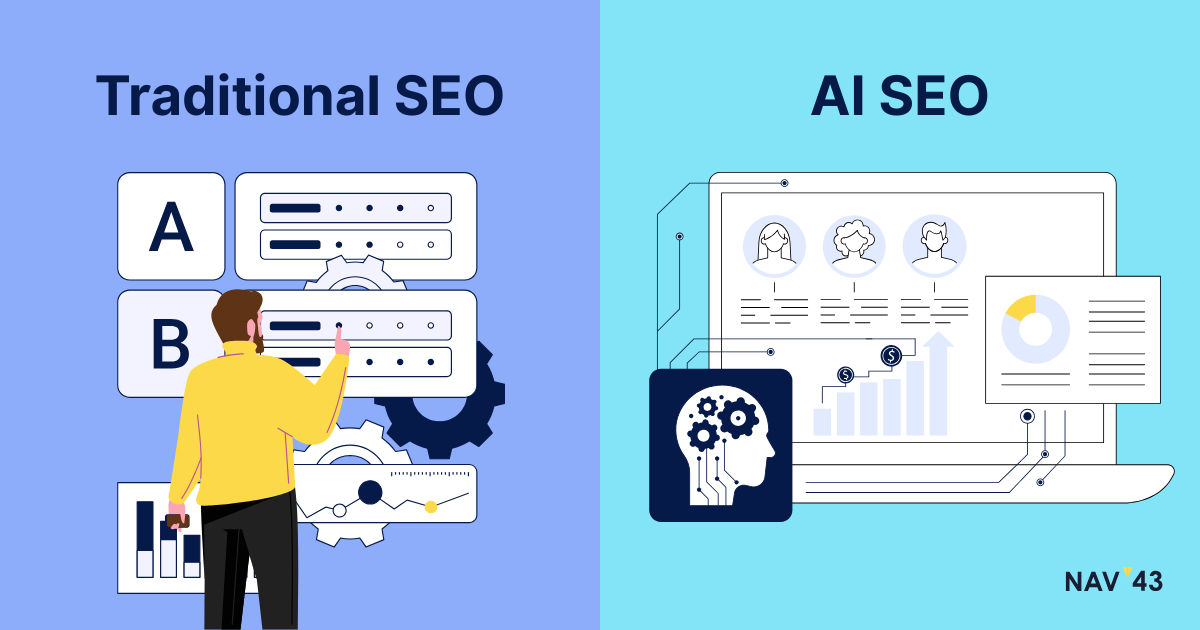
Understanding the division of labor between AI and humans is critical for successful implementation. Neither can fully replace the other, but they excel at different tasks.
| Aspect | AI Strengths | Human Strengths |
|---|---|---|
| Research | Processes millions of data points, identifies obscure long-tail keywords. | Understands nuanced user intent and cultural context. |
| Writing Speed | Generates drafts in seconds, ideal for bulk content. | Slower but produces original prose with personality. |
| Creativity | Can suggest new angles based on data patterns. | Creates memorable hooks, storytelling, and emotional resonance. |
| Accuracy | Prone to errors, needs verification. | Can verify facts through experience and expertise. |
| Scalability | Unlimited capacity, no fatigue. | Limited by time and energy. |
| SEO Optimization | Excellent at technical on-page elements like meta tags and internal links. | Better at natural keyword placement that reads smoothly. |
The most effective strategy is to use AI for the first 80% of the work, then have a human editor transform the draft into a polished, authoritative piece. This division of labor reduces costs while maintaining the quality that Google’s E-E-A-T guidelines reward.
Practical Guide: Building Your AI Seasonal Content Calendar
Implementing this strategy requires a step-by-step approach.
Step 1: Audit Your Historical Data
Start by exporting your Google Analytics and Search Console data for the past two to three years. Identify which pages saw traffic spikes during specific seasons. Note the exact dates when traffic began to rise and when it peaked. This historical baseline is the ground truth that your A
Step 2: Feed Data into an AI Trend Tool
Use a platform like Google Trends API, Exploding Topics, or a dedicated SEO AI tool. Input your historical keywords and let the AI generate a forecast for the upcoming season. Pay attention to the predicted growth rate and the suggested optimal publish date. Set a reminder to publish two to three weeks before the predicted traffic surge.
Step 3: Generate Content Clusters
For each seasonal event, create a pillar page and supporting cluster pages. The pillar page covers the broad topic, like “Summer Fitness Guide,” while cluster pages target specific long-tail queries like “best exercises for beach body” or “summer running hydration tips.” Use AI to generate the outlines for all these pages, ensuring they interlink properly.
Step 4: Draft and Edit with a Hybrid Workflow
Use an AI writing assistant like Claude or ChatGPT to generate the first draft. Provide it with your brand guidelines, target keywords, and any unique data points you want included. Then, have a human editor rewrite the introduction, add personal anecdotes, verify all facts, and ensure the content aligns with your brand voice. This step is non-negotiable for quality.
Step 5: Automate Distribution and Tracking
Once published, use AI-powered tools to automate social media distribution and email marketing blasts. Set up dashboards that track keyword rankings daily. If a piece is underperforming, use AI to suggest quick fixes, such as adding a FAQ section or updating the title tag. This iterative process continues until the season ends.
Common Mistakes with AI Seasonal Content and How to Avoid Them
Even experienced marketers make errors when adopting AI. Here are the most common pitfalls and the strategies to avoid them.
Mistake 1: Publishing Too Early or Too Late
Publishing too early means your content sits without traffic, and search engines may not index it properly. Publishing too late means you miss the peak. The fix is to rely on AI predictions but always add a buffer. Publish at the earliest predicted date, not the average date.
Mistake 2: Ignoring Local and Regional Variations
Seasonal timing differs by region. “Back to school” in Australia is in January, not September. Use AI to segment your data by geography and create region-specific versions of your content. This is a huge opportunity that most competitors ignore.
Mistake 3: Over-Optimizing for Keywords
AI can easily stuff keywords into content, making it unreadable. Always set a strict keyword density limit and instruct the AI to prioritize natural language. After editing, read the content out loud. If it sounds robotic, rewrite it.
Mistake 4: Forgetting to Update Old Seasonal Content
Last year’s Christmas gift guide is still valuable this year. Instead of creating new content from scratch, use AI to update the old piece with new products, prices, and trends. This preserves your existing authority and saves significant time.
Mistake 5: Neglecting User Intent Beyond the Season
Some users search for seasonal topics after the season ends, like “how to store Christmas decorations.” Create a separate piece of evergreen content that captures this post-season traffic. AI can help you identify these “shoulder season” queries.
Important Notes for Long-Term Success
To sustain success with AI SEO seasonal content, keep these principles in mind. First, always prioritize user experience over search engine manipulation. Google’s algorithms are sophisticated enough to detect content that exists solely to rank, and they will penalize it. Second, maintain a human editor who has deep knowledge of your industry. This person is your quality gatekeeper. Third, document your AI workflows and results. What worked for one season may not work for another, so continuous learning is essential.
Also, be aware of Google’s guidelines on AI-generated content. Google does not ban AI content outright, but it does penalize content that is created primarily to manipulate search rankings. Your content must demonstrate experience, expertise, authoritativeness, and trustworthiness. This means including original data, expert quotes, and unique insights that AI cannot generate on its own.
Frequently Asked Questions
What is the best AI tool for seasonal content creation?
The best tool depends on your specific needs. For trend prediction, Google Trends and Exploding Topics are excellent. For content generation, Claude and ChatGPT offer strong writing capabilities. For end-to-end SEO optimization, platforms like Surfer SEO and Clearscope integrate AI with on-page analysis. A combination of these tools typically yields the best results.
How far in advance should I publish seasonal content?
Most SEO experts recommend publishing 4 to 6 weeks before the peak search date. This gives search engines time to index and rank your content. For major holidays like Christmas, start publishing in early November. For smaller events, a 2 to 3 week lead time is often sufficient. Use AI to analyze your specific niche, as some industries have longer lead times.
Can Google detect AI-written content?
Google can detect patterns that are common in AI-generated text, such as repetitive phrasing and lack of original insight. However, Google’s primary focus is on content quality, not the method of creation. If your AI content is well-edited, factually accurate, and provides genuine value, it can rank just as well as human-written content.
How do I avoid duplicate content when using AI for multiple seasonal pages?
Provide the AI with unique data points, different angles, and distinct target keywords for each page. After generation, use a plagiarism checker to ensure uniqueness. Additionally, manually rewrite the introduction and conclusion of each piece to ensure a different voice and perspective.
Is AI seasonal content worth the investment for small businesses?
Yes, especially for small businesses with limited marketing budgets. AI reduces the cost of content production by up to 70%, allowing you to compete with larger brands. However, you must invest time in learning the tools and establishing a quality review process. The initial learning curve is worth the long-term savings.
Conclusion
AI SEO seasonal content is not a passing trend; it is the new baseline for competitive digital marketing. The ability to predict demand, generate scalable content, and optimize in real-time gives businesses a significant edge in capturing time-sensitive traffic. The key to success lies in a balanced approach: let AI handle the heavy lifting of data analysis and drafting, but never remove the human element of expertise and judgment. By following the workflows and avoiding the common pitfalls outlined in this guide, you can build a seasonal content engine that delivers consistent, measurable growth year after year. Start small, measure your results, and scale what works. The seasons are coming, and with AI, you will be ready.
Xem thêm:
- AI SEO Knowledge Base: The Complete Guide to Building and Using One in 2025
- AI Search Volume: The Ultimate Guide to Tracking and Leveraging AI-Related Search Trends
- AI SEO Content Editing: The Complete Guide to Smarter, Faster Optimization
- AI SEO Schema Markup Generator: The Complete Guide to Automated Structured Data
- AI SEO Backlink Prospecting: The Complete Guide to Automating Link Building in 2025
Bài viết cùng chủ đề:

AI SEO SEO Automation with Make: The Complete Workflow Guide

AI SEO SEO Automation with Zapier: The Complete Workflow Guide

AI SEO SEO Automation with n8n: The Complete Workflow Guide
AI SEO SEO Automation with Gemini: The Complete Guide to Scaling Organic Growth

AI SEO SEO Automation with Claude: The Complete Guide to Scaling Content in 2025

AI SEO SEO Automation with ChatGPT: The Complete Playbook for 2025

AI SEO & SEO Automation for Affiliate Sites: The 2025 Playbook for Passive Income Growth
AI SEO & SEO Automation for Bloggers: The Complete Guide to Scaling Your Content

AI SEO & SEO Automation for Agencies: The Complete 2025 Playbook

AI SEO and SEO Automation for Ecommerce: The Complete Playbook for 2025

AI SEO & SEO Automation for WordPress: The Complete Playbook for 2025
AI SEO SEO Automation Strategy: The Complete Playbook for 2025

Mastering the AI SEO SEO Automation Process: A Complete Guide to Scaling Organic Growth
AI SEO SEO Automation System: The Complete Guide to Scaling Organic Growth in 2025
AI SEO SEO Automation Platform: The Complete Guide to Scaling Organic Growth in 2025
AI SEO SEO Automation Software: The Complete Guide to Scaling Organic Growth in 2025















