
No products in the cart.
AI SEO Seed Keywords: The Complete Guide to Smarter Content Discovery
10
Aug
Aug
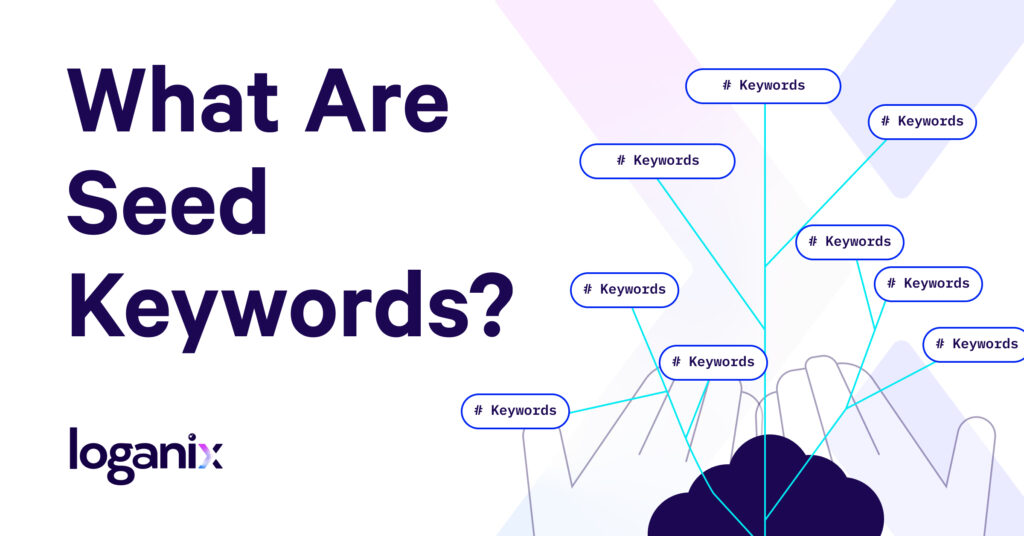
AI SEO seed keywords are the foundational terms that power modern content strategies. These short, high-level phrases act as the starting point for artificial intelligence tools to generate clusters of long-tail variations, semantic topics, and search intent patterns. In 2025, relying on manual keyword research alone is no longer sufficient. Understanding how to leverage AI SEO seed keywords helps marketers uncover hidden opportunities, streamline content production, and align with how search engines interpret context. This guide explains everything from the core concept to practical implementation, including real examples, common pitfalls, and expert-level workflows.
What Are AI SEO Seed Keywords?
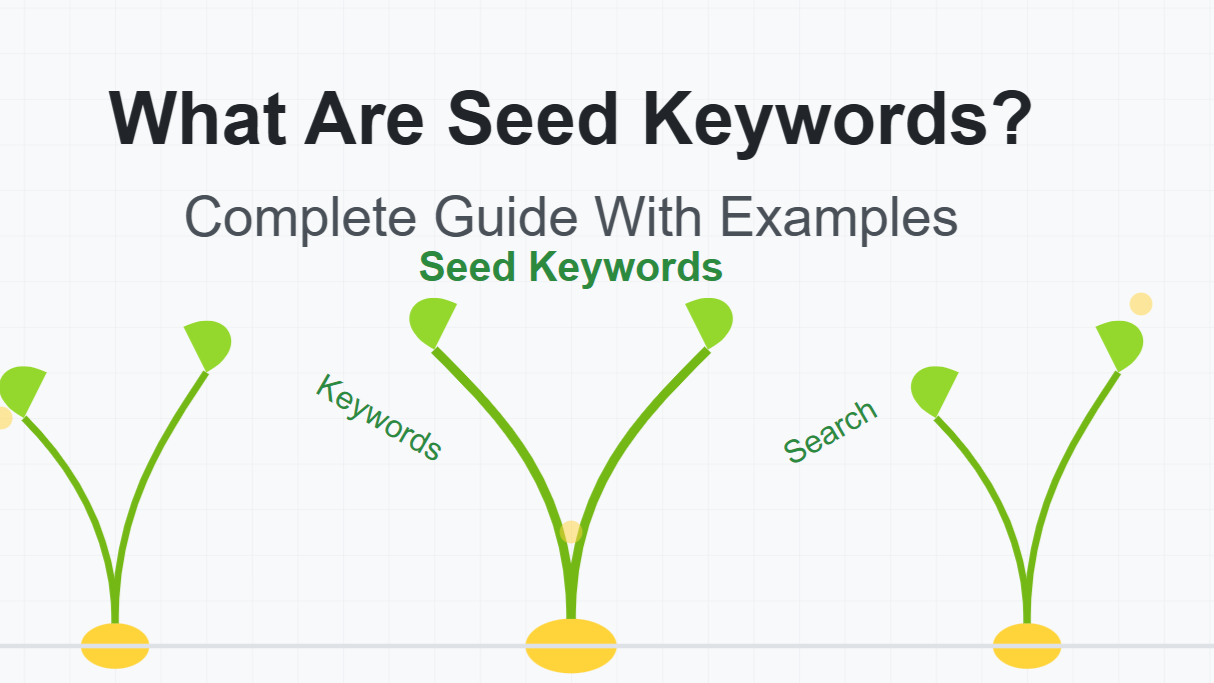
AI SEO seed keywords are broad, single-concept terms that serve as the initial input for machine learning algorithms. Unlike traditional seed keywords used in classic SEO tools, these are specifically optimized for AI models that analyze search behavior, entity relationships, and user intent. A seed keyword might be something like “vegan protein” or “home office setup.” The AI then expands this into hundreds of related queries, questions, and subtopics that humans might miss.
The core difference lies in the processing. Traditional tools rely on exact-match data and volume metrics. AI-powered systems use natural language processing (NLP) to understand the semantic field around the seed. This means the output includes not just “vegan protein powder” but also “plant-based muscle recovery,” “pea protein vs. whey,” and “vegan protein for seniors.” The result is a more holistic view of the topic landscape.
The Role of Seed Keywords in AI Content Pipelines
In an AI-driven SEO workflow, seed keywords are the first step in a multi-stage process. The pipeline typically looks like this: seed keyword input, AI expansion, intent clustering, content brief generation, and finally, article creation. Each stage relies on the quality of the initial seed. A poorly chosen seed leads to irrelevant or overly broad content suggestions. A well-chosen seed, however, ensures that the entire content ecosystem remains focused and authoritative.
Search engines like Google use similar concepts internally. Their algorithms identify core entities and then map related concepts. By using AI SEO seed keywords that mirror this entity-based thinking, you align your content strategy with how ranking systems actually operate. This is why seed selection is no longer just a research task; it is a strategic decision that impacts topical authority.
Why AI SEO Seed Keywords Matter for Modern Search
The shift from keyword matching to semantic search has changed the rules. Google’s BERT and MUM updates prioritize understanding over string matching. This means that content must cover a topic comprehensively, not just target a single phrase. AI SEO seed keywords enable this comprehensive coverage by providing the raw material for topic clusters.
Consider the user journey. A person searching for “best running shoes” might actually need information on pronation, arch support, or trail running. A traditional keyword tool might suggest “best running shoes 2025” or “cheap running shoes.” An AI system, fed the seed “running shoes,” will generate questions like “how to choose running shoes for flat feet” and “difference between stability and neutral shoes.” This depth is what builds topical authority and satisfies the user’s underlying need.
Data on AI-Driven Keyword Expansion
Recent industry analyses indicate that AI-generated keyword clusters can uncover up to 300% more long-tail opportunities than manual methods. For example, a seed like “project management software” can yield specific queries such as “kanban vs. scrum for small teams” or “free project management tools for non-profits.” These long-tail terms often have lower competition but higher conversion intent. Ignoring this expansion means leaving significant organic traffic on the table.
Furthermore, AI tools can analyze search engine results pages (SERPs) to identify content gaps. If the top results for a seed keyword lack a specific angle, such as “budget options” or “case studies,” the AI flags this as an opportunity. This data-driven approach ensures that your content does not just replicate what already exists but fills a genuine void.
How to Generate High-Quality AI SEO Seed Keywords
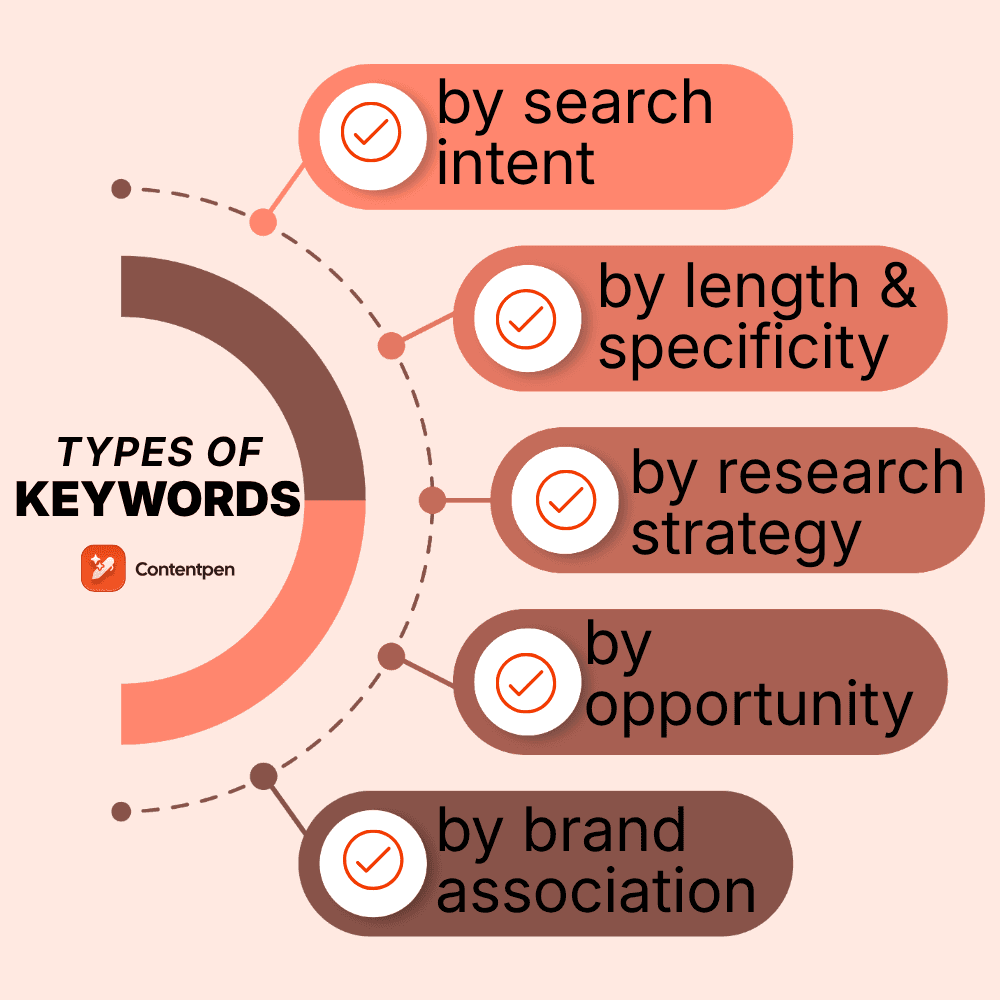
Generating effective seeds is not about random brainstorming. It requires a structured approach that combines human intuition with data validation. The process starts with understanding your core business offering and then branching out into related domains.
Start with your product or service category. If you sell ergonomic chairs, your initial seed is “ergonomic office chairs.” From there, consider the user’s environment, pain points, and alternative solutions. This leads to seeds like “back pain relief at work,” “sitting posture correction,” or “standing desk accessories.” Each of these is a valid AI SEO seed keyword that can generate a distinct content cluster.
Using AI Tools for Seed Discovery
Several platforms specialize in AI-driven keyword research. Tools like Clearscope, Surfer SEO, and MarketMuse use machine learning to analyze top-ranking pages and suggest related terms. However, even general-purpose AI like ChatGPT can be used effectively. The key is to prompt it correctly. Instead of asking for “keywords about chairs,” ask for “a list of 20 seed keywords related to ergonomic seating that represent different user intents, including commercial, informational, and transactional.”
Another technique involves analyzing your own site search data. The queries that users type into your internal search bar are gold. They represent real intent that your current content does not address. Feed these queries into an AI tool as seeds to generate full articles or FAQ sections. This closes the loop between user demand and content supply.
Practical Applications of AI SEO Seed Keywords
The most immediate application is in content planning. Instead of creating a list of 50 random articles, you create a matrix. The rows are your seed keywords, and the columns are content formats (blog post, video script, infographic, FAQ page). This ensures that every piece of content serves a strategic purpose within a larger cluster.
For e-commerce sites, AI SEO seed keywords are invaluable for category page optimization. A seed like “wireless headphones” can be expanded to create sub-category pages for “noise-cancelling,” “sports,” “budget,” and “audiophile.” Each sub-category page targets a specific intent, improving the site’s relevance for a wide range of queries without cannibalizing rankings.
Case Study: B2B SaaS Implementation
A B2B software company used the seed “customer onboarding” to revamp their blog. The AI expansion produced topics like “onboarding metrics to track,” “customer onboarding email templates,” and “how to reduce time-to-value.” Within six months, their organic traffic for the entire “onboarding” cluster increased by 150%. The key was not just the articles but the internal linking structure that connected them, signaling topical authority to search engines.
This example illustrates the power of starting small. One seed led to a comprehensive resource hub that now ranks for dozens of related terms. The company did not need to target each keyword individually; they simply built a robust network around a single concept.
Benefits and Limitations of AI Seed Keyword Strategy
The benefits are clear: efficiency, depth, and alignment with search intent. AI can process vast datasets in seconds, revealing patterns that would take a human analyst weeks to find. This speed allows for more agile content strategies that adapt to market changes quickly.
However, there are limitations. AI-generated suggestions can sometimes be generic or off-target. The algorithms lack the nuanced understanding of your specific audience that you have. For example, an AI might suggest “luxury dog food” as a seed, but if your brand focuses on “raw food diets for working dogs,” the suggestion is irrelevant. Human oversight is essential to filter and refine the AI’s output.
Another limitation is the risk of content homogenization. If everyone uses the same AI tools with the same seeds, the resulting content will be similar. To stand out, you must inject unique data, personal experiences, or proprietary research into the content generated from these seeds. The seed is the starting point, not the final product.
Comparison: Traditional vs. AI-Driven Seed Keyword Research
| Aspect | Traditional Research | AI-Driven Research |
|---|---|---|
| Data Source | Search volume tools, manual brainstorming | NLP models, SERP analysis, user behavior data |
| Output Type | List of keywords with volume and difficulty | Semantic clusters, questions, intent groups |
| Speed | Slow, manual filtering required | Fast, automated expansion in seconds |
| Depth | Surface-level, misses long-tail nuances | Deep, uncovers hidden subtopics |
| Human Role | Primary driver of the process | Validator and strategic director |
| Best For | Small sites with limited scope | Large-scale content operations |
This table highlights that neither method is obsolete. Traditional research provides a baseline understanding, while AI-driven research scales that understanding exponentially. The best strategies combine both, using traditional tools for validation and AI for discovery.
Step-by-Step Guide to Building a Seed Keyword Strategy
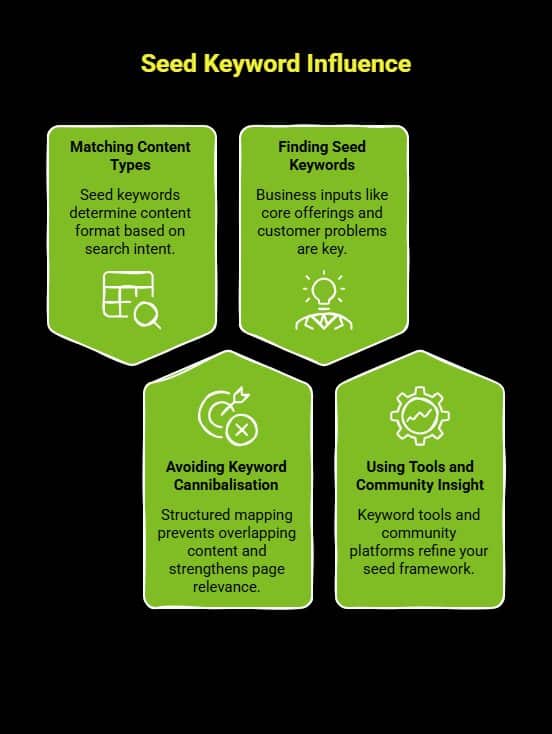
Implementing this strategy requires a clear workflow. Follow these steps to integrate AI SEO seed keywords into your daily operations.
- Define Your Core Pillars: Identify the 5-10 main topics that define your business. These are your primary seeds.
- Expand with AI: Use an AI tool to generate 50-100 related terms for each core seed. Do not filter yet; just collect.
- Cluster by Intent: Group the generated terms by user intent. Informational (how-to), Commercial (best), Transactional (buy), and Navigational (brand).
- Validate with Data: Use a traditional SEO tool to check search volume and difficulty for the most promising terms. Discard terms with zero volume unless they are strategic for entity building.
- Create Content Briefs: For each cluster, create a brief that includes the primary seed, secondary terms, and specific questions to answer.
- Map to Funnel Stage: Assign each cluster to a stage in the marketing funnel. Top-of-funnel content should target broad informational seeds, while bottom-of-funnel content should target specific commercial seeds.
- Review and Iterate: After publishing, monitor performance. Use the data to refine your seed list for the next cycle.
Tools and Resources for Implementation
Several tools can assist in this process. For AI expansion, consider using ChatGPT with custom prompts, or specialized tools like Frase.io which integrates AI writing with SEO data. For validation, Ahrefs and SEMrush remain industry standards. For a free option, Google Keyword Planner combined with Google’s “People Also Ask” section provides a manual but effective way to find related seeds.
Remember that the tool is less important than the process. A clear methodology with any tool will outperform a random approach with the best tool on the market.
Common Mistakes and How to Avoid Them
Many marketers fail to get results from AI seed keywords due to a few recurring errors. The most common mistake is using seeds that are too broad. A seed like “health” will generate millions of irrelevant suggestions. The solution is to always include a modifier that defines the audience or context, such as “health for shift workers” or “gut health for runners.”
Another mistake is ignoring search intent. An AI might suggest a keyword with high volume, but if the intent is transactional and your content is informational, you will not rank well. Always analyze the current SERP for the suggested keyword. If the top results are product pages, your blog post will struggle to gain visibility.
Finally, many people treat the AI output as final. They copy the generated keywords directly into their content without adding unique value. This leads to thin, duplicate content that search engines penalize. The AI provides the skeleton; you must add the flesh with original research, expert quotes, and real-world examples.
Important Notes on AI SEO Seed Keywords and E-E-A-T
Google’s quality rater guidelines emphasize Experience, Expertise, Authoritativeness, and Trustworthiness (E-E-A-T). AI-generated keywords can help you identify topics, but they cannot provide the first-hand experience needed to rank. For example, if your seed is “hiking gear,” the A” To rank for this, you need actual testing data, photos from the trail, and personal recommendations. This is where human input becomes non-negotiable.
Furthermore, be cautious with AI-generated facts. If the AI suggests a statistic or a claim, verify it against authoritative sources before publishing. Publishing incorrect information damages your trustworthiness and can lead to manual penalties. The seed keyword is a research tool, not a content generator.
Frequently Asked Questions
What is the difference between a seed keyword and a long-tail keyword?
A seed keyword is a short, broad term that defines a topic, such as “digital marketing.” A long-tail keyword is a specific, multi-word phrase that narrows down the topic, such as “digital marketing for local plumbers.” AI SEO seed keywords are used to generate long-tail variations through semantic analysis.
How many seed keywords should I use for a content strategy?
For a small business, 5-10 core seeds are sufficient to start. For larger enterprises, 20-30 seeds across different departments or product lines are common. The key is to focus on quality and relevance rather than quantity. Each seed should represent a distinct pillar of your business.
Can AI SEO seed keywords replace traditional keyword research?
No, they complement it. AI seeds provide breadth and uncover hidden connections, while traditional research provides validation through volume and difficulty metrics. A complete strategy uses both. Relying solely on AI can lead to irrelevant suggestions, while relying solely on traditional tools can miss semantic opportunities.
Are AI-generated keywords considered spam by Google?
No, using AI to generate keyword ideas is not spam. Spam is defined by the quality of the content and the intent to manipulate rankings. If you use AI seeds to create genuinely helpful, well-researched content, you are following best practices. If you use them to mass-produce low-quality articles, you risk penalties.
How often should I update my seed keyword list?
Review your seed list quarterly. Market trends, new technologies, and changes in user behavior can make certain seeds obsolete. For example, the seed “5G phones” has evolved significantly over the past few years. Regular updates ensure your content strategy remains relevant and competitive.
Conclusion
AI SEO seed keywords represent a fundamental shift in how content strategies are developed. They move the focus from individual keywords to comprehensive topic ecosystems. By starting with a strong seed, expanding it with AI, and validating it with human insight, you can build a content operation that is efficient, scalable, and aligned with modern search engine algorithms. The process is not without challenges, but the potential rewards in organic traffic and topical authority are substantial. Start with one core seed today, run it through an AI tool, and observe the depth of content ideas that emerge. That single exercise will demonstrate the power of this approach better than any explanation.
Xem thêm:
- AI SEO Site Architecture: The Complete Guide to Building Search-Ready Websites
- AI Site Audit: The Complete Guide to Smarter, Faster Website Analysis for 2025
- WP Trove AI SEO: The Complete Guide to Automating WordPress Search Rankings
- AI Ecommerce Content: The Complete Guide to Scaling Product Copy, SEO, and Sales
- AI SEO for Events: The Complete Guide to Boosting Attendance in 2025
Bài viết cùng chủ đề:

AI SEO SEO Automation with Make: The Complete Workflow Guide

AI SEO SEO Automation with Zapier: The Complete Workflow Guide

AI SEO SEO Automation with n8n: The Complete Workflow Guide
AI SEO SEO Automation with Gemini: The Complete Guide to Scaling Organic Growth

AI SEO SEO Automation with Claude: The Complete Guide to Scaling Content in 2025

AI SEO SEO Automation with ChatGPT: The Complete Playbook for 2025

AI SEO & SEO Automation for Affiliate Sites: The 2025 Playbook for Passive Income Growth
AI SEO & SEO Automation for Bloggers: The Complete Guide to Scaling Your Content

AI SEO & SEO Automation for Agencies: The Complete 2025 Playbook

AI SEO and SEO Automation for Ecommerce: The Complete Playbook for 2025

AI SEO & SEO Automation for WordPress: The Complete Playbook for 2025
AI SEO SEO Automation Strategy: The Complete Playbook for 2025

Mastering the AI SEO SEO Automation Process: A Complete Guide to Scaling Organic Growth
AI SEO SEO Automation System: The Complete Guide to Scaling Organic Growth in 2025
AI SEO SEO Automation Platform: The Complete Guide to Scaling Organic Growth in 2025
AI SEO SEO Automation Software: The Complete Guide to Scaling Organic Growth in 2025















