
No products in the cart.
AI SEO Site Architecture: The Complete Guide to Building Search-Ready Websites
31
Jul
Jul
AI SEO site architecture is the strategic practice of structuring a website’s pages, internal links, and content hierarchy so that artificial intelligence systems—like Google’s RankBrain, BERT, and the more recent generative AI search experiences—can crawl, understand, and rank the site with maximum efficiency. In 2025, search engines no longer just match keywords; they interpret user intent, semantic relationships, and contextual relevance. A well-designed architecture powered by AI principles ensures that every page on your site has a clear purpose, that authority flows logically from your homepage to your deepest content, and that your entire digital footprint is optimized for both traditional search results and AI-generated answers. This guide breaks down the core components, practical implementation steps, and common pitfalls of building an AI-ready site structure.
What Is AI SEO Site Architecture and Why Does It Matter?
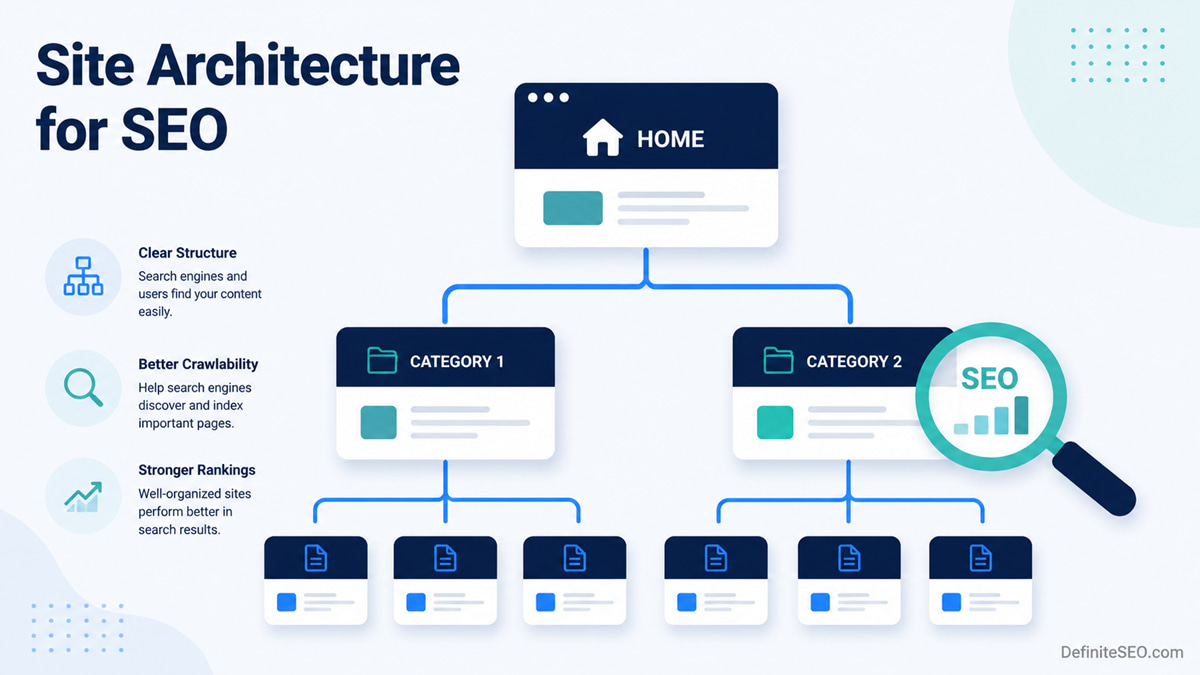
AI SEO site architecture refers to the deliberate organization of a website’s information hierarchy, URL structure, internal linking, and content clustering, all designed to align with how machine learning algorithms process and rank web pages. Unlike traditional SEO architecture, which focused primarily on crawlability and keyword placement, AI-driven architecture prioritizes semantic depth, entity recognition, and user engagement signals.
The importance of this approach has grown exponentially. Google’s algorithms now use neural matching to understand the relationship between words and concepts, meaning that a site with a logical, topic-clustered structure will outperform a flat, disjointed site even if both have similar keyword usage. Moreover, with the rise of AI Overviews and conversational search, your site’s architecture determines whether your content gets cited as a source or buried beneath competitors with better-structured information.
Consider this: a site with 500 pages but no clear topical hierarchy forces search engines to guess which pages are most important. An AI-optimized site, by contrast, uses pillar pages, topic clusters, and contextual internal links to signal exactly what each page covers and how it relates to the broader subject. This clarity reduces crawl budget waste, increases indexation rates, and improves the likelihood of ranking for long-tail and conversational queries.
The Core Components of an AI-Optimized Site Architecture
Building an architecture that satisfies both human users and AI crawlers requires attention to several interconnected elements. Each component plays a distinct role in how search engines interpret your site’s relevance and authority.
1. Semantic Topic Clusters and Pillar Pages
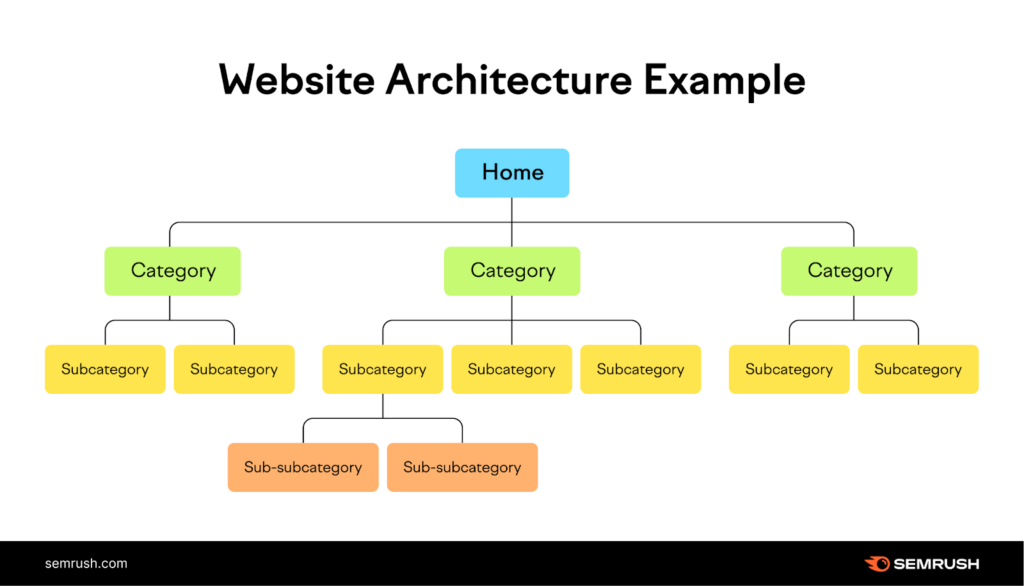
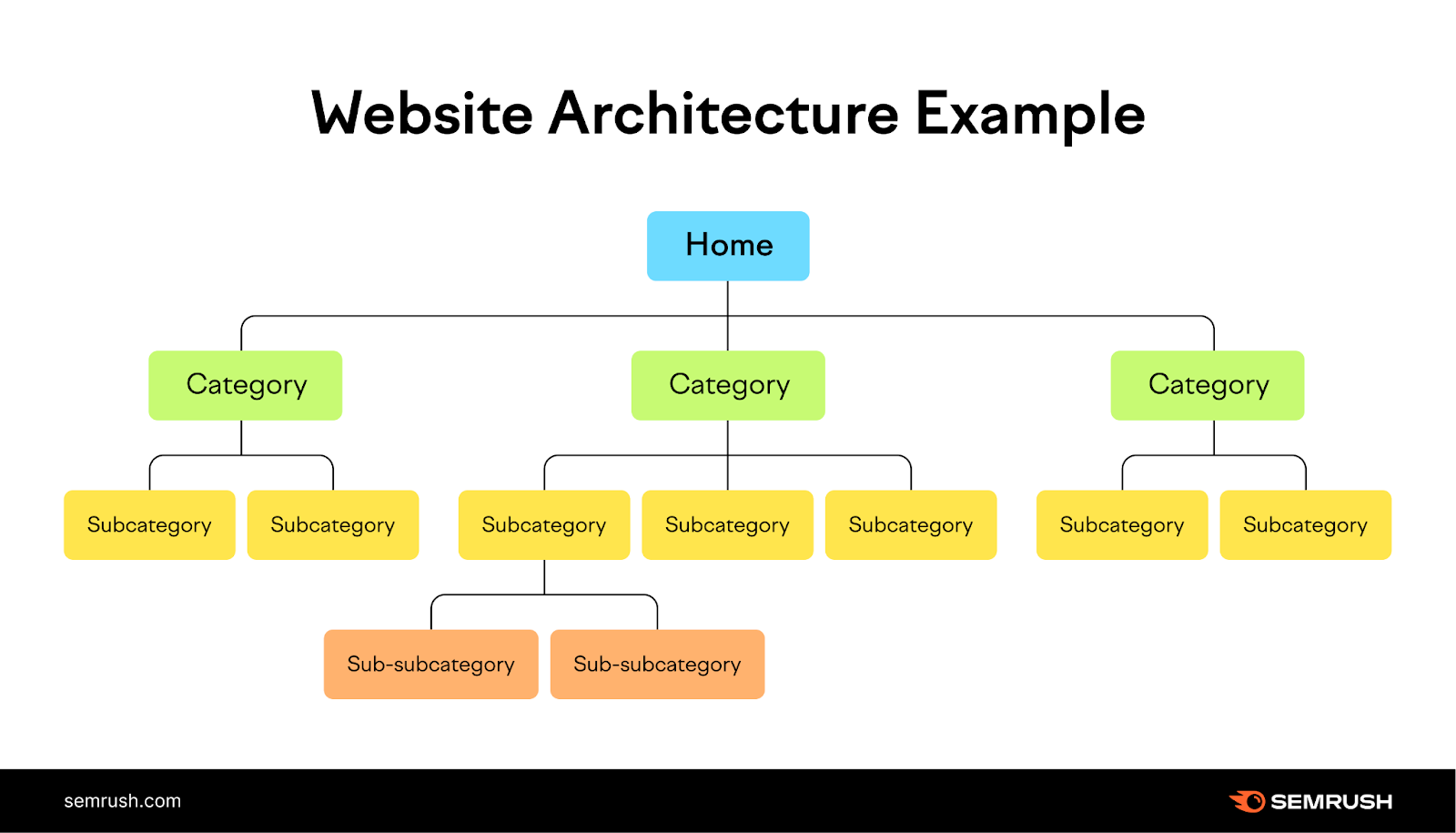
At the heart of AI SEO site architecture lies the concept of topic clusters. Instead of creating isolated blog posts that compete with each other, you organize content around a central pillar page that covers a broad topic comprehensively. Cluster pages then dive into specific subtopics, each linking back to the pillar and to each other where contextually relevant.
For example, if your pillar page is “AI SEO Site Architecture,” your cluster pages might cover “Internal Linking Strategies for AI Crawlers,” “Schema Markup for Entity Recognition,” and “URL Structure Best Practices.” This structure creates a semantic web of related content that AI algorithms can easily map, understanding that your site is an authoritative resource on the entire subject, not just a collection of random articles.
2. Logical URL Hierarchy and Flat Nesting
Your URL structure should mirror your content hierarchy. A flat architecture—where important pages are no more than three clicks from the homepage—is preferred by AI crawlers because it reduces the depth they must traverse to discover content. URLs should be descriptive, concise, and keyword-relevant, using hyphens to separate words.
Consider the difference between example.com/blog/post123 and example.com/ai-seo/site-architecture. The latter provides clear semantic signals to both users and AI systems about the page’s content and its position within the site’s hierarchy. Avoid dynamic parameters, excessive subdirectories, and session IDs, as these confuse crawlers and dilute link equity.
3. Internal Linking with Contextual Anchor Text
Internal links are the pathways that AI crawlers follow to discover and understand your content. In an AI-optimized architecture, every internal link should use descriptive anchor text that accurately describes the target page’s topic. Generic anchors like “click here” or “read more” provide zero semantic value.
More importantly, the placement of internal links matters. Links placed within the main body of your content carry more weight than those in footers or sidebars. A strategic internal linking plan ensures that your most important pages receive the most internal links, signaling their authority to search engines. Additionally, using related links within cluster content helps AI systems understand the contextual relationship between different pages on your site.
4. Schema Markup and Entity Clarity
Schema markup, or structured data, is a critical component of AI SEO site architecture. By implementing vocabulary like Schema.org, you provide explicit signals about the entities on your page—whether it’s a product, article, FAQ, or organization. This helps AI systems disambiguate your content and display rich snippets in search results.
For instance, adding FAQ schema to your cluster pages can make your content eligible for featured snippets and AI-generated answers. Organization schema establishes your brand as a recognized entity, while BreadcrumbList schema helps crawlers understand your site’s hierarchy. The key is to implement schema consistently across all pages, ensuring that the structured data accurately reflects the visible content.
5. Crawl Budget Optimization
AI crawlers have a finite budget for each site, determined by your site’s authority and the number of pages you publish. An efficient architecture ensures that this budget is spent on your most valuable pages, not wasted on duplicate content, thin pages, or orphaned URLs. Use your robots.txt file to block low-value areas like admin panels, tag pages, and internal search results. Implement canonical tags to consolidate duplicate versions of the same page.
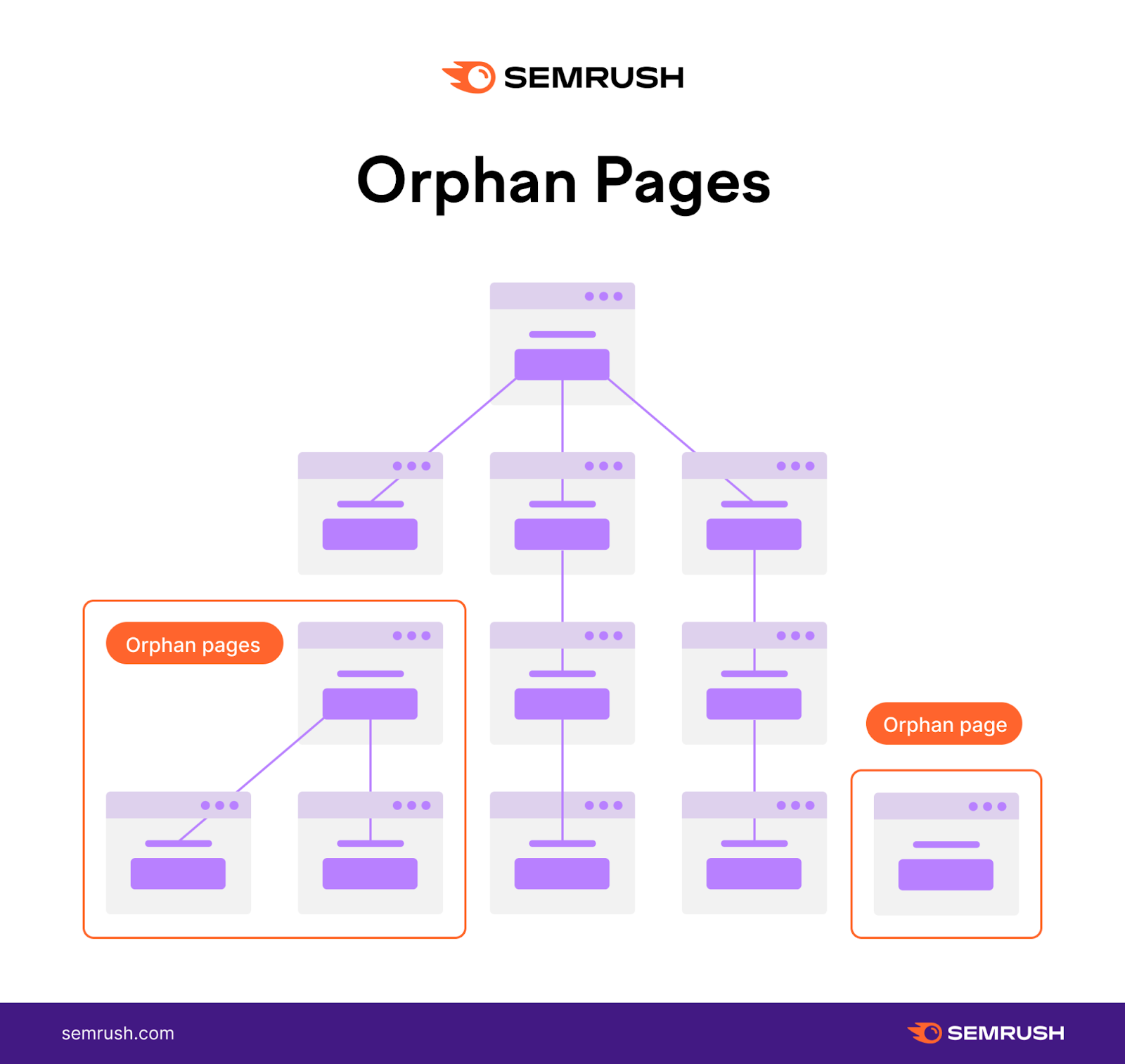
Regularly audit your site for orphan pages—those with no internal links pointing to them. These pages are invisible to crawlers and effectively dead weight. An AI-optimized architecture ensures every page is reachable through at least one internal link from a relevant, higher-level page.
Benefits of Implementing AI SEO Site Architecture
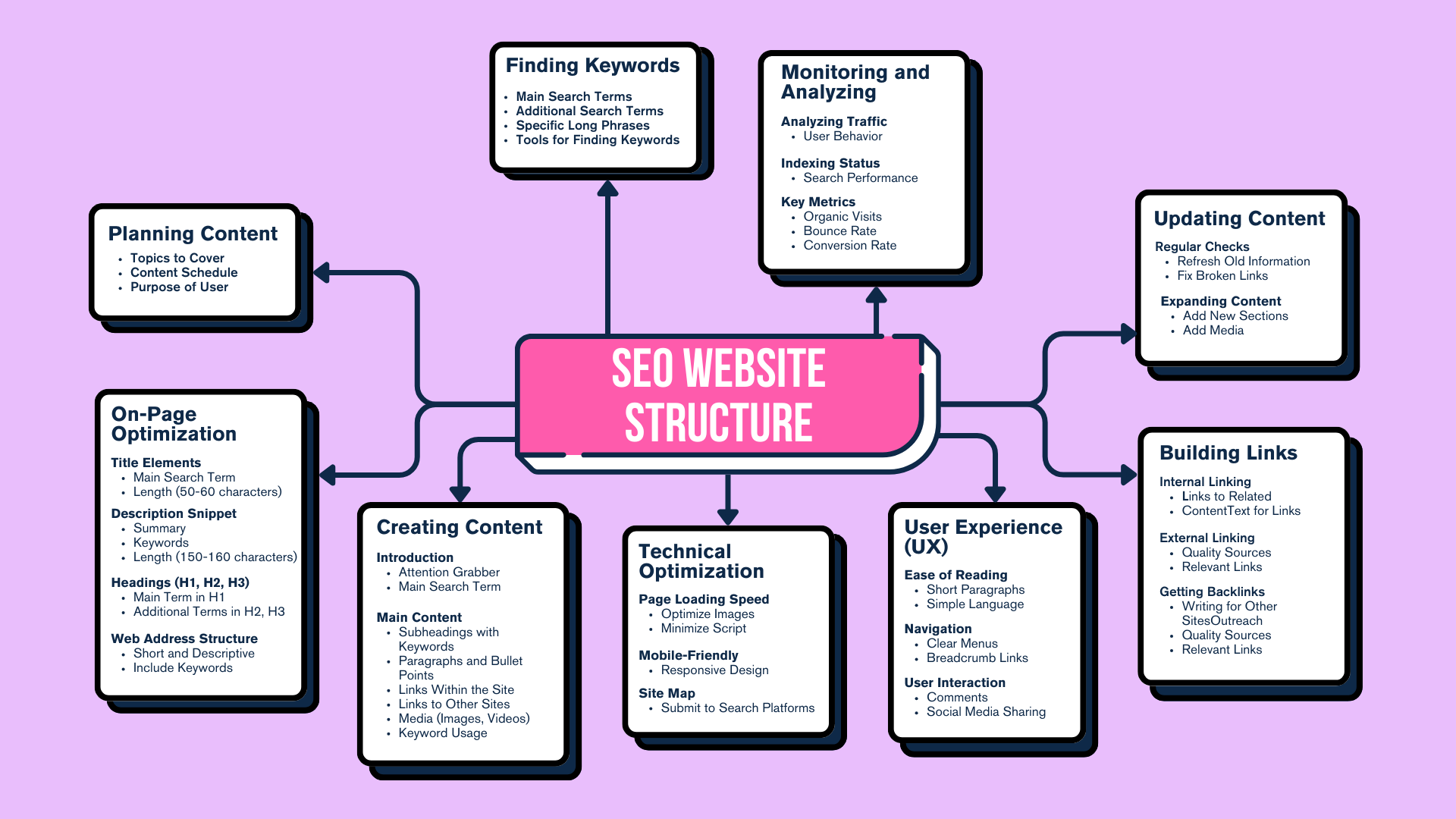
The advantages of adopting this approach extend far beyond simple ranking improvements. A well-structured site creates a positive feedback loop that enhances every aspect of your online presence.
- Improved crawl efficiency: AI crawlers can index more of your content in less time, leading to faster discovery of new pages and updates.
- Higher relevance scores: Semantic clustering signals to search engines that your site covers a topic comprehensively, boosting your authority for related queries.
- Enhanced user experience: A logical structure helps visitors navigate your site intuitively, reducing bounce rates and increasing time on page—both positive engagement signals.
- Better AI search visibility: With the rise of generative AI in search, having a clear, well-linked structure increases the likelihood that your content will be cited as a source in AI-generated answers.
- Scalability: A defined architecture makes it easier to add new content without disrupting your existing SEO performance, as each new page has a clear place within your topic clusters.
- Stronger link equity distribution: Internal links pass authority throughout your site, ensuring that deep pages benefit from the authority of your homepage and pillar pages.
Limitations and Challenges to Consider
While the benefits are substantial, implementing an AI-optimized architecture is not without its challenges. Understanding these limitations helps you plan effectively and avoid frustration.
Time and resource intensity: Restructuring an existing site, especially a large one, requires significant effort. You must audit every page, map new hierarchies, implement redirects, and update internal links. This is not a weekend project but a strategic initiative that may take months to complete fully.
Risk of over-optimization: T Overusing exact-match anchor text, creating excessive topic clusters, or forcing content into unnatural categories can trigger spam filters. The architecture must feel organic and user-centric, not engineered solely for crawlers.
Constant evolution: AI algorithms are not static. What works today may be less effective tomorrow as search engines update their understanding of semantics and user intent. Your architecture requires ongoing monitoring and adjustment, which demands continuous attention and expertise.
Technical complexity: Implementing schema markup, managing canonical tags, and optimizing crawl budgets requires technical SEO knowledge. Small teams without dedicated SEO specialists may struggle to execute these elements correctly.
Traditional vs. AI-Driven Site Architecture: A Comparison
| Aspect | Traditional SEO Architecture | AI SEO Site Architecture |
|---|---|---|
| Primary focus | Keyword targeting and crawlability | Semantic relevance and entity understanding |
| Content organization | Flat structure with individual pages targeting specific keywords | Topic clusters with pillar pages and interconnected subtopics |
| Internal linking | Links placed for navigation and link equity | Contextual links with descriptive anchors that build semantic relationships |
| Data markup | Basic schema for products or articles | Comprehensive structured data for entities, FAQs, breadcrumbs, and more |
| User intent handling | Focus on matching exact search queries | Understanding and addressing the underlying intent behind varied queries |
| Adaptability to AI search | Limited; designed for traditional blue-link results | Optimized for featured snippets, AI Overviews, and conversational search |
Practical Guide: How to Build an AI-Optimized Site Architecture
Implementing this architecture requires a systematic approach. Follow these steps to transform your website into an AI-ready structure that drives sustainable organic growth.
Step 1: Conduct a Comprehensive Content Audit
Begin by cataloging every page on your site. Use tools like Screaming Frog or Ahrefs to export a full list of URLs, along with data on page views, backlinks, and current rankings. Categorize each page by topic and identify gaps, overlaps, and thin content. This audit forms the foundation of your new architecture, revealing which pages deserve prominence and which should be consolidated or removed.
During the audit, pay special attention to pages that target the same keyword or cover the same topic. These cannibalizing pages dilute your authority and confuse AI crawlers. Plan to merge them into a single, comprehensive resource or differentiate them by targeting distinct subtopics.
Step 2: Map Your Topic Clusters
Identify your site’s core topics—the broad subjects that define your business and expertise. For each core topic, create a pillar page that provides a comprehensive overview. Then, list all the subtopics that fall under each pillar. These subtopics will become your cluster pages.
For example, a digital marketing agency might have pillars for “SEO,” “Content Marketing,” and “Paid Advertising.” Under the SEO pillar, cluster pages could cover “Technical SEO,” “Link Building,” “Keyword Research,” and “AI SEO Site Architecture.” Each cluster page should be detailed enough to stand alone but clearly linked back to its pillar.
Step 3: Redesign Your URL Structure
Based on your topic cluster map, create a logical URL hierarchy. Use short, descriptive slugs that include your primary keyword. Avoid unnecessary subdirectories—example.com/seo/site-architecture is preferable to example.com/blog/2025/03/15/seo-tips-for-site-architecture. If you are restructuring existing URLs, implement 301 redirects from old URLs to new ones to preserve link equity and avoid broken links.
Step 4: Implement a Strategic Internal Linking Plan
Create a spreadsheet mapping out which pages should link to which. Every cluster page should link to its pillar page using the pillar’s primary keyword as anchor text. The pillar page should link out to every cluster page. Additionally, link related cluster pages to each other where the content is contextually relevant.
Use descriptive, varied anchor texts. Instead of always using the exact target keyword, mix in synonyms and related phrases. This creates a natural link profile that AI algorithms interpret as authoritative and user-focused.
Step 5: Add Comprehensive Schema Markup
Implement structured data across your site. At minimum, add Organization schema to your homepage, Article schema to your blog posts, and BreadcrumbList schema to all pages. If you have FAQs, use FAQPage schema. For e-commerce sites, include Product and Offer schema. Validate your markup using Google’s Rich Results Test to ensure it is error-free.
Schema markup directly supports AI understanding by providing explicit metadata about your content’s entities and relationships. This is one of the most direct ways to communicate your site’s structure to machine learning systems.
Step 6: Optimize Crawl Budget and Indexation
Review your robots.txt file and remove any directives that block important pages. Use the URL Inspection tool in Google Search Console to ensure your key pages are indexed. Identify and fix any crawl errors, such as 404s or server issues. Consolidate duplicate content using 301 redirects or canonical tags.
For large sites, create an XML sitemap that reflects your new hierarchy, listing your pillar pages first and then your cluster pages. Submit this sitemap in Google Search Console to facilitate faster crawling and indexation.
Step 7: Monitor, Measure, and Iterate
After implementation, track your performance using tools like Google Analytics and Search Console. Monitor changes in organic traffic, keyword rankings, indexation rates, and crawl stats. Pay attention to how your pages perform in AI Overviews and featured snippets.
SEO is not a set-and-forget activity. Regularly review your architecture to ensure it remains aligned with evolving AI algorithms and user behavior. Add new cluster pages as you create content, and update pillar pages to keep them current and comprehensive.
Common Mistakes in AI SEO Site Architecture and How to Avoid Them
Even experienced SEO professionals make errors when restructuring their sites. Recognizing these pitfalls in advance can save you significant time and prevent ranking losses.
Mistake 1: Creating shallow topic clusters. Some sites create pillar pages that are too brief or cluster pages that lack depth. AI algorithms quickly identify thin content and will not grant authority to such clusters. Avoid this by ensuring your pillar page is at least 2,000 words and covers the topic comprehensively, with each cluster page providing unique, in-depth value.
Mistake 2: Ignoring user experience for crawler needs. An architecture that makes perfect sense to a crawler but confuses human users is a failure. Your navigation menus, breadcrumbs, and internal links should guide users naturally through your content. If users cannot find what they need, engagement metrics will suffer, and AI algorithms will interpret this as a lack of relevance.
Mistake 3: Overusing exact-match anchor text. When every internal link uses the exact same anchor text, it appears manipulative. AI systems are designed to detect unnatural patterns. Vary your anchors, use synonyms, and let the surrounding context provide additional semantic clues.
Mistake 4: Neglecting orphan pages. After a site migration or content update, it is easy to leave pages without any internal links. These orphan pages are invisible to crawlers and waste your crawl budget. Conduct regular audits to identify and fix orphaned content, either by linking to it or removing it.
Mistake 5: Failing to update schema after restructuring. If you change your URL structure or content hierarchy, your schema markup must be updated accordingly. Outdated structured data can confuse AI systems and lead to incorrect rich snippets or loss of eligibility for enhanced features.
Important Notes for Maintaining an AI-Ready Architecture
Building the architecture is only the beginning. Maintaining it requires ongoing vigilance and adaptation to the changing search landscape.
First, prioritize content freshness. AI algorithms favor sites that regularly update their information. Review your pillar pages quarterly and update statistics, examples, and best practices. Ensure your cluster pages remain relevant and accurate.
Second, monitor your site’s performance in AI search results. Use tools like Google’s Search Console to see how often your pages appear in AI Overviews. If you notice a decline, investigate whether your architecture is still clear or if competitors have improved their own structures.
Third, stay informed about algorithm updates. Google frequently announces changes to its ranking systems, many of which relate to AI and machine learning. Subscribe to reputable SEO news sources and adjust your architecture strategy accordingly.
Fourth, consider the role of user engagement signals. AI algorithms use metrics like click-through rate, dwell time, and bounce rate as proxies for content quality. An architecture that improves user navigation directly improves these signals, creating a virtuous cycle of better rankings and more traffic.
Frequently Asked Questions
What is the difference between AI SEO site architecture and traditional SEO structure?
Traditional SEO structure focuses on keyword targeting, crawlability, and link equity distribution. AI SEO site architecture goes further by prioritizing semantic relationships, entity clarity, and user intent understanding. It uses topic clusters, contextual internal linking, and comprehensive schema markup to help machine learning algorithms grasp the full context and authority of your content, making it more likely to rank in both traditional and AI-generated search results.
How does internal linking affect AI SEO site architecture?
Internal linking is the backbone of AI SEO site architecture. It creates pathways for AI crawlers to discover and understand your content. Contextual internal links with descriptive anchor text help algorithms map the relationships between your pages, establishing which are most important and how they relate to each other. A well-planned internal linking strategy distributes link equity, reduces orphan pages, and signals topical authority to search engines.
Can I implement AI SEO site architecture on an existing website?
Yes, but it requires careful planning and execution. Start with a comprehensive content audit to understand your current structure. Map out your new topic clusters and URL hierarchy, then implement changes gradually to avoid massive ranking fluctuations. Use 301 redirects for any URL changes, update your internal links, and add schema markup. Monitor your performance closely during and after the transition to identify and fix any issues.
What role does schema markup play in AI SEO site architecture?
Schema markup provides explicit, machine-readable data about your content’s entities and relationships. It helps AI systems understand what your page is about, who published it, and how it relates to other pages on your site. Implementing schema like Organization, Article, BreadcrumbList, and FAQPage enhances your chances of earning rich snippets and being cited in AI-generated answers, making it a critical component of an AI-optimized architecture.
How often should I update my site architecture for AI SEO?
T Monitor your crawl stats, indexation rates, and organic performance. Whenever you add significant new content, ensure it fits into your existing topic clusters. Stay alert to algorithm updates and adjust your structure as needed. An architecture that remains static for years will eventually become outdated as AI systems evolve.
Conclusion
AI SEO site architecture is no longer an optional enhancement but a fundamental requirement for competing in modern search. As search engines increasingly rely on machine learning to interpret content and user intent, the way you structure your website determines your visibility and authority. By implementing semantic topic clusters, logical URL hierarchies, contextual internal linking, and comprehensive schema markup, you create a site that is not only crawlable but deeply understandable to AI systems.
The process requires effort—auditing your content, redesigning your structure, and maintaining it over time—but the rewards are substantial. Improved crawl efficiency, higher relevance scores, better user engagement, and increased visibility in AI-driven search results all stem from a well-executed architecture. Avoid the common pitfalls, stay adaptable to algorithmic changes, and treat your site structure as a living system that evolves with your content and your audience’s needs.
Start by auditing your current architecture and identifying the first topic cluster you can build or improve. Every step you take toward an AI-optimized structure strengthens your site’s foundation for the future of search.
Xem thêm:
- AI SEO Topic Discovery: The Complete Guide to Finding Content That Ranks
- AI SEO Statistics 2025: Data-Driven Insights Every Marketer Must Know
- AI SEO Generative Search Ranking: The Complete Playbook for 2025
- AI SEO AI APIs: The Complete Guide to Automating Search Optimization in 2025
- AI SEO Citation Building: The Complete Guide to Automated Local Search Dominance
Bài viết cùng chủ đề:

AI SEO SEO Automation with Make: The Complete Workflow Guide

AI SEO SEO Automation with Zapier: The Complete Workflow Guide

AI SEO SEO Automation with n8n: The Complete Workflow Guide
AI SEO SEO Automation with Gemini: The Complete Guide to Scaling Organic Growth

AI SEO SEO Automation with Claude: The Complete Guide to Scaling Content in 2025

AI SEO SEO Automation with ChatGPT: The Complete Playbook for 2025

AI SEO & SEO Automation for Affiliate Sites: The 2025 Playbook for Passive Income Growth
AI SEO & SEO Automation for Bloggers: The Complete Guide to Scaling Your Content

AI SEO & SEO Automation for Agencies: The Complete 2025 Playbook

AI SEO and SEO Automation for Ecommerce: The Complete Playbook for 2025

AI SEO & SEO Automation for WordPress: The Complete Playbook for 2025
AI SEO SEO Automation Strategy: The Complete Playbook for 2025

Mastering the AI SEO SEO Automation Process: A Complete Guide to Scaling Organic Growth
AI SEO SEO Automation System: The Complete Guide to Scaling Organic Growth in 2025
AI SEO SEO Automation Platform: The Complete Guide to Scaling Organic Growth in 2025
AI SEO SEO Automation Software: The Complete Guide to Scaling Organic Growth in 2025















