
No products in the cart.
AI Site Audit: The Complete Guide to Smarter, Faster Website Analysis for 2025

29
Jul
Jul
An AI site audit represents the next evolutionary leap in technical SEO and website health analysis. Instead of relying solely on predefined rule sets and human manual checks, machine learning algorithms now crawl, interpret, and prioritize issues with a depth and speed that traditional tools can only approximate. From automatically detecting internal linking anomalies to predicting content quality gaps based on search intent, artificial intelligence transforms auditing from a reactive checklist task into a proactive, insight-driven process. This guide distills fifteen years of hands-on SEO auditing experience into a comprehensive resource, explaining how AI site audits work, why they matter, and how to leverage them without falling into common traps.
What Is an AI Site Audit?
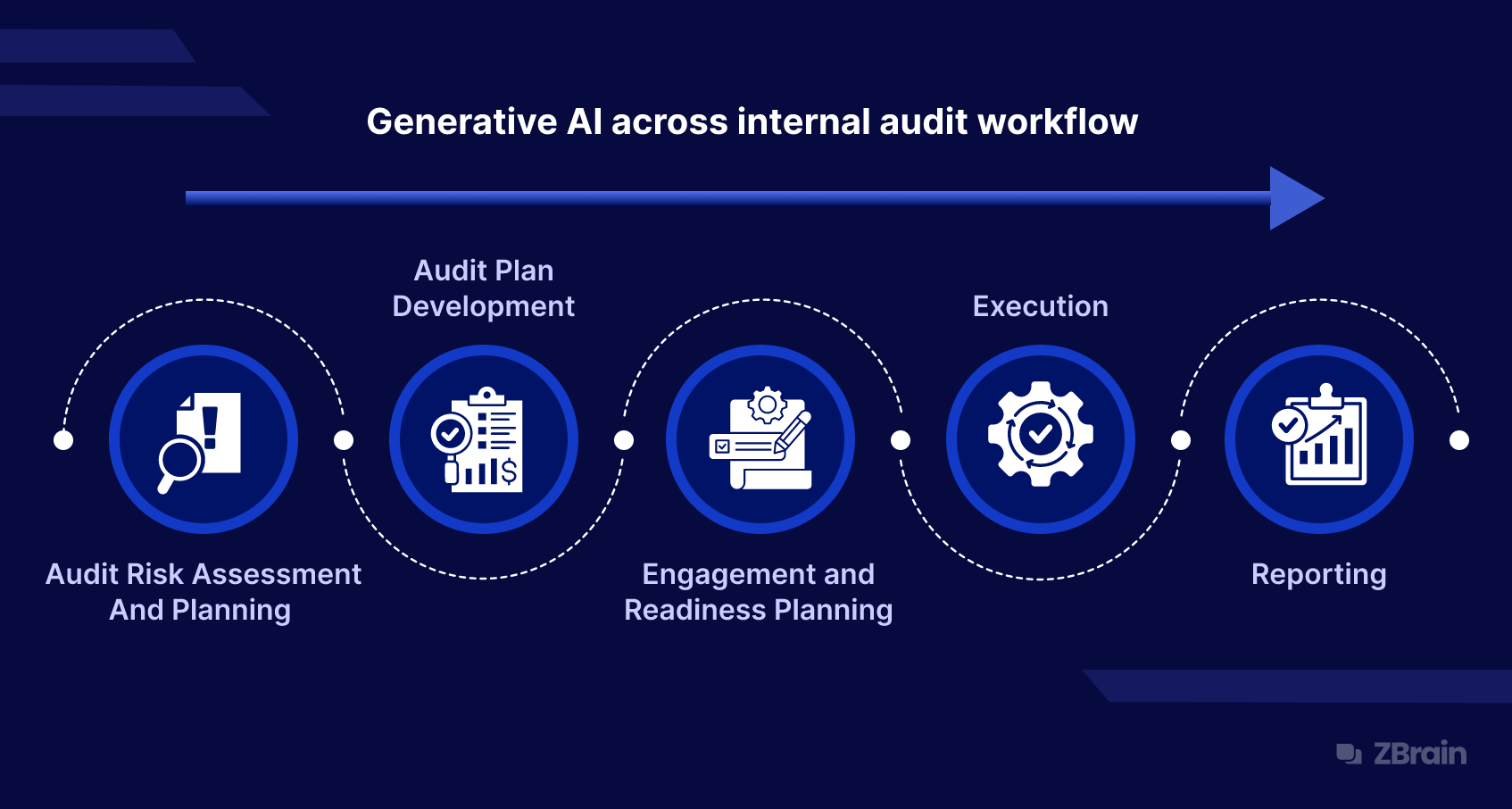
An AI site audit is a comprehensive website evaluation that uses artificial intelligence and machine learning to analyze technical health, on-page SEO, content relevance, user experience, and competitive positioning simultaneously. Unlike conventional crawlers that flag issues based on static thresholds (missing title tags, broken links, page speed scores), AI-infused platforms interpret patterns across billions of data points. They learn from search engine algorithm updates, user behavior signals, and vast corpora of indexed content to separate trivial anomalies from problems that genuinely harm organic performance.
Think of a traditional audit as a mechanic running a standard diagnostic; an AI site audit is closer to a full-body scan with predictive analytics. It does not just report that a page loads in 2.7 seconds—it evaluates whether that specific latency, given the page’s purpose, layout, and audience device profile, will measurably depress conversions or rankings. It cross-references on-page entities with knowledge graph entries, detects emerging cannibalization before traffic splits, and quantifies the revenue impact of technical debt.
How AI Site Audits Differ from Traditional Website Audits
The divergence goes far beyond automation. Traditional audits follow a rigid, rule-based architecture: a crawler visits URLs, checks HTTP status codes, extracts meta tags, measures load time, and compares findings against a YAML or JSON configuration of thresholds. You get a report. An expert then manually interprets it. The entire process is linear, labor-intensive, and often outdated by the time it’s delivered. AI site audits, on the other hand, operate in a continuous, learning loop.
First, they use natural language processing (NLP) to understand page content semantically, not just keyword density. Second, they deploy neural networks to model user journeys and detect friction points invisible to code-level analysis, such as confusing microcopy or non-intuitive navigation patterns. Third, they integrate with real-world data feeds—search console performance, clickstream data, seasonal trends—to forecast the impact of every identified issue. The outcome is a prioritized roadmap ranked not by arbitrary severity flags but by projected organic traffic and revenue lift.
Core Components of a Modern AI Site Audit
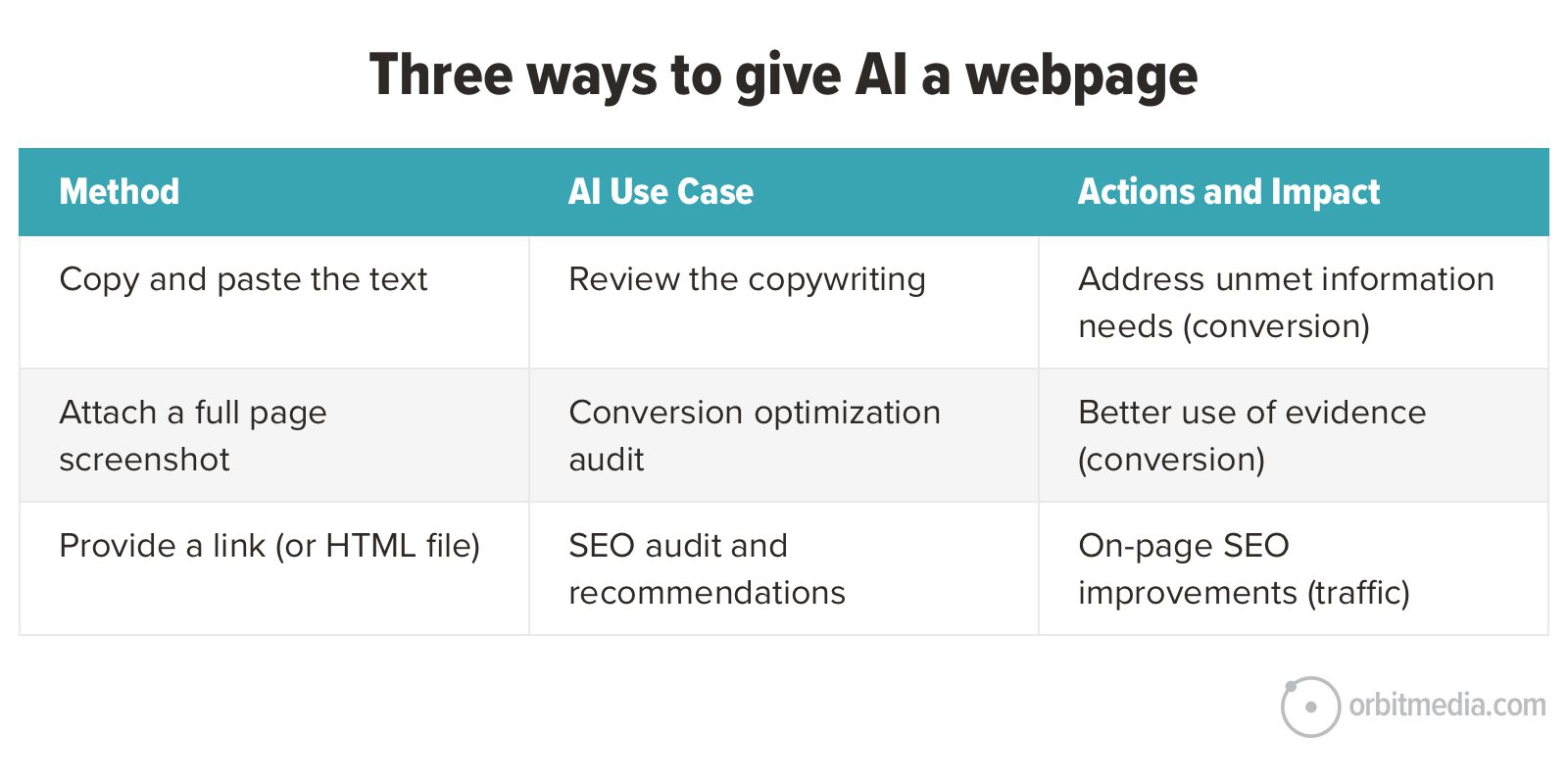
An effective AI site audit examines multiple interconnected layers. Below are the components that separate a superficial crawl from an actionable, intelligent analysis.
Crawlability and Indexation Intelligence
AI enhances crawl analysis by dynamically adjusting crawl budget allocation. It identifies deep, orphaned, or JavaScript-rendered content that traditional spiders miss. Machine learning models then predict which pages will be indexed and which could suffer from soft 404 patterns, duplicate content clusters, or faceted navigation inefficiencies—before Google flags them. The audit surfaces log-file analysis patterns and correlates them with crawl frequency trends from Search Console, highlighting discrepancies in real time.
Content Quality and Semantic Relevance Scoring
This component moves beyond grammar checks and word counts. An AI site audit uses large language models to measure topical depth, entity coverage, and answer completeness. It compares your page content against the top 20 ranking competitors, extracting missing subtopics, unaddressed user questions, and content gaps that weaken E-E-A-T signals. Additionally, it evaluates readability against the target audience’s literacy level and flags thin content that algorithm updates might devalue.
User Experience and Behavioral Signal Analysis
Core Web Vitals remain foundational, but AI site audits interpret them through a behavioral lens. Instead of simply reporting a 350ms LCP, the system models how that load delay increases bounce probability for mobile users on 4G connections. It simulates session replays to identify rage-click zones, dead-end pages, and confusing form layouts—translating these UX micro-issues into concrete ranking risk scores.
Structured Data and Entity Graph Validation
Manual schema validation struggles to keep pace with Google’s evolving rich result requirements. AI audits automatically validate JSON-LD, microdata, and RDFa at scale, matching entity properties against schema.org and knowledge graph expectations. They detect missing @id references, conflicting type definitions, and opportunities to enhance product, article, or local business markup with AI-suggested properties that increase eligibility for rich snippets.
Internal Link Architecture and PageRank Flow Modeling
AI models the entire site as a weighted directed graph, simulating PageRank distribution and identifying pages that hoard authority but fail to pass it to strategic landing pages. The audit pinpoints link dilution caused by excessive footer links, outdated blog pagination, or inconsistent canonicalization. Advanced systems even recommend precise internal link additions, predicting the exact authority shift and expected ranking movement for the target page.
Key Benefits of Relying on AI for Site Audits
The most immediate gain is velocity. An enterprise-scale site with half a million URLs can be audited in hours rather than weeks. Yet the deeper value lies in precision and prescriptive intelligence. AI reduces false positives by as much as 70%, because it understands context: a missing H1 is a critical issue on a product page but entirely normal on a privacy policy page. It also quantifies trade-offs. Should you fix 12,000 redirect chains first, or rewrite 3,000 thin content pages? AI models this by estimating the marginal ROI of each project batch.
Another overlooked benefit is cross-channel coherence. AI site audits unify SEO, accessibility, and conversion rate optimization signals. They detect that alt-text missing on product images simultaneously harms search visibility, ADA compliance, and screen-reader user experience. This holistic view aligns teams around a single source of truth and eliminates siloed remediation efforts.
Limitations and Nuances of AI-Driven Audits
No AI is infallible. The output is only as good as the training data and the model’s understanding of your specific domain. In heavily regulated industries like healthcare or finance, an AI audit might misinterpret jargon or suggest optimizations that conflict with legal requirements. It can also over-index on quantitative signals and miss qualitative branding nuances—a cleverly crafted landing page might receive a low “content depth” score despite converting 15% of visitors because it does not match a generic SERP analysis template.
Another challenge is interpretability. When a deep learning model assigns a “crawl waste score” of 78, the underlying logic may be opaque. Teams need to trust the system enough to act without fully understanding every weight and activation. This demands a gradual trust-building approach, where human experts validate early recommendations until confidence matures. Finally, AI audits that aggressively prioritize issues based solely on projected traffic impact can neglect foundational architectural problems that do not immediately affect rankings but create long-term fragility.
Comparison of Leading AI-Enhanced Site Audit Platforms
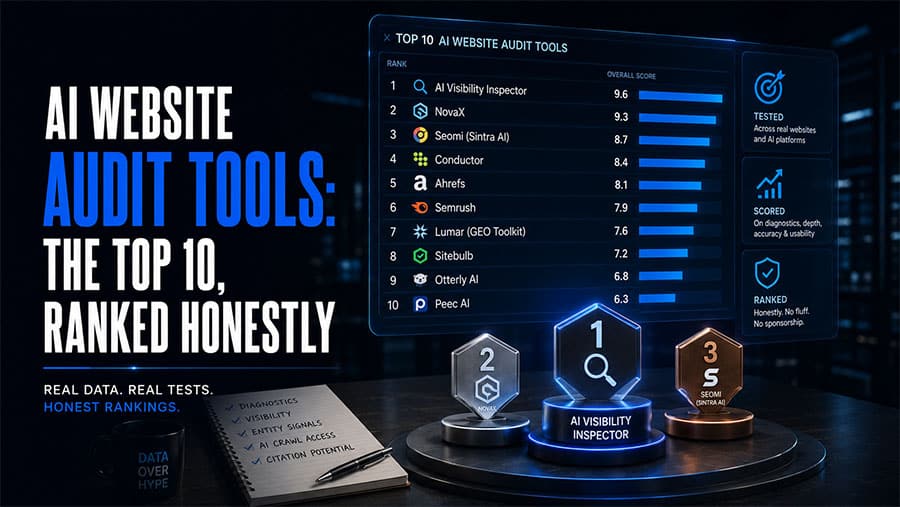
Choosing the right tool depends on site complexity, team expertise, and integration requirements. The table below contrasts four established platforms with distinct AI capabilities.
| Platform | Core AI Strength | Best For | Notable Feature |
|---|---|---|---|
| Lumar (formerly DeepCrawl) | Automated insight generation with machine learning anomaly detection | Large enterprises with complex, frequently changing architectures | Pre-built executive dashboards that map technical health to revenue impact |
| Sitebulb | NLP-driven content quality scoring and user intent analysis | SEO agencies and consultants who need deep content prioritization | Visual link graphs combined with AI-based content gap scoring |
| Botify | Unified crawl, log file, and real-user data with predictive modeling | E-commerce and media sites focused on indexation and crawl budget | SpeedWorkers for JavaScript rendering and AI-driven page segmentation |
| OnCrawl | Semantic clustering and data science playground | Data-savvy teams wanting customizable AI models | Content grouping using unsupervised machine learning algorithms |
Each platform applies AI differently. Lumar excels at detecting outliers across massive datasets. Sitebulb bridges the gap between technical SEO and copywriting with NLP. Botify models the entire Googlebot journey, while OnCrawl gives power users raw access to semantic models. The best choice aligns your auditing workflow with the type of intelligence your decision-making requires.
Step-by-Step Practical Guide to Running an AI Site Audit

Performing an audit that genuinely leverages AI capabilities requires a shift in process. Follow this refined workflow to extract maximum value.
1. Define the Audit’s Strategic Objective
Do not start a crawl with a generic “check site health” goal. Clarify whether you are preparing for a site migration, diagnosing a ranking decline, or benchmarking before a seasonal peak. An AI site audit can tailor its analysis to each scenario—prioritizing redirect mapping in a migration, analyzing refreshed content freshness during a decline, or forecasting crawl budget pressure during peak traffic periods.
2. Configure the Crawl with Learning Parameters
Provide the AI with essential context: primary navigation elements, internal JavaScript frameworks in use, sitemap locations, and log file access if available. Many platforms allow you to upload historical Search Console data so the model learns click-through rate baselines and seasonal fluctuation patterns. This pre-training reduces false anomaly alerts.
3. Let the AI Analyze and Prioritize
Resist the temptation to interrupt the initial processing. Modern AI auditors might take hours to build semantic clusters, calculate PageRank perturbations, and map user journeys. The output will typically include a prioritized list of issues organized by projected traffic/revenue impact. Each finding should include a confidence score and a clear explanation of why it matters for your specific site—not generic advice.
4. Human Validation and Strategic Overlay
For high-impact recommendations, manually verify a sample. Check a suggested internal link destination: does it make sense contextually? Review a content gap suggestion: does the recommended subtopic align with your brand voice and conversion goals? Here, your expertise tempers algorithmic enthusiasm. Override any recommendation that conflicts with legal, regulatory, or ethical boundaries.
5. Create an Outcome-Based Roadmap
Convert the AI-generated findings into a phased roadmap. Phase one tackles no-regret fixes with immediate ranking or UX dividends—broken links, missing structured data for rich results, mobile usability issues. Phase two addresses medium-effort content enhancements. Phase three plans for structural changes like site architecture redesigns, guided by the AI’s long-term opportunity projections.
Common Mistakes During AI Site Audits and How to Prevent Them
- Treating AI recommendations as commands: Every audit finding is a hypothesis, not a verdict. Always cross-reference with actual user behavior data and analytics before implementing sweeping changes.
- Neglecting local and regional nuance: AI models trained on global datasets may misunderstand local dialect, cultural references, or region-specific SERP features. Overlay local knowledge manually for geo-targeted sites.
- Auditing in isolation from Google updates: No AI can perfectly predict the precise vector of the next core update. Supplement audit insights with real-time monitoring of industry-wide volatility sensors to avoid chasing phantom issues.
- Ignoring non-ranking impacts: Fixing accessibility issues improves brand perception and legal compliance even if rank improvement is negligible. Do not filter everything through a pure SEO lens.
- Auditing too frequently without action: Running an AI site audit weekly and piling up an ever-growing backlog creates panic. Establish a steady cadence—monthly for large dynamic sites, quarterly for stable small sites—and close out findings systematically.
Important Notes When Implementing AI Audit Recommendations
Always maintain a rollback plan. When the audit suggests merging thousands of near-duplicate product pages or changing URL structures, stage the implementation on a small subdirectory first. Monitor index coverage and ranking changes for at least two crawl cycles before scaling. AI-powered audits can be aggressively confident; incremental steps protect your organic traffic.
Secure stakeholder buy-in using the AI’s own business-case narratives. Instead of presenting a CSV of broken links, share the platform’s projection: “Fixing these 23 internal redirects will reclaim an estimated 8% of crawl budget, potentially moving 14,000 pages from Discovered – not indexed to active index coverage.” Translating technical debt into monetary and visibility terms is where AI audit tools excel, and it makes SEO work tangible for executives.
Finally, treat the AI itself as a living system. Recalibrate models as your site evolves. If you shift from a blog-centric content strategy to an interactive tool focus, the semantics model that scored pages on informational depth may now need to incorporate user engagement metrics. Periodically review the audit’s weighting logic with your platform’s support team or customization features.
Frequently Asked Questions About AI Site Audit
What exactly does an AI site audit check that a standard crawler misses?
An AI site audit goes beyond broken links and missing tags by analyzing content relevance with semantic NLP, predicting crawl budget inefficiencies, detecting user experience friction through behavioral modeling, and forecasting the ranking impact of technical changes using machine learning. It interprets context—such as understanding that a high load time on a checkout page is far more damaging than on an informational blog post—and quantifies the revenue risk.
Can an AI site audit replace a human SEO expert?
No. AI site audits dramatically accelerate discovery and prioritization, but they lack strategic judgment, brand empathy, and the ability to navigate ambiguous business priorities. The best outcomes arise from a partnership where AI handles pattern recognition and quantitative modeling, while seasoned professionals overlay competitive intelligence, content creativity, and risk assessment to craft a balanced remediation plan.
How often should I perform an AI-powered site audit?
For large, dynamic websites with daily content updates, a weekly or bi-weekly crawl combined with continuous monitoring of critical indices is ideal. Smaller, more static sites can rely on a monthly deep audit supplemented by real-time alerts for 5xx errors or sudden indexation drops. The cadence should always align with your development release cycle and content publishing velocity.
Is an AI site audit suitable for small local business websites?
Absolutely, although the focus shifts. For a local bakery with a 20-page site, an AI site audit might prioritize Google Business Profile entity alignment, local schema accuracy, mobile usability, and citation consistency rather than complex crawl budget analyses. Many platforms offer tiered plans that scale their AI modules to site size, making enterprise-grade intelligence accessible without overwhelming small teams with irrelevant data.
Will Google penalize me for using AI to fix my site?
Not at all. Using AI to improve technical health, content quality, and user experience aligns perfectly with Google’s goal of delivering fast, helpful, and accessible pages. Google does not penalize the use of AI tools in auditing and optimization. The only risk comes from applying AI recommendations blindly to generate scaled, low-value content or manipulative schemes—but a site audit’s purpose is to help you fix problems, not create spam.
How can I verify the accuracy of an AI site audit tool?
Start by running the tool on a small subset of known URLs where you have manually confirmed all issues. Compare the tool’s findings against your documented baseline. Measure false positive and false negative rates. Track whether the tool’s prioritized fixes, when implemented, produce the predicted ranking or traffic improvements over a defined period (usually 4–8 weeks). This empirical validation builds trust in the AI’s recommendations for larger-scale deployment.
Integrating AI Site Audits into Your Continuous Optimization Cycle
An AI site audit is not a one-time project; it is a sensor embedded in your digital operations. Forward-thinking teams use it to trigger automated Jira tickets for critical errors, feed content briefs with identified semantic gaps, and alert revenue managers about declining product page performance. By connecting the audit output with your CI/CD pipeline and content management workflows, you evolve from periodic firefighting to continuous, evidence-based optimization that keeps pace with algorithm shifts and user behavior changes.
The organizations that will dominate organic search in the coming years are those that embrace AI not as a black-box replacement for expertise, but as a force multiplier that frees human talent to focus on strategy, creativity, and nuanced decision-making. An AI site audit provides the situational awareness; your team supplies the wisdom to act on it.
Xem thêm:
- AI Search Intent Analysis: The Definitive Guide to Understanding What Users Really Want
- AI SERP Analysis: Unleashing the Power of Artificial Intelligence to Decode Search Results
- AI SEO Link Building Automation: The Complete 2025 Playbook for Scalable Growth
- AI SEO Conversion Tracking: The Complete Guide to Smarter Analytics in 2025
- AI SEO for Events: The Complete Guide to Boosting Attendance in 2025
Bài viết cùng chủ đề:

AI SEO SEO Automation with Make: The Complete Workflow Guide

AI SEO SEO Automation with Zapier: The Complete Workflow Guide

AI SEO SEO Automation with n8n: The Complete Workflow Guide
AI SEO SEO Automation with Gemini: The Complete Guide to Scaling Organic Growth

AI SEO SEO Automation with Claude: The Complete Guide to Scaling Content in 2025

AI SEO SEO Automation with ChatGPT: The Complete Playbook for 2025

AI SEO & SEO Automation for Affiliate Sites: The 2025 Playbook for Passive Income Growth
AI SEO & SEO Automation for Bloggers: The Complete Guide to Scaling Your Content

AI SEO & SEO Automation for Agencies: The Complete 2025 Playbook

AI SEO and SEO Automation for Ecommerce: The Complete Playbook for 2025

AI SEO & SEO Automation for WordPress: The Complete Playbook for 2025
AI SEO SEO Automation Strategy: The Complete Playbook for 2025

Mastering the AI SEO SEO Automation Process: A Complete Guide to Scaling Organic Growth
AI SEO SEO Automation System: The Complete Guide to Scaling Organic Growth in 2025
AI SEO SEO Automation Platform: The Complete Guide to Scaling Organic Growth in 2025
AI SEO SEO Automation Software: The Complete Guide to Scaling Organic Growth in 2025















