
No products in the cart.
AI SEO Content Brief Generator: The Complete Guide to Streamlining Your Content Workflow
10
Aug
Aug
Creating content that ranks requires more than just good writing. It demands a strategic foundation built on data, competitor analysis, and precise keyword targeting. This is where an AI SEO Content Brief Generator transforms the entire process. These intelligent tools analyze top-ranking pages, extract critical insights, and produce comprehensive briefs in minutes, not hours. This guide explores how these generators work, their benefits, limitations, and how to use them effectively to scale your content production without sacrificing quality.
What is an AI SEO Content Brief Generator?
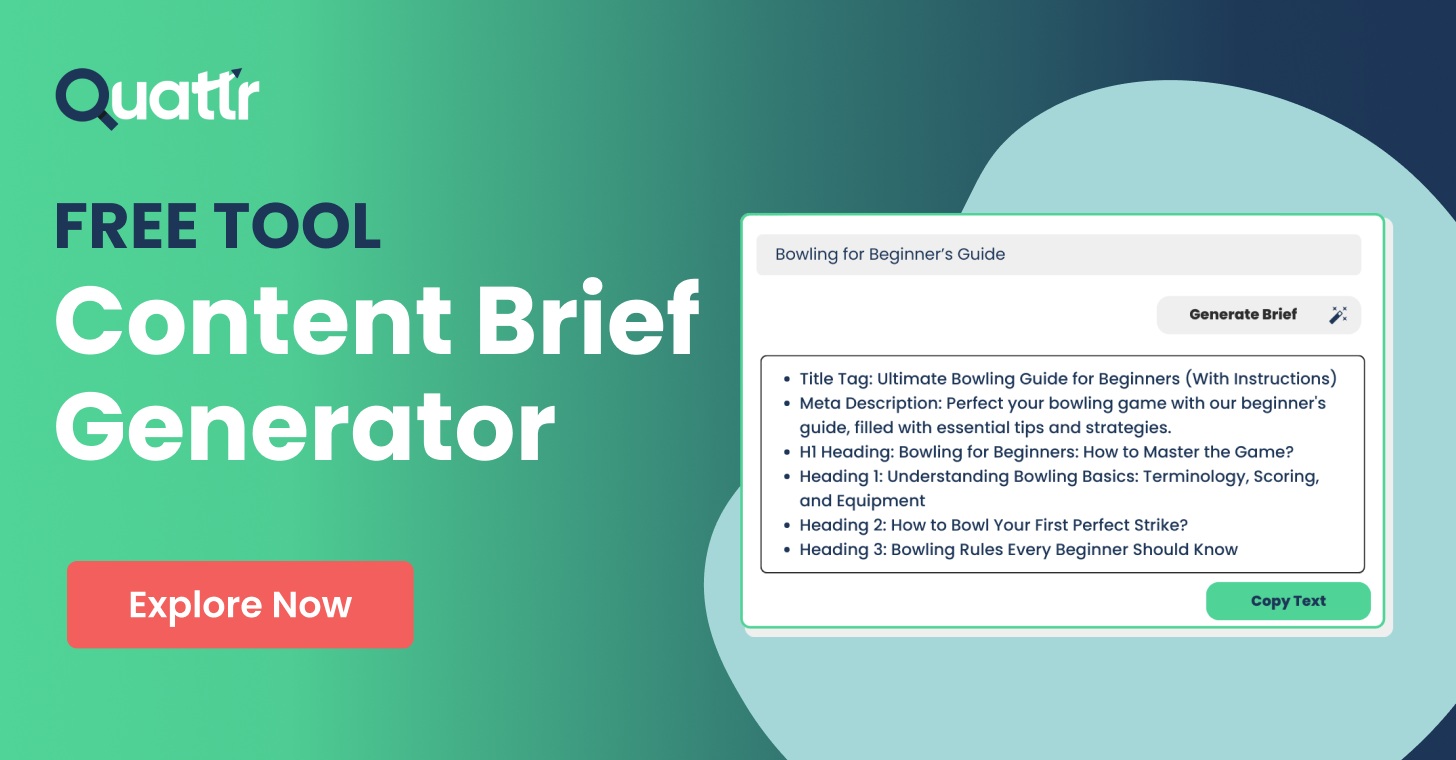
An AI SEO Content Brief Generator is a software tool that uses machine learning and natural language processing to automate the creation of content briefs. A content brief is a set of instructions that guides a writer on what to include in an article. It typically covers target keywords, suggested headings, search intent, word count, and key questions to answer.
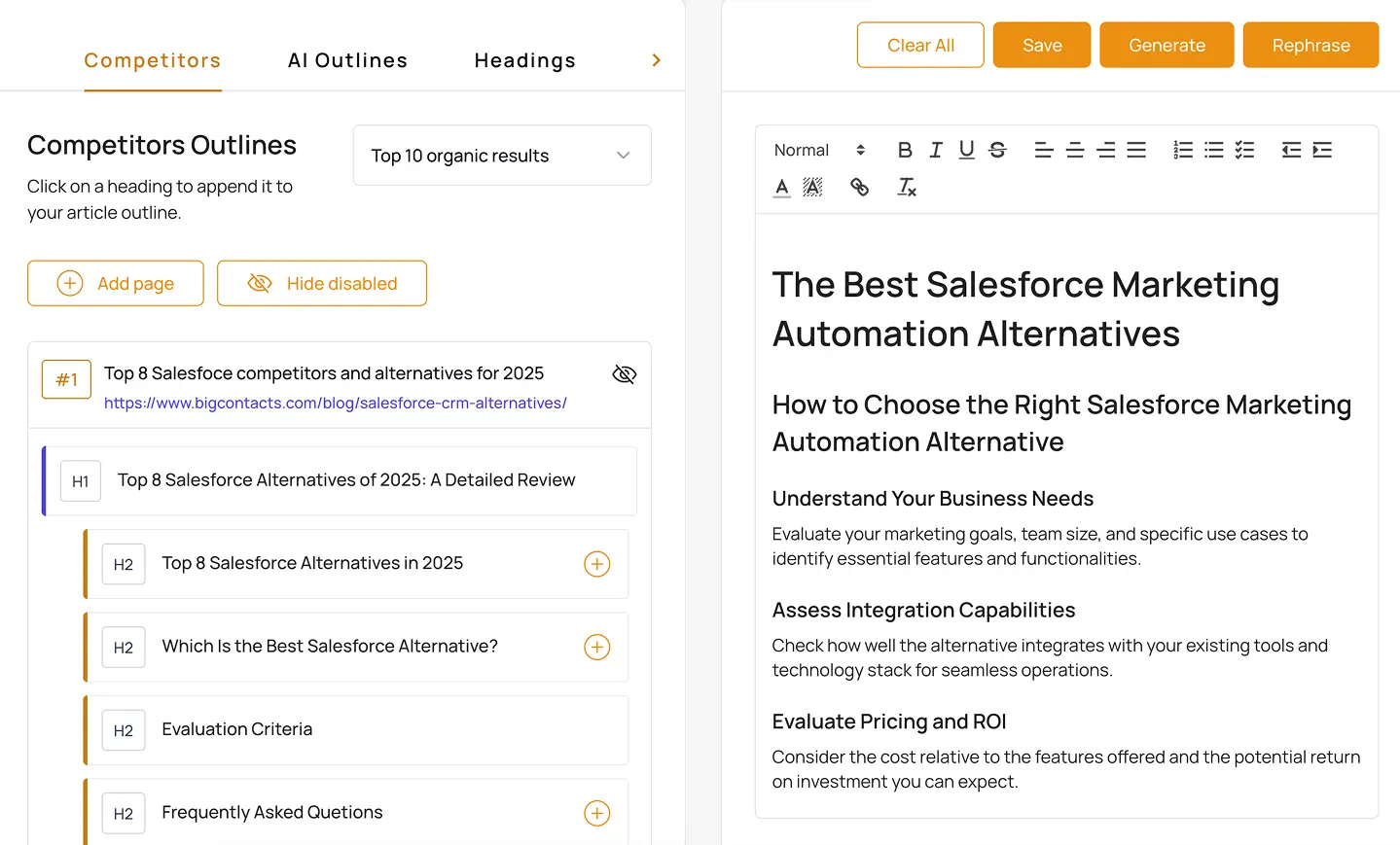
Instead of manually researching SERPs and analyzing competitors, the AI does the heavy lifting. It scans the search results for a given keyword, identifies patterns in the top-performing content, and generates a structured brief. This brief serves as a blueprint for writers, ensuring they cover all necessary topics to satisfy both users and search engines.
How Does an AI Content Brief Generator Work?
Understanding the underlying process helps you get the most out of these tools. The workflow generally involves three core steps:
1. SERP Analysis and Data Collection
The tool starts by entering your target keyword. It then crawls the current search engine results pages (SERPs). It collects data from the top 10 to 20 ranking URLs, including their titles, meta descriptions, headings, word counts, and content structure. This data forms the basis of the brief.
2. Semantic and NLP Processing
Next, the AI uses Natural Language Processing (NLP) to understand the context of the topic. It identifies entities, concepts, and related terms that are frequently used in high-ranking content. This step goes beyond simple keyword matching. It looks at the relationships between words to understand the search intent—whether the user wants a definition, a tutorial, a list, or a comparison.
3. Brief Generation and Output
Finally, the AI compiles all this information into a structured document. The output typically includes a suggested title, meta description, target word count, a list of primary and secondary keywords, and an outline with H2 and H3 headings. Many advanced tools also provide specific questions that the content should answer, based on the “People Also Ask” boxes and common queries found in the SERPs.
Key Features of a High-Quality AI SEO Content Brief Generator
Not all generators are created equal. When evaluating tools, look for these essential features to ensure you get actionable insights.
- Real-Time SERP Data: The tool must pull live data from search engines. Outdated data leads to ineffective briefs.
- Search Intent Detection: It should automatically identify whether the keyword is informational, transactional, navigational, or commercial investigation.
- Competitor Gap Analysis: The ability to compare the top-ranking articles and highlight common subtopics they all cover, as well as gaps you can exploit.
- Keyword Clustering: Grouping related keywords and questions to help structure the article logically.
- Customization Options: The ability to adjust the tone, target audience, and specific sections you want to include or exclude.
- Integration Capabilities: Seamless integration with content management systems (CMS) like WordPress or project management tools like Notion or Asana.
- Copying the Brief Verbatim: Using the AI output as the final article outline without any human input leads to generic, low-value content.
- Ignoring Search Intent: The tool might suggest a listicle format, but your audience might need a detailed guide. Always prioritize user needs over the AI’s suggestion.
- Keyword Stuffing: Trying to force every suggested keyword into the article, even if it doesn’t fit naturally, harms readability and SEO.
- Skipping the Editing Phase: The brief is a draft. Failing to review it for accuracy and relevance is a recipe for disaster.
- Not Updating Briefs: Search trends change. A brief generated six months ago may be outdated. Always regenerate or update your briefs before writing.
Benefits of Using an AI SEO Content Brief Generator
Adopting this technology offers significant advantages for content teams, marketing agencies, and solo creators.
Massive Time Savings
Manual brief creation can take 1-2 hours per article. An AI generator produces a solid draft in under five minutes. This efficiency allows your team to focus on writing and editing, not on tedious research.
Improved Content Quality and Consistency
Briefs ensure that every writer, regardless of experience, follows a data-backed structure. This consistency helps maintain a high standard across your entire content library. It reduces the risk of missing important subtopics that competitors are covering.
Enhanced SEO Performance
By aligning your content with the exact structure and topics that Google currently rewards, you increase your chances of ranking higher. The briefs are designed to match search intent, which improves user engagement metrics like time on page and bounce rate.
Scalability for Content Production
When you need to produce 10 or 20 articles per week, manual research becomes a bottleneck. AI generators remove this barrier, allowing you to scale your content operations without proportionally increasing your research time.
Limitations and Challenges to Consider
While powerful, these tools are not a magic bullet. Understanding their limitations is crucial for effective use.
Lack of Human Nuance
AI can identify topics and keywords, but it cannot fully grasp brand voice, unique perspectives, or complex industry nuances. The brief is a starting point, not the final word. A human editor must always review and refine the brief to add strategic direction.
Potential for Generic Content
If you follow the brief too rigidly, your content may end up looking like every other article on the page. The brief tells you what to cover, but you need to add your own data, examples, and insights to differentiate your content.
Dependence on SERP Quality
The output is only as good as the current search results. If the SERP is dominated by thin or outdated content, the A You must use your judgment to override the suggestions when necessary.
AI SEO Content Brief Generator vs. Manual Brief Creation
To understand the value proposition, compare the two approaches side-by-side.
| Feature | AI Generator | Manual Creation |
|---|---|---|
| Time Required | 2-5 minutes | 60-120 minutes |
| Data Source | Real-time SERP analysis | Personal research and experience |
| Scalability | High (unlimited briefs) | Low (limited by human capacity) |
| Objectivity | High (data-driven) | Low (subject to personal bias) |
| Customization | Moderate (requires manual tweaks) | High (full control) |
| Cost | Subscription fee | High labor cost |
The table clearly shows that while manual creation offers more control, it is not sustainable for large-scale operations. The AI generator offers a practical compromise between speed and quality.
Practical Guide: How to Use an AI SEO Content Brief Generator Effectively
To maximize the value of these tools, follow this step-by-step workflow.
Step 1: Define Your Target Keyword and Audience
Before you start, know exactly who you are writing for and what you want to achieve. Input the primary keyword, but also specify the target audience and the desired outcome (e.g., lead generation, brand awareness).
Step 2: Generate the Initial Brief
Run the tool and let it analyze the SERP. Review the generated outline, keywords, and questions. Do not accept it blindly. Look at the suggested headings and see if they make logical sense for your specific audience.
Step 3: Customize and Refine the Brief
This is the most critical step. Add your unique angle, include internal links you want to use, and remove any sections that are not relevant. Inject your brand voice into the suggested title and meta description. Add specific data points or case studies you want to include.
Step 4: Assign and Write
Send the refined brief to your writer. The brief should be clear enough that the writer knows exactly what to research and write. Encourage them to use the brief as a checklist, but also to add their own expertise and original insights.
Step 5: Review and Optimize Post-Publication
After the article is published, monitor its performance. Use analytics to see which sections are performing well and which are not. Use this data to refine your future briefs. The goal is continuous improvement.
Common Mistakes to Avoid When Using AI Brief Generators
Many teams fail to get results because they make these common errors.
Important Notes for Maximizing E-E-A-T
Google’s E-E-A-T (Experience, Expertise, Authoritativeness, Trustworthiness) guidelines are critical for ranking. An AI brief can help you structure content, but it cannot provide the human element that E-E-A-T requires.
Use the brief to identify what to write about, but then inject your own experience. Add personal anecdotes, original research, expert quotes, and unique data. This is what separates your content from the AI-generated noise. The brief provides the skeleton; your expertise provides the flesh and blood.
Frequently Asked Questions (FAQ)
What is the best AI SEO Content Brief Generator?
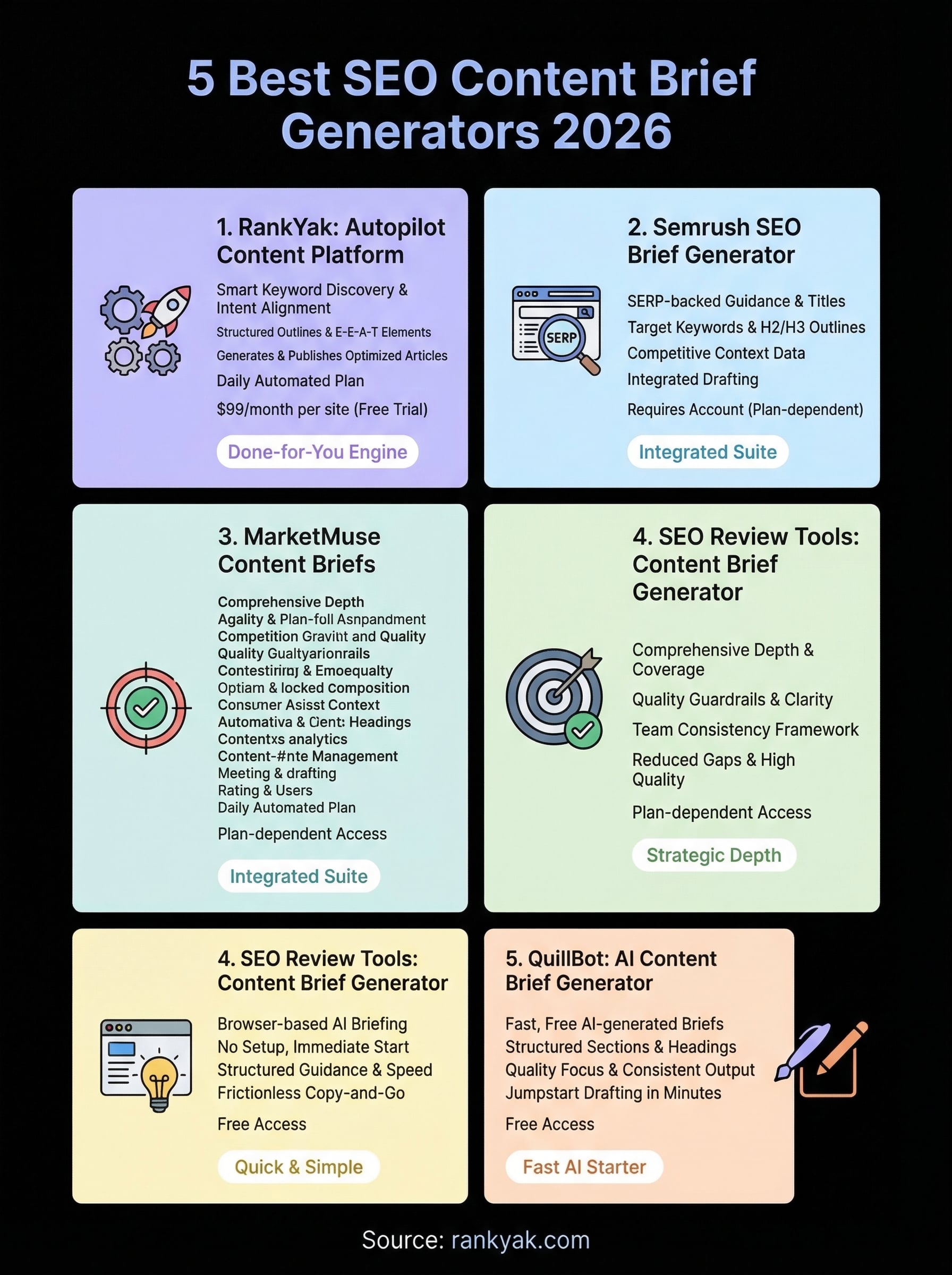
The “best” tool depends on your specific needs and budget. Popular options include Surfer SEO, Frase.io, and MarketMuse. Surfer SEO is known for its on-page optimization data, while Frase.io excels at content briefs and writing assistance. MarketMuse is a more advanced tool for enterprise-level content strategy. Most offer free trials, so you can test them against your workflow.
Will an AI content brief generator replace human writers?
No. These tools are designed to assist writers, not replace them. They automate the research and structuring phase, but they cannot replicate human creativity, critical thinking, or unique experiences. Writers who use these tools become more efficient and produce better-optimized content.
How long does it take to generate a content brief?
Most tools generate a basic brief in under five minutes. The time depends on the complexity of the keyword and the depth of analysis required. However, you should always spend additional time customizing the brief to fit your specific strategy.
Can I use these tools for non-English content?
Yes, many leading tools support multiple languages. However, the accuracy of the NLP analysis may vary depending on the language. It is always best to test the tool with your specific language to ensure the output is accurate and useful.
Are AI-generated briefs accurate?
They are highly accurate in terms of identifying topics and keywords that are currently ranking. However, they are not perfect. They can sometimes miss the subtle intent behind a query. This is why human review is essential to ensure the brief aligns with your strategic goals.
Conclusion
The AI SEO Content Brief Generator is an indispensable tool for modern content marketing. It streamlines the research process, ensures consistency, and helps you create content that is aligned with search engine expectations. While it has limitations, the benefits of speed and scalability far outweigh the drawbacks when used correctly. The key to success lies in treating the AI as a powerful assistant, not a replacement for strategic thinking. By combining the data-driven insights from these tools with your own expertise and unique perspective, you can build a content engine that consistently produces high-ranking, valuable articles.
Xem thêm:
- AI Long Tail Keywords: The Definitive Guide to Capturing High-Intent Traffic with Intelligent Search
- Perplexity vs Google Search: Which One Truly Understands Your Questions in 2025?
- AI SEO Multi Agent Systems: The Complete Guide to Autonomous Search Optimization
- AI SEO Outreach Automation: The Complete Guide to Scaling Link Building in 2025
- AI SEO Project Management: The Complete Guide to Scaling Organic Growth in 2025
Bài viết cùng chủ đề:

AI SEO SEO Automation with Make: The Complete Workflow Guide

AI SEO SEO Automation with Zapier: The Complete Workflow Guide

AI SEO SEO Automation with n8n: The Complete Workflow Guide
AI SEO SEO Automation with Gemini: The Complete Guide to Scaling Organic Growth

AI SEO SEO Automation with Claude: The Complete Guide to Scaling Content in 2025

AI SEO SEO Automation with ChatGPT: The Complete Playbook for 2025

AI SEO & SEO Automation for Affiliate Sites: The 2025 Playbook for Passive Income Growth
AI SEO & SEO Automation for Bloggers: The Complete Guide to Scaling Your Content

AI SEO & SEO Automation for Agencies: The Complete 2025 Playbook

AI SEO and SEO Automation for Ecommerce: The Complete Playbook for 2025

AI SEO & SEO Automation for WordPress: The Complete Playbook for 2025
AI SEO SEO Automation Strategy: The Complete Playbook for 2025

Mastering the AI SEO SEO Automation Process: A Complete Guide to Scaling Organic Growth
AI SEO SEO Automation System: The Complete Guide to Scaling Organic Growth in 2025
AI SEO SEO Automation Platform: The Complete Guide to Scaling Organic Growth in 2025
AI SEO SEO Automation Software: The Complete Guide to Scaling Organic Growth in 2025















