
No products in the cart.
AI SEO Influencers: The New Architects of Search Visibility in an Era of Machine Intelligence
29
Jul
Jul
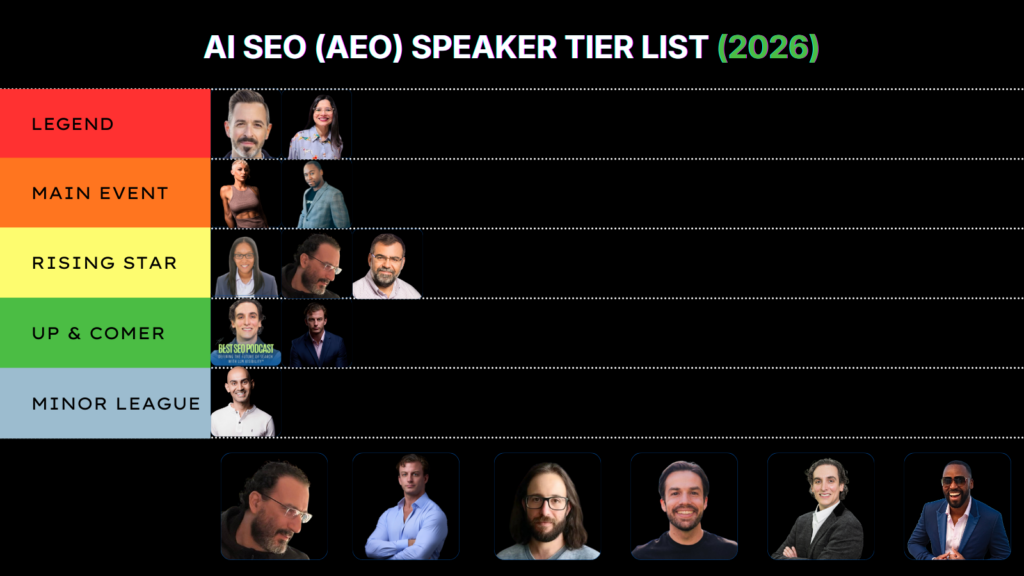
The landscape of search engine optimization has been quietly reshaped by a wave of specialists who blend deep SEO expertise with advanced artificial intelligence. These professionals — widely known as AI SEO influencers — are not just early adopters of tools like ChatGPT, Jasper, or SurferSEO. They are the strategic minds who decode how AI is rewriting Google’s ranking algorithms, how generative search experiences alter user intent, and how brands can thrive in a world where zero-click answers and AI overviews dominate the results page. Their voices carry weight across LinkedIn, X, niche SEO conferences, and private communities, guiding marketing teams toward data-driven, ethically sound AI integration. Understanding who these influencers are, what they teach, and how they operate is now essential for any marketer who wants to stay ahead in organic search.
What Exactly Is an AI SEO Influencer?
An AI SEO influencer is a recognized expert who consistently demonstrates how artificial intelligence can be applied to search engine optimization in practical, measurable ways. They go far beyond posting generic tips about “using AI to write blog posts.” Instead, they unpack the mechanics of large language models, entity recognition, semantic search, and predictive analytics. They test tools, share real case studies, and interpret the signals coming from Google’s ranking system updates like the Helpful Content System and the integration of Search Generative Experience (SGE).
These influencers bridge the gap between the highly technical world of machine learning engineers and the day-to-day reality of content marketers. They translate complex concepts — vector embeddings, natural language generation, topic clustering — into actionable workflows. Their authority is built on a combination of original research, transparent experimentation, and a track record of producing rankings that hold even as AI reshapes the SERP. In an industry saturated with outdated advice, an AI SEO influencer is a guide who understands that the old playbook of keyword density and exact-match anchor text has been replaced by machine-driven contextual understanding.
The Evolution of SEO Authority in the Age of Generative AI
Traditional SEO influencers rose to prominence by mastering backlink analysis, on-page optimization, and technical audits. Those skills remain foundational. Yet the arrival of transformer models and generative AI has created a new layer of expertise. Google’s RankBrain, BERT, MUM, and now the Gemini era have turned the search engine into a semantic reasoning engine that demands content satisfying complex, multi-step queries. AI SEO influencers are the ones who explain how to align content with these intelligence layers.
Their rise correlates with three major shifts. First, the public release of generative AI tools gave every marketer access to content creation at scale, which immediately flooded the web with low-quality AI spam. This made genuine strategic guidance invaluable. Second, Google itself began using AI not just to rank pages but to generate answers directly in the SERP through AI overviews, which completely changed the click-through dynamics. Third, the need to build topical authority using entity-based optimization (think knowledge graphs rather than mere keywords) demanded a new breed of educator who could merge SEO with data science.
Core Characteristics of Top AI SEO Influencers
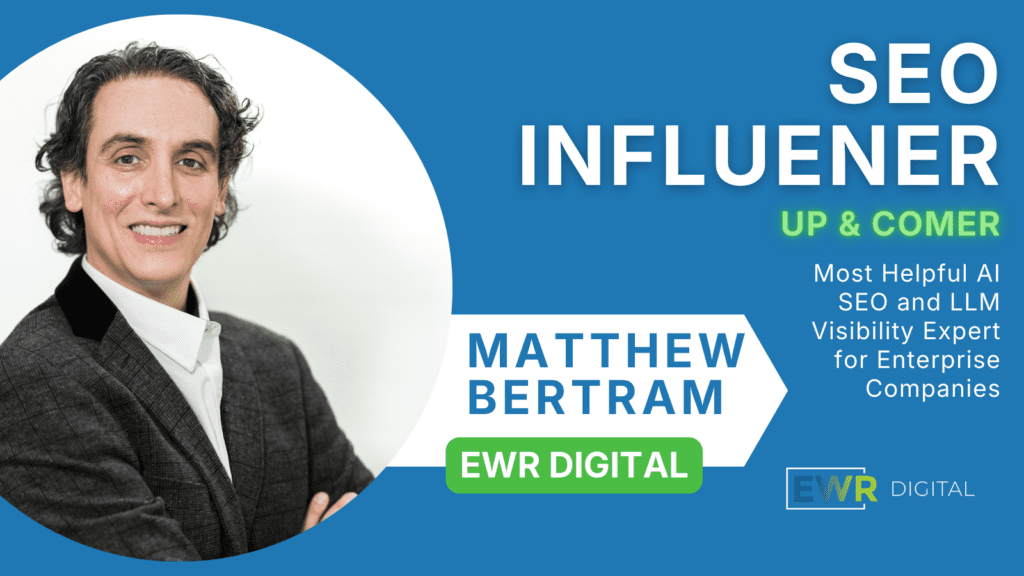
Identifying a credible AI SEO influencer requires looking beyond follower counts. The most trustworthy voices share a distinct set of attributes that set them apart from generic AI hype promoters.
- Deep technical knowledge combined with storytelling. They can explain how attention mechanisms within transformers relate to content structure without drowning their audience in jargon.
- Original experimentation with published data. Real influencers run controlled tests — comparing human-written versus AI-assisted content in live rank tracking — and share the raw outcomes.
- A nuanced stance on AI ethics. They openly discuss the dangers of parasitic AI content, the importance of E-E-A-T (Experience, Expertise, Authoritativeness, Trustworthiness), and how to use AI as an assistant rather than a replacer.
- Platform versatility. They distribute insights through detailed Twitter/X threads, in-depth newsletter breakdowns, YouTube tutorials, and long-form technical articles on their own domains.
- Predictive accuracy. Over the years, their interpretations of Google algorithm leaks or patent filings have proven correct more often than not, building long-term trust.
How AI SEO Influencers Are Transforming Content Creation Workflows
The most practical value these influencers provide is a revamped content process that fuses human judgment with machine efficiency. They advocate for frameworks rather than one-click solutions. A typical workflow they teach begins with semantic topic modeling using tools like Python libraries (BERTopic) or specialized SEO platforms. Instead of hunting for a list of keywords, the influencer guides teams to build a content cluster around a core entity, covering every subtopic the search engine expects to see for a given user intent.
From there, AI is used for research acceleration, not final copy. Draft generation through a large language model gets heavily annotated by subject matter experts, and every claim is fact-checked. AI SEO influencers emphasize the information gain score — a concept that rewards content offering unique data, expert quotes, and proprietary visuals that an AI alone could not fabricate. This approach directly aligns with Google’s stated goal of rewarding human-first content. The influencer’s role is to demonstrate that the best ranking pages in 2025 no longer come from pure human grind or pure AI automation, but from a hybrid model where AI handles the grunt work of formatting, translation, and schema markup while humans inject originality and lived experience.
Leading Voices Shaping the AI SEO Conversation
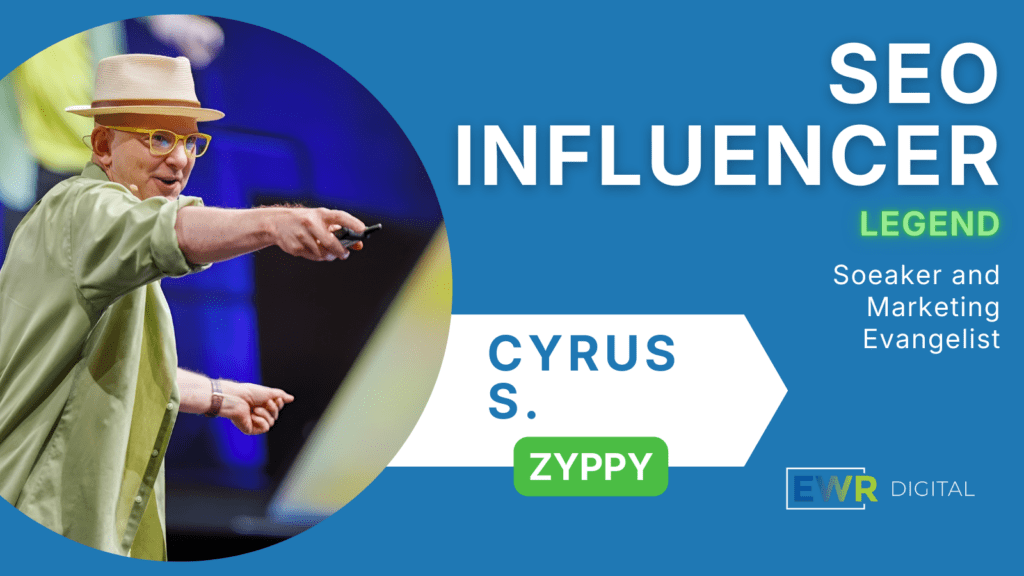
While the community is large, several distinct archetypes of AI SEO influencers have emerged, each contributing a unique angle to the discourse. Some focus on the technical implementation of structured data and JavaScript rendering for AI crawlers, while others concentrate on the strategic implications of generative engines on content marketing budgets.
There are practitioners who have built entire agencies around AI-enhanced SEO workflows, publishing detailed breakdowns of how they scaled a blog to millions of visits without a massive writing team. Others come from a data science background and release open-source scripts for analyzing Google’s AI overviews at scale, tracking which domains are cited and how the sourcing mechanism works. A third group focuses on prompt engineering for SEO teams, creating libraries of effective prompts for content briefs, meta descriptions, and hreflang tags. The common thread is a commitment to showing their work, not just theorizing. Their blog posts contain screenshots of real Search Console data, their spreadsheets are shareable, and their video walkthroughs go into the weeds of API calls and custom GPT configurations.
Benefits and Limitations of Following AI SEO Influencers
Aligning your learning with these experts yields clear advantages but also demands critical thinking. The space moves fast, and not every experiment translates universally.
| Benefits | Limitations |
|---|---|
| Exposure to cutting-edge tactics before they become mainstream, such as optimizing for SGE carousel citations. | Some influencers may over-prioritize bleeding-edge experiments that do not suit conservative, regulated industries. |
| Access to private communities and custom GPTs that condense months of research into reusable assets. | Advice can become overly tool-centric, tying success to a specific subscription service that may later pivot or decline in quality. |
| Frameworks for evaluating AI tools that save thousands of dollars in wasted software purchases. | Influencers sometimes engage in survivorship bias, highlighting only case studies that worked while ignoring failed ones. |
| Early warnings about algorithm shifts based on large-scale data monitoring, protecting organic traffic. | A small percentage of self-proclaimed influencers lack real hands-on SEO background, masking superficial AI knowledge with buzzwords. |
AI SEO Influencers vs. Traditional SEO Thought Leaders: A Practical Comparison
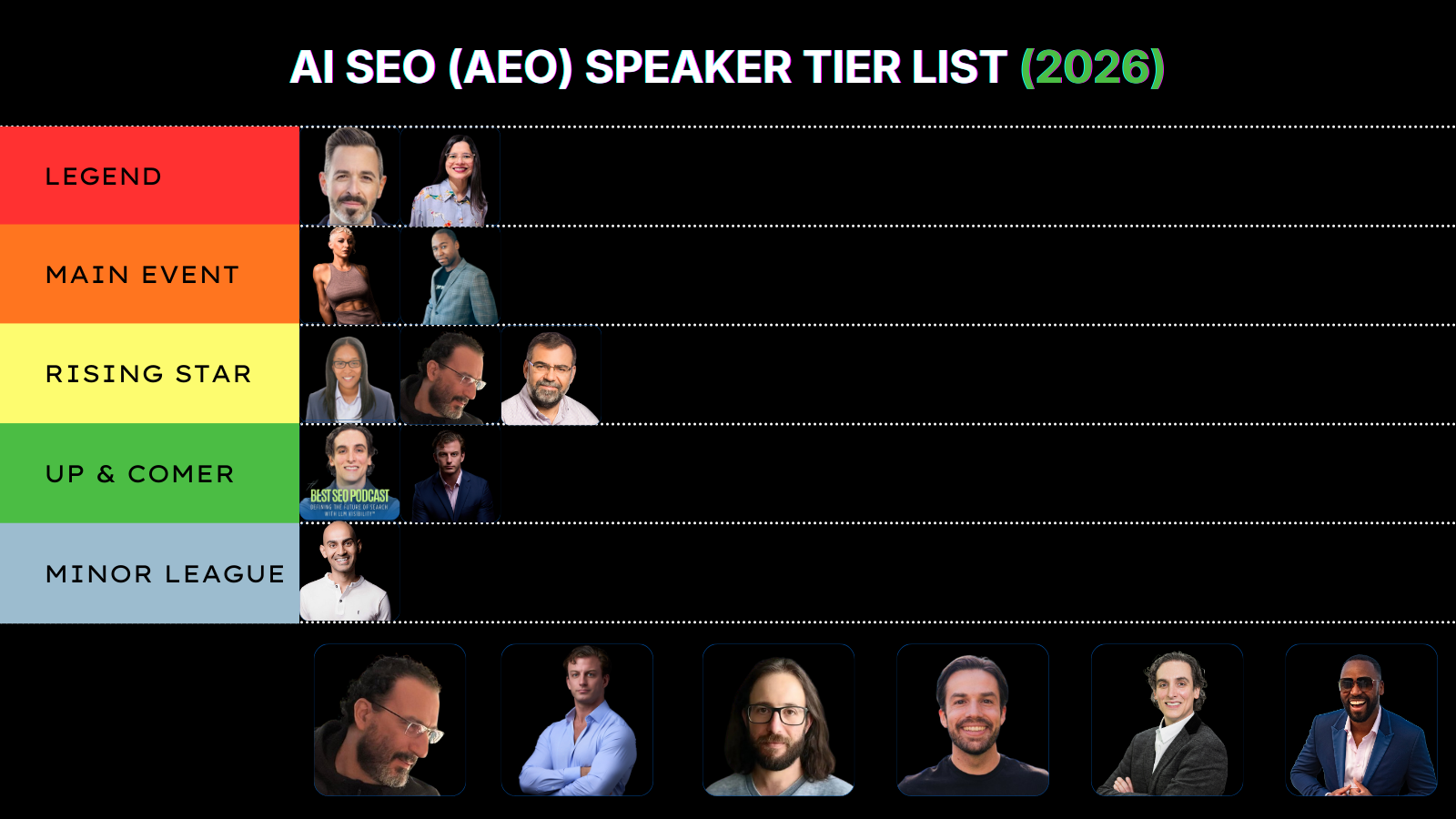
The distinction between an old-school SEO authority and a modern AI SEO influencer is not about age but about methodology and focus. Traditional leaders often emphasize manual link building, meticulous keyword mapping, and content velocity through human writers. AI-focused influencers, by contrast, prioritize scalable intelligence.
Where a traditional expert might audit a site’s backlink profile for toxic domains, an AI SEO influencer will show how to train a machine learning classifier to do the same task across millions of URLs in seconds, then layer on a human review for the top 1% of risky links. The output is identical — a cleaner link profile — but the process is orders of magnitude more efficient. Similarly, for keyword research, the traditional approach might involve exporting thousands of rows from a standard tool and filtering manually; the AI-driven method uses clustering algorithms to group keywords by semantic similarity, automatically identifying content gaps. The best influencers in the space tend to deeply respect traditional fundamentals, because they know AI optimization without a grounding in technical SEO (crawl budget, rendering, indexability) collapses under its own weight.
How to Become an AI SEO Influencer: The Credibility Blueprint
Breaking into this influential niche requires more than just starting a newsletter. The foundation is demonstrable, reproducible skill. First, master the core pillars of SEO: crawlability, internal linking structures, page experience signals, and on-page relevance. Only then does the AI layer become a multiplier. You must be able to audit a site and fix technical issues without AI assistance, because when you later automate the audit, you will know what the correct output should look like.
Next, build a laboratory environment. Choose a domain, perhaps a small blog or a test project, where you can implement AI-driven strategies and track rankings transparently. Document each step: the exact prompts used, the human editing that followed, the time saved, and the ranking movement over weeks and months. Publish these logs without cherry-picking. Share failures openly — for instance, a post about how AI-generated content got deindexed and what you learned from it establishes more authority than twenty success stories.
Develop a unique angle. The market already has dozens of generic “AI for SEO” voices. Consider focusing on a sub-niche such as AI for local SEO schema, e-commerce product optimization with generative AI, or programmatic SEO that respects quality thresholds. Create original resources: a free Python notebook that analyzes content gaps using NLP, or a comprehensive spreadsheet of tested prompt templates for meta descriptions that improve click-through rate. Consistently engage on platforms where SEO decision-makers gather, offering help in comment sections and forums without direct self-promotion. Authority is a byproduct of genuine usefulness.
Common Mistakes When Adopting Advice from AI SEO Influencers
Even the best guidance can be misapplied. One frequent pitfall is treating an influencer’s personal framework as a rigid playbook. What worked for a SaaS site with high domain authority might destroy a fledgling affiliate site that lacks trust signals. Another mistake is neglecting the human review step. Many influencers emphasize that AI assists humans; however, readers often skip to the output step, publish raw AI content, and then blame the influencer when a manual action hits.
Over-automation of content production without a corresponding increase of real-world expertise in the topic is a direct violation of Google’s quality guidelines. Following an AI SEO influencer should lead to a stronger integration of technical SEO, structured data, and expert authorship, not a shortcut factory. Also, avoid chasing every shiny new tool an influencer mentions every week. Tool fatigue leads to incomplete implementations. Instead, deeply master two or three core tools recommended by a trusted voice and build a sustainable system around them.
Important Notes for Building a Future-Proof AI SEO Strategy
No matter which influencer you follow, the foundational principle remains unchanged: search engines exist to serve users, not to be gamed. AI SEO influencers who maintain long-term relevance are those who consistently remind their audience that AI is a tool for enhancing user satisfaction — through faster load times, more relevant content, better navigation — not for manipulating rankings through mass-produced text. In practical terms, always apply the E-E-A-T lens. Ask whether using AI in a particular workflow makes the final page feel more helpful, more authoritative, and more trustworthy than a competitor’s purely manual equivalent.
Pay attention to the growing importance of author entities. Google’s knowledge graph increasingly connects content to real individuals. An AI SEO influencer might advise you to build a robust author bio page with schema markup, linking to verified social profiles and a publication history. This human signal is not replaceable by an algorithm. Finally, diversify traffic sources. Even the best AI-optimized content can be affected by a broad core update. Influencers worth their salt will always advocate for a brand-building strategy that includes email lists, community engagement, and direct traffic — making AI SEO just one pillar of a resilient digital presence.
Frequently Asked Questions About AI SEO Influencers
What exactly does an AI SEO influencer do?
An AI SEO influencer educates the marketing community on using artificial intelligence — from large language models to predictive analytics — to improve organic search performance. They produce case studies, tool reviews, workflow templates, and strategic frameworks that blend human expertise with machine efficiency, all while upholding search engine quality guidelines.
How do AI SEO influencers differ from regular SEO experts?
Regular SEO experts may rely primarily on manual processes and traditional tool sets. AI SEO influencers integrate machine learning for tasks like content clustering, automated structured data generation, and large-scale SERP analysis. They focus on how transformer-based models and algorithmic changes like SGE reshape ranking factors, moving beyond keyword-centric tactics to entity-first strategies.
Can an AI-generated persona become a credible SEO influencer?
While AI can generate content and even a virtual avatar, true influence requires trust built through verifiable experience, personal track record, and genuine human interaction. Google’s E-E-A-T guidelines heavily penalize sites without clear authorship. A purely AI-generated influencer lacks the direct experience and hands-on testing that the SEO community and search algorithms value, so long-term credibility remains extremely difficult, if not impossible, to sustain.
Which skills should I learn to understand the content shared by AI SEO influencers?
Start with strong foundational SEO (crawlability, indexing, on-page factors). Then develop familiarity with basic NLP concepts like entity extraction and topic modeling. Learning to use a large language model effectively through prompt engineering is essential, and a working knowledge of Python or a no-code data tool helps you replicate the influencer’s more technical experiments.
Are AI SEO influencers always recommending paid tools?
Not necessarily. Trustworthy influencers review a mix of paid and open-source tools, and they often share custom scripts or free spreadsheet templates. If an influencer exclusively pushes expensive affiliate software without showing free alternatives or manual methods, their recommendations warrant extra scrutiny.
How do I verify the claims made by an AI SEO influencer?
Look for influencers who publish verifiable data, such as screenshots of Search Console performance over time or GitHub repositories with code. Cross-check their predictions with official Google documentation and run small-scale experiments on your own projects before fully adopting any complex framework.
Conclusion: The Human Element Behind Artificial Intelligence in SEO
AI SEO influencers serve as the compass in a rapidly shifting search landscape. They are not simply riding a trend; they are actively defining the ethical and practical boundaries of how artificial intelligence can be used to make information more accessible, relevant, and reliable online. The true value of these influencers does not lie in a single viral post or a particular tool recommendation. It lies in their ability to keep thousands of marketers anchored to the core truth that behind every algorithm update and every line of machine-generated code, the goal is the same: to serve a better answer to a real person’s question.
For anyone navigating this space, the takeaway is clear: choose influencers who educate rather than sensationalize, who show their work rather than making vague promises, and who treat AI as a precision instrument, not a magic wand. The future of SEO will be written by those who master the symbiosis between human insight and machine intelligence — and the influencers who light that path will continue to shape the industry in profound ways.
Xem thêm:
- AI Long Tail Keywords: The Definitive Guide to Capturing High-Intent Traffic with Intelligent Search
- AI Publishing Workflow: The Complete Guide to Automating and Scaling Your Content Production
- AI SEO Conversational Keywords: The Complete Guide to Ranking in the Age of Voice Search
- AI SEO Generative Search Strategy: The Complete Playbook for 2025
- AI SEO External Links: The Complete Guide to Smarter Link Building in 2025
Bài viết cùng chủ đề:

AI SEO SEO Automation with Make: The Complete Workflow Guide

AI SEO SEO Automation with Zapier: The Complete Workflow Guide

AI SEO SEO Automation with n8n: The Complete Workflow Guide
AI SEO SEO Automation with Gemini: The Complete Guide to Scaling Organic Growth

AI SEO SEO Automation with Claude: The Complete Guide to Scaling Content in 2025

AI SEO SEO Automation with ChatGPT: The Complete Playbook for 2025

AI SEO & SEO Automation for Affiliate Sites: The 2025 Playbook for Passive Income Growth
AI SEO & SEO Automation for Bloggers: The Complete Guide to Scaling Your Content

AI SEO & SEO Automation for Agencies: The Complete 2025 Playbook

AI SEO and SEO Automation for Ecommerce: The Complete Playbook for 2025

AI SEO & SEO Automation for WordPress: The Complete Playbook for 2025
AI SEO SEO Automation Strategy: The Complete Playbook for 2025

Mastering the AI SEO SEO Automation Process: A Complete Guide to Scaling Organic Growth
AI SEO SEO Automation System: The Complete Guide to Scaling Organic Growth in 2025
AI SEO SEO Automation Platform: The Complete Guide to Scaling Organic Growth in 2025
AI SEO SEO Automation Software: The Complete Guide to Scaling Organic Growth in 2025















