
No products in the cart.
AI SEO Slug Generator: The Complete Guide to Perfect URLs in 2025
10
Aug
Aug
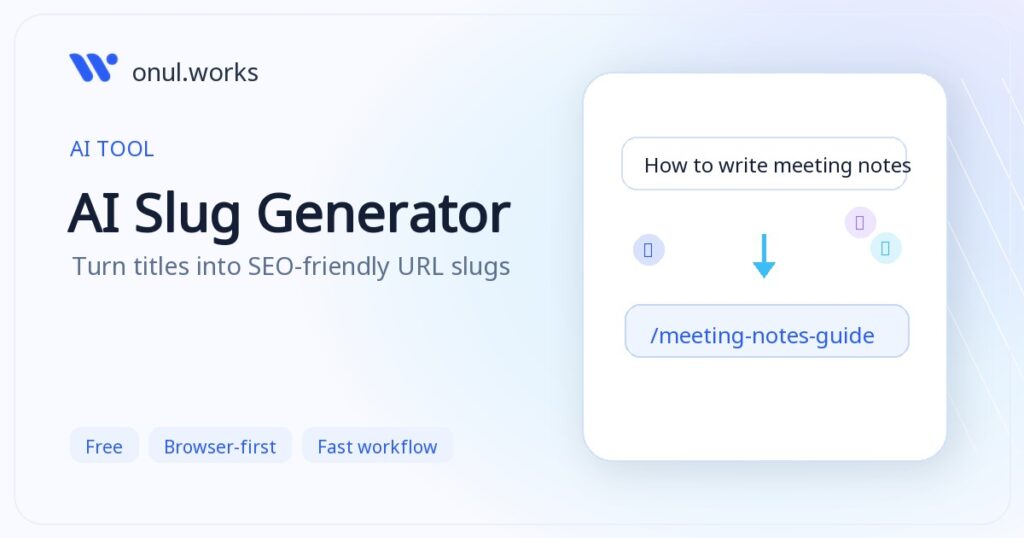
An AI SEO Slug Generator is a specialized tool that uses artificial intelligence to create optimized URL slugs for web pages. These tools analyze search intent, keyword relevance, and content structure to generate clean, readable, and search-friendly URL paths. Unlike traditional slug generators that simply strip spaces and add hyphens, AI-powered versions understand context and semantic meaning. This guide covers everything from basic concepts to advanced implementation strategies, ensuring your URLs contribute positively to your search engine rankings.
What Is an AI SEO Slug Generator and Why It Matters
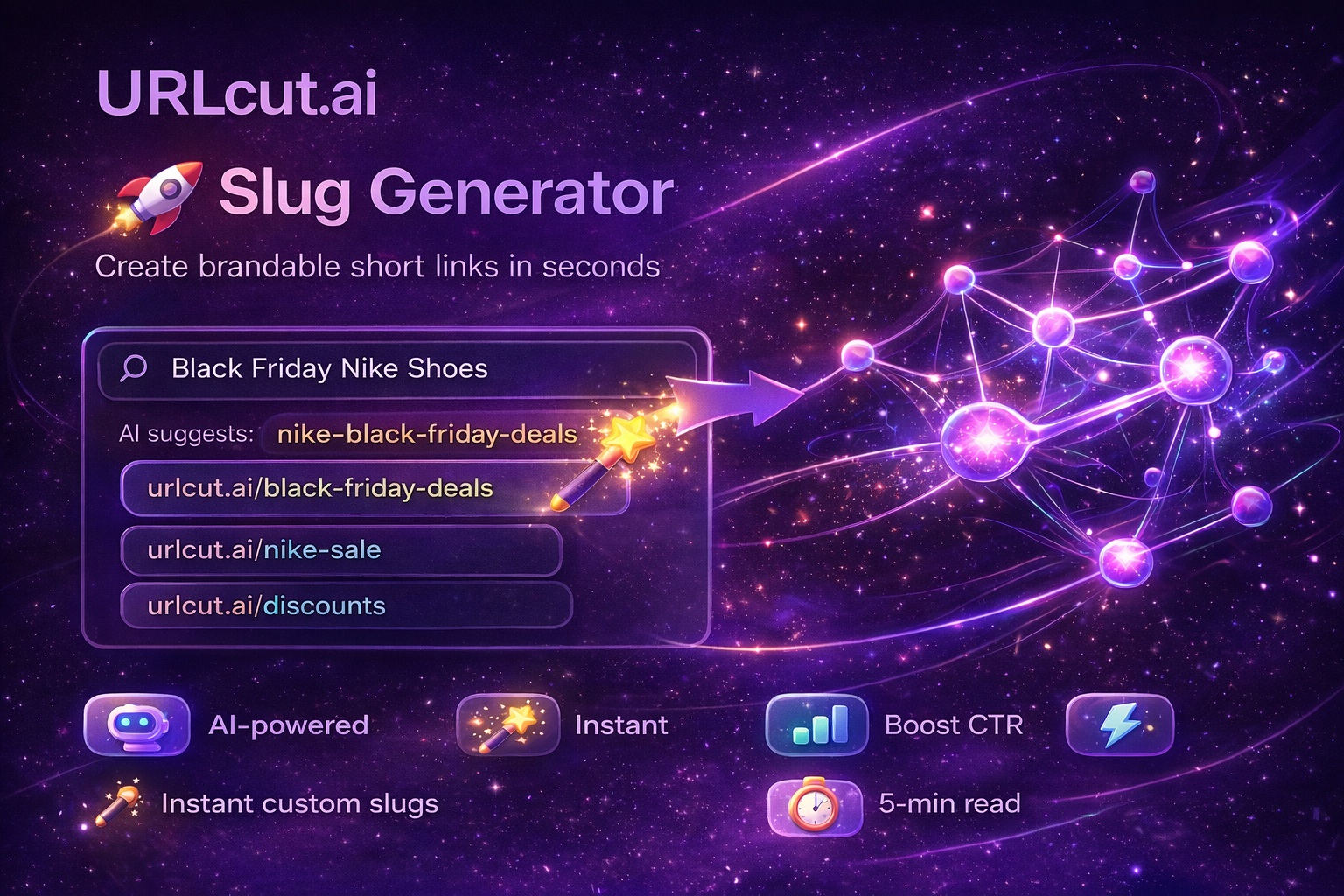
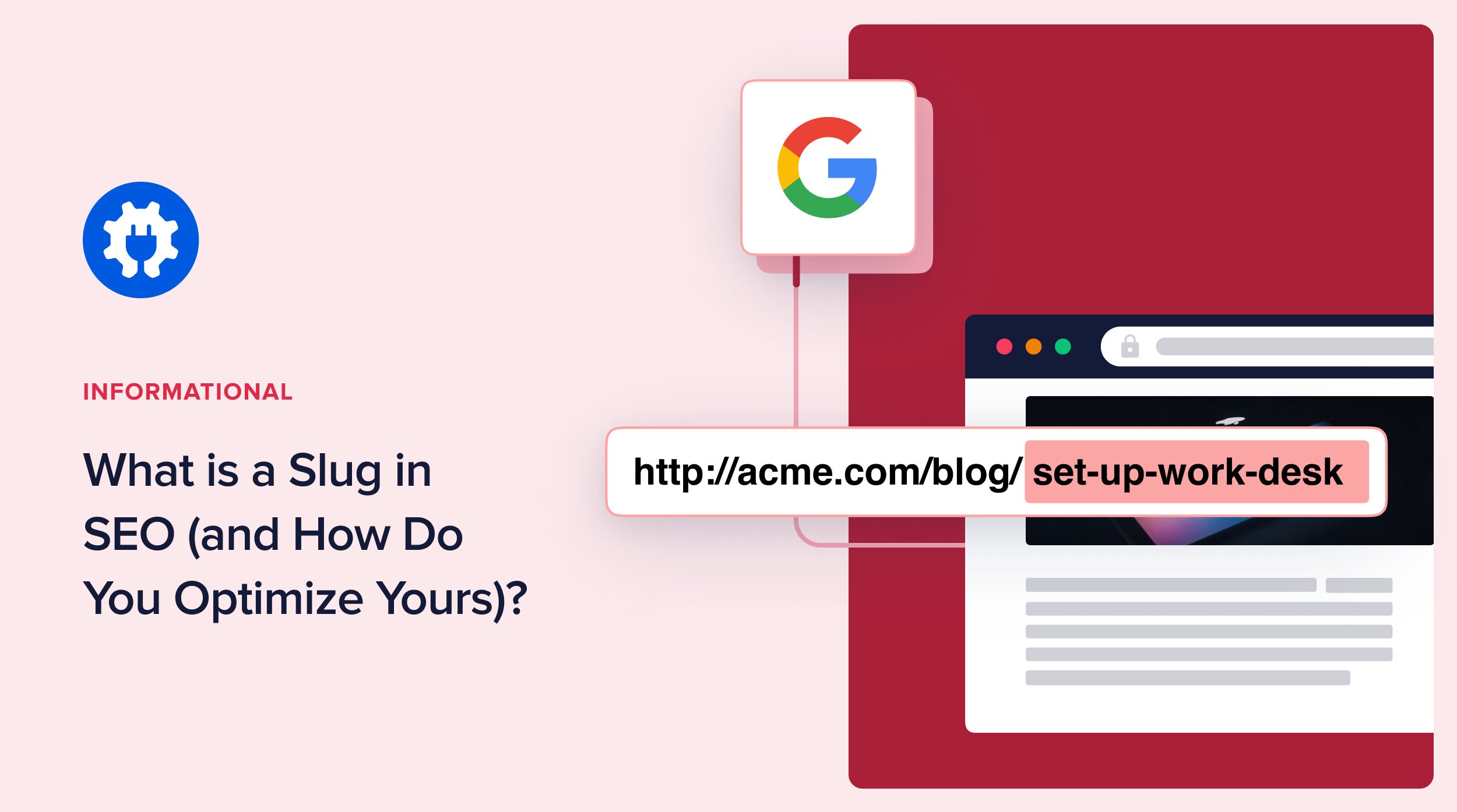
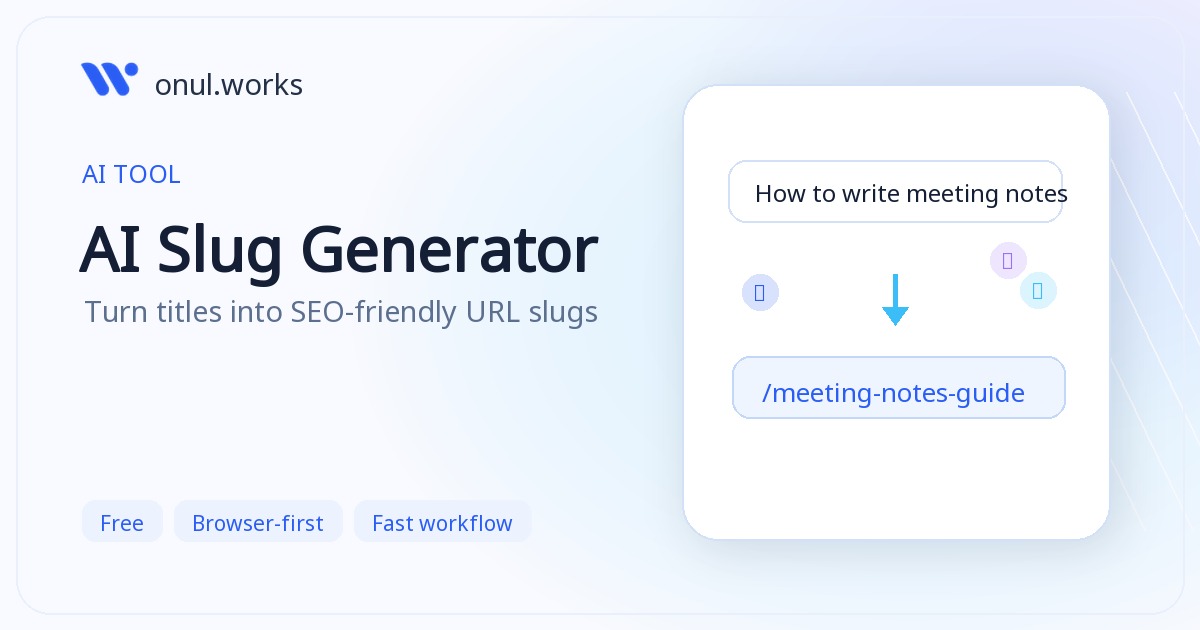
A URL slug is the part of a web address that comes after the domain name. For example, in example.com/blog/ai-seo-tools, the slug is ai-seo-tools. An AI SEO Slug Generator automates the creation of these slugs by analyzing the page title, content, and target keywords. The AI component differentiates it from manual or rule-based generators because it understands language nuances, synonyms, and user search behavior.
The importance of a well-crafted slug extends beyond aesthetics. Search engines use URL slugs as a ranking signal, albeit a minor one. More critically, descriptive slugs improve click-through rates (CTR) because users see the URL in search results and can gauge content relevance. A clear slug also enhances user experience, making it easier to share and remember links. In competitive niches, every ranking factor counts, and an optimized slug provides a small but meaningful edge.
How AI SEO Slug Generators Work
Understanding the underlying technology helps you choose the right tool and use it effectively. Most AI slug generators follow a multi-step process that combines natural language processing (NLP) with SEO best practices.
Natural Language Processing and Context Analysis
The AI engine reads your page title, meta description, and sometimes the full body text. It identifies the primary topic, key entities, and the search intent behind the content. For instance, if your article is about “best running shoes for flat feet,” the AI recognizes that “flat feet” is a critical qualifier, not just “running shoes.” This contextual understanding prevents generic slugs like best-shoes and instead generates best-running-shoes-flat-feet.
Keyword Extraction and Semantic Expansion
After understanding the context, the AI extracts primary and secondary keywords. It also considers LSI (Latent Semantic Indexing) keywords—terms related to the main topic. For a page about “vegan protein sources,” the AI might consider “plant-based protein,” “legumes,” and “tofu.” The slug generation then prioritizes the most searchable and relevant terms, avoiding keyword stuffing while maintaining clarity.
Character Optimization and Readability
Search engines truncate long URLs in results, so keeping slugs concise is vital. AI tools typically enforce a character limit, often between 50-60 characters. They also remove stop words (like “a,” “the,” “and”) and special characters. The output is always lowercase, uses hyphens as separators, and avoids underscores or spaces. The result is a clean, scannable URL that both users and search engines can parse quickly.
Key Benefits of Using an AI SEO Slug Generator
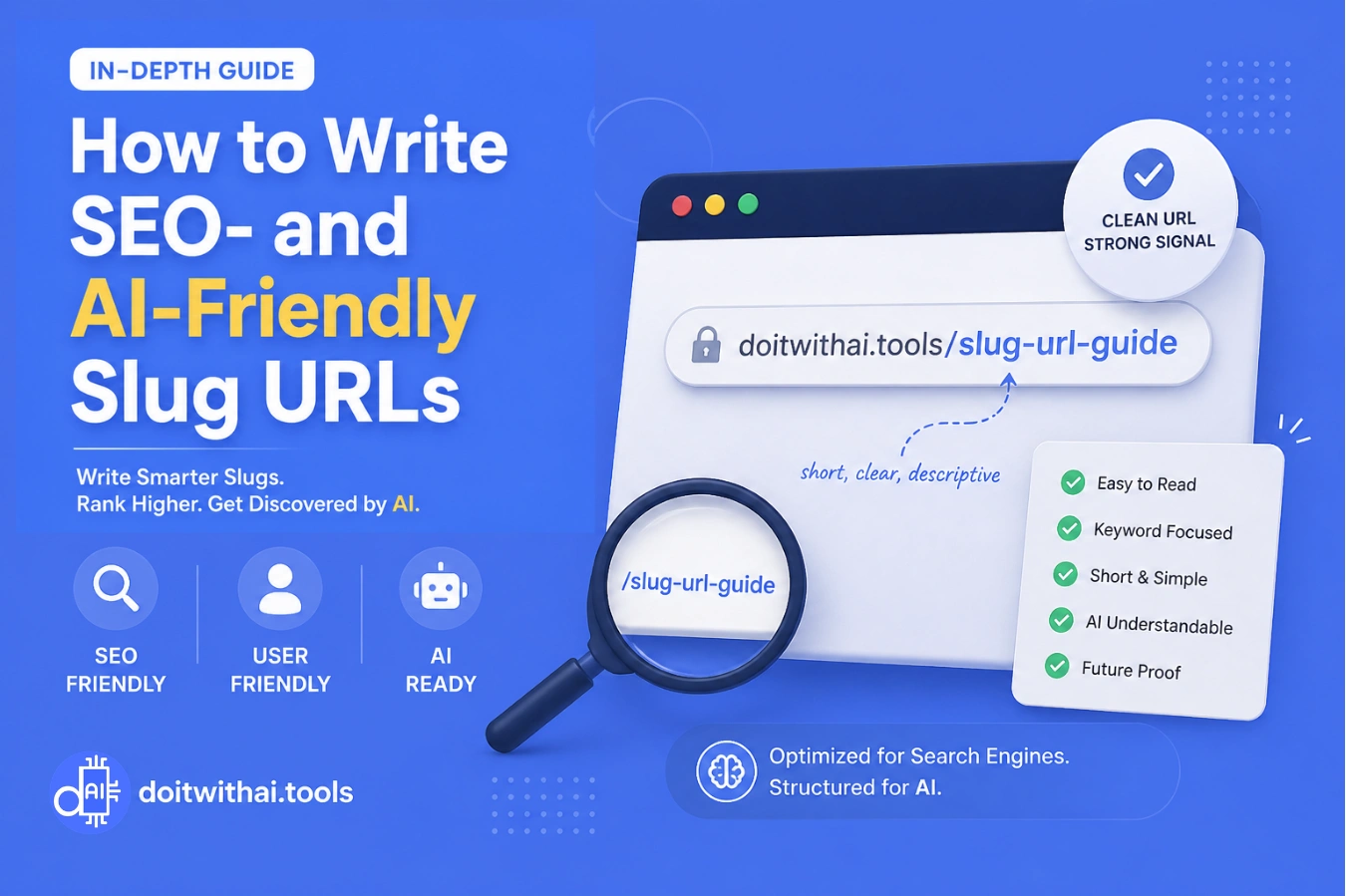
Adopting AI for slug creation offers tangible advantages over manual methods or basic plugins. These benefits directly impact your SEO performance and content workflow.
- Time Efficiency: Manually crafting slugs for hundreds of pages is tedious. AI generates them instantly, freeing up time for content creation and strategy.
- Consistency: AI applies the same rules across all URLs, ensuring uniform structure across your site. This consistency helps search engine crawlers understand your site architecture.
- Improved Relevance: AI understands context better than a human quickly skimming a title. It captures the true essence of the content, leading to more accurate slugs.
- Reduced Keyword Cannibalization: By analyzing existing slugs, some AI tools suggest variations to avoid targeting the same keyword on multiple pages, preventing internal competition.
- Better International SEO: Advanced tools can transliterate non-English titles into ASCII characters, creating slugs that work globally without breaking URL encoding.
- Ignoring the Human Review: Relying solely on AI output without checking for accuracy or brand fit leads to generic URLs that lack personality.
- Using Dates in Slugs: Including a year or date (e.g., /best-laptops-2025/) can make content look outdated quickly. AI tools sometimes suggest this if the title contains a date. Remove it unless you plan to update the content annually.
- Creating Excessively Long Slugs: Even if the AI suggests a 100-character slug, truncate it. Long URLs are harder to share and may be cut off in search results.
- Keyword Stuffing: If the AI generates best-seo-tools-for-seo-professionals-to-improve-seo, reject it. This looks spammy and provides no user value.
- Changing Slugs Without Redirects: This is a critical technical error that results in 404 errors and lost rankings. Always implement redirects when altering existing URLs.
- Ignoring Localization: For multilingual sites, ensure the AI tool handles character encoding properly. Non-ASCII characters in slugs can cause issues with some servers and analytics tools.
Limitations and Challenges to Consider
While powerful, AI slug generators are not infallible. Being aware of their limitations helps you avoid common pitfalls and maintain quality control.
Over-Optimization Risk: Some AI tools may generate slugs that are too keyword-dense, appearing spammy. For example, buy-cheap-running-shoes-online-sale is a red flag. Always review the output for naturalness.
Lack of Brand Voice: AI does not know your brand’s unique terminology or preferred naming conventions. A tool might generate a technically correct slug that does not align with your editorial style.
Contextual Errors: If your content is highly technical or niche-specific, the AI might misinterpret acronyms or jargon. Always verify that the slug accurately reflects the page’s subject matter.
Dependency on Input Quality: Garbage in, garbage out. If your page title is vague or misleading, the A The tool is only as good as the metadata you provide.
AI SEO Slug Generator vs. Traditional Slug Tools
Understanding the difference between AI-powered and conventional tools helps you decide when to use each. The table below highlights the key distinctions.
| Feature | AI SEO Slug Generator | Traditional Slug Generator |
|---|---|---|
| Context Understanding | Yes, uses NLP to grasp meaning | No, relies on simple word splitting |
| Keyword Selection | Prioritizes based on search intent | Uses all words in the title |
| Stop Word Removal | Intelligent, context-aware removal | Basic, often removes important words |
| Synonym Handling | Can replace words with better alternatives | No synonym capability |
| Character Limit | Configurable, SEO-aware | Fixed, often too long |
| Learning Capability | Improves with more data | Static rules |
Traditional tools are sufficient for simple blog posts where the title is already optimized. However, for e-commerce product pages, cornerstone content, or pages targeting competitive keywords, an AI tool provides a strategic advantage by crafting slugs that align with user search behavior.
Practical Guide: How to Use an AI SEO Slug Generator Effectively
Implementing an AI slug generator into your workflow is straightforward, but following best practices maximizes its value.
Step 1: Prepare Your Content Metadata
Before running the tool, ensure your page title is compelling and contains your primary keyword near the beginning. Write a meta description that summarizes the content accurately. The AI uses these inputs as the primary source for slug generation. If your title is weak, the slug will be weak too.
Step 2: Choose the Right Tool for Your Platform
Several options exist, from standalone web apps to CMS plugins. For WordPress, popular AI SEO plugins like RankMath or Yoast SEO Premium now include AI-powered slug suggestions. For custom websites, APIs from companies like OpenAI or specialized SEO platforms can be integrated. Evaluate tools based on your technical skill level and budget.
Step 3: Review and Customize the Output
Never accept the AI’s suggestion blindly. Read the slug aloud. Does it make sense? Is it too long? Does it include the primary keyword? Make manual adjustments if necessary. For example, if the AI generates best-digital-marketing-strategies-2025-guide, you might shorten it to digital-marketing-strategies-2025 for brevity.
Step 4: Maintain a URL Structure Strategy
Use the AI tool within a broader URL architecture plan. Decide whether you want to include categories in your slugs (e.g., /blog/ or /products/). Consistency across your site is more important than perfect optimization on a single page. The AI tool should help you maintain this structure, not disrupt it.
Step 5: Update Existing Slugs with Caution
If you want to optimize old URLs, be aware that changing slugs creates redirects. Use 301 redirects to preserve link equity. AI tools can help you identify which old slugs are underperforming and suggest better alternatives, but the migration process requires careful execution to avoid traffic loss.
Common Mistakes to Avoid When Using AI Slug Generators

Even with advanced technology, users make errors that undermine their SEO efforts. Recognizing these mistakes is the first step to avoiding them.
Important Notes for Maximizing SEO Impact
Beyond the tool itself, several factors influence how much your slugs contribute to SEO. Pay attention to these nuances to get the most out of your efforts.
Slug Placement in the URL Hierarchy: A slug is part of the full URL. The path before the slug (e.g., example.com/category/) also matters. Keep the hierarchy shallow—ideally, no more than two or three levels deep. AI tools can help you decide whether to include the category in the slug or keep it flat.
Hyphens vs. Underscores: Always use hyphens. Search engines treat hyphens as word separators, while underscores are ignored. This is a non-negotiable technical standard.
Lowercase Only: URLs are case-sensitive on some servers. Using all lowercase prevents broken links and duplicate content issues. AI tools automatically handle this, but verify if you are manually editing.
Stop Words: While removing stop words is standard, be careful. Removing “of” from state-of-the-art changes the meaning. AI tools are better at this than regex-based tools, but always double-check.
Future-Proofing: Avoid using slang or trending terms that may become obsolete. The AI might suggest trendy keywords, but a timeless slug is more valuable for evergreen content.
Frequently Asked Questions About AI SEO Slug Generators
What is the ideal length for an SEO slug?
The ideal length is between 3 and 5 words, or roughly 50-60 characters. This length is long enough to be descriptive but short enough to be fully displayed in search engine results. Shorter slugs are also easier to type and share. Focus on including the primary keyword and one or two modifiers, avoiding unnecessary filler words.
Can an AI SEO Slug Generator replace manual URL optimization?
Yes, for the most part. AI tools handle the heavy lifting of keyword extraction and formatting. However, manual oversight is still necessary for brand-specific terminology, creative phrasing, and strategic decisions about URL hierarchy. The best approach is a hybrid: let the AI generate a draft, then refine it manually.
Do slugs affect Google rankings directly?
Google has confirmed that URLs are a minor ranking factor. The impact is small compared to content quality, backlinks, and page speed. However, a well-optimized slug improves CTR, which indirectly influences rankings. A higher CTR signals to Google that your result is relevant, potentially boosting your position over time.
Are there free AI SEO slug generator tools available?
Yes, several free options exist. Some SEO plugins offer basic AI slug suggestions in their free tiers. Standalone web-based tools also provide limited free generations per day. These free tools are sufficient for small websites or occasional use. For high-volume publishing, a paid tool with API access is more efficient.
How does an AI slug generator handle non-English content?
Advanced AI tools support multiple languages. They can transliterate characters from languages like Arabic, Chinese, or Russian into Latin script. This is crucial for international SEO, as it makes URLs readable for global audiences and avoids encoding issues. Always test the tool with your specific language to ensure accuracy.
Should I include keywords in the slug if they are already in the title?
Yes, but avoid duplication. If your title is “Complete Guide to Email Marketing,” the slug should be email-marketing-guide or complete-email-marketing-guide. The slug reinforces the topic for search engines and users. However, do not repeat the exact same phrase verbatim if it makes the URL awkwardly long.
Conclusion
An AI SEO Slug Generator is a valuable asset in any content marketer’s toolkit. It automates a tedious process while introducing a level of contextual intelligence that manual methods cannot match. By understanding how these tools work, their benefits, and their limitations, you can integrate them effectively into your SEO strategy. The key takeaway is to use AI as a starting point, not a final answer. Always review the generated slug for clarity, brevity, and alignment with your brand voice. When used correctly, an optimized slug improves user experience, enhances click-through rates, and contributes to your overall search visibility. Start experimenting with an AI tool today and observe how small changes in your URL structure can yield meaningful improvements in your organic performance.
Xem thêm:
- AI SEO Automated Keyword Research: The Complete Guide to Scaling Content Strategy
- AI SEO Topic Authority: The Complete Guide to Dominating Search Rankings in 2025
- AI SEO Blog Post Generator: The Complete Guide to Automated Content That Ranks
- AI SEO Rendering: The Complete Guide to Modern Search Visibility
- AI SEO Content Generator: Elevate Your Rankings with Smart Automation
Bài viết cùng chủ đề:

AI SEO SEO Automation with Make: The Complete Workflow Guide

AI SEO SEO Automation with Zapier: The Complete Workflow Guide

AI SEO SEO Automation with n8n: The Complete Workflow Guide
AI SEO SEO Automation with Gemini: The Complete Guide to Scaling Organic Growth

AI SEO SEO Automation with Claude: The Complete Guide to Scaling Content in 2025

AI SEO SEO Automation with ChatGPT: The Complete Playbook for 2025

AI SEO & SEO Automation for Affiliate Sites: The 2025 Playbook for Passive Income Growth
AI SEO & SEO Automation for Bloggers: The Complete Guide to Scaling Your Content

AI SEO & SEO Automation for Agencies: The Complete 2025 Playbook

AI SEO and SEO Automation for Ecommerce: The Complete Playbook for 2025

AI SEO & SEO Automation for WordPress: The Complete Playbook for 2025
AI SEO SEO Automation Strategy: The Complete Playbook for 2025

Mastering the AI SEO SEO Automation Process: A Complete Guide to Scaling Organic Growth
AI SEO SEO Automation System: The Complete Guide to Scaling Organic Growth in 2025
AI SEO SEO Automation Platform: The Complete Guide to Scaling Organic Growth in 2025
AI SEO SEO Automation Software: The Complete Guide to Scaling Organic Growth in 2025















