
No products in the cart.
AI SEO Keyword Grouping: The Complete Guide to Smarter Content Clusters
10
Aug
Aug
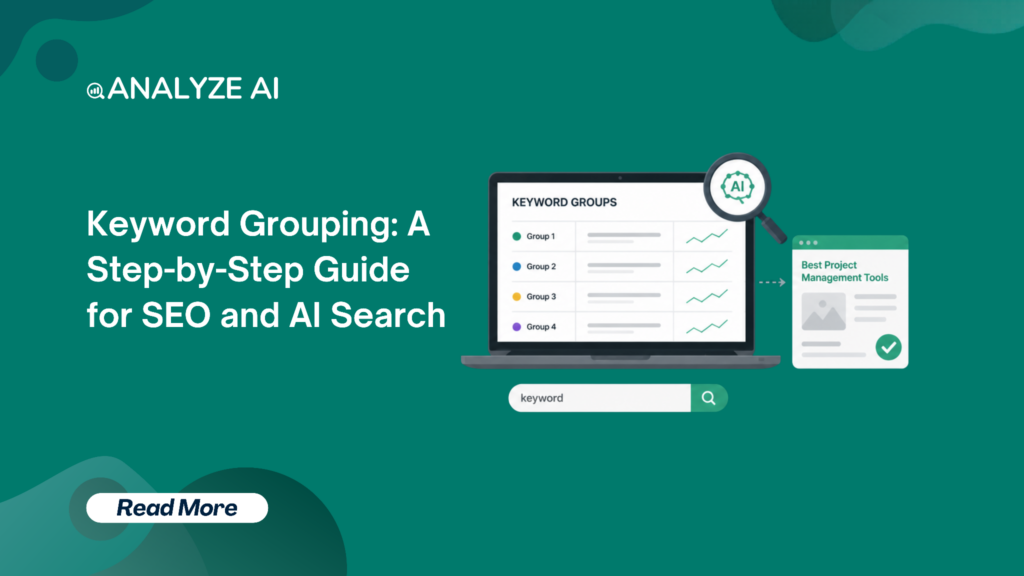
AI SEO keyword grouping has transformed how digital marketers plan, structure, and execute their content strategies. Instead of manually sorting hundreds of keywords into spreadsheets, artificial intelligence now clusters related terms based on search intent, semantic relevance, and topical authority. This approach saves countless hours and produces content architectures that search engines understand more deeply. For any serious SEO professional, mastering AI-driven keyword grouping is no longer optional—it is essential for staying competitive in modern search rankings.
What Is AI SEO Keyword Grouping?
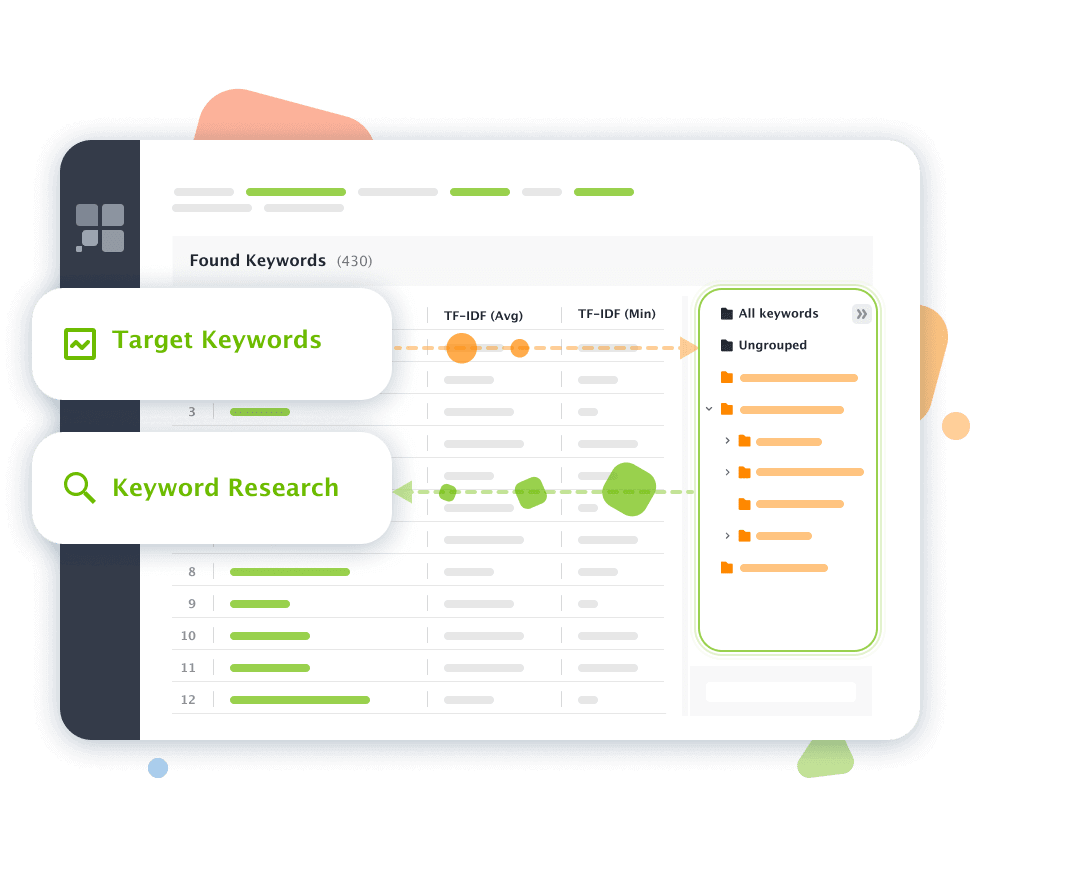
AI SEO keyword grouping is the process of using machine learning algorithms to automatically organize keywords into thematic clusters. These clusters represent groups of search queries that share similar user intent and topical relevance. Rather than treating each keyword as an isolated entity, AI examines patterns across millions of search queries to identify relationships between terms.
Traditional keyword grouping relied on manual review, exact-match logic, and basic spreadsheet filters. AI takes this several steps further by analyzing semantic meaning, co-occurrence patterns, and contextual signals. The result is a set of keyword groups that reflect how users actually search and what they truly expect to find.
How AI Algorithms Understand Keyword Relationships
Modern AI systems use natural language processing (NLP) and vector embeddings to map keywords in multidimensional space. Terms that appear in similar contexts get placed closer together, even if they do not share exact words. For example, “best running shoes for flat feet” and “arch support sneakers for runners” would be grouped together because the underlying intent is nearly identical.
These algorithms also consider search volume trends, click-through rates, and SERP features to refine groupings. A keyword that triggers video results will be clustered differently than one that triggers local pack listings. This level of nuance is impossible to replicate manually at scale.
Why AI Keyword Grouping Matters for SEO Success
Search engines like Google have shifted toward semantic understanding and topical authority. A website that covers a subject comprehensively, with interlinked content addressing every facet, ranks higher than a site with scattered, unrelated articles. AI SEO keyword grouping enables this comprehensive coverage by revealing exactly which subtopics need dedicated pages.
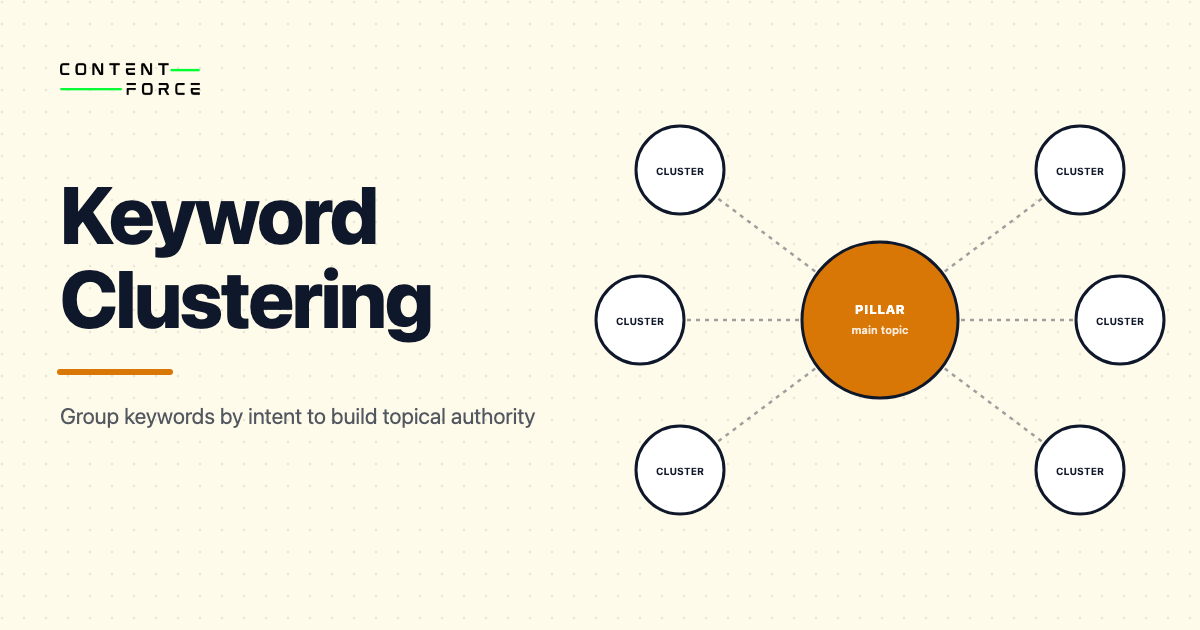
When you group keywords correctly, you can build content silos that signal expertise to search engines. Each cluster becomes a pillar page surrounded by supporting articles. Internal links flow naturally between related pieces, distributing authority and improving crawlability.
The Shift from Individual Keywords to Topic Clusters
Gone are the days when SEO meant optimizing one page for one keyword. Modern search behavior is conversational and varied. Users phrase the same question in dozens of different ways. AI keyword grouping captures this diversity and organizes it into actionable clusters that cover entire topics, not just single phrases.
This shift aligns perfectly with Google’s RankBrain and BERT algorithms, which prioritize understanding over matching. Content built around AI-generated keyword clusters naturally satisfies these algorithms because it addresses the full spectrum of user needs within a topic.
Key Benefits of Using AI for Keyword Grouping
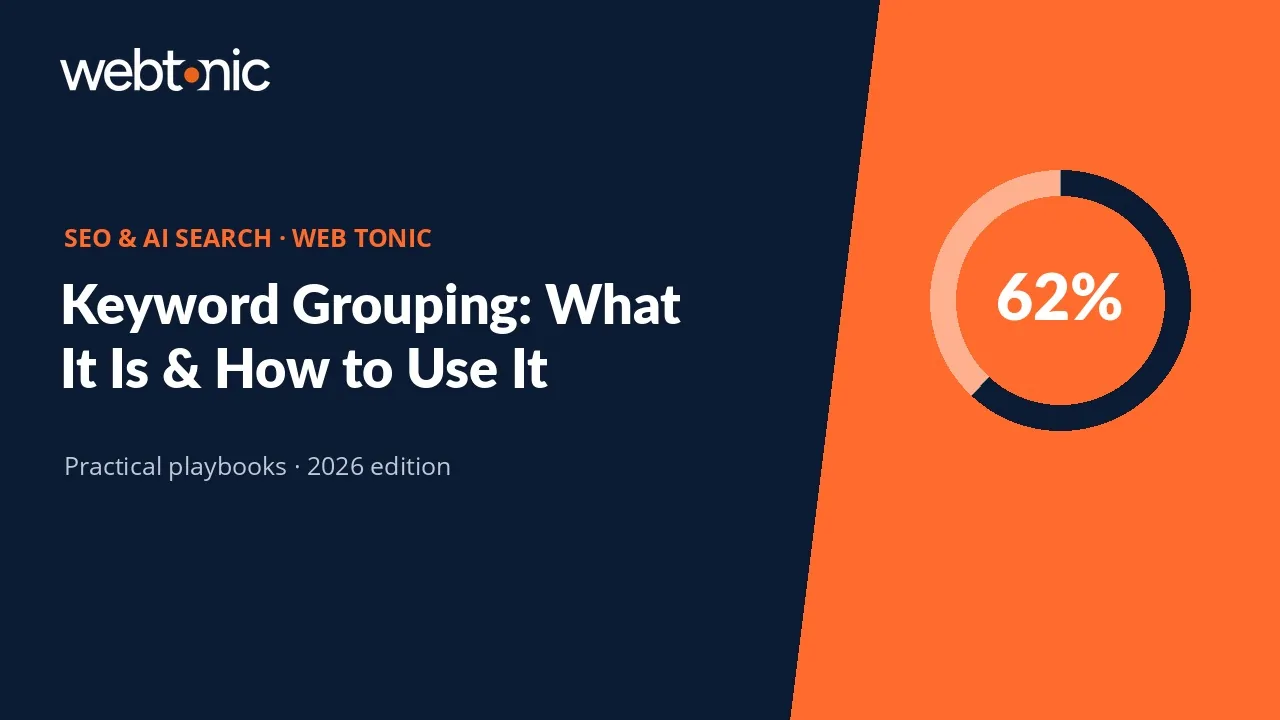
The advantages of AI-driven keyword grouping extend far beyond time savings. Here are the primary benefits that make this approach indispensable:
- Scalability: AI processes thousands of keywords in minutes, a task that would take days or weeks manually
- Accuracy: Algorithms detect subtle semantic relationships that humans often miss
- Intent Recognition: AI distinguishes between informational, transactional, and navigational queries with high precision
- Content Gap Identification: Clusters reveal missing subtopics that competitors cover
- Better Internal Linking: Grouped keywords naturally suggest which pages should link to each other
- Improved SERP Targeting: Each cluster can be optimized for specific search features like featured snippets or People Also Ask
- Data Quality: Garbage in, garbage out. Ensure your keyword data comes from reliable sources and is cleaned of duplicates and irrelevant terms
- Granularity: Choose the right level of clustering granularity. Too fine, and you have hundreds of tiny clusters. Too coarse, and you have a few massive ones
- Integration with Other SEO Activities: Keyword grouping should inform your technical SEO, link building, and content promotion strategies
- Measurement: Track how pages within each cluster perform. If a cluster is underperforming, investigate whether the grouping was correct
- Competitor Analysis: Use AI grouping on competitor keywords to identify gaps in your own coverage
Time Efficiency and Resource Optimization
A typical SEO campaign might involve 5,000 to 50,000 keywords. Manually grouping these into meaningful clusters is a monumental task that consumes hundreds of billable hours. AI reduces this to a few hours of setup and refinement. Marketing teams can redirect their energy toward content creation, link building, and performance analysis.
Enhanced Content Relevance and Authority
When every piece of content targets a well-defined cluster, the entire website becomes more coherent. Search engines recognize this coherence and reward it with higher rankings. Users also benefit from finding exactly what they need, which improves engagement metrics like dwell time and reduces bounce rates.
How AI SEO Keyword Grouping Works: A Step-by-Step Process
Understanding the mechanics behind AI keyword grouping helps you use the tools more effectively. They incorporate multiple data signals to create accurate groupings:
| Data Signal | How It Influences Grouping |
|---|---|
| Search Volume | High-volume keywords often anchor clusters, while long-tail terms fill in supporting roles |
| Click-Through Rate | Keywords with similar CTR patterns are likely to share intent |
| SERP Features | Keywords triggering the same features (videos, images, local pack) are grouped together |
| Co-occurrence | Terms that frequently appear together in top-ranking content are clustered |
| User Behavior | Keywords leading to similar on-site behavior are considered related |
Top AI Keyword Grouping Tools in 2025
Several powerful tools dominate the AI keyword grouping landscape. Each offers unique features suited to different needs and budgets.
Surfer SEO
Surfer SEO integrates keyword clustering with content optimization. Its AI analyzes top-ranking pages and groups keywords that appear naturally together. The tool then provides content guidelines for each cluster, including suggested headings and word count.
Keyword Insights
This tool specializes in clustering keywords based on search intent. It uses Google Autocomplete data and AI to group queries that share the same user goal. Keyword Insights also identifies question-based keywords and informational vs. transactional intent.
SE Ranking
SE Ranking offers a keyword grouping feature that uses AI to analyze semantic similarity. It provides visual cluster maps that show relationships between keyword groups. The tool integrates directly with their rank tracking and content marketing modules.
Ahrefs
While Ahrefs is primarily known for backlink analysis, its keyword explorer includes clustering capabilities. The AI groups keywords by parent topic and shows which pages currently rank for each group. This helps identify content opportunities and gaps.
Clearscope
Clearscope focuses on content optimization but includes keyword grouping as part of its workflow. It analyzes top-ranking content and generates clusters of related terms that should appear in your article for maximum relevance.
Practical Applications of AI SEO Keyword Grouping
AI keyword grouping is not just a theoretical concept. It has direct, practical applications that improve every aspect of SEO strategy.
Building Content Pillars and Topic Clusters
Once you have your keyword clusters, you can structure your website around them. Each cluster becomes a topic cluster with a pillar page targeting the highest-volume keyword and supporting blog posts targeting long-tail variations. Internal links connect all pieces, creating a web of topical authority.
For example, a fitness website might have a cluster around “home workouts.” The pillar page targets “home workout routines,” while supporting articles cover “home workouts for beginners,” “home workouts without equipment,” and “home workout schedules for weight loss.”
Optimizing Existing Content
AI grouping reveals which of your existing pages are competing for the same keywords. You can consolidate overlapping content into stronger, more comprehensive pages. Alternatively, you can identify thin content that needs expansion to fully cover its assigned cluster.
Planning New Content Calendars
Keyword clusters provide a ready-made editorial calendar. Each cluster represents a content series that should be published together for maximum impact. This ensures your website grows in a structured, logical way rather than through random topic selection.
Common Mistakes in AI Keyword Grouping and How to Avoid Them
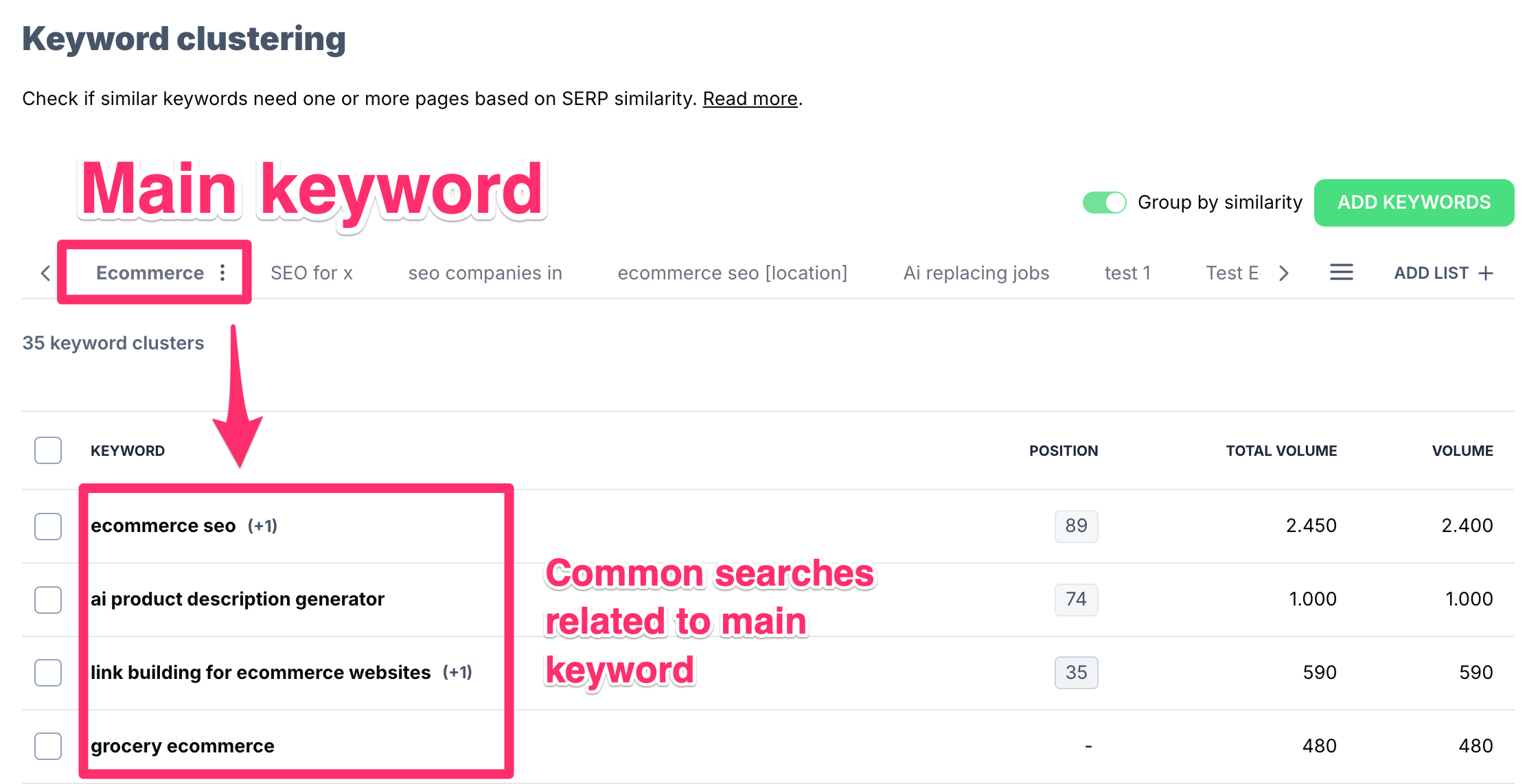
Even with powerful AI tools, mistakes happen. Being aware of these pitfalls helps you get the most from your grouping efforts.
Over-Grouping Keywords
Some SEOs create clusters that are too broad, lumping together keywords with different intents. For example, “best laptops” and “laptop repair” should never be in the same cluster. One is transactional, the other is informational. Avoid this by reviewing clusters manually and checking the search intent of each keyword.
Ignoring Search Intent Nuances
AI tools are smart, but they are not perfect. They might group “how to bake bread” with “bread baking classes near me” because both contain “bread baking.” The first is informational, the second is local transactional. Always review clusters with a human eye for intent.
Neglecting to Update Clusters
Search behavior evolves. New keywords emerge, and old ones lose relevance. AI grouping is not a one-time task. Re-run your clustering analysis quarterly to keep your content architecture aligned with current search demand.
Relying Solely on AI Without Human Judgment
AI provides the foundation, but human expertise refines it. Your knowledge of your industry, audience, and business goals should override algorithmic suggestions when they conflict. Use AI as a starting point, not the final word.
Important Notes for Successful AI Keyword Grouping
Several factors determine whether your AI keyword grouping efforts succeed. Pay attention to these critical considerations:
AI SEO Keyword Grouping vs. Traditional Methods
Understanding the differences between AI-driven and manual keyword grouping helps justify the investment in new tools.
| Aspect | Traditional Manual Grouping | AI-Powered Grouping |
|---|---|---|
| Speed | Days to weeks for large datasets | Minutes to hours |
| Scalability | Limited to a few hundred keywords | Handles tens of thousands easily |
| Semantic Understanding | Relies on human intuition | Uses NLP and vector embeddings |
| Consistency | Varies based on who does the work | Consistent algorithmic logic |
| Cost | High labor costs | Software subscription costs |
| Accuracy | Prone to human error and bias | High accuracy with proper setup |
Frequently Asked Questions About AI SEO Keyword Grouping
What is the difference between keyword grouping and keyword clustering?
Keyword grouping and keyword clustering are often used interchangeably, but t Grouping is the broader term that describes organizing keywords into categories. Clustering specifically refers to the algorithmic process of using data points to form groups based on similarity. In practice, AI SEO keyword grouping uses clustering algorithms to achieve its results.
How many keywords should be in each cluster?
The ideal cluster size varies by topic and website structure. Generally, a cluster should contain 5 to 20 keywords. Smaller clusters are easier to target with a single page, while larger clusters may require multiple interlinked pages. The right size depends on the depth of the topic and your content resources.
Can AI keyword grouping replace manual SEO analysis?
No. AI keyword grouping automates the mechanical aspects of organizing keywords, but it cannot replace strategic thinking. Human judgment is still required to interpret clusters, prioritize them, and align them with business goals. The best results come from combining AI efficiency with human expertise.
How often should I re-run AI keyword grouping?
Search trends shift constantly, so quarterly re-analysis is recommended. However, if you operate in a fast-moving industry or launch new products frequently, monthly updates may be necessary. Regular updates ensure your content architecture stays aligned with current search demand.
Does AI keyword grouping work for local SEO?
Yes, AI keyword grouping works exceptionally well for local SEO. The algorithms can incorporate location modifiers and local intent signals into the clustering process. This helps create content that targets specific geographic areas while maintaining topical relevance.
Conclusion
AI SEO keyword grouping represents a fundamental advancement in how we approach search engine optimization. By leveraging machine learning to understand semantic relationships and user intent, marketers can build content architectures that satisfy both search algorithms and human readers. The benefits are clear: massive time savings, improved topical authority, better internal linking, and more targeted content creation.
The technology is accessible and mature, with multiple tools offering robust clustering capabilities. The key to success lies in combining AI efficiency with human strategic oversight. Review your clusters, refine them based on your unique business context, and integrate them into a comprehensive SEO workflow.
As search engines continue to evolve toward deeper semantic understanding, the importance of proper keyword grouping will only grow. Websites that organize their content around well-defined, AI-generated topic clusters will enjoy sustained visibility and authority. Those that cling to outdated manual methods will find themselves increasingly left behind. The time to adopt AI SEO keyword grouping is now, and the tools are ready for you to use.
Xem thêm:
- AI SEO Edge SEO: The Complete Guide to Gaining a Competitive Advantage in 2025
- AI SEO Product Comparison: The Definitive Guide to Choosing the Right Tool in 2025
- AI SEO H3 Optimization: The Complete Guide to Structuring Content for AI Search
- AI Localization: Unlocking Global Markets with Intelligent Language Adaptation
- AI SEO Keyword Insights: The Complete Guide to Data-Driven Search Optimization
Bài viết cùng chủ đề:

AI SEO SEO Automation with Make: The Complete Workflow Guide

AI SEO SEO Automation with Zapier: The Complete Workflow Guide

AI SEO SEO Automation with n8n: The Complete Workflow Guide
AI SEO SEO Automation with Gemini: The Complete Guide to Scaling Organic Growth

AI SEO SEO Automation with Claude: The Complete Guide to Scaling Content in 2025

AI SEO SEO Automation with ChatGPT: The Complete Playbook for 2025

AI SEO & SEO Automation for Affiliate Sites: The 2025 Playbook for Passive Income Growth
AI SEO & SEO Automation for Bloggers: The Complete Guide to Scaling Your Content

AI SEO & SEO Automation for Agencies: The Complete 2025 Playbook

AI SEO and SEO Automation for Ecommerce: The Complete Playbook for 2025

AI SEO & SEO Automation for WordPress: The Complete Playbook for 2025
AI SEO SEO Automation Strategy: The Complete Playbook for 2025

Mastering the AI SEO SEO Automation Process: A Complete Guide to Scaling Organic Growth
AI SEO SEO Automation System: The Complete Guide to Scaling Organic Growth in 2025
AI SEO SEO Automation Platform: The Complete Guide to Scaling Organic Growth in 2025
AI SEO SEO Automation Software: The Complete Guide to Scaling Organic Growth in 2025















