
No products in the cart.
AI SEO Templates: Streamline Your Search Strategy with Intelligent Frameworks
29
Jul
Jul
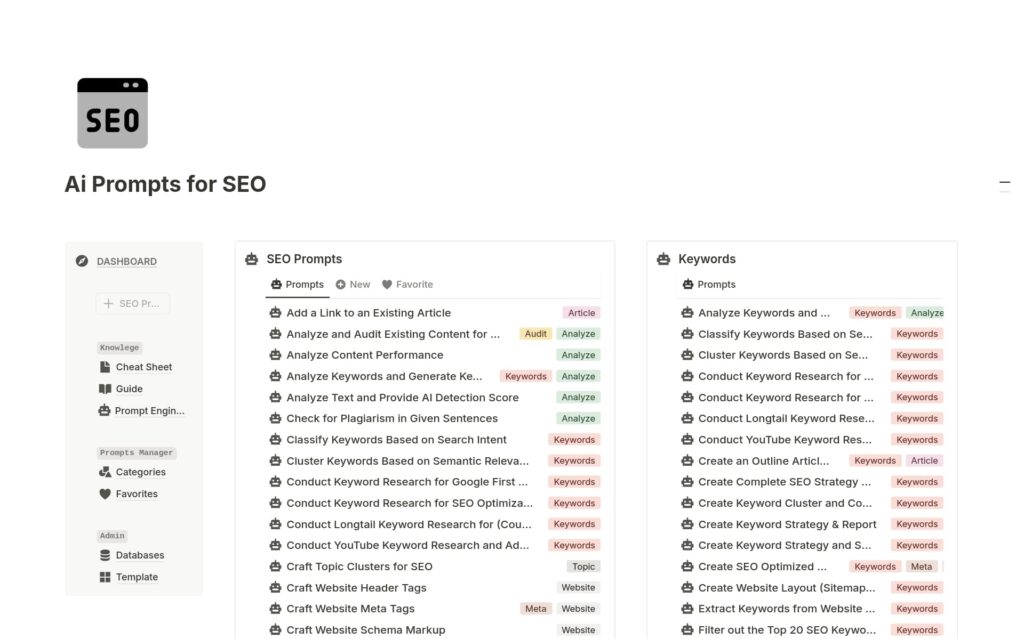
Modern search engine optimization demands speed, consistency, and data-driven decisions. AI SEO templates combine the structural power of a proven blueprint with the generative intelligence of artificial intelligence, drastically reducing the hours spent on repetitive content and technical tasks. These templates are not just fill-in-the-blank documents; they are dynamic frameworks that guide AI tools to produce meta descriptions, content briefs, schema markup, and full articles aligned with your keyword strategy while maintaining brand voice and topical authority.
What Exactly Are AI SEO Templates?
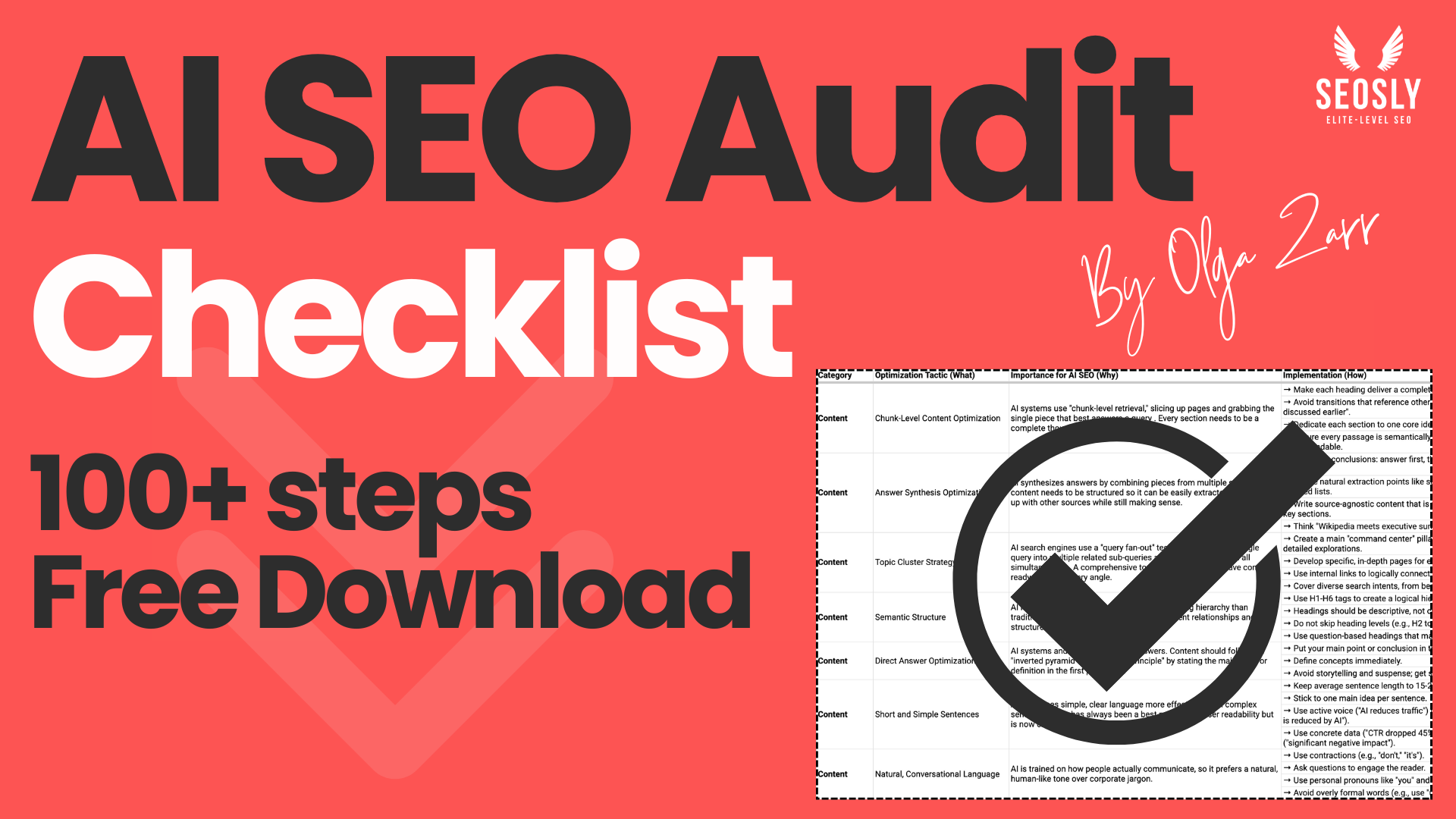
An AI SEO template is a pre-designed, parameterized prompt or document structure that instructs an artificial intelligence model—such as a large language model—to generate SEO-friendly output. Unlike static templates that would require a human to manually insert every keyword and heading, AI-driven templates incorporate variables, conditional logic, and semantic search patterns. They provide the guardrails so that the AI output remains compliant with on-page SEO best practices, avoiding thin content, keyword stuffing, or poor readability.
At their core, these templates transform the way search marketers approach content creation. Instead of starting from a blank page, you define a framework that captures your target entity, primary keyword, secondary long-tail modifiers, user intent, and desired content structure. The AI then populates that framework with natural language, optimized headings, internal linking suggestions, and even calls-to-action. The result is a scalable production method for blogs, product descriptions, pillar pages, and local landing pages that consistently satisfies search engine ranking factors.
Types of AI SEO Templates Every Marketer Should Master
Not all templates serve the same purpose. The smartest adoption strategy involves categorizing your workflow into distinct template families. Each family targets a specific stage of the search engine optimization lifecycle, from planning to measurement. By understanding the typology of AI SEO templates, you can build a library that covers 80% of your recurring tasks.
1. Keyword-Driven Content Brief Templates
These templates transform a single focus keyword into a complete editorial guide. They prompt the AI to analyze search intent, extract related questions from People Also Ask boxes, suggest a recommended word count based on top-ranking competitors, and propose an H2/H3 outline that logically covers the topic cluster. A robust brief template will output not just headings but also target entities, internal link opportunities, and a summary of what the target audience expects to find.
2. On-Page Optimization Templates
Once the content draft exists, on-page templates refine every crawlable element. Using this type of AI SEO template, you input the target URL or raw text and receive optimized suggestions for title tags under 60 characters, meta descriptions between 120 and 155 characters with an emotional hook, and image alt text variations that include LSI keywords. Advanced versions can even identify missing schema opportunities and generate the JSON-LD markup compatible with Google’s rich result guidelines.
3. Technical SEO Audit Frameworks
Auditing a site manually for canonical conflicts, hreflang errors, or orphan pages is painstaking. Technical audit templates instruct the AI to parse crawled data exports (like Screaming Frog CSVs) and generate human-readable reports. The template forces the AI to segment issues into critical, warning, and notice categories, provide a root cause explanation, and draft actionable fix instructions for developers. You define the metric thresholds; the AI does the anomaly detection and reporting.
4. Local SEO and Google Business Profile Templates
For multi-location businesses, consistency at scale is paramount. Local AI SEO templates ingest a simple spreadsheet containing location name, address, phone number, and services, then produce unique, non-duplicate Google Business Profile description drafts. They also generate city-specific landing page content that avoids boilerplate by weaving in local landmarks, neighborhood names, and community-relevant trust signals, all while maintaining NAP consistency.
5. Link Building Outreach and Asset Ideation Templates
Off-page SEO benefits from structured creativity. Link building templates guide the AI to analyze a list of target backlinks from a competitor and brainstorm data-driven content assets—original research angles, interactive calculator concepts, or definitive guide structures—that are statistically likely to attract editorial links. They can then draft the first outreach email sequence, personalizing it based on the content gap the prospect’s audience faces.
How AI SEO Templates Reshape the Content Workflow
A well-implemented template system does more than speed up writing; it creates a repeatable editorial process that reduces cognitive load. The typical workflow moves through four distinct phases where AI plays a different role, all governed by template parameters.
Phase 1: Discovery and Planning. The template extracts a semantic keyword cluster from a seed term, analyzes the search engine results page features, and defines the content type and angle required to rank. This phase replaces the manual spreadsheet-pivot marathon.
Phase 2: Composition and Structuring. Here, the AI, restricted by the content brief template, generates the first draft. The template ensures that the introduction addresses the query directly, that header tags contain precise matching variants, and that the body naturally incorporates NLP-friendly related terms. It acts as a quality assurance checklist injected into the prompt itself.
Phase 3: Expert Review and Refinement. No AI output should be published raw. The template now switches to an editing assistant mode. It checks for factual consistency (when connected to a retrieval-augmented generation source), suggests statistics to insert, and identifies passages that sound generic, urging the human editor to inject original experience and case study data.
Phase 4: Publication Optimization. Finally, the on-page template runs a final sweep: it formats the slug, validates the internal linking structure against a predefined site hierarchy, and ensures that the primary keyword appears early in the first paragraph, not just in the first sentence. This phased approach treats AI SEO templates as a pipeline, not a one-off miracle fix.
Benefits and Limitations of Relying on AI SEO Templates
Adopting these intelligent frameworks unlocks significant operational advantages, but a clear-eyed view of their constraints prevents strategic missteps.
Key Benefits
- Scale without Sacrifice: Produce 50 product descriptions or 20 local pages in an afternoon while maintaining a consistent quality bar that manual writing would compromise under time pressure.
- Elimination of Decision Fatigue: The template pre-decides the optimal headline structure, keyword density range, and semantic hierarchy, freeing mental energy for nuanced strategy and unique expertise.
- Built-In Best Practices: Every generation enforces rules like unique title tags, proper use of the H1 tag, mobile-friendly readability checks, and inclusion of structured data, reducing the chance of a technical SEO oversight.
- Rapid Testing and Iteration: Marketers can A/B test output variations by tweaking template variables (e.g., length, tone, CTA placement) without rewriting entire prompts or waiting for multiple human writers to deliver.
- Hallucination Risk in Unbounded Fields: If a template asks for “a statistic about X” and the AI’s training data is fuzzy, it may invent a plausible-sounding number. Templates require strict sourcing instructions for factual assertions.
- Homogeneity Across Competitors: If everyone uses similar publicly shared prompts, the output begins to sound alike. The template must incorporate proprietary brand language, unique data sets, and original case examples to retain differentiation.
- Lack of True Topical Depth: A template is only as smart as its context window. For heavily regulated or deeply technical niches (like medical or legal SEO), AI-generated content still requires subject-matter expert review to ensure compliance and authority.
- Dependency on Input Quality: Garbage in, garbage out. If the target keyword research is inaccurate, the most elegant AI SEO template will produce content that targets the wrong audience or doesn’t match the true intent, wasting resources.
- Over-Prompting with Keywords: Pasting a list of thirty exact-match keywords into the template and demanding inclusion leads to robotic, unreadable text. Instead, instruct the template to use semantic clustering and prioritize readability, using only primary variants naturally.
- Ignoring Search Intent Shift: A template optimized for informational queries (“what is”) will fail dismally if applied to a transactional query (“buy”). Always verify the intent behind each keyword group and adjust the template’s call-to-action and structure accordingly.
- Forgetting the Human Edit Phase: Treating the template output as a final publishable asset is a guarantee of thin content penalties. The template should produce a near-final draft that requires a human to add personal anecdotes, brand-specific data, and up-to-date micro-details that the AI cannot know.
- Using a Single Monolithic Prompt: One giant prompt for an entire website sounds efficient but creates brittle output. A modular micro-template approach—separate prompts for title tag, meta, introduction, and body—allows for easier debugging and repurposing across different page types.
- Neglecting Internal Linking Strategy: Templates often focus purely on the page content, forgetting the site architecture. Without specific instructions to analyze existing site content and suggest two to three contextual internal links with descriptive anchor text, you lose a massive ranking factor.
Honest Limitations to Anticipate
Comparison: Static Templates vs. AI-Iterated SEO Templates
The distinction between a conventional downloadable template and an AI-driven system is profound. A static template is a fixed document with empty fields, while an AI SEO template behaves more like a decision tree that generates and adapts its own fields based on context. The table below highlights the practical differences in daily SEO operations.
| Feature | Static SEO Template | AI SEO Template |
|---|---|---|
| Keyword Integration | Manual insertion required; risk of unnatural stuffing. | Automatically places keywords and LSI variants in header tags, alt text, and body with proper density. |
| Content Generation | Provides only headings; writer fills from scratch. | Generates complete paragraphs, ledes, transitions, and conclusions that satisfy search intent. |
| Scalability | Scales linearly with human effort; prone to quality decline. | Scales exponentially; quality remains consistent when guardrail prompts are refined. |
| Adaptability | Static; one size fits all pages. | Dynamic; adjusts tone, length, and structure based on content type, funnel stage, or audience persona. |
| Data Refresh | Cannot update real-time information. | Can integrate with live search data APIs for SERP feature analysis and current statistics. |
Practical Guide: Building Your First AI SEO Template
Creating a high-performing template is an iterative design process. Rather than writing a single massive prompt, construct a modular system that chains instructions. Below is a step-by-step framework to build a dependable blog post template using any capable large language model.
Step 1: Define the Objective and Constraints
Start by mapping out what must be fixed and what can vary. Your template preamble should lock down the non-negotiables: the reading level (e.g., Grade 8-9 for B2C, professional for B2B), the format of the title (must include a number or be a how-to), and forbidden phrases (no generic openers like “In today’s digital landscape”). The constraints prevent the AI from drifting into bland default prose.
Step 2: Embed SERP Context and Entity Recognition
Feed the template the top three ranking URLs for the target query. Instruct the AI to analyze why those pages rank: what subtopics they cover, what unique entities they mention (people, products, methods), and what content gap you can exploit. Then, frame the template output to address those missing entities. This transforms the template from a generic writer into a competitive analysis engine.
Step 3: Structure the Output with Strict SEO Tagging
Your template must explicitly request the HTML structure (without markdown code blocks). Specify that the H1 must contain the primary keyword and promise a benefit; H2s must be formatted as statements that break down the user’s problem; H3s should add supporting detail. For each paragraph, instruct the template to start with a clear topic sentence and naturally sprinkle a semantic variant of the main keyword. Request that the meta description be output as a separate text block marked clearly.
Step 4: Inject Authority and Trust Signals
To combat AI’s tendency toward generalization, the template must include a retrieval-augmented generation (RAG) command or a placeholder for expert quotes. You can instruct: “Identify two places in the article where a statistic from a trusted source (e.g., a government report or academic paper) would boost authority, and insert a placeholder [INSERT STAT] with a specific query suggestion to find it.” This subtle instruction ensures the final draft doesn’t read like unsupported opinion.
Step 5: Iterate Through the Editing Loop
After the first output, run it through a secondary template designed for quality assurance. This QA template checks: does the introduction exceed 150 words without getting to the answer? Are the subheadings repetitive or keyword-stuffed? Does the article meet the minimum word count without fluff? Each feedback loop sharpens the original generation template for future tasks.
Common Mistakes That Derail AI SEO Template Success
Even experienced SEO professionals stumble into predictable pitfalls when automating with AI. Awareness and prevention are what separate ranking gains from algorithmic slaps.
Essential Metrics to Measure Template Performance
You cannot improve what you do not track. Once AI SEO templates are in production, shift your focus from output volume to output impact. Establish a dashboard that answers questions about template effectiveness, not just word count efficiency.
Track the indexation rate of template-generated pages. If Google consistently leaves them out of the index or in the “Crawled – currently not indexed” bucket, the content signals duplication or low quality. Monitor the average position for target keywords at 30, 60, and 90 days post-publication. A flat or declining curve indicates the template’s content depth fails to match ranking thresholds.
User engagement metrics are equally critical. A template that produces a high bounce rate and a terrible dwell time signals a misalignment with intent. Compare organic click-through rate between AI-assisted pages and purely human-written pages. The ideal scenario is parity or improvement. If the AI template’s meta descriptions are technically perfect but emotionally flattened, CTR will drop, and you need to refine the template’s creative direction parameters.
Building a Sustainable AI SEO Template Library
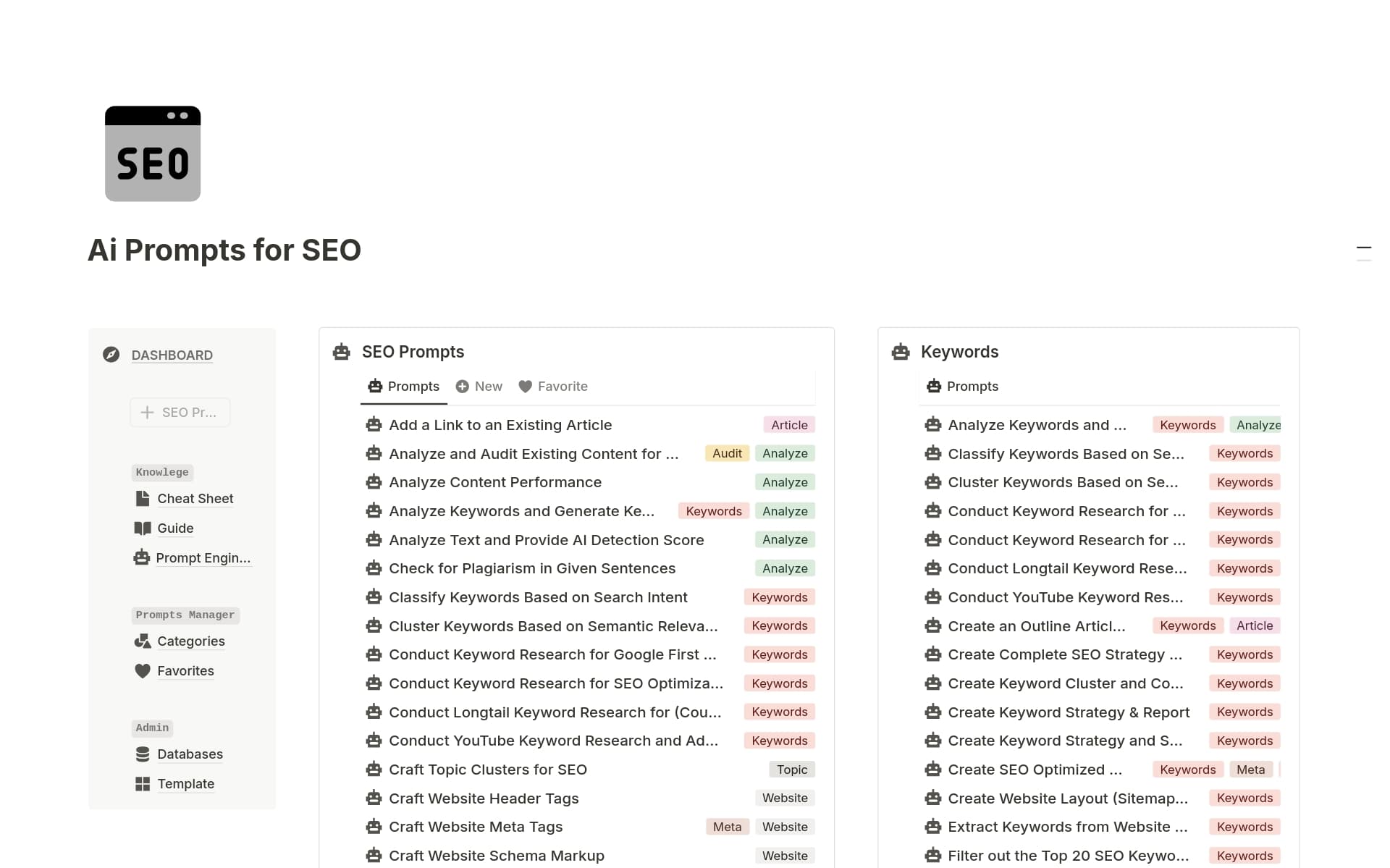
Long-term success comes from treating your template collection as a living knowledge base. Dedicate a shared workspace (like a Notion database or a shared document repository) organized by content type, funnel stage, and target audience. Version control each template, documenting why changes were made and what the observed ranking outcome was.
Train your team on template adaptation, not blind execution. Encourage SEO editors to add their own “template layers” that capture niche insights from their specific verticals. A technology SEO template might include layers for developer documentation linking, while an ecommerce fashion template might embed size-guide schema and product-video embedding instructions. This layered approach ensures the unique expertise of your human team is never lost but rather codified and amplified by the AI.
Frequently Asked Questions about AI SEO Templates
What is an AI SEO template and how does it differ from a prompt?
An AI SEO template is a structured, repeatable framework that includes system-level instructions, output formatting rules, and conditional logic tailored for search optimization tasks. A simple prompt is a one-off question; an AI SEO template acts as a persistent configuration that forces the AI to adopt a specific SEO-optimized role, ensuring that every output adheres to on-page standards, keyword mapping, and tone guidelines without needing to re-specify the rules each time.
Can AI SEO templates completely replace human SEO writers?
No. AI SEO templates serve as force-multipliers that handle the drafting of repetitive, low-creativity content and technical checks, but they cannot replace the strategic reasoning, original research, brand storytelling, and genuine first-hand experience that a human expert provides. The most effective workflow uses the template to create a solid 80% foundation, then relies on a human editor to fact-check, inject unique data, and refine the emotional nuance that builds E-E-A-T signals.
How do I prevent duplicate content when using the same template for many similar pages?
Effective AI SEO templates incorporate differentiation variables. Instead of generating the same guest post or product description each time, the template should be fed unique selling propositions, specific local details, or distinct customer pain points as input parameters. The template’s instructions must also include a directive to avoid boilerplate introductions and to generate novel sentence structures by varying the arrangement of benefits and features each time the template is run for a new URL.
Which on-page SEO elements should an AI template always cover?
A robust AI SEO template must generate not just the body content but also a compelling title tag (under 60 characters), a meta description that includes the primary keyword and a call to action, a logical heading hierarchy using relevant terms, keyword-rich image alt text suggestions, and a slug optimization recommendation. Advanced templates should also identify opportunities for featured snippet optimization—formatting lists, tables, or concise definitions right where the search algorithm expects them.
Are there free tools available to start using AI SEO templates?
Yes, many free tiers of large language model chatbots allow you to copy-paste a crafted template as the initial message and then provide the variable data (like the keyword) in a follow-up. While these free interfaces do not offer the API integration needed for bulk production, they are an excellent testing ground to refine your template logic, check for hallucination patterns, and validate that the output consistently meets your editorial standards before scaling up with paid professional SEO platforms.
Conclusion
The intersection of structured SEO methodology and generative AI is not a futuristic speculation; it is the current competitive advantage for agile content teams. AI SEO templates codify your brand’s unique approach to search excellence, transforming every content task from a creative gamble into a predictable, measurable process. The key is to build templates that are intelligent scaffolds—flexible enough to produce varied, human-sounding text, yet rigid enough to enforce the technical discipline search engines reward. By layering your expertise into modular templates, continuously editing through quality loops, and relentlessly measuring against real ranking signals, you build a scalable machine that earns traffic, trust, and conversions without sacrificing the distinctive voice that makes your content worth reading.
Xem thêm:
- AI SEO Perplexity Optimization: The Complete Guide to Ranking in the Age of Answer Engines
- AI SEO Voice Assistants: The Complete Guide to Voice Search Optimization in 2025
- AI SEO Review Content: The Complete Guide to Automated Reviews That Rank
- AI SEO Link Relevance: The Complete Guide to Modern Link Building
- AI SEO Content Structure: The Blueprint for Ranking in 2025
Bài viết cùng chủ đề:

AI SEO SEO Automation with Make: The Complete Workflow Guide

AI SEO SEO Automation with Zapier: The Complete Workflow Guide

AI SEO SEO Automation with n8n: The Complete Workflow Guide
AI SEO SEO Automation with Gemini: The Complete Guide to Scaling Organic Growth

AI SEO SEO Automation with Claude: The Complete Guide to Scaling Content in 2025

AI SEO SEO Automation with ChatGPT: The Complete Playbook for 2025

AI SEO & SEO Automation for Affiliate Sites: The 2025 Playbook for Passive Income Growth
AI SEO & SEO Automation for Bloggers: The Complete Guide to Scaling Your Content

AI SEO & SEO Automation for Agencies: The Complete 2025 Playbook

AI SEO and SEO Automation for Ecommerce: The Complete Playbook for 2025

AI SEO & SEO Automation for WordPress: The Complete Playbook for 2025
AI SEO SEO Automation Strategy: The Complete Playbook for 2025

Mastering the AI SEO SEO Automation Process: A Complete Guide to Scaling Organic Growth
AI SEO SEO Automation System: The Complete Guide to Scaling Organic Growth in 2025
AI SEO SEO Automation Platform: The Complete Guide to Scaling Organic Growth in 2025
AI SEO SEO Automation Software: The Complete Guide to Scaling Organic Growth in 2025















