
No products in the cart.
AI SEO Tools: The Complete Guide to Automating Search Rankings Without Losing the Human Touch
29
Jul
Jul
The landscape of search engine optimization has shifted dramatically. Where once a marketer could rely on intuition and manual spreadsheets, today’s competitive SERPs demand speed, data precision, and scale that only AI SEO tools can deliver. These platforms are not a passing trend; they represent a fundamental evolution in how content is researched, created, optimized, and measured. An AI SEO tool uses machine learning, natural language processing, and predictive analytics to handle the heavy lifting of modern search marketing, freeing you to focus on strategy and authentic audience connection.
Rather than replacing human expertise, the most effective AI SEO solutions amplify it. They can surface hidden keyword opportunities, analyze the semantic depth of top-ranking content, generate fully briefed article drafts in minutes, and even forecast the traffic impact of a new page. For businesses clinging to manual processes, the gap is widening every day. This in-depth guide will walk you through exactly what AI SEO tools are, how they work across every stage of the content lifecycle, the core features to demand, the common pitfalls that derail novices, and a practical roadmap for integrating them into your workflow.
What Exactly Are AI SEO Tools?
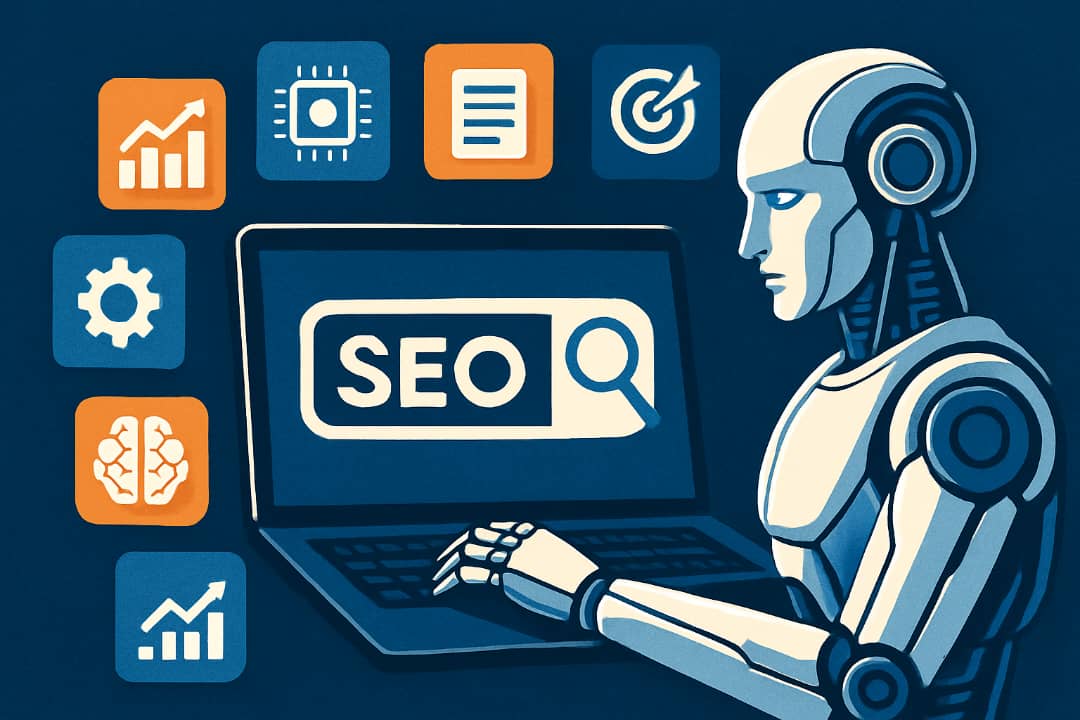
At their core, AI SEO tools are software applications that incorporate artificial intelligence—specifically machine learning models and large language models (LLMs)—to perform or assist with search optimization tasks. Unlike traditional SEO software that relies on static databases and rule-based analysis, an AI SEO tool “learns” from patterns in search engine results, user behavior, and linguistic structures. This enables the tool to not just report data, but to generate content outlines, write full paragraphs, identify content gaps based on search intent, and even automate technical audits.
The technology stack inside these tools typically includes several key components. Natural Language Processing (NLP) engines like Google’s BERT or OpenAI’s GPT models understand the context and entities within content, not just isolated keywords. Predictive analytics forecast how a piece of content might rank against competitors. Computer vision can optimize images, while retrieval-augmented generation (RAG) models ensure factual accuracy by pulling in live data from the web. The outcome is a system that acts as a tireless junior strategist, researcher, and copywriter blended into one interface.
Core Functions of an AI SEO Tool in the Modern Workflow
To understand the value these platforms bring, it’s helpful to break down exactly which SEO tasks they have transformed. The days of manually collecting keywords in a spreadsheet are over. AI now connects every dot from initial research to performance analysis.
Automated Keyword Discovery and Intent Clustering
Traditional keyword tools give you a list of terms, volume, and difficulty. An AI-powered keyword research module goes several layers deeper. It automatically groups thousands of keywords not by alphabetical order but by search intent—informational, commercial, transactional, navigational—using NLP clustering. It identifies semantic relationships, suggesting topic clusters that would take a human hours to map. The tool analyzes top-ranking pages and extracts the entities and subtopics they cover, giving you an instant blueprint of what the search engine expects from authoritative content.
Content Generation and Optimization at Scale
This is where most people first encounter AI SEO. Modern tools can write long-form blog posts, product descriptions, and meta tags from a single seed keyword. However, the real advantage is not merely text generation but structured content optimization. The best tools build data-driven briefs that specify target word count, LSI keyword density, heading structure, internal link suggestions, and questions to answer—all based on a real-time competitive analysis of the first page of search results. They then generate or assist in writing content that addresses these exact criteria, often with real-time scores as you edit.
Technical SEO Audits and Real-Time Monitoring
AI has turned site audits from reactive, periodic snapshots into proactive, continuous monitoring systems. Tools now crawl websites daily and use pattern recognition to instantly flag anomalies—like a sudden spike in page load time due to a new JavaScript snippet, or a cascade of broken links from a site relaunch. Some platforms use machine learning to prioritize fixes not just by technical severity but by predicted impact on organic traffic, effectively telling you what to fix first to see the biggest ranking lift.
Link Building and Digital PR Prospecting
Finding high-quality backlink opportunities has traditionally been a manual grind. AI SEO tools now scrape and analyze thousands of link profiles to identify prospects with high domain relevance and authentic traffic. They can evaluate the topical authority of a site, predict the likelihood of a response based on historical outreach patterns, and even draft personalized outreach emails that match the tone of the target publication. Sentiment analysis features can monitor brand mentions across the web, turning unlinked citations into easy link reclamation opportunities.
Benefits and Limitations of Relying on AI for SEO
A clear-headed understanding of what AI can and cannot do is essential before you invest heavily in any platform. The strengths are transformative, but the weaknesses can be catastrophic if ignored.
Key Advantages
- Exponential Efficiency Gain: Tasks that once took weeks—like creating a 50-article content plan with full briefs—can be completed in an afternoon, allowing teams to shift resources to creative differentiation and user experience.
- Data-Backed Decision Making: Instead of guessing which topic to target next, AI surfaces opportunities based on your site’s current topical authority, competitive moat, and traffic potential, removing vanity metrics from the equation.
- Content Freshness and Coverage: AI tools can monitor ranking pages for content decay and automatically suggest updates to maintain or improve position, including identifying new questions to add or sections to expand.
- Pattern Recognition at Scale: Detecting technical issues across a site with tens of thousands of pages, or identifying brand mentions in podcasts and videos through speech-to-text transcription, is only feasible with machine learning.
- Risk of Generic, Undifferentiated Content: AI models generate text based on probabilities. Without strong human editorial oversight, the output can be accurate yet utterly bland, lacking the unique insights, original data, proprietary examples, and brand storytelling that generate true backlinks and trust.
- Factual Hallucinations and Inaccuracy: Large language models can confidently state misinformation, cite fictitious studies, or fabricate statistics. Every AI-generated claim must be verified, especially in YMYL (Your Money or Your Life) niches where accuracy is non-negotiable.
- Over-Optimization and Penalty Risk: Blindly following AI’s keyword density recommendations or letting it auto-generate thousands of pages with thin, templated content can trigger search engine spam filters and lead to manual actions. The goal is to satisfy human intent, not an algorithm.
- Dependence and Skill Atrophy: SEO professionals who never learn to manually analyze a SERP or understand information architecture may become unable to function without the tool, or worse, unable to spot when the tool’s recommendations are strategically wrong.
- Publishing Unedited AI Content: This is the cardinal sin. Google’s algorithms, including the helpful content system, are increasingly adept at identifying content that provides no original value. A site filled with polished but generic AI prose will see brief ranking gains that vanish into thin air at the next core update.
- Ignoring Brand Voice and Tone: AI, by default, writes in a careful, neutral, corporate style. If your brand is known for irreverence, deep technical authority, or a hyper-local feel, allowing the tool’s default voice to stand will dilute your identity and make all your pages sound the same.
- Chasing AI-Recommended Keyword Density: Many tools still surface a target number of times a keyphrase should appear. Obeying this mechanically leads to stilted, unnatural prose that repels readers. Write for clarity first; use keyphrases where they naturally fit, and use the tool only as a final sanity check for egregious gaps.
- Automating Entire Funnels Without Oversight: Setting up an AI system to auto-generate hundreds of location or product pages can be devastating if the underlying data is flawed or templated. A single hallucinated address or misleading specification multiplied across the web creates a massive cleanup job and a trust deficit with your audience.
- Neglecting E-E-A-T Signals: AI content often lacks author bios, cited original sources, and clear evidence of firsthand experience. If your financial or health articles do not prominently feature qualified authors and editorial review processes, no amount of on-page optimization will protect the rankings.
Significant Limitations
AI SEO Tools vs. Traditional SEO Software: A Functional Comparison
The market has shifted from first-generation tools like early keyword explorers and rank trackers to integrated AI platforms. The following table illustrates how the two generations fundamentally differ in their approach to the same problem.
| Function | Traditional SEO Tool | AI SEO Tool |
|---|---|---|
| Keyword Research | Provides volume, CPC, difficulty from a static database. Clustering is manual or based on prefix matching. | Clusters keywords by NLP-based intent, identifies entities, predicts traffic potential based on your domain authority. |
| Content Creation | Offers basic on-page grader with keyword density. No content generation capability. | Generates full drafts, outlines, and briefs. Scores content against top 20 competitors in real time for topical completeness. |
| Backlink Analysis | Lists referring domains and anchor text distribution. | Assesses link quality via AI-based trust metrics, predicts link value, automates broken link building and prospect qualification. |
| Technical Audit | Reports a flat list of errors and warnings. | Prioritizes fixes by traffic impact, automatically detects dynamic rendering issues and Core Web Vitals anomalies with root-cause analysis. |
| Reporting | Standardized PDF reports and basic trend charts. | Natural language querying of analytics, automated anomaly detection with alerts, and predictive traffic forecasts. |
How to Integrate AI SEO Tools Into Your Daily Workflow
A tool is only as good as the process around it. Successful teams establish ironclad workflows where AI handles the repetitive data processing, and humans make the final strategic and creative calls.
Step 1: The Strategic Foundation (Human-Led, AI-Assisted)
Begin with your business goals, not a keyword list. Use an AI SEO tool to map your product categories or service lines against the complete search demand landscape. Run a domain-level topical authority analysis to understand where your site can realistically compete in the short term versus where you need to build foundational content first. The tool will output a prioritized topic cluster map, but you must overlay this with your own market expertise and margin analysis to select the topics with the highest commercial value, not just the highest volume.
Step 2: The Data-Driven Brief (AI-Led, Human-Reviewed)
For each chosen target topic, let the AI build the content brief. It will scrape the current top 10 or 20 ranking URLs and aggregate their average word count, reading level, heading structure, and the list of semantically related entities that appear across all of them. The brief will identify “must-cover” subtopics and unique angles that competitors have missed. Do not simply hand this brief to a writer. A senior strategist should validate the intent interpretation: does the SERP truly reward listicles, or is it showing definitive how-to guides? The AI might misinterpret a mixed-intent SERP, so human curation here prevents misaligned content.
Step 3: The First Draft and Expert Layer (AI-Human Hybrid)
Use the AI to generate a structured first draft based on the approved brief. This draft will have proper headings, a logical flow, and will cover all the identified semantic entities. However, the draft is skeletal. The critical human contribution is the “expert layer”: inserting proprietary data, original quotes from internal subject matter experts, unique case studies, exclusive statistics from your own research, and brand-specific storytelling. This layer is what makes the content impossible for competitors to replicate and what signals E-E-A-T to search engines. Never publish an AI draft without this layer.
Step 4: Real-Time Optimization and Final Polish
Before publishing, run the enriched draft through the tool’s content scoring engine. It will highlight any remaining topical gaps, suggest internal links from your existing content inventory, and check for over-optimization of the primary keyphrase. A skilled editor then does a final read for voice, tone, and logical flow, ensuring every statistic is fact-checked and every link is purposeful. After publication, set up automated monitoring in the tool to alert you if the page drops in rankings or if a competitor updates their content.
Common Mistakes That Sabotage AI-Assisted SEO Strategies
The accessibility of these tools has led to a wave of avoidable failures. Recognizing these traps upfront can save your site from algorithmic downgrades and wasted budget.
Important Considerations When Selecting an AI SEO Platform
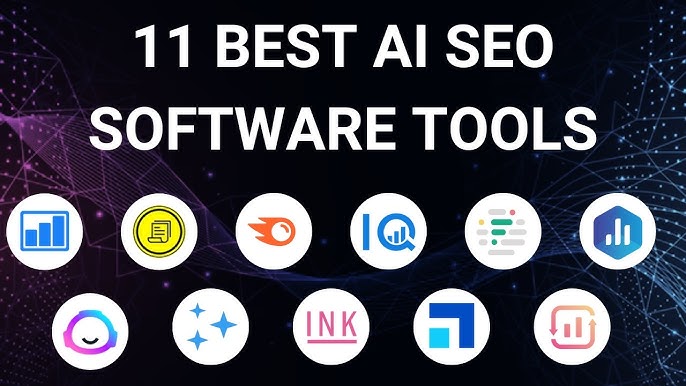
The market is crowded, and marketing hype often obscures true capability. Before committing to a subscription, evaluate these critical factors that separate enterprise-grade solutions from superficial wrappers around an LLM API.
Data Freshness and Source Transparency: Does the tool rely on a static GPT model’s knowledge cutoff, or does it perform live crawling and retrieval to fact-check and update its suggestions? For competitive content, you need a platform that analyzes today’s SERP, not a snapshot from six months ago.
Integration With Your Existing Stack: A tool that doesn’t connect to Google Search Console, Google Analytics 4, and your key CMS becomes an isolated island. The real power emerges when the tool can read your actual click-through rates and rankings to refine its recommendations specifically for your domain’s authority and audience.
Customization and Guardrails: Can you upload your brand’s style guide, custom forbidden words, and standard legal disclaimers? An enterprise-ready platform lets you set hard rules that prevent the AI from making claims your legal team hasn’t approved or using language that contradicts your tone-of-voice documentation.
Content Ownership and Privacy: Carefully review the terms. Some tools may use your uploaded data and generated content to train their models. For proprietary business strategies or client data, you need a platform that guarantees your data remains fully private and is not used for model improvement.
Frequently Asked Questions About AI SEO Tools
Do AI SEO tools produce content that can rank on the first page of Google?
Yes, content produced with AI SEO tools can rank on the first page, but only when it is substantially enhanced, fact-checked, and infused with original expertise by a human editor. If you use an AI SEO tool to generate a draft that covers all required semantic entities, and then you layer in first-party data, expert quotes, and original visuals, the final page can be extremely competitive. Raw, unedited AI text rarely sustains top rankings in competitive niches after major algorithm updates that target helpful, experience-based content.
Can AI tools completely replace an SEO professional or agency?
No. AI SEO tools are force multipliers for skilled practitioners but cannot replace the strategic, creative, and ethical oversight that a human expert provides. AI cannot decide what brand storytelling angle will resonate with your specific audience, it cannot build genuine relationships for link earning, and it cannot be held accountable for business outcomes. The most effective model is an experienced SEO strategist who uses AI tools to handle data analysis, first-draft generation, and monitoring, while they focus on competitive differentiation and high-level architecture.
Is content generated by AI SEO tools penalized by Google?
Google does not penalize content simply because it is AI-generated. The search engine’s official position is that it values content quality irrespective of the production method. The penalty risk arises from using AI to produce content at scale with the primary purpose of manipulating rankings and without adding original value. Content that is unoriginal, lacks E-E-A-T, or is mass-produced via automation violates Google’s spam policies, and that is what triggers manual actions and algorithmic demotions. The tool itself is not the issue; the abusive workflow is.
How do I choose the best AI SEO tool for a small business on a budget?
Start by auditing your single most time-consuming SEO task. For a small business, this is often content creation for a handful of core landing pages and a blog. Prioritize an all-in-one AI SEO tool that offers strong content generation with SERP-aware briefs, basic keyword research, and on-page optimization scoring in one package, rather than a specialized enterprise suite. Many reputable platforms offer entry-level plans that give you the essential AI-powered writing and optimization modules without the heavy cost of large-scale crawls and API access. Focus on tools that let you limit generation credits to prevent going over budget while you learn the workflow.
Do AI SEO tools work for local SEO and brick-and-mortar businesses?
Absolutely. Modern AI SEO tools are highly effective for local SEO when used correctly. They can generate optimized Google Business Profile descriptions, craft localized service and city pages based on a template you define, and monitor local pack rankings. The AI can analyze review sentiment to identify key themes your customers care about, informing your content strategy. The critical manual component remains local link building, real community engagement, and ensuring location-specific information is accurate—areas where AI hallucination can damage a local brand’s trust.
Conclusion
The era of AI SEO tools is not on the horizon; it is the current reality separating market leaders from those struggling to keep up. These platforms have permanently raised the floor of what every competent marketer can achieve in a given day, handling the vast data collection and pattern recognition tasks that humans simply cannot scale. The most successful adopters treat these tools as a powerful engine inside a car they themselves are driving. They let the AI navigate the data, process competitive landscapes, and assemble a solid framework, but they keep their hands firmly on the wheel for creative direction, ethical judgment, and authentic connection.
By integrating an AI SEO tool into a disciplined workflow that always ends with a strong human editorial layer, you unlock the rare combination of speed and substance. You can publish more content, target more topics, and react to competitive changes faster than ever, without sacrificing the unique voice and original expertise that search engines and real people demand. The path forward is not a choice between human or machine, but the practiced collaboration of both.
Xem thêm:
- AI SEO Content Structure: The Blueprint for Ranking in 2025
- AI SEO Content Briefs: The Complete Guide to Smarter Content Planning
- AI SEO Content Relevance: The Complete Guide to Ranking in the Age of Machine Learning
- AI SEO Crawl Budget: The Complete Guide to Smarter Crawling in 2025
- AI Copywriting Tools: The Complete Guide to Automating High-Converting Content in 2025
Bài viết cùng chủ đề:

AI SEO SEO Automation with Make: The Complete Workflow Guide

AI SEO SEO Automation with Zapier: The Complete Workflow Guide

AI SEO SEO Automation with n8n: The Complete Workflow Guide
AI SEO SEO Automation with Gemini: The Complete Guide to Scaling Organic Growth

AI SEO SEO Automation with Claude: The Complete Guide to Scaling Content in 2025

AI SEO SEO Automation with ChatGPT: The Complete Playbook for 2025

AI SEO & SEO Automation for Affiliate Sites: The 2025 Playbook for Passive Income Growth
AI SEO & SEO Automation for Bloggers: The Complete Guide to Scaling Your Content

AI SEO & SEO Automation for Agencies: The Complete 2025 Playbook

AI SEO and SEO Automation for Ecommerce: The Complete Playbook for 2025

AI SEO & SEO Automation for WordPress: The Complete Playbook for 2025
AI SEO SEO Automation Strategy: The Complete Playbook for 2025

Mastering the AI SEO SEO Automation Process: A Complete Guide to Scaling Organic Growth
AI SEO SEO Automation System: The Complete Guide to Scaling Organic Growth in 2025
AI SEO SEO Automation Platform: The Complete Guide to Scaling Organic Growth in 2025
AI SEO SEO Automation Software: The Complete Guide to Scaling Organic Growth in 2025















