
No products in the cart.
AI SEO Topic Authority: The Complete Guide to Dominating Search Rankings in 2025
10
Aug
Aug
AI SEO Topic Authority represents the convergence of artificial intelligence and strategic content development, where search engines evaluate not just individual keywords but the comprehensive depth and interconnectedness of your content ecosystem. This approach transforms how websites establish credibility, moving beyond simple keyword density to demonstrate genuine expertise across entire subject areas. As Google’s algorithms evolve with machine learning capabilities, understanding and implementing AI SEO Topic Authority has become essential for brands seeking sustainable organic visibility.
Understanding AI SEO Topic Authority
AI SEO Topic Authority refers to the measurable degree of expertise and comprehensiveness a website demonstrates on a specific subject through the lens of artificial intelligence algorithms. Search engines now employ sophisticated natural language processing models that assess content clusters, semantic relationships, and topical coverage patterns to determine which sites deserve authoritative status.
This concept represents a fundamental shift from traditional SEO practices. Previously, ranking well meant optimizing individual pages for specific keywords. Today, AI systems evaluate entire content ecosystems, looking for evidence that a website thoroughly understands a topic from multiple angles, addresses user intent comprehensively, and maintains consistent quality across interconnected pages.
The Evolution from Keyword-Based to Topic-Based Ranking
Early search algorithms relied heavily on exact-match keywords and backlink counts. The introduction of RankBrain in 2015 marked the beginning of AI-driven search, enabling Google to better interpret ambiguous queries and understand semantic relationships between concepts. Subsequent updates, including BERT and MUM, accelerated this transformation, allowing algorithms to process information more like humans do.
Modern AI systems analyze content at scale, examining entity relationships, contextual relevance, and information completeness. They can identify gaps in topical coverage, recognize when content merely scratches the surface, and distinguish between genuine expertise and superficial keyword stuffing. This evolution makes AI SEO Topic Authority the primary competitive advantage in current search landscapes.
Why AI SEO Topic Authority Matters for Search Rankings
Google’s Quality Rater Guidelines emphasize E-E-A-T (Experience, Expertise, Authoritativeness, Trustworthiness) as core ranking criteria. AI SEO Topic Authority directly supports these principles by demonstrating comprehensive knowledge through structured, interconnected content that addresses user needs at every stage of their journey.
Search engines increasingly prioritize content that provides complete answers within a cohesive topical framework. When your website consistently produces authoritative content across a subject area, AI algorithms recognize this pattern and reward it with higher rankings, increased visibility, and enhanced trust signals.
How AI Algorithms Evaluate Topical Authority
Artificial intelligence systems assess topical authority through multiple signals. Entity recognition identifies key concepts and their relationships within your content. Semantic analysis evaluates whether your writing demonstrates genuine understanding rather than surface-level keyword matching. Content freshness signals indicate ongoing engagement with the topic. Internal linking structures show how well your content pieces connect to form a comprehensive knowledge base.
The algorithms also examine user engagement metrics as indirect authority signals. When searchers consistently find your content valuable, spending more time on pages, exploring multiple articles, and returning for additional information, AI systems interpret these behaviors as evidence of authority.
Core Components of AI SEO Topic Authority
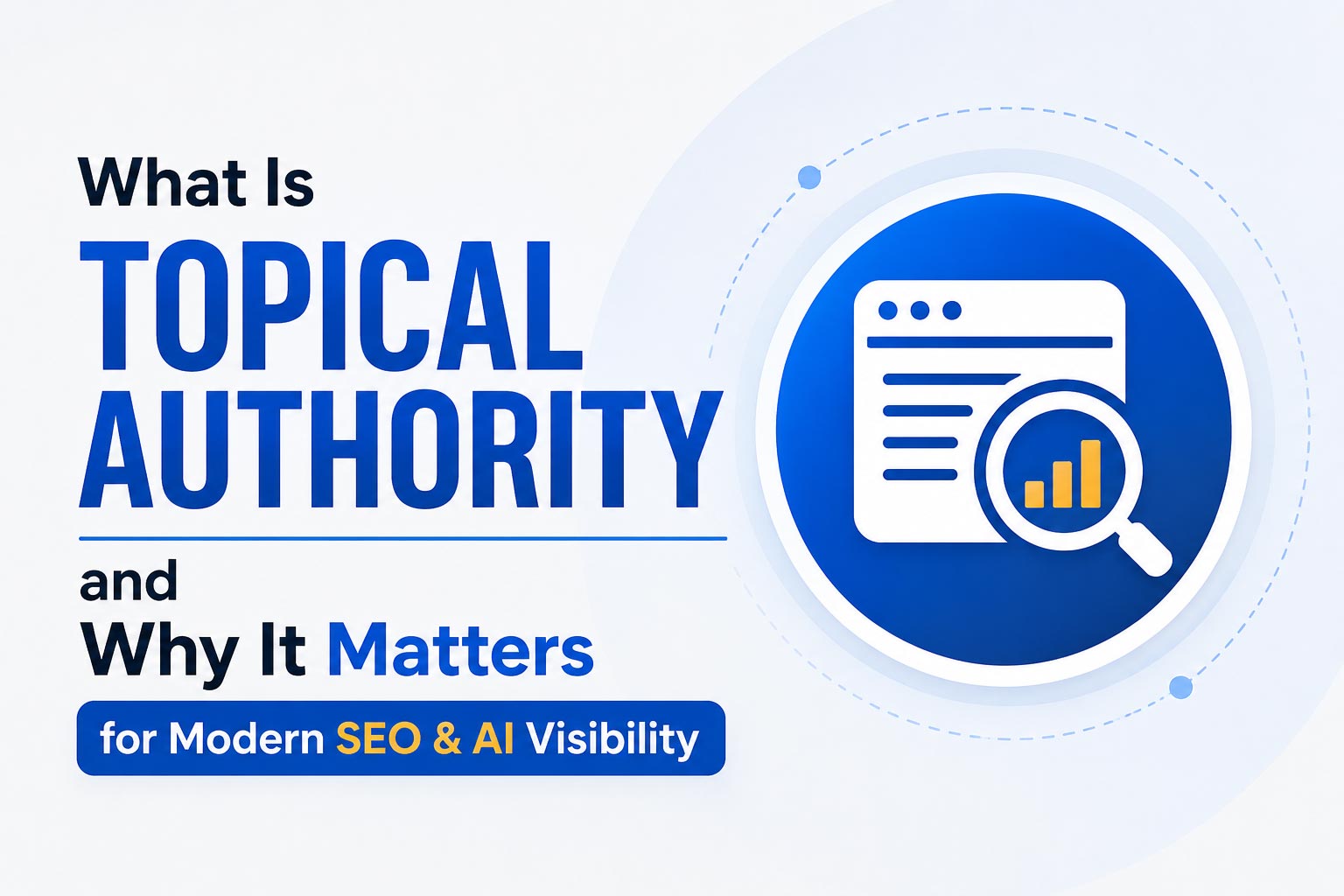
Building AI SEO Topic Authority requires a systematic approach encompassing several interconnected elements. Each component reinforces the others, creating a compound effect that strengthens your overall topical standing.
Comprehensive Topic Clusters
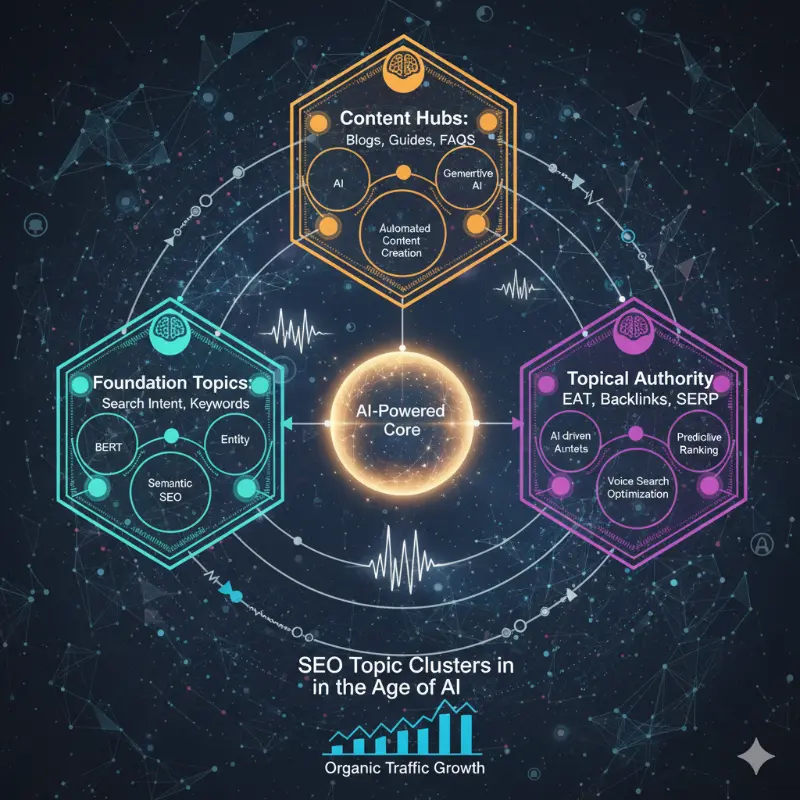
Topic clusters form the structural foundation of AI SEO Topic Authority. A pillar page serves as the comprehensive overview of your main subject, while cluster content addresses specific subtopics in greater detail. This architecture creates clear semantic relationships that AI algorithms can easily interpret.
For example, a website focused on digital marketing might create a pillar page covering the complete landscape, with cluster pages dedicated to SEO, content marketing, social media strategy, email automation, and analytics. Each cluster page links back to the pillar, and the pillar links out to all clusters, establishing a clear knowledge graph that demonstrates comprehensive coverage.
Semantic Depth and Entity Coverage
AI systems evaluate whether your content covers all relevant entities associated with your topic. This includes related concepts, industry terminology, common questions, emerging trends, and historical context. Comprehensive entity coverage signals that your content represents genuine expertise rather than narrow keyword targeting.
Natural language processing models identify entities and their relationships, building a semantic map of your topical domain. The more complete this map, the stronger your AI SEO Topic Authority becomes. This requires researching your subject thoroughly and creating content that addresses every meaningful aspect.
Content Interconnectivity and Internal Linking
Strategic internal linking demonstrates to AI algorithms how your content pieces relate to one another. Descriptive anchor text helps search engines understand the context of linked pages. Logical link hierarchies guide both users and crawlers through your content ecosystem, reinforcing topical relationships.
Effective internal linking also distributes authority throughout your site, ensuring that deeper content pages benefit from the authority accumulated by your pillar pages. This creates a self-reinforcing cycle where comprehensive coverage generates authority, which then boosts all related content.
Benefits of Implementing AI SEO Topic Authority
Websites that successfully implement AI SEO Topic Authority strategies experience numerous advantages beyond simple ranking improvements. These benefits compound over time, creating durable competitive advantages that are difficult for competitors to replicate.
| Benefit | Impact | Timeframe |
|---|---|---|
| Higher search rankings | Improved visibility for primary and secondary keywords | 3-6 months |
| Increased organic traffic | More clicks from broader query coverage | 6-12 months |
| Enhanced brand credibility | Recognition as industry thought leader | 12+ months |
| Better user engagement | Lower bounce rates, longer session durations | Immediate |
| Resilience to algorithm updates | Sustained rankings despite search changes | Ongoing |
| Natural backlink acquisition | Other sites reference your comprehensive resources | 6-18 months |
Long-Term Competitive Advantage
AI SEO Topic Authority creates barriers to entry that competitors find difficult to overcome. Building comprehensive topical coverage requires substantial time, research, and content production investment. Once established, your content ecosystem becomes increasingly difficult to replicate, especially as you continuously update and expand your coverage.
This advantage extends beyond search rankings. Comprehensive topical authority positions your brand as the go-to resource in your industry, attracting media mentions, partnership opportunities, and customer trust that further reinforce your authoritative status.
Practical Implementation Strategy for AI SEO Topic Authority

Implementing AI SEO Topic Authority requires a structured approach that combines strategic planning with consistent execution. The following framework provides a roadmap for building topical authority systematically.
Step 1: Conduct Comprehensive Topic Research
Begin by identifying your core topic areas using AI-powered keyword research tools that reveal semantic relationships and content gaps. Analyze competitor content ecosystems to understand what topics they cover and where opportunities exist for more comprehensive treatment.
Use search engine autocomplete, related searches, and question-based tools to identify the full range of queries associated with your topic. Examine forums, social media discussions, and industry publications to understand what information your audience actually seeks. This research forms the foundation of your content strategy.
Step 2: Map Your Content Architecture
Create a visual representation of your proposed content ecosystem, identifying pillar topics and their associated cluster content. Each pillar should represent a broad subject area, while clusters address specific subtopics that support the main theme. Ensure comprehensive coverage by mapping all relevant entities and subtopics.
Prioritize content creation based on search demand, competitive opportunity, and alignment with business goals. Develop a content calendar that ensures systematic coverage of your topical map, balancing quick wins with foundational content that supports long-term authority building.
Step 3: Create Comprehensive, High-Quality Content
Each piece of content should demonstrate genuine expertise through thorough research, practical examples, and actionable information. Structure content to answer questions comprehensively, addressing all aspects of the subtopic rather than providing superficial overviews. Include data, case studies, and real-world examples that substantiate your claims.
Write for humans first while ensuring AI algorithms can easily parse your content structure. Use clear headings, logical organization, and natural language that demonstrates understanding. Avoid keyword stuffing while ensuring your target terms appear naturally in context.
Step 4: Implement Strategic Internal Linking
Connect your content ecosystem through thoughtful internal linking that helps both users and AI algorithms navigate your topical coverage. Use descriptive anchor text that clearly indicates the linked content’s subject matter. Ensure every cluster page links to its pillar, and the pillar links to all relevant clusters.
Additionally, link between related cluster pages where natural connections exist. This creates a dense network of related content that reinforces your topical authority and helps search engines understand the full scope of your expertise.
Step 5: Continuously Update and Expand
AI SEO Topic Authority requires ongoing maintenance. Regularly audit your content to identify outdated information, emerging subtopics, and opportunities for expansion. Update existing content to reflect current data, trends, and best practices. Add new cluster content as your industry evolves.
Monitor search performance to identify gaps in your topical coverage. Analyze queries where you appear but don’t rank well, and create content that better addresses those search intents. This continuous improvement cycle ensures your topical authority grows over time.
Common Mistakes That Undermine AI SEO Topic Authority
Many websites attempt to build topical authority but make critical errors that limit their success. Recognizing these pitfalls helps you avoid wasting resources on ineffective strategies.
Creating Thin, Superficial Content
Publishing numerous short articles that barely scratch the surface of their topics signals low expertise to AI algorithms. Search engines increasingly prioritize comprehensive, in-depth content that provides genuine value. Thin content not only fails to build authority but can actively harm your rankings.
Instead of creating many shallow pieces, focus on fewer, more comprehensive articles that thoroughly address their subjects. Quality consistently outperforms quantity when building AI SEO Topic Authority.
Ignoring Semantic Relationships
Creating content without considering how it connects to your broader topical ecosystem results in fragmented authority signals. Each piece of content should clearly relate to your other content, reinforcing your comprehensive coverage. Isolated articles that don’t connect to your content architecture fail to contribute to your overall topical authority.
Always consider how new content fits within your existing ecosystem. Identify related content to link to, ensure consistent terminology and concepts, and maintain a clear topical focus across your entire site.
Neglecting Content Freshness
AI algorithms consider content freshness when evaluating authority. Topics evolve, new information emerges, and best practices change. Content that remains static while the industry moves forward gradually loses its authority signals.
Implement a regular content review schedule that ensures your most important pages stay current. Update statistics, refresh examples, and add new information that reflects the latest developments in your field.
Measuring AI SEO Topic Authority Success
Tracking your progress in building AI SEO Topic Authority requires monitoring multiple metrics that collectively indicate growing expertise and visibility.
Key Performance Indicators
Monitor keyword rankings for your target topics, tracking both primary and secondary terms. Watch for increases in the number of keywords you rank for within your topical domain, as this indicates expanding authority coverage. Track organic traffic growth, particularly from informational queries related to your topics.
Analyze engagement metrics including time on page, pages per session, and bounce rates. Improving engagement signals indicate that users find your content valuable, which reinforces authority signals. Monitor backlink acquisition, especially from reputable sources referencing your content as an authoritative resource.
Tools for Monitoring Topical Authority
Several platforms provide insights into your topical authority. Google Search Console reveals which queries trigger your content and how your pages perform. SEMrush and Ahrefs offer topical authority metrics that estimate your standing relative to competitors. Clearscope and MarketMuse analyze content comprehensiveness against semantic expectations.
Regular monitoring allows you to identify improvement areas and adjust your strategy accordingly. Track your progress monthly, comparing your metrics against both your baseline and your primary competitors.
Important Considerations for AI SEO Topic Authority
Building topical authority requires patience and consistency. Results typically emerge over months rather than weeks, as AI algorithms need time to crawl, index, and evaluate your expanded content ecosystem. Maintain consistent content production and improvement efforts rather than expecting immediate results.
Focus on genuine expertise rather than algorithmic manipulation. AI systems become increasingly sophisticated at detecting content created solely for search engines. Authentic, valuable content that demonstrates real knowledge will always outperform content designed to game algorithms.
Balance breadth with depth. While comprehensive coverage is important, attempting to cover too many topics superficially dilutes your authority. Focus on becoming the definitive resource for your core subject areas before expanding into adjacent topics.
Frequently Asked Questions About AI SEO Topic Authority
How long does it take to build AI SEO Topic Authority?
Building meaningful AI SEO Topic Authority typically requires 6-12 months of consistent effort. Initial improvements in rankings and visibility often appear within 3-6 months, but establishing yourself as a recognized authority in your niche takes longer. The timeline depends on your starting point, competitive landscape, and the comprehensiveness of your content strategy.
What is the difference between domain authority and AI SEO Topic Authority?
Domain authority measures overall website strength based primarily on backlink profiles. AI SEO Topic Authority focuses specifically on demonstrated expertise within particular subject areas. A site can have high domain authority but low topical authority in certain subjects, or vice versa. Topical authority is more granular and directly tied to content quality and comprehensiveness.
Can small websites compete with established brands for AI SEO Topic Authority?
Yes, smaller websites can compete by focusing on specific niches and creating exceptionally comprehensive content. While established brands have advantages in backlink profiles and brand recognition, topical authority rewards content quality and comprehensiveness. A smaller site that thoroughly covers a specific subject can outrank larger competitors who only touch on the topic superficially.
How does AI SEO Topic Authority affect featured snippets?
Websites with strong topical authority are more likely to earn featured snippet positions. AI algorithms prefer content that comprehensively answers queries and demonstrates expertise. When your content ecosystem clearly establishes you as an authority on a subject, your pages become preferred candidates for featured snippet placement.
Does AI SEO Topic Authority require more content production?
Building topical authority generally requires more content than traditional keyword-focused SEO, but the emphasis is on quality and comprehensiveness rather than sheer volume. A well-planned content ecosystem with 50 comprehensive articles can build more authority than 500 thin, superficial posts. Focus on creating the right content rather than simply creating more content.
Conclusion
AI SEO Topic Authority represents the new standard for search visibility in an era where artificial intelligence increasingly determines content value. By building comprehensive, interconnected content ecosystems that demonstrate genuine expertise, websites can establish durable competitive advantages that withstand algorithm updates and evolving search behaviors.
The shift from keyword-based optimization to topic-based authority requires a fundamental change in content strategy. Success demands thorough research, systematic content architecture, consistent quality, and ongoing refinement. While the investment is substantial, the returns in rankings, traffic, credibility, and business growth make AI SEO Topic Authority the most effective long-term approach to organic search success.
Start by auditing your current content ecosystem, identifying gaps in your topical coverage, and developing a comprehensive strategy that positions your website as the definitive resource in your field. The algorithms are ready to recognize genuine authority. The question is whether your content strategy is ready to demonstrate it.
Xem thêm:
- Google AI Mode SEO: A Complete Guide to Optimizing for Google’s AI‑Powered Search Shift
- AI SEO SERP Scraping: The Complete Guide to Automated Rank Tracking in 2025
- AI SEO Playbook: The Complete Guide to Ranking in the Age of Machine Learning
- WP Trove AI Landing Pages: The Complete Guide to High-Converting WordPress Pages
- AI SEO Content Depth: The Complete Guide to Outranking Thin Content
Bài viết cùng chủ đề:

AI SEO SEO Automation with Make: The Complete Workflow Guide

AI SEO SEO Automation with Zapier: The Complete Workflow Guide

AI SEO SEO Automation with n8n: The Complete Workflow Guide
AI SEO SEO Automation with Gemini: The Complete Guide to Scaling Organic Growth

AI SEO SEO Automation with Claude: The Complete Guide to Scaling Content in 2025

AI SEO SEO Automation with ChatGPT: The Complete Playbook for 2025

AI SEO & SEO Automation for Affiliate Sites: The 2025 Playbook for Passive Income Growth
AI SEO & SEO Automation for Bloggers: The Complete Guide to Scaling Your Content

AI SEO & SEO Automation for Agencies: The Complete 2025 Playbook

AI SEO and SEO Automation for Ecommerce: The Complete Playbook for 2025

AI SEO & SEO Automation for WordPress: The Complete Playbook for 2025
AI SEO SEO Automation Strategy: The Complete Playbook for 2025

Mastering the AI SEO SEO Automation Process: A Complete Guide to Scaling Organic Growth
AI SEO SEO Automation System: The Complete Guide to Scaling Organic Growth in 2025
AI SEO SEO Automation Platform: The Complete Guide to Scaling Organic Growth in 2025
AI SEO SEO Automation Software: The Complete Guide to Scaling Organic Growth in 2025















