
No products in the cart.
AI SEO Content Depth: The Complete Guide to Outranking Thin Content
10
Aug
Aug
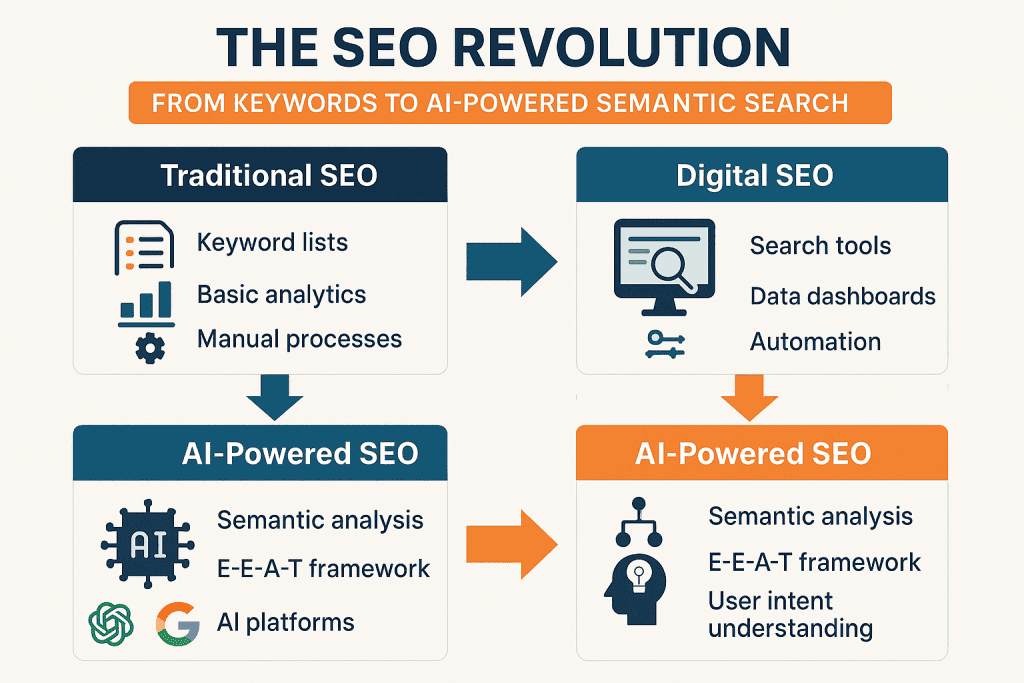
AI SEO Content Depth has become the defining factor between websites that rank on the first page and those buried on page five. Search engines now prioritize comprehensive, authoritative material over shallow, keyword-stuffed pages. With generative AI tools producing thousands of words in seconds, the market is flooded with superficial articles that fail to satisfy user intent. This guide explains exactly what content depth means in the age of artificial intelligence, how to measure it, and how to build pages that outperform competitors by delivering genuine value.
What Is AI SEO Content Depth?
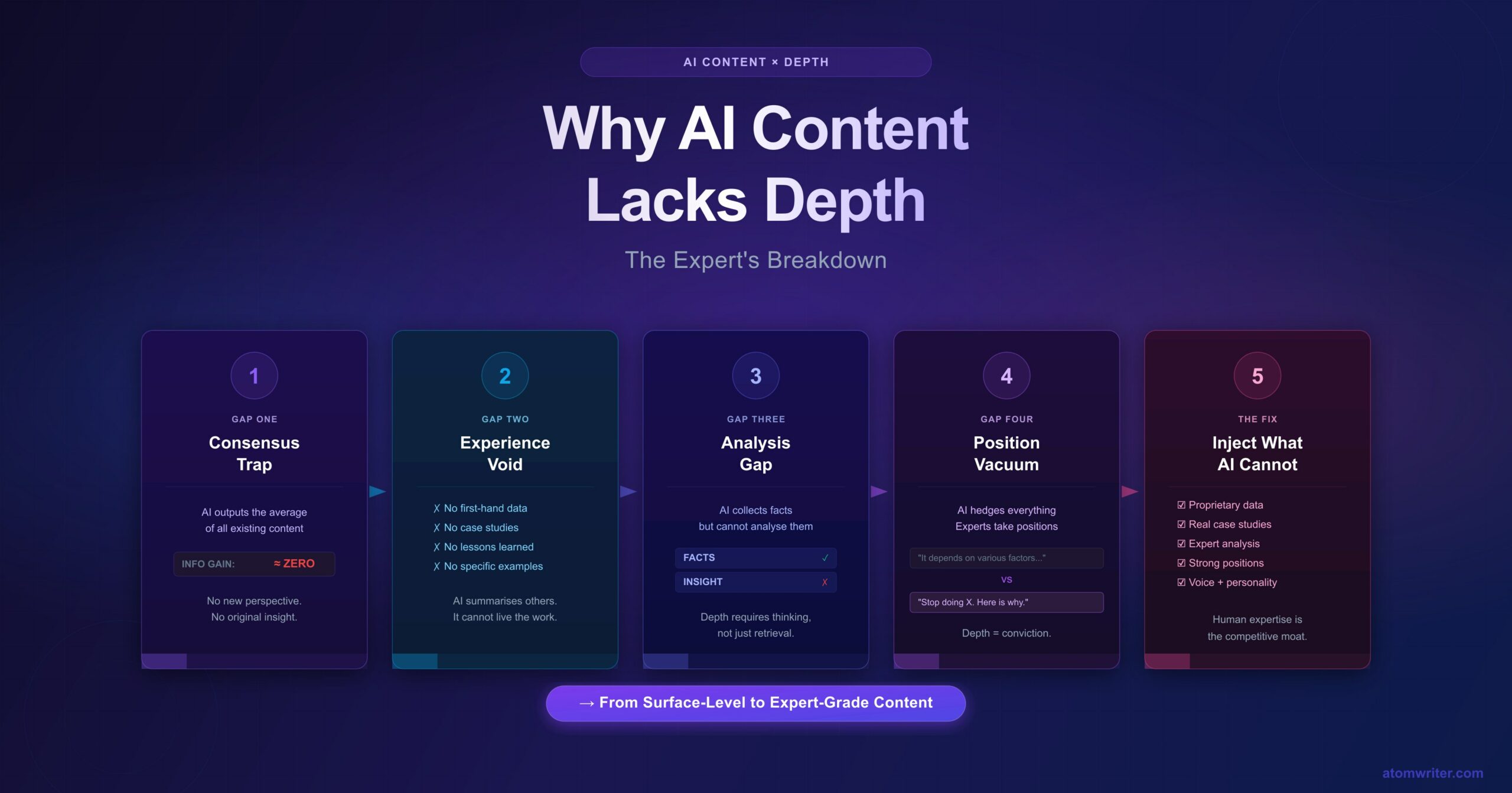
AI SEO Content Depth refers to the level of thoroughness, contextual relevance, and semantic completeness that an article or webpage demonstrates, particularly when evaluated by search engine algorithms and AI-powered ranking systems. It is not merely about word count. Depth encompasses how well a piece covers a topic from multiple angles, answers related questions, includes data points, addresses user pain points, and connects to broader subject clusters.
Modern search engines like Google use neural matching and natural language processing to assess whether content truly covers a topic. They compare your page against the collective understanding of what users expect when they search for a specific query. If your content lacks depth, the algorithm detects gaps and drops your ranking. AI tools have accelerated this trend because they can generate surface-level text instantly, forcing search engines to become stricter about what they reward.
The Difference Between Length and Depth
Many marketers mistakenly equate long-form content with deep content. A 3,000-word article that repeats the same points in different ways is still thin. Depth requires unique information at every stage. For example, an article about “coffee brewing methods” that simply lists French press, pour-over, and espresso with one paragraph each is shallow. A deep version includes water temperature ratios, grind size charts, extraction times, common errors, regional variations, and equipment maintenance tips.
AI SEO Content Depth also involves entity coverage. Search engines identify key entities—people, places, concepts, and objects—related to your main topic. Your content should naturally include these entities and explain their relationships. When you cover entities comprehensively, you signal expertise and relevance to the algorithm.
Why Content Depth Matters More Than Ever in AI-Driven Search
The rise of AI-generated content has fundamentally changed the search landscape. Google’s helpful content system and spam policies explicitly target unoriginal, mass-produced material. Content depth serves as a primary defense against these penalties. When you create genuinely deep content, you demonstrate that a human expert invested time and research, which aligns with Google’s E-E-A-T guidelines (Experience, Expertise, Authoritativeness, Trustworthiness).
Additionally, AI-powered search features like Google’s Search Generative Experience (SGE) and Bing Chat pull information from multiple sources to synthesize answers. These systems favor content that contains clear, structured, and comprehensive information because it is easier to extract and cite. Pages with shallow content get ignored in favor of deeper resources that provide complete answers in one place.
How Search Engines Evaluate Content Depth
Search engines use several signals to evaluate depth. First, they analyze the ratio of unique concepts to total words. High-depth content introduces new ideas consistently rather than repeating the same keyword variations. Second, they examine internal linking patterns. Deep content often links to related subtopics, showing the algorithm that you understand the broader subject ecosystem. Third, they measure dwell time and bounce rate. Users spending more time on your page indicates that they found the content satisfying and complete.
Natural language processing models also evaluate the presence of semantic fields. For instance, an article about “home solar panels” should include terms like “inverter,” “net metering,” “photovoltaic cells,” “wattage,” “payback period,” and “installation permits.” The presence of these related terms tells the algorithm that your content covers the topic comprehensively rather than just targeting one keyword phrase.
Core Components of AI SEO Content Depth
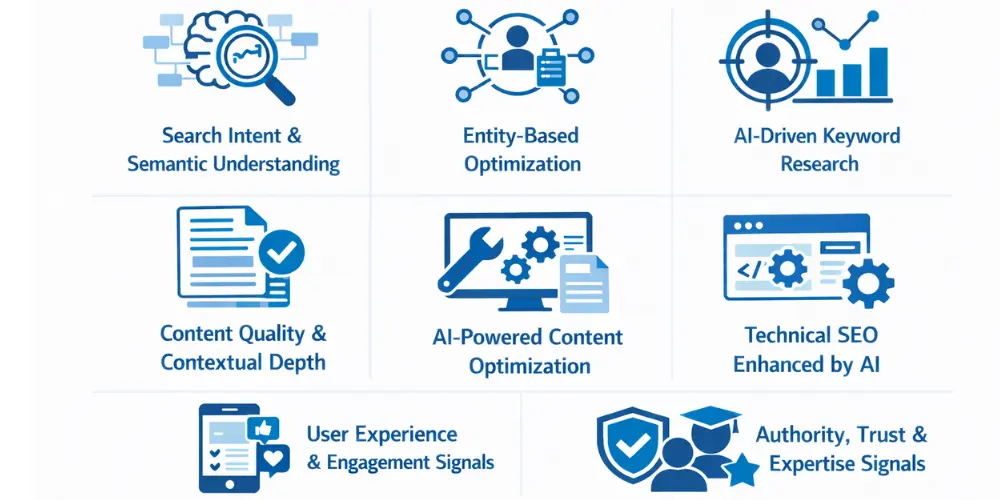
Building deep content requires attention to several structural and informational components. Each element contributes to the overall perception of thoroughness and authority.
Complete Topic Coverage
Start by mapping every possible question a user might have about your topic. Use tools like “People Also Ask” boxes, Reddit threads, and Quora to identify real user queries. Your content should answer these questions directly, either in the main body or in a dedicated FAQ section. For example, if your topic is “email marketing automation,” cover not just the basics but also deliverability rates, segmentation strategies, A/B testing methodologies, GDPR compliance, and integration with CRM systems.
Data and Evidence Integration
Deep content includes statistics, case studies, and research findings. Numbers add credibility and provide concrete value that generic advice cannot match. When you cite a statistic, ensure it comes from a reputable source and is current. For example, instead of saying “email marketing has high ROI,” state “according to a 2024 Litmus report, email marketing delivers an average ROI of $36 for every $1 spent.” This specificity signals expertise and gives readers actionable benchmarks.
Practical Examples and Use Cases
Theoretical explanations alone do not constitute depth. Include real-world scenarios, step-by-step walkthroughs, and before-and-after comparisons. If you are writing about “supply chain optimization,” describe how a specific company reduced lead times by 20% using a particular software solution. Concrete examples help readers visualize implementation and build trust in your recommendations.
Multimedia and Structured Data
While the text itself must be deep, supporting elements enhance perceived value. Tables comparing features, bulleted lists of pros and cons, and clear subheadings break complex information into digestible chunks. Search engines also use structured data markup to understand your content hierarchy, which can improve your chances of appearing in rich snippets.
How to Measure AI SEO Content Depth
You cannot improve what you cannot measure. Several metrics help quantify content depth and identify gaps in your existing pages.
Semantic Coverage Analysis
Use SEO tools like Surfer SEO, Clearscope, or MarketMuse to analyze your content against top-ranking pages. These tools generate a list of relevant terms and entities that your content should include. They score your content based on how many of these terms appear naturally. A score below 60% indicates significant depth gaps that need addressing.
Word Count Benchmarks by Topic
While word count alone is insufficient, it provides a baseline. Analyze the top 10 results for your target keyword and calculate the average word count. If your content falls significantly below this average, you likely lack depth. However, do not simply match the average; aim to exceed it by 20-30% while ensuring every additional word adds unique value.
User Engagement Metrics
Monitor time on page, scroll depth, and conversion rates in Google Analytics. If users consistently leave after reading only 30% of your article, your content likely fails to maintain interest or deliver promised value. Heatmaps can reveal which sections users skip, helping you identify weak areas that need more substance.
Practical Strategies for Building AI SEO Content Depth
Creating deep content requires a systematic approach that combines research, writing, and optimization. Follow these strategies to elevate your content above the AI-generated noise.
Conduct a Content Gap Audit
Before writing, analyze the top 5 ranking pages for your target keyword. List every subtopic, question, and data point they cover. Then identify what they miss. Your content should cover everything they do, plus the gaps you discovered. This approach ensures you create the most comprehensive resource available, which search engines reward with higher rankings.
Use the Pillar-Cluster Model
Create a comprehensive pillar page that covers your main topic in depth, then link to cluster pages that explore specific subtopics in even greater detail. This architecture signals topical authority to search engines. For example, a pillar page on “digital marketing” links to cluster pages on “SEO,” “PPC,” “content marketing,” and “social media.” Each cluster page should also link back to the pillar, creating a web of interconnected depth.
Incorporate Original Research
Conduct surveys, analyze your own data, or compile industry statistics into unique charts and graphs. Original research is the ultimate depth signal because it cannot be replicated by AI tools or competitors. Even a simple survey of 100 customers about their preferences can provide exclusive data points that make your content authoritative and link-worthy.
Update Content Regularly
Depth is not a one-time achievement. Industries evolve, statistics become outdated, and new questions emerge. Set a schedule to review and update your cornerstone content every 6-12 months. Add new sections, refresh data, and remove obsolete information. Google’s freshness algorithm rewards pages that demonstrate ongoing maintenance and relevance.
Common Mistakes That Destroy Content Depth
Even experienced writers fall into traps that undermine their depth efforts. Recognizing these mistakes is the first step to avoiding them.
Keyword Stuffing Disguised as Depth
Some writers believe that repeating the target keyword and its variations throughout the text creates depth. This approach actually harms readability and triggers spam filters. Use your keyword naturally in the title, first paragraph, and a few subheadings. The rest of your content should focus on providing information, not forcing keyword mentions.
Ignoring User Intent Variations
Search queries have different intents: informational, navigational, commercial, and transactional. A deep article addresses all relevant intents. For example, an article about “best running shoes” should cover not only product recommendations (commercial intent) but also how to choose the right shoe type (informational) and where to buy them (transactional). Failing to address multiple intents leaves your content shallow for a portion of your audience.
Overloading with Fluff and Filler
Adding paragraphs that say nothing new to reach a word count target is the opposite of depth. Every sentence should serve a purpose: inform, persuade, or clarify. If you find yourself writing generic statements like “in today’s fast-paced world,” delete them and replace them with specific, actionable information.
Neglecting Readability and Structure
Deep content that is poorly formatted becomes inaccessible. Walls of text overwhelm readers and cause high bounce rates, which signals low quality to search engines. Break your content into short paragraphs, use descriptive subheadings, and include bullet points for scannability. A well-structured deep article keeps users engaged from start to finish.
AI SEO Content Depth vs. Traditional SEO Content
Understanding the distinction between traditional SEO writing and AI-driven depth requirements helps clarify why old tactics no longer work.
| Aspect | Traditional SEO Content | AI SEO Content Depth |
|---|---|---|
| Primary Focus | Keyword placement and density | Semantic completeness and entity coverage |
| Word Count | Often 500-1,000 words | Typically 2,000+ words with unique value |
| Research Requirement | Minimal, based on competitor keywords | Extensive, including data and expert insights |
| Content Structure | Simple headings and paragraphs | Multi-level headings, tables, lists, FAQs |
| Update Frequency | Rarely updated | Regularly refreshed with new information |
| User Engagement | Secondary consideration | Primary metric for success |
The table illustrates a clear shift. Traditional methods focused on manipulating algorithms through keyword repetition. Modern AI SEO Content Depth focuses on satisfying user needs comprehensively, which naturally satisfies algorithms as a byproduct.
Tools to Enhance Your Content Depth Workflow
Several software solutions help streamline the process of creating deep content. These tools do not replace human expertise but augment it with data-driven insights.
AI Writing Assistants with Depth Features
Tools like Jasper and Copy.ai now include features that suggest related subtopics and outline expansions. Use these suggestions as a starting point, then verify and expand them with your own research. The AI can help you overcome writer’s block, but it cannot verify facts or provide genuine expertise.
Content Optimization Platforms
Surfer SEO and Frase analyze top-ranking pages and provide real-time recommendations for terms to include, questions to answer, and structural improvements. These platforms use NLP to understand what search engines expect from a comprehensive article. Integrating their suggestions into your writing process significantly improves your depth score.
Competitor Analysis Tools
Ahrefs and SEMrush allow you to examine the top-performing content for any keyword. Analyze their backlink profiles, word counts, and organic traffic trends. Identify which pieces have earned the most links and study what makes them authoritative. This competitive intelligence informs your content strategy and helps you identify depth opportunities.
Frequently Asked Questions About AI SEO Content Depth
How long should an article be to have sufficient content depth?
T The appropriate length depends on your topic’s complexity and the level of competition. For most commercial and informational topics, 2,000-3,000 words provide enough space for comprehensive coverage. However, a simple query like “what is a CPU” might only require 800 words of genuine depth, while a topic like “enterprise SEO strategy” could justify 5,000 words. Analyze your competitors and aim to exceed their depth, not just their length.
Can AI-generated content achieve high depth scores?
AI can produce content that appears deep on the surface, but it often lacks original insights, verified data, and genuine experience. Search engines are increasingly sophisticated at detecting AI-generated text that lacks human expertise. To achieve true depth, use AI as a research and drafting assistant, then inject your own knowledge, case studies, and analysis. The final product must reflect human judgment and real-world experience.
Does content depth affect backlinks and authority?
Yes, depth directly influences your ability to earn backlinks. Other websites link to resources that provide comprehensive, unique value. A shallow article offers no reason for citation, while a deep, data-rich guide becomes a reference point for the industry. Over time, these backlinks build your domain authority, creating a positive cycle that further boosts rankings.
How often should I update my content to maintain depth?
Update frequency depends on your industry’s pace of change. Fast-moving fields like technology, finance, and healthcare require updates every 3-6 months. Slower industries like history or classic literature may only need annual reviews. Monitor your pages’ performance and check for declining traffic, which often signals outdated information. Proactive updates keep your content fresh and maintain its depth advantage.
What is the role of internal linking in content depth?
Internal links connect your deep content to related resources, creating a comprehensive knowledge network. When you link to a detailed guide on a subtopic, you signal to search engines that you have covered the subject thoroughly across your site. This interlinking also distributes authority and helps users navigate your content ecosystem, increasing time on site and reducing bounce rates.
Important Notes for Implementing Content Depth
Success with AI SEO Content Depth requires patience and consistency. Do not expect immediate ranking improvements after publishing one deep article. Search engines need time to crawl, index, and evaluate your content. Focus on building a library of comprehensive resources over several months.
Prioritize quality over quantity. Publishing one exceptional, deeply researched article per week outperforms publishing five shallow posts daily. Each deep article compounds in value through backlinks, social shares, and sustained organic traffic.
Always verify your facts and statistics. In the age of AI misinformation, accuracy is your strongest trust signal. Cite reputable sources, link to original research, and correct any errors promptly. This commitment to accuracy builds long-term credibility with both users and search engines.
Finally, remember that content depth is not a static target. As AI tools evolve, search engines will continue refining their definitions of quality. Stay informed about algorithm updates, study emerging trends in your industry, and continuously elevate your content standards. The websites that thrive will be those that treat depth as an ongoing commitment rather than a one-time checkbox.
Conclusion
AI SEO Content Depth represents the new standard for search visibility in an era of machine-generated text. Search engines have evolved to reward comprehensive, semantically rich, and genuinely useful content while demoting shallow pages regardless of their keyword optimization. By understanding the components of depth, measuring your current performance, and implementing systematic strategies to expand your coverage, you position your website for sustainable organic growth.
The practical steps outlined in this guide—conducting gap audits, integrating original research, using optimization tools, and maintaining regular updates—provide a clear roadmap for elevating your content above the competition. Avoid the common pitfalls of keyword stuffing and fluff, and always prioritize the reader’s need for complete, accurate information. When you commit to genuine depth, you not only satisfy search algorithms but also build lasting trust with your audience, which remains the ultimate goal of any content strategy.
Xem thêm:
- AI SEO Google Analytics 4: The Complete Guide to Smarter Data-Driven Rankings
- AI SEO Topic Authority: The Complete Guide to Dominating Search Rankings in 2025
- AI Site Audit: The Complete Guide to Smarter, Faster Website Analysis for 2025
- AI SEO Google Knowledge Graph: The Complete Guide to Dominating Search in 2025
- AI SEO vs Surfer SEO: The Complete Guide to AI-Powered Search Optimization
Bài viết cùng chủ đề:

AI SEO SEO Automation with Make: The Complete Workflow Guide

AI SEO SEO Automation with Zapier: The Complete Workflow Guide

AI SEO SEO Automation with n8n: The Complete Workflow Guide
AI SEO SEO Automation with Gemini: The Complete Guide to Scaling Organic Growth

AI SEO SEO Automation with Claude: The Complete Guide to Scaling Content in 2025

AI SEO SEO Automation with ChatGPT: The Complete Playbook for 2025

AI SEO & SEO Automation for Affiliate Sites: The 2025 Playbook for Passive Income Growth
AI SEO & SEO Automation for Bloggers: The Complete Guide to Scaling Your Content

AI SEO & SEO Automation for Agencies: The Complete 2025 Playbook

AI SEO and SEO Automation for Ecommerce: The Complete Playbook for 2025

AI SEO & SEO Automation for WordPress: The Complete Playbook for 2025
AI SEO SEO Automation Strategy: The Complete Playbook for 2025

Mastering the AI SEO SEO Automation Process: A Complete Guide to Scaling Organic Growth
AI SEO SEO Automation System: The Complete Guide to Scaling Organic Growth in 2025
AI SEO SEO Automation Platform: The Complete Guide to Scaling Organic Growth in 2025
AI SEO SEO Automation Software: The Complete Guide to Scaling Organic Growth in 2025















