
No products in the cart.
AI SEO Traffic Prediction: The Complete Guide to Forecasting Organic Growth
10
Aug
Aug
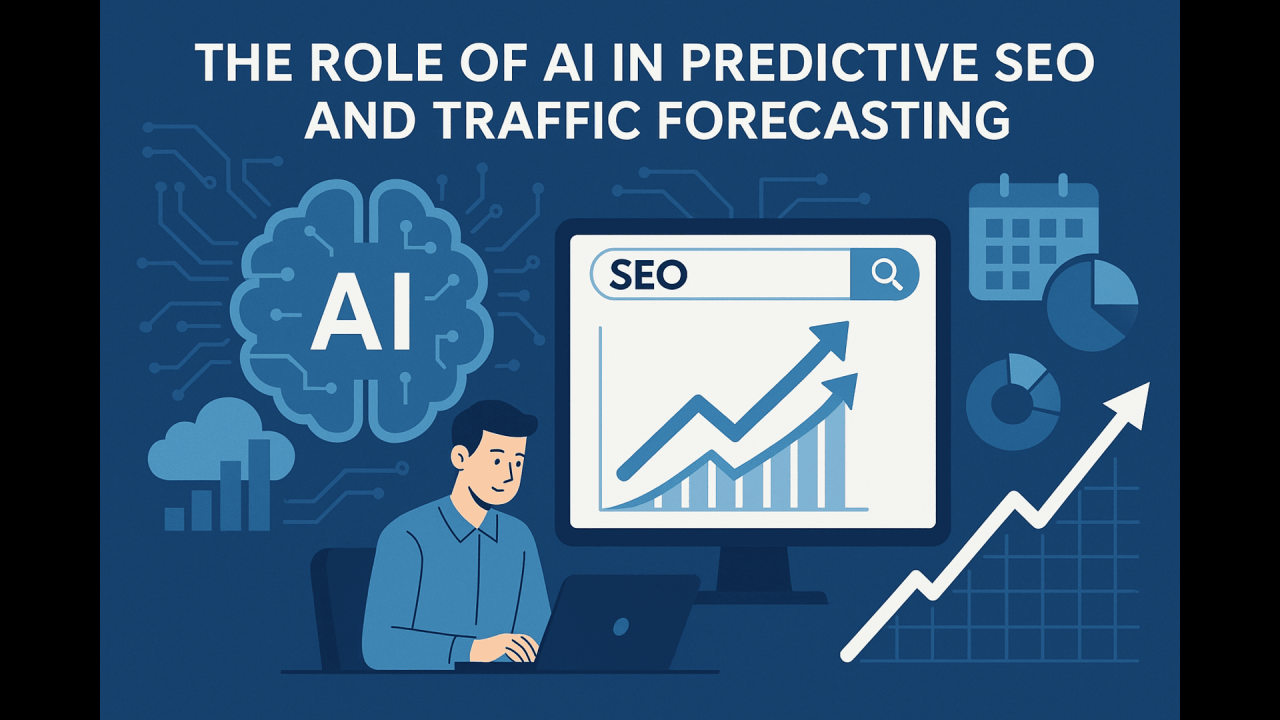
AI SEO traffic prediction has transformed how digital marketers plan, execute, and measure their organic search strategies. Instead of relying on gut feeling or historical data alone, modern SEO teams use machine learning models to forecast future performance with remarkable accuracy. This guide explains everything you need to know about AI-driven traffic forecasting, from the underlying technology to practical implementation steps that deliver measurable results.
What Is AI SEO Traffic Prediction?
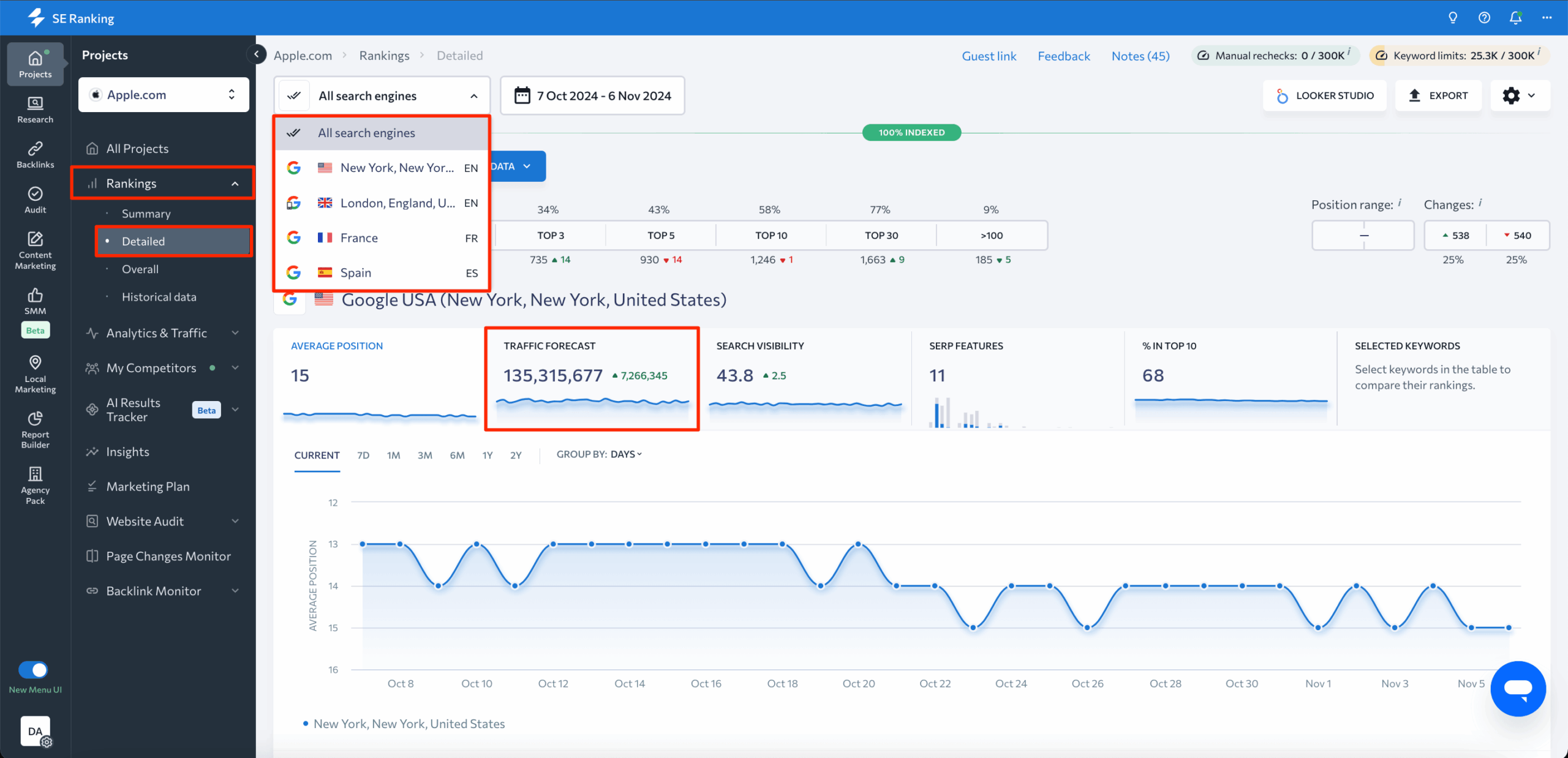
AI SEO traffic prediction refers to the use of artificial intelligence and machine learning algorithms to estimate future organic search traffic for specific pages, keywords, or entire websites. These systems analyze vast datasets including search volume trends, click-through rates, ranking positions, seasonality patterns, and competitor activity to generate probabilistic forecasts.
Traditional forecasting methods relied on simple linear projections or manual spreadsheet calculations. AI-powered systems go far beyond that by identifying complex, non-linear relationships between dozens of ranking factors and actual user behavior. The result is a dynamic prediction model that updates continuously as new data flows in.
How AI Models Differ from Traditional Forecasting
Conventional SEO forecasting typically uses historical traffic data and applies a growth percentage. This approach fails to account for algorithm updates, shifting user intent, or emerging competitors. AI models process hundreds of variables simultaneously, learning which signals matter most for your specific niche and domain authority.
Machine learning models like gradient boosting, random forests, and neural networks can detect patterns that human analysts miss. For instance, an AI system might notice that your traffic spikes correlate with specific content formats, publishing times, or internal linking structures. These insights feed directly into more accurate predictions.
Why AI SEO Traffic Prediction Matters in 2025
Search engine algorithms have become increasingly sophisticated, making manual prediction nearly impossible. Google processes billions of searches daily, and ranking factors change constantly. AI SEO traffic prediction gives businesses a competitive edge by providing clarity in an uncertain environment.
Accurate traffic forecasts enable better resource allocation. When you know which pages will likely gain traction, you can invest content production, link building, and technical optimization efforts where they deliver the highest return. Marketing budgets become more defensible when backed by data-driven projections rather than optimistic guesses.
Key Benefits of AI-Powered Forecasting
- Improved budget planning: Predict revenue from organic traffic with greater confidence, allowing finance teams to allocate resources effectively
- Proactive strategy adjustment: Identify declining trends early and pivot before traffic drops significantly
- Competitive intelligence: Model how competitor actions might impact your rankings and traffic
- Content ROI measurement: Forecast the expected traffic for new content pieces before publishing
- Risk mitigation: Prepare for seasonal fluctuations and algorithm update impacts
- Audit your data: Ensure you have at least 12 months of continuous traffic data with proper tracking in place
- Define prediction goals: Decide whether you need page-level, keyword-level, or site-wide forecasts
- Select your tool: Choose between commercial platforms or custom development based on budget and expertise
- Configure data sources: Connect all relevant analytics and search console accounts
- Train the model: Allow the system to learn from historical patterns and validate accuracy
- Review predictions: Compare AI forecasts against actual outcomes and refine parameters
- Integrate into workflows: Use predictions to inform content calendars, budget decisions, and performance targets
Core Components of AI Traffic Prediction Systems
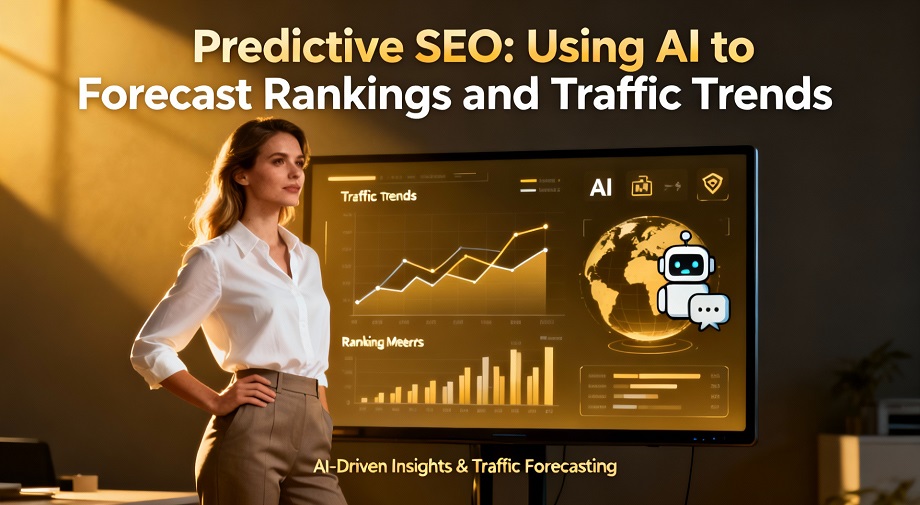
Understanding the building blocks of AI SEO traffic prediction helps you evaluate different tools and build your own models if needed. Every system relies on several key components working together.
Data Collection and Integration
High-quality predictions require high-quality data. AI systems pull information from multiple sources including Google Search Console, Google Analytics, keyword research tools, and rank tracking platforms. The more comprehensive the dataset, the more accurate the model becomes.
Data granularity matters significantly. Daily-level data provides better signal than weekly or monthly aggregates. Historical data spanning at least 12-24 months allows the model to learn seasonal patterns and long-term trends effectively.
Feature Engineering for SEO Signals
Feature engineering transforms raw data into meaningful variables that the AI model can learn from. Common features include keyword difficulty scores, search volume trends, current rankings, page authority metrics, backlink profiles, content length, and user engagement signals.
Advanced systems also incorporate external factors like economic indicators, industry news cycles, and even weather patterns for certain niches. This holistic approach captures the full context that influences search behavior.
Machine Learning Algorithms
Different algorithms serve different forecasting needs. Time series models like ARIMA and Prophet excel at capturing trends and seasonality. Regression models predict continuous traffic values based on feature inputs. Classification models might categorize pages into traffic growth tiers.
Ensemble methods that combine multiple algorithms often deliver the best accuracy. These systems weigh predictions from different models and produce a consensus forecast that reduces individual model bias.
How to Implement AI SEO Traffic Prediction
Implementing AI-driven forecasting doesn’t require a data science team. Several approaches exist, ranging from using commercial tools to building custom solutions with open-source libraries.
Using Commercial AI SEO Tools
Many established SEO platforms now include AI-powered traffic prediction features. These tools handle the complex machine learning behind the scenes, presenting forecasts in user-friendly dashboards. They typically integrate directly with your existing SEO workflows.
When evaluating commercial tools, look for features like scenario modeling, confidence intervals, and the ability to adjust predictions based on planned SEO actions. Some tools allow you to simulate the impact of gaining backlinks or improving page speed on future traffic.
Building Custom Prediction Models
For organizations with technical resources, building custom models offers maximum flexibility. Python libraries like scikit-learn, TensorFlow, and PyTorch provide the necessary frameworks. The process involves data preparation, model training, validation, and deployment.
A basic approach starts with exporting historical traffic data from Google Search Console. Clean the data, handle missing values, and create features like day of week, month, and lagged traffic values. Train a gradient boosting model on this dataset and evaluate its performance using holdout data.
Step-by-Step Implementation Guide
Practical Applications of AI Traffic Forecasting
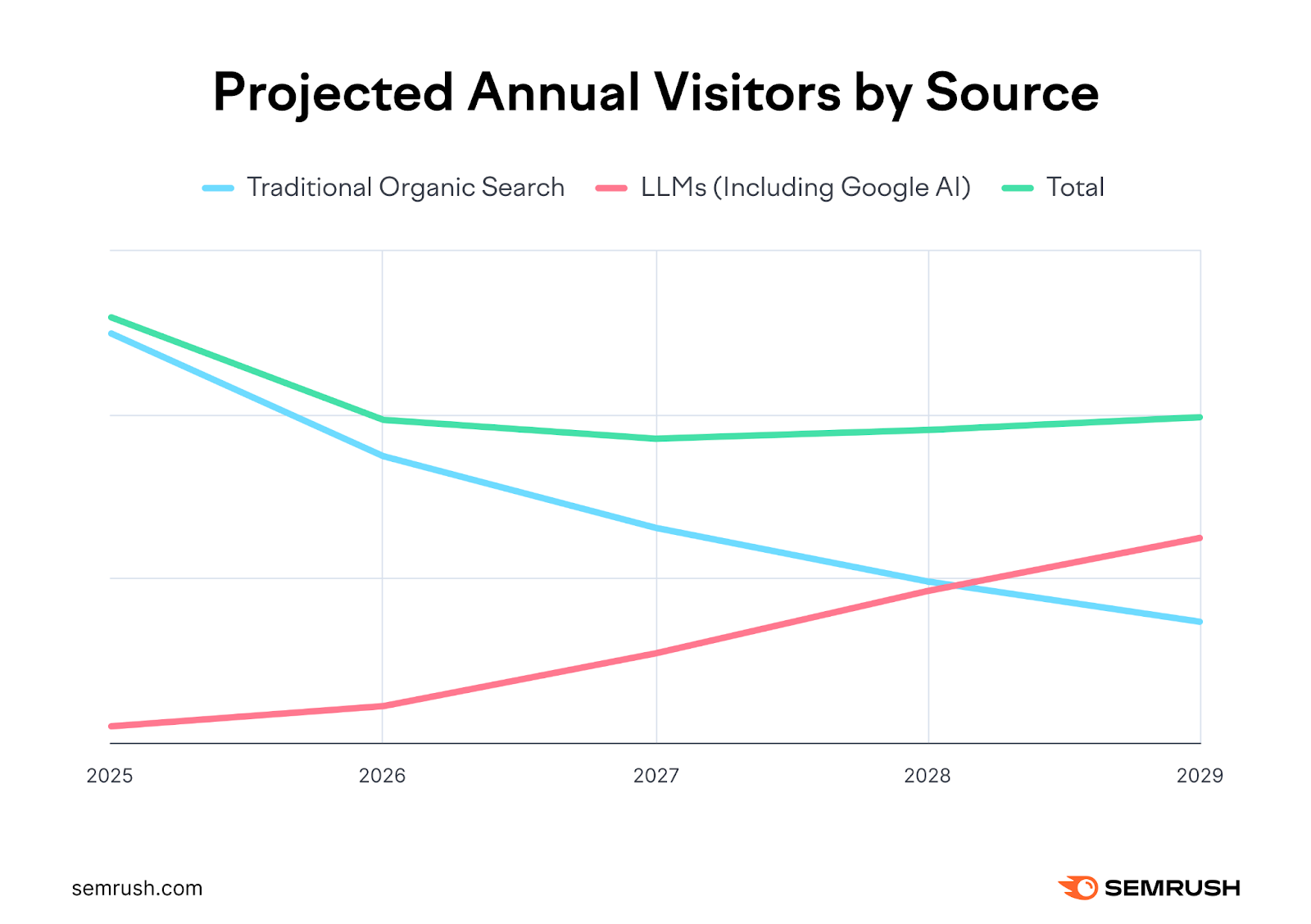
AI SEO traffic prediction delivers value across multiple business functions. Marketing teams use forecasts to set realistic goals, while executives rely on them for strategic planning and investor communications.
Content Strategy Optimization
Before writing a new article, run the proposed topic through your prediction model. The system estimates expected traffic based on keyword difficulty, current rankings, and your domain’s authority. This data helps prioritize content ideas that offer the best traffic potential.
Forecasting also guides content refresh decisions. When predictions show declining traffic for existing pages, you know which pieces need updating. This proactive approach maintains search visibility and prevents gradual traffic erosion.
SEO Budget Allocation
Forecasts translate directly into expected revenue, making budget conversations easier. If the model predicts a 20% traffic increase from a specific link building campaign, you can calculate the resulting revenue lift and compare it against campaign costs.
This data-driven approach reduces reliance on subjective opinions about which SEO activities matter most. Resources flow to initiatives with the strongest predicted returns, improving overall marketing efficiency.
Performance Monitoring and Alerts
AI prediction systems continuously compare actual traffic against forecasted values. Significant deviations trigger alerts, allowing teams to investigate potential issues like algorithm updates, technical errors, or competitor actions.
Early detection of negative deviations prevents small problems from becoming major traffic losses. Conversely, positive deviations highlight strategies that are working better than expected, informing future optimization efforts.
Common Mistakes in AI SEO Traffic Prediction
Even with advanced technology, several pitfalls can undermine forecasting accuracy. Recognizing these mistakes helps you avoid them and get the most from your prediction systems.
Overreliance on Historical Data
Past performance does not guarantee future results. Markets change, competitors emerge, and search algorithms evolve. Models trained exclusively on historical data may fail to anticipate structural shifts in your industry.
Mitigate this risk by incorporating external signals and regularly retraining models with fresh data. Human oversight remains essential to interpret predictions in the context of current market conditions.
Ignoring Confidence Intervals
AI predictions always carry uncertainty. Some tools provide confidence intervals that show the range within which actual traffic will likely fall. Ignoring these ranges leads to overconfident planning and disappointment when results land at the lower end.
Use conservative estimates for budget planning and aggressive estimates for stretch goals. Understanding the full prediction range enables more nuanced decision-making.
Treating Predictions as Certainties
Forecasts guide strategy, but they do not guarantee outcomes. SEO involves many variables outside your control, including competitor actions and search engine updates. Maintain flexibility in your plans and adjust course when actual data diverges from predictions.
Comparison: AI Prediction vs. Manual Forecasting
| Factor | AI SEO Traffic Prediction | Manual Forecasting |
|---|---|---|
| Data processing speed | Handles millions of data points instantly | Limited by human capacity and spreadsheet tools |
| Pattern recognition | Identifies complex non-linear relationships | Relies on obvious trends and linear projections |
| Accuracy | Higher accuracy with continuous learning | Prone to bias and oversimplification |
| Scalability | Works across thousands of pages and keywords | Practical only for small datasets |
| Adaptability | Updates automatically with new data | Requires manual recalculation |
| Cost | Subscription fees or development costs | Time investment from skilled analysts |
Important Notes for Accurate Predictions
Several factors significantly influence the accuracy of AI SEO traffic prediction. Pay attention to these elements to maximize the value of your forecasting efforts.
Data quality stands as the most critical factor. Ensure tracking codes function correctly, filters exclude internal traffic, and data collection remains consistent over time. Gaps or errors in data lead to unreliable predictions regardless of model sophistication.
Seasonality plays a major role in many industries. Retail sites experience holiday spikes, while B2B companies see fluctuations based on fiscal calendars. Models must account for these recurring patterns to avoid misleading forecasts.
Algorithm updates can disrupt even the best prediction models. When Google releases a core update, historical patterns may no longer apply. Monitor industry news and be prepared to recalibrate forecasts following significant algorithm changes.
Frequently Asked Questions
How accurate is AI SEO traffic prediction?
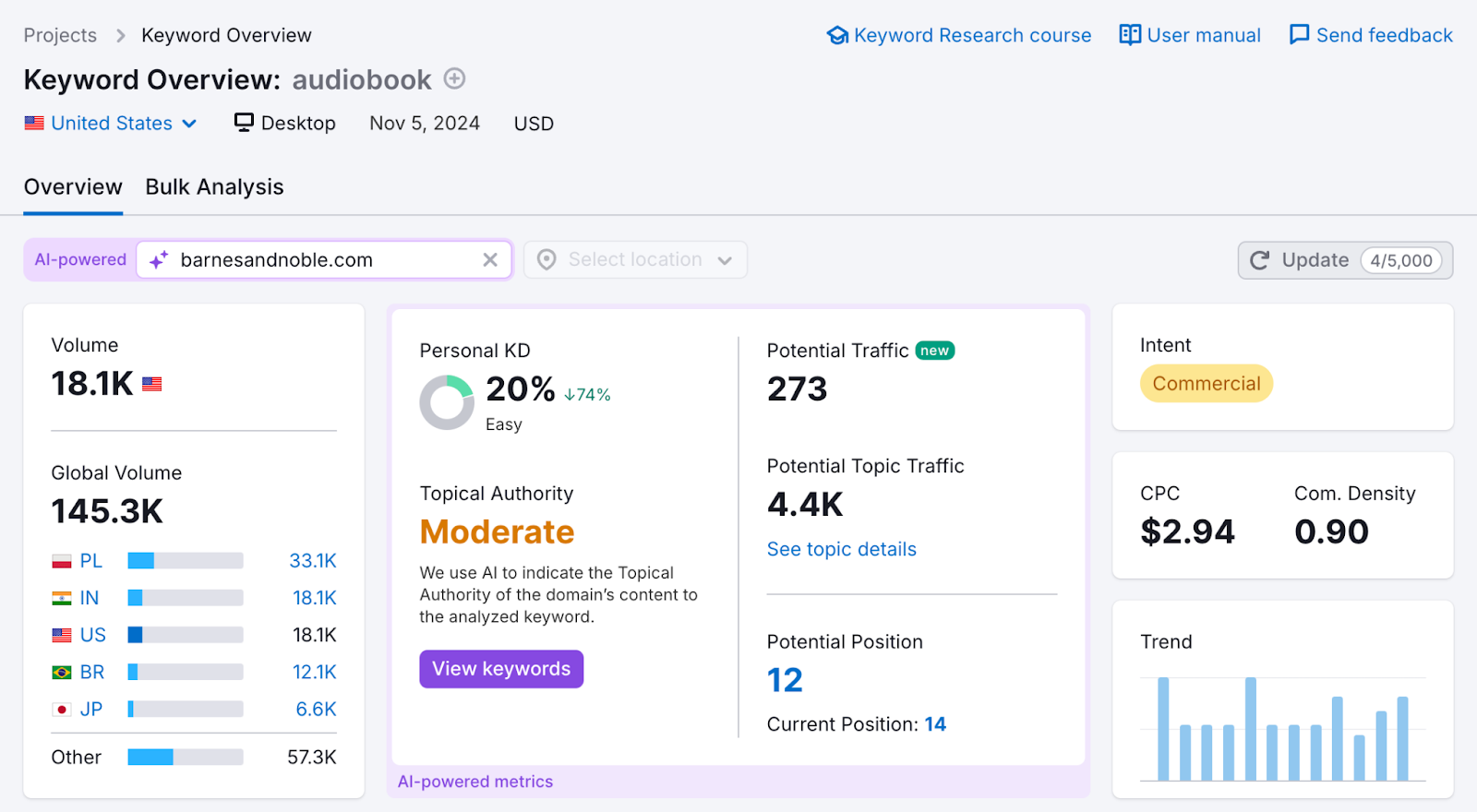
Accuracy varies based on data quality, model sophistication, and market stability. Well-configured systems typically achieve 80-90% accuracy for short-term forecasts of 1-3 months. Long-term predictions over 6-12 months carry more uncertainty, with accuracy dropping to 60-75% depending on industry volatility.
What data do I need for AI traffic prediction?
At minimum, you need 12 months of daily organic traffic data from Google Analytics or Search Console. Additional data like keyword rankings, backlink profiles, and content metrics improves accuracy. The more relevant data you provide, the better the model learns your specific traffic patterns.
Can AI predict Google algorithm updates?
AI cannot predict specific algorithm updates, but it can detect early signals of ranking volatility. Some systems monitor SERP fluctuation metrics and alert users when unusual activity suggests an impending update. This early warning allows teams to prepare and respond quickly.
Is AI traffic prediction suitable for small websites?
Yes, but with caveats. Small sites with limited historical data produce less reliable predictions. A minimum of 6-12 months of data helps establish baseline patterns. As your site grows and accumulates more data, prediction accuracy improves accordingly.
How often should I update my traffic predictions?
Refresh predictions at least monthly, or more frequently during periods of significant change. Weekly updates work well for active campaigns where strategies shift often. Automated systems can update predictions daily as new data flows in, providing the most current view.
Conclusion
AI SEO traffic prediction represents a fundamental shift in how digital marketers approach organic growth planning. By leveraging machine learning to analyze complex data patterns, businesses gain unprecedented visibility into future performance. This clarity enables smarter investments, more realistic goal setting, and faster response to market changes.
The technology continues to evolve rapidly, with new models incorporating natural language processing and real-time search data. Organizations that adopt AI-driven forecasting now position themselves ahead of competitors still relying on manual methods. Start with your existing data, choose the right tools, and build prediction capabilities into your regular SEO workflow.
Accurate traffic forecasts transform SEO from a cost center into a strategic growth driver. When you can predict outcomes with confidence, you unlock the full potential of organic search as a reliable, measurable channel for business growth.
Xem thêm:
- AI SEO Sitebulb: The Complete Guide to Smarter Technical Audits
- AI SEO Reputation Management: The Complete Guide to Protecting Your Brand in 2025
- AI SEO for Beauty: The Complete Guide to Dominating Search in 2025
- AI Knowledge Graph: The Complete Guide to Intelligent Data Networks
- How to Optimize for AI Search: A Comprehensive Guide to Generative Engine Optimization
Bài viết cùng chủ đề:

AI SEO SEO Automation with Make: The Complete Workflow Guide

AI SEO SEO Automation with Zapier: The Complete Workflow Guide

AI SEO SEO Automation with n8n: The Complete Workflow Guide
AI SEO SEO Automation with Gemini: The Complete Guide to Scaling Organic Growth

AI SEO SEO Automation with Claude: The Complete Guide to Scaling Content in 2025

AI SEO SEO Automation with ChatGPT: The Complete Playbook for 2025

AI SEO & SEO Automation for Affiliate Sites: The 2025 Playbook for Passive Income Growth
AI SEO & SEO Automation for Bloggers: The Complete Guide to Scaling Your Content

AI SEO & SEO Automation for Agencies: The Complete 2025 Playbook

AI SEO and SEO Automation for Ecommerce: The Complete Playbook for 2025

AI SEO & SEO Automation for WordPress: The Complete Playbook for 2025
AI SEO SEO Automation Strategy: The Complete Playbook for 2025

Mastering the AI SEO SEO Automation Process: A Complete Guide to Scaling Organic Growth
AI SEO SEO Automation System: The Complete Guide to Scaling Organic Growth in 2025
AI SEO SEO Automation Platform: The Complete Guide to Scaling Organic Growth in 2025
AI SEO SEO Automation Software: The Complete Guide to Scaling Organic Growth in 2025















